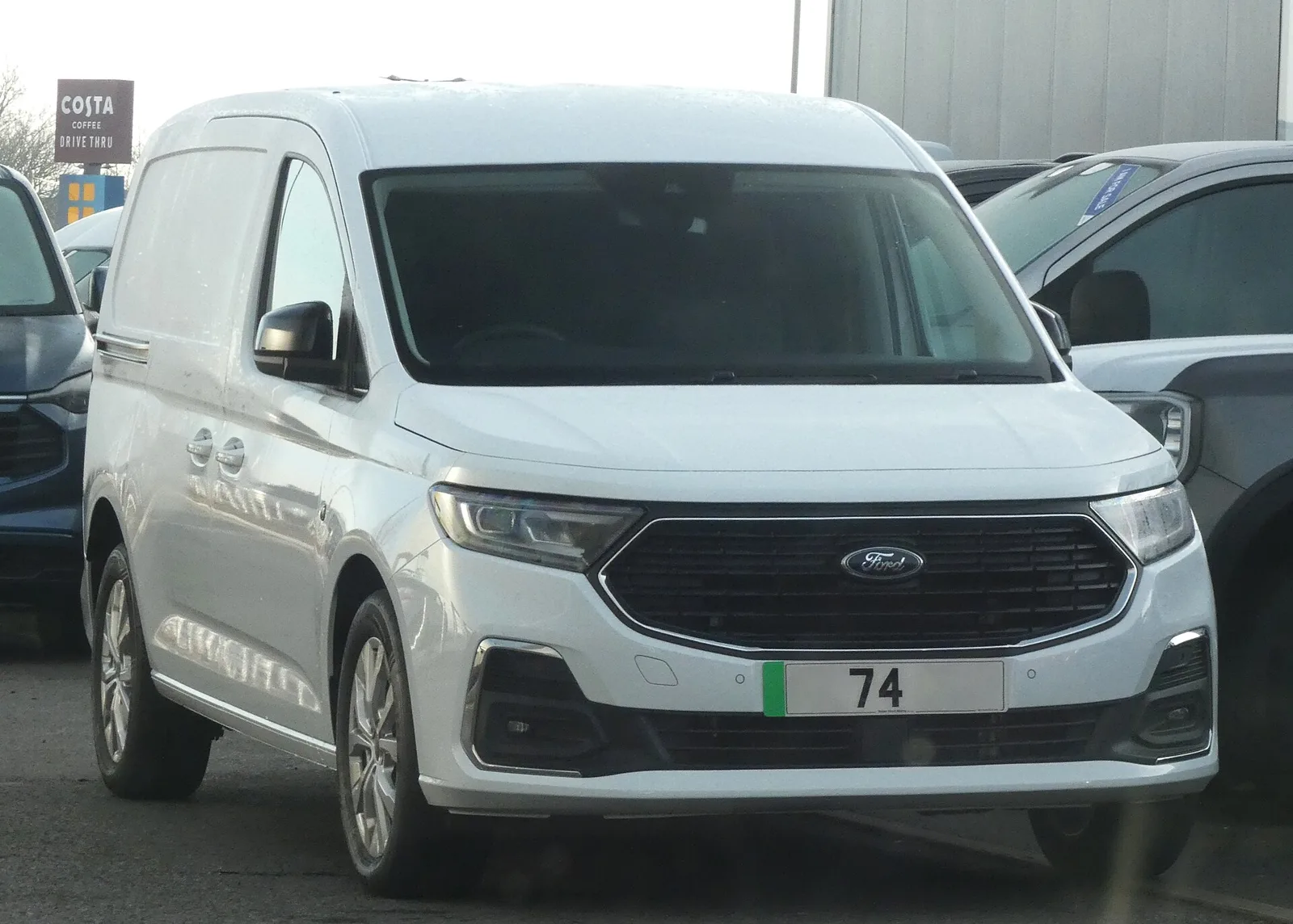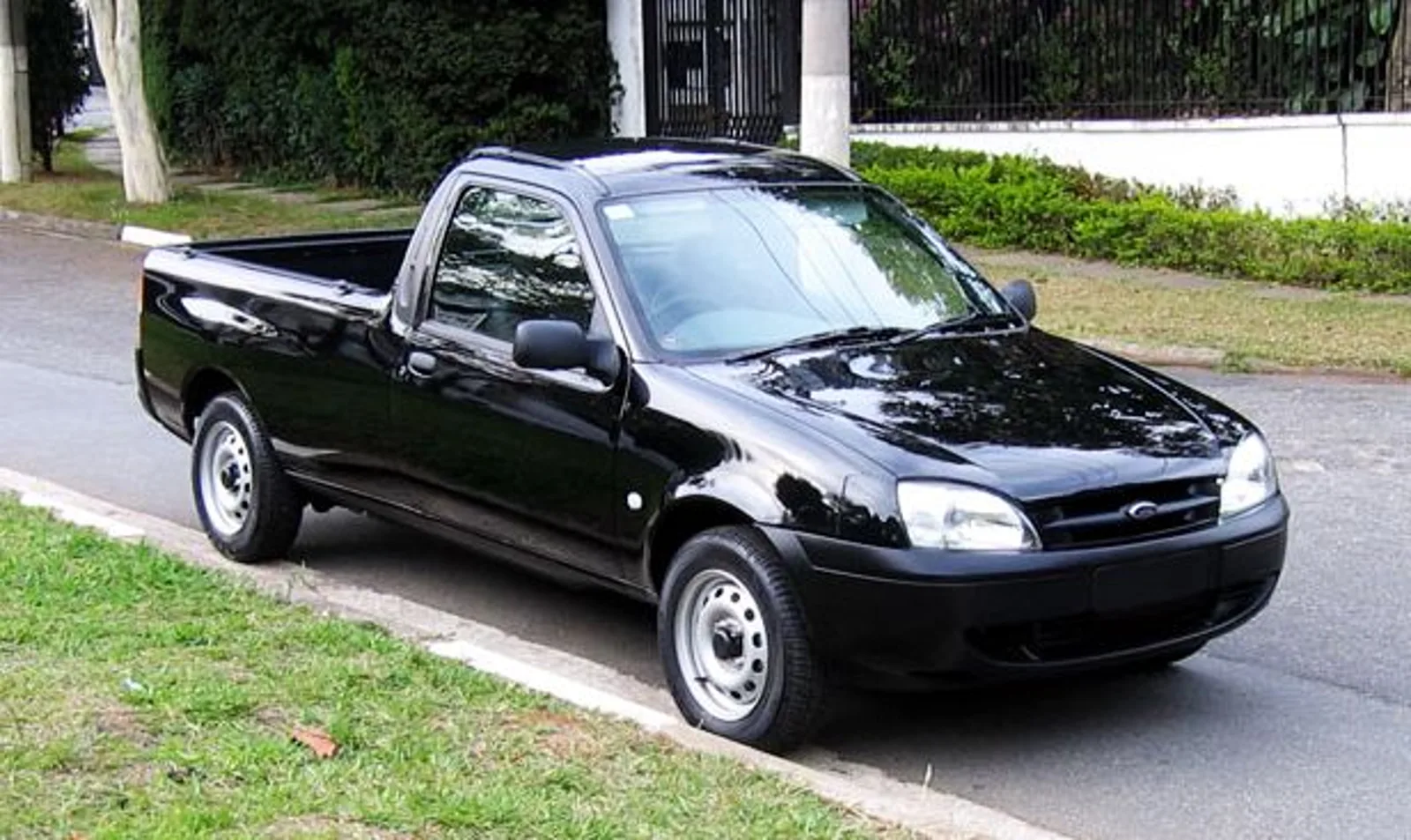
One nameplate covering a sedan delivery, a Mazda-built compact pickup, a European Fiesta van and a Brazilian coupe utility.
Ford's Courier nameplate covered a 1952 to 1960 sedan delivery, a Mazda-built pickup from 1972 and, in Europe, a Fiesta-based van from 1991. Brazil also built a Fiesta-based coupe utility from 1998 to 2013, and the name later returned as the Transit Courier.
The Ford Courier is a nameplate that Ford has applied to very different vehicles since the early 1950s. It began as a sedan delivery body, returned in 1972 as a rebadged Mazda compact pickup, and later became a Fiesta-based van in Europe and a coupe utility in Brazil.
What is the Ford Courier?
The Ford Courier is a nameplate Ford has used since the early 1950s for a sedan delivery, a Mazda-built compact pickup, a Fiesta-based European van and a Brazilian coupe utility. The name was first used in North America for a sedan delivery and later travelled across several continents.
The nameplate has a loose thread of commercial use running through it. A panel van, a pickup and a utility all carried the badge at different times.
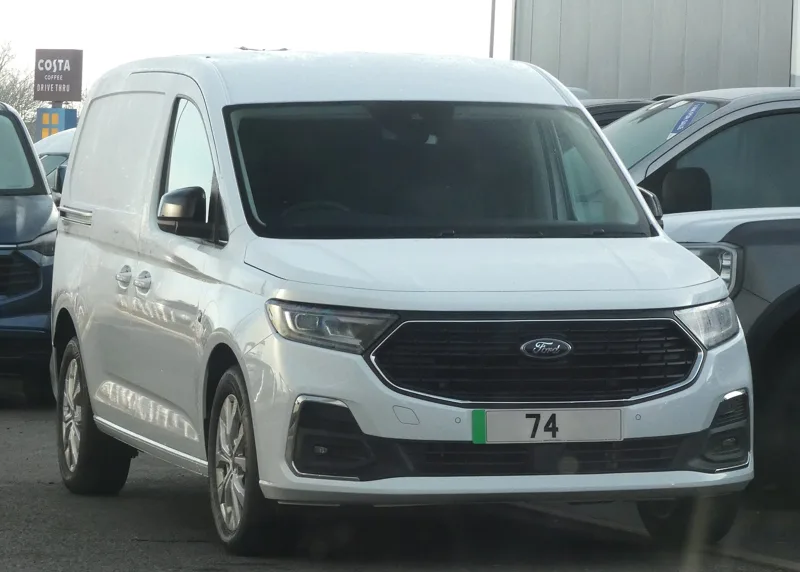
The stand-alone Courier name was withdrawn for 2014, but it came back as the Transit Courier, the smallest vehicle in the Transit van series. By then the pickup and the panel van had both been replaced by other Ford models.
One nameplate, four very different vehicles, and a name that kept finding a new body in new markets.
How did the sedan delivery Courier work?
From 1952 to 1960 the Courier was the sedan delivery body of the full-size Ford line. It shared its body with the two-door Ford station wagon, but it swapped the rear seating for storage and replaced the side windows with painted steel panels.
Marketed only as a two-door, the Courier was first fitted with a side-hinged rear cargo door that was unique to the model line. For 1957 and 1958 it adopted a two-piece clamshell rear door instead.
For 1959 and 1960 Ford used the two-door Ranch Wagon body in its entirety, so the only distinction was the rear cargo area. In 1961 Ford replaced the Courier and the F-Series panel delivery with the Econoline cargo van, and the two-door sedan delivery moved into the compact Falcon range until the 1964 model year.
The panel delivery built on the F-Series pickup was another precursor of the modern cargo van. Each of these bodies was built on an existing passenger-car or pickup structure.
Why did Ford bring back the Courier in 1972?
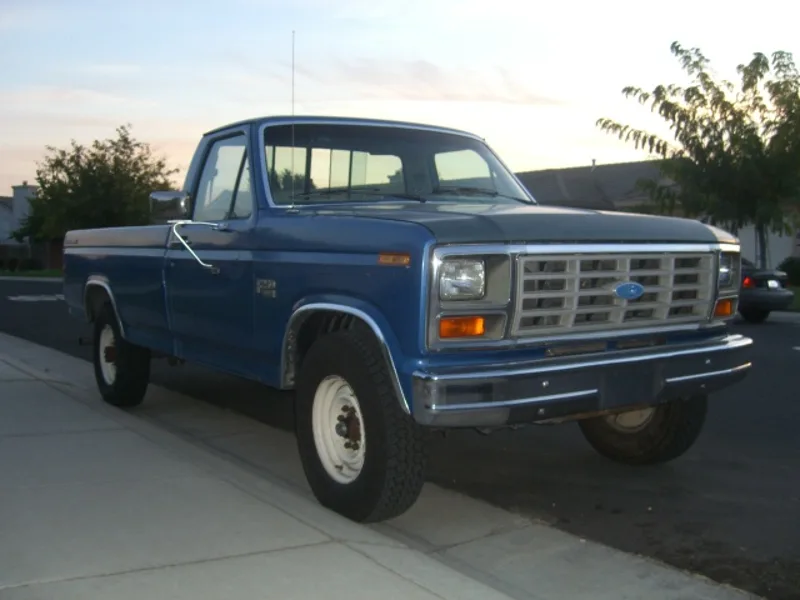
Ford revived the nameplate for 1972 after a 12-year hiatus, applying it to a rebranded Mazda B-Series that became Ford's first compact pickup. The truck was the first product that Ford and Mazda marketed jointly, and the alliance that followed lasted through 2020 production.
The first-generation truck was sold worldwide and gave Ford a compact pickup with a far smaller price tag than full-size trucks.
What was the first-generation Courier like?
The first-generation Courier had a 1.8-litre overhead-cam engine rated at 74 hp (55 kW) at 5,070 rpm and 92 lb-ft (125 Nm) at 3,500 rpm. A four-speed manual was standard, a three-speed automatic was optional, and the rated load was 1,400 lb (635 kg).
Like other minipickups of the period, it used rear-wheel drive and a small engine, and it was priced well below full-size trucks. Its front grille was designed to echo the larger F-Series, and it used single large headlights where the Mazda original had twin units.
Couriers were imported as cab chassis, which left off the cargo box and so avoided the 25% chicken tax on light trucks. Only a 4% tariff applied, and a truck bed was fitted after arrival so the vehicle could be sold as a light truck.
A five-speed manual option arrived for the 1976 model year, and the cab was lengthened by 3 in (76 mm) that year. Northwest A.T.V. in Kelso, Washington, converted around 1500 examples to 4WD Courier Sasquatch trim, using a Dana Spicer two-speed transfer case and a solid front axle.
The Sasquatch was sold only along the west coast of the United States.
How did the second-generation Courier change?
From 1977 the Courier adopted blocky, angular styling typical of 1980s design, while the base engine remained the 1.8 L (1,796 cc) VB. The base engine grew to 2.0 litre (120.1 CID) in 1979, and a Ford-built 2.3-litre option was also available.
That 2.3-litre engine was the same unit used in the Ford Pinto and Mustang II, and in the Mercury Bobcat and Capri. The grille gained park and indicator lights in later years, while 1977 models still carried their turn signals in the bumper.
The Courier stopped in North America after the 1982 model year. For 1983, Ford introduced its own Ranger to fill the compact truck segment in the United States and Canada, effectively replacing the Courier. In Australia the second generation continued until the 1985 model year.
Did the Courier ever have a diesel engine?
Not in the United States. The Courier was never offered with a diesel there, but a 1980 Mazda B2200 carried a Perkins 2.2-litre diesel that produced 66 hp (49 kW) at 2,100 rpm. That engine later appeared in early Ford Rangers, which then used a Mitsubishi 4D55T 2.3-litre turbodiesel from 1985 to 1987.
Ford also built a small electric version of the Courier. Between 1979 and 1982, Jet Industries bought gliders, meaning Courier bodies without engines, and fitted a DC motor and lead-acid batteries to make the ElectraVan 750.
The ElectraVans reached about 70 mph (113 km/h) and covered 50 to 60 miles (97 km) on a full charge. They were sold mainly as service trucks to local government departments, and a number still exist with upgraded motor controls.
What changed in the third generation?
The third generation arrived in 1985 with a larger, more modern cab. Options included five-speed manuals, four-wheel drive and a V6, and for the first time extended and four-door cabs were available.
The third-generation Courier also gave its platform to a sport utility, the Ford Raider, which was sold from 1991 to 1997. Mazda sold the same vehicle as the Proceed Marvie.
Did the Courier name survive the late 1990s?
In Australia it did. Mazda redesigned the B-Series in 1998, and Ford adopted the Ranger name for both the Mazda-built and Ford-built compact trucks sold worldwide except in North America. Ford Australia kept the Courier nameplate and sold it through 2006 in Australia and New Zealand.
How did the Fiesta-based Courier van work in Europe?
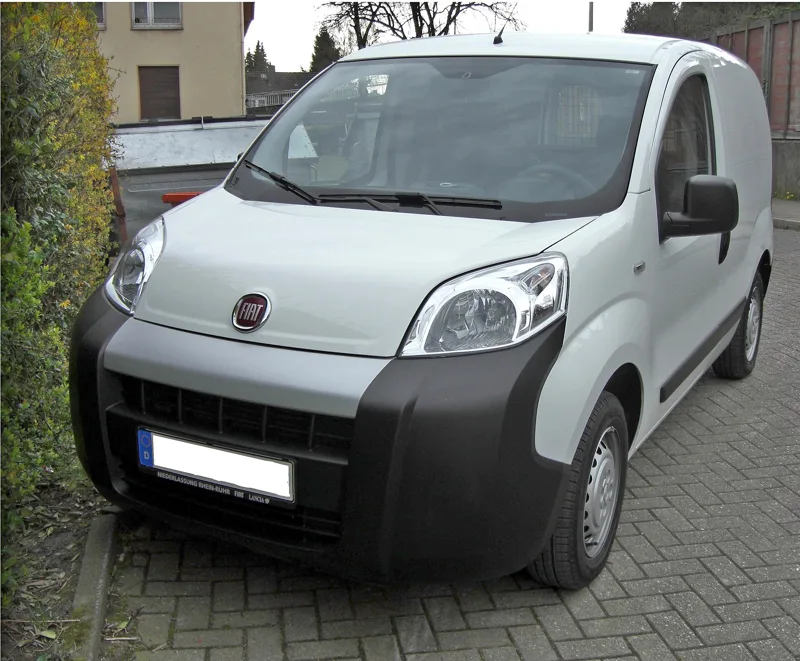
Ford of Europe launched a Fiesta-based van in June 1991, with front-wheel drive and a choice of 1.3-litre OHV petrol or 1.8-litre OHC diesel power. It was built on the Ford BE-2 platform at Dagenham in England and Cologne in Germany.
The van measured 4,115 mm long, 1,650 mm wide and 1,835 mm tall, with a curb weight of 1,700 kg and a 590 kg capacity. Its early rivals were the Fiat Fiorino and the Renault Express, and every unit had a five-speed manual gearbox.
From August 1995 the van moved to a Mark IV-based version. A glazed five-seat passenger model was also sold as the Courier Kombi, alongside the two-seat cargo van.
The 1.8-litre naturally aspirated diesel produced 60 PS (44 kW) at 4,800 rpm, with 110 Nm of torque at 2,500 rpm, and its claimed top speed was 84 mph (135 km/h). From 1999 to 2002 a turbo-diesel was optional, but only in 75 PS low-boost form, and a 90 PS intercooled version was never offered on the van.
Production of the van ended in August 2002. In September 2002 Ford replaced it with the Transit Connect, which was based on the Focus. Years later, a Fiesta-based van bearing the Transit Courier name was revealed at Yenikoy in Turkey in 2013.
What was the Brazilian Courier?
The Brazilian Courier was a small coupe utility based on the Fiesta, built by Ford in Brazil and exported to countries including Mexico. It carried a 700 kg (1,543 lb) load and was produced from 1998 to 2013.
Early versions used a smaller engine and the 1.4-litre 16v Zetec-SE unit, which reached 170 km/h (106 mph). From 2000 both engines were replaced by the Zetec Rocam 1.6-litre, which reached 180 km/h (112 mph) and did 0-100 km/h in 10 seconds.
The coupe had a 2,830 mm (111.4 in) wheelbase, 4,457 mm (175.5 in) length, 1,793 mm (70.6 in) width and 1,477 mm (58.1 in) height. The South African version had short five-door doors and small quarter lights, while the Brazilian car had the three-door's longer doors and no quarter windows.
How did production in Brazil end?
Ford moved all Courier pickup production to Sao Bernardo do Campo in Sao Paulo, starting in May 2002. From 2013 the plant suspended manufacture for ordinary consumers and business buyers, but Ford did not confirm that the model had left the line for good.
The Courier may have been replaced in Brazil by the Ford Ranger, although that has not been confirmed. In Mexico it stopped being sold after 2010. The name lived on in the Fiesta-based Transit Courier that followed.
What were the Ford Courier specifications?
| Generation or type | Years | Engine | Key detail |
|---|---|---|---|
| Sedan delivery | 1952 to 1960 | Full-size Ford line | Two-door, shares the station wagon body |
| First-generation pickup | 1972 to 1976 | 1.8-litre overhead-cam, 74 hp (55 kW) at 5,070 rpm | Rated load 1,400 lb (635 kg); five-speed from 1976 |
| Second generation | 1977 to 1985 | 1.8 L VB, then 2.0 L (120.1 CID) from 1979; 2.3-litre option | Mazda B2200 diesel: 66 hp (49 kW) at 2,100 rpm |
| Third generation | 1985 to 1998 | Larger cab; V6 option | Five-speed manual; four-wheel drive |
| European van | 1991 to 2002 | 1.3-litre OHV petrol or 1.8-litre OHC diesel | 590 kg capacity; 4,115 mm long |
| Brazilian coupe utility | 1998 to 2013 | 1.4-litre 16v Zetec-SE, then Zetec Rocam 1.6-litre from 2000 | 700 kg (1,543 lb) load |