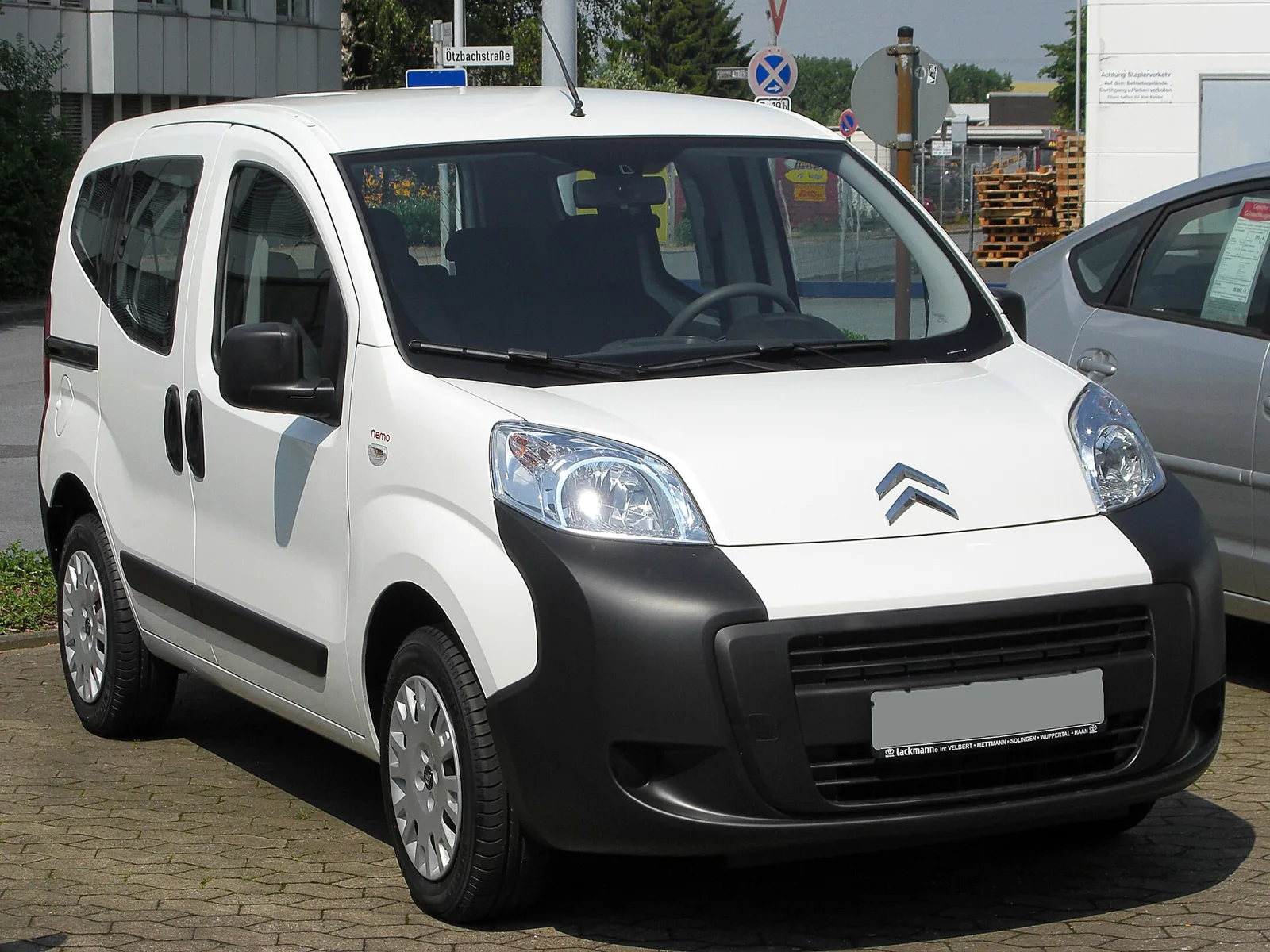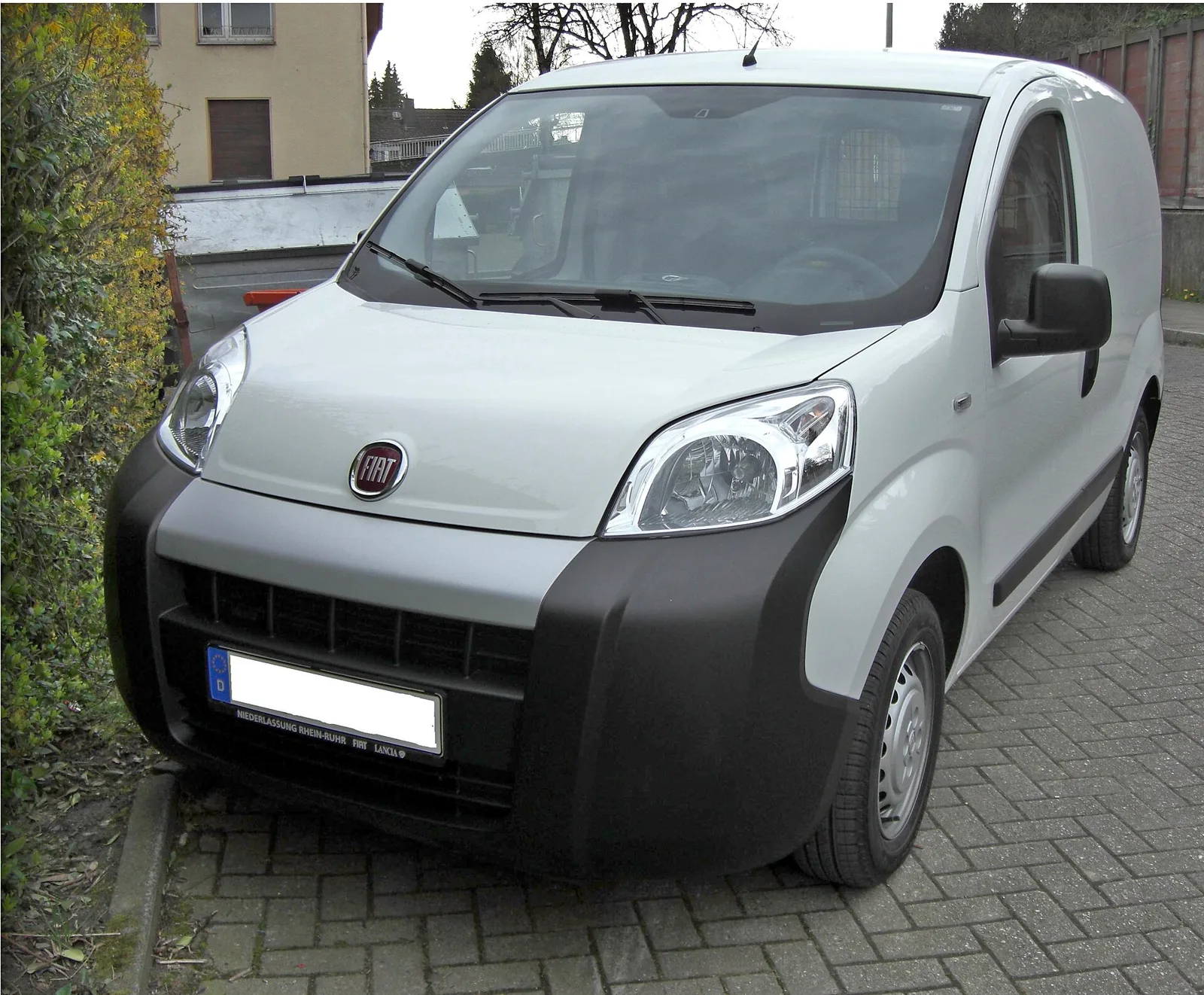
Fiat's Fiorino and Ford's Fiesta-based Courier van went head to head for European van buyers, but the two families followed very different routes.
The Fiat Fiorino grew out of a 1977 Fiat 127 van and lasted decades in several markets. Ford's Courier was a Fiesta-based European van from 1991 to 2002, rated at 590 kg, and the two are weighed here on engines, payloads, sales and successors.
The Fiat Fiorino and the Ford Courier were both small commercial vehicles, and in Europe in the early 1990s they competed for the same van buyers. The Fiorino was a Fiat design from 1977 that grew into a long-running family of vans and pick-ups. The Courier was a Ford van built on the Fiesta's platform, which Ford sold in Europe until 2002.
Where did the Fiorino and the Courier come from?
The Fiorino began in 1977 as a panel van derived from the Fiat 127, and its name comes from an old Italian coin called the fiorino d'oro. The Courier name dates back to the early 1950s, but the European van of that name arrived in June 1991 on a Fiesta-based platform.
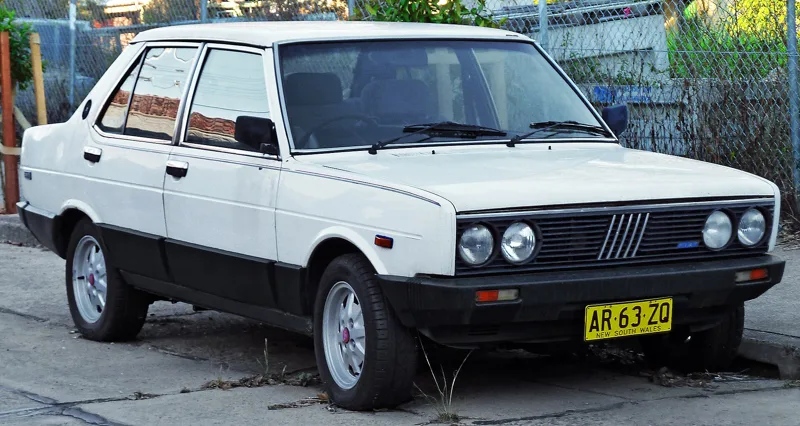
The first Fiorino was launched in early November 1977 as a panel van with the 903 cc inline-four petrol engine from the 127. Its platform was a stretched version of the Brazilian 147, with a different rear suspension, so the design already had a South American link from the start.
The Courier van was a different sort of product. It was a B-segment, car-derived van with a front-engine, front-wheel-drive layout, and it was first based on the Mark III Fiesta, introduced in 1989, before moving to the Mark IV in August 1995. Its longer wheelbase and torsion bar rear suspension set it apart from the car it came from.
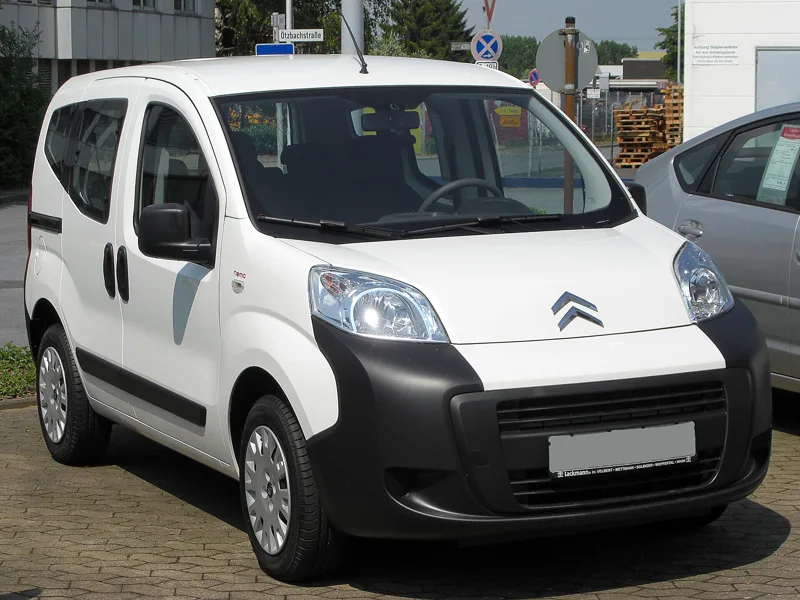
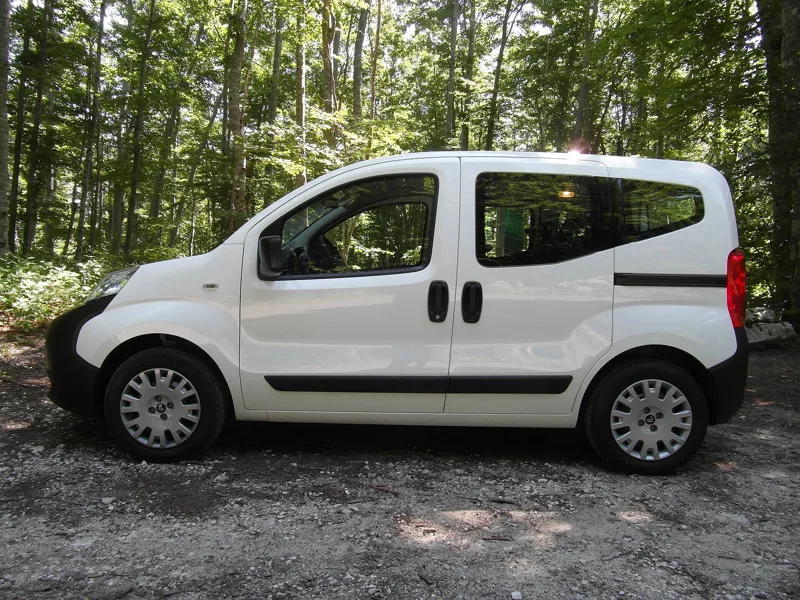
The Fiorino's third generation, unveiled in October 2007, shares its body and architecture with the Citroen Nemo and Peugeot Bipper through the Sevel joint venture between Fiat and PSA Peugeot Citroen. It is built by Tofas in Bursa, Turkey, and sits below the larger Doblo, Berlingo and Partner in the model lines.
Two small vans built to a similar job, one a Fiat family that ran for decades and one a Fiesta-based Ford that lasted little more than a decade in Europe.
How did the vans compare on body and size?
The first Fiorino used a high-cube van body about 1.3 metres (4 ft 3 in) tall, a layout that several other European automakers later copied. The Courier van measured 4,115 mm long, 1,650 mm wide and 1,835 mm tall, with a curb weight of 1,700 kg.
For right-hand drive markets the early Fiorino kept the original 127 underpinnings and design. Those cars were built by Bertone, which also assembled other Fiat models, until late 1987, and they used the original 127 front end.
The second generation arrived in 1987, based on the Brazilian Fiat Duna, and it came as a panel van, a Panorama passenger van or a pick-up. Phase II in 1992 brought styling inspired by the Fiat Tipo, and phase III in 1994 moved the van onto the Fiat Mille platform with a longer wheelbase and single side windows.
The Courier van came in two forms: a two-seat cargo version and a five-seat passenger model sold as the Courier Kombi. Every unit had a five-speed manual gearbox, and the vans were built at Dagenham in England and Cologne in Germany.
Production locations also split the two families. The first Fiorino was assembled at Mirafiori in Turin from 1977 to 1981, after which European production moved to the Minas Gerais plant in Brazil. The Courier, by contrast, was built only in its two European factories during its life as a van.
Which engines did the two vans use?
The first Fiorino started with a 903 cc OHV four-cylinder petrol engine, later joined by a 1050 cc OHC unit and a 1301 cc SOHC diesel from 1981. The Courier van offered a 1.3-litre OHV petrol or a 1.8-litre OHC diesel, and from 1999 to 2002 the diesel could be ordered as a turbo version with 75 PS.
The second-generation Fiorino used the 1301 cc Fiasa petrol engine, producing 50 kW (68 hp), and a 1.7-litre diesel that made 44 kW (60 hp). After the phase II work, the diesel lost two horsepower to 43 kW (58 hp) through a new induction system and injector pump, which made it smoother and cleaner.
The Courier's European diesel produced 60 PS (44 kW) at 4,800 rpm, with maximum torque of 110 Nm at 2,500 rpm. Its claimed top speed was 84 mph (135 km/h), and no acceleration figure is available for that version.
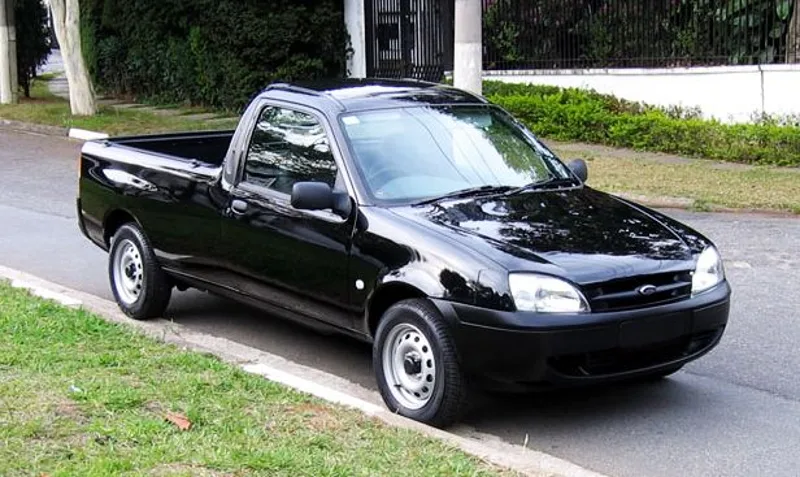
Brazil took the Courier name in a different direction. The Fiesta-based coupe utility used the Endura 1.3-litre engine and the 1.4-litre Zetec-SE until 1999, then the 1.6-litre Zetec Rocam from 2000. The 1.6 Mk V model reached 180 km/h (112 mph) and accelerated from 0 to 100 km/h in 10 seconds.
How much could each van carry?
At its launch in Brazil, the Fiorino was rated for a payload of 420 kg (926 lb). The phase III one-litre model raised that to 500 kg (1,102 lb), and the Fiorino also appeared as a camper through Fiat's Ognitempo kit in Europe.
The Courier van had a capacity of 590 kg, which put it in the same class as the competing Fiat Fiorino and the Renault Express. Every unit came with the five-speed manual gearbox, so buyers chose between the cargo and Kombi bodies rather than between transmissions.
In the Brazilian coupe utility, the load capacity was 700 kg (1,543 lb). That figure reflects the coupe's role as a light working vehicle rather than the van's cargo focus, and it is the number that matters most for buyers comparing the two families in South America.
How did each van change through its facelifts?
The Fiorino was updated several times. The 1985 facelift added a five-speed manual, the 1992 phase II brought Tipo-inspired styling, the 1994 phase III moved to the Mille platform and the 2004 phase IV adopted the Doblo front. The Courier van's main changes were its move to the Mark IV Fiesta in 1995 and a 1999 facelift with three different front ends.
The 1985 Fiorino update also took Fiat's five-bar grille and the wing mirrors from the Ducato. Phase III kept the front almost unchanged at first, but the gas cap now sat behind an integrated flap, and European diesels gained exhaust gas recirculation to meet new emissions rules.
The Fiorino's later European updates were smaller. The grille changed in 1997, a new front arrived in 2001, and the five-bar logo was replaced with a wreath-style logo in 2002. A 2009 update added a red Fiat logo to the front.
The Courier's changes were fewer but still significant. From 1999 to 2002 a 1.8-litre turbo-diesel was available for better performance, though only in 75 PS low-boost form, and the 90 PS intercooled version fitted to the Escort van never reached the Courier.
Production of the Courier van ended in August 2002. The Ford Transit Connect, based on the Focus, replaced both the Courier and the Escort van in September 2002, and the Courier name returned in 2013 on a Fiesta-based Transit Courier built in Turkey.
What was the wider Courier family?
The Courier name had a long history before the European van. From 1952 to 1960 it was used for the sedan delivery version of the full-size Ford line, and from 1972 it was applied to a compact Mazda-built pickup sold worldwide. That pickup was the first product marketed jointly by Ford and Mazda.
The Mazda-based Courier came with a 1.8-litre overhead-cam engine producing 74 hp (55 kW), a four-speed manual as standard and a 1,400 lb (635 kg) load rating. Ford replaced the pickup in North America with its own Ranger from 1983, while the nameplate continued in other markets.
A sport utility called the Ford Raider was based on the third-generation Courier pickup and sold from 1991 to 1997. The Brazilian coupe utility, which used Fiesta mechanics, ran through 2013, and the Courier name then went quiet until the Transit Courier appeared.
How well did each van sell?
The Fiorino was a commercial success, with more than 250,000 sold in Europe by the end of 2000 and over one million sold in South America. The Courier van's European sales figures are unavailable here, so a direct sales comparison is not possible.
In Brazil, the Fiorino led its segment for 23 consecutive years. A total of 981,922 Fiorinos were built at Betim, of which 775,620 were Cargo and Panorama vans and 206,302 were pick-ups, and production ended in December 2013.
The Fiorino stopped being imported to the UK in 2001, a year after production for European export had ended. The Courier pickup's Brazilian production moved to Sao Bernardo do Campo in Sao Paulo state, starting in May 2002.
Which van suits which buyer?
A buyer who wants a long-established high-cube van with a wide family of bodies and a strong record in South America will find the Fiorino easier to match. A buyer who valued a Fiesta-derived van with a Ford badge and a five-speed manual on every unit may prefer the Courier.
On the facts given, neither van is clearly better. The Fiorino offers a wider range of body styles, from van to passenger model to pick-up, and it had the longer production run in Europe. The Courier van offers 590 kg of capacity and a five-seat Kombi option, which suits buyers who need a passenger version.
Buyers who wanted a pick-up had a different story. The Mazda-based Courier from 1972 covered that ground in many markets, while the Fiorino's pick-ups were sold mainly in Brazil, where over three quarters of production stayed at home.
Side-by-side comparison
| Point | Fiat Fiorino | Ford Courier |
|---|---|---|
| Origin | Fiat 127-based van, launched 1977 | Fiesta BE-2 platform van, launched in Europe June 1991 |
| Body styles | Panel van, Panorama passenger, pick-up | Two-seat cargo van and five-seat Kombi |
| Petrol engines | 903 cc, 1050 cc and 1301 cc Fiasa; 1.4 Tipo later | 1.3-litre OHV |
| Diesel engines | 1.7-litre, 44 kW (60 hp); 43 kW (58 hp) after phase II | 1.8-litre, 60 PS (44 kW) |
| Payload or capacity | 420 kg at launch in Brazil; 500 kg on the one-litre model | 590 kg |
| Top speed | Not given | 84 mph (135 km/h) claimed for the 1.8 diesel |
| Production | 981,922 built in Brazil | Not given |
| Successor | Third generation, unveiled October 2007 | Ford Transit Connect from September 2002 |