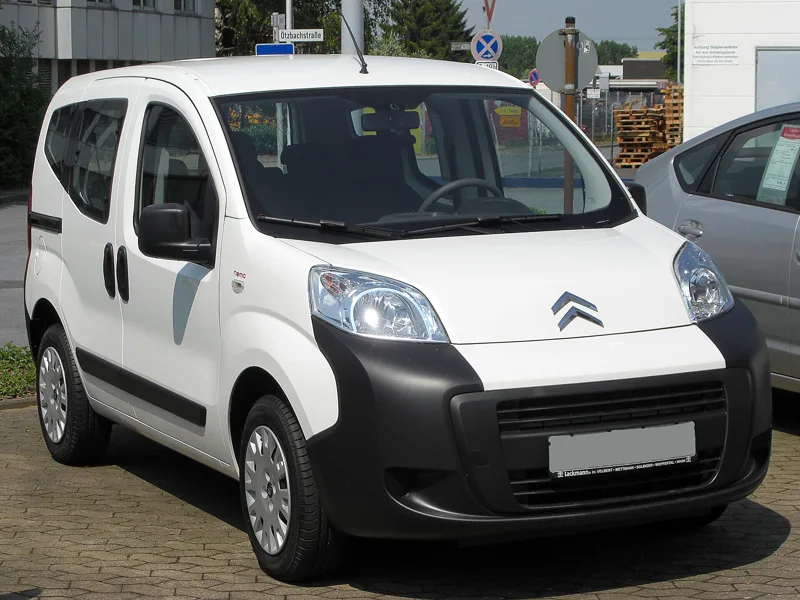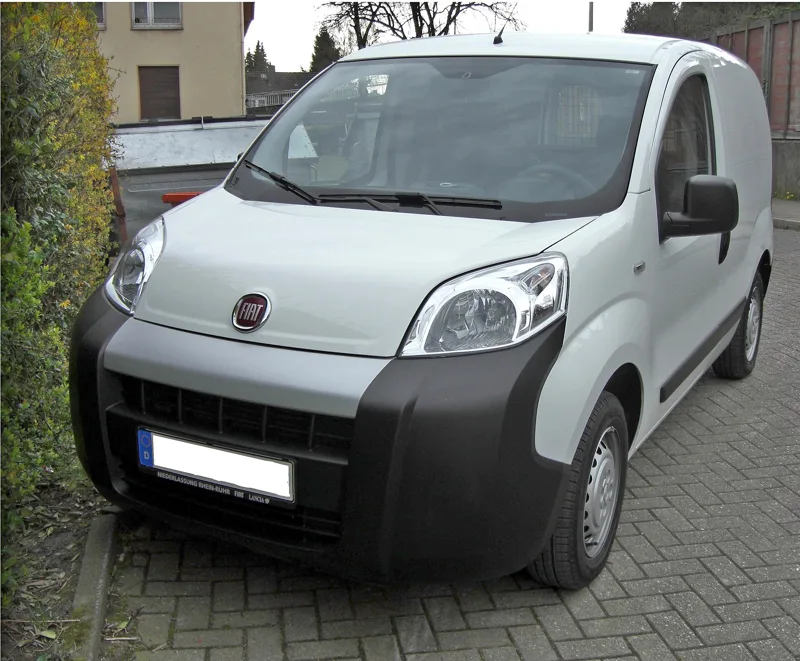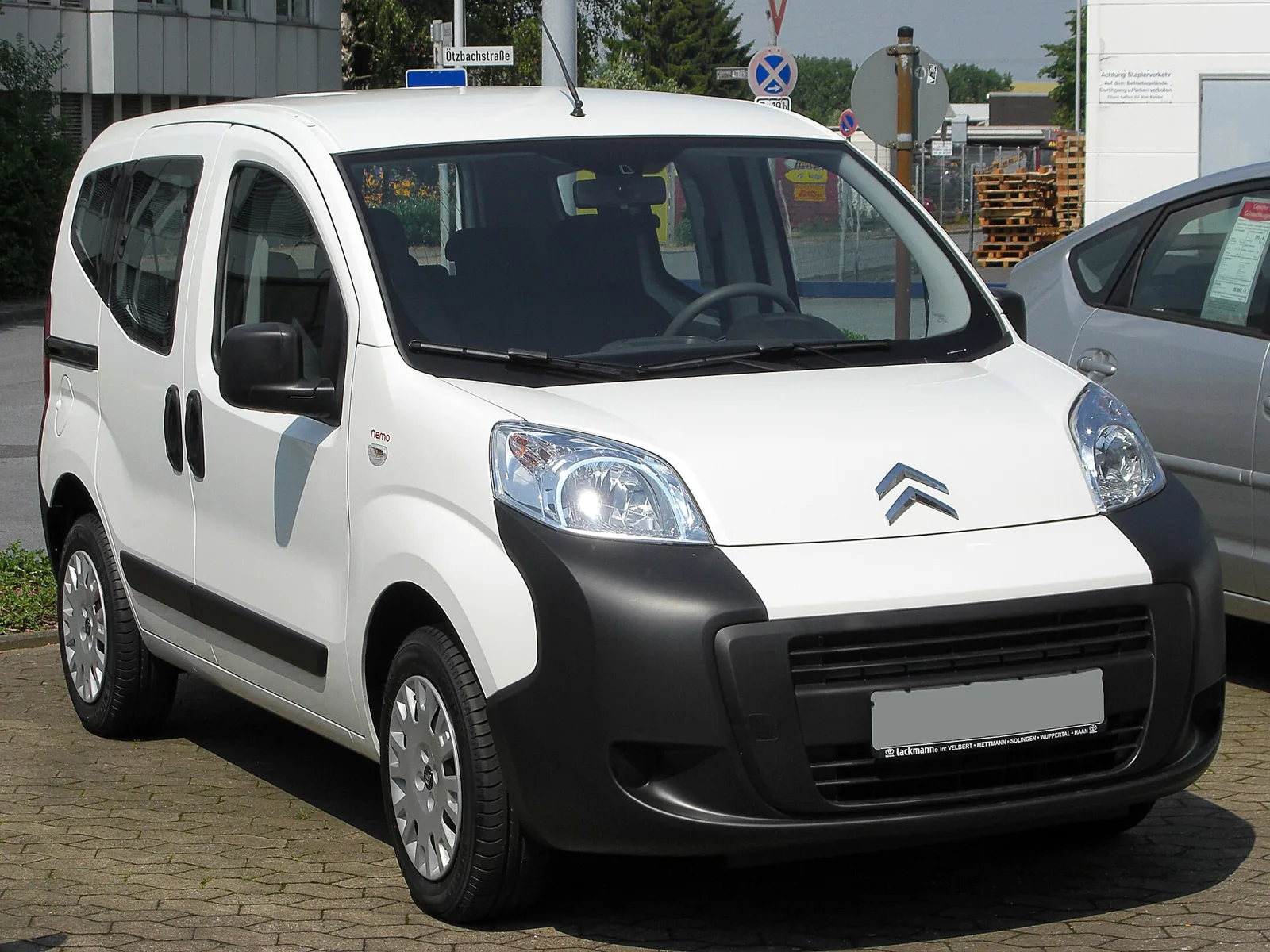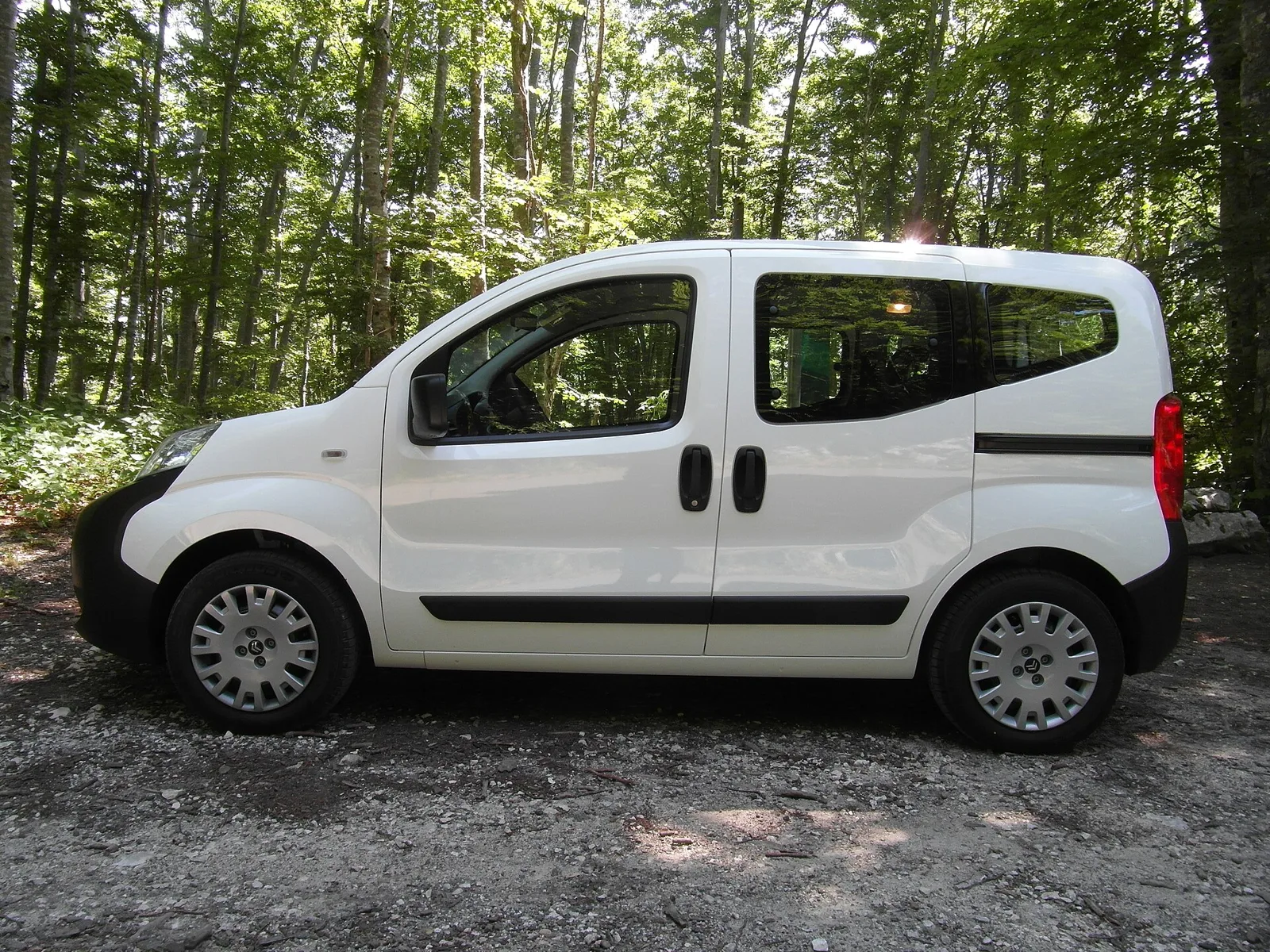
A Fiorino-based people carrier from Tofas in Turkey, sold beside Peugeot and Citroen twins and due to leave European sale in July 2024 under the GSR2 regulation.
Built by Tofas in Turkey as the passenger derivative of the Fiorino van, the Qubo was sold from June 2008 beside Nemo and Bipper twins. Its 1.3 diesel made 75 PS (74 hp), and sales in Western Europe ended after early 2020.
The Fiat Qubo was the passenger-car derivative of the Fiorino van, built by the Turkish subsidiary Tofas and sold from June 2008 beside the Citroen Nemo and Peugeot Bipper. Its 1.3 Multijet diesel produced 75 PS (74 hp), and in Western Europe the model was no longer sold after early 2020.
The programme went by the name MiniCargo, and Tofas held all of its engineering rights. Fiat Professional began selling the van in December 2007, and the two French makers followed in February 2008, each through its own network.
Where did the Qubo come from?
The Qubo grew out of a cooperation agreement signed on 31 March 2005 between Fiat, PSA and Tofas. Tofas, Fiat's Turkish subsidiary, opened its Bursa production line on 3 October 2007, when Sergio Marchionne, Christian Streiff and Mustafa V. Koc inaugurated it.
Tofas is the largest car maker in Turkey, and Fiat Group and Koc Holding each own half of it. The van was presented in Milan at the Transpotec-Logitec show on the same day, and it revived the Fiorino name of a 1977 ancestor.
A Fiorino with a passenger cabin, built in Turkey and sold under three badges.
What platform and engines did the van use?
The van was developed on a shortened Fiat Grande Punto platform, and it used Italian engines. The diesel was the Fiat 1.3 Multijet, a 1,248 cc 16V unit that already powered many Fiat models and rivals such as Opel and Suzuki. PSA joined the list of users from 2011.
Power ranged from 75 PS (74 hp) up to 95 PS (94 hp), with 85 PS (84 hp) in between, and these outputs were offered from September 2010. Diesel models claimed 4.5 L/100 km (63 mpg-imp), with CO2 below 109 g/km. Those versions accounted for more than 90% of sales in the years when a petrol option existed.
How big was the Qubo?
The Qubo was a small people carrier that sat below the Fiat Doblo in size. It was the passenger-car version of the Fiorino, a name that dated back to a 1977 ancestor.
Across all makes, the Qubo had the highest level of equipment. Its kit included body-coloured bumpers, four airbags, electric mirrors and a CD MP3 radio as standard. A choice of tailgate or hinged doors was offered, and fog lamps and a spare wheel were included.
Air conditioning was part of the package. Optional extras included a robotised gearbox, a reversing radar and Blue and Me Bluetooth, and ESP has been standard since 2011.
What changed when the Fiorino III was updated in 2016?
A second-phase Fiorino III came out in April 2016, with a new horizontal-bar grille and fog lamps relocated low on the bumpers. Inside, the steering wheel, gear lever and instruments were new, and a 13 cm touchscreen added Bluetooth and GPS navigation.
The Fiat version was facelifted that year and carried on until July 2024. Both the Fiorino 3 and the Qubo stayed in production, and both were fully renewed.
Was there an electric version of the Fiat van?
An electric version was shown alongside the petrol and diesel models, with a motor of 30 kW (40 hp). Fiat Professional presented it in the same way as its other commercial vehicles. An Italian company built it externally, and French sales began in February 2009.
How did the Bipper and Nemo fit beside the Qubo?
The Peugeot Bipper replaced the Partner Origin, the first-generation model that Peugeot had kept selling when the Partner II arrived. Its private-buyer version is called the Bipper Tepee, and Peugeot kept selling the first generation under the Partner Origin name until the Bipper took its place.
The Citroen Nemo succeeded the C15, a model first sold in France in 1984, and it extended the range downwards, alongside the Berlingo. Renault had dropped its equivalent after the Express ended in 2000, so the Nemo had no rival until the shortened Kangoo arrived in autumn 2008.
Sales of the Bipper and Nemo ended on 13 April 2016, while the Fiat version stayed on sale until July 2024.
What were the Nemo's selling points?
Like the Qubo and the Bipper, the Nemo had a few advantages. Its simple design let it offer commercial-vehicle features, and it had a compact body and a front passenger seat with several configurations.
- A compact exterior and good manoeuvrability, with a turning circle of 9.95 metres between kerbs
- A simple design that allows commercial-vehicle features
- A passenger seat that offers several configurations
What was the Nemo's ADAC test?
The German motoring club ADAC tested the Nemo, and it turned over on the road at the first bend. The Mercedes-Benz A-Class had suffered a similar fate at its own troubled launch.
To answer the bad publicity, PSA added ESP as an option from October 2010. The system had been out of reach on its models until then, although the twin Fiat Fiorino III came with it as standard.
Which trims and engines did the Nemo offer?
The Nemo came in two trims at first: the Tentation for entry-level buyers, from 11,480 euros, and the Multispace at the top, from 12,630 euros. Each trim had its own equipment list and its own options.
The Tentation came with a driver airbag, an immobiliser that works through a transponder, a tachometer, hydraulically assisted steering and tinted windows. Its rear doors were 60/40 asymmetric, and a glazed sliding door sat on the right-hand side.
Options on the Tentation cost 300 euros for metallic paint, 150 euros for a passenger airbag, 150 euros for a rear wiper with a heated rear window, 230 euros for a comfort pack, 60 euros for radio pre-equipment and 450 euros for a CD radio with MP3 and 4 speakers.
The Multispace added a removable boot light, a hard parcel shelf, an ashtray and lighter that can be removed, and a passenger airbag. Its options list was longer, with side airbags at 240 euros, fog lamps at 150 euros, a driving pack at 540 euros, manual air conditioning at 970 euros and a Bluetooth system at 690 euros.
Both trims used PSA engines: a 1.4i petrol of 73 PS and a 1.4 HDi of 70 PS, each with a manual gearbox. In December 2010 PSA dropped the petrol engine and replaced the diesel with the Fiat 1.3 MultiJet of 1,248 cc, which meets Euro 5 standards. The change was made to comply with the European Euro emissions rules.
What were the Nemo's passenger and XTR versions?
The Nemo Combi added a rear bench for five passengers and a boot of 356 litres, rising to 884 litres with the seats folded. The bench splits 1/3 to 2/3 and comes out with a handle under each section, allowing two, three, four or five seats.
With the rear bench removed, the boot grows to 2,500 litres (2.5 cubic metres). The Combi later became the Nemo Multispace, and its SUV-style version was the XTR, echoing the C3 XTR.
What were the Bipper Outdoor and Trek versions?
The Bipper Tepee Outdoor option pack raised the suspension by 15 mm and added larger sill protectors, 185/65 R15 tyres, an underbody plate, a trim strip for the lower front bumper and front and rear mud flaps. It also came with a floor covering that can be washed.
An all-terrain version, the Trek, was offered through an approved converter. It did not have four-wheel drive, but it raised ground clearance to 20 cm, added an engine undershield and offered a limited-slip differential as an option. The Citroen equivalent carried the Nemo Trek name.
When did the Qubo leave European sale?
Western European sales of the Qubo stopped in early 2020, and the Fiorino alone remained on sale there. The passenger version kept selling in other markets such as Turkey, and the Fiorino van was the only model still offered to buyers in Western Europe.
The Fiat version is set to leave European showrooms for good in July 2024, under the GSR2 rules.
What happened to the PSA alliance after 2016?
PSA did not renew its partnership in this segment with Tofas and Fiat in 2016. Its replacement vans were built from 2018 in Vigo, carrying the group's new brand, Opel.
Since 2018 FCA has also sold a Fiorino clone under the RAM brand in Chile, exported from the Turkish Bursa plant as the RAM V700 City. In February 2022 Fiat adopted a new logo at the front, and the older badge was kept elsewhere on the vehicle.