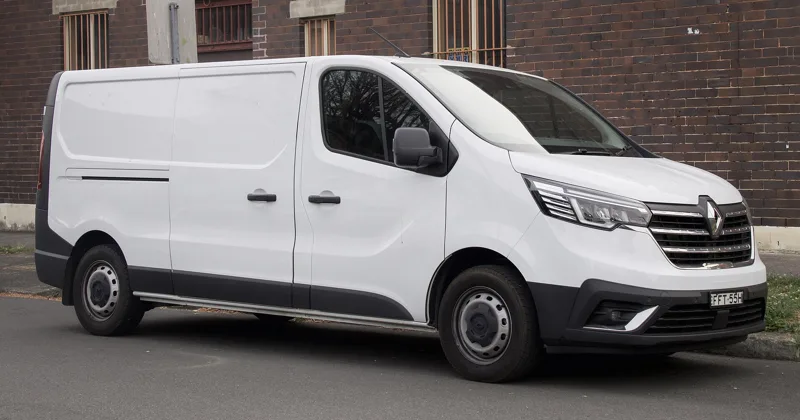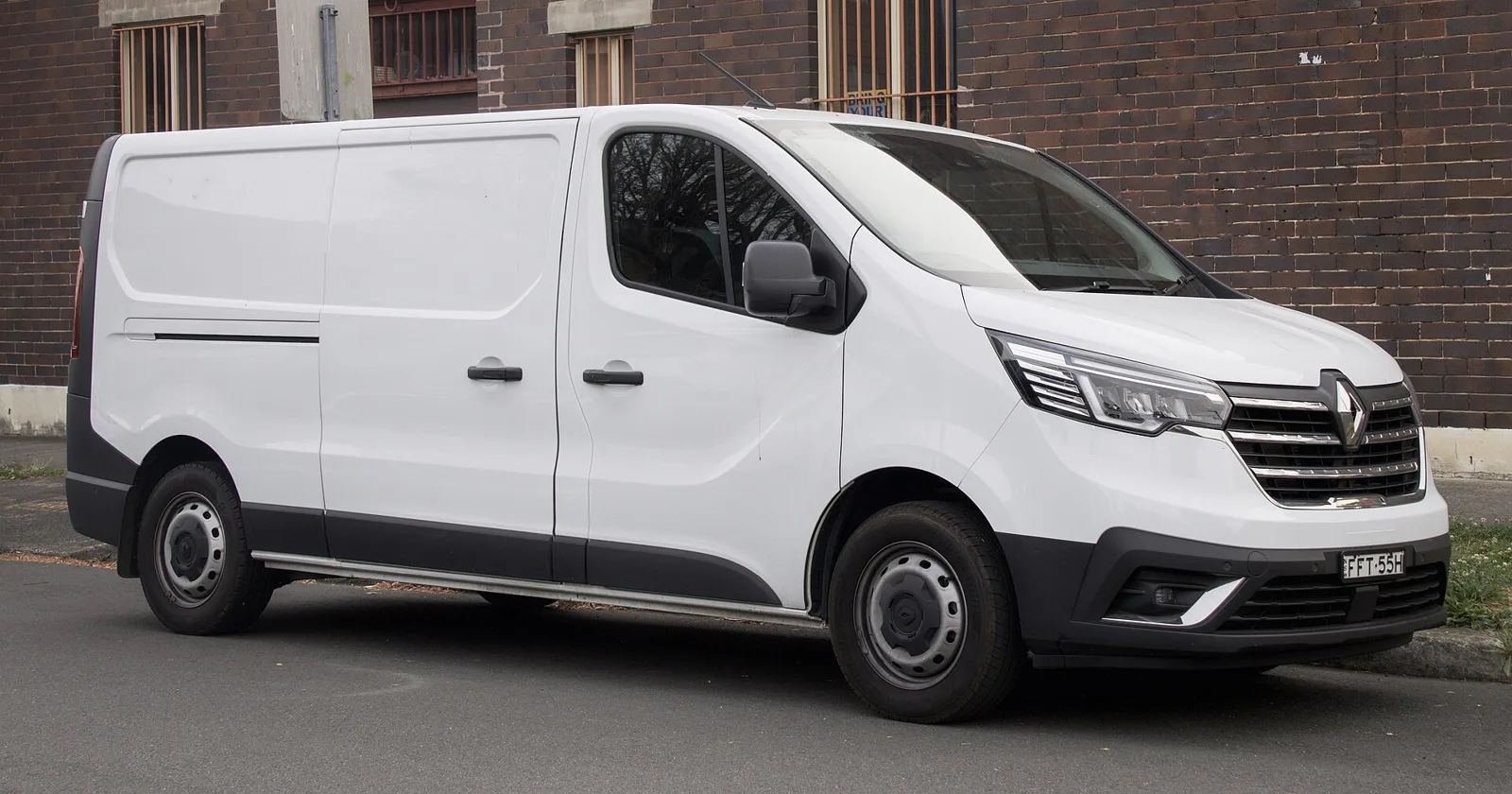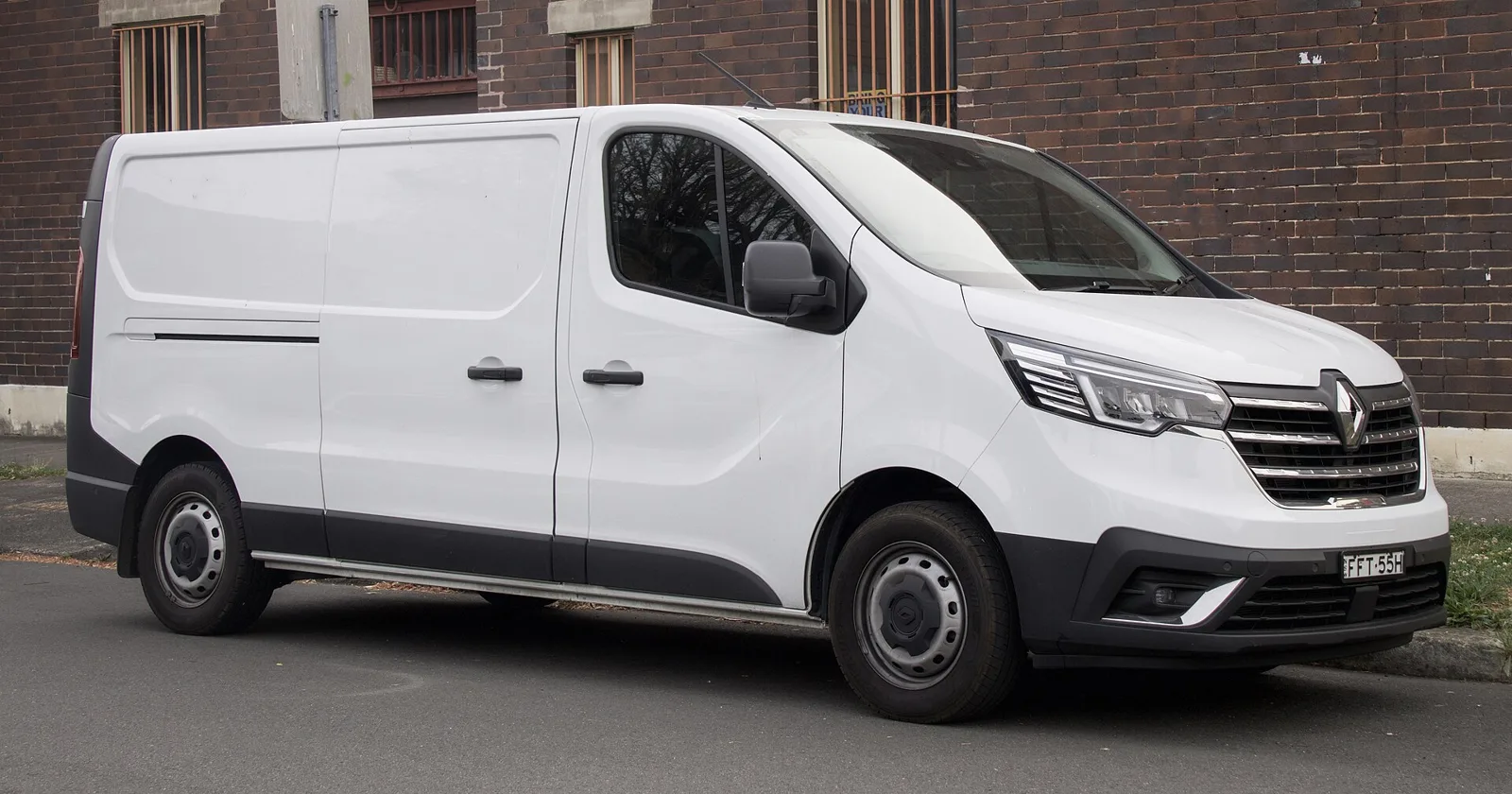
Built at Sandouville from 2014, the Trafic III was sold under several other names, and an electric version was presented in 2022 for the market from 2023.
The Renault Trafic III was a light commercial vehicle marketed from 2014 and built at Sandouville in France, sold as a minibus or fitted van. Nissan, Opel, Vauxhall, Fiat and others sold rebadged versions, and Renault Trucks sold its own Trafic III Red. An electric Trafic was due from 2023.
The Renault Trafic III is a light commercial van that Renault began selling on 29 October 2014, offered as a 7 to 9-seat minibus or a fitted van. It was built at Sandouville in France, and other carmakers sold their own versions of it. An electric Trafic Van E-Tech was presented in 2022 for the market from 2023.
Which brands sold the Trafic III under their own names?
Nissan sold the NV300 and then the Primastar from 2016, Opel and Vauxhall sold the Vivaro B from 2014 to 2019, Fiat sold the Talento II from 2016 to June 2020, and Mitsubishi sold the Express in Australia from 2020 to 2022. Renault Trucks has sold the Trafic III Red since 2022.
Vauxhall, Opel's British sister company, built the right-hand-drive Vivaro B versions without a raised roof at the former GM plant in Luton, England, until 2019. The raised versions, known as H2, were made by Renault at Sandouville for both brands, as were the left-hand-drive Vivaros.
The Talento II name borrowed the short version of the first-generation Fiat Ducato, which carried the Italian brand's habit of naming vans after an old coin. The Fiat partnership was broken off after the French government refused to approve a Fiat-Renault merger. That refusal led to the FCA and PSA rapprochement and the creation of Stellantis, and production of the Talento II ended in October 2020.
Nissan replaced its first-generation Primastar with the NV300 once that older van left production at the end of 2016, two years after the Trafic III launched. Sandouville supplied the left-hand-drive and raised NV300s, and Luton supplied the low-roof right-hand-drive ones until 2019.
At the end of 2018 PSA, the new owner of Opel and Vauxhall, announced that its partnership with Renault for the Vivaro B was over, and that a new version arriving in 2019 would be based on Citroen's own Jumpy-Dispatch and Peugeot's Expert. Mitsubishi sold the car in Australia and New Zealand as the Express from 2020, under the newly created Renault-Nissan-Mitsubishi Alliance.
The Mitsubishi Express earned zero of five stars in Australian crash tests, known as ANCAP. Its sales ended two years later.
From 2022 Renault supplied its Trafic to Renault Trucks, which is owned by Volvo AB. Renault Trucks sells it through its own dealer network alongside its heavy lorries, and launched it with a Red Edition special series.
Renault wanted the Trafic to feel less like a utility and more like a saloon, without losing its practicality.
What changed in the 2019 and 2020 facelifts?
Renault announced a facelift of the Trafic III in April 2019, with a new LED light signature and full LED headlights as standard. A second phase was presented in November 2020, first as the passenger version, with a C-shaped LED signature, a redesigned grille and bumper, a flatter bonnet and an 8-inch Easy Link touchscreen.
The clones did not follow the 2019 changes. Fiat Professional, Mitsubishi Motors, Opel, Vauxhall and Nissan kept the older styling, consumption improvements and equipment, leaving the Talento II, Express, Vivaro B and NV300 without the update.
The Easy Link screen supported Android Auto and Apple CarPlay, each available with a cable or wirelessly. A wireless smartphone charger was offered as an option across the range, and it came as standard on the restyled SpaceClass.
Renault dropped the raised short-wheelbase L1H2 versions in summer 2021, across Renault, Nissan and Renault Trucks, after sales for that body variant proved very poor. Nissan restyled the NV300 in February 2021, and its passenger version was renamed Primastar in September 2021.
The utility version of the Trafic received its own restyle in September 2021. Since July 2024, under the GSR2 safety regulation, every Renault and Renault Trucks Trafic has carried the new Renault logo, and every Nissan Primastar the new Nissan logo.
What was the Trafic SpaceNomad?
The SpaceNomad is a fitted van version that was launched in France in July 2022. It has a raising roof that adds two extra berths, USB sockets, reading lights and solar panels on the Iconic trim. Renault also offers a 49-litre fridge, a kitchenette and a side awning.
Sandouville builds the vehicle, but the fitting work is done at Angers by the company Pilote. Renault Pro+ converts the Trafic III at the Qstomize site in Heudebouville, Normandy, including stickers, body cut-outs and vehicles adapted for people with reduced mobility.
Where was the Trafic III built and converted?
Sandouville in France built the Trafic III, plus the left-hand-drive and raised versions of the clones. Luton in England built the right-hand-drive versions without a raised roof for Vauxhall until 2019. Converters then added the stickers, body cut-outs and van fittings that made each model a finished vehicle.
Fiat Professional carried out the conversions for the Talento II in Italy. The Fiat Professional conversion sites now convert models sold by all the Stellantis brands, as well as the European vans of the Japanese clone from Toyota.
Is there an electric Trafic?
The Trafic Van E-Tech is the fully electric version, presented at the 2022 Hanover show and due on the market from 2023. It uses a 90 kW (122 PS; 120 hp) motor and a 52 kWh battery, with claimed ranges between 240 km and 305 km depending on the body.
The claimed ranges are 297 km for the L2H1 van, 240 km for the L2H2 van, 285 km for the chassis cab, 265 km for the L2H1 deep cab, 275 km for the L1H1 deep cab and 305 km for the L1H1 van. Only the fully electric chassis cab could be had with an automatic gearbox.
The same drivetrain was studied for the third-generation Kangoo, and Renault, Nissan and Mercedes-Benz were named as possible users. From autumn 2024 a 7-inch digital instrument cluster came as standard on all electric versions and high-end models, and optional on some entry-level ones.
A faster-charging variant with a larger battery and more power was under study, as was an electric Primastar II at Nissan.
Other electric body variants were still under study: the raised H2 versions in two lengths, the Combi Passenger and SpaceClass in two lengths, and a fast-charge variant. The 7-inch digital cluster was optional on entry-level passenger versions, entry-level thermal vans and Deep Cabs, the thermal chassis cab and the raised H2 van, and it was not offered on camping and leisure versions.
What were the Trafic III's key specifications?
The Trafic III came in several body lengths and heights, with load volumes from 5.2 cubic metres to 8.6. The electric version added a 90 kW motor and a 52 kWh battery, and its claimed ranges run from 240 km to 305 km. The L2 length also took long loads up to 4.15 m (13.6 ft).
| Specification | Figure |
|---|---|
| Electric motor | 90 kW (122 PS; 120 hp) |
| Battery | 52 kWh |
| Range, L2H1 van | 297 km |
| Range, L1H1 van | 305 km |
| Range, L2H2 van | 240 km |
| Range, chassis cab | 285 km |
| Load volume | 5.2 m3 (L1H1) to 8.6 m3 (L2H2) |
| Long-load hatch under passenger bench | Up to 4.15 m (13.6 ft) in L2 |
| Digital instrument cluster | 7-inch, standard on electric versions |
| Seats in minibus versions | 7, 8 or 9 |
What were the main technical changes?
Compared with the Trafic II, the exterior changes were mostly at the front, with its grille, logo and imposing optics, and the door handles became horizontal. Inside, the cabin was designed to connect smartphones, tablets and laptops, controlled by an optional 7-inch touchscreen with R-Link or IntelliLink.
Hands-free access and starting were optional on several versions, and they became standard on high-end trims of all body styles from July 2024. Renault calls the system Carte Mains Libres. A reinforced traction mode for soft ground came as standard, named Extended Grip at Renault, Renault Trucks and Nissan, and IntelliGrip at Opel and Vauxhall.
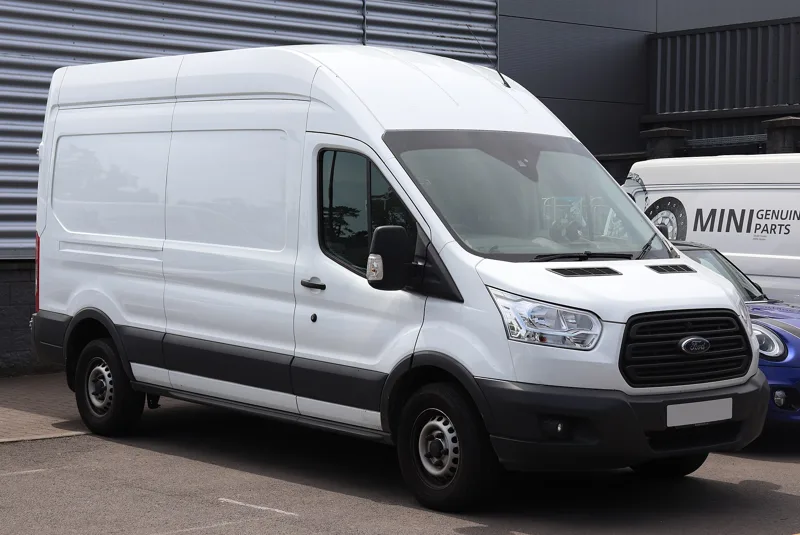
A hatch in the partition lets long objects run beneath the passenger bench, reaching 4.15 m (13.6 ft) in L2. The Ford Transit Custom has a similar hatch.
Did the Trafic III win praise?
The Trafic III won L'Argus van of the year in 2015, ahead of the Ford Transit 2T and the Opel Vivaro II. The van is recognised above all for its load-carrying ability, and its cabin is much appreciated for storage and ergonomics. Its load volumes ran from 5.2 m3 in L1H1 to 8.6 m3 in L2H2.
On the road L'Argus found it convincing, comfortable and pleasant to handle. Renault's attempt to make the Trafic feel more like a saloon, while staying practical, seems to have worked.
Which trims and special versions existed?
Renault offered the SpaceClass, a very exclusive, high-end minibus variant, plus a Sport+ pack for the utility Trafic in England. Opel and Vauxhall sold rebadged Tourer and Life versions, and Fiat sold a Lounge pack on its Talento Combi.
- SpaceClass: the very exclusive, high-end minibus variant.
- Tourer: a pack for the Vivaro Combi, with an optional retractable table and swivel seats.
- Life: a rear bench that can be made into a bed, or set up as a VIP lounge with a pull-out table and swivel seats.
- Red Edition: a launch special series for Renault Trucks.