A budget city car launched in India in 2015, later rebuilt for Brazil, and spun into an electric family that reached Europe as the Dacia Spring.
Renault's Kwid started life in India in 2015 as a small crossover city car, then gained extra safety equipment for Brazil in 2017. Its electric twin, the City K-ZE, went on sale in China in 2019 and reached Europe as the Dacia Spring.
The Renault Kwid is a small crossover city car that Renault launched in India in 2015, then rebuilt for Brazil in 2017. Its battery electric sibling, the City K-ZE, reached China in 2019 and became the Dacia Spring in Europe. A 2026 facelift has now reworked the Indian range.
Where did the Kwid come from?
The Kwid was developed under the project code BBA and became the first car built on the CMF-A platform that Renault and Nissan share. Its engineering team in India was led by Gerard Detourbet, and Carlos Ghosn unveiled the car at Chennai on 20 May 2015.
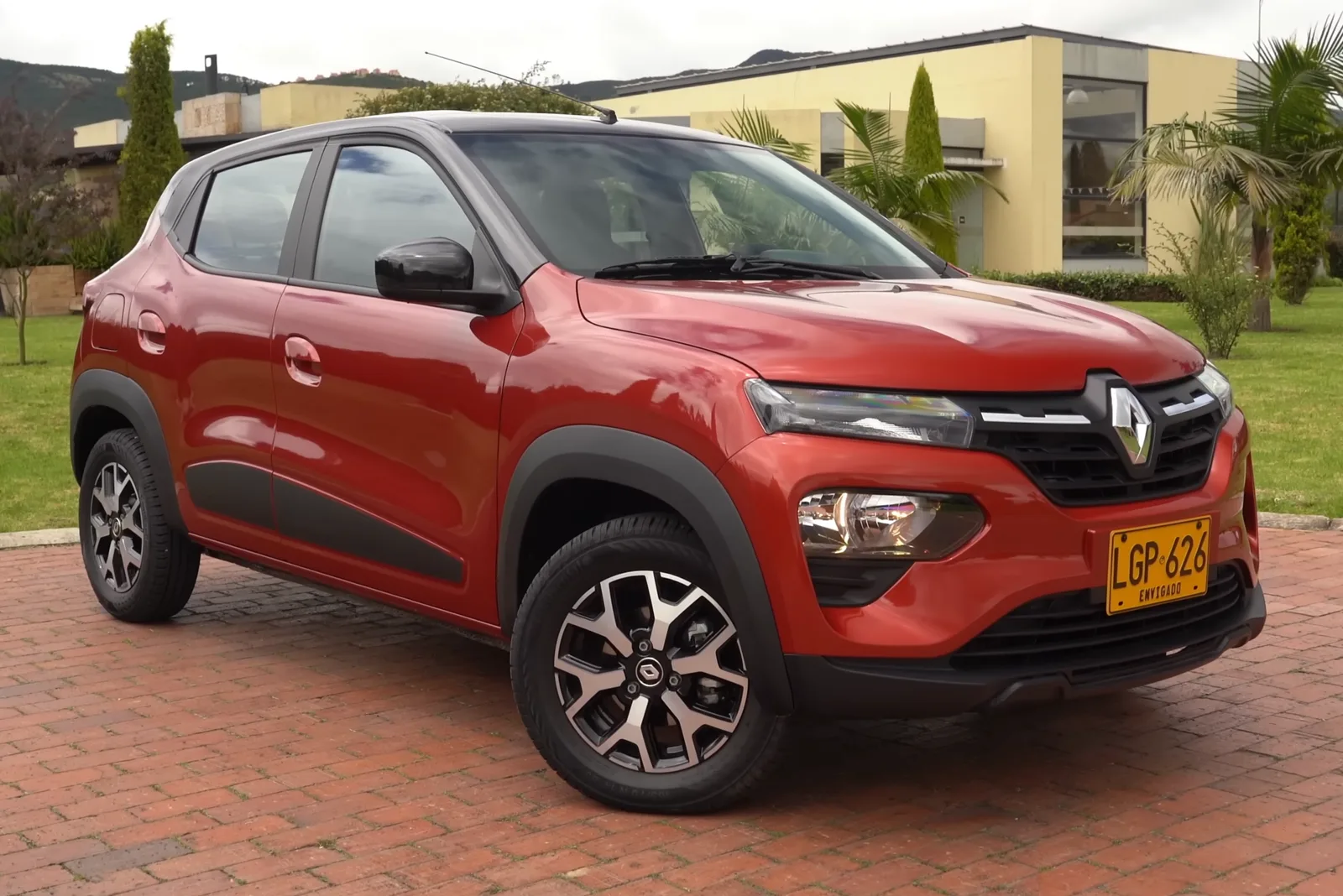
The Kwid sits slightly longer but narrower than the Twingo, Renault's smallest conventional model. It has a high seating position and a 180 mm (7.1 in) ride height.
Renault used 98 per cent localised parts for the Indian car, and it was aimed squarely at the Suzuki Alto and other small cars. Buyers got a digital instrument cluster and a multimedia touchscreen, equipment that was uncommon for the segment. Ghosn described the car as a turning point for Renault in India.
A budget city car that became the template for a whole electric family, from Chennai to Europe.
How did the Indian launch perform?
The Indian Kwid went on sale in September 2015 from 257,000 rupees, equal to $3,884. Bookings reached 25,000 in two weeks, 50,000 in five weeks and 70,000 in two months, which translated into about 10% effective market share in its segment.
The launch engine was a 799 cc three-cylinder rated at 40 kW (54 hp) and 72 Nm (53 lb ft), paired with a five-speed manual. The Financial Express described the 300-litre boot as the most voluminous in its class, and it rated fuel economy at 3.973 l/100 km (25.17 km/L), or 59.2 mpg-US.
Indian-built cars were exported to Sri Lanka, Indonesia, Tunisia and Sub-Saharan Africa. In August 2016 the range gained a more powerful 999 cc 1.0-litre engine producing 50 kW (67 hp) and 91 Nm (67 lb ft) of torque.
What changed with the 2018 and 2019 updates?
A minor update in July 2018 added front seat belts with pretensioners, extra USB ports and a rear armrest, plus a restyled grille and a pair of new paint options. The Dacia Easy-R five-speed automated manual also became available on Indian models from that point.
The October 2019 facelift brought a front end inspired by the City K-ZE, with split LED headlamps. It also added an 8.0-inch infotainment system with Apple CarPlay and Android Auto, plus an optional front airbag for the passenger side.
How did the Brazilian Kwid differ?
The Brazilian version began production in 2017 at Renault's plant in Brazil. To meet tougher local rules it gained structural reinforcements and four airbags as standard, which added 88 kg compared with the Indian car. It came with only a 1.0-litre inline-three petrol engine.
The Kwid reached the Mexican market in May 2019 in Intens, Iconic and Outsider trims. A Bitono trim followed on 10 November 2020, with a black roof and a position above Outsider, available in Marfil, Rojo Fuego and Naranja Ocre paint.
The facelift for Brazil and Latin America arrived in early 2022. Later that year Renault returned to Brunei after nine years away, offering the facelifted Kwid there in RXT and Climber variants from late July.
How safe is the Kwid?
Crash results have been mixed. The Indian car without ABS scored 0 stars for adults and 2 stars for infants in Global NCAP's 2016 tests, while the Brazilian car with four airbags but no electronic stability control earned 3 stars from Latin NCAP in 2017. The Kwid uses rear drum brakes.
Renault and other manufacturers objected to Global NCAP's methodology, arguing that it ignored India's own safety criteria. One version with a driver airbag scored 1 star for adults and 1 star for infants in the same year. A two-airbag version built for Africa was tested in 2020 and scored 2 stars for both groups.
What is the Renault City K-ZE?
Built at a plant in Shiyan, Hubei, the City K-ZE is Renault's battery electric take on the Kwid. The factory belongs to eGT New Energy Automotive, a partnership of Dongfeng, Renault and Nissan. It uses a 26.8 kWh lithium-ion battery and a 33 kW (44 hp) front motor, and it starts at under $8,700 after incentives.
A concept appeared at the 2018 Paris Motor Show, and the production model debuted at the Shanghai Motor Show in April 2019. It went on sale in China on 10 September 2019. It uses the CMFA-EV variant of the CMF-A platform and sits below the Renault Zoe as Renault's smallest electric vehicle.
The motor produces 125 Nm (92 lb ft), and DC fast charging takes 50 minutes from 0% to 80%. Renault did not list an EPA range, and estimates put the car at 100 miles (160 km), while the China rating of 271 km (168 mi) uses the older NEDC cycle.
At RMB 61,800 (US$9,581.4) after incentives, against RMB 72,888 (US$11,300.47) without them, the car is very affordable by Western standards. JATO Dynamics put the 2019 cost of a car priced at $1 in 2011 at $0.52 in China, against $1.42 in Europe and $1.55 in the US. International Business Times called the car a Tesla Killer on price, though its claim that it was the cheapest EV in the world was wrong, since cheaper electric cars exist in China.
Dongfeng also sold badge-engineered versions. The Venucia e30 went on sale in December 2019, and the Nano Box arrived in July 2022, claiming 331 km (206 mi) in the Chinese test cycle.
How did the Dacia Spring reach Europe?
Renault's budget brand Dacia unveiled the Spring Electric as a Europe-bound City K-ZE on 3 March 2020, and production was shown on 15 October 2020. Sales began in March 2021, and at launch the Spring was the cheapest electric car in Europe.
Europe required a reengineered car. The Spring received a reinforced chassis, six airbags and other assistance systems. Its 27.4 kWh battery, against 26.8 kWh in the Chinese model, gave a claimed 230 km (140 mi) on the WLTP cycle.
The Spring was also the second most popular electric car exported from China in the first eight months of 2021, behind only the Tesla Model 3, with 17,398 units. Car-sharing and cargo versions followed later that year.
The 2023 Spring, launched in June 2022, received a slight grille facelift. The Spring Extreme arrived in January 2023 with a 48 kW (65 hp) motor and a 220 km (140 mi) range. The 2024 refresh brought revised fascias and a right-hand drive version for the UK and Ireland.
The Spring scored one star in Euro NCAP's December 2021 test. The testers warned of a high risk of life-threatening injuries for the driver's chest and the rear passenger's head in frontal crashes.
What is the Kwid E-Tech?
The Kwid E-Tech is the Brazilian name for the City K-ZE, exported from 2022 as the top-range Kwid. Its 48 kW (64 hp) motor is more powerful than the 33 kW Chinese unit, but the car weighs 977 kg against 818 kg for the petrol Kwid, so it seats four rather than five.
The Kwid E-Tech began to spread across most Latin American countries in 2023, matching Renault's current branding for electric vehicles.
What did the 2026 facelift change?
On 3 July 2026 Renault launched a facelift in India with a new logo, new wheel covers and a starting price of 4.53 lakh rupees ex-showroom. The range shrank to the Evolution and Climber, with the Authentic and Techno trims discontinued, and a retrofitted CNG kit became an official option for manual models.
What was the Kwid concept?
The Kwid concept appeared at the 2014 Auto Expo in India as an SUV-like design. It carried a roof-mounted, remote-controlled quadcopter called the Flyer Companion, along with butterfly doors and large R16 wheels.
Renault described the concept interior as inspired by a nest, with a three-seat front bench and a two-seat rear arrangement.