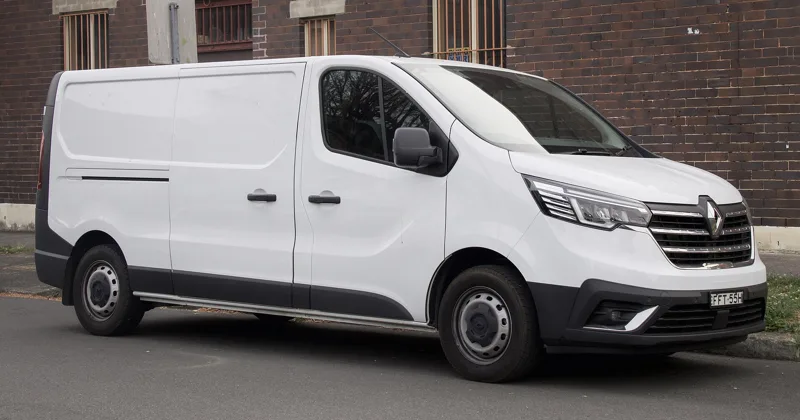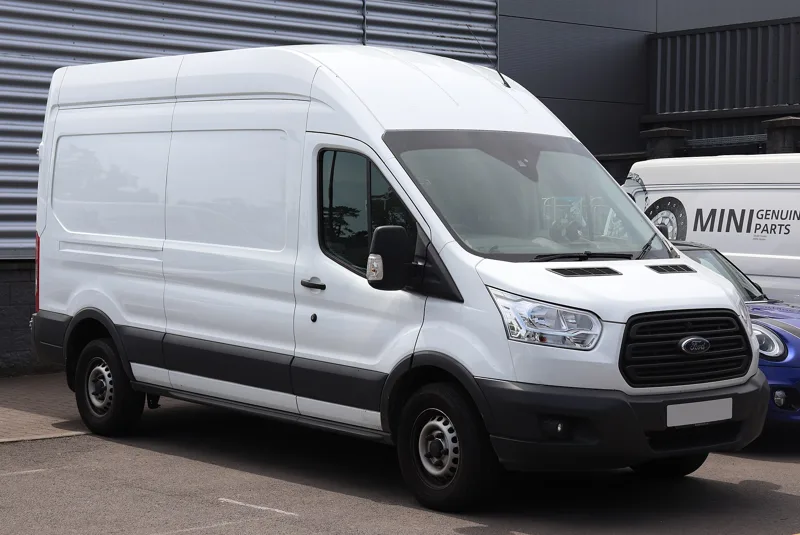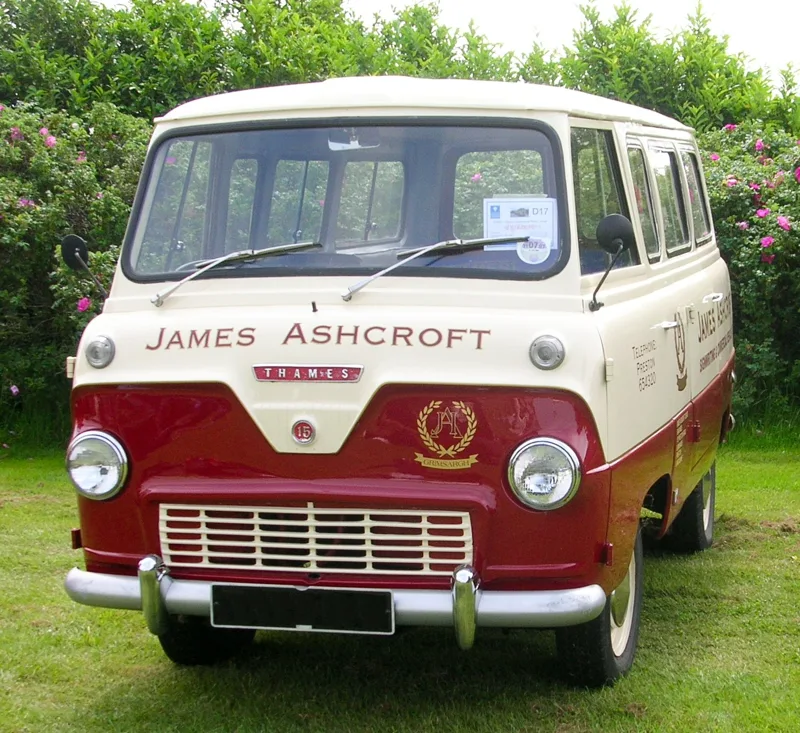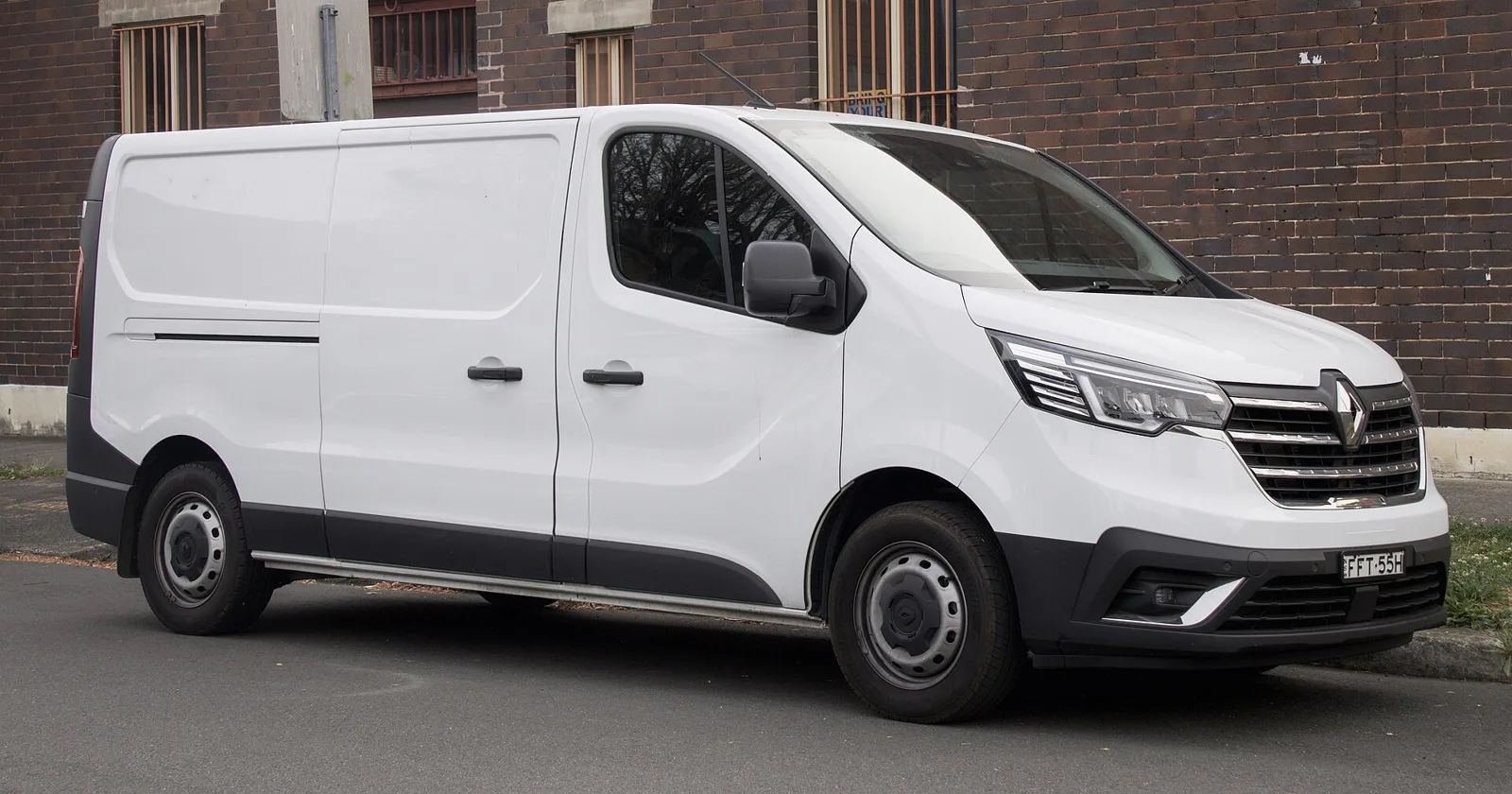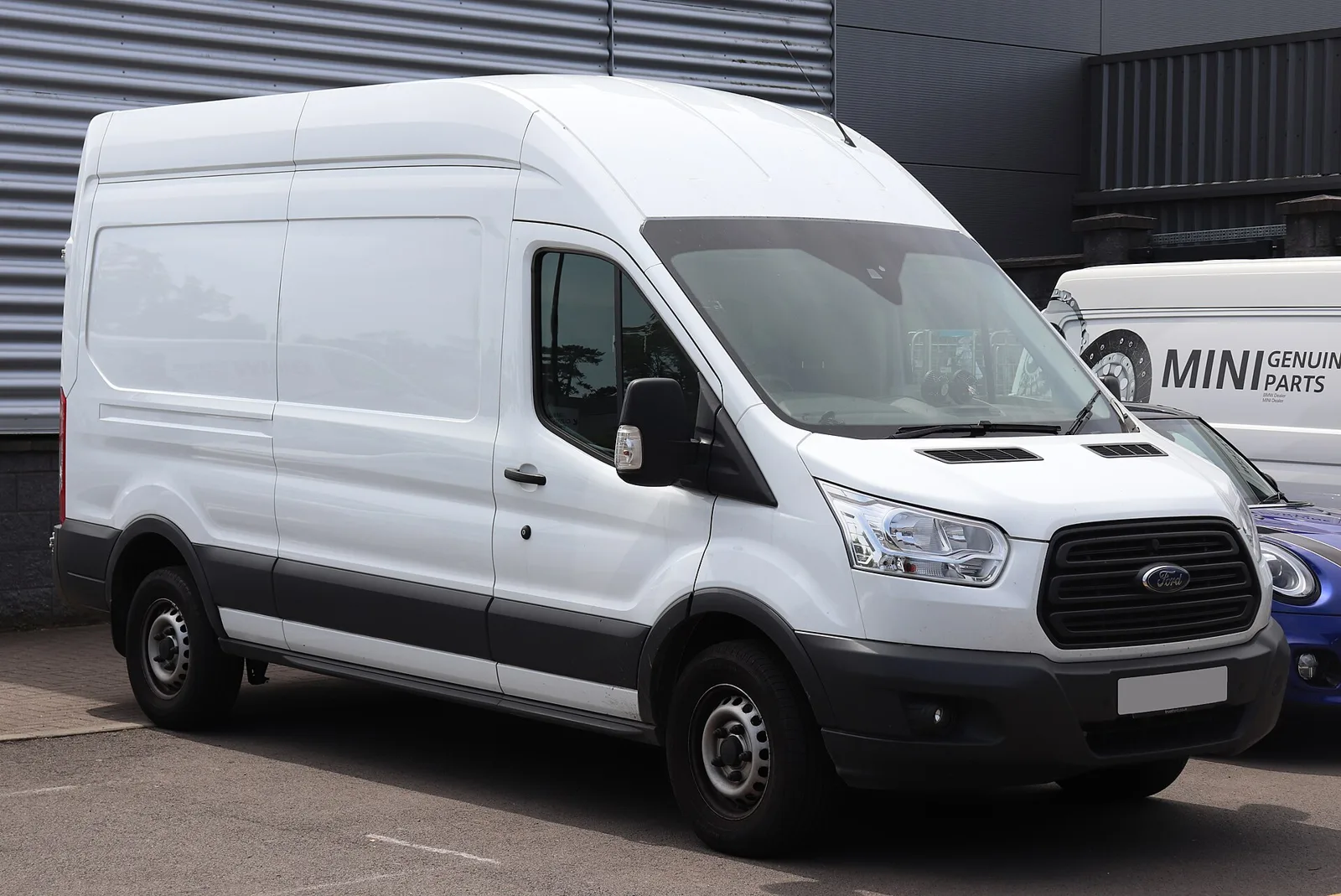
The Transit arrived in 1965 as a broad-track van, and the Renault Trafic followed in 1980 to share the same European light commercial market for six years.
The Ford Transit was a broad-track van introduced in 1965 that sold 8 million units by 2015. The Renault Trafic arrived in 1980 and shared the European light van market with the Transit until the Transit's first generation ended in 1986.
The Ford Transit and the Renault Trafic were both light commercial vans sold across Europe, and their first generations shared the market for six years. The Transit arrived in 1965 as a broad-track van, while the Trafic was introduced in 1980 by the French maker Renault. Neither history names the other as a direct rival, but the two vans competed for the same fleet and trade buyers.
Were the Ford Transit and Renault Trafic rivals?
In the sense that they were sold to the same kind of buyer, yes. Both were light commercial vans built for trade and fleet use, and both were sold across Europe, where the Transit had been the best-selling light commercial vehicle for decades.
The two vans overlapped from 1980 to 1986, when the first generation of the Transit gave way to its VE6 platform. For that period the Trafic was a newcomer taking on a van that had already set the standard.
The Trafic reached buyers under many badges, including the Opel and Vauxhall Vivaro and the Nissan Primastar, so it could meet the Transit under more than one name.
Two European vans that shared a market for six years, one a broad-track classic from 1965 and the other a compact newcomer from 1980.
When did each van go on sale?
The first-generation Transit was introduced in October 1965 and was known as the Transit Mark I in the United Kingdom. It stayed largely unaltered for 12 years, until the major update of 1977, and its platform was replaced by the VE6 in 1986.
The Renault Trafic was sold from 1980 to 2001 as its first generation. Renault revised it several times, with a major front-end facelift in May 1989 and a final facelift in 1995.
The Trafic's second generation, X83, arrived in 2001 as a joint venture between Opel, Nissan and Renault. The third generation, X82, followed in September 2014.
How were the first-generation vans built?
The Transit used a front-engined layout and a broad track, with a front beam axle in place of the independent front suspension of its British predecessor. Most of its mechanical parts were adapted from Ford's car range.
The first-generation Trafic was built on a different idea. The engine sat behind a flat grille on the smaller 1397 cc version, while the larger 2.1-litre diesel and 1647 cc petrol engines needed an extended plastic grille and a deeper bumper.
The Trafic could also be ordered with four-wheel drive from late 1984. It was a part-time system, paired with the diesel engine and a five-speed manual, which ran as front-wheel drive until a dog clutch engaged the rear wheels.
What are the Ford Transit and Renault Trafic specifications?
| Specification | Ford Transit (first generation) | Renault Trafic (first generation) |
|---|---|---|
| Introduced | October 1965 | 1980 |
| Production ended | Replaced by the VE6 platform in 1986 | 2001 for the first generation |
| Petrol engines | Essex V4 in 1.7 L and 2.0 L | 1397 cc, 1647 cc, then 1721 cc OHC; 2.2-litre petrol later |
| Diesel engines | Perkins 43 bhp (32 kW), replaced by York in 1972 | 2.1-litre diesel, with an extended grille |
| Drive | Front-engined with a front beam axle | Front-wheel drive; part-time four-wheel drive from late 1984 |
| Body styles | Panel vans, pick-up, minibus, crew-cab | Van, chassis cab, campervan conversions |
| Major facelifts | 1971 front styling and safety dashboard; 1977 update | May 1989 front end; 1995 final facelift |
| Motorhome base | not recorded | Winnebago LeSharo from 1983, and Auto Sleepers conversions |
| Output | 8 million Transit vans by 2015, across generations | not recorded for the first generation |
How did the engines compare?
The Transit's first engines were Essex V4 petrol units in 1.7 L and 2.0 L form, kept short so the engine sat ahead of the driver with little added length. Its alternator was an advance on the dynamos that British rivals still expected.
The Trafic's engines changed over the years. The 1647 cc OHV unit gave way to a 1721 cc OHC engine in the mid-1980s, and a 2.2-litre petrol carried on alongside the diesel.
Transit diesels were a 43 bhp Perkins unit that was replaced by Ford's York engine in 1972. The Trafic's 2.1-litre diesel was a larger unit, and it needed the extended grille, which set the two vans apart in appearance as well as in power.
Which van was better for campers and motorhomes?
The Trafic had a strong record in campervans. Its chassis and cab were used by Winnebago Industries to build the LeSharo from 1983, along with the Itasca Phasar, and Auto Sleepers and Holdsworth converted the Mk1 into budget family motorhomes.
For the American market the Winnebago chassis used a Renault J7T 2,165 cc petrol engine and 2.1-litre diesels. Jeep versions used a Garrett T2 turbocharger, while Winnebagos used the larger T3, and the California regulator granted yearly waivers for missing On Board Diagnostics until 1992.
The Transit was known for its broad track and wide range of bodies, but it is not recorded here as a motorhome base. Its appeal lay mainly with panel vans, pick-ups and minibuses.
What did the second-generation Trafic share with its siblings?
The second-generation Trafic resulted from a tie-up of Opel, Nissan and Renault, and it was also sold as the Opel Vivaro and the Nissan Primastar. It was designed at Renault's technical centre outside Paris and developed by the light commercial team at Villiers-Saint-Frederic.
Under an agreement between Renault and Nissan, high roof versions were made at Nissan's Barcelona plant, because the Luton assembly plant had a low roof that could not take the extra height.
The van ranged from a three-seater, with all the rear space for loads, to a nine-seater passenger van. That breadth of body was the second generation's main selling point.
How did the Nissan Primastar and Opel Vivaro differ?
The Nissan Primastar launched in 2001 with two wheelbases, two roof heights, three diesel engines and a petrol option. It was replaced by the NV300 in September 2016, after the last Primastar left the line at the end of 2014.
The Opel Vivaro was launched in September 2001 and was built at GM Manufacturing Luton and by Nissan at its Zona Franca plant in Spain. In the United Kingdom it was sold as a Vauxhall.
The Vivaro's 2006 facelift moved the front indicators up into the headlight housings. The 2.0 litre four-cylinder diesel came in 90 PS (66 kW; 89 bhp) and 115 PS (85 kW; 113 bhp) forms, with a six-speed manual or optional automatic.
How did the Trafic's later generations compare?
The second-generation Trafic was built by GM Manufacturing Luton in the United Kingdom and by Nissan in Barcelona. It was the first Renault vehicle built in the United Kingdom in more than thirty years, and its passenger version could seat up to nine.
In 2012, production of the Vauxhall Vivaro reached 36,982 vehicles, and the Renault Trafic reached 16,483. A mild facelift in October 2006 swapped the orange indicators for clear ones, and production ended in June 2015.
The third-generation Trafic arrived in September 2014 with new engines from 95 to 145 PS, and the highest outputs used a twin turbocharger. A 2019 facelift added a 2.0-litre EcoJet diesel that was 11 percent more fuel efficient.
How was the third-generation Trafic rebadged?
Renault's third generation, X82, arrived in September 2014 and was rebadged as the Opel Vivaro in Europe and the Vauxhall Vivaro in the UK. Styling was updated for 2019, again for 2021, and in 2024 with new Renault and Nissan logos.
In July 2016 Fiat introduced a rebadged Trafic called the Talento, to replace its Scudo. The Talento later gained a 7-inch touchscreen with Apple CarPlay and Android Auto, and in September 2020 Renault announced it would stop supplying Talentos to Fiat.
What electric options did each van have?
The Transit's electric history is not recorded in this comparison, so no electric comparison can be made. The Trafic, by contrast, offered an electric model from 2022, when Renault presented the Trafic Van E-Tech at the IAA show.
The E-Tech uses a 90 kW (120 hp) electric motor and a 52 kWh battery, with a WLTP range of 297 km (185 mi). It can take 7 kW single-phase AC or 22 kW three-phase AC charging, and a 50 kW DC fast-charging option is available.
The Opel Vivaro e Concept of September 2010 was a plug-in hybrid with a 21 kWh battery, which offered more than 60 miles of pure electric range.
Which van sold more?
The Transit sold 8 million vans by 2015, and it was the third best-selling van of all time. Its record in the United States was also strong after its arrival there, where it quickly became the best-selling van of any type.
The Trafic's total sales are not recorded in this comparison. The 2012 production figures for the Vivaro and the Trafic show a steady volume, but lifetime totals are not given here.
The two vans therefore cannot be ranked on a like-for-like sales basis. The Transit's total is far larger, but the Trafic's badge variety meant it reached buyers under many names.
Which van suits which buyer?
The Transit suits a buyer who wanted a long-running van with a broad track, a wide range of bodies and a record as the best-selling van in several markets. It is the stronger choice for a fleet that wanted one van in many forms.
The Trafic suits a buyer who wanted a compact van that could be converted into a motorhome, a four-wheel-drive van in its first generation, or an electric van in its later generations.
The figures do not settle which is the better van. The Transit had the longer history and the bigger total, while the Trafic had the wider camper history and the electric options in its later years.