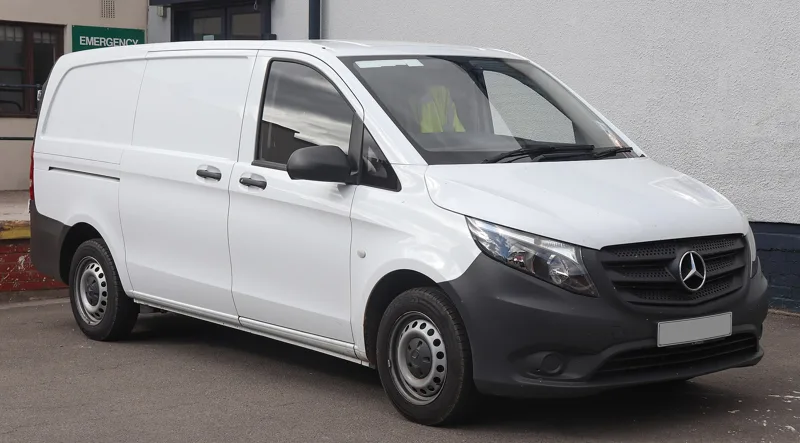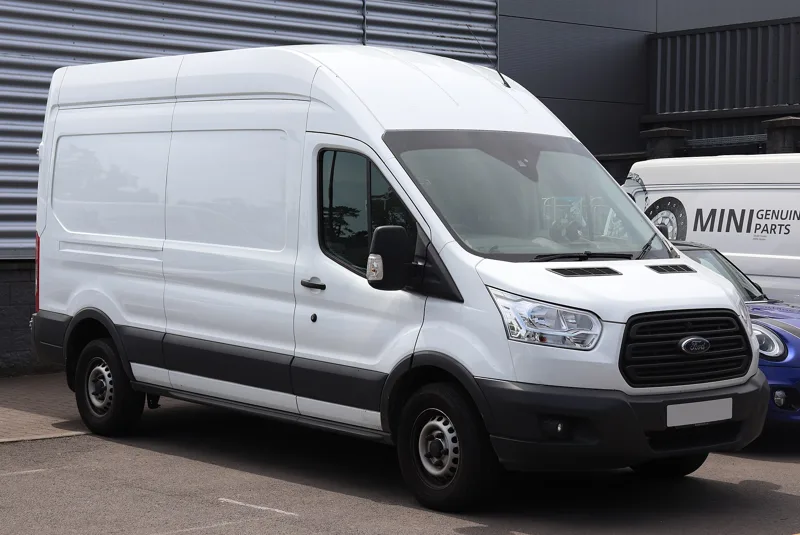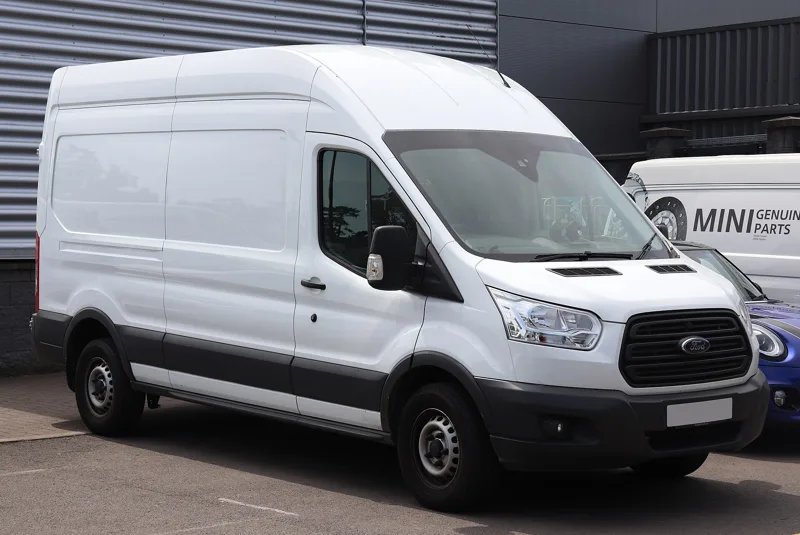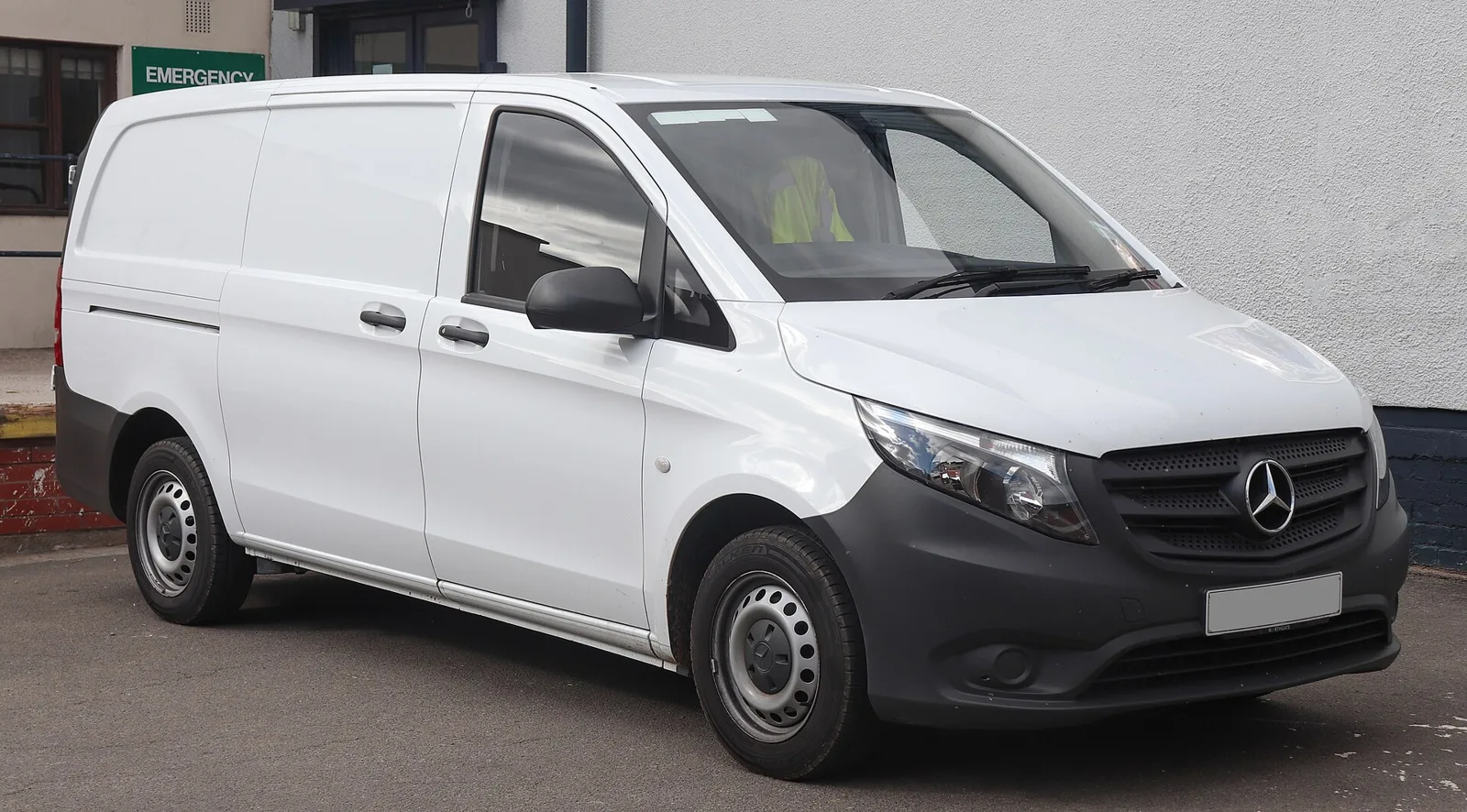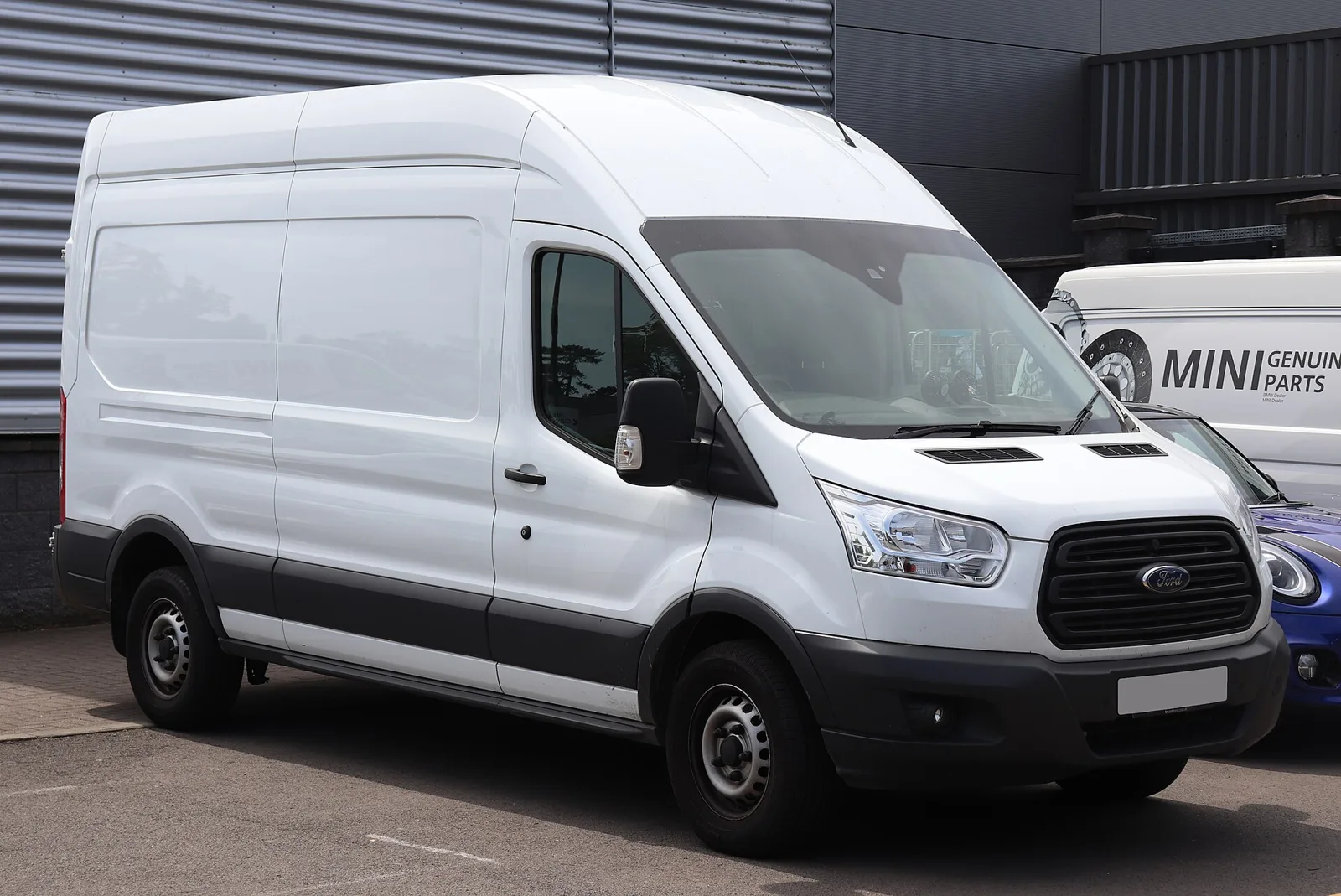
The Transit was a broad-track van from 1965 that sold 8 million units, and the Mercedes-Benz Vito was a mid-sized rival that arrived in 1996 and was designed with the Transit among its named competitors.
The Ford Transit was a broad-track van from 1965 that sold 8 million units by 2015. The Mercedes-Benz Vito arrived in 1996 as a mid-sized rival, and its first generation competed with the Transit among a list of named rivals.
The Ford Transit and the Mercedes-Benz Vito were both mid-sized vans built for business, and they competed in the European market. The Transit began in 1965 and became one of the best-selling vans ever built. The Vito's first generation arrived in 1996, and its design named the Transit among its competitors. The comparison shows how a long-running Ford van compared with a German rival from the 1990s.
Were the Ford Transit and Mercedes-Benz Vito rivals?
Yes. The first-generation Vito competed with a list of rivals that included the Citroen Jumpy, Peugeot Expert, Volkswagen Transporter, Fiat Scudo, Ford Transit, Renault Trafic, Toyota Hiace and others.
The Vito was positioned between the larger Sprinter and the smaller Citan in the Mercedes-Benz range. That put it in the same mid-sized space that the Transit occupied, which made the two vans natural rivals.
The Transit had been on the market for three decades before the Vito arrived, and its broad track had given it a big edge in carrying capacity over comparable vans of its day.
A broad-track Ford van that ran for decades against a German mid-sized rival that was designed with it in view.
When did each van go on sale?
The first-generation Transit was introduced in October 1965, and it was known as the Transit Mark I in the United Kingdom. Its platform lasted more than 20 years, until the VE6 platform arrived in 1986.
The first-generation Vito went on sale in 1996 as the W638, and it was produced until 2003. The second generation, W639, followed and was renamed the Viano, while the third generation launched in 2014 under the V-Class name.
This comparison sets the Transit's first generation against the Vito's first generation. The Transit's later generations, including the 1986 platform, are not covered here, so the comparison is limited to the early vans.
How did the Transit's German and British roots shape it?
The first Transit-badged van was the FK 1000, built at Cologne from 1953 and sold with the Taunus name from 1961. Ford's British and German vans then began competing for the same continental markets, which proved costly.
Ford Germany resumed truck production in 1945, and the FK series launched in 1951, standing for Ford Koln. In 1961 Ford dropped the FK brand, and the FK1000 van carried on as the Taunus Transit.
The Redcap project, begun in 1963, produced a single unified van. Ford of Britain and Ford-Werke merged into Ford of Europe in 1967, and the Transit became the first product of that joined-up approach.
How were the two vans designed?
The Transit's first generation had a front-engined layout and a broad track, with American-inspired styling that set it apart from European vans of its day. Most of its mechanical parts were adapted from Ford's car range, and a front beam axle replaced the independent front suspension of its British predecessor.
The Vito's first generation was designed by Michael Mauer from 1989 to 1991, and the final design was chosen and patented in February 1993. It was front-wheel drive in its first generation, with a diesel or petrol engine and a van body that could also be sold as the V-Klasse passenger version.
The Vito's later passenger version, the Viano, was rear-wheel drive in its second generation. That change gave it a smaller turning circle than front-wheel-drive rivals, and the Compact and Long models turned in 11.8 m (39 ft).
What are the Ford Transit and Mercedes-Benz Vito specifications?
| Specification | Ford Transit (first generation) | Mercedes-Benz Vito (first generation, W638) |
|---|---|---|
| Introduced | October 1965 | 1996; production to 2003 |
| Class | Broad-track light commercial van | Mid-sized light commercial vehicle |
| Drive | Front-engined, with a front beam axle | Front-wheel drive |
| Petrol engines | Essex V4 in 1.7 L and 2.0 L; 3.0 L Essex V6 for police and ambulance vans | Two Mercedes units (113 and 114) and a Volkswagen 2.8 VR6 (M104.900), up to 140 bhp (104 kW; 142 PS) |
| Diesel engines | Perkins 43 bhp (32 kW), replaced by York in 1972 | 2.3 with and without turbo, and CDI 2.2, up to 120 bhp (89 kW; 122 PS) |
| Body styles | Panel vans, pick-up, minibus, crew-cab | Panel van, chassis cab, and the Viano passenger version as V-Klasse |
| Seats | not recorded | Viano version with only two front seats |
| Electric version | not recorded | Vito 108 E, 40 kW (54 hp), range up to 170 km |
| Designer | not recorded | Michael Mauer, 1989 to 1991 |
| Sales | 8 million Transit vans by 2015 across all generations | not recorded |
How did the engines compare?
The Transit's first engines were the Essex V4 petrol units in 1.7 L and 2.0 L form, short enough to sit ahead of the driver without much added length. An alternator was fitted when many British rivals still used dynamos.
The Vito's first-generation engines covered a wider spread. Its petrol options included a Volkswagen 2.8 VR6, and its diesels ranged from older 2.3 units with and without turbo to the modern CDI 2.2.
Transit diesels were a 43 bhp Perkins unit that was replaced by Ford's York engine in 1972, while the Vito's diesels reached up to 120 bhp (89 kW; 122 PS).
Did either van offer an electric version?
The Vito did. The Vito 108 E was a battery-electric variant of the W638, unveiled in July 1996, with a three-phase asynchronous motor producing 40 kW (54 hp) and 190 N-m (140 lbf-ft) of torque.
The 108 E used a molten-salt ZEBRA battery stored under the rear bench seat, with a total capacity of 35.6 kWh. It could reach 120 km/h (75 mph) and carry up to 600 kg (1,300 lb), with a range of up to 170 km (110 mi).
The 108 E was assembled at Mercedes-Benz's Mannheim plant, and it was expected to cost about three times as much as a conventionally powered Vito. Deutsche Post ran a small fleet of them in Bremen.
How did the passenger versions compare?
The Vito's passenger range was broad. The Viano could seat six or seven as standard, or eight with two three-seater benches, and all the rear seats slid in small steps and could be folded or removed.
With all the seats removed, the Viano Extra-Long could carry 4,610 litres (163 ft3) of cargo with a payload of 930 kg (2,050 lb). It could tow a 2,500 kg braked trailer and a 750 kg unbraked trailer.
The Transit's passenger role was covered by its minibus bodies. Its strength was its wide choice of body styles rather than a single large MPV.
How did the Vito's later generations develop?
The second-generation Vito was more streamlined than its predecessor, and it used a rear-wheel-drive layout with a new range of engines. The windscreen and A-pillar were set closer to horizontal, and the dashboard was enlarged.
Its engines were the 109, 111, 115 and 120 CDI. The 109 produced 95 PS (70 kW; 94 hp), the 111 produced 116 PS (85 kW; 114 hp), the 115 reached 150 PS (110 kW; 148 hp), and the 120 used a 3.0-litre V6 for 204 PS (150 kW; 201 hp).
The Vito also became a London taxi in August 2008, after the Public Carriage Office approved a variant built by Penso in Coventry. Its rear-wheel steering gave it a 25 ft (7.6 m) turning circle, which met the strict conditions for a black cab.
What did the Vito's taxi and camper versions offer?
The Vito London taxi was approved in August 2008 and built by Penso in Coventry. It had electric sliding doors, electric steps and seating for six people, and it was a variation of the Traveliner model.
The taxi's rear-wheel steering system was licensed from one80 and distributed through a subsidiary. The U-turn function worked only below 5 mph (8.0 km/h), and above that speed the system deactivated and the wheels straightened.
The Viano Marco Polo was a camping derivative with a galley, a multi-function wardrobe and a sliding bench that became a large air-sprung bed. A pop-up roof gave standing height, and an extra bed could be fitted to sleep four.
The Viano X-Clusive edition was sold only in European markets from 2008 to 2010, with a petrol or diesel V6, 18-inch alloy wheels and a choice of Brilliant Silver or Obsidian Black paint.
What did reviewers say about the Viano?
The Viano received mixed to positive reviews from the motoring press. Its van-based design was a blessing to some critics and a failing to others, and reviews of the facelifted model were not available by July 2010.
What Car? praised its choice of two wheelbases, its plentiful space and its sliding rear side doors, but it warned that the engines were noisy and the van roots showed through in some areas. Autocar called it still more van than MPV.
Yahoo! Cars made the point that most MPVs make little sense when full, because the luggage has nowhere to go, and that the vast Viano did not suffer from that problem.
Which van sold more?
The Transit sold 8 million vans by 2015 across its generations, and it was the third best-selling van of all time. Its North American record was also striking after its arrival there.
The Vito's sales figures are not recorded in this comparison, so a complete sales race cannot be called.
The second-generation Viano was assembled in China from 16 April 2010, at the Fujian Daimler Automotive plant in Fuzhou, which shows how far the model had spread beyond Europe.
Which van suits which buyer?
The Transit suits a buyer who wanted a long-running van with a wide choice of bodies, from pick-ups and minibuses to panel vans, and a broad track for carrying capacity.
The Vito suits a buyer who wanted a mid-sized van with a choice of rear- or four-wheel drive, a passenger version, an electric option in its early years and a taxi or camper variant.
The figures do not settle which is the better van. The Transit had the longer history and the bigger sales total, while the Vito had the wider passenger and electric options in its early years.