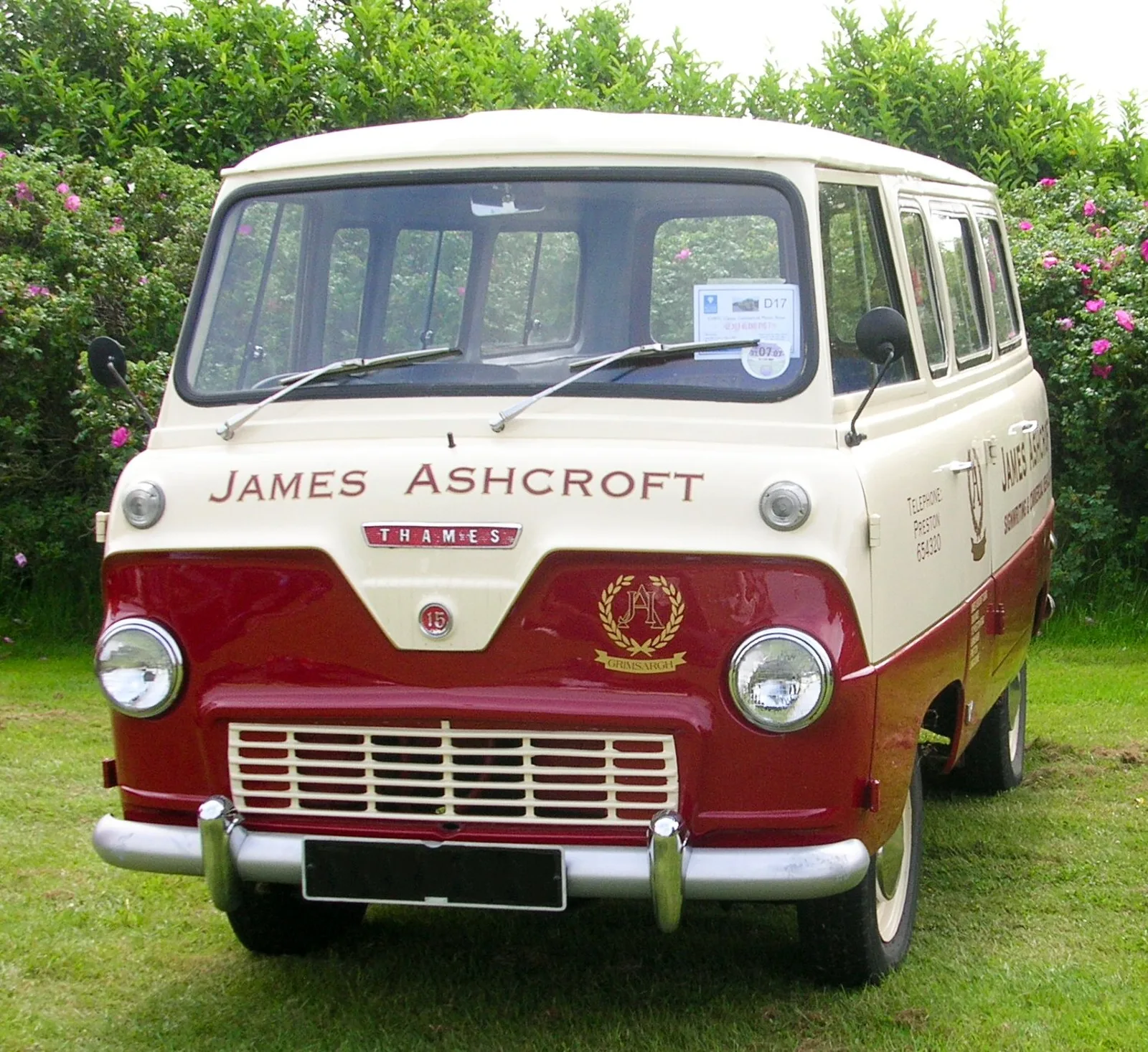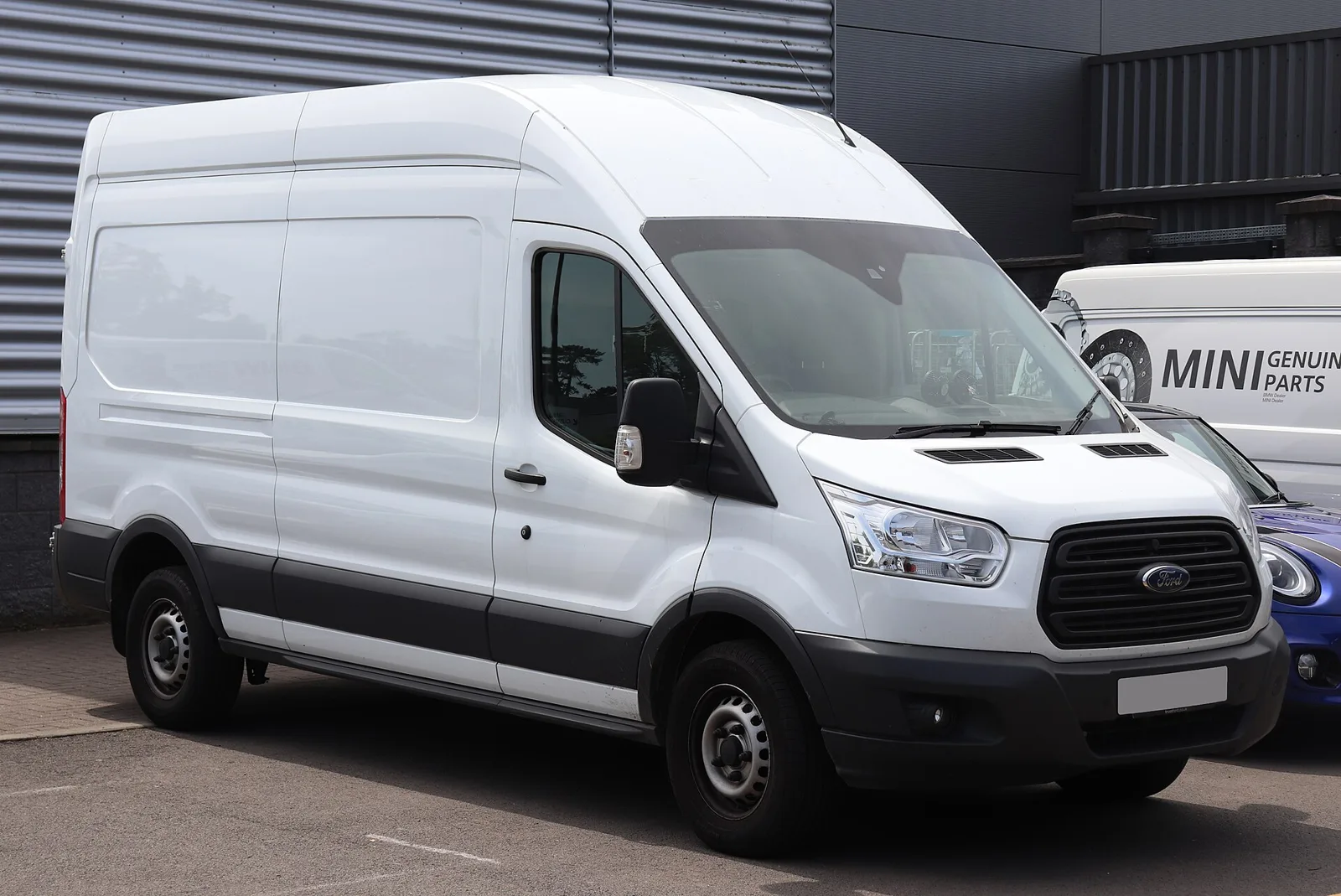
Ford's Transit grew from a 1965 British-German design into one of the best-selling vans ever built, while Volkswagen's Crafter started in 2006 as a larger three-to-five-tonne van.
The Ford Transit was a family of vans from 1965 that sold 8 million units by 2015. The Volkswagen Crafter arrived in 2006 as a larger three-to-five-tonne van, first built as a rebadged Mercedes-Benz Sprinter, and it now offers electric versions.
The Ford Transit and the Volkswagen Crafter are both European vans built to carry loads for business, but they grew from very different starting points. The Transit began in 1965 as a joint British and German project and went on to sell 8 million units by 2015. The Crafter arrived in 2006 as the largest three-to-five-tonne van in Volkswagen's range, and it was built on a Mercedes-Benz Sprinter platform at first.
Were the Ford Transit and Volkswagen Crafter rivals?
They compete in the same general market, but they sit in different load classes. The Crafter is the larger three-to-five-tonne van, while the Transit was built as a broad-track family of vans with a wide range of bodies.
The two vans therefore meet at the edges of the market rather than head to head. Buyers choosing between them would be weighing a Transit's versatility against the Crafter's heavier gross weight and payload.
Both have a strong European presence in their own classes.
A broad-track British-German van from 1965 against a German three-to-five-tonne van from 2006, separated by class and by the sprinter it began as.
When did each van go on sale?
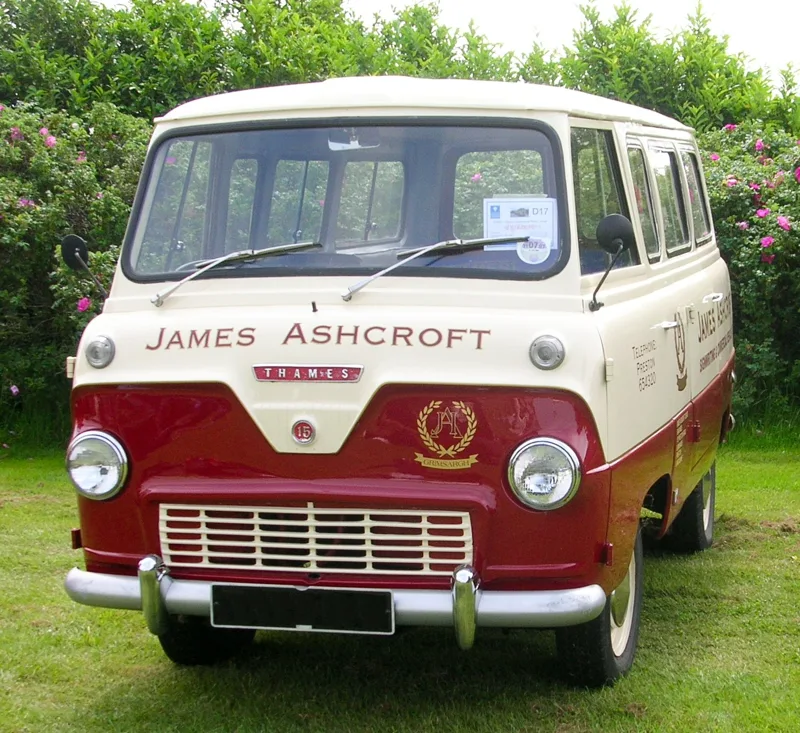
The first generation of the Transit was introduced in October 1965, taking over from the Thames 400E. It stayed largely unaltered for 12 years and was replaced by a new platform in 1986, after more than 20 years of production in one form or another.
The Crafter was introduced in 2006 and replaced the Volkswagen Transporter LT, which had been launched in 1975. The first-generation Crafter ran from 2006 to 2017, and the second generation followed from the 2017 model year.
The Transit has since had four basic platform generations, debuting in 1965, 1986, 2000 and 2013. The Crafter has had two generations so far, with the second designed entirely by Volkswagen.
Where did the two vans come from?
The Transit's first Transit-badged van was built at Cologne from 1953 as the FK 1000, with a 1.2-litre sidevalve engine from the Taunus. It became the Taunus Transit in 1961 and was produced until 1965, before the Redcap project brought the Transit's unified platform.
The Crafter's first generation was a rebadged Mercedes-Benz Sprinter, built by Daimler, with a powertrain developed by Volkswagen. The first Crafter was built in the same Ludwigsfelde and Dusseldorf factories as the Sprinter.
The first Transit plant at Langley in Berkshire was a former Second World War aircraft factory that had built Hawker Hurricane fighters, and production later moved to Southampton.
The Crafter's second generation was developed entirely by Volkswagen after the end of the Mercedes-Benz collaboration. It is built in Wrzesnia, Poland, in a new factory that cost about 800 million EUR.
MAN Truck & Bus also sells a version of the second-generation Crafter as the MAN TGE, with a wide range of body types, including tipper, dropside and crew cab variants.
What are the Ford Transit and Volkswagen Crafter specifications?
| Specification | Ford Transit (first generation) | Volkswagen Crafter (first generation) |
|---|---|---|
| Introduced | October 1965 | 2006 |
| Class | Broad-track family of vans and minibuses | Largest three- to five-ton van from Volkswagen |
| Basis | New unified platform from the Redcap project | Rebadged Mercedes-Benz Sprinter |
| Petrol engines | Essex V4 in 1.7 L and 2.0 L; 3.0 L Essex V6 for police and ambulance vans | not recorded for petrol; diesel listed only |
| Diesel engine | Perkins 43 bhp (32 kW), replaced by York in 1972 | 2.5 litre R5 TDI, 2,459 cc inline five-cylinder |
| Emissions | not recorded | Euro IV through a particulate filter; Blue TDI for Euro V EEV |
| Wheelbases | Long and short forms | 3,250 mm (128.0 in), 3,665 mm (144.3 in), 4,325 mm (170.3 in) |
| Payload | not recorded | 1,472 to 3,026 kg (3,245 to 6,671 lb) |
| Gross weight | not recorded | 3.5 or 5.3 tonnes |
| Drive options | Front beam axle in the first generation | 4Motion four-wheel drive with BiTDI from March 2012 |
| Production volume | 8 million Transit vans sold by 2015 | Second generation planned at 85,000 vehicles a year |
| Electric version | not recorded in this comparison | e-Crafter, 43 kWh battery, 208 km estimated range |
How did the engines compare?
The Transit's early engines were the Essex V4 petrol units, in 1.7 L and 2.0 L form. Ford kept the V4s short so they could sit ahead of the driver without adding much length.
The Crafter started with a 2.5 litre R5 TDI, an inline five-cylinder turbodiesel of 2,459 cc. Early examples had turbo failures, which were corrected in the 2010 revision, and the Blue TDI update used AdBlue to meet Euro V EEV standards.
In 2011 the Crafter's 2.5 litre gave way to a 2.0 litre TDI, with outputs of 80 kW (109 PS), 100 kW (136 PS) and a BiTDI at 120 kW (163 PS). The payload rose by up to 10% on some models.
Which van could carry more?
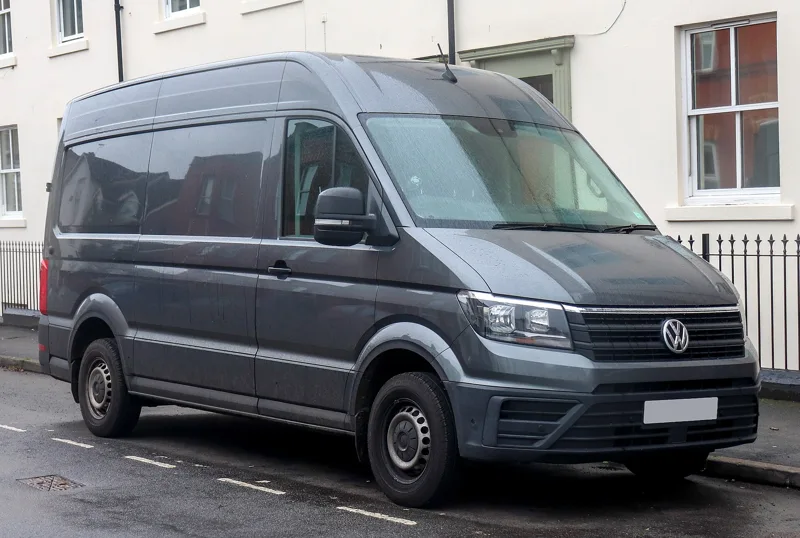
The Crafter's chassis and double-cab models offered payloads from 1,472 to 3,026 kilograms (3,245 to 6,671 lb), with gross vehicle weights of 3.5 or 5.3 tonnes. Those figures place the Crafter in the three-to-five-tonne class.
The Transit's early strength was its broad track, which gave it a big advantage in carrying capacity over comparable vans of its day. The Transit's payload figures are not recorded in this comparison, so a direct payload verdict cannot be given.
The Crafter's electronic differential lock works differently from a true mechanical lock. Sensors watch the wheel speeds on a driven axle, and when one wheel slips the system brakes it, which moves torque to the wheel that still has grip.
How safe were the two vans?
The Crafter came with front airbags as standard, with side and curtain airbags optional. It also had anti-lock braking, a load-adapting electronic stability programme, traction control and the electronic differential lock. Several of these were standard, while the side and curtain airbags were optional.
The early Transit's safety record is less documented here. Its padded dashboard, added in the 1971 model year, was one of the few safety changes mentioned for the first generation.
The Metropolitan Police reported in 1972 that Transits were used in 95 per cent of bank raids, and described the van as Britain's most wanted.
Which van had more body styles?
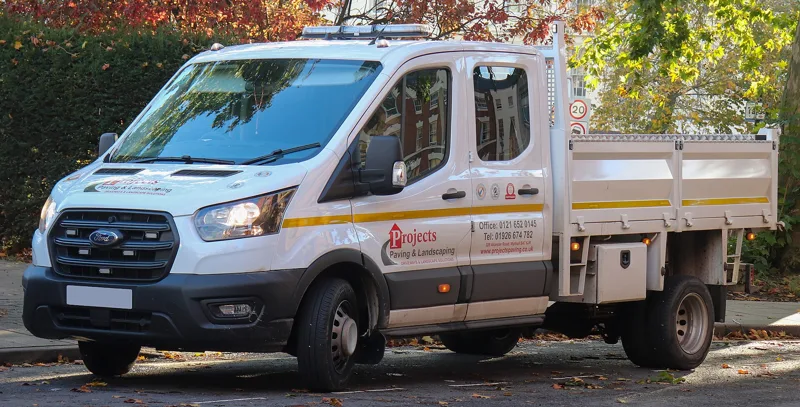
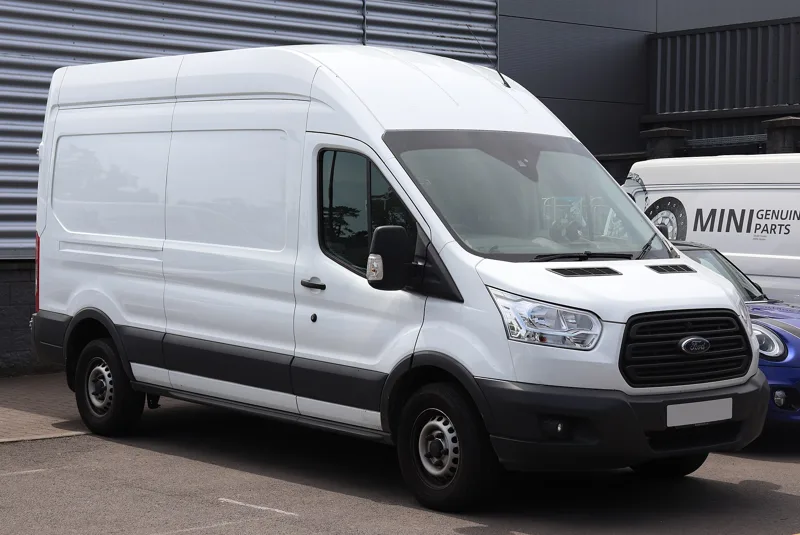
The Transit's range was wide from the start, with panel vans in long and short wheelbase forms, pick-up trucks, minibuses and crew-cabs. That variety was one of the reasons for its success.
The Crafter was also a strong base for minibus conversions, and Volkswagen kept a list of accredited conversion specialists. Its Grand California motorhome, based on the second generation, went on sale in 2019.
The second-generation Transit family was not covered in this comparison, but the Crafter's second generation offered a Grand California motorhome and an electric e-Crafter, showing how far the Crafter's range had grown.
Which van sold more?
The Transit has sold 8 million vans by 2015, making it the third best-selling van of all time. It was the best-selling van of any type in the United States after its arrival there, and the best-selling light commercial vehicle in Europe for forty years.
The Crafter's sales are not recorded here, so a complete sales race cannot be called. The Crafter's second generation was planned to build 85,000 vehicles a year at its Polish plant.
Because the two vans sit in different classes, their sales records cannot be compared directly.
What did the Crafter's 2011 facelift change?
Volkswagen Commercial Vehicles released a revised Crafter in April 2011. The grille was changed to the current design language of the Volkswagen brand, and new engines replaced the earlier units.
The 2.5 litre engine gave way to a 2.0 litre TDI, which used exhaust gas recirculation together with a diesel particulate filter to meet Euro 5b standards that came into force in September 2011. The facelift arrived two years before the Sprinter it was based on received its own update.
In March 2012 a 4Motion variant joined the range, with the BiTDI engine at 120 kW (163 PS; 161 hp). The four-wheel drive system was supplied and fitted by Austrian specialists Achleitner.
How did the e-Crafter and MAN eTGE differ?
The e-Crafter was unveiled in September 2016 at the IAA Commercial Vehicles show in Hanover, with a 43 kWh battery and an estimated range of 208 km. Its payload was rated at 1,709 kg, with 11.3 cubic metres of cargo space.
The e-Crafter's electric motor produced 100 kW (136 PS; 134 hp) and 290 N-m (214 lb-ft) of torque, and its top speed was limited to 80 km/h. Initial retail deliveries were slated for 2017.
The MAN eTGE followed in 2018 with a 35.8 kWh battery, and it could carry up to 1,700 kg.
Which awards did the Crafter win?
The Crafter collected several awards in its early years, including the What Van? Overall Van of the Year in 2006 and the magazine's Large Van of the Year the same year. Professional Van and Light Truck Magazine named it Large Van of the Year in 2007.
Other honours included Van Fleet World's Best Large Panel Van in 2007, Delivery Magazine's Large Van of the Year in Australia, and a 2008 award for Best Van derived Chassis Cab from Professional Van and Light Truck Magazine.
Which van suits which buyer?
The Transit suits a buyer who wanted a versatile van with a wide choice of bodies, from pickups and minibuses to panel vans, and a long record of reliable service in the European market.
The Crafter suits a buyer who needed a heavier three-to-five-tonne van, with four-wheel drive, electric options and a wide payload range.
The figures do not settle which is the better van, because they sit in different classes and were built for different tasks. On the facts given, the Transit wins on sales and body variety, and the Crafter on heavy payload and electric options.