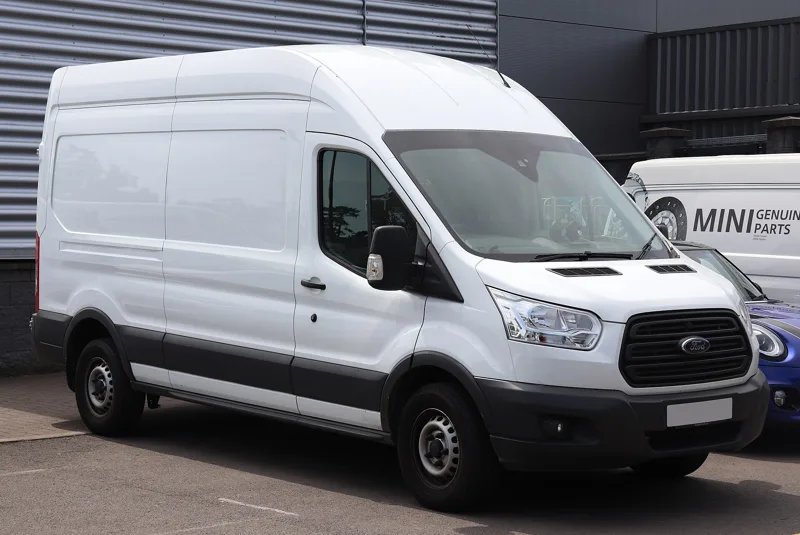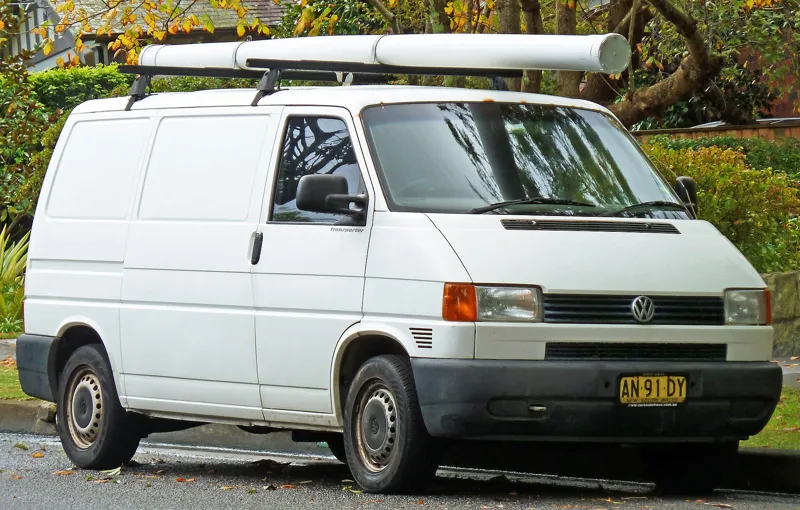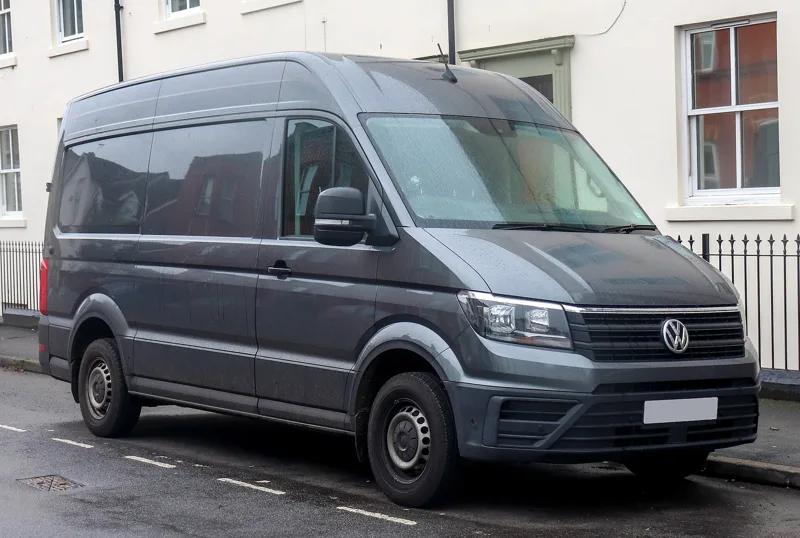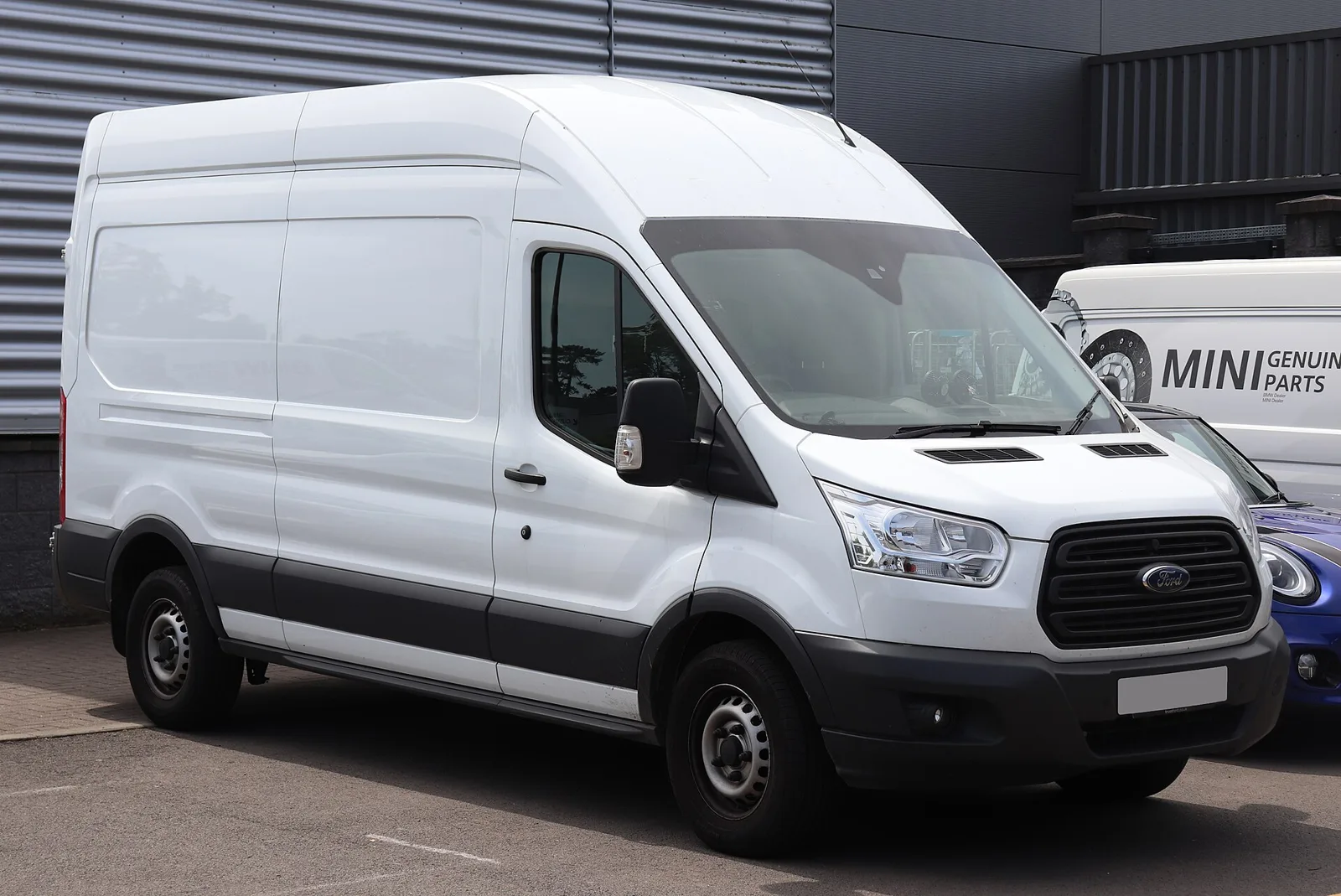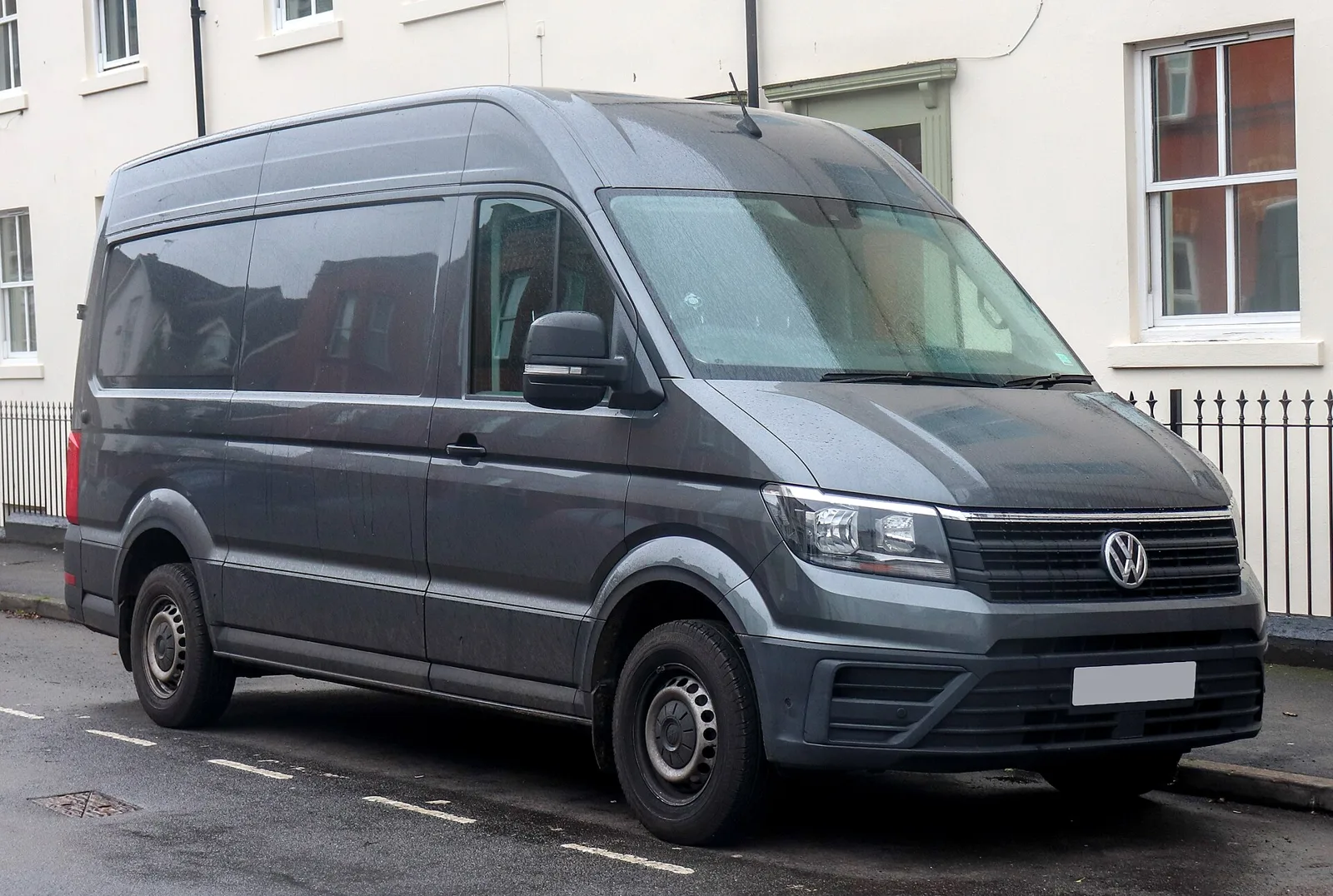
A Mercedes-based first generation, a Volkswagen-built second generation, and the electric, motorhome and military versions that followed.
The Volkswagen Crafter is a large van built by Volkswagen Commercial Vehicles, introduced in 2006 as the largest three- to five-ton van in the range. The first generation was a rebadged Mercedes-Benz Sprinter, and the second, from 2017, was developed by Volkswagen alone.
Sold by Volkswagen Commercial Vehicles, the Crafter sits at the top of the company's van range for loads between three and five tonnes. Introduced in 2006, it officially replaced the Transporter LT launched in 1975, and it is also known by its production plant code, LT3.
The van has two very different starting points. The first generation was in effect a Sprinter with a Volkswagen powertrain, while the second generation, from the 2017 model year, was designed and built by Volkswagen alone.
Where did the Crafter come from?
Volkswagen Commercial Vehicles' largest van arrived in 2006 and took over the official role of the Transporter LT. Daimler AG built the first generation, and the powertrain came from Volkswagen.
The Transporter LT it replaced had launched in 1975.
Production of the first generation took place at Mercedes-Benz plants in Ludwigsfelde and Duesseldorf. That arrangement reflected how closely the first Crafter was tied to the Sprinter it was based on.
A van that began life as a rebadged Mercedes-Benz Sprinter and grew into a Volkswagen design with electric and motorhome versions.
Who shaped the Crafter's front end?
French designer Laurent Boulay shaped the front of the first generation. The front design takes cues from the Volkswagen Constellation, a link to Volkswagen's own range rather than to the Sprinter it was built on.
The second generation follows the current Volkswagen design line and comes in Startline or Trendline trim.
What engines powered the first generation?
From launch in 2006 until 2010, the first-generation Crafter used a 2.5-litre R5 TDI turbodiesel with 2,459 cc. This inline five-cylinder engine used common rail injection with piezoelectric injectors for cylinder-direct fuel delivery.
A diesel particulate filter allowed the engines to meet Euro IV rules. A 2010 revision of the 2.5-litre unit corrected earlier turbo failures.
An update branded Blue TDI used AdBlue, also known as diesel exhaust fluid (DEF), together with a DPF. That combination was used to meet the stricter Euro V EEV standard.
What changed in the 2011 facelift?
April 2011 brought a revised Crafter from Volkswagen Commercial Vehicles. The grille was changed to the current Volkswagen design language, and the facelift arrived two years before the Sprinter received its own facelift.
Out went the 2.5-litre unit, and in came the 2.0-litre TDI, which used exhaust gas recirculation with a diesel particulate filter. The changes met Euro 5b, also known as Euro V, rules that came into force in September 2011.
Engine outputs in the revised range were 80 kW (109 PS) and 100 kW (136 PS), with the top BiTDI rated at 120 kW (163 PS). Payload rose by up to 10 percent on some models.
In March 2012 the Crafter 4Motion was released with the BiTDI engine as its only option. Four-wheel drive was fitted by the Austrian specialist Achleitner.
How does the electronic differential lock work?
The electronic differential lock, or EDL, is not a differential lock in the mechanical sense. Sensors compare the speeds of the two wheels on a driven axle, and when one turns markedly faster, the system briefly brakes it.
That braking shifts torque across to the second driven wheel, which is judged to still have grip. The Crafter's safety kit also includes anti-lock braking, the electronic stability programme (ESP) and anti-slip regulation (ASR).
Front airbags are standard, while side and curtain airbags are available as options.
What are the Crafter's wheelbases and payloads?
The Crafter is offered with three wheelbases: 3,250 mm, 3,665 mm and 4,325 mm. Chassis and double-cab models carry payloads of 1,472 to 3,026 kg (3,245 to 6,671 lb), at gross vehicle weights of 3.5 or 5.3 tonnes.
The van is also a strong base for minibus conversions, and Volkswagen keeps a list of accredited vehicle conversion specialists for customers who want one.
| Item | Detail |
|---|---|
| First generation | Introduced 2006, 2.5-litre R5 TDI with 2,459 cc |
| 2011 facelift | 2.0-litre TDI, from 80 kW (109 PS) to 120 kW (163 PS) |
| Second generation | From the 2017 model year, built at Wrzesnia, Poland |
| Wheelbases | 3,250 mm, 3,665 mm and 4,325 mm |
| Payload | 1,472 to 3,026 kg (3,245 to 6,671 lb) |
| e-Crafter | 43 kWh battery, 100 kW (136 PS; 134 hp) motor, 208 km (129 mi) estimated range |
| MAN eTGE | 35.8 kWh battery, 1,700 kg (3,700 lb) load |
What is the second-generation Crafter?
The second generation was developed entirely by Volkswagen after its collaboration with Mercedes-Benz came to an end. It follows the current Volkswagen design line, and it is no longer associated with the Sprinter.
The second generation is built at Wrzesnia in Poland, in a new factory constructed specifically for its production. The plant is planned to produce 85,000 vehicles a year on a site of 220 ha, with 300,000 square metres under roof.
The new Polish plant cost about EUR 800 million to build.
What is the MAN TGE?
The MAN TGE is the second-generation Crafter as sold by MAN Truck and Bus. MAN belongs to TRATON, Volkswagen's heavy vehicle division, so the TGE gives the group a second brand for the same van.
The MAN TGE comes in a wide range of body types. The van is mostly sold as a panel van, but it is also offered as a tipper, dropside or crew cab.
The all-electric MAN eTGE entered series production in July 2018. Its load capacity reaches 1,700 kg (3,700 lb), and its permanently excited synchronous motor is rated at 100 kW (134 hp), with a top speed limited to 90 km/h (56 mph).
The MAN eTGE has a 35.8 kWh battery. Its purchase price was around EUR 69,500 in 2018.
What electric and motorhome versions were made?
The e-Crafter was revealed in September 2016 during the IAA Commercial Vehicles event in Hanover, with retail deliveries slated for 2017. The e-Crafter had a 43 kWh battery and could travel an estimated 208 km (129 mi).
Its 100 kW (136 PS; 134 hp) motor delivered 290 Nm (214 lb ft) of torque, and top speed was capped at 80 km/h (50 mph). Payload was rated at 1,709 kg, with 11.3 cubic metres of cargo space listed.
A motorhome concept called the California XXL, 6.2 m long and 2.2 m tall, was shown at the 2017 IAA Frankfurt Motor Show. The production version, the Grand California, first appeared at the 2018 Caravan Salon Duesseldorf and went on sale in early 2019.
The Grand California comes in 6.0 m and 6.8 m lengths. It is based on the Crafter and is the larger version of the Transporter-based Volkswagen California.
Which armed forces use the Crafter?
Military operators include Austria, Bangladesh, the Netherlands and Poland. Their vehicles are mostly ambulances and command vans, which are the main special-purpose uses of the Crafter.
Austria operates 20 Crafter 4-Motion ambulances, which entered service in 2022 in civilian colours. The Bangladesh Army received 12 Crafter ICU ambulances supplied through UN support activities.
The Dutch Ministry of Defence used Crafters and MAN TGE vehicles to transport demining robots and equipment. Poland ordered 90 Crafters in August 2017 for Warsaw, and Sweden ordered 28 vehicles for a command role.
Ukraine received a single MAN TGE donated by Norway, which was used by border guards for radiation control.
Is there an off-road Crafter?
Torsus developed the Terrastorm, an off-road van, through a partnership with RMMV. The aim was a special operations vehicle based on a modified Crafter or MAN TGE.
That partnership shows how the platform has been adapted beyond passenger and cargo use, from motorhomes to specialist military tasks.
Did the Crafter win awards?
Yes. The van collected a run of British and Australian awards in its first years, starting in 2006 with the What Van? Overall Van of the Year title in the UK.
The same year brought What Van? Large Van of the Year. In 2007 the Crafter was named Large Van of the Year by Professional Van and Light Truck Magazine and Best Large Panel Van by Van Fleet World, and Delivery Magazine named it Large Van of the Year in Australia.
In 2008 it also won the UK award for best van-derived chassis cab.
What is the Crafter's legacy?
The Crafter began as a Mercedes-based van with a Volkswagen engine and grew into a fully Volkswagen product with electric, motorhome and military versions.
From the 2006 launch through the 2011 facelift to the all-electric e-Crafter and the Grand California, the van has remained a large commercial base for other builders to adapt.