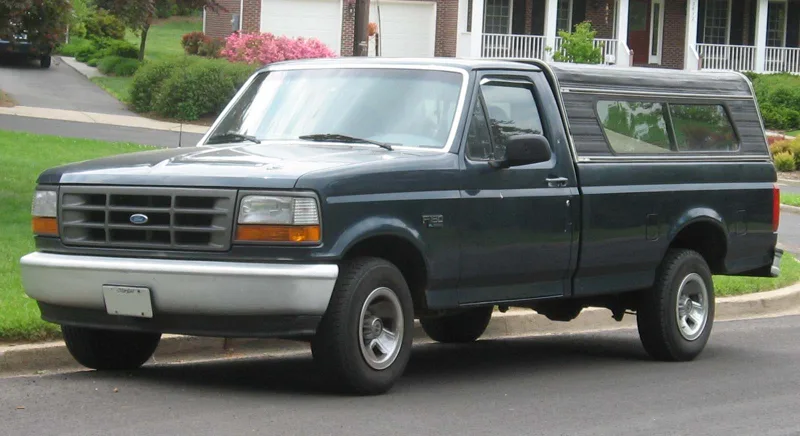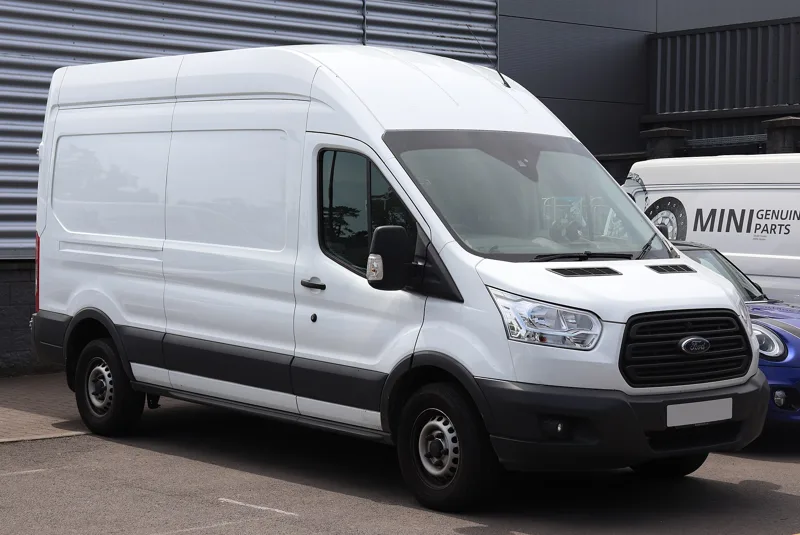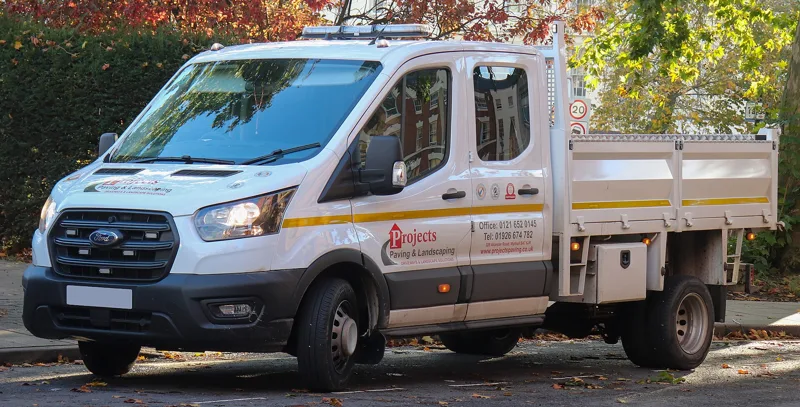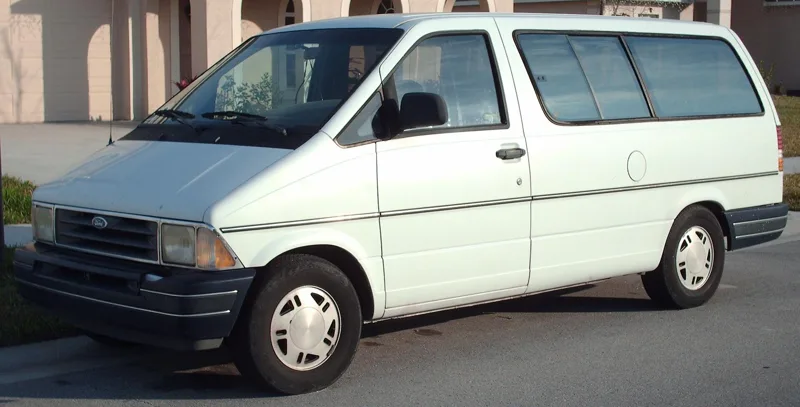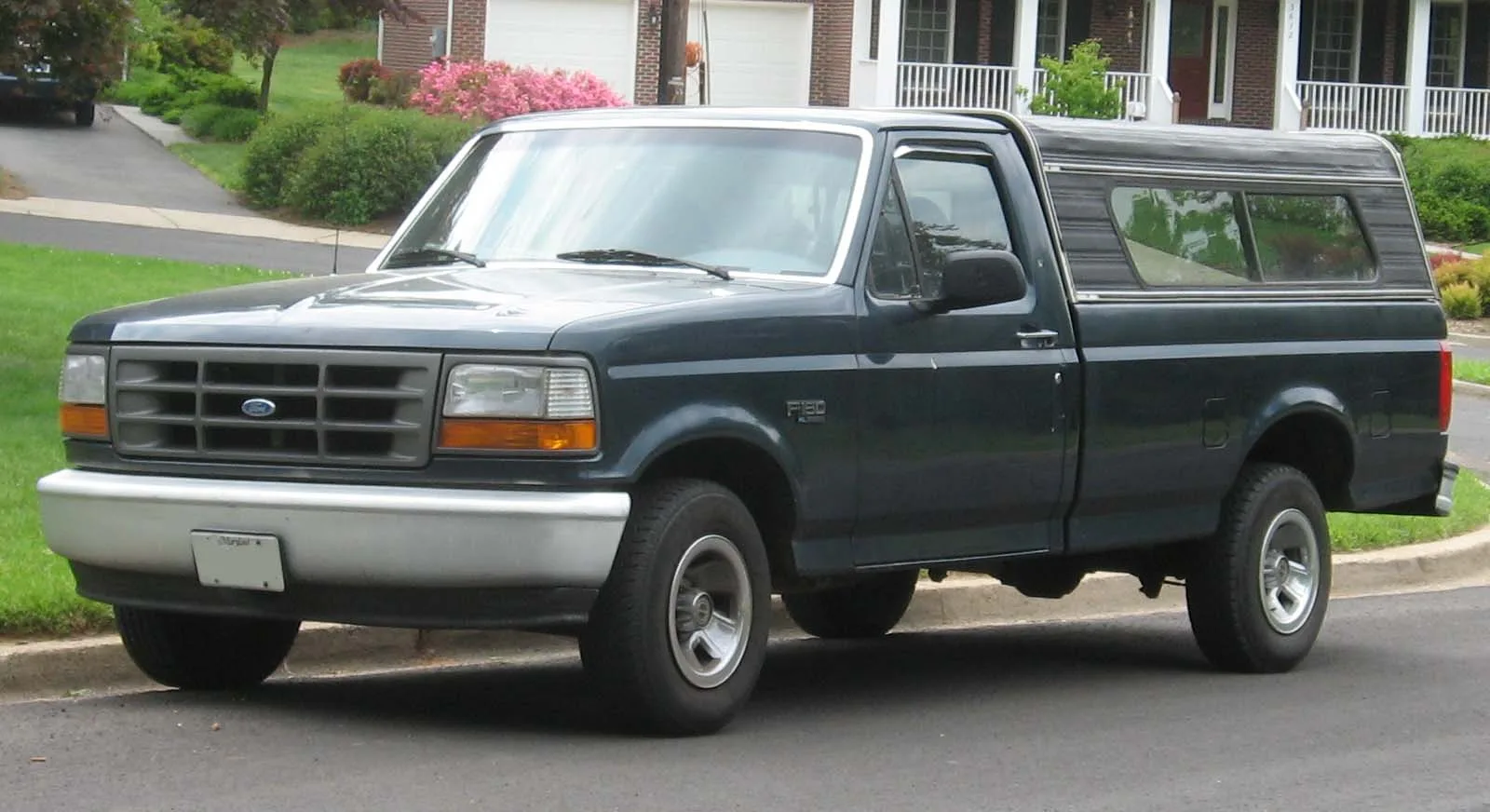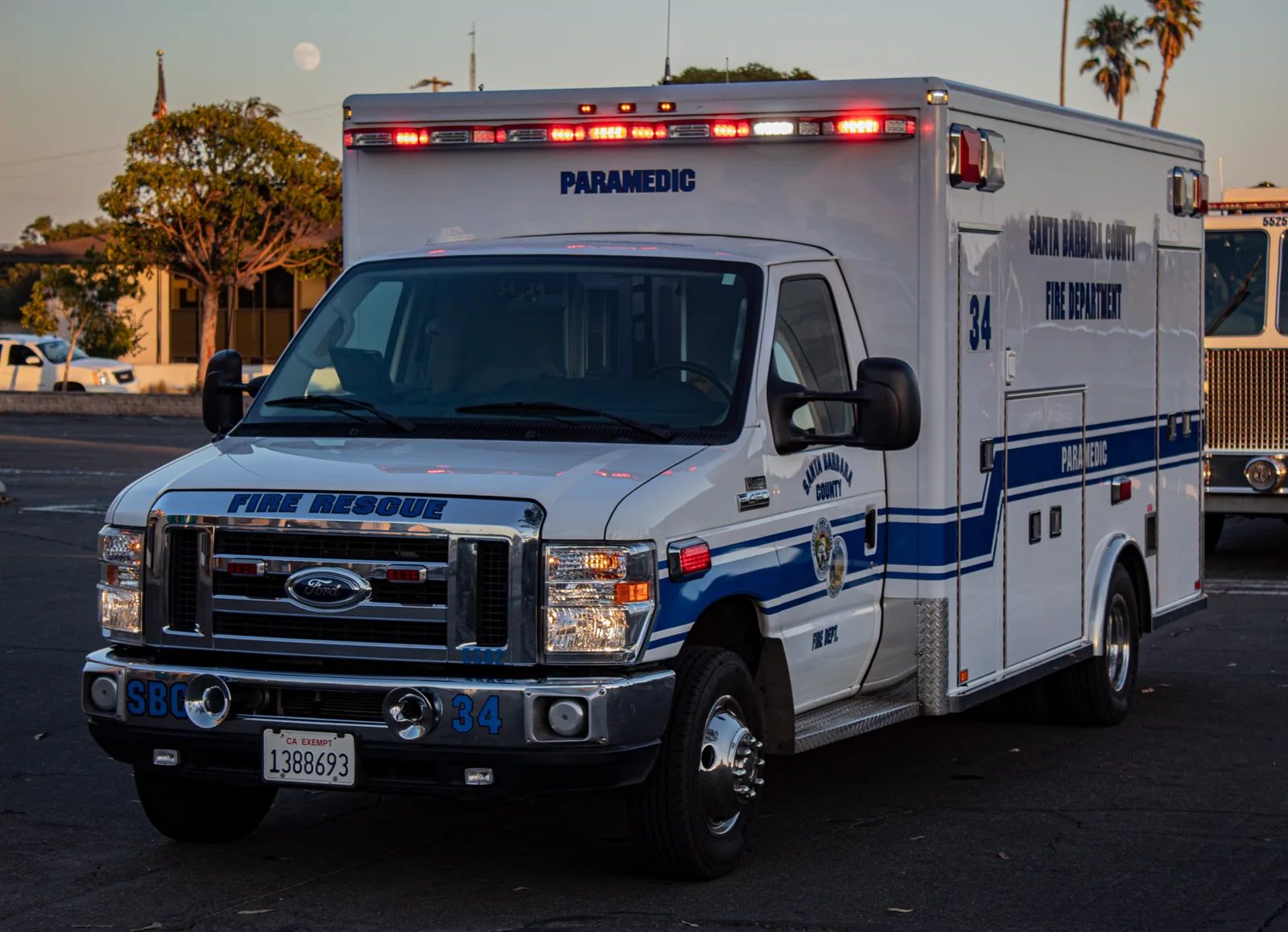
From the 1961 Econoline to today's cutaway chassis, Ford's full-size van line has sold over 8.2 million units.
The Ford E-Series is a range of full-size vans that Ford has built since 1961, first as the Econoline and Club Wagon. It spans four generations and has sold over 8.2 million units. Passenger and cargo versions ended in 2014, leaving cutaway and stripped-chassis models for upfitters.
Ford's full-size van line began as the Econoline in 1961 and has now passed through four generations. It has sold over 8.2 million units, and today the range survives only as cutaway and stripped-chassis vehicles for upfitters. The story runs from a mid-engined van with inline sixes to a 2021 model fitted with a 7.3L V8 gasoline engine.
Where did the Ford Econoline come from?
Development of the Econoline began in 1957 as a single replacement for two Ford lines: panel delivery vehicles based on the F-100, and the Courier sedan delivery. The first generation was released for 1961 on 21 September 1960, and it was sold as a cargo van, a passenger van and a pickup.
Lorain Assembly in Lorain, Ohio, built the model line from 1961 until 2005. Ohio Assembly in Avon Lake, Ohio, has built the E-Series since 1975, so the later production of the van has come from that plant.
In 2021 the line became the second active Ford model after the F-Series to reach 60 years of continuous production. Over 8.2 million units have been sold since 1961, which places the E-Series third among van lines in history, behind only the Ford Transit and the Volkswagen Transporter.
A mid-engined van with inline sixes at the start and a 7.3L V8 by 2021, after four generations.
Why was the first Econoline layout unusual?
The first Econoline placed its engine between the front seats, a mid-engine arrangement that set it apart from its rivals. That gave the van a flat load floor and let its rear doors extend fully to the bumpers. The main competitors were the Chevrolet Corvair van and the Volkswagen Transporter.
The body adapted several elements from the Volkswagen Type 2, although the mid-engined layout forced major departures from that design. The approach was later copied, and the Chevrolet G10 and Dodge A100 adopted the midengine layout in 1964.
The range grew quickly. An eight-door version arrived for 1963, adding two doors on the driver side. The 1965 Super Van extended the body 457.2 mm (18 inches) behind the rear axle.
The 90-inch wheelbase was the shortest for a Ford since 1908, and the Econoline adopted the midengined configuration to accommodate it.
In Canada the Econoline also appeared as a Mercury, and 1,291 Mercury Econoline pickups were built in 1965. Mercury-brand trucks ended in Canada after the 1968 model year, leaving the Mercury Econoline as the last Mercury-branded van for a time.
What engines did the early Econoline vans use?
The first Econoline used a 144-cubic-inch inline-six producing 85 hp (63 kW). A 170-cubic-inch six with 101 hp (75 kW) was optional, and a 240-cubic-inch six became an option from 1965. The mid-engine layout ruled out a V8 on the first generation.
Solid front and rear axles with leaf springs sat at all four corners. A three-speed manual was standard, while a Dagenham four-speed manual was used between 1963 and 1964. The 170-cubic-inch six could be paired with a three-speed automatic from 1964.
How did the second generation change the van?
The second generation launched in January 1968, after a strike in 1967 had delayed the schedule. It moved the engine to the front under a conventional hood, adopted the Twin-I-Beam front suspension from F-Series trucks and grew the wheelbase by 381.0 mm (15 inches).
The conventional hood was a clear break from the mid-engined first generation. The V8 also became an option for the first time, a choice the earlier vans did not offer.
What changed with the 1975 redesign?
The 1975 redesign moved the Econoline onto body-on-frame construction, with Ford as the first American maker to adapt that layout to a full-size van. The new chassis came in 3,150 mm (124 inches) and 3,510 mm (138 inches) wheelbases, and it became the base for ambulances, buses and various trucks.
Sharing its drivetrain with the F-Series opened the way for aftermarket four-wheel drive conversions. The basic styling of the full-size van also went on to influence the Ford Ranger and the Bronco II. A 1983 option added a 6.9L IDI diesel V8 from International Harvester, which was enlarged to 7.3L in 1988.
The Econoline won Motor Trend's first Truck of the Year title in 1978. The Blue Oval appeared on the grille in 1983, replacing the lettering on the hood. Manual transmissions were discontinued after the 1989 model year, as automatics had become the norm in full-size vans.
How did the fourth generation reshape the E-Series?
The fourth generation arrived for the 1992 model year with a new body and interior, while the chassis was largely carried over. The line was renamed the E-Series for 1999, and the Club Wagon nameplate was dropped. Motor Trend's Truck of the Year award for 1992 went to the Chateau.
The E-Series became the best-selling full-size van in the US from 1980, a position it held when its passenger and cargo versions were retired. Its later years were shaped by cutaway chassis and by the upfitters who finished them. In the 2010s the E-Series still led the Class C motorhome segment, a market built on cutaway chassis.
In 1995 Ford began exporting the Econoline to Mexico under NAFTA. The Transit, by contrast, had been sold outside North America since 1965.
Which engines powered the later E-Series?
The 1992 launch used a 4.9 L inline-six as standard, with a 5.0 L V8 on the E-150 only and a 5.8 L V8 as an option. On 350-series vans a 7.3 L Navistar diesel V8 was also available. In 1995 a 7.3L Ford Power Stroke diesel replaced the IDI diesel.
The 1997 update changed the lineup again. A 4.2 L V6 replaced the inline-six, and a 6.8 L V10 replaced the 7.5 L V8. The 2004 model year brought a 6.0L diesel in place of the 7.3L unit, and the 4.6 L V8 became standard on the E-150 and E-250.
Flex-fuel capability arrived in 2009 for the 4.6 L and 5.4 L engines. Diesel availability ended when the 6.0L Power Stroke was dropped. In 2014 the final 4.6 L V8 was produced, and the 5.4 L V8 became the standard engine for 2015.
The 2017 model year made the 6.8 L V10 standard and offered a 6.2 L V8 as the option. Since 2021 the E-Series has used only the 7.3 L V8 gasoline engine, shared with the Super Duty truck, and both the V10 and V8 can be converted to CNG or LPG. The tow rating is up to 5 tons (10,000 lbs).
When did passenger and cargo vans end?
Ford ended production of E-Series passenger and cargo vans in June 2014, when the Transit replaced them in North America. From the 2015 model year the E-Series was built only as a cutaway or stripped chassis. The chassis-cab version was eliminated from the 2019 model year, and no E-Series was produced for 2020.
Ford said the line had changed little since 1992, on a chassis that dated from 1975. At the 2008 update, 95% of sales went to commercial or fleet buyers.
What does the E-Series look like today?
The 2021 model year brought a redesigned interior with an electronic instrument cluster. The cluster has a 58 mm (2.3-inch) monochrome screen, with an optional 200 mm (8-inch) colour screen. Adaptive cruise control and lane departure warning were added, options the E-Series had not previously offered.
The 2021 update also left the 7.3L V8 as the only gasoline engine, replacing a choice that had included V10 and several V8 options. Ford Sync was eliminated for 2021, leaving a basic AM/FM single DIN radio as the only factory audio system. The 2026 model year gave the Cutaway a new grille, its first exterior update since 2008. The 2008 redesign had brought a restyled front end similar to the Super Duty trucks, along with larger brakes, improved steering and rollover stability control, all aimed at handling and safety.
Which body variants were built?
The range included the Club Wagon passenger van, marketed as an alternative to station wagons, and the Station Bus, largely intended for fleet and commercial use. A pickup bodystyle ran from 1961 to 1967 with a 7-foot bed. The van outsold the pickup nine-to-one during the first generation.
The Hi-Cube cab-chassis arrived in 1972 with a box-van body. The E-Super Duty Class 4 variant appeared in 1996 and was later renamed the E-450, and it suited box truck and bus conversions. The E-550 Super Duty was offered only as a cutaway from 2002 to 2003, with a GVWR of up to 19,000 lbs.
The Chateau trim had standard air conditioning and an optional 12-passenger layout. The 1978 Super Van added room for up to 15 passengers. The E-150 Traveler replaced the Chateau for 2001, but it was dropped after 2002. The Club Wagon nameplate itself went when the E-Series name arrived for 1999.
What are the Ford E-Series specifications?
| Specification | Detail |
|---|---|
| First release | Released for 1961 on 21 September 1960 |
| Generations | Four |
| Units sold | Over 8.2 million since 1961 |
| First-generation wheelbase | 90-inch |
| First-generation engine | 144-cubic-inch inline-six, 85 hp (63 kW) |
| Fourth-generation launch engine | 4.9 L inline-six |
| Third-generation wheelbases | 3,150 mm (124 inches) and 3,510 mm (138 inches) |
| Current engine (2021 onward) | 7.3 L V8 gasoline |
| Tow rating | Up to 5 tons (10,000 lbs) |
| E-Super Duty GVWR | 16,000 lbs |
| E-550 GVWR | Up to 19,000 lbs |
| E-550 wheelbase | 159.5 inches to 233.5 inches |
| Instrument cluster (2021 onward) | 58 mm (2.3-inch) monochrome; optional 200 mm (8-inch) colour |