How ACC adjusts speed to traffic, why radar, lidar and cameras each behave differently, and how the technology grew from 1990s laser experiments to Level 2 driving.
Adaptive cruise control adjusts a car's speed to keep a set gap from the vehicle ahead, using radar, lidar or cameras. It slows when traffic slows and resumes the preset speed once the road clears. Most systems are SAE Level 1, and the best ones handle stop-and-go traffic.
Adaptive cruise control, or ACC, is an advanced driver-assistance system that adjusts a car's speed to keep a safe distance from the vehicle ahead. Sensors watch the traffic in front, the car slows when the vehicle ahead slows, and it accelerates back to the preset speed once the road clears. Developed from the old cruise control, ACC has become one of the most common assistance features in modern cars.
What is adaptive cruise control?
Adaptive cruise control uses sensors such as radar, lidar or cameras to measure the traffic ahead. Where a conventional cruise control holds one speed regardless of what is in front, ACC changes the car's speed to match the vehicle in front. It can slow the car when traffic slows and resume the preset speed when the lane opens up again.
The technology dates from the 1990s, and it has evolved from early laser-based systems into radar and camera designs capable of working across the full speed range. Those later systems can handle stop-and-go traffic, which earlier units could not manage. The result is a feature that makes motorway driving far less tiring, particularly in heavy traffic.
Adaptive cruise control began as a laser that could only warn, and grew into a system that can stop a car in traffic.
How does ACC operate on the road?
The driver sets a cruising speed and a following distance. When the car approaches slower traffic, ACC reduces engine power and may apply the brakes to hold the chosen gap. When the way ahead clears, the car accelerates back to the preset speed. The system adjusts throttle and, in many designs, braking, so the driver is relieved of the constant small corrections that cruise control leaves to them.
ACC is not a replacement for the driver. It works as a supplement, and it requires continuous supervision. Drivers remain responsible for the car, and the system is designed to assist rather than to take over. Some full speed range systems can carry the car through stop-and-go traffic, but attention is still needed at all times.
How much does ACC cost?
Adaptive cruise control is often standard on higher trim levels and sometimes sold as part of an optional safety or technology package. Adding it can increase a vehicle's price by several hundred to several thousand US dollars, depending on the manufacturer and the features bundled with it.
ACC is frequently packaged with other driver-assistance technologies, including lane-keeping assist and automatic emergency braking. A buyer may therefore be paying for a broader safety suite rather than for ACC alone. Comparing packages is usually the best way to see what a particular price actually includes.
Which sensors does ACC use?
ACC systems are usually grouped by the sensing technology that detects and tracks vehicles ahead. The main options are radar, lidar, cameras and combinations of these. Each has strengths and weaknesses, which is why manufacturers often combine them. The table summarises how the main approaches compare.
| Sensor | Main strength | Main weakness |
|---|---|---|
| Radar | Wide field of view with accurate range measurements to 160+ meters | Can be affected by the shape of the surrounding metal and by the car's own fascia |
| Lidar | Largest detection distance and the best accuracy of all ACC systems | Fog and water particles disturb the laser, and dirty cars are harder to track |
| Camera | Visual context, including object classification | Distance is inferred from image cues rather than measured directly |
| Radar and camera | Radar range and speed combined with camera detail | More hardware to integrate and calibrate |
How do radar systems detect vehicles?
Radar sensors emit a radio wave at either 24 GHz or 77 GHz, then measure how long the reflection takes to return. That timing reveals how far away the vehicle ahead is. Because the beam is widely distributed, radar gives a much broader field of view than a narrow beam would, while still delivering measurements of 160+ meters, roughly 525 feet.
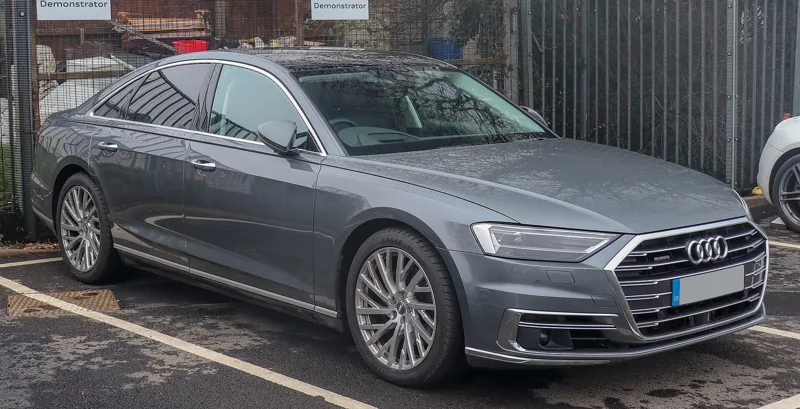
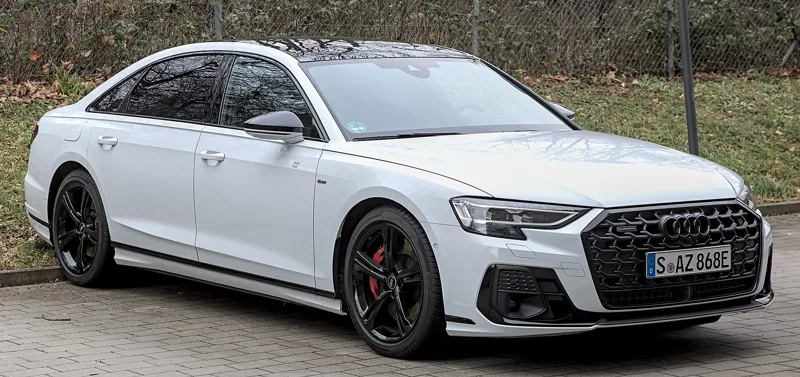
Radar sensors can hide behind plastic fascias, although the fascias may look different from those on a car without the feature. Mercedes-Benz, for example, places its radar behind the upper grille in the centre, behind a solid panel with painted slats that imitate the rest of the grille. Single radar is the most common arrangement. Some cars use two similar sensors, as the 2010 Audi A8 and the 2010 Volkswagen Touareg did, while the BMW 5 and 6 Series combine a long-range radar with two short sensors at the corners.
How do lidar and camera systems work?
Lidar stands for light detection and ranging, and laser-based ACC gives the greatest detection distance and accuracy of any approach. Its weakness is weather. Fog and water particles in the air can absorb or redirect the laser light, and laser systems also struggle to track dirty vehicles that reflect poorly. The sensor must be exposed, so it usually sits in the lower grille, offset to one side.
Camera-based ACC uses one or more forward-facing cameras and computer vision. Rather than measuring range with radio waves or laser pulses, the system estimates range and closing speed from visual clues, such as how large an object looks and how it shifts between frames. Stereo cameras can estimate depth from the parallax between two views. Subaru's EyeSight uses camera-based sensing for adaptive cruise control and related functions, while Tesla Vision relies mainly on cameras and neural-network processing.
Some systems combine radar and cameras. Radar supplies robust range and relative speed measurements, and the cameras add visual detail that helps classify objects and interpret the scene. The pairing aims to cover the weaknesses of each sensor with the strengths of the other.
What are predictive adaptive cruise control systems?
Predictive adaptive cruise control, or PACC, goes beyond reacting to the vehicle ahead. It incorporates forward-looking data and behavioural estimates to change speed before conditions arrive. Instead of responding only to the distance and relative speed of a preceding car, the system uses extra information to adjust proactively.
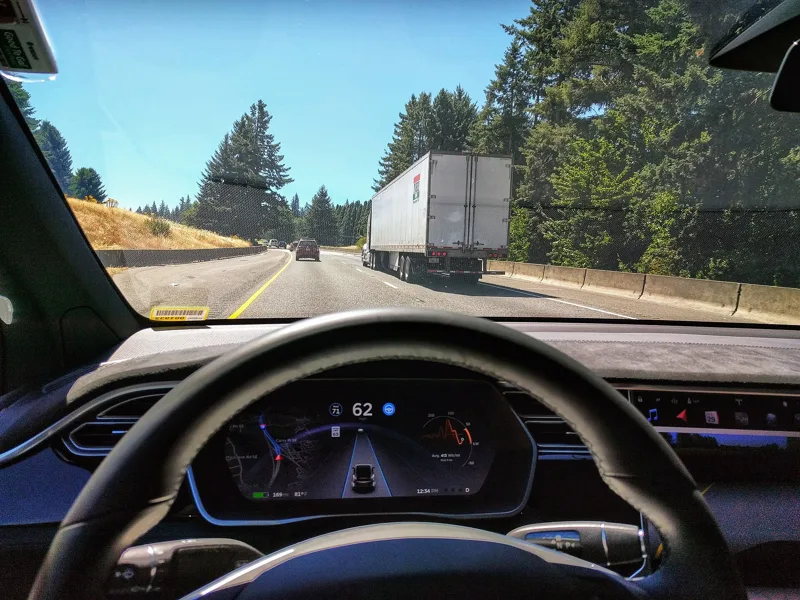
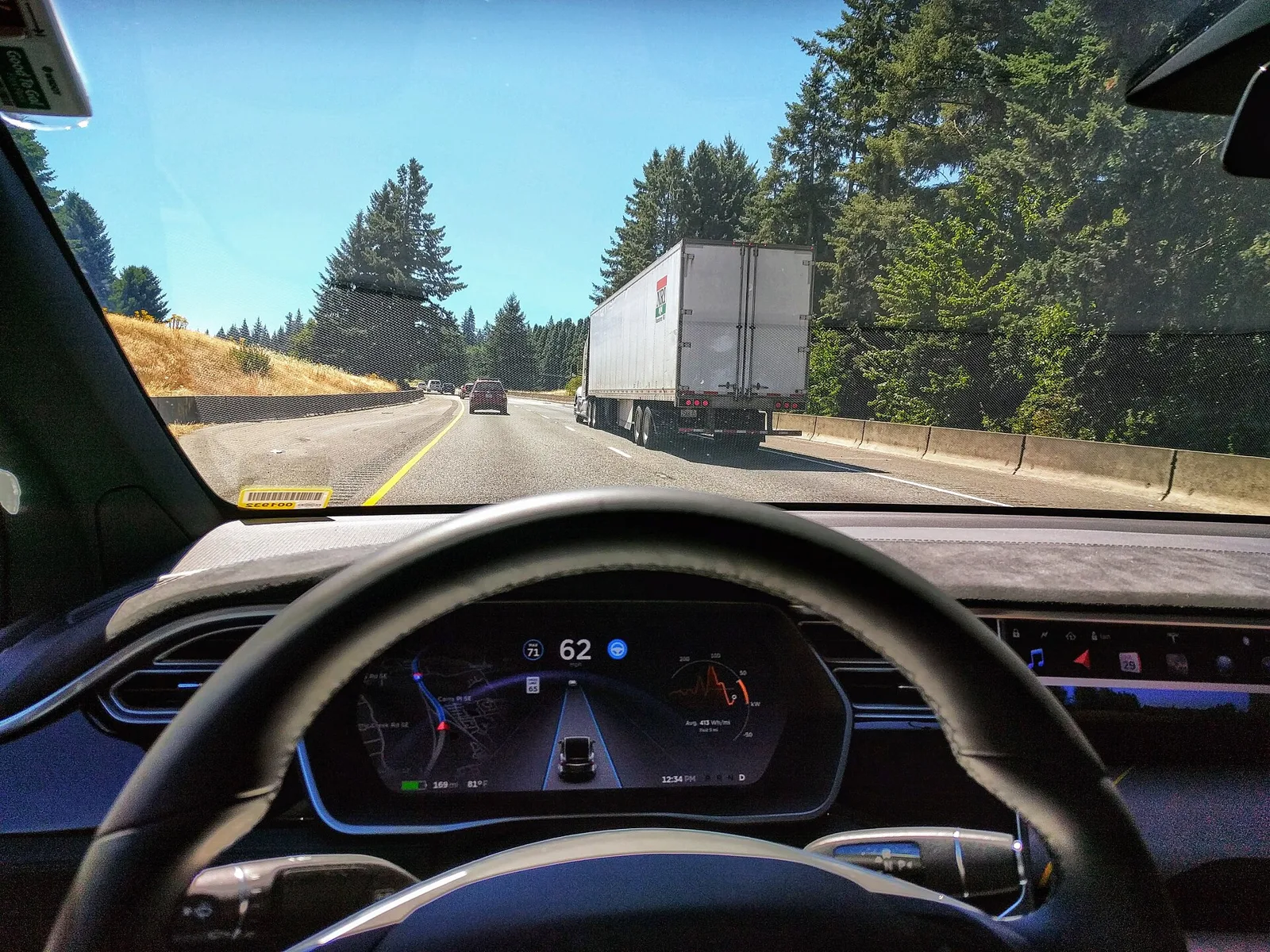
In production cars, PACC uses navigation and map data to anticipate features of the road. GPS location, digital maps and traffic sign recognition can prompt the car to slow before a bend, a change in speed limit or a motorway exit. Ford BlueCruise, GM Super Cruise and Tesla Autopilot bundle ACC with lane centring, high-precision maps and driver monitoring to enable wider automation on compatible roads. Safety organisations stress that these remain assistance features that still need active driver supervision.
What rules govern adaptive cruise control?
ACC is regulated mainly by ISO 15622:2018, which sets out minimum functional requirements, control behaviour, driver interface elements, diagnostics and performance test procedures. The standard treats ACC as partial automation of longitudinal control, and it distinguishes between Full Speed Range systems, called FSRA, and Limited Speed Range systems, called LSRA.
Because ACC can brake automatically, it must also satisfy braking regulations. In countries that apply the UNECE framework, UN Regulation No. 13-H governs braking performance and electronic brake control for passenger cars. Any active brake control in an ACC system has to operate within the limits that regulation prescribes.
How did adaptive cruise control begin?
ACC developed during the 1990s as an extension of conventional cruise control. Early systems relied on lidar sensors and gave warnings or throttle control without automatic braking. Radar systems that could modulate both throttle and brakes arrived by the late 1990s and early 2000s. Over time manufacturers added full-speed stop-and-go operation, collision mitigation and, later, coordination with lane centring.
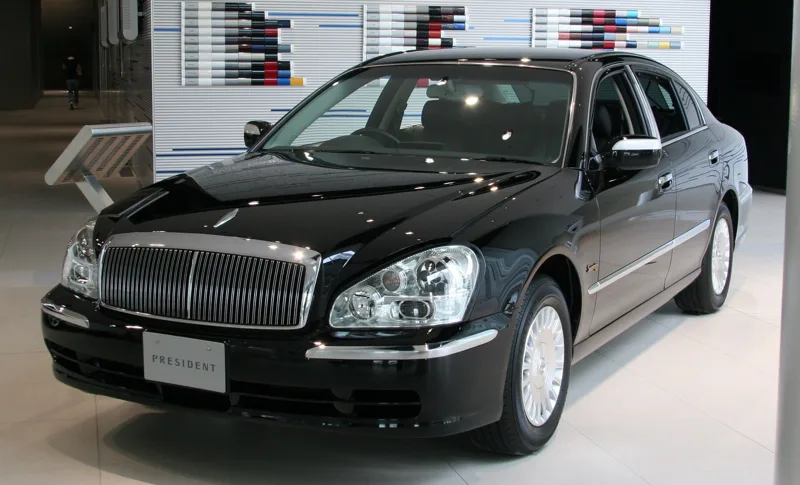
Mitsubishi began the story in 1992 with a lidar system on its Debonair that gave only a distance warning, without touching the throttle, brakes or gearshifts. In 1995 its Diamante added laser Preview Distance Control, which managed speed through the throttle and downshifts but could not brake. Toyota's 1997 Celsior offered similar laser ACC in Japan.
The first radar-assisted ACC came from Mercedes in 1999. Distronic appeared on the S-Class W220 and the CL-Class, and it adjusted speed to the car ahead to keep a safe distance. The same year Jaguar offered radar ACC on the XK, Nissan introduced laser ACC on the Cima, and Subaru brought out a camera-based system on the Legacy Lancaster, which it described as the world's first.
How did ACC spread in the 2000s?
The early 2000s saw rapid spread. BMW introduced radar Active Cruise Control in Europe on the 7 Series in 2000, and Toyota brought laser ACC to the US that year on the LS 430, adding brake control soon afterwards. Infiniti, Renault, Lancia, Volkswagen, Audi and Cadillac all offered radar ACC between 2001 and 2003. Toyota then shifted from laser to radar, and the Lexus LS added a radar-guided pre-collision system.
The mid-2000s brought real stopping ability. In 2005 Mercedes upgraded its system so that the S-Class W221 could halt completely when needed, a function later named Distronic Plus. The Volkswagen Passat B6 worked from 30 to 210 km/h, and Audi's Q7 introduced full speed range ACC plus with emergency braking preparation. In September 2006 Toyota's Lexus LS 460 offered all-speed tracking from 0 to 100 km/h, designed for congested highways. BMW followed in 2007 with full-speed stop-and-go on the 5 Series E60.
What were the later ACC milestones?
From the late 2000s ACC became common across brands. Lincoln introduced radar ACC on the MKS in 2008, Hyundai offered it on the Equus in Korea, and Volkswagen made ACC standard on the Golf MK7 SE and above from 2012. Ford's sixth-generation Taurus debuted ACC in 2010, and in 2015 the company put it on a pickup truck for the first time. Volvo offered ACC on all its models from 2015.
The 2010s brought more automation. Mercedes introduced Distronic Plus with Steering Assist, a traffic jam assist, in 2013, and BMW added Active Cruise Control with a Traffic Jam Assistant the same year. Tesla added Autopilot to the Model S in 2014. Cadillac launched Super Cruise on the 2018 CT6, for cars produced from 6 September 2017, using radar, cameras and lidar mapping data for hands-free driving on limited-access highways. Toyota made dynamic radar cruise control part of its Safety Sense P package from 2017.
How has Mercedes shaped ACC safety?
Mercedes-Benz has been central to the story. The original Distronic was followed by Distronic Plus, which could halt the car on most sedans. A well-known Top Gear demonstration showed a car slowing from motorway speed to a roundabout and stopping without any pedal input. In 2016 Mercedes introduced Active Brake Assist 4, which was the first emergency braking assistant to recognise pedestrians.
Not every test went smoothly. In 2005 the German magazine Stern tested the original Distronic and found that the system did not always brake in time. Mercedes's head of safety, NVH and testing at its technology centre said some of those tests failed because the car was in a metallic hall, which disturbed the radar. Later versions received upgraded radar and other sensors that are not disrupted by metal surroundings. In 2008 Mercedes compared crash rates and concluded that vehicles with Distronic Plus had around 20% fewer crashes.
Is there an aftermarket ACC option?
For some models, Comma.ai offers an aftermarket alternative to factory ACC through its openpilot software and Comma hardware. Once installed in a compatible vehicle, openpilot replaces or adds to the existing driver-assistance features, which can bring Level 2 capability to cars that did not originally have it. Buyers should check compatibility and the legal position in their own market before fitting one.