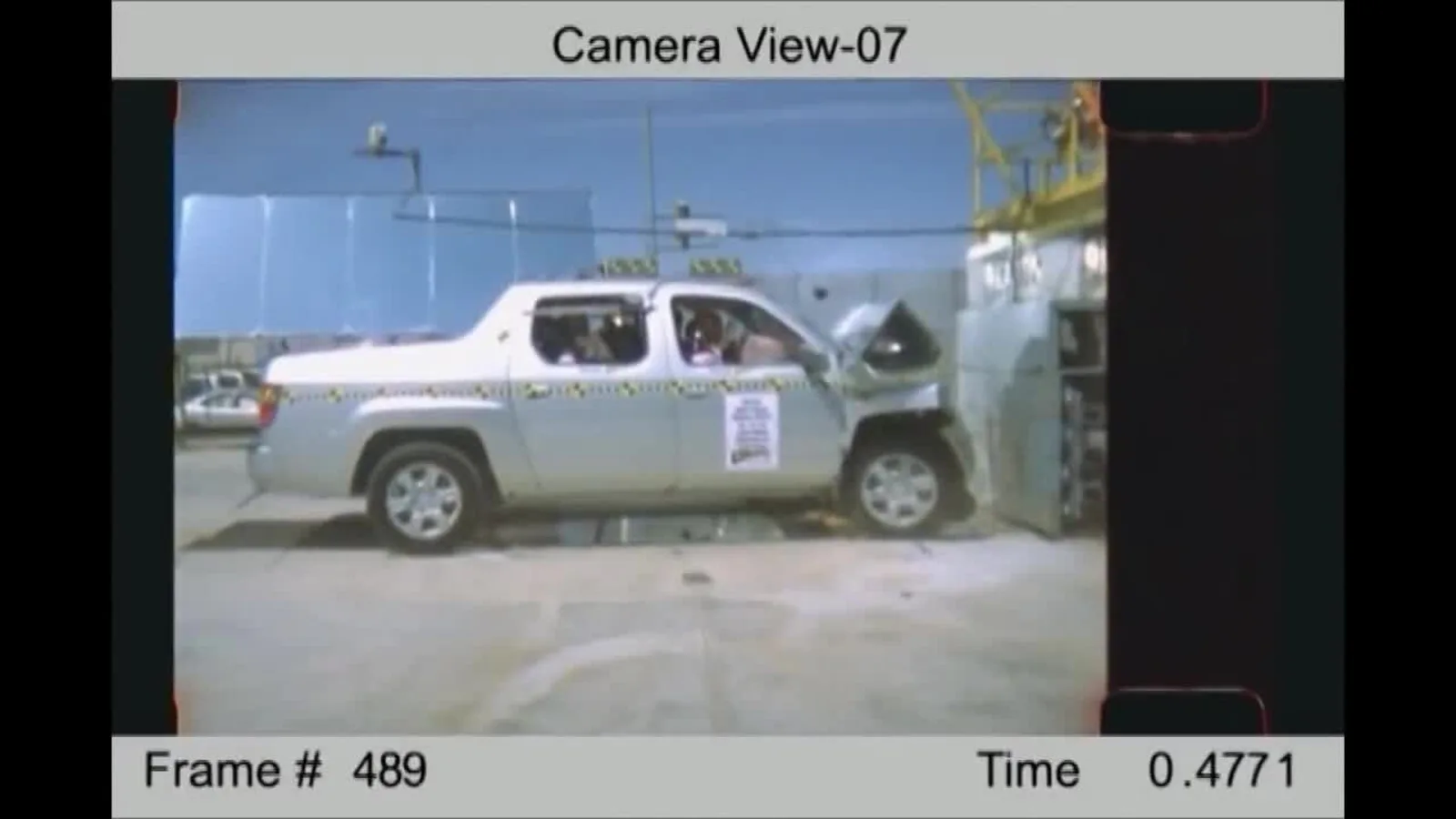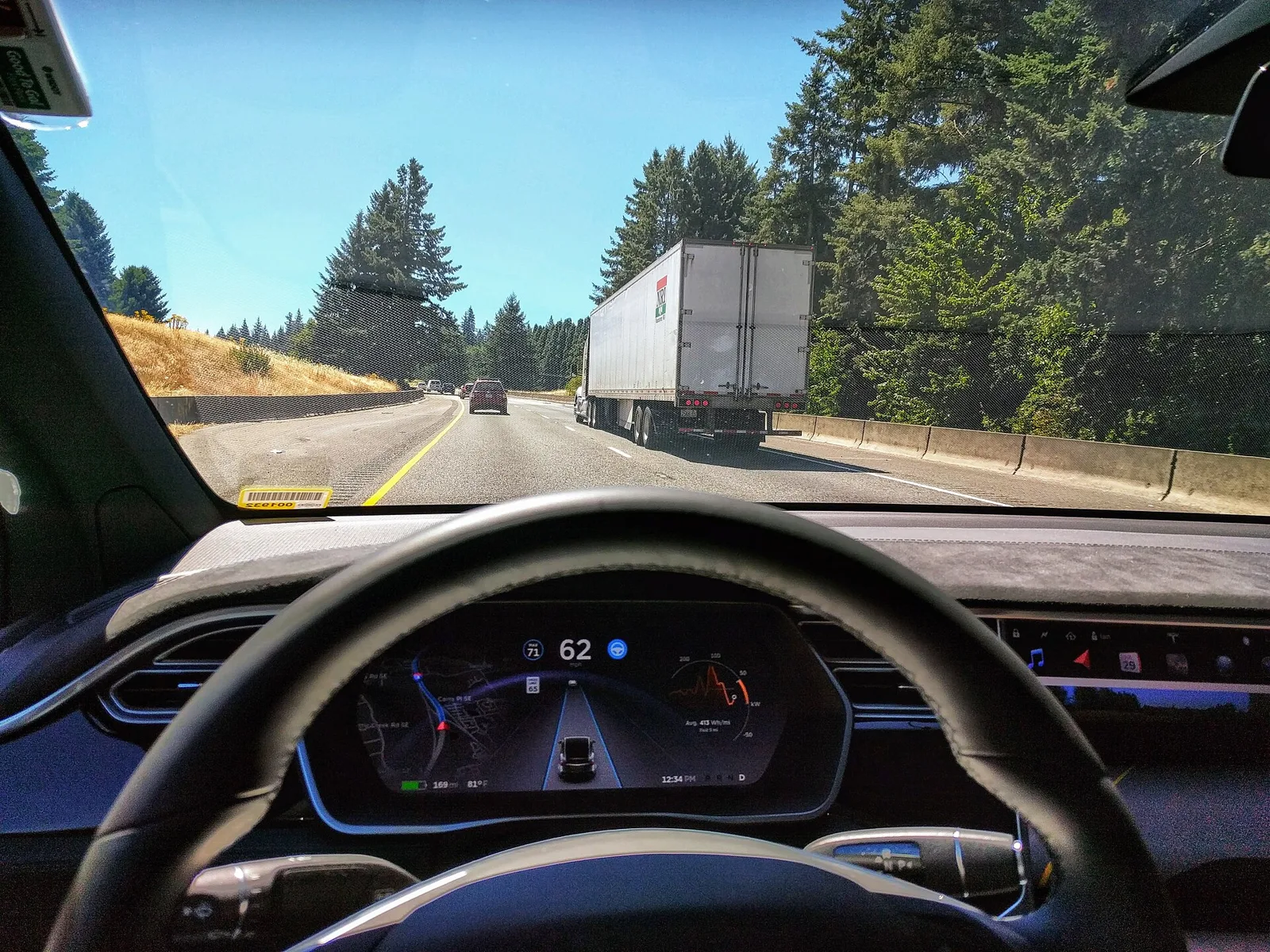
From automatic emergency braking to lane keeping, adaptive cruise and blind-spot monitors, how each system works, the crash savings claimed for them and where they stop.
ADAS, or advanced driver-assistance systems, use sensors and cameras to spot obstacles or driver mistakes and respond. The family includes automatic emergency braking, adaptive cruise control, lane keeping and blind-spot monitors. They help drivers by alerting, braking or steering, but they require an attentive human.
In Japan, 72 accidents in 2017, 101 in 2018 and 80 across the first nine months of 2019 were put down to drivers trusting automatic brakes more than they should. The technology works. The trouble starts when people forget that it is an assistant and not a chauffeur.
What is ADAS?
ADAS stands for advanced driver-assistance systems: technologies that help a driver operate a vehicle safely. Sensors and cameras spot nearby obstacles or mistakes by the driver, and the car then responds by warning, braking, steering or a combination. Depending on the feature, they can also enable various levels of autonomous driving.
The rationale is simple. Most road crashes involve human error, so these systems aim to automate, adapt and enhance what the car does to reduce it. Some features only alert the driver to a problem. Others put safeguards in place, and a few take control of the car if they have to.
What separates ADAS from older driver aids is where the information comes from. Instead of reading only the car's own internal data, it draws on the world outside, through imaging, LiDAR, radar, computer vision, telemetry and in-car networking. Some inputs can arrive from other vehicles or from roadside infrastructure. Because modern cars carry this in their electronics, makers can add features at the design stage or later through over-the-air updates.
These are real-time systems that must rank incoming information and react at once. That is also a weak point: assigning priorities wrongly is what can make such a system do more harm than good. The idea is older than it seems. ADAS first reached production cars in the 1970s with the anti-lock braking system, and electronic stability control, blind spot information, lane departure warning and traction control followed.
| System | What it does | Does it act on the car? | Main limit |
|---|---|---|---|
| Forward collision warning | Alerts the driver to a closing gap | No, alert only | Cannot brake by itself |
| Automatic emergency braking | Brakes to avoid or soften a collision | Yes, can brake without driver input | Weather and false triggers |
| Adaptive cruise control | Holds a speed and following distance | Yes, throttle and often brakes | Needs a supervising driver |
| Lane departure warning | Alerts when the car drifts from its lane | No, alert only | Needs visible lane lines |
| Lane keep assist | Steers the car back toward its lane | Yes, applies steering | Driver must stay in control |
| Blind spot monitor | Warns of obstacles beside or behind | Can work with emergency braking | Covers limited areas |
These systems assist the driver. None of them replaces the driver.
What is AEB, and how does automated emergency braking work?
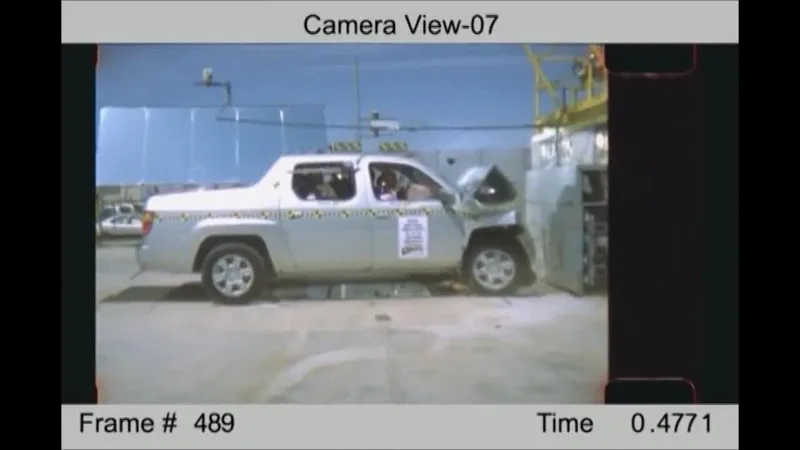
AEB detects a likely forward collision, warns the driver and, when the crash becomes imminent, can brake on its own without any driver input. Some systems can steer as well. Braking suits low speeds, below 50 km/h (31 mph), while steering may suit higher speeds where the adjacent lane is clear.
Euro NCAP describes the idea in three words: autonomous, emergency and braking. It acts independently of the driver, steps in only in a critical moment and tries to avoid the crash by applying the brakes. AEB is not the same as forward collision warning, which alerts the driver but does not brake the car. Steering-based avoidance is a newer concept with limits of its own, including heavy reliance on lane markings, sensor weaknesses and the way driver and system interact.
Early work was slow to catch on. A radar prototype called the Cadillac Cyclone appeared in the late 1950s and was judged too costly to build. William L. Kelley patented what is regarded as the first modern forward collision avoidance system in 1990, and in 1995 engineers at Hughes Research Laboratories demonstrated a radar-based system called Forewarn, using a custom antenna at 77 GHz. AEB reached the British market in 2008.
What the studies say about AEB
The results are encouraging, though the figures vary. One 2015 study drawing on European and Australasian figures suggests AEB can cut rear-end collisions by 38%, and a police-reported crash study found a 39 percent reduction. A 2020 Italian study put it at 45%, drawing on 1.5 million vehicles in 2017 and 1.8 million in 2018. In Australia, AEB has been linked to a 55 percent fall in police-reported crashes, 40 percent in rear-end crashes and 28 percent in occupant trauma.
The European Commission has noted that efficiency depends on the analysis, citing 38% in one study, 9% to 20% in Volvo figures and 44% in another. In 2019 the IIHS and HLDI linked forward collision warning combined with autobrake to 50% fewer front-to-rear crashes and 56% fewer of those involving injuries, against 27% and 20% for warning alone.
How does adaptive cruise control work?
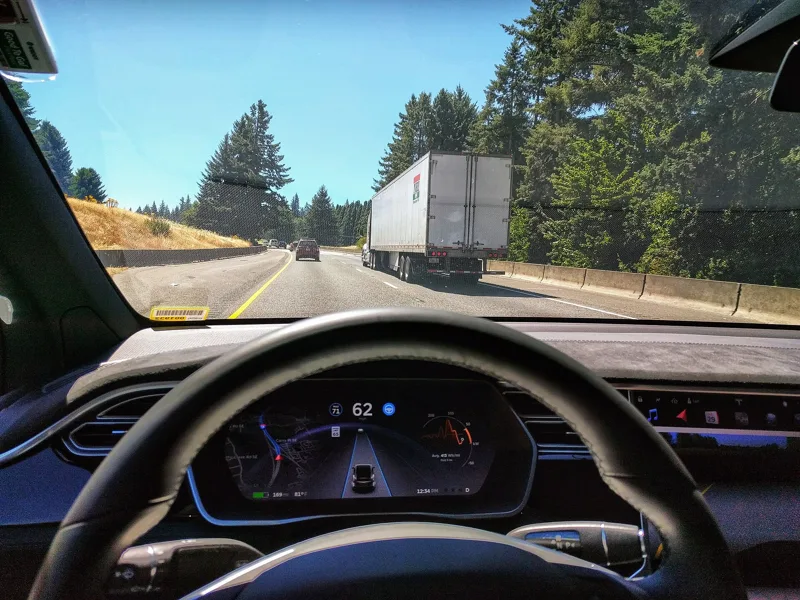
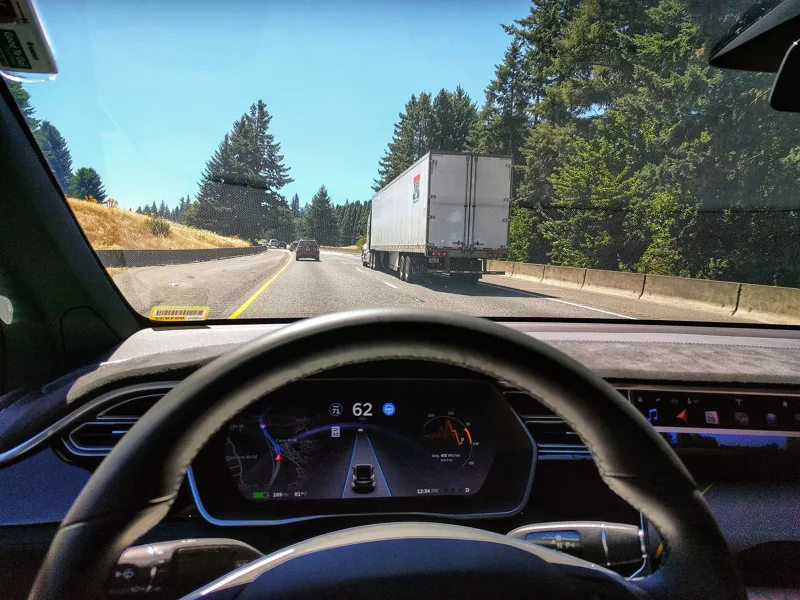
Adaptive cruise control, or ACC, takes a speed and a following distance chosen by the driver and keeps to them. Using radar, lidar or cameras, it slows the car when traffic ahead slows down, then accelerates back to the set speed when the road clears. Some full speed range versions can come to a stop and move off again in stop-and-go traffic.
It supplements the driver rather than replacing them. Under SAE International's scale, most ACC counts as Level 1 automation because it controls only the car's forward and backward motion. Pair it with lane centering and it can qualify as Level 2, but continuous supervision remains required either way. Think of it as a very attentive co-driver who watches the gap, not one who watches the road for you.
The sensor type shapes behaviour. Radar sends out a radio wave at 24 GHz or 77 GHz and times the return, giving accurate readings out beyond 160 metres (roughly 525 feet), and it can sit hidden behind plastic trim. Lidar offers the greatest range and accuracy but copes worse with fog and water in the air, and struggles to track dirty vehicles. Camera systems infer distance from image cues; Subaru's EyeSight uses a pair of cameras so it can judge depth, and Tesla Vision leans mainly on cameras with neural-network processing. Many cars combine radar and cameras to cover each other's weaknesses. Predictive versions go a step further by using maps, GPS and sign recognition to slow before a bend or a lower limit.
The history shows how quickly the idea spread. In 1992 Mitsubishi offered a lidar distance warning on the Debonair that only warned. Toyota's Celsior carried a laser ACC in 1997, and in 1999 Mercedes launched Distronic, the earliest radar-assisted ACC, for the S-Class and CL-Class, while Subaru fitted the first camera-based version to the Legacy Lancaster. By 2005 the S-Class could halt the car completely, and in 2006 the Lexus LS 460 offered tracking from 0 to 100 km/h (0 to 62 mph).
On price, ACC is commonly standard on higher trims or bundled into safety or technology packs, where it may add several hundred to several thousand US dollars. Because it often comes together with lane-keeping assist or AEB, a buyer may be paying for a wider safety suite rather than one feature. It is governed mainly by the ISO 15622:2018 standard, with braking regulations applying where it can brake.
What is lane keep assist, and how is it different from lane departure warning?
Lane departure warning only tells the driver the car is leaving its lane, with a visual, audible or vibration alert. Lane keep assist goes a step further and, if the driver does not respond, steers to keep the car in lane. Lane centering assist holds the car in the middle and asks the driver to take over in difficult situations.
Cameras watching the road ahead do most of the work, though laser and infrared sensors have been used. It cannot work where the edge of the lane has no painted line, and it normally stays quiet if the turn signal is on. A related feature, emergency lane keeping, applies correction to a car that crosses a solid lane marking. A further class, automated lane keeping systems, is designed to follow the markings with no human at the wheel; a UNECE regulation released in 2020 covers it for specific roads up to 60 km/h.
The first working model was fitted to a Rover SD1 in England in 1988 by the inventor Nick Parish. Production arrived in Europe in 2000 with an Iteris system on Mercedes Actros trucks. Honda launched its Inspire system in 2003, supplying up to 80% of the steering torque needed to stay in lane, and Citroen was the first in Europe to offer such a warning on cars in 2005, using infrared sensors and a vibrating seat.
Results are mixed. A 2012 study found lane departure systems unhelpful and perhaps harmful at that stage of development. A later pair of studies of police data from 25 states between 2009 and 2015 found lane keeping and blind-spot monitoring were linked to 11 percent fewer single-vehicle, sideswipe and head-on crashes and 21 percent fewer injuries in them, although the sample was too small to control for other variables. The IIHS has also worried that drivers may become less vigilant when they rely on automated safety systems.
What do blind-spot monitors and other alerts do?
A blind-spot monitor watches the areas beside and behind the car that the driver cannot see from the seat, and tells the driver when an obstacle is close. It usually works with the emergency braking system. A rear cross-traffic alert often partners it, warning of approaching traffic as you reverse out of a space. US crash data suggest blind zone detection could decrease crashes by 9%.
Other aids fill in the picture:
- Driver drowsiness detection: reads facial patterns, steering movement and signal use to spot fatigue, then sounds an alert and may shake the seat.
- Parking sensors: beep faster as an object nears, but can miss low objects such as parking stops, so they usually sit alongside a camera.
- Pedestrian protection: lifts the bonnet in a collision to cushion a pedestrian's head.
- Electronic stability control: slows the car and brakes individual wheels to prevent understeer and oversteer.
- Crosswind stabilisation: reads yaw, steering angle and lateral acceleration to resist a side gust.
- Vibrating seat warnings: available on Cadillacs since the 2013 ATS, they vibrate toward the side the car is drifting.
What can ADAS not do?
Quite a lot. These systems can be confused by weather, road markings, unusual objects and their own mistakes, and none is meant to take over the driving. Heavy rain, snow or fog may temporarily reduce the effectiveness of emergency braking, and unnecessary braking can be triggered by shadows on the road, parked cars, metal signs on a bend or steep driveways.
Other limits are built into the design. Forward collision warning and lane departure warning only alert; they do not take control. Adaptive cruise control only governs speed and distance, so it still needs an alert driver. Automatic parking takes over steering, braking and acceleration, but the driver must watch the surroundings. The US NTSB has noted that some collision avoidance systems may fail to detect a damaged crash attenuator, so the car could drive into it.
Upkeep matters too. Alignment changes or collision damage can disturb the sensors, which is why many manufacturers require an automatic reset afterwards. Repair costs can also rise: the 2019 IIHS and HLDI analysis found that vehicles with rear automatic braking had repair bills about US$109 higher on average, because the sensors sit in places prone to damage.
A further limit is the driver. In HGVs, inquiries found some lorry drivers regularly switched off AEB to follow closer, which led to EU standards from 2025 limiting deactivation to 15 minutes. The opposite mistake, relying on a system too much, is what the Japanese accident figures show.
Where is ADAS required by law?
Increasingly, in many places. In the European Union, advanced emergency braking has been required on new vehicle models from May 2022 and on all new vehicles from May 2024. In the United States, makers voluntarily committed to standard AEB from 2022, with a legal requirement for cars and light trucks set for September 2029.
Japan has been moving to require AEB on new and remodelled passenger cars, with imports covered from about June 2024 and existing imported models from about June 2026. In April 2020, 66% of new light vehicle models in Australia had it as standard, 10% on higher grades only, 6% as an option and 16% not at all.
What should a buyer look for in driver-assist features?
Names vary wildly between brands, and several safety groups have asked for common terms, namely forward collision warning and automatic emergency braking, in place of marketing labels. Ask what each feature does in plain terms: does it warn, brake, steer or only hold a speed?
Check how the features are packaged. AEB and lane keeping may be standard on one trim and an option on another. Find out whether the system works at city speeds, whether it spots pedestrians, and what it needs after a windscreen change or collision. If you run an older car, a camera-based aftermarket unit can add forward collision and lane departure warnings, though it will alert rather than control.
Where this goes next
Canalys predicted in 2021 that 50% of all cars on the road would be ADAS-enabled by 2030, up from approximately 33% of new vehicles sold at the time of its report. The US legal requirement for AEB in cars and light trucks is set for September 2029. Japan's rule for existing imported models is due from about June 2026, and the EU's new heavy-vehicle standards apply to new types from 2025.