Five stars is not a permanent badge: ratings lapse after six years, and newer, tougher classes reshape what a safe car looks like.
An ANCAP star rating scores a car from one to five stars on crash protection and crash-avoidance technology, using Euro NCAP-based protocols adopted in 2018. Five stars needs top results in every test plus advanced safety assist features. Ratings now expire after six years, so older results lapse.
A five-star safety badge does not last for ever. ANCAP announced in 2021 that its ratings would lapse after six years, and the rule took effect on 31 December 2022, which means an old result on a car still in showrooms may no longer count for much.
What does an ANCAP five-star rating actually mean?
ANCAP, the Australasian New Car Assessment Program, awards between one and five stars to a vehicle, and more stars mean the car did better in its tests. To reach the maximum, a car must reach the highest standard in every test and also carry advanced safety assist technology. A strong crash result alone is not enough.
The organisation was founded in 1993 and is based in Australia. Its job is to crash-test cars sold here and publish what it finds so buyers can compare. The ratings cover how well a car protects its occupants and pedestrians in the most common types of crash, and how well technology helps it avoid a crash in the first place. As of 2015 it had published results for more than 515 cars and light commercial vehicles sold across Australia and New Zealand.
Coverage is wide. In 2019-2020, according to ANCAP, 95% of all new vehicles sold had been tested. Producing a single rating costs about A$750,000 on average, which explains why the scheme leans on governments, motoring clubs and road authorities as members, among them NRMA, the New Zealand Transport Agency and the FIA Foundation.
A five-star badge describes a car as tested in one year, against the standards of that year.
How are the crash tests carried out?
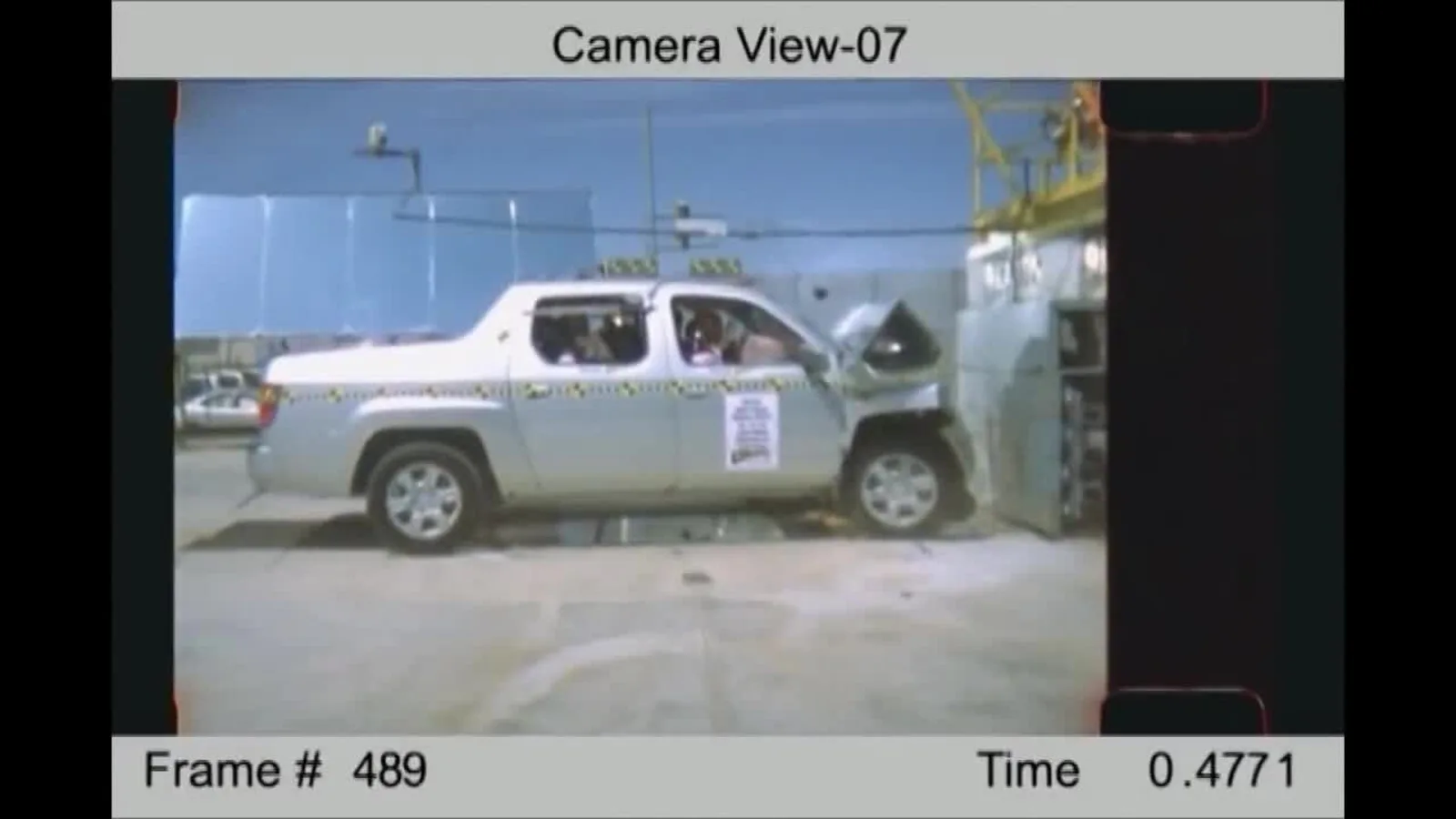
ANCAP adopted the Euro NCAP protocols in 2018 and adjusted the scoring to local conditions, so the tests Euro NCAP describes are the best guide to what happens to a car. A full programme can take up to six weeks and puts instrumented dummies through frontal, side, pole, rear and pedestrian scenarios.
Think of it as a series of different questions put to the same car. One asks how the structure copes when another vehicle hits it head on. Another asks whether the seat belts and airbags hold a small person in place. A third asks what happens if the car is hit from the side or slides into a tree.
| Test | Speed | What it examines |
|---|---|---|
| Mobile progressive deformable barrier | 50 km/h (31 mph) for both car and 1,400-kilogram trolley, 50% overlap | Crumple zones and compatibility with a mid-size family car |
| Full width rigid barrier | 50 km/h (31 mph) | Restraints such as airbags and seat belts, with a small dummy in the driver and rear seats |
| Mobile side impact barrier | 60 km/h (37 mph) | Another vehicle striking the side of the car at a right angle |
| Side pole | 32 km/h (20 mph) | A car sliding sideways into a tree or pole |
| Whiplash | 16 and 24 km/h (9.9 and 14.9 mph) | Seat and head restraint protection in a rear impact |
The frontal test uses two adult male dummies in the front seats and two child dummies, aged 6 and 10, in the back. Since 2020 a far-side test has also been run on the body shell alone, mounted on a sled, to measure how far the dummy moves toward the impacted side. If a car has centre airbags, a front passenger dummy is added to check them.
Beyond the crashes, Euro NCAP scores vulnerable road users through head, pelvis and lower leg impact tests, plus automatic emergency braking for pedestrians and cyclists. It also assesses safety assist features, including speed assistance and lane support, and looks at rescue and extrication: how easily first responders can free an occupant and how well the eCall system performs after a collision.
Why can a car lose its stars?
Because ratings are tied to time. Since 31 December 2022 an ANCAP rating expires after six years. A model that stays on sale beyond that window cannot lean on a result earned under older rules, and a buyer comparing two five-star cars from different years is no longer comparing like with like.
The classes behind the scheme explain why. ANCAP groups its results into 18 increasingly demanding classes, running from 1993-1994 through to 2029 and beyond. Recent groupings are 2020-2022 and 2023-2025, with 2026-2028 and 2029+ to follow. Each step raises the bar, so the same engineering that earned top marks in an earlier class would face a harder test in a later one.
Two further wrinkles apply. Euro NCAP notes that some cars carry dual ratings: the lower figure is for a car with standard equipment, the higher for one fitted with optional safety packs. And a rating is valid for a region, because the same model imported to another country may carry less standard equipment. A badge on a showroom wall is only meaningful if it matches the car actually being sold.
What is changing for 2026?
The clearest structural change is the new class. From 2026, ANCAP results move into a 2026-2028 group that is more demanding than the 2023-2025 one before it. Euro NCAP, whose approach ANCAP follows, has said that from 2026 it will mark down cars that lean too heavily on touchscreens.
Other threads are already in motion. An underwater safety test was due to be introduced in 2023. Since the 2019/2020 period, NCAP standards have required certain driver assistance features to be active by default whenever the car is started. To score points for driver monitoring, the system must be active at the start of each journey, and it must not be possible to deactivate it with a single momentary push of a button. Euro NCAP has also run its Advanced scheme since 2010, which rewards new technologies that have a proven safety benefit but are not yet part of the star rating.
Each new class asks for more, and a rating from an old class carries less weight beside a newer one.
How does ANCAP compare with Euro NCAP?
They are separate programmes with a shared approach. Euro NCAP is a voluntary European scheme formed in 1996, based in Leuven, Belgium, and its first results came out in February 1997. ANCAP now follows its protocols, yet the two label results differently and each applies its own tweaks.
Euro NCAP expresses its result as percentages in four areas: adult occupants, children, vulnerable road users such as pedestrians and cyclists, and safety assist. These are turned into an overall result from zero to five stars. Its own descriptions are blunt: five stars means excellent crash protection with comprehensive crash avoidance technology, while zero stars means the car meets type-approval standards and can legally be sold but lacks critical modern safety equipment.
Euro NCAP says its frontal and side tests are based on those in European law but use much higher performance requirements. Its position is that law sets a compulsory floor, while the programme aims at the best practice available today. According to Euro NCAP, it has put more than 1,800 new cars through testing and issued over 600 ratings, and it credits itself with saving upwards of 78,000 lives across Europe.
The consumer effect can be dramatic. The Rover 100 earned a one-star Adult Occupant Rating in the late 1990s and sold poorly before being withdrawn. In 2005 the Daewoo Kalos scored only two stars; it was sold in Australia as the Holden Barina, and Holden's managing director had to defend it in public. Manufacturers also regard other regional programmes, such as ASEAN NCAP, as equal in standing to ANCAP.
What do the critics say about ANCAP?
Critics raise four main objections. They query the cost of a taxpayer-funded scheme after the collapse of the Australian car industry, the heavy weight placed on driver assistance, a focus on occupants over other road users, and a testing method that has not stayed constant, which makes long-term comparison unreliable.
The driver assistance point is the sharpest. AEB is mandatory to achieve five stars, and critics argue that lets some less-safe cars earn a high rating by using cheap electronics. On the second point, they cite the 2022 Toyota Hilux, with 5.71 deaths per 100 crashes, against the 2012 Mazda3 at 3.1, almost half as many pedestrian fatalities, even though the Hilux gets the higher ANCAP rating. These are critics' claims rather than ANCAP findings.
What is AEB, and why does it matter so much?
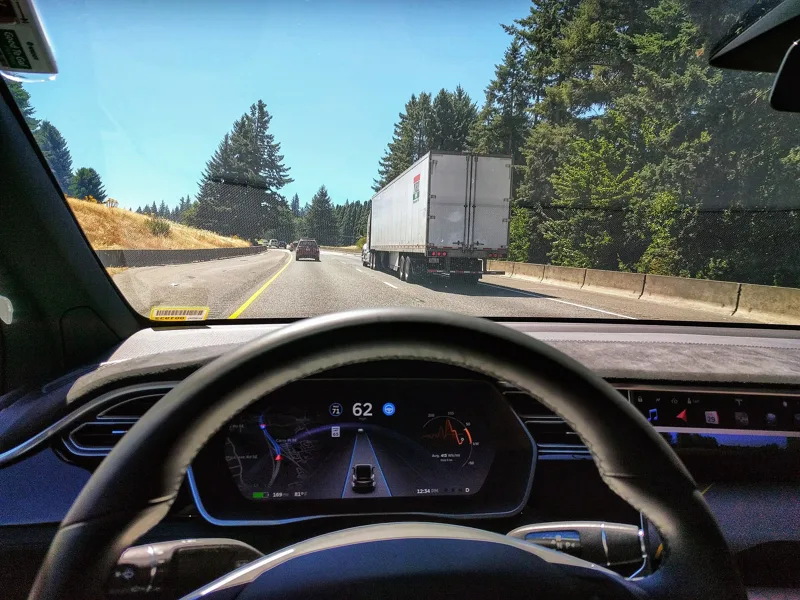
AEB, or autonomous emergency braking, uses sensors to spot a likely collision with the car ahead, warns the driver and, if the crash becomes unavoidable, brakes without waiting for the driver. It differs from forward collision warning, which only alerts the driver and does not brake the car. Euro NCAP describes AEB as autonomous, emergency and braking.
The case for it is strong. One 2015 study drawing on European and Australasian figures suggests AEB can cut rear-end collisions by 38%, and in a study of police-reported crashes the reduction was 39 percent. In Australia the system has been linked to 55 percent fewer police-reported crashes, 40 percent fewer rear-end crashes and 28 percent less occupant trauma. Analyses differ, though: the European Commission cites results from 9%-20% to 44%.
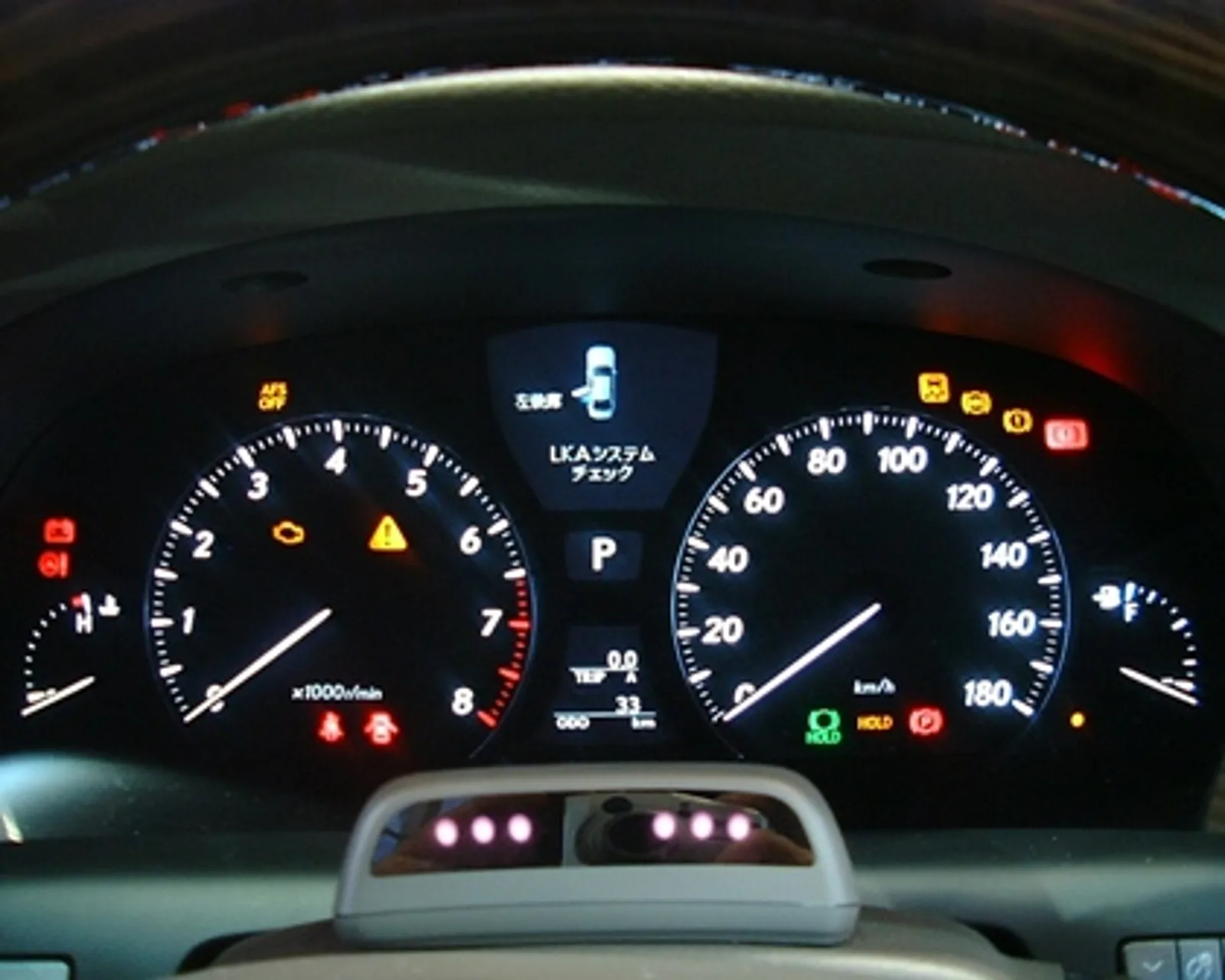
Limits exist. Heavy rain, snow or fog can reduce effectiveness, and false triggers can come from shadows on the road, parked cars, metal road signs on a curve or steep driveways. In Japan, drivers who trusted automatic brakes too much were behind 72 accidents in 2017, 101 in 2018 and 80 across the first nine months of 2019.
The legal picture has moved quickly. In April 2020, AEB was standard on 66% of new light vehicle models, found only on higher variants in 10%, an option in 6% and absent from 16%. Across the European Union it has applied to new models from May 2022 and to every new vehicle sold from May 2024.
What should a buyer do with a star rating?
Treat it as a snapshot. Check the year of the result against the six-year expiry, make sure the badge applies to the exact variant and equipment pack you are buying, and confirm that it covers the region where the car was sold. Compare cars within the same class, not across decades of testing.
The rating also says less than it appears to about every part of safety. It leans on occupant protection and driver assistance, and critics say it says little about other road users. A shortlist of the safest cars in Australia built on stars alone therefore leaves out information that matters, such as how the car behaves around pedestrians.
It helps to know what technology you are paying for. Check whether AEB covers pedestrians and cyclists, not only cars, whether the car has a driver monitoring system that cannot be turned off with a single press, and whether it needs an optional pack to reach the rating on the brochure. Those checks cost nothing and make the badge mean something.
Where this goes next
In the United States, a legal requirement for automatic emergency braking in cars and light trucks is set for September 2029, and in the European Union new UNECE standards for heavy vehicles apply to new types from 2025.