A new comparison class, a penalty for touchscreen-heavy cabins and tighter rules on driver monitoring and speed assistance are changing what earns top marks.
Euro NCAP rates new cars on adult and child occupant protection, vulnerable road users and safety assist, converting the scores to zero to five stars. As of 2024 it said it would penalise excessive touchscreen use from 2026, when results enter a new, more demanding 2026-2028 comparison class.
A rule about speed-limit sensors is enough to end a sports coupe's career in Europe. Toyota's GR86 will go off sale there after 2024 because its existing roofline cannot hold the sensor that intelligent speed assistance demands. That is how far safety regulation now reaches into the shape of a car.
What does a Euro NCAP five star rating mean?
Euro NCAP, Europe's new-car assessment programme, scores new cars on how well they protect adults, children and vulnerable road users, and on the safety assist technology they carry. The scores become an overall result of zero to five stars. Five means excellent crash protection together with comprehensive, robust crash avoidance equipment.
The programme is voluntary and based in Leuven, Belgium. It was formed in 1996, released its first results in February 1997, and began life at the Transport Research Laboratory, which ran it for Britain's Department for Transport, before several European governments and the European Union backed it. Testing is not mandatory: Euro NCAP picks the models itself, or manufacturers sponsor them.
Before it existed, buyers had little to go on. Britain at the time required only a frontal crash test at 48 km/h (30 mph). According to Euro NCAP, it has since put more than 1,800 new cars through testing, issued over 600 ratings and helped save upwards of 78,000 lives in Europe. The influence on sales is real. The Rover 100 earned a one-star Adult Occupant Rating in 1997, sold poorly and was withdrawn soon after.
The rule that ended a coupe in Europe was a sensor the roofline could not hold.
How are Euro NCAP ratings built?
Each rating combines percentage scores in four areas: protection of adults, protection of children, protection of vulnerable road users and the safety assist technology fitted. Those figures are folded into one star result. The same star can therefore hide very different strengths, and a car with great crash structure can still be held back by thin crash avoidance equipment.
| Stars | What Euro NCAP says the car offers |
|---|---|
| 5 | Excellent crash protection and comprehensive crash avoidance technology |
| 4 | Good crash protection, with extra avoidance technology possibly present |
| 3 | Average occupant protection or better, without always having the latest avoidance features |
| 2 | Nominal protection and no crash avoidance technology |
| 1 | Marginal protection and little avoidance technology |
| 0 | Meets type-approval so it can legally be sold, but lacks critical modern safety technology |
Two caveats apply to every badge. Some cars carry dual ratings, where the lower figure describes the car with standard equipment and the higher one the car fitted with certain options, often a safety pack. And ratings are valid for a region, because a model sold in another country may have less standard equipment.
The crash tests behind the stars
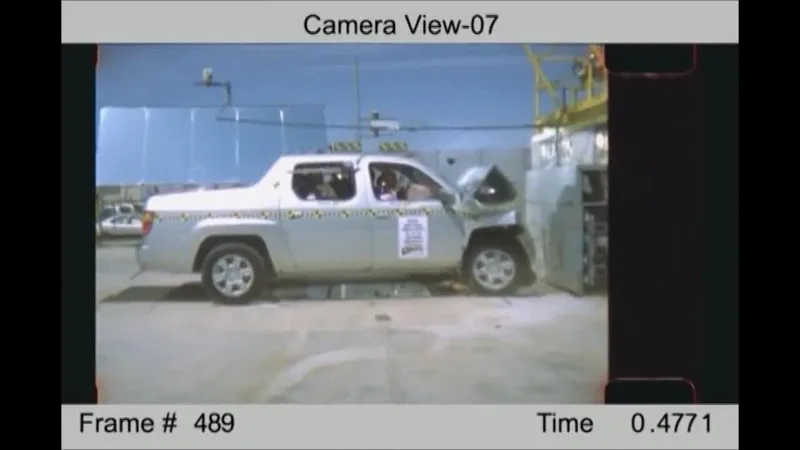
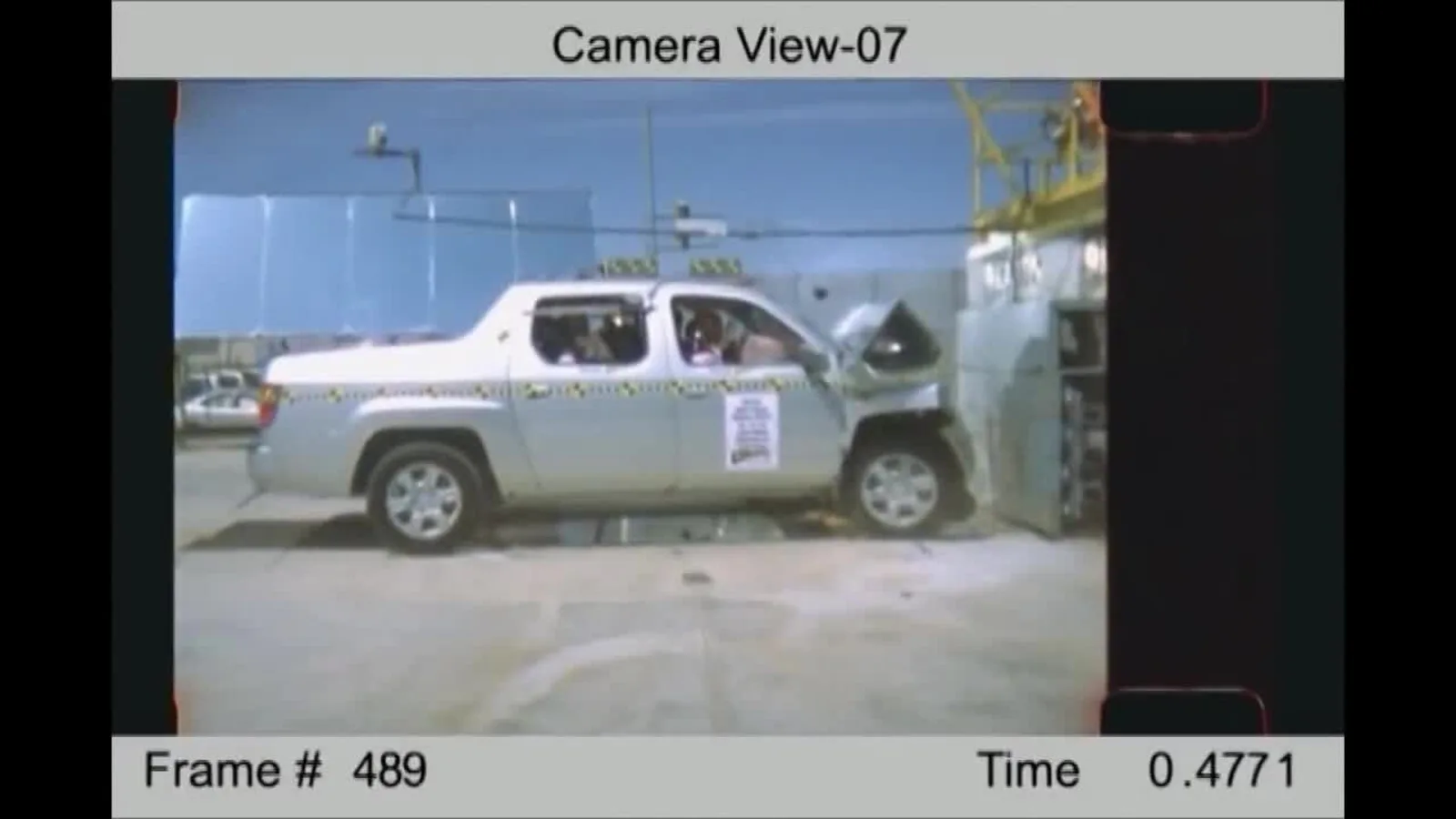
A complete test programme can run for as long as six weeks. In the mobile progressive deformable barrier test, introduced in 2020 and first tried on a Toyota Yaris, the car is driven at 50 km/h (31 mph) into a moving barrier on a 1,400-kilogram (3,100 lb) trolley, also at 50 km/h, with a 50% overlap. It represents a collision with a medium-sized family car. Two adult dummies sit in front and two child dummies, aged 6 and 10, in the back.
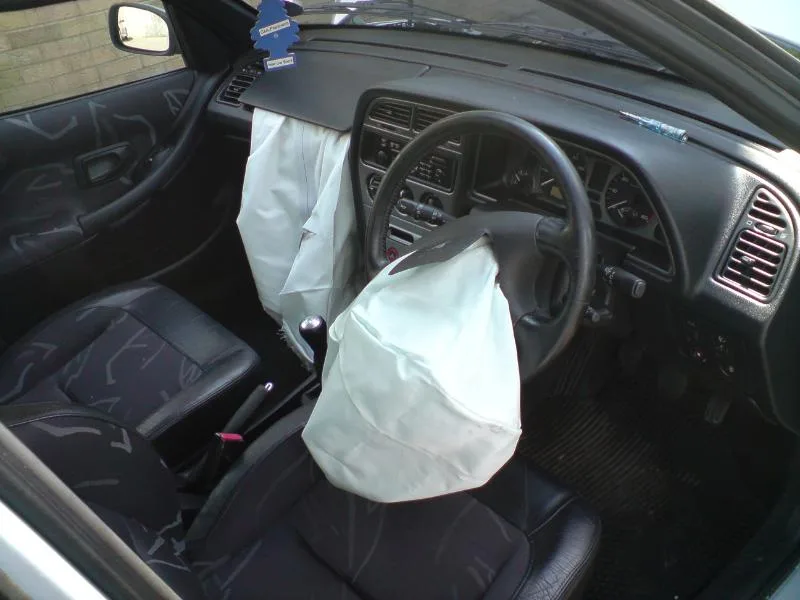
A full width rigid barrier test at 50 km/h checks airbags and seat belts with small dummies. A mobile side barrier hits the stationary car at 60 km/h (37 mph), a side pole test slides it sideways into a narrow pole at 32 km/h (20 mph), and whiplash testing drives the seat forward at 16 and 24 km/h. A far-side impact test, added in 2020, measures how far the dummy moves toward the impacted side.
What is changing in Euro NCAP 2026?
The headline is the touchscreen. As of 2024, Euro NCAP has said, many cars make excessive use of touchscreens, and that will be penalised starting in 2026. Results also move into a new 2026-2028 comparison class, which follows 2023-2025 and sits ahead of a 2029+ group.
Euro NCAP organises its results into increasingly demanding classes, listed from archived early groups up to the 2029+ class. Each step raises the bar, so a car earning five stars in the 2026-2028 group has cleared a harder test than one rated several years earlier. Buyers comparing badges should note which class each belongs to.
The pressure is coming from the safety assist area, which already lists automatic emergency braking, occupant status monitoring, speed assistance and lane support.
Why do driver monitoring systems matter for Euro NCAP ratings?
A driver monitoring system assesses how alert the driver is, warns when needed and can eventually apply the brakes. Since 2019/2020 the rules have said that, to earn points, such a system must be active from the start of each journey and cannot be cancelled with a single quick press of a button. Critics have faulted how some makers implement these features.
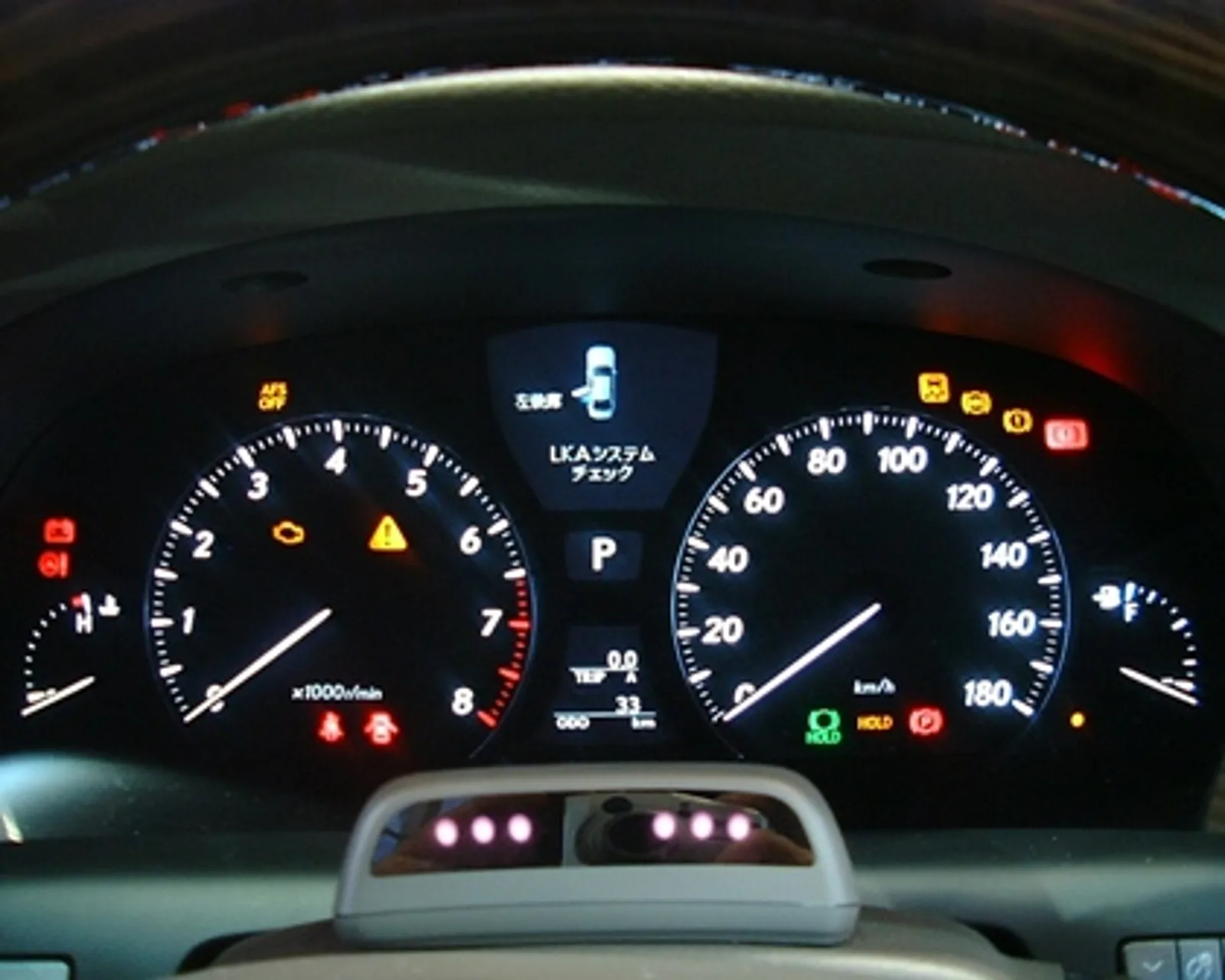
The idea is not new. Toyota introduced the first system in 2006 on the Lexus GS 450h in Japan. A camera on the steering column tracks the face using infrared LEDs, and if the driver ignores warnings from flashing lights and sounds, the car applies the brakes briefly. In 2008 the Toyota Crown went further, watching the eyelids to detect sleepiness.
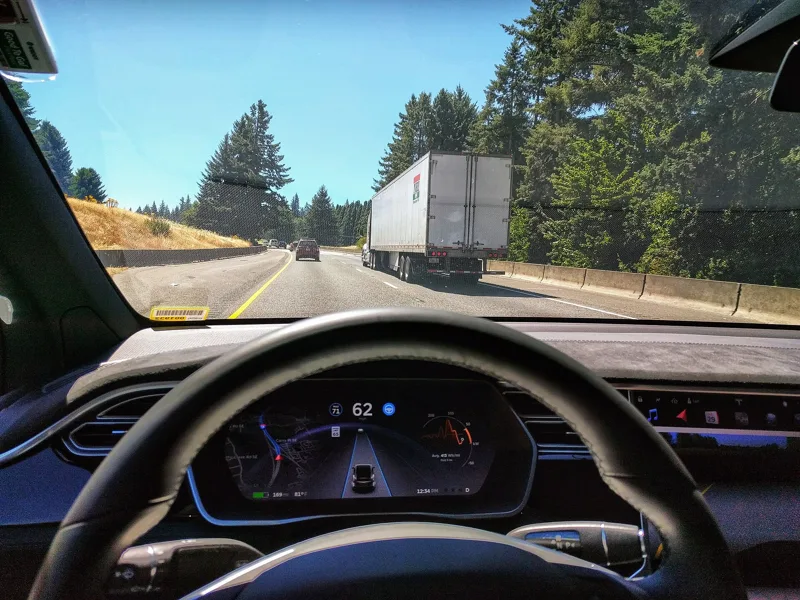
Hands-free driving brought the technology into the mainstream. Cadillac's Super Cruise, released in 2017 on the CT6, used a Seeing Machines system to make sure the driver kept watching the road. BMW offered an Extended Traffic Jam Assistant in 2019 for hands-free driving at up to 37 mph (60 km/h), and added driver monitoring across much of its range. Ford uses a camera module on the steering column for its BlueCruise system, and Mercedes-Benz built its camera into the 2021 S-Class. NIO and XPeng offer similar systems.
EU regulation 2019/2144 covers the technology. It requires drowsiness and attention warning systems to avoid continuous recording, to keep no data beyond what is needed, to keep the data from third parties and to delete it straight after processing.
How does intelligent speed assistance work, and why is it required?
Intelligent speed assistance, or ISA, makes sure a vehicle does not exceed a safe or legal speed, either by alerting the driver or by easing the speed down automatically. It finds the limit from the car's position, from signs read by a camera, or both. Passive systems warn; active ones slow the car.
Four technologies feed it. Position-based systems compare satellite signals to locate the car, relying on a GPS network of 31 satellites arranged so that at least five are in view at any time. Radio beacons transmit limits to a receiver in the car. Optical recognition reads speed signs and road markings, and dead reckoning plots the car's path from wheel rotation, steering angle and sensors, then overlays it on a digital map. It tends to collect small errors, such as those caused by tyre wear or changing pressure, and some high-end navigation units use it only as a backup.
The legal path has been bumpy. By 2013 the European Commission was weighing the technology, and a UK government spokesman dismissed the idea as a case of Big Brother nannying by EU officials. In 2019 it was agreed to adopt ISA in all new cars from July 2022, and the rule took legal effect in the EU on 8 July 2022. A framework for testing is set by regulation 2021/1958.
EU law defines ISA as a speed limit information function plus either a warning function or a speed control function. The driver must be able to switch it off, although the system resets to normal operation each time the vehicle is started, and the driver can still exceed the speed it prompts. Performance targets are meant to keep the error rate low in real driving.
Limits remain. If no speed signs are present, the system may not work, which matters when joining a main road from a side road, and crossing between countries that mix metric and imperial signs is awkward. Some studies show drivers drive up to the limits of the system. Supporters point to a 2012 British estimate that ISA could cut road fatalities by half, and a 2010 Australian analysis that put injury reductions at 7.7% for advisory, 15.1% for supportive and 26.4% for limiting systems.
What else counts toward five stars?
Driver assistance of all kinds, which Euro NCAP folds into its Safety Assist score. A US crash database study suggests forward collision prevention could reduce crashes by 29%, lane keeping by 19% and blind zone detection by 9%. A 2021 Canalys report estimated that about 33% of new vehicles sold across the United States, Europe, Japan and China carried such systems, and it predicted 50% of cars on the road by 2030 would.
The word assistance matters. Forward collision warning and lane departure warning only alert the driver, and adaptive cruise control still needs an alert person behind the wheel. These are aids, not replacements, which is partly why Euro NCAP cares about the driver monitoring that keeps people engaged. It also runs an Advanced reward scheme, launched in 2010, for technologies with a proven safety benefit that are not yet part of the star rating.
What will the changes do to cars that earn five stars?
They narrow the road to the top. A car now needs sound crash structure, a full set of assist systems that are on by default, a driver monitoring system that cannot be dismissed with a single press, and, from 2026, a cabin that does not lean too heavily on touchscreens. Designs that lack room for sensors face a harder time.
The GR86 shows the extreme case: a model that cannot be redesigned to carry the ISA sensor leaves the market. Regulations may prompt such disappearances more broadly.
For a buyer, practical checks follow. Look at which class the rating belongs to, whether the star applies to the standard car or only a version with a safety pack, and whether it covers your region. Find out whether the car's driver monitoring and speed assistance are on by default and whether switching them off is easy.