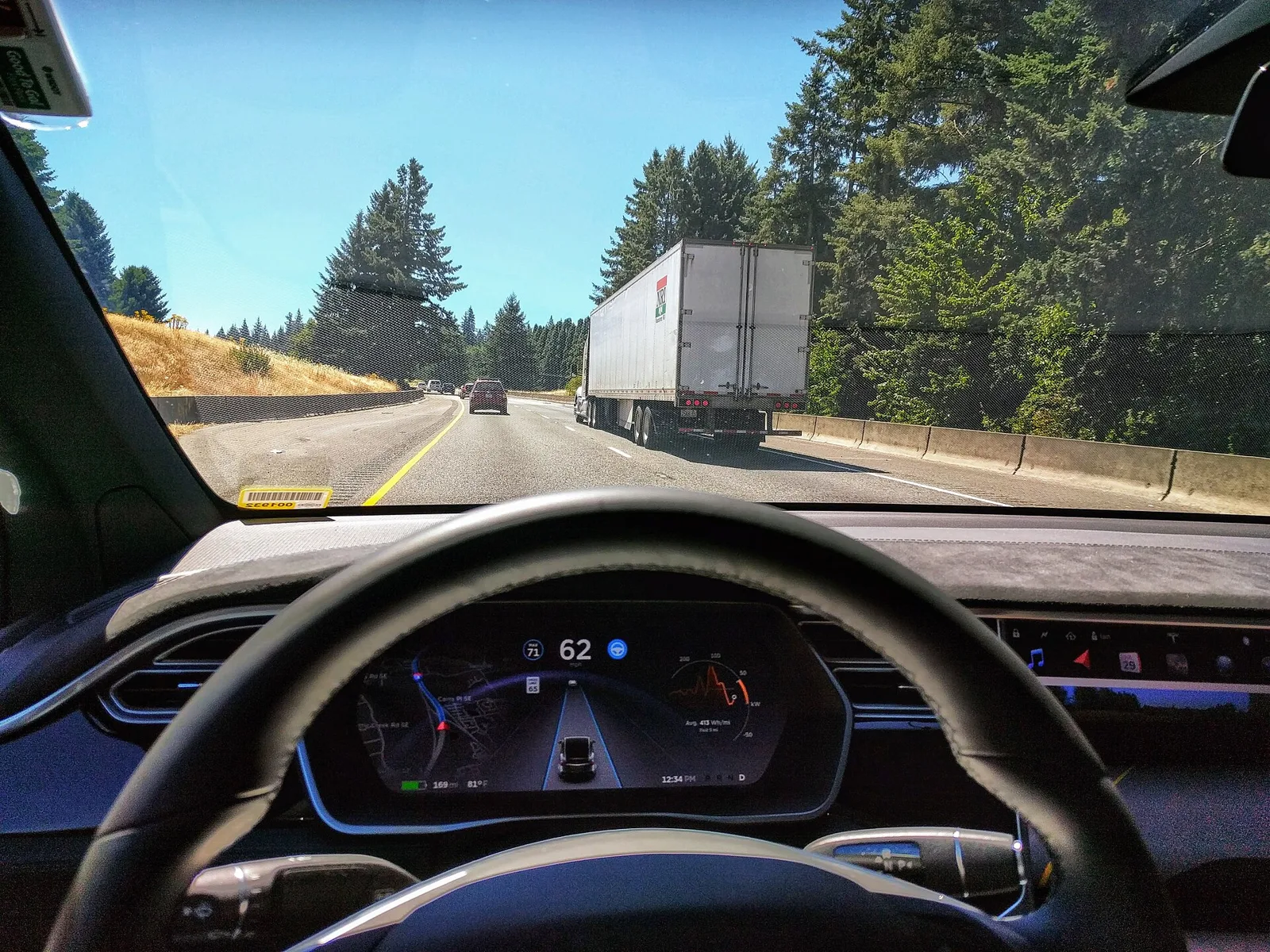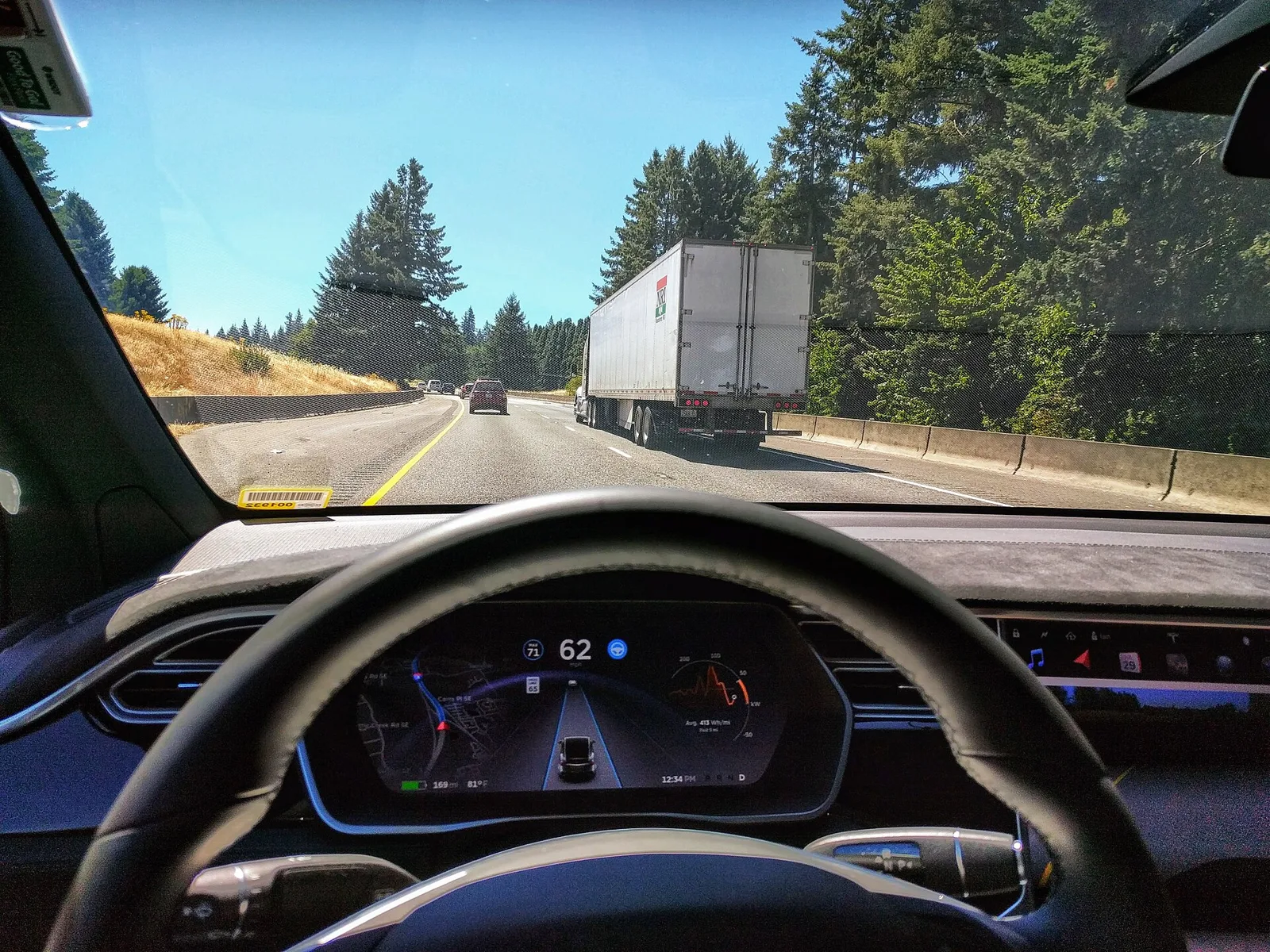
A car that lets you look away sits on a narrow rung between driver assistance and a robotaxi. In January 2026 Mercedes-Benz withdrew its Level 3 system.
Level 3 is the point on the SAE scale where the car, not the driver, does the driving within a defined domain and must spot when it is leaving it, asking the driver to take over if needed. Mercedes-Benz offered one until January 2026; no system has full Level 5 autonomy.
Until January 2026, Mercedes-Benz sold a Level 3 system that let drivers stop watching the road in a highway traffic jam at up to 64 km/h (40 mph). In that month the company removed the feature from its cars in favour of an upcoming Level 2 capability. The most talked-about promise in driving automation, a car that handles the road while you look elsewhere, turned out to be the hardest to keep.
What are the SAE levels of autonomy?
The levels come from SAE International, which published its six-level classification, J3016, in 2014. The standard runs from Level 0, where the human does everything, to Level 5, where the system drives in all circumstances. SAE updated it in 2016, the United States National Highway Traffic Safety Administration adopted it, and the United Nations Economic Commission for Europe brought it into UN Regulation No. 157, in force from January 2021 and used in more than 50 countries.
Two ideas sit underneath the numbers. The first is the operational design domain: the circumstances in which a system is built to work, such as a certain kind of road, a speed range or a traffic condition. The second is what the system must actually do inside that domain. Together they decide the level. Because both can change from road to road, one car can be at different levels at different times: Level 3 for lane management up to 100 km/h and Level 2 above it, for example, or driverless on designated highways and Level 2 on urban side streets.
The levels are based on the role of the driver, not on how clever the car is. Above Level 1, they differ in how responsibility for safe movement is divided or shared between the driver and the driver-assistance system.
| Level | What the standard and the market show |
|---|---|
| Level 0 | No driving automation; the human handles the driving |
| Level 1 | One function at a time: adaptive cruise control, emergency brake assist, lane-keeping, lane centering |
| Level 2 | Combined assistance such as highway assist, obstacle avoidance and automatic parking; Tesla sells its Full Self-Driving system as Level 2 |
| Level 3 | The system drives inside its domain and must recognise when it is leaving it; Mercedes-Benz offered this in jams up to 64 km/h until January 2026 |
| Level 4 | Driverless within a defined domain, such as designated highways |
| Level 5 | All roads, speeds and conditions; no system has achieved it in all domains as of late 2025 |
The step from Level 2 to Level 3 changes who is supposed to be watching.
Level 3 autonomous driving: where the responsibility shifts
The step from Level 2 to Level 3 is the biggest in the scale, because it changes who is supposed to be watching. Up to Level 2 the human remains the supervisor. At Level 3 and above, the system itself must notice when conditions change and respond. If a clear highway turns into a construction zone with a worker giving hand signals, a Level 3 or higher system has to recognise that it is leaving its operating domain and fall back, including by asking the driver to take over where necessary.
Think of the difference between supervising an apprentice and being on call. At Level 2 you stand beside the apprentice for the whole job. At Level 3 you may do something else, but you must come when summoned, and the summons has to arrive in time. That is why the classification is argued over: critics say it focuses on technology, that its structure suggests automation rises in a straight line and that more is always better, and that it ignores changes needed in infrastructure and in how other road users behave.
Who pays or answers when something goes wrong is a question for national law, and the standards do not settle it. What the legal texts do show is the test. Britain's Automated and Electric Vehicles Act 2018 says a vehicle drives itself when nobody is controlling it and nobody needs to keep watch. The Automated Vehicles Bill, introduced in November 2023, went further: it proposed that a vehicle counts as travelling autonomously only if the car does the controlling and no person, watching either the car or its surroundings, is able to step in. It also asks that the vehicle act safely and legally, with an acceptably low risk of a traffic infraction. In the European Union, Regulation 2019/2144 calls a vehicle automated if it moves without continuous driver supervision but human intervention may still be expected in some domains, and fully automated if it needs no supervision at all.
What does eyes-off driving actually require?
The phrase comes from Mobileye, whose chief executive Amnon Shashua and chief technology officer Shai Shalev-Shwartz proposed a consumer-friendly alternative to the SAE numbers, based on how engaged the driver must be.
Hands-on, eyes-on means the driver is fully responsible and the system supervises, as with adaptive cruise control or automatic emergency braking. Hands-off, eyes-on lets the driver release the wheel while the system drives, but the driver keeps monitoring and must be ready to resume control. Eyes-off, hands-off means the driver can stop monitoring and the system is in full command. The fourth category, no driver, needs no human in the car at all, with any monitoring done remotely or not at all.
The bar for eyes-off is high. Mobileye says it requires that errors are neither reproducible nor frequent, that speeds are suitable for the setting (80 mph, or 130 km/h, on limited-access roads is Mobileye's example), and that the system copes with ordinary events such as another car cutting in. The level may vary with the road, eyes-off on freeways but eyes-on on side streets. For the top two categories, the car must also be able to perform a minimum risk manoeuvre, stopping safely out of traffic without help from the driver.
Which cars offer hands-free driving?
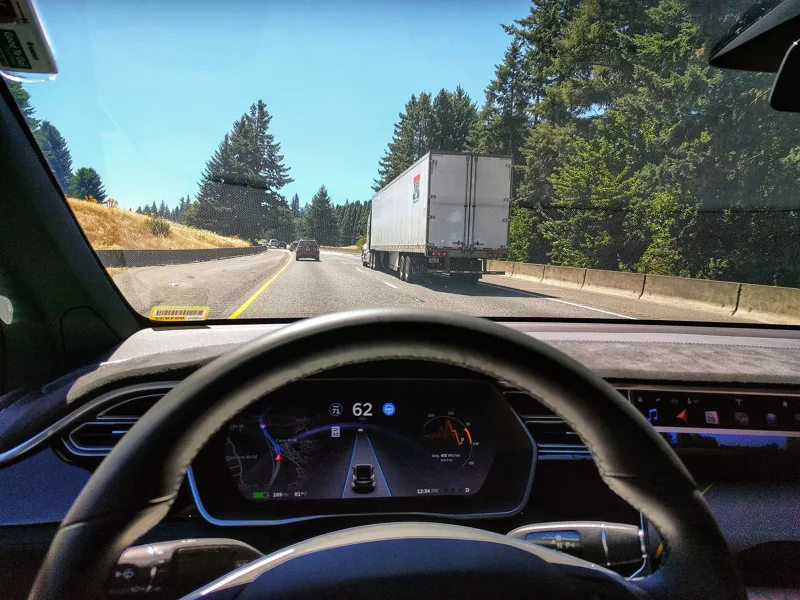
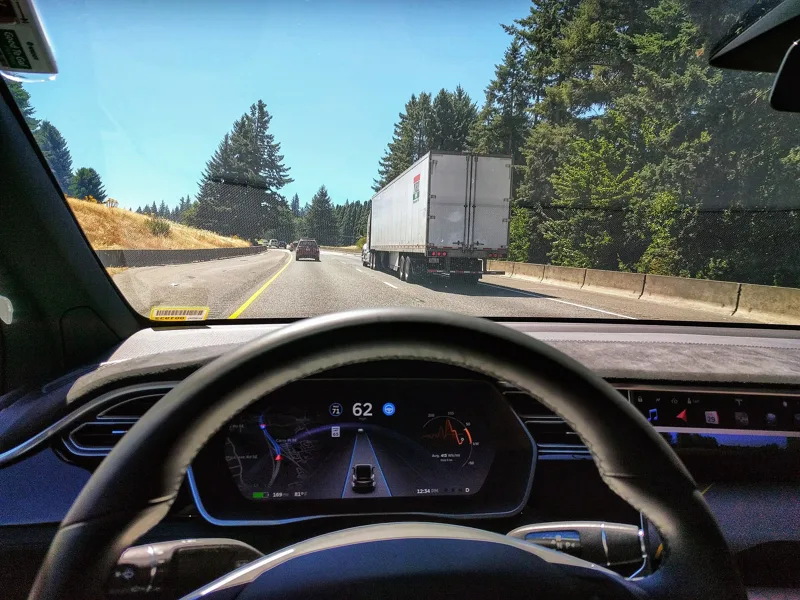
Makers have taken different routes, and the names can mislead. Tesla lets its Full Self-Driving system run in every domain, but classes it as Level 2, so the driver is expected to keep both hands on the wheel and watch the road; the company itself has stated that the system does not autonomously handle all driving tasks. Mobileye's SuperVision lets the driver release the wheel on every type of road, up to 130 km/h (81 mph), while still watching.
General Motors' Super Cruise is hands-free only on mapped roads and only in suitable conditions, and it either stops or hands control back when those conditions end. In 2024 GM said it would grow the network from 400,000 miles to 750,000 miles (1,210,000 km). Ford's BlueCruise, also hands-off, is limited to divided highways in the United States, covering 130,000 miles (210,000 km).
Waymo took the opposite approach, choosing specific domains, namely city streets in Phoenix and San Francisco. It was the first to carry paying passengers in driverless taxis, in 2020, inside limited areas.
Names add to the confusion. Labels such as AutonoDrive, PilotAssist, Full-Self Driving and DrivePilot appear on products that offer a mix of features that may not match the name. The Association of British Insurers has said that using the word autonomous in marketing is dangerous, because advertisements lead drivers to believe that autonomous or autopilot means the car can look after itself, when it cannot. Thatcham found that automated lane keeping systems met only two of the twelve principles needed to guarantee safety, and said they should be called assisted driving.
Is hands-free driving legal?
The answer depends on where you drive and on what the car is allowed to claim. Britain, the European Union and the UN regulation offer definitions rather than a simple yes or no. British law treats a fully self-driving car as one that is registered as such, not one identified by a list of features. A hands-off, eyes-on system is therefore still a driver-assistance system in the eyes of the standards, with the human expected to monitor.
The cautious reading is that a car which needs you to watch is a Level 2 car, whatever the badge says, and that the law in your market decides what you may do with your hands and eyes.
Why is Level 3 so hard?
The primary obstacle is software and mapping. Systems must work safely across the vast range of conditions drivers meet, and the software cannot yet cope with every circumstance, and it has been implicated in accidents and deaths. The technology rests mainly on LiDAR and cameras, combined with GPS, neural networks and artificial intelligence. Other problems include the security of over-the-air updates, regulation, ethics and consumer confidence.
Public confidence is thin. In a 2022 survey, just 27 percent of the world's people said they would feel safe riding in one. There is also a bias at work: drivers judge identical autonomous driving much more harshly than the same driving by a human.
The assistance systems underneath help. According to the US national crash database, forward collision prevention could reduce crashes by 29 percent, lane keeping assistance by 19 percent and blind zone detection by 9 percent. Canalys reported in 2021 that roughly a third of new vehicles sold across the United States, Europe, Japan and China carried driver-assistance systems, and it forecast that half of all cars on the road would have them by 2030.
Where this goes next
The dated plans are modest. Mercedes-Benz has withdrawn its Level 3 feature in favour of an upcoming Level 2 capability. General Motors announced in 2024 that it would widen Super Cruise coverage to 750,000 miles. Ford's BlueCruise covers 130,000 miles of divided highway. The forecast with the most numbers attached comes from Canalys, which expects half of all cars on the road to have driver-assistance systems by 2030.
As of late 2025, no system has full autonomy in all domains. Any promise of Level 3 or higher without a date attached is a forecast, not a plan.
What it means for buyers and drivers
Judge a system by its limits, not its name. Ask what domain it works in, what speed range, and what it does when the domain ends. Ask whether you are required to keep your eyes on the road, because that is the practical difference between the levels.
Maintenance matters too. Driver-assistance systems can be affected by mechanical alignment changes or damage from a collision, and many manufacturers require an automatic reset of these systems after an alignment is performed. And bear in mind that driver monitoring, which uses infrared sensors and cameras to track the driver's attention through eye-tracking, exists precisely because the human is still part of the system at most levels.