Autopilot has gone, Full Self-Driving now carries the word Supervised, and the autonomy Elon Musk promised for 2013 onwards has yet to arrive. What the software handles, what it leaves to you and where regulators stand.
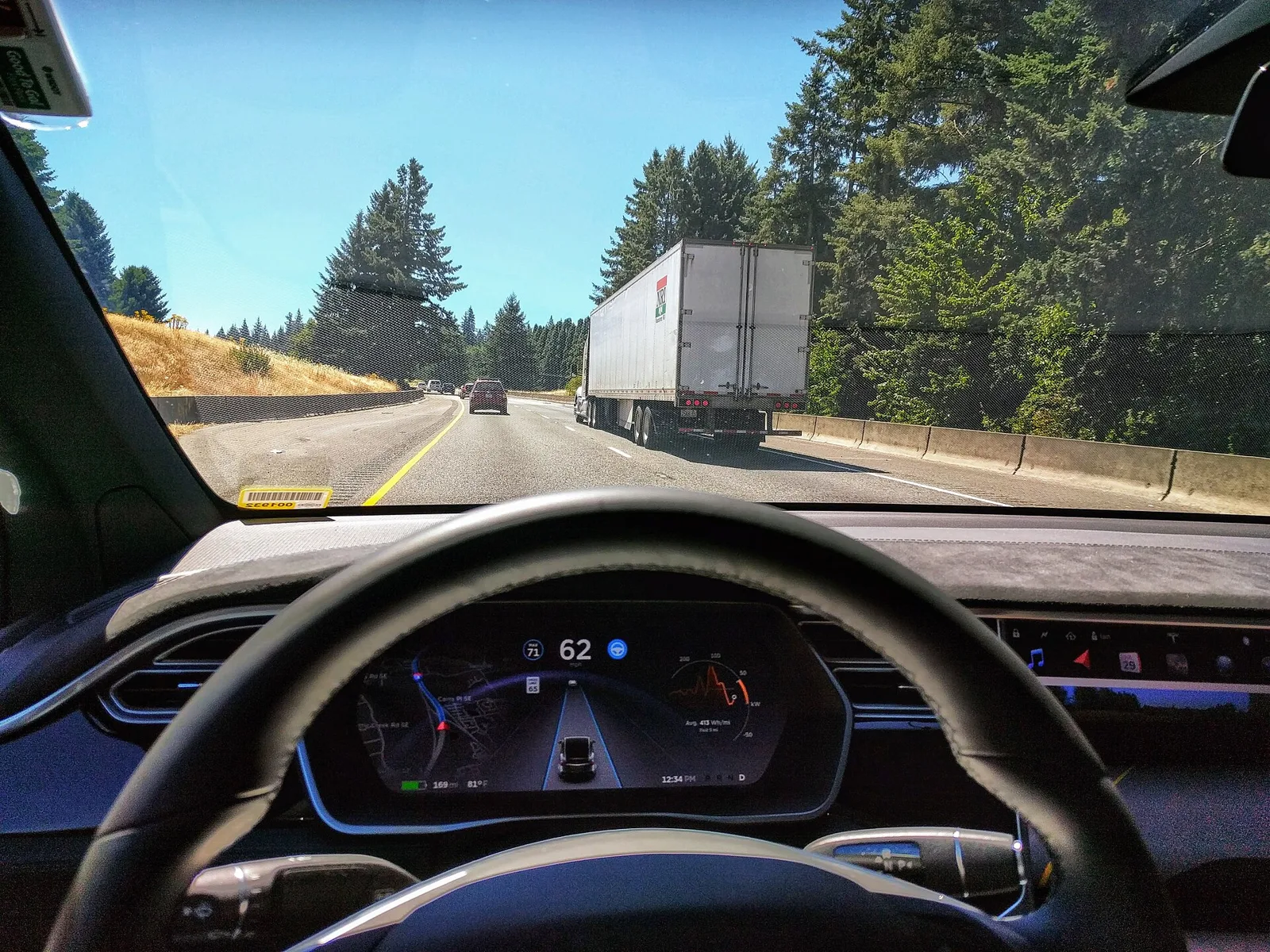
Tesla's Autopilot and Full Self-Driving are Level 2 driver-assistance systems that steer, brake and accelerate under continuous driver supervision. They do not make the car self-driving. As of September 2026 Autopilot is no longer sold, and the only package is the subscription Full Self-Driving (Supervised).
Since 2013, Elon Musk has repeatedly predicted that Tesla would achieve fully autonomous driving within one to three years. As of July 2026 it has not, and the system the company sells today is named Full Self-Driving (Supervised) precisely because a human has to keep watching the road.
What are Tesla Autopilot and Full Self-Driving?
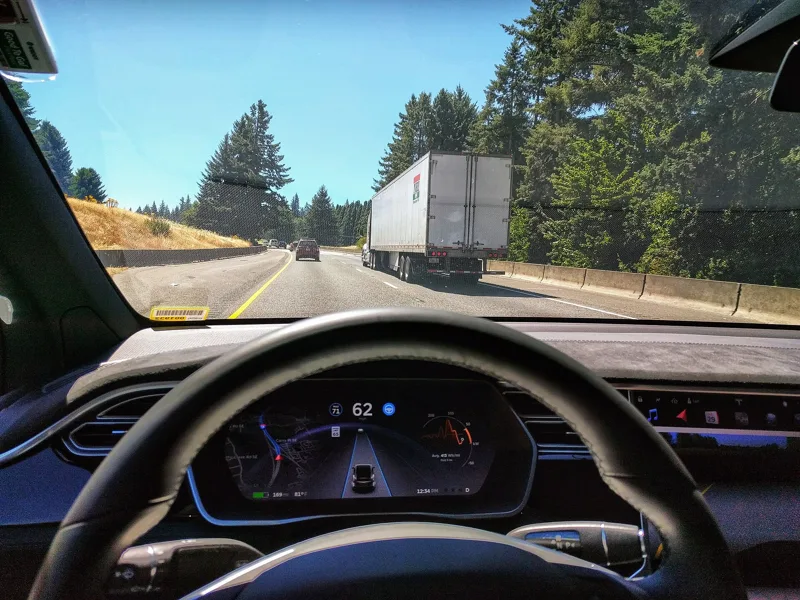
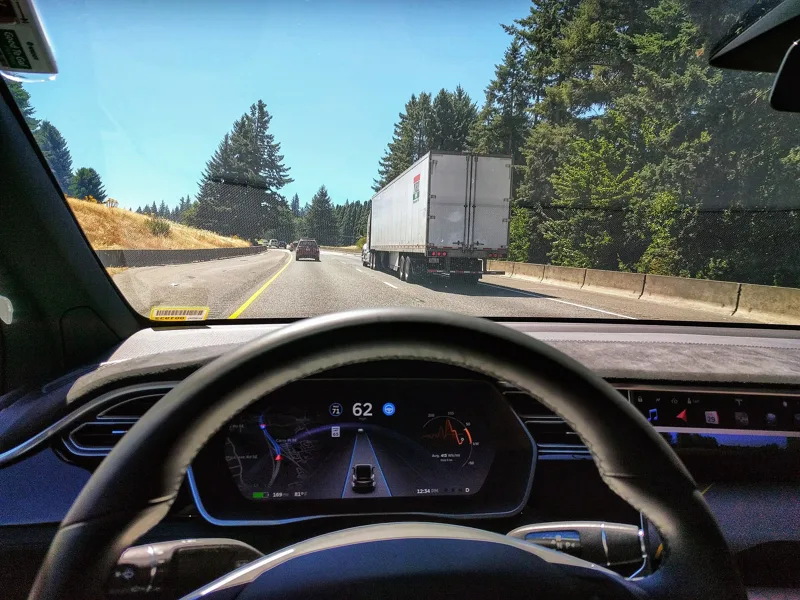
They are advanced driver-assistance systems developed by Tesla that provide partial automation, matching Level 2 on the scale published by SAE International. Autopilot brought autosteer and traffic-aware cruise control. Full Self-Driving, now sold as FSD (Supervised), extends this to semi-automated route-following on almost any road, plus automated parking and a summon function that calls the car out of its space.
The names promise more than the engineering delivers. Every Tesla on sale still needs a driver supervising at all times, and that is not the same thing as full self-driving. The FSD branding has drawn criticism for potentially misleading consumers, and the earlier Autopilot branding was criticised for similar reasons, even though no autopilot in an aircraft makes the aircraft fully autonomous.
Tesla's own position is that these features make driving safer and cut crashes that stem from tiredness or lapses of attention. Against that, crashes and deaths in cars running Autopilot or FSD have attracted scrutiny from the press and regulators, and industry experts and safety advocates have called the release of the software to the general public risky and potentially irresponsible.
The label says Supervised for a reason: the driver is still the safety system.
How do Autopilot, Enhanced Autopilot and FSD differ?
Autopilot was the basic package, fitted to all Teslas produced between April 2019 and January 2026. It offered traffic-aware cruise control and Autosteer, which keeps the car in its lane. Enhanced Autopilot was a middle tier, and FSD sat above both. From September 2026 Autopilot can no longer be had, and subscribers can take only the Level 2 FSD (Supervised) package.
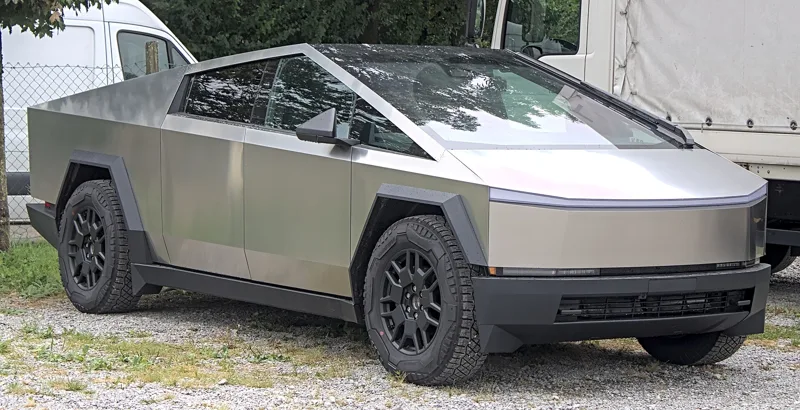
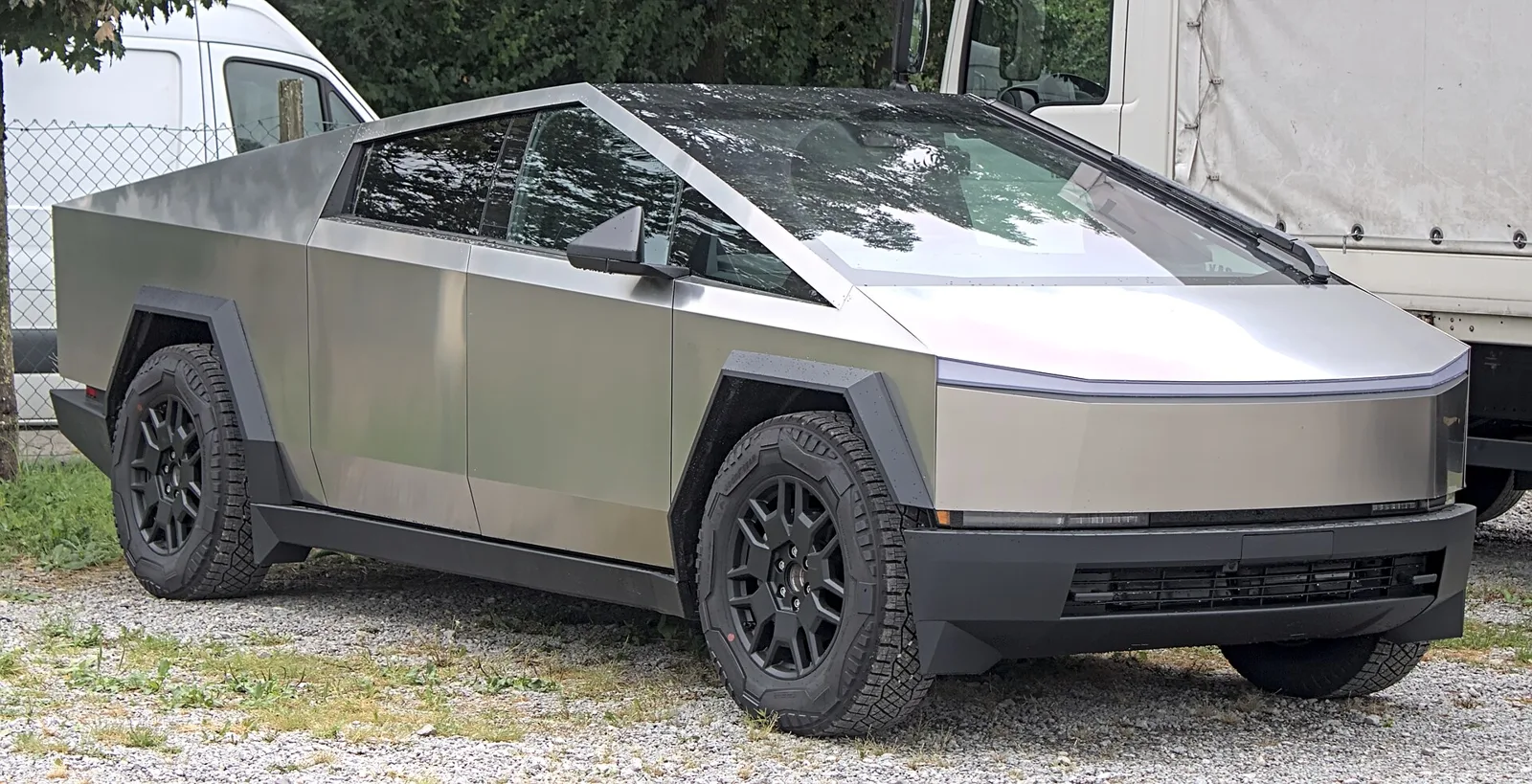
The basic package also bundled standard safety kit: automatic emergency braking, blind spot indicators, a green light chime, and warnings that also correct the car when it strays from its lane or the road edge. Not every car had Autosteer. The Cybertruck and standard variants of the Model 3 and Model Y never did, and Tesla said in January 2026 that vehicles sold from then on would leave it out.
Enhanced Autopilot layered on Autopark, Summon, Navigate on Autopilot and Auto Lane Change. Navigate on Autopilot manoeuvres on the motorway from on-ramp to off-ramp, changing lanes and taking interchanges, then hands back to basic Autosteer when the car leaves. North American customers cannot currently buy the package, although it remains active on cars that already have it.
Summon comes in three forms. Dumb Summon moves the car forwards or backwards. Smart Summon, now deprecated, drove the car to the user or a set location using ultrasonic sensors. Actual Smart Summon does the same with the car's cameras, runs only through the app and has a larger radius.
How the packages evolved
Autopilot began in 2014 as automatic parking and low-speed summoning, with hardware from Mobileye. The first software release arrived in October 2015, and by 2016 the system had automatic emergency braking, adaptive cruise control and lane centring. In July 2016 Tesla and Mobileye dissolved the partnership. Mobileye said it walked away because Tesla was taking risks with safety, in its words pushing the envelope.
Enhanced Autopilot was announced in late 2016, and Tesla offered FSD as an upgrade to it, even as a promotional video from that year acknowledged that real FSD was some way off. The option to buy the upgrade was removed in October 2018, with Musk saying it was causing too much confusion. A beta of FSD software reached EAP testers in the United States in October 2020, by September 2022 it had grown to 160,000 testers across the United States and Canada, and it was extended to all North American buyers of the option in November 2022. In April 2024, Enhanced Autopilot disappeared from North American design pages.
What can Tesla FSD actually do, and what can it not do?
FSD (Supervised) can navigate on nearly all roads, park itself and be summoned from a parking space. It cannot drive without a supervising human. In April 2026 Musk said that, contrary to earlier company promises, Hardware 3 cars lack what it takes for unsupervised full self-driving, and he did not give a timeframe for offering upgrades to newer hardware.
A human has to remain alert even when the car is doing most of the work. Early versions of the software were adjusted to push drivers toward safer habits: version 7.1 stripped out some features that invited risky driving, and in November 2016 Autopilot 8.0 was revised to nudge drivers to keep hold of the steering wheel. When automatic lane changes without driver confirmation were added in April 2019, Consumer Reports called the feature far less competent than a human driver.
Software can also differ by region. In May 2019 Tesla issued an updated Autopilot limited to Europe to meet a fresh UNECE rule on automatically commanded steering. How FSD (Supervised) is offered in a particular country, including Australia, depends on local approval.
How do the autonomy levels apply?
SAE International published a six-level scale in 2014 as J3016, running from fully manual to fully automated, and the United Nations adopted it as UN Regulation No. 157, in force from January 2021 and used in over 50 countries. The levels turn on the driver's role, not on how clever the car appears. At Level 2, the human remains responsible for safe movement.
The key idea is the operational design domain, the set of circumstances a system is built for. Above Level 2 the system must recognise when it is leaving that domain and fall back safely, asking the driver to take over if necessary. Level 5 would mean every circumstance, in every place, which as of late 2025 no system has achieved. Waymo was first to offer driverless taxi rides, in 2020, but in limited geographic areas.
| System | How it is used | Where it works |
|---|---|---|
| Tesla FSD (Supervised) | Level 2, hands on and eyes on | Allowed in all operational domains |
| Waymo robotaxi | Driverless within chosen areas | City streets in Phoenix and San Francisco |
| Mercedes-Benz | Level 3 traffic jam service, up to 40 miles per hour (64 km/h) | Highway jams; removed in January 2026 |
| Mobileye SuperVision | Hands-off, eyes-on | All road types up to 130 km/h (81 mph) |
| GM Super Cruise | Hands-free | Mapped roads; plan to grow from 400,000 to 750,000 miles (1,210,000 km) |
| Ford BlueCruise | Hands-off | 130,000 miles (210,000 km) of US divided highways |
That is the real difference. Tesla's approach is to let one system run almost anywhere while the driver supervises, whereas rivals either narrow the places where hands may come off or promise less. A 2022 survey found that just 27% of people worldwide would feel safe riding in a self-driving car, which hints at the confidence gap the industry still has to close.
What hardware sits behind Autopilot and FSD?
Tesla has moved through several computer and sensor generations, and which one a car has shapes what the software can do. Cars built after September 2014 carried Hardware 1. Hardware 2 arrived in October 2016, followed by Hardware 2.5 in August 2017 with a faster processor and redundant systems, and Hardware 3 in March 2019.
From 2021 Tesla began moving from radar to its camera-only Tesla Vision, giving safety as its reason in October 2022, and vehicles made after 2022 have neither radar nor ultrasonic sensors. Hardware 4 began shipping in January 2023. Its processor is made by Samsung on a 7 nm process, with 16 GB of memory and 256 GB of storage, double and quadruple the HW3 amounts. Musk puts the gain over HW3 at three to eight times in computing power. A 2023 tear-down found high-definition radar hardware in the HW4 Model S and Model X, though the software did not use radar. It took six months before HW4 cars ran FSD, and at first the software ran by emulating HW3.
What have investigators and critics said?
Experts have questioned releasing the software publicly, the FSD name has been challenged, and the Association of British Insurers argued that using words such as autonomous or autopilot in marketing is dangerous because car adverts lead motorists to think the vehicle will look after itself.
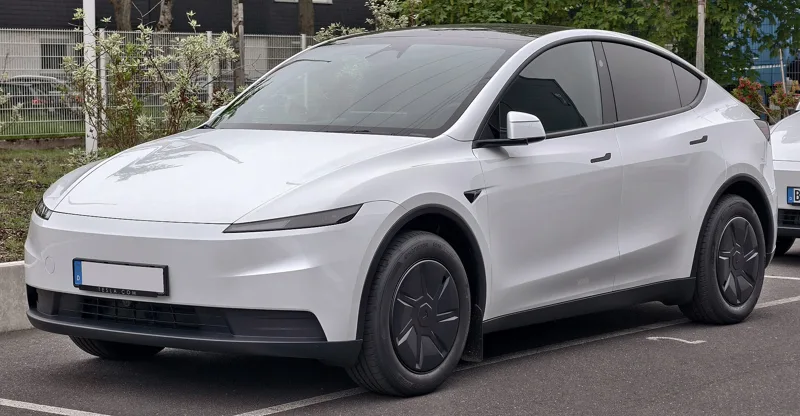
Software changes reflect lessons learned. After a fatal 2016 Autopilot crash in Florida, version 8.0 in early 2017 put more emphasis on the radar system, and earlier revisions tried to keep hands on the wheel. Tesla's own response is that its features reduce accidents. The regulatory picture is mixed too: in May 2026, NHTSA said recent Model Y cars were the first to pass the agency's new benchmark for advanced driver assistance systems.
NHTSA is the US federal agency that writes and enforces vehicle safety standards and collects crash data, and it has run high-profile investigations before, including the Toyota sticky accelerator pedal and the Ford Explorer rollover problem. It has its own critics: audits by the Department of Transportation's Inspector General in 2011, 2014, 2015, 2016, 2018 and 2021 concluded that it was largely ineffectual, and the 2018 audit found it unable to conduct adequate, timely recalls. That context matters when reading any single regulatory announcement.
What does this mean for someone buying or driving a Tesla?
Treat it as an assistant. Whatever the package is called, the driver is responsible for the car, and Level 2 means eyes on the road and hands ready. Check which hardware generation the car carries, because Musk has said HW3 cars cannot reach unsupervised driving, and check whether FSD is a subscription or a one-off purchase in your market.
Older cars raise questions the company has not answered. Musk said HW3 owners would be offered upgrades to HW4 and a discounted trade-up, but gave no timeframe and did not say whether lifetime FSD owners could carry their access to a new car. And with Autopilot gone from the options list, a new buyer wanting only lane centring and adaptive cruise may find the choice narrower than it was.
Where this goes next
According to Tesla, a Hardware 4 upgrade named AI4.1 is scheduled to begin production in 2027, with memory rising from 16GB to 32GB per chip and a 10% gain in computing power. Hardware 5, renamed AI5, was due in January 2026, but the schedule was revised to early 2027. Musk has described it as ten times the power of HW4, then in April 2026 said it would serve the Optimus robots and supercomputer clusters rather than cars.
The Cybercab was reported in September 2026 to use a computer similar to HW4 with iterative updates.