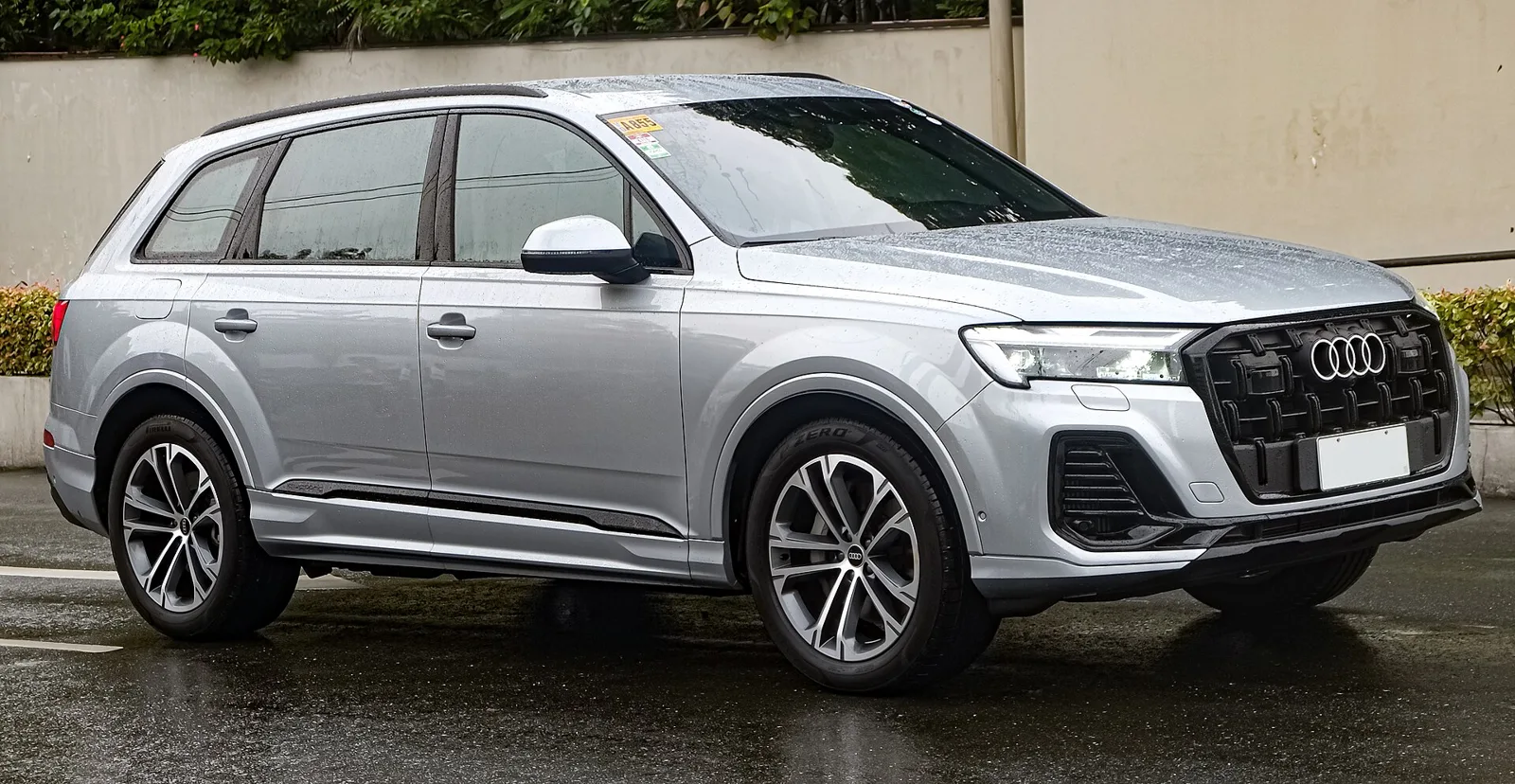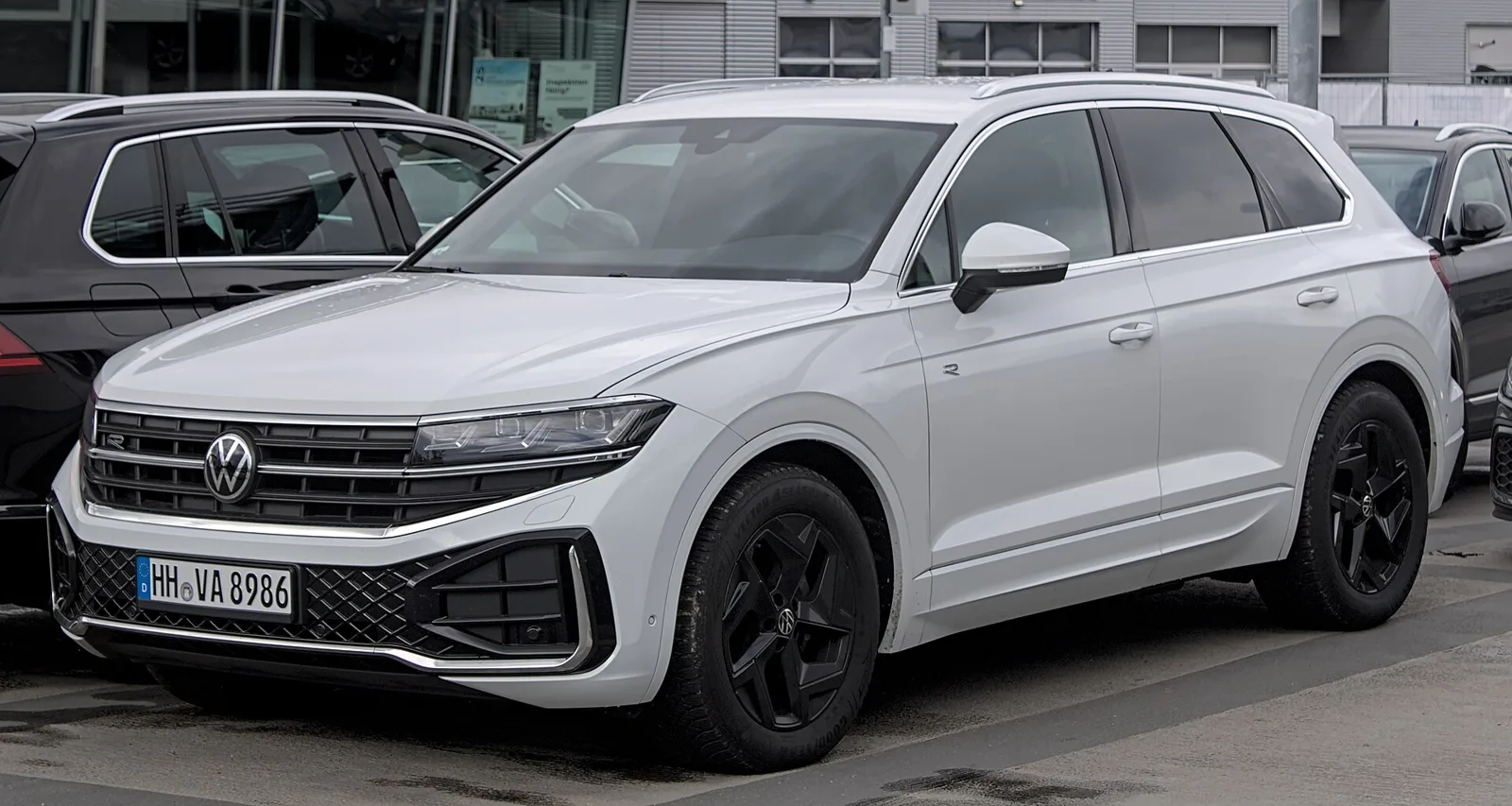
A luxury SUV built on a platform shared with Porsche and Audi, which won a DARPA challenge, a Dakar Rally and a long-distance record along the way.
The Volkswagen Touareg was built from August 2002 until March 2026 as Volkswagen's flagship SUV. Its first generation used the PL71 platform shared with Porsche and Audi, and its third generation added a plug-in hybrid option. Three generations were built in all.
The Volkswagen Touareg was a mid-size luxury crossover that ran from August 2002 until March 2026. It served as Volkswagen's flagship SUV through three generations, shared its underpinnings with Porsche and Audi, and built a motorsport record that included an autonomous-driving victory.
Where does the Touareg name come from?
The name comes from the Tuareg, a nomadic people of the Sahara in North Africa.
Development was a joint venture between Porsche and the Volkswagen Group, involving both the Audi and Volkswagen marques. The first generation's internal code was Typ 7L, and the team that built the platform worked at Weissach in Germany.
A flagship SUV that won a DARPA challenge, a Dakar one-two and a diesel record before its 2026 end.
How was the platform shared?
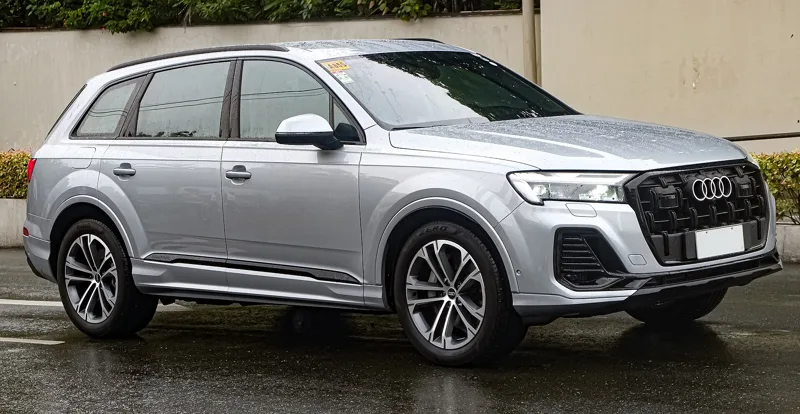
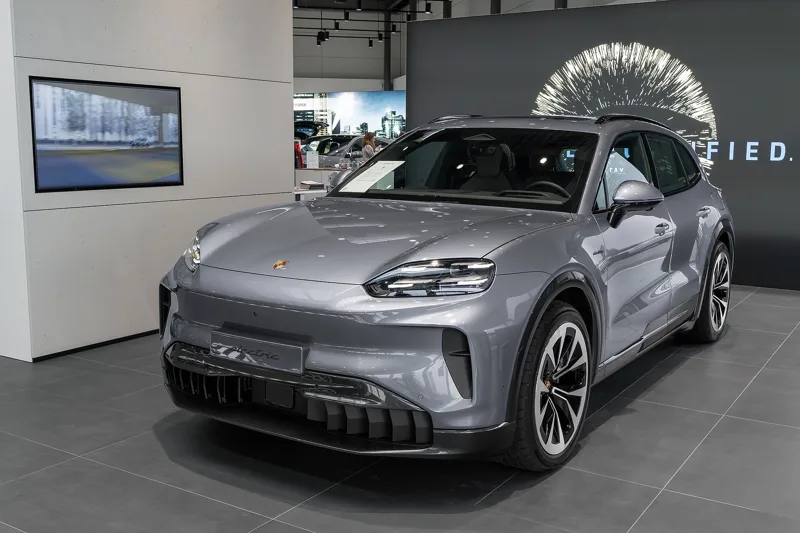
The PL71 platform was the foundation for three siblings, the Touareg, the Audi Q7 and the Porsche Cayenne. Two of them carried five people, and the Q7's longer wheelbase allowed a third row for seven.
Klaus-Gerhard Wolpert led the Weissach team. Porsche was not a wholly owned Volkswagen subsidiary during the early work, and it did not become one until 2012.
Porsche's chief executive, Wendelin Wiedeking, wanted to broaden the brand beyond sports cars. That ambition produced the Cayenne as Porsche's first four-door model, and it assembled the car on a dedicated line at Leipzig. The Touareg and Audi Q7 were built in Bratislava.
What set the first-generation Touareg apart?
The first generation came standard with 4XMotion four-wheel drive, which used an automatic progressively locking centre differential with a manual override. An in-cabin switch selected low range, and an optional four-wheel active air suspension could raise the ride height on demand.
Ground clearance at load level was 160 mm (6.3 in). It rose to 244 mm (9.6 in) in the Off-Road setting and reached 300 mm (11.8 in) at maximum height, figures that made the car credible away from pavements.
Awards followed in the United States, where the Touareg was named Best Luxury SUV, Best Sport/Utility, Best 4x4 and Least Green Car for 2004.
How wide was the engine range?
The first generation offered five, six, eight, ten and twelve cylinders, a spread that few rivals could match. The most striking unit was the W12, a 6.0-litre 48-valve DOHC engine that started out as a limited edition of 500 units.
Volkswagen said the W12 accelerated from 0 to 100 km/h in 5.9 seconds, with an electronically limited top speed of 250 km/h (155 mph). It later became an unrestricted production variant, and some were sold in China, although none reached the United States.
The V10 TDI came to the United States for a limited period in 2004, before emissions rules temporarily removed it from sale. It returned as a 2006 model in five states, and it was eventually cancelled after stricter California standards cut its compliance.
What were the R50 and the V6 TDI?
The R50 was the third Volkswagen to get R performance treatment from Volkswagen Individual, after the Golf and the Passat. It used a 5.0-litre V10 diesel that made 257 kW (349 PS; 345 hp) and 850 Nm (627 lb-ft), and it reached 100 km/h in 6.7 seconds.
The R50 came standard with 21-inch Omanyt wheels and sport-tuned air suspension, plus an engine-turned finish for the interior trim. It was launched at the 2007 Australian International Motor Show.
In the United States and Canada the V6 TDI Clean Diesel replaced the V10. Its selective catalytic reduction system carried AdBlue in a 17 L (4.5 US gal) tank under the boot floor, and Volkswagen recommended refilling it every 8,000 km (4,971 mi).
What did the facelift and the Lux Limited add?
The first facelift was unveiled at the 2006 Paris Motor Show and introduced the shield grille, along with more than 2,300 redesigned parts. ABS Plus worked with traction control to shorten braking distances by up to 25% on loose surfaces.
Front Scan adaptive cruise control could slow or stop the car according to traffic, while Side Scan used rear-mounted radar to flash warning LEDs in the mirrors when another vehicle was alongside. In North America the facelifted car was sold as the Touareg 2 for 2008 to 2010, before reverting to plain Touareg in 2011.
Buyers could add a rollover sensor, redesigned comfort seats, a 620-watt Dynaudio system and a driving dynamics package on the 2007 car. Every diesel variant received a standard diesel particulate filter.
The Lux Limited, shown at the 2009 North American International Auto Show, was a US variant with 20-inch Mountain alloys, four body colours and Cricket two-tone leather. It was built on the V6 TDI Clean Diesel, V6 FSI and V8 FSI.
How did the second generation change?
The second-generation Touareg, type 7P, was revealed on 10 February 2010 in Munich. It introduced Dynamic Light Assist, a glare-free high-beam system that Volkswagen called a world first, and it gained adaptive cruise control with a Stop and Go function.
Other equipment included Lane Assist, Side Assist, Front Assist with automatic emergency braking, Area View with four surround cameras and adaptive air suspension. An eight-speed automatic came as standard.
The Touareg Hybrid was unveiled at the 2010 Geneva Motor Show, and the Chinese version went on sale in early 2011. Its Exclusive trim offered two-tone Nappa leather in Pepper Beige and Titan Black, or in Dark Burgundy and Titan Black.
The IIHS tested the second generation and rated it Good in four categories: moderate overlap frontal, side, roof strength, and head restraints and seats.
Did the Touareg win at Dakar?
Volkswagen's race Touaregs won repeatedly at the Dakar Rally. In 2009 the team finished one-two, with Giniel de Villiers and Dirk von Zitzewitz winning ahead of Mark Miller and Ralph Pitchford, although Carlos Sainz crashed out while leading near the finish.
Sainz returned in 2010 for a Volkswagen one-two-three, and Nasser Al-Attiyah won for the team in 2011 in the Race Touareg 3. Earlier, de Villiers and Tina Thorner had taken second place in the Race Touareg 2 in 2006, the highest finish for a diesel at that point.
Carlos Sainz also won the 2008 Central Europe Rally in a Race Touareg 2, which showed the model's competitiveness beyond Dakar.
The Race Touareg 3 used a 2.5-litre twin-turbocharged TDI rated at 300 PS (221 kW; 296 hp), mated to a 5-speed sequential gearbox with a ZF-Sachs three-plate ceramic clutch.
Who won the 2005 DARPA challenge?
A modified Touareg called Stanley won the 2005 DARPA Grand Challenge for autonomous vehicles. The win remains part of the model's motorsport record.
The model also appeared at Pikes Peak, where Volkswagen entered V10 TDI Touaregs and a V6 TDI Touareg in the 85th International Hill Climb. Ryan Arciero won with a time of 13:17.703, setting a division record for the fastest diesel vehicle, while Mike Miller took second in 13:25.247.
How did Baja and the Trophy Truck go?
A 2.5-litre R5 TDI took a class win at the 2007 Baja 500, driven by Mark Miller and Ralph Pitchford. Two years later the Trophy Truck was unveiled at the 2008 LA Auto Show, with a 5.5-litre V12 clean diesel that made 550 PS (405 kW; 542 hp) and 850 Nm (627 lb-ft).
The mid-engined, rear-wheel-drive Trophy Truck used an Xtrac six-speed sequential transmission and finished 13th in its class at the 41st Tecate SCORE Baja 1000, driven by Mark Miller.
How did the Cape to Cape record happen?
Rainer Zietlow, Marius Biela and Sam Roach shared the driving on 20 September 2015. Their Touareg V6 TDI covered 19,000 km (11,806 mi) from Cape Agulhas to Nordkapp in 9 days, 4 hours, 9 minutes and 27 seconds, a world record time for the route.
For the attempt the car had firmer suspension, bigger tyres, a roll cage and extra fuel capacity, bringing its total range to 3,000 km (1,864 mi). Its engine and drivetrain remained standard.
Specifications across the generations
| Generation | Years | Platform | Notable powertrain |
|---|---|---|---|
| First generation (7L) | 2002 to 2010 | PL71 | W12 6.0-litre, V10 TDI, 4XMotion |
| Second generation (7P) | 2010 to 2018 | PL72 | Full-hybrid variant, eight-speed automatic |
| Third generation (CR) | 2018 to 2026 | MLB Evo | Touareg R plug-in hybrid, 462 PS (340 kW; 456 hp) |
| Race Touareg 3 | 2011 Dakar | Race chassis | 2.5-litre twin-turbo TDI, 300 PS (221 kW; 296 hp) |
| R50 | 2007 to 2010 | PL71 derivative | 5.0-litre V10 TDI, 257 kW (349 PS; 345 hp) |
Why did Volkswagen stop selling the Touareg in North America?
Sales in North America stopped with the 2019 model year. Volkswagen blamed weaker demand next to the bigger, cheaper Atlas, which had appeared for 2017 and took over the family-SUV role the Touareg had filled there.
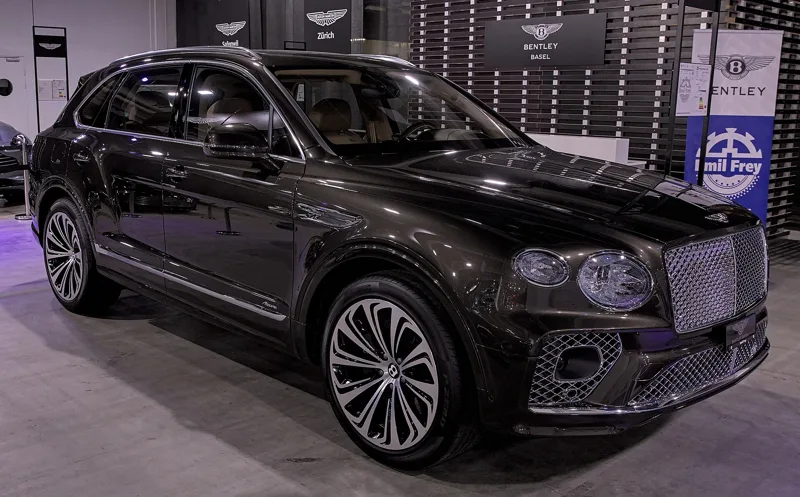
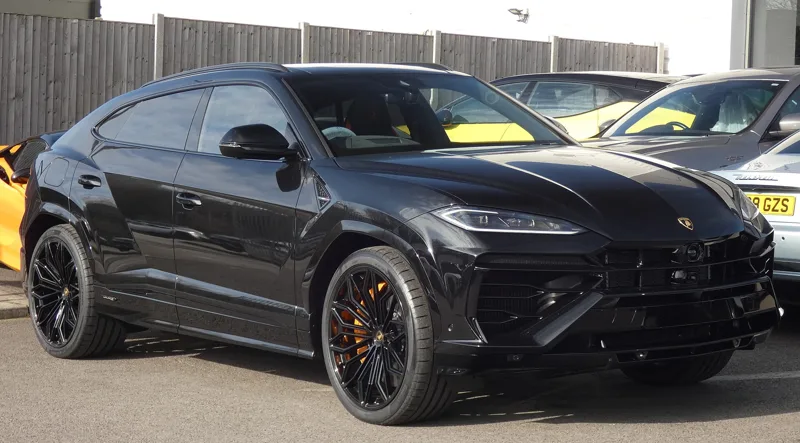
The third generation was never offered in North America at all. Its MLB Evo structure also underpins the Porsche Cayenne, the Audi Q7 and Q8, the Bentley Bentayga and the Lamborghini Urus.
What did the third generation bring?
The third generation was revealed on 23 March 2018 in Beijing, with its motor show debut at Poznan. It gave the Touareg its first body structure independent of the Audi Q7's door skins, and it brought a far more advanced driver assistance suite.
Night Vision with animal and pedestrian detection, and an optional Innovision Cockpit with a 15-inch touchscreen, were among the newer features. A plug-in hybrid variant, the Touareg R, arrived in 2020.
The Touareg R was unveiled in February 2020. The turbocharged 2,995 cc V6 petrol engine was combined with an electric motor of 100 kW (136 PS; 134 hp) and a 14.1 kWh lithium-ion pack, producing 462 PS (340 kW; 456 hp) and 700 Nm (516 lb-ft).
Edition 20 marked the 20th anniversary in 2022, with Meloe Blue paint, Edition 20 badges on the pillars and illuminated interior panels. Shown on 23 May 2023, the 2024 facelift brought headlights with matrix LED technology, a rear logo that lights up along a light bar, and reworked displays inside.
The second-generation car had been updated for 2015 with standard bi-xenon headlights, automatic post-collision braking and upgraded adaptive cruise control. A new 262 PS (193 kW; 258 hp) V6 TDI joined the range, and online services such as Google POI search, Google Earth mapping and traffic reporting arrived with it.
How did the Touareg end in 2026?
Production of all variants ended in March 2026, after a run that lasted from August 2002. The model was built exclusively at the Volkswagen Bratislava Plant, with CKD assembly in Malaysia from 2024 supplementing production for some markets.
The end of the line came after three generations and a long list of awards, including Car and Driver's Best Luxury SUV for 2003 and Motor Trend's Sport/Utility of the Year for 2004. Four Wheeler named it Four Wheeler of the Year for 2005.
What record did the Touareg set for towing?
In a 2007 advertising campaign a V10 TDI Touareg pulled a Boeing 747, which set a world record for the heaviest load ever towed by a production passenger car. The campaign showed how far the model could be pushed.