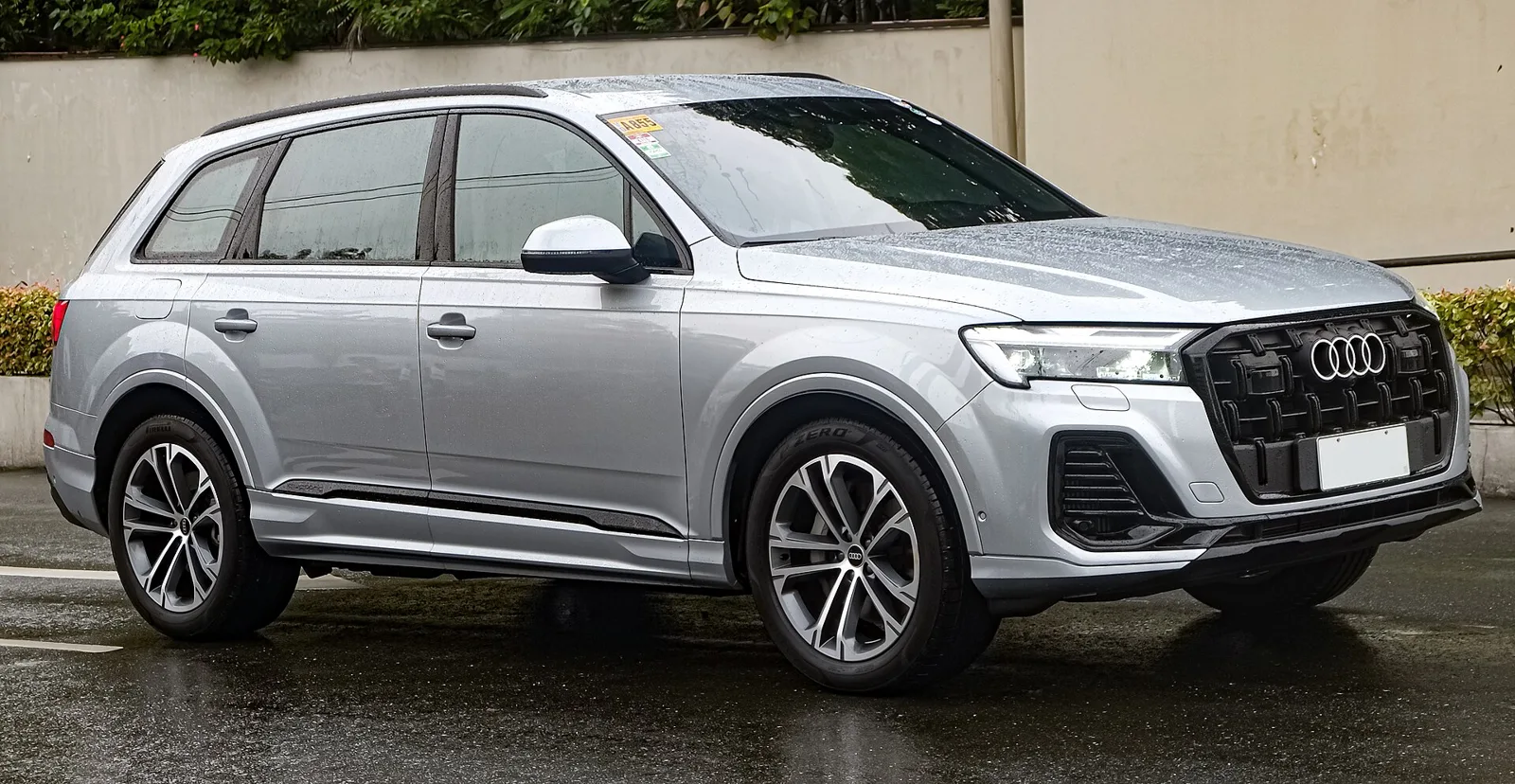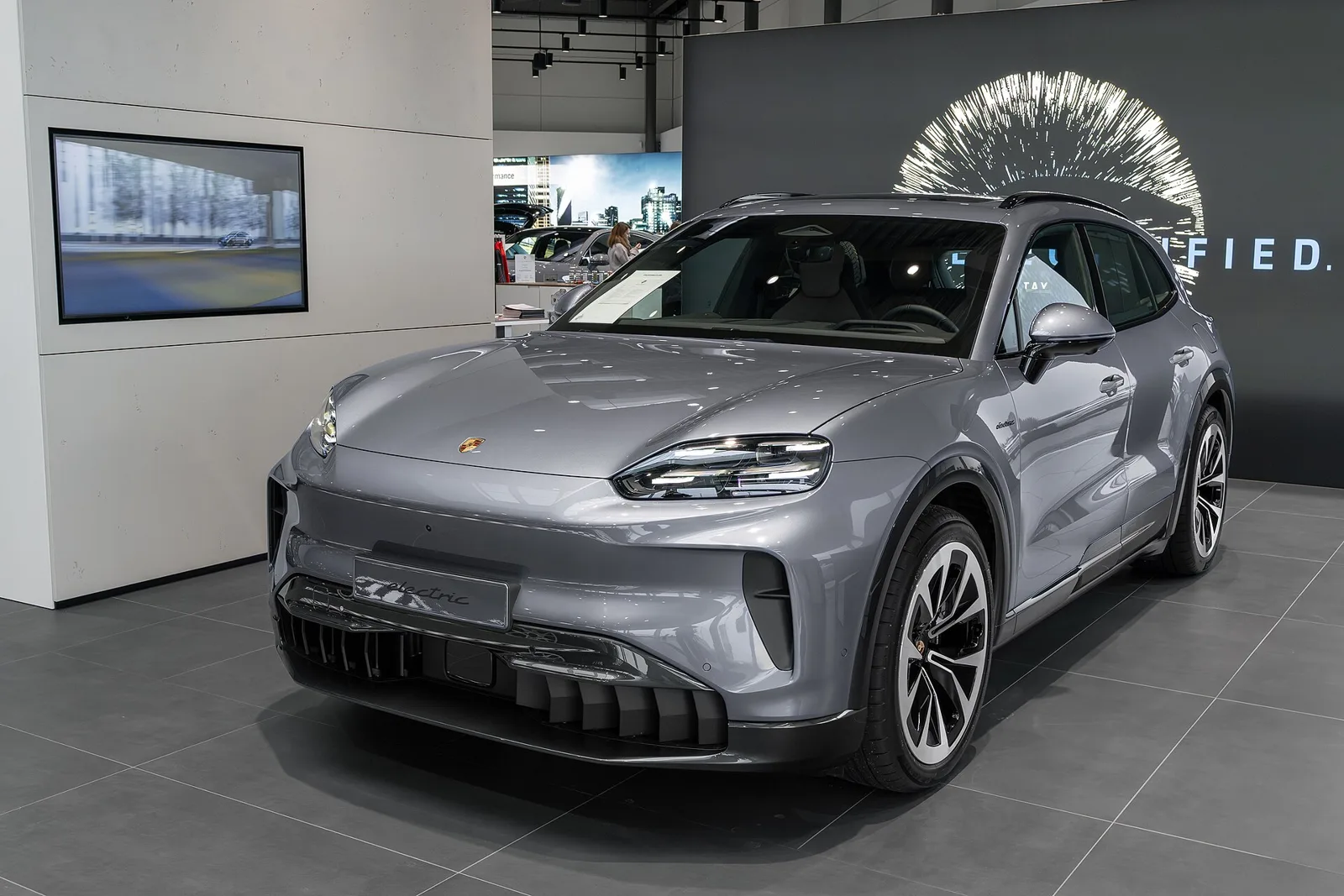
A 113 kWh battery, 400 kW charging and a dual-motor Turbo that reaches 1,072 hp under launch control mark the first all-electric Cayenne.
The Cayenne Electric is Porsche's fourth-generation luxury SUV, sold only with a battery-electric powertrain. Unveiled in November 2025, it carries a 113 kWh pack, supports charging at up to 400 kW and offers a dual-motor Turbo with over 804 hp in standard operation.
Porsche's fourth-generation Cayenne has dropped combustion power altogether. Sold as the Cayenne Electric, it pairs a 113 kWh battery with charging of up to 400 kW, and the dual-motor Turbo reaches 1,072 hp (799 kW) under launch control. The model marks the point at which the Cayenne family went fully electric.
What is the Porsche Cayenne Electric?
Think of it as the newest chapter of a nameplate that began in 2002. The fourth generation is an SUV with a fully electric drivetrain, and the November 2025 unveiling introduced it to the world as the Cayenne Electric.
The Cayenne is a luxury crossover in the E-segment. Depending on how you measure it, it can be read as either a full-size or a mid-size SUV. Engineers refer to this generation as Type X1A/X1B or E4, and it belongs to a line that Porsche has sold since 2002.
Porsche has sold the Cayenne alongside the smaller Macan since 2014. The fourth generation is the first in the family to be offered only with a battery-electric powertrain, and it rides on the Premium Platform Electric (PPE) architecture. That same platform also underpins the second-generation Macan, linking the two SUVs at the engineering level.
A battery-only Cayenne with a 113 kWh pack, 400 kW charging and a family history that stretches back to 2002.
How did the Cayenne family begin?
The first Cayenne reached the market in 2002 to a mixed reception, yet it proved strong on handling and engines for an SUV. Porsche produced 276,652 units in total over eight model years, and the name itself came from Manfred Gotta.
The first generation launched with V8-powered Cayenne S and Turbo models. VR6 and diesel versions joined later in its eight model years, so buyers could choose between petrol and diesel power.
The original car also set several firsts for the brand. It was the first V8-engined Porsche since 1995, when the 928 was discontinued, and it marked Porsche's first four-door production car. It was also the first Porsche off-road vehicle since the company's 1950s Super and Junior tractors.
The second generation arrived at the 2010 Geneva Motor Show, almost 250 kg (551 lb) lighter than the car it replaced. Engineers used more aluminium and magnesium and removed the low-range transfer case, while off-road ability was kept. Diesels from 2013 to 2016 later became part of the Volkswagen emissions scandal, and Porsche gave pre-facelift 92A cars a ten-year warranty covering 2011 to 2014 models.
The third generation was revealed on 29 August 2017 and reached buyers in 2019. It sat on the Volkswagen Group MLB platform, which also underpins the Touareg, Q7, Q8, Bentayga and Urus. It was about 63 mm (2.5 in) longer than its predecessor and 9 mm (0.4 in) lower, with a drag coefficient of 0.35.
Weight came down as well. Aluminium was used throughout the body, and the car weighed about 65 kg (143 lb) less depending on configuration. A 2023 facelift then added a fully digital 12.6-inch gauge cluster to the third generation.
The Cayenne Coupe arrived in 2019 and was shown at the Shanghai Auto Show in April 2019. Its roof sits 20 mm (0.8 in) lower than the SUV's, and its front windscreen is shallower, which gives the body a more rakish profile.
When did the Cayenne Electric arrive?
Porsche unveiled the fourth-generation Cayenne on 19 November 2025, and orders opened immediately. Series production began in February 2026, and the coupe-style Coupe Electric followed when it was unveiled on 24 April 2026. The SUV is the first Cayenne offered only as a battery-electric car.
The reveal set the timetable for both body styles. The launch also sits alongside a separate update programme for the third-generation model, which Porsche has announced as its own project. The two tracks mean the Cayenne name now covers an electric car and a combustion-era car in parallel.
How fast does the Cayenne Electric charge?
The pack charges at up to 400 kW and can take the battery from 10% to 80% in as few as 16 minutes. It supports both NACS and J1772 chargers, and an 11 kW inductive home charging option is offered for the garage.
The battery is a 113 kWh pack with 108 kWh of net capacity, built from six modules bolted to the chassis. Each module holds four packs of eight pouch cells connected in series. Energy density is about 7% higher than that of the Taycan sedan.
The cooling system uses 15% less energy, and predictive thermal management conditions the battery while the car is driven and while it charges. Together, those two systems govern how the battery is kept at temperature in both driving and charging.
How much power does the Turbo make?
The dual-motor Turbo produces over 804 hp (600 kW) in standard operation. Ten-second surge power lifts output to over 938 hp (699 kW), and launch control reaches 1,072 hp (799 kW). On both torque and output, it stands above every other regular-series Porsche.
Regeneration tops out at 600 kW, enough for more than 0.5 g of slowing. The motor cools its stator directly with non-conductive oil, and silicon carbide inverters push motor efficiency as high as 98%. Taken together, these parts describe a drivetrain built around cooling and power electronics as much as output.
What does the cabin include?
The cabin uses a 14.25-inch OLED instrument display and a curved 12.25-inch OLED central screen, which Porsche calls the flow display. Options include a 14.9-inch passenger display and an augmented 3D head-up display, and Android Auto and Apple CarPlay are supported.
The previous generation had already moved in this direction. The 2023 facelift brought a fully digital 12.6-inch gauge cluster and a dashboard layout inspired by the Taycan, so the electric car continues a shift that was already under way.
Which Cayenne variants came after 2017?
Porsche added the Cayenne Turbo in 2017 with a 549 PS (404 kW; 541 hp) twin-turbo 4.0-litre V8. Later models brought E-Hybrid, Turbo S E-Hybrid, GTS and Turbo GT versions, which covered plug-in hybrid and performance-focused buyers. The line stretched from the Turbo to the Turbo GT over several years.
The Turbo produced 770 Nm (568 lb ft) of torque, and Porsche claimed 4.1 seconds to 100 km/h, or 3.9 seconds with the Sport Chrono package. Its top speed was 285 km/h (177 mph).
The E-Hybrid paired a 3.0-litre petrol V6 with a plug-in system rated at 462 PS (340 kW; 456 hp). It offered an all-electric range of 43 km (27 mi) from a 14.1 kWh battery, and the quoted sprint to 100 km/h takes 5.0 seconds.
The Turbo S E-Hybrid combined a 4.0-litre twin-turbo V8 with an electric motor for 680 PS (500 kW; 671 hp), and Porsche claimed 3.6 seconds to 100 km/h. The 2025 GTS returned with 493 hp (368 kW; 500 PS) from its 4.0-litre twin-turbo V8, reaching 0-60 mph in 4.2 seconds.
The 2024 Cayenne S E-Hybrid used a turbocharged 3.0-litre V6 rated at 348 hp (260 kW; 353 PS) alone, and 512 hp (382 kW; 519 PS) combined with its electric motor. The Turbo GT, based on the Cayenne Coupe, delivered 640 PS (471 kW; 631 hp), with a quoted 3.3 seconds to 100 km/h.
Across these versions the 4.0-litre twin-turbo V8 became the common thread. It appeared in the Turbo, the Turbo S E-Hybrid, the GTS and the Turbo GT, which gave the later range a shared core engine.
Did the Cayenne set any records?
Yes. In June 2021 a Cayenne Turbo GT lapped the Nordschleife in 7:38.925, driven by test driver Lars Kern. On 1 May 2017 a Cayenne S Diesel pulled a 265-tonne Airbus A380 42 metres, a Guinness World Record for the heaviest aircraft towed by a production car.
That towing result beat a 2013 benchmark, when a Nissan Patrol moved a 170-tonne Ilyushin Il-76 for 50 metres. The A380 weighed 265 tonnes against the Il-76's 170 tonnes, although the Cayenne towed it 42 metres rather than the earlier 50.
What are the Porsche Cayenne Electric specifications?
The Cayenne Electric uses a 113 kWh battery with 108 kWh net capacity, charges at up to 400 kW and produces over 804 hp (600 kW) in dual-motor Turbo form. Regenerative braking reaches 600 kW, and the car sits on the PPE platform.
| Specification | Detail |
|---|---|
| Generation | Fourth (E4), battery-electric only |
| Platform | Premium Platform Electric (PPE) |
| Battery | 113 kWh (108 kWh net), six modules |
| Maximum charging | 400 kW; 10% to 80% in as few as 16 minutes |
| Charging connectors | NACS and J1772; 11 kW inductive home charging |
| Cooling system | 15% less energy used |
| Motor efficiency | Up to 98%, with silicon carbide inverters |
| Turbo output | Over 804 hp (600 kW) standard; 938 hp (699 kW) surge; 1,072 hp (799 kW) launch control |
| Regenerative braking | 600 kW, over 0.5 g |
| Displays | 14.25-inch OLED instrument; curved 12.25-inch OLED infotainment |
| Unveiled | 19 November 2025 |
| Series production | February 2026 |
| Coupe Electric | Unveiled 24 April 2026 |
The figures above describe the Electric only. Earlier generations used different engines and platforms, so their values appear in the sections on history and variants instead.
Is a combustion Cayenne coming?
Porsche has not confirmed a combustion-engined fourth-generation Cayenne. The company has, however, announced a further update to the third-generation model as a separate programme. For now, the battery-electric car is the only fourth-generation Cayenne, and the earlier model line continues on its own development path.
How does the Cayenne Electric relate to the Macan?
The Macan is the smaller Porsche SUV, and the two have been sold side by side since 2014. Both use the Premium Platform Electric architecture, so the Cayenne Electric and the second-generation Macan share their underlying engineering. This makes the pair a useful reference point for Porsche's wider electric strategy.
In many markets the Macan has already gone electric-only, so the Cayenne Electric follows a path that Porsche has partly walked with its smaller sibling. Buyers who know one model will find the same platform logic in the other, although the two cars differ in size.
Why does the Cayenne Electric matter for Porsche?
The Cayenne has been a sales engine for Porsche for years. Global deliveries reached 102,889 units in 2024, an 18% increase over 2023. In many markets it has become the company's best-selling model since the Macan went electric-only, and in the first quarter of 2022 Porsche sales fell 5% while the Cayenne still led the range.
The fourth generation carries that question into a fully electric form. It asks whether a large luxury SUV can keep its appeal without a combustion engine, and early sales will show how buyers respond to that change.