A Jeep-styled off-roader from 1951 that grew into a full-size SUV, passed through seven generations and is set to return to Japan.
Built in Japan since 1951, the Patrol is Nissan's longest-running model line, spanning off-roaders and full-size SUVs. Seven generations have been sold worldwide, from Australia to Western Europe, and the latest arrived in 2024.
The Nissan Patrol is a range of off-roaders and big SUVs that Nissan has built in Japan since 1951. It is the company's longest-running series, and seven generations have been sold around the world, the latest from 2024. The early cars were styled much like the Willys Jeep, and the modern models are large luxury-leaning SUVs sold from Australia to Western Europe.
Where did the Patrol begin?
The 4W60 was introduced in September 1951, exclusively through Japanese Nissan dealerships. Its styling was similar to the Willys Jeep, and it used a 75 PS (55 kW) 3.7-litre engine borrowed from the Nissan 290 bus, Four-wheel drive was part-time, and the gearbox was a four-speed manual.
A 4W70 Carrier wagon was available alongside it. The Carrier had appeared in 1950 and took its inspiration from the Dodge M37, and it used the M37's chassis together with the 4W60's drivetrain. The grille carried a pressed-steel Nissan badge.
Nissan's longest-running series began as a Jeep-styled off-roader in 1951.
How did the 4W61 and 4W65 develop the design?
The 4W61 arrived in August 1955 with a revised grille, a one-piece windscreen that sat further back when folded, and unequally sized seats. Power came from a new 3.7-litre NB engine producing 92 PS (68 kW), later replaced by a 105 PS (77 kW) 4.0-litre NC unit.
The 4W65 followed in October 1958, with an all-chrome grille, redesigned front wings and a bonnet carrying Patrol badges. An eight-seat hardtop wagon, the WG4W65, joined the range, giving the line a family-sized option.
A short-lived 4W66 had appeared in December 1956 with a 125 PS (92 kW) 4.0-litre P engine, and it was dropped in June 1960. Its wagon counterpart, the Carrier, was sold from 1956 to 1959.
What happened to the 4W70 Carrier line?
The Carrier line kept evolving in parallel. The 4W72 arrived in 1955 with a 78 kW (105 hp) NC engine, and the 4W73 of 1959 used the P engine to deliver 145 PS (107 kW). Each change brought modified hoods, fenders and grilles.
Those trucks and wagons would later feed directly into the Jonga story in India, where the 4W73 was assembled alongside the Patrol.
Why was the 60 series important in North America?
The 60 series arrived in October 1960 as a soft-top two-door. Its wheelbase measured 2,200 mm (86.6 in), while the longer G60 stretched to 2,500 mm (98.4 in) between axles. Canada and the United States bought Patrols from 1962 until 1969 through Datsun dealers, making it the sole Nissan-branded car in the US until about the early 1980s.
The 4WD 60 series came in short, medium and long wheelbase versions. Its P engine was a 3,956 cc inline overhead-valve six with bathtub-shaped combustion chambers and a seven-bearing crankshaft. The extra-long H60 seated eight, and a hardtop KG60 followed in 1963.
Nissan Australia credits the 60 series as the first vehicle to cross the Simpson Desert. It marked the 50th anniversary of that feat with a re-enactment that ended on 21 July 2012, timed to promote the new Y62.
A Patrol Fire Truck variant was sold across Japan, not only in mountain and snow country. Its A2-class pump could discharge large volumes of water thanks to the big engine, and a two-wheel-drive Fire Patrol was also offered.
Specifications
| Generation | Code | Years | Notes |
|---|---|---|---|
| First | 4W60 | 1951 onward | 3.7-litre NAK engine, part-time four-wheel drive |
| Second | 60 series | 1960 onward | 3,956 cc P inline-six |
| Third | 160 series | 1980 onward | L28, P40 and SD33 engines, leaf springs |
| Fourth | Y60 | 1987 onward | Coil-spring suspension, three-link front axle |
| Fifth | Y61 | 1997 onward | Petrol 4.5 and 4.8 litres; diesel turbos 2.8, 3.0 and 4.2 litres |
| Sixth | Y62 | 2010 onward | V6 and V8 petrol engines |
| Seventh | Y63 | 2024 onward | 3.8 litre V6, or 3.5 litre twin-turbo V6 |
How did the Jonga reach India?
From about 1969 the Vehicle Factory Jabalpur of the Indian Army built a quarter-ton Patrol, called the Jonga, alongside the Nissan 4W73. The name spells out Jabalpur Ordinance aNd Guncarriage Assembly, and both Nissans shared engines and many parts.
Civilians could buy a Jonga for a short time in 1996, fitted with a 4.0-litre Hino diesel. Low demand, a high price and unappealing looks limited sales to fewer than 200 units. It served faithfully until the late 1990s, when the lighter Mahindra MM550 took its place.
Ex-Army Jongas that were auctioned later were stretched and converted into people carriers, and some still serve in rural areas of India.
What was the 160 series?
The 160 series arrived in June 1980 as the successor to the 60 series, sold in Australia and New Zealand as the MQ Patrol. Its engines were the L28, P40 and SD33, and every model had leaf-spring suspension and a four-speed manual.
An automatic with three speeds came as an option on long-wheelbase L28 cars. Every 160 had a two-speed offset transfer case, with a direct high range and a low range. The SD33 versions used 24-volt electronics, while air conditioning and power steering were reserved for deluxe models.
In 1983 the 160 became the 161, with rectangular headlights, a revised front suspension and a fifth gear for most models. A high-roof Super Roof wagon arrived with the SD33T turbo diesel, which made 110 PS (81 kW) and could reach 145 km/h (90 mph).
In Japan Nissan renamed the Patrol the Safari in 1981, the same year that a new Toyota Land Cruiser and two new rivals, the Isuzu Bighorn and Mitsubishi Pajero, appeared. Production of most of the range ended in 1987, although fire-truck cab-chassis and pickups continued until 1994.
How did Spanish production shape the Patrol?
Nissan bought a 35.85% stake in Motor Iberica in 1980 and raised it to 54.68% in 1982. The first Spanish-built Patrol left the plant at Zona Franca, near Barcelona, in early 1983. The first year's plan called for 4,000 to 5,000 cars for Spain and Portugal, with exports to follow.
The early Spanish cars used a Perkins MD27 four-cylinder diesel and Spanish transmissions to meet local content rules. Nissan later introduced its own A428 engine, derived from the MD27, with its cylinders opened up by 2 mm (0.08 in) to reach 2.8 litres (2,820 cc). Later versions were the turbocharged A428T and the A428II.
Six-cylinder RD28 and RD28T engines eventually replaced the old Perkins-based engines in Spanish cars. The 260 of 1986 was a facelifted Spanish-built 160, recognisable by its rectangular headlamps, and it came in short and long wheelbase forms.
Output for export ran until 1994, and cars for the Spanish market were built until 2002.
What made the Y60 different?
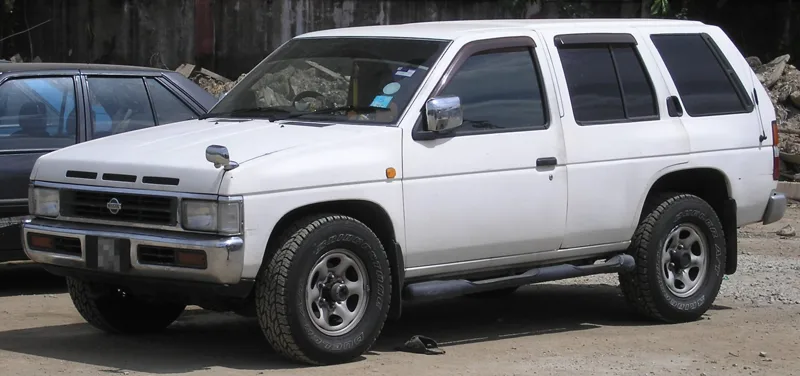
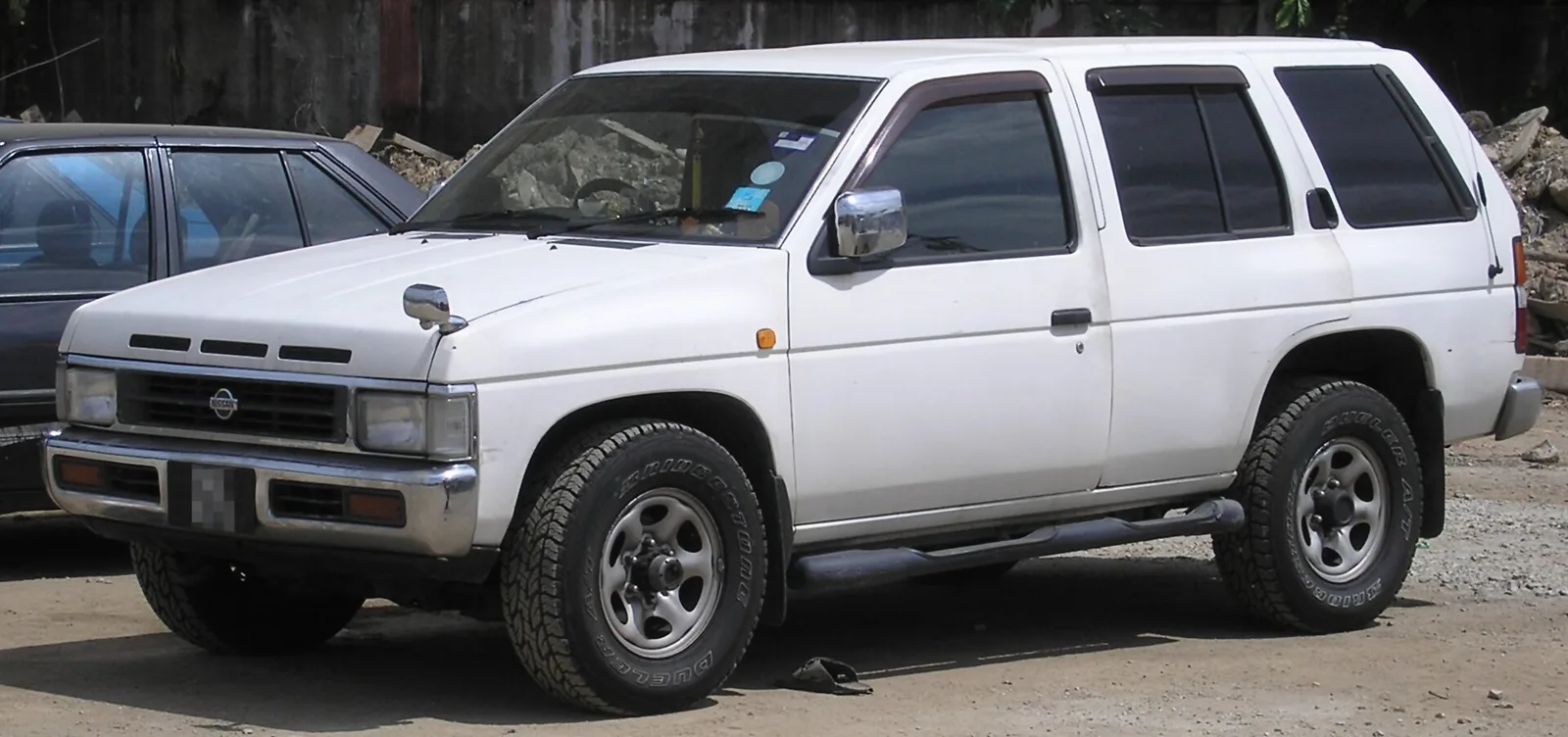
The Y60 of 1987 brought coil springs to the range for the first time, which improved comfort and handling on rough ground. Wagons used a three-link live axle at the front, and five links located the rear. The utility could be had with leaf springs at the back, and from 1994 also with coil springs.
Power steering was standard. Wagons had disc brakes at both ends, while the utility kept drums at the rear. Most cars came with a limited-slip rear differential. Some Y60s also carried a winch driven from the power take-off, with its lever beside the gearstick.
In Japan the Patrol was sold as the Safari through Nissan Prince dealers, while Nissan Bluebird dealers kept the Patrol name. The Safari offered a higher-voltage electrical option, and the larger engines pushed the car into a higher road tax band for Japanese owners.
The Ti trim, introduced in late 1989, had electric windows, central locking, a seven-speaker sound system and alloy wheels. It carried a high roof and a sunroof until 1991, and leather and woodgrain trim arrived as standard in 1992 with the Series 2.
Two major updates came in Australia, in 1992 with the GQ Series 2 and in 1995 with a minor facelift. The 1992 changes brought fuel injection to the TB42 engine, an EGR valve and oil cooler for the RD28T, new seats and side intrusion bars.
Owners reported front-end vibrations, rear door hinges that cracked under the weight of the spare tyre, and rust in the rear window frames. The RD28T and TB42 could suffer head gasket problems under heavy use, while the TD42 earned a reputation for reliability as long as it was properly cooled.
An aftermarket version called the Autech Adieu appeared in Japan in 1995. Based on the Grand Road and King Road tall-roof models, it was altered for use as a hearse.
What did the Y61 bring?
The Y61 arrived in December 1997 with petrol engines of 4.5 and 4.8 litres, plus diesel turbos of 2.8, 3.0 and 4.2 litres. Its drivetrain gained larger CV joints and fewer synchros in the manual gearboxes, while the differential housings were widened to suit the new body.
Comfort rose over the GQ, especially in the seats and in noise and vibration control. A 2005 facelift changed the headlights, added box flares to the wheel arches and enlarged the tail lamps, and it resolved the troubles that had affected the variable turbo geometry of the ZD30 diesel.
Nissan stopped selling the Safari in Japan in 2005 because of poor sales. A two-door pickup was also offered in some markets, and production of it started at Nissan Shatai in April 2011.
The TB48DE engine became popular with tuners across the Gulf, especially in the United Arab Emirates, because its cast-iron block and aftermarket support suit turbocharged builds. Specialist racing examples have produced more than 750 kW (1,000 hp).
Nissan discontinued the Y61 worldwide in 2014, except in several markets such as South Africa, the Middle East and parts of Africa and Eastern Europe. Australia kept it until 2016, and production finally ended in 2024 for government and United Nations users.
How did the Y62 reshape the Patrol?
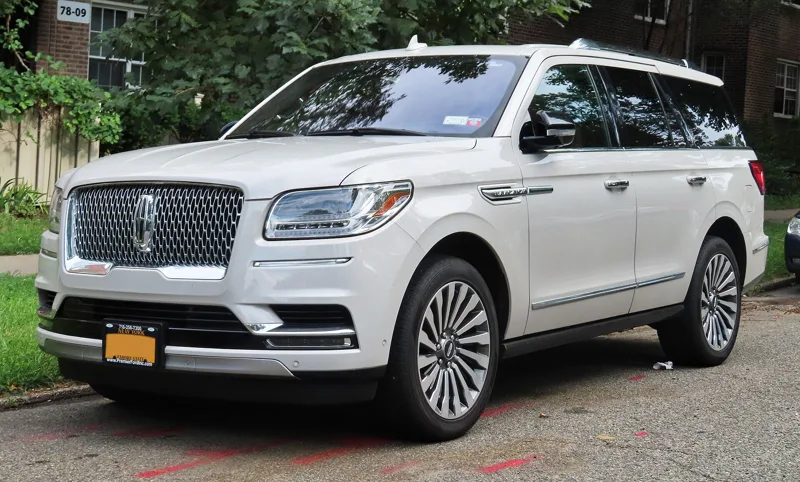
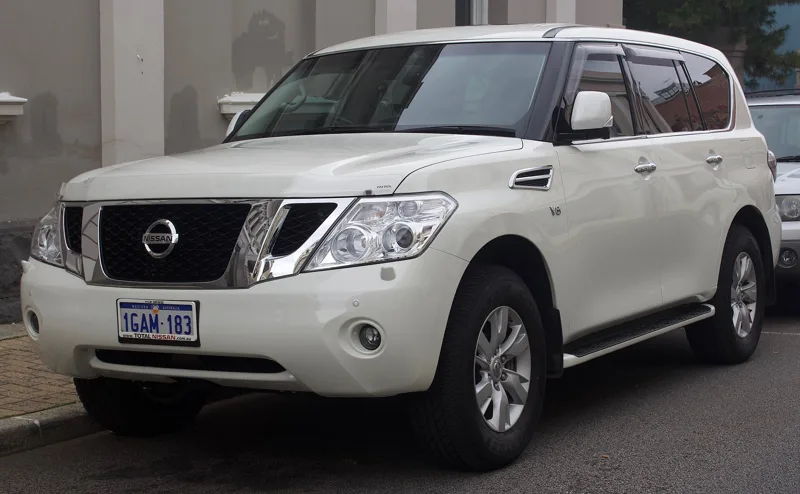
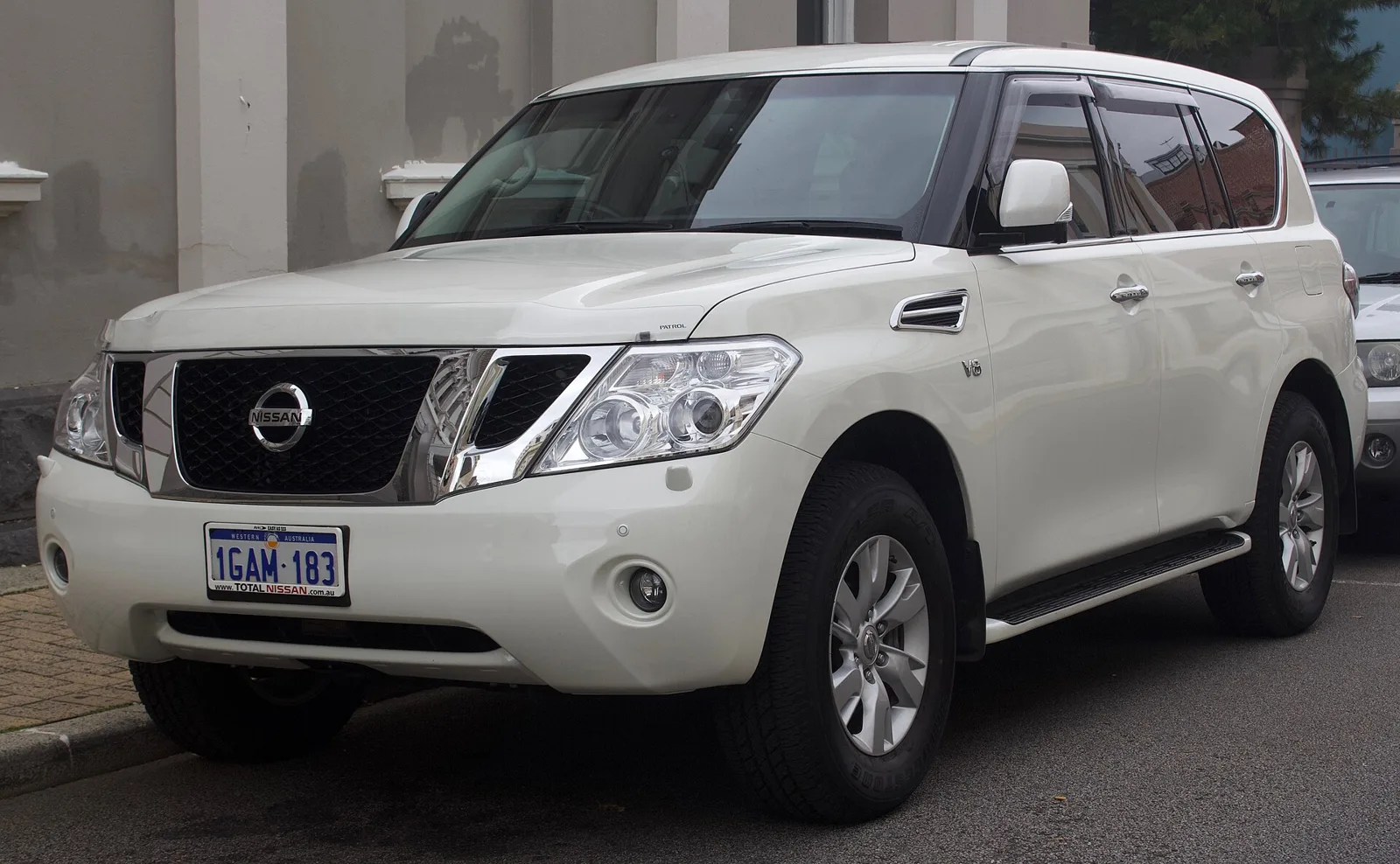
The sixth generation, the Y62, debuted in Abu Dhabi on 13 February 2010. Its luxury variant, the Z62, was sold in North America as the Infiniti QX56, the first Patrol-based vehicle sold there since the 60 series in 1969. Its name became QX80 in 2013, with the 2014 model year as its first.
Nissan Shatai built the Y62 in Japan, but it never went on sale there because of its size. Many Japanese owners reverse-imported it as grey imports, mostly US-spec Armadas, and a few came from the Middle East and Oceania.
The Y62 reached North America as the Armada in 2016, for the 2017 model year, replacing the Titan-based first-generation Armada. Its 4.0-litre VQ40DE V6 made 205 kW (275 hp) and 394 Nm in the entry XE and SE trims, while the 5.6-litre VK56VD V8 made 298 kW (400 hp) and 560 Nm for the upper trims.
Before the V6 arrived, entry trims used a lower-output 5.6-litre V8 rated at 236 kW (317 hp) and 526 Nm. The NISMO edition added 21 kW (28 hp) from a tuned version of the big V8. Every 2017 model had a seven-speed automatic, and a variable four-wheel-drive package offered sand, on-road, rock and snow modes.
The Patrol launched in Australia in early 2013 with that generation's technology, including lane-departure warning and stability control.
What changed in the Y62's middle years?
A minor facelift arrived in June 2014 with revised tail lights, built-in LED headlights and a new tan interior. In 2019 a more significant facelift brought a deeper front bumper and Nissan's Intelligent Mobility driver aids, including forward collision warning and automatic emergency braking.
Nissan sold a limited run of 200 Patrol Black Special Editions, with red seats, chrome detailing and a matte black exterior. The 70th Anniversary edition reached the Middle East in December 2021 with a honeycomb grille and a 12.3-inch infotainment screen.
The Desert Edition used a 5.6-litre V8 rated at 300 kW (400 hp), with simpler cloth seats and conventional suspension in place of the hydraulic body-control system. The Patrol Nismo, revealed on 31 March 2021, used a V8 tuned by Nissan's Takumi craftsmen to 319 kW (428 hp), with Bilstein shocks and 22-inch wheels.
What is the Y63?
The seventh generation, the Y63, was shown in Abu Dhabi on 3 September 2024 and reached Middle Eastern showrooms on 1 November 2024. It is about 5,200 mm (204.7 in) long, with a width of 2,025 mm (79.7 in) and a height of 1,940 mm (76.4 in), plus 275 mm (10.8 in) of ground clearance.
The cabin seats up to eight, and its third row is 30% wider than before. Twin 14.3-inch screens combine to make a 28.6-inch dashboard display, and a 7-inch head-up display sits alongside Google Built-In connectivity.
The base engine is a 3.8-litre naturally aspirated V6 with 236 kW (316 hp) and 386 Nm, paired with a nine-speed automatic and four-wheel drive. Higher trims use a 3.5-litre twin-turbo V6 with 317 kW (425 hp) and 700 Nm, which reaches 100 km/h in 6.7 seconds.
Nissan confirmed at the Japan Mobility Show on 28 October 2025 that the Patrol will return to Japan in fiscal 2027, after a 20-year hiatus. The Y63 will therefore be the first Patrol on sale in Japan since the Y61 Safari ended in 2007.
Australia is due to receive the model in November 2026. The braked towing capacity is 3,700 kg (8,157 lb), roughly 200 kg (441 lb) above the outgoing model.
What is the Patrol Nismo?
The Nismo variant was shown on 24 June 2025 at an event in the Middle East that also featured the Z Nismo. It produces 369 kW (495 hp) and 700 Nm, and it wears a unique grille with air curtains, a splitter-style front spoiler and red accents.
The body is 40 mm (1.6 in) wider and 90 mm (3.5 in) longer than the standard Y63. Extras include wide over-fenders bearing the Nismo name, side vents, a bigger rear spoiler and forged 22-inch wheels. Inside, a black and red theme, red stitching and leather upholstery give the cabin a sporty look.