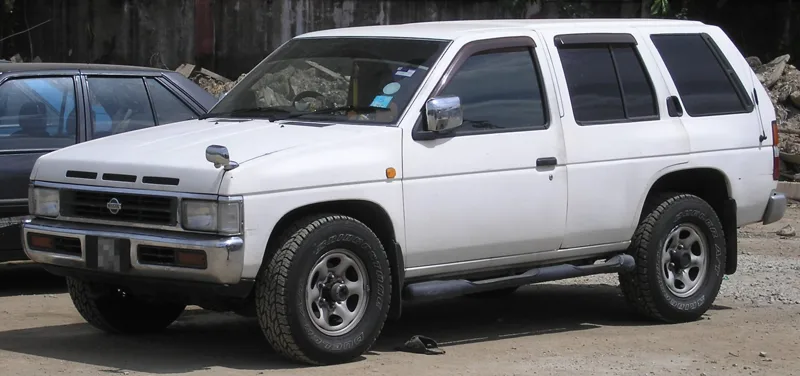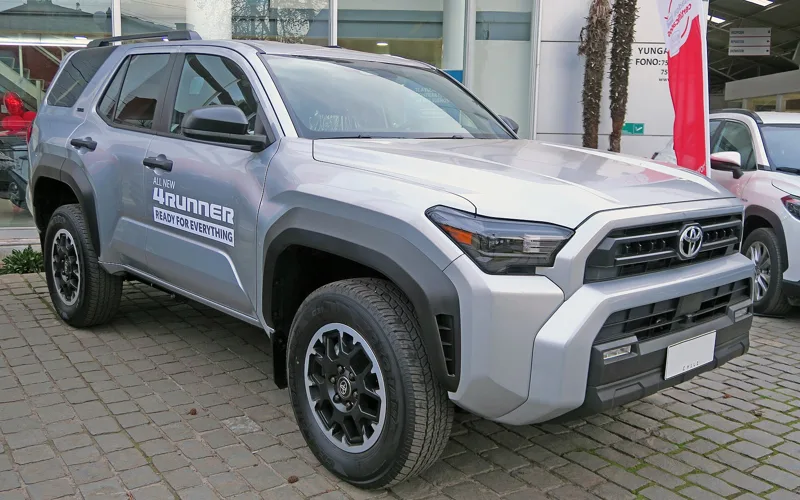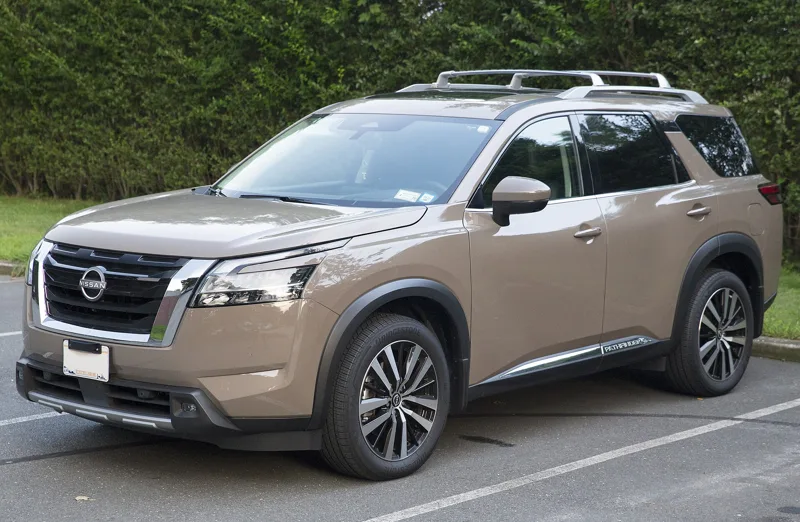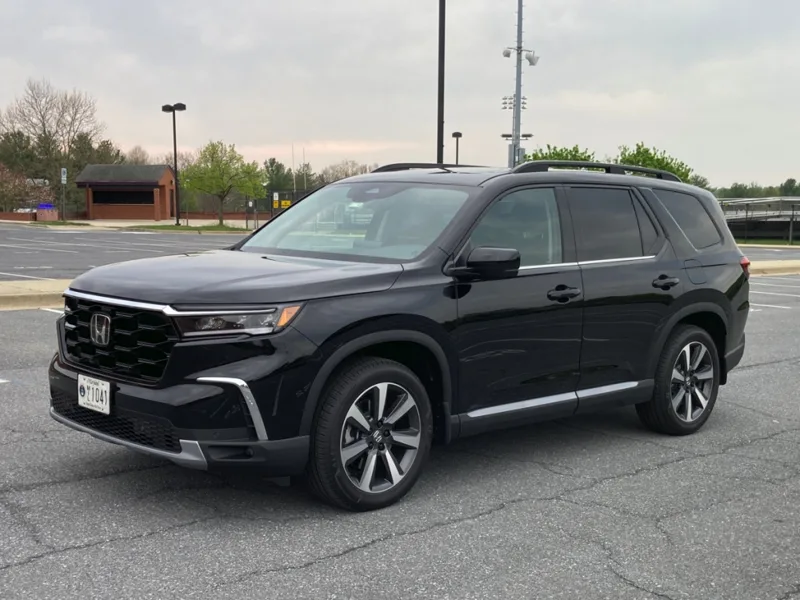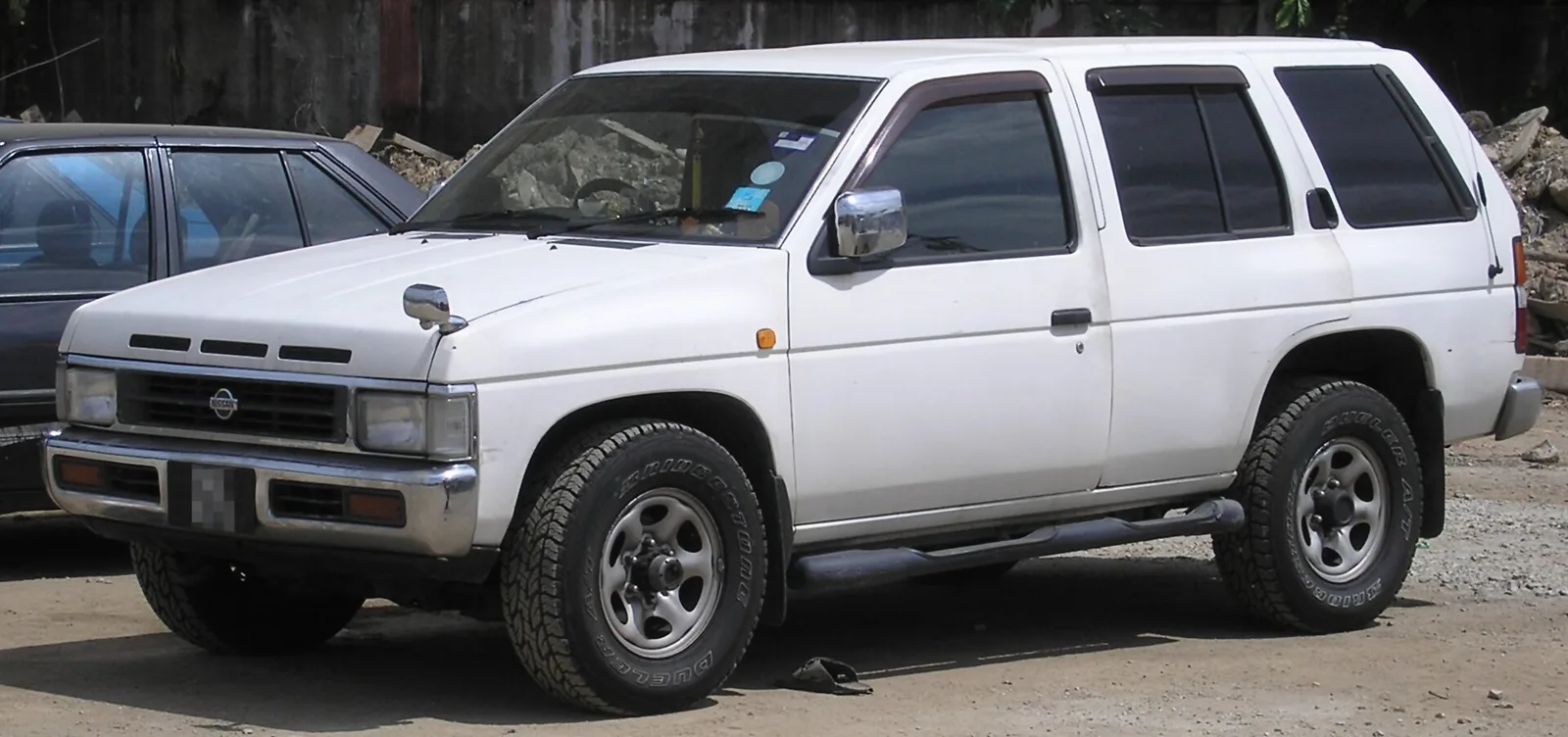
Nissan's Pathfinder, sold as the Terrano outside North America, was built on a pickup platform to answer Toyota's 4Runner, a truck-based SUV that began in 1984.
Nissan's Pathfinder, known as the Terrano abroad, and Toyota's 4Runner both began as truck-based SUVs in the mid-1980s. Toyota's started life as a modified pickup and Nissan's used the Hardbody platform, and both later adopted V6 engines.
The Nissan Pathfinder and the Toyota 4Runner were both body-on-frame off-road SUVs built on pickup-truck foundations, and each was a direct answer to the other's rival line-up. The 4Runner began in North America in 1984 as a Hilux pickup with a removable shell, while the Pathfinder came from Nissan in 1985 on the platform that also carried the Hardbody truck. Both grew from their pickups into proper sport utility vehicles, and both reached their stride with V6 engines.
How did the 4Runner begin?
The 4Runner's story started earlier, with a conversion. Toyota had worked with third-party recreational vehicle makers since at least 1973, when a Chinook popup camper was fitted to a long-bed Toyota truck. The Trekker, built by Winnebago from 1981 to 1983, was a walk-through conversion of the short-bed Hilux, with the rear wall removed and a fixed fiberglass shell added. About 1,200 to 1,500 Trekkers were built in the United States, and the car was priced at US$13,000 in 1981.
Jack Safro, a Toyota dealer in Brookfield, Wisconsin, had suggested the Trekker as a replacement for the Land Cruiser FJ40, and the Trekker was discontinued in 1984 once Toyota began selling its own 4Runner. The Trekker and similar conversions had in effect served as test vehicles for that SUV.
Toyota shipped the trucks from Japan as cab and chassis to avoid a 25 percent customs tax on assembled trucks, and most Trekker sales went to the west coast of the United States.
Two truck-based SUVs from 1984 and 1985, one that started as a Hilux with a fiberglass shell and one that was built on the Hardbody platform.
What was the first 4Runner?
The first-generation N60 Hilux Surf, which became the export 4Runner, appeared in 1983. Toyota did not develop a new vehicle for it. It modified the existing Hilux with a short-bed pickup body, taking out the panel behind the front seats and fitting rear seats, a roll bar and a removable fiberglass canopy. The concept owed a debt to the second-generation Ford Bronco and the Chevrolet K5 Blazer, both of which had been built the same way.
North American sales began in May 1984, as the 1984 1/2 model year. The base DX omitted the rear seat, and the SR5 package upgraded the interior and added the seat. The initial engine was a carbureted 2.4 L 22R four rated at 96 hp (72 kW), with a five-speed manual, and four-wheel drive was available through a solid front axle with manual locking hubs.
How did the Pathfinder start in 1985?
Nissan unveiled the Pathfinder in May 1985, and the two-door body-on-frame model reached American showrooms in July 1986 as a 1987. Its styling and most parts were borrowed from the Hardbody pickup, and the body sat on a ladder frame. Nissan built it as a response to the Chevrolet Blazer, the Ford Bronco II and the Jeep Cherokee, and it also took aim at non-American rivals such as the Toyota 4Runner, the Honda Passport and the Isuzu MU.
Before the Pathfinder there was the Bushmaster, an aftermarket conversion of the Datsun truck. The Pathfinder's four-wheel drive could be engaged electronically while the vehicle was moving, a feature that was unusual at the time. Base models had a 2.4 L four, and in some countries a 2.7-litre diesel was also offered, with a turbocharger added in November 1988.
What did the Japanese Terrano look like?
In Japan the vehicle was sold only through Nissan Shop locations, under the Terrano name. It was a smaller companion to the larger Nissan Safari, and it took its rear five-link coil suspension from the Safari to improve its off-road ability. Japanese buyers saw the Terrano as a luxury leisure vehicle, presented as an off-road Fairlady ZX, and it came with climate-controlled air conditioning, electric windows and seats, and, from 1993, Recaro seats.
Nissan's sports arm, Autech, offered special packages, including the Wide R3M Urban and the AJ Limited. On the wide models, overfenders and larger bumpers pushed exterior dimensions past the regulation limit, which meant a higher annual road tax. The first-generation Terrano also entered the Paris to Dakar rally in 1985 and won its category several times in the years that followed.
How did the four-door Pathfinder change?
The four-door body arrived in October 1989 to widen the Pathfinder's appeal, but the wheelbase and overall length were not extended to fit the rear doors. The front doors were shortened to make room. In North America the 1985 to 1989 cars had been two-doors, and from 1990 the four-door became the only body in the US, with a small number of two-door 1990 cars still sold.
Nissan hid the rear door handles in the C-pillar trim so the car looked like a two-door truck with a camper shell, and that tradition was kept on later Nissan SUVs such as the Armada, the Juke, the Terrano II and the Xterra. The first generation continued until 1995.
What engines did the Pathfinder and 4Runner use?
From 1987 to 1989 the Pathfinder came with either a 143 hp (107 kW) 3.0 L VG30i V6 with torque of 162 lb-ft (220 N m), or a 106 hp (79 kW) 2.4 L Z24i four. For 1990 the V6 gained multi-point fuel injection as the VG30E, reaching 153 hp (114 kW) and 180 lb-ft (244 N m), and the four became the KA24E.
The 4Runner's engine story ran in parallel. A turbocharged 22R-TE arrived in 1986 with 135 hp (101 kW), and in 1988 a 3.0 L 3VZ-E V6 with 145 hp (108 kW) replaced the turbo as the optional engine, with the four-cylinder remaining standard. The V6 needed a heavier rear differential and a new transmission and transfer case, and the transfer case was chain driven, which lowered cab noise.
How did the 4Runner's front suspension change in 1986?
For the 1986 model year the 4Runner's front axle was replaced with Toyota's Hi-Trac independent front suspension, and the track was widened by three inches. The change made the vehicle more comfortable on the road and improved its stability and handling, while it also gave the engine bay room for larger engines like the V6 that followed. Some felt it reduced off-road ability, while the regular Hilux kept its solid axle in other markets.
How did the second generations compare?
The Pathfinder's second generation arrived in late 1995 with revised styling and the VG33E 3.3 L V6, rated at 168 hp (125 kW) and 196 lb-ft (266 N m). For the 2001 model year a 240 hp VQ35DE V6 arrived, and manual models made 250 hp. The four-cylinder option was dropped, and the Terrano left Japan in 2002, replaced there by the Murano. Diesel engines continued in Japanese and European models.
The 4Runner's second generation, N120/N130, arrived in 1989 for the 1990 model year. It was a fundamental change: rather than a pickup with a fiberglass cap, it had a full-steel integrated body on the existing frame. Its front end still looked almost identical to the Hilux from the B-pillars forward, and it shared the Hilux powertrain.
Which SUV reached the later generations first?
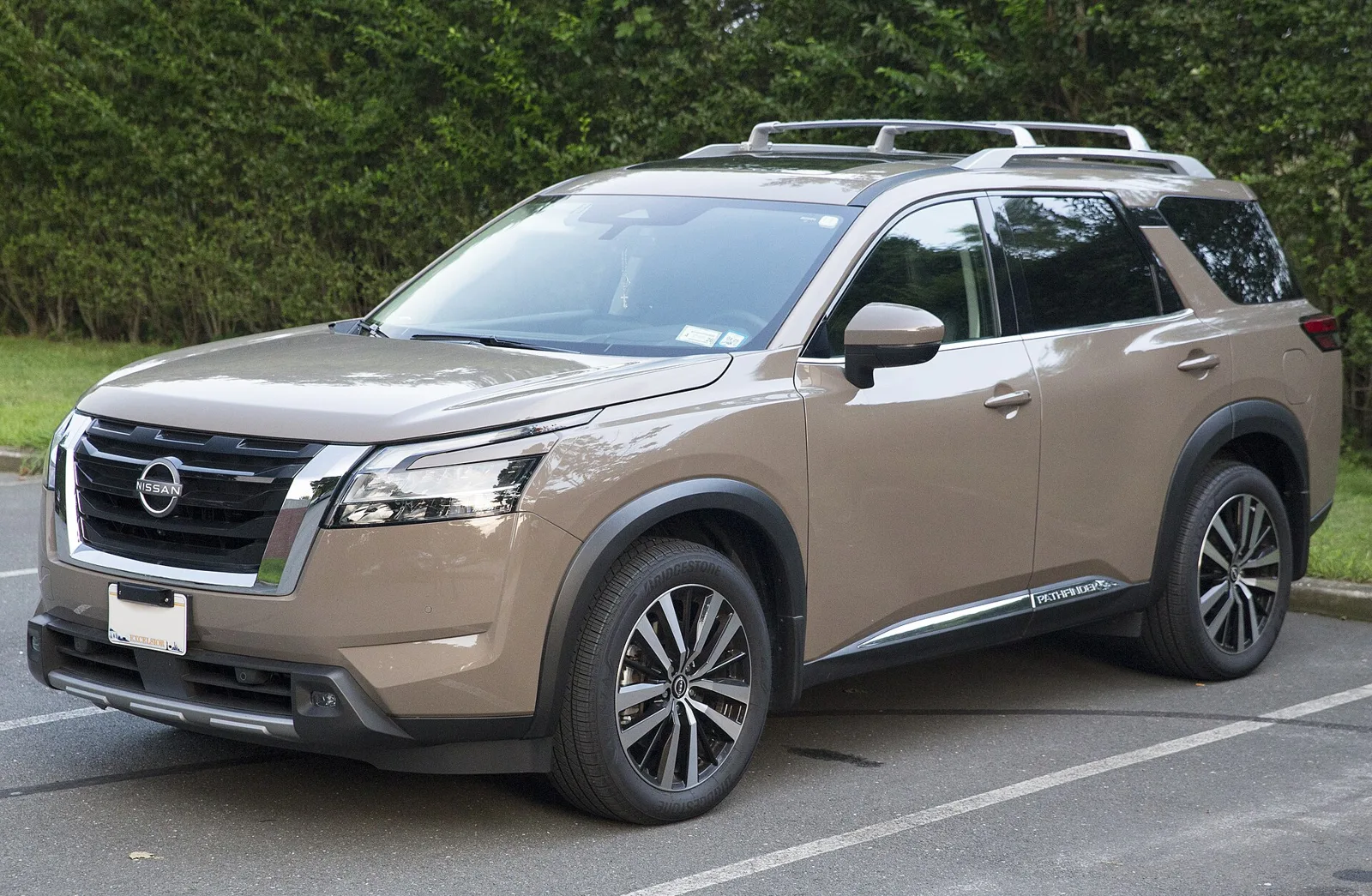
The Pathfinder's third generation, the R51, arrived for the 2005 model year on the F-Alpha platform. Its 4.0 L VQ40DE V6 made 266 hp (198 kW) and 288 lb-ft (390 N m) of torque, and a 2.5 L YD25DDT turbodiesel was also offered. It added a third row of seats for the first time, and a 2008 facelift brought the Titan's 5.6 L V8 at 310 hp (231 kW) to some markets.
The 4Runner has been marketed since 1984 across six generations. In Japan it was the Toyota Hilux Surf, withdrawn in 2009. It is now sold mainly in North America, Central America and parts of South America, while Europe, Asia and the Middle East receive the Land Cruiser Prado instead. The name was created by copywriter Robert Nathan at Saatchi and Saatchi, and Toyota said the 4 stood for four-wheel drive and Runner for the vehicle's off-road ability.
What was the Infiniti QX4?
@N@The Infiniti QX4 arrived in September 1996 on the Pathfinder's underpinnings. It was Infiniti's first entry into the SUV segment, and it was launched after Acura's SLX and Lexus's larger LX 450. In Japan the same car was the Terrano Regulus, with a more upscale interior and 8.3 inches (211 mm) of ground clearance.
@N@@N@Its 3.3 L V6 made 168 hp (125 kW), which was generally considered underpowered for the segment, and period testing recorded 0 to 60 mph in 12.4 seconds. The 2001 revision brought the 240 hp VQ V6, 17-inch alloy wheels and Xenon headlamps, at the same price as before.
@N@@N@Nissan showed the Dunehawk concept at IAA 2003 in Frankfurt, previewing the R51 design. The production model followed at the 2004 North American International Auto Show for the 2005 model year.
@N@@N@Specifications side by side
| Feature | Nissan Pathfinder (first generation) | Toyota 4Runner (first generation) |
|---|---|---|
| Introduced | May 1985 unveiling; 1987 model year in the US | May 1984 North American sales (1984 1/2 model year) |
| Body | Two-door, later four-door from 1989 or 1990 | Two-door with a removable fiberglass canopy |
| Frame | Ladder-type body-on-frame | Body-on-frame, based on the Hilux |
| Base engine | 2.4 L Z24i four, 106 hp (79 kW) | 2.4 L 22R four, 96 hp (72 kW) |
| V6 | 3.0 L VG30i, 143 hp (107 kW); VG30E, 153 hp (114 kW) from 1990 | 3.0 L 3VZ-E, 145 hp (108 kW), from 1988 |
| Turbo | Not listed | 22R-TE, 135 hp (101 kW), from 1986 |
| Front suspension | Not listed | Solid axle, replaced by Hi-Trac independent in 1986 |
| Transmission | Not listed | Five-speed manual; automatic option |
| Assembly | Not listed | Tahara, Aichi, and Hino Motors in Hamura |
| Rally history | Terrano entered the Paris to Dakar rally from 1985 | Not listed |
| Longevity | Not listed | 3.94 percent of 4Runners over 200,000 miles (2019 study) |
Which off-roader suits which buyer?
The Pathfinder suits a buyer who wanted a truck-based SUV with a four-wheel drive that could be engaged on the move and, from 1989, four doors with the look of a two-door. Its later V6 engines, including the 240 hp VQ35DE from 2001, gave it the power for longer highway work.
The 4Runner suits a buyer who wanted a body-on-frame SUV from its 1984 start, with a turbo or V6 option and a pickup-based chassis that Toyota had refined from its 1984 start. Its later growth into a mid-size-like SUV made it a long-term choice for North American buyers.
Both nameplates outlived these first generations by many years, and the 4Runner was still sold in North America in 2021. On the evidence here, neither vehicle takes a clear overall lead. The 4Runner came first and had the stronger early start, while the Pathfinder had the more aggressive rally and Japanese luxury story. A buyer who values an early start and long-run durability will look at the 4Runner, while one who wants the Pathfinder's four-door layout and its later V6 power will look at Nissan.