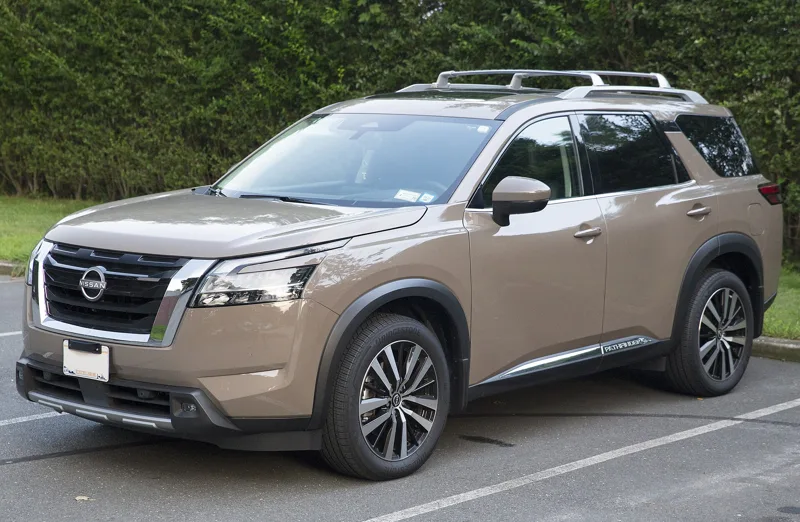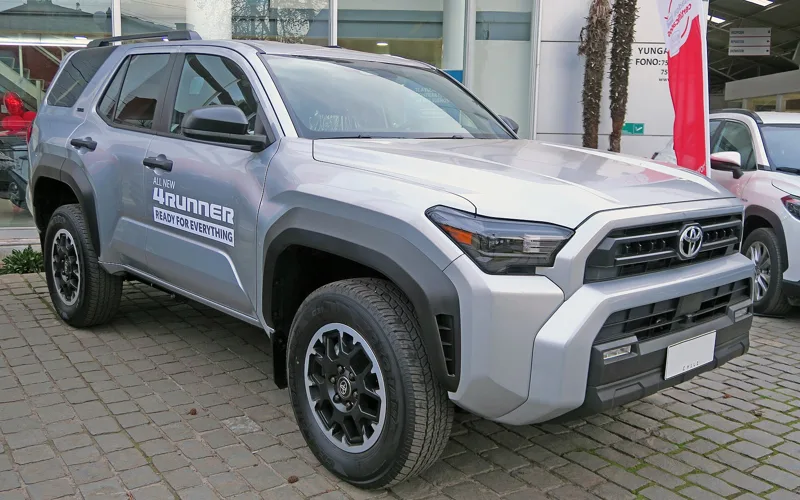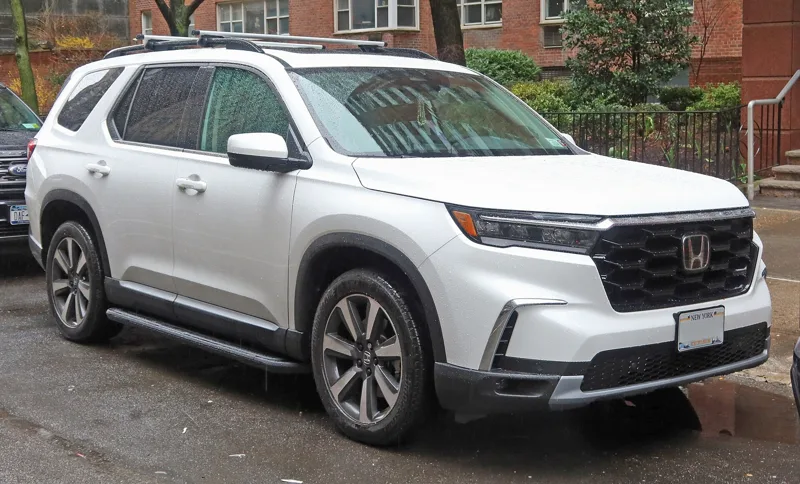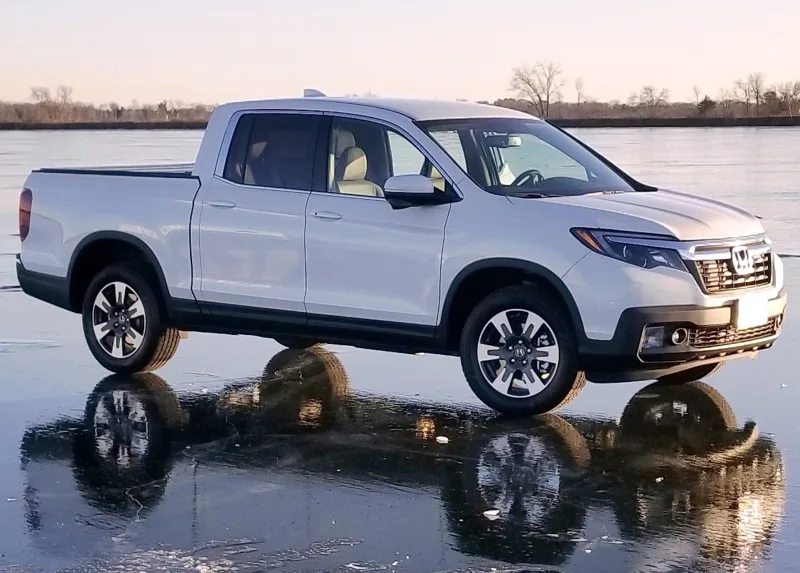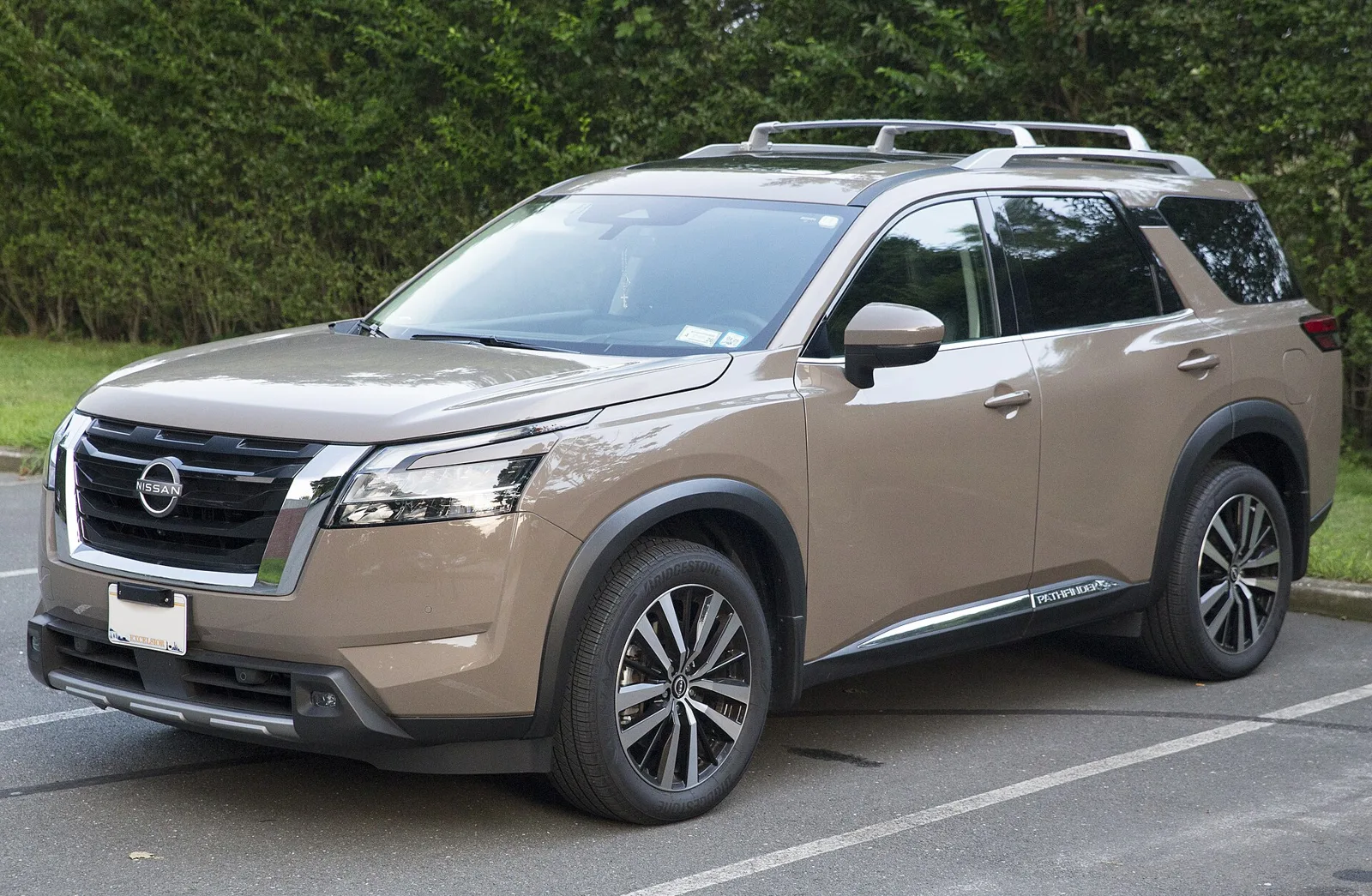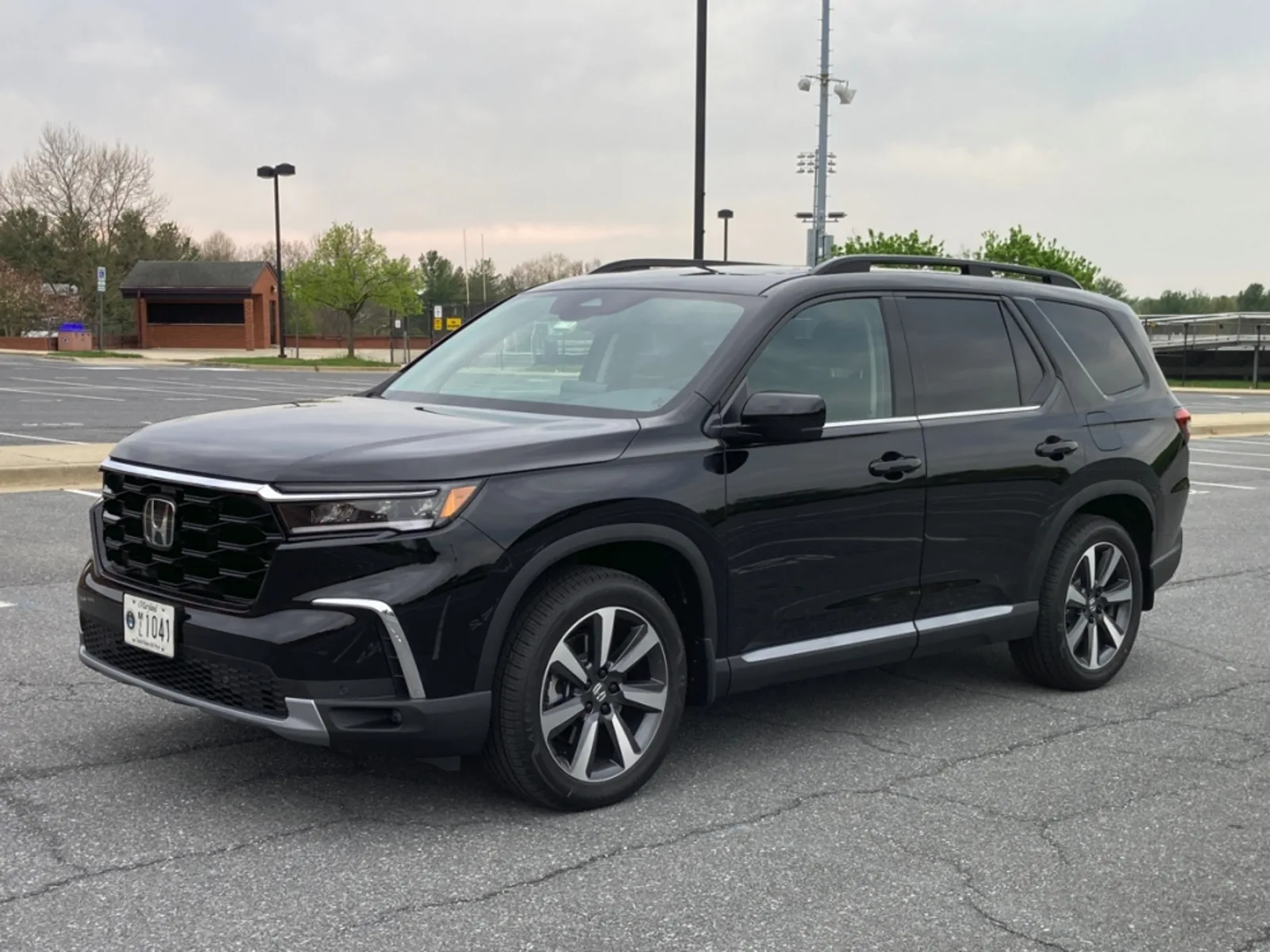
Honda's unibody family SUV and Toyota's Hilux-derived 4Runner both sold to buyers who wanted room, towing and off-road ability, from very different starting points.
The Honda Pilot is a mid-size three-row crossover SUV built by Honda since 2002 for the 2003 model year. The Toyota 4Runner is an SUV that Toyota has marketed globally since 1984, across six generations, developed from the Hilux pickup.
The Honda Pilot and the Toyota 4Runner both aim at buyers who want space, towing capacity and some off-road ability, but they reached the market from very different starting points. The Pilot arrived in 2002 as a unibody three-row crossover built on the Accord-based platform it shared with the Acura MDX. The 4Runner came from Toyota's Hilux pickup and had been on sale since 1984, so it carried a truck heritage the Pilot never had.
How did the Pilot and 4Runner begin?
Honda showed the first Pilot in December 2001, and it reached showrooms in June 2002 as a 2003 model. It was Honda's largest SUV, although the later Crosstour surpassed it in length. Its unibody construction and independent suspension were designed to handle more like a car, with integrated perimeter frame rails for towing and light off-road use.
Before the Pilot, Honda's SUVs included the CR-V and MDX, plus several truck-based models built on body-on-frame designs. The 4Runner was marketed globally from 1984 and has run for six generations. In Japan it was sold as the Hilux Surf until 2009. Its name came from a copywriter at Saatchi and Saatchi, who played on the word forerunner, and Toyota said the 4 described its four-wheel drive while Runner nodded to its all-terrain ability.
A unibody three-row crossover against a Hilux-based SUV that spent decades proving it could go anywhere and keep running.
Where did the 4Runner come from?
The 4Runner began as a modified Hilux pickup rather than a new design. The first-generation N60 Hilux Surf and export 4Runner arrived in 1983, with a removable fiberglass canopy and rear seats added behind the cab. Nearly all the changes were behind the B-pillar, and the car was nearly mechanically identical to the Hilux 4x4 below.
Early models had two doors and carried a rear spring design that could not always cope with the extra load, so some tended to sag at the back. Designers drew on the Ford Bronco and Chevrolet K5 Blazer, which had also added removable shells to short-bed pickups.
What engines did the Pilot offer over time?
The first-generation Pilot used a J35A4 3.5-litre V6 with VTEC, rated at 240 hp (179 kW), with a torque rating of 242 lb-ft (328 N-m) in the 2003 and 2004 models. The 2005 model received the J35A6, with drive-by-wire throttle and 255 hp (190 kW), and the 2006 update brought the J35Z1 and J35A9 engines rated at 244 hp (182 kW).
The second generation, which went on sale on May 22, 2008, used a new J35Z4 3.5-litre V6 with i-VTEC, rated at 250 hp (186 kW; 253 PS), with torque of 253 lb-ft (343 N-m) arriving at 4,800 rpm. The third generation added direct injection, and the V6 reached 280 hp (209 kW; 284 PS).
What trims and options did the first 4Runner offer?
The entry DX car had no rear seat, while the SR5 package upgraded the interior with more gauges, better fabrics and a rear seat as standard. The Hilux Surf came in SR and SSR trim lines, with a 2.0-litre 3Y gasoline engine or a 2.4-litre 2L diesel on offer.
Many 1984 to 1986 models reached the United States without rear seats, which kept them classed as trucks and outside the higher customs duties on sport vehicles. Dealers then fitted aftermarket seats and seat belts, so the buyer still got a usable rear bench.
How did the 4Runner's engines develop?
The first 4Runner engines were four-cylinder units. The 1984 half-year cars used the carbureted 2.4-litre 22R, while the 1985 model year brought the fuel-injected 22R-E, which lifted output from 96 hp (72 kW) to 116 hp (87 kW). A turbocharged 22R-TE arrived in the 1986 model year with 135 hp (101 kW).
In 1988 Toyota offered an optional 3.0-litre V6, the 3VZ-E, rated at 145 hp (108 kW) and available with the SR5 trim. That V6 was more powerful than the four-cylinder but was less reliable, and it came with a heavier rear differential and a new transmission and transfer case.
The 1989 model year brought only small cosmetic and option changes, because the next model was already in final development.
How did the Pilot's VTM-4 system work?
Normally, the VTM-4 setup sent most of the power forward. When the car accelerated hard or the front wheels began to slip, up to half of the power could reach the rear. A dashboard lock split power between the rear wheels, but it worked only in first, second and reverse and gave way above 18 mph (29 km/h).
Front-drive models of the 2006 year gained Variable Cylinder Management, which switches off up to three cylinders when the load is light. The FWD version returned 18 mpg in the city and 24 on the highway, which was better than the four-wheel-drive version by one and two mpg respectively.
Side-by-side specifications
| Specification | Honda Pilot | Toyota 4Runner |
|---|---|---|
| Launch | Unveiled December 2001; on sale June 3, 2002 | Introduced 1983; on sale from May 1984 |
| Basis | Unibody, shares its platform with the Acura MDX | Modified Hilux pickup with body-on-frame layout |
| Seats | Eight, in three rows | Two-door body in the first generation; no seat count given |
| Engine | J35Z4 3.5-litre V6 i-VTEC (second generation) | 3.0-litre 3VZ-E V6 from 1988 |
| Peak output | 250 hp (186 kW; 253 PS) second generation; 280 hp (209 kW; 284 PS) third generation | 145 hp (108 kW) for the 3VZ-E |
| Torque | 253 lb-ft (343 N-m) at 4,800 rpm, second generation | No figure given |
| Towing | 4,500 lb (2,041 kg) boat or 3,500 lb (1,588 kg) trailer with the towing package | No figure given |
| Drivetrain | VTM-4 four-wheel drive, front-wheel drive base | Four-wheel drive with a solid front axle until 1986, then independent suspension |
| Length and width | 190.9 in (4,849 mm) and 78.5 in (1,994 mm), second generation | No figure given |
| Production | Lincoln, Alabama | Tahara, Aichi, and Hamura |
| Successor | Third generation in 2015 | Second generation in 1989 |
How did the Pilot grow, then shrink?
The second-generation Pilot was larger, with a 109.2 in (2,774 mm) wheelbase and a 153.7 cu ft (4.35 m3) interior. Its truck-like styling echoed GM's full-size Tahoe and Yukon, and buyers liked it for that reason.
The third generation was smaller overall but more spacious inside, modelled on the Odyssey's interior. It was also about 300 lb (140 kg) lighter, and Honda said 21.3 percent of its body was made from ultra-high-strength steels. It was revealed in Chicago in February 2015 and went on sale from June 18, 2015.
How did the third-generation Pilot's exterior change?
The third-generation Pilot was sleeker than its boxy predecessor, and its drag area fell by 10 percent. Standard LED brake and tail lights arrived, and the Elite trim gained ventilated front seats, plus heated rear captain's chairs that cut seating to seven. A panoramic roof and alloy wheels were also included.
Apple CarPlay and Android Auto were added for the 2017 model year, except on the base LX. The third generation also brought a tri-angle backup camera as standard, with dynamic guidelines as an option. A refresh for 2019 brought new bumpers, grille and wheels, and a hands-free tailgate became available.
What did the Pilot's safety features add?
Honda's Advanced Compatibility Engineering front bracket was part of the Pilot's safety design. A standard rearview backup camera arrived for the 2013 model year, and the Insurance Institute for Highway Safety found the Pilot's driver death rate among the ten lowest in its report, at 2 deaths per million registered vehicles.
The third generation added LaneWatch, blind spot information and a suite of Honda Sensing systems, including forward collision warning and adaptive cruise control. Those features reflected how much the segment had moved on since the first model.
What fuel economy did the third-generation Pilot offer?
The six-speed front-drive Pilot returned 19 mpg-US in the city, 27 on the highway and 22 combined. All-wheel-drive six-speed models managed 18 city, 26 highway and 21 combined, so the drive system cost a little efficiency.
The nine-speed models, which were restricted to the Touring and Elite trims, did better in front-drive form at 20 city, 27 highway and 23 combined. The nine-speed all-wheel-drive version reached 19, 26 and 22. The 4Runner's economy is not given in this comparison, so the two cannot be matched on that point.
Which buyer suits each vehicle?
The Pilot suits a buyer who wants a practical three-row family crossover with car-like handling, a V6 and a choice of front or all-wheel drive. The 4Runner suits a buyer who wants a body-on-frame SUV with a long record of durability and a stronger off-road character.
The figures here do not settle which is better, so no verdict is given. The 4Runner's longevity is well documented in one study, while the Pilot's third-generation technology made it a strong family buyer's choice. Buyers in Europe and Asia, where the 4Runner is not offered, would look at the Land Cruiser Prado instead.
What did each vehicle leave behind?
The 4Runner left a durable name and a family of trucks that drew on the Hilux. Its Hilux Surf badge was withdrawn in 2009, and the Fortuner later replaced it in some markets as a lower-cost alternative, while Europe, Asia and the Middle East received the Land Cruiser Prado instead, and it ranked fifth in a 2019 study by iSeeCars.com of the longest-lasting vehicles in the US. In that study, 3.94 percent of 4Runners had covered more than 200,000 miles.
The Pilot left a model line that became a key part of Honda's North American range, and its SE trim, added in 2015, widened the choice for buyers who wanted a sportier three-row car, with a power moonroof and satellite radio as standard. The Pilot's largest-SUV status in Honda's line also gave it a clear place in the lineup.