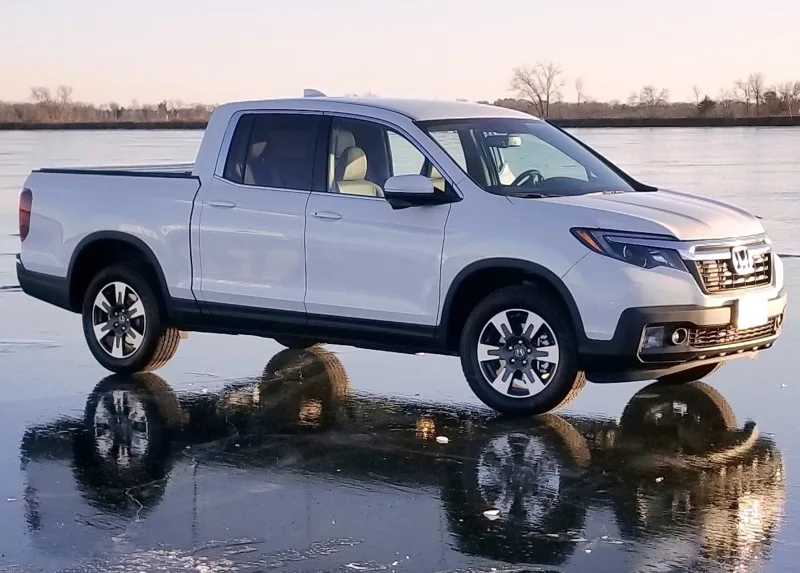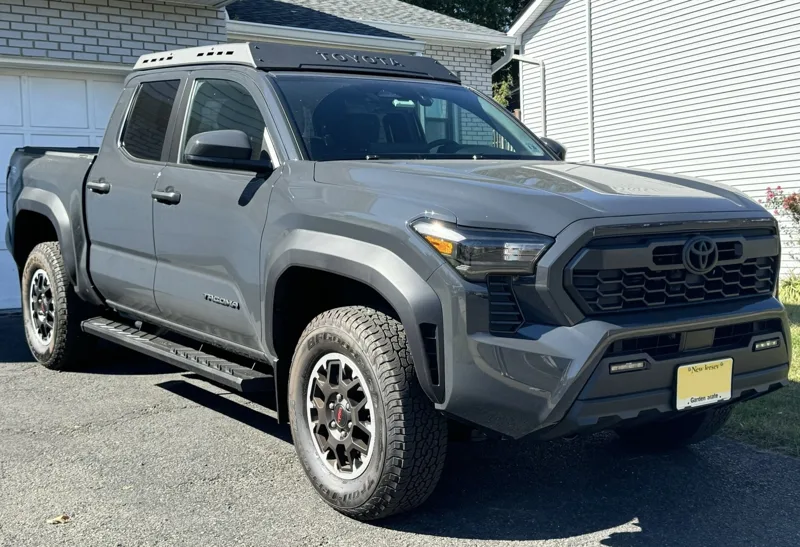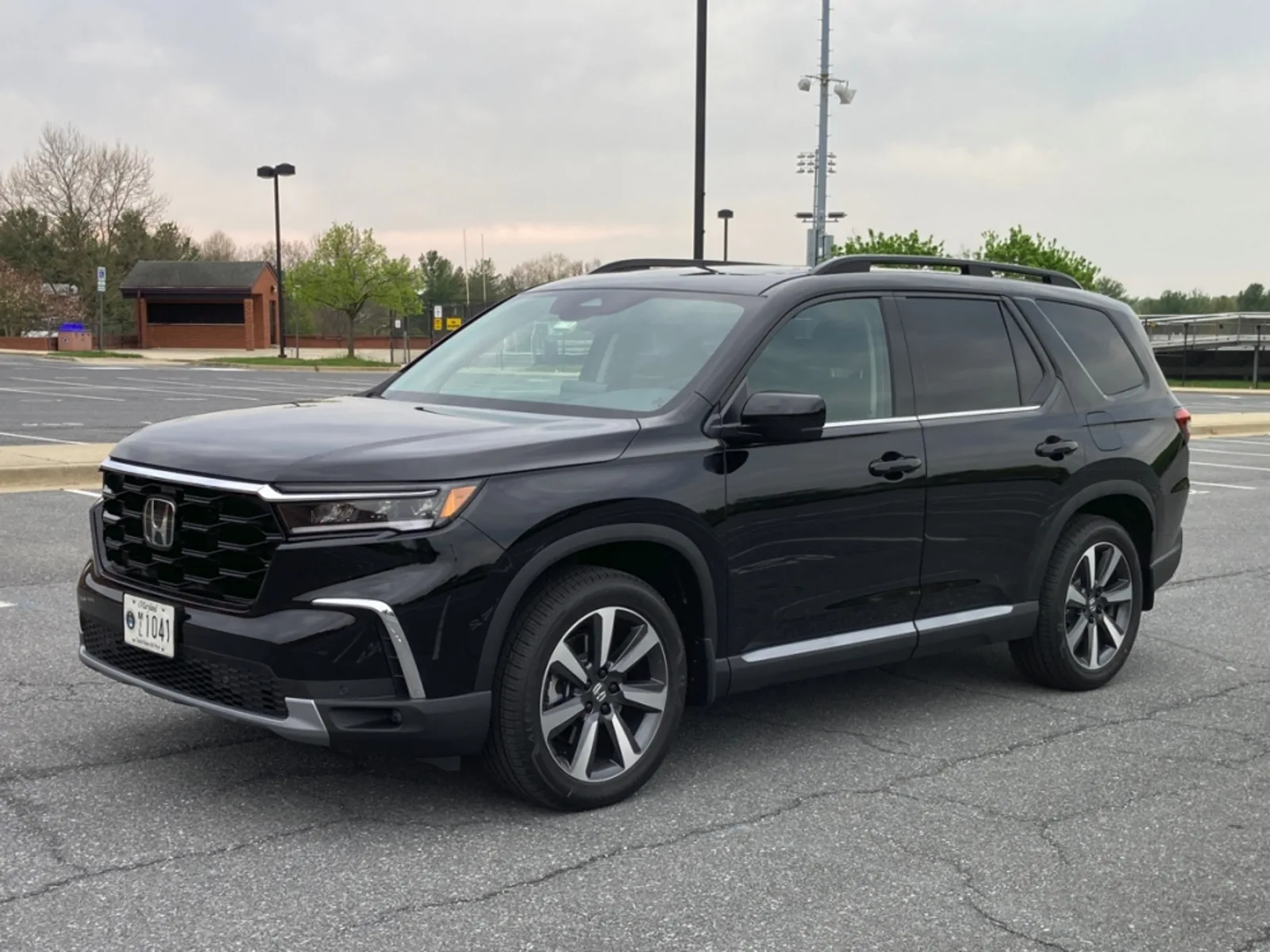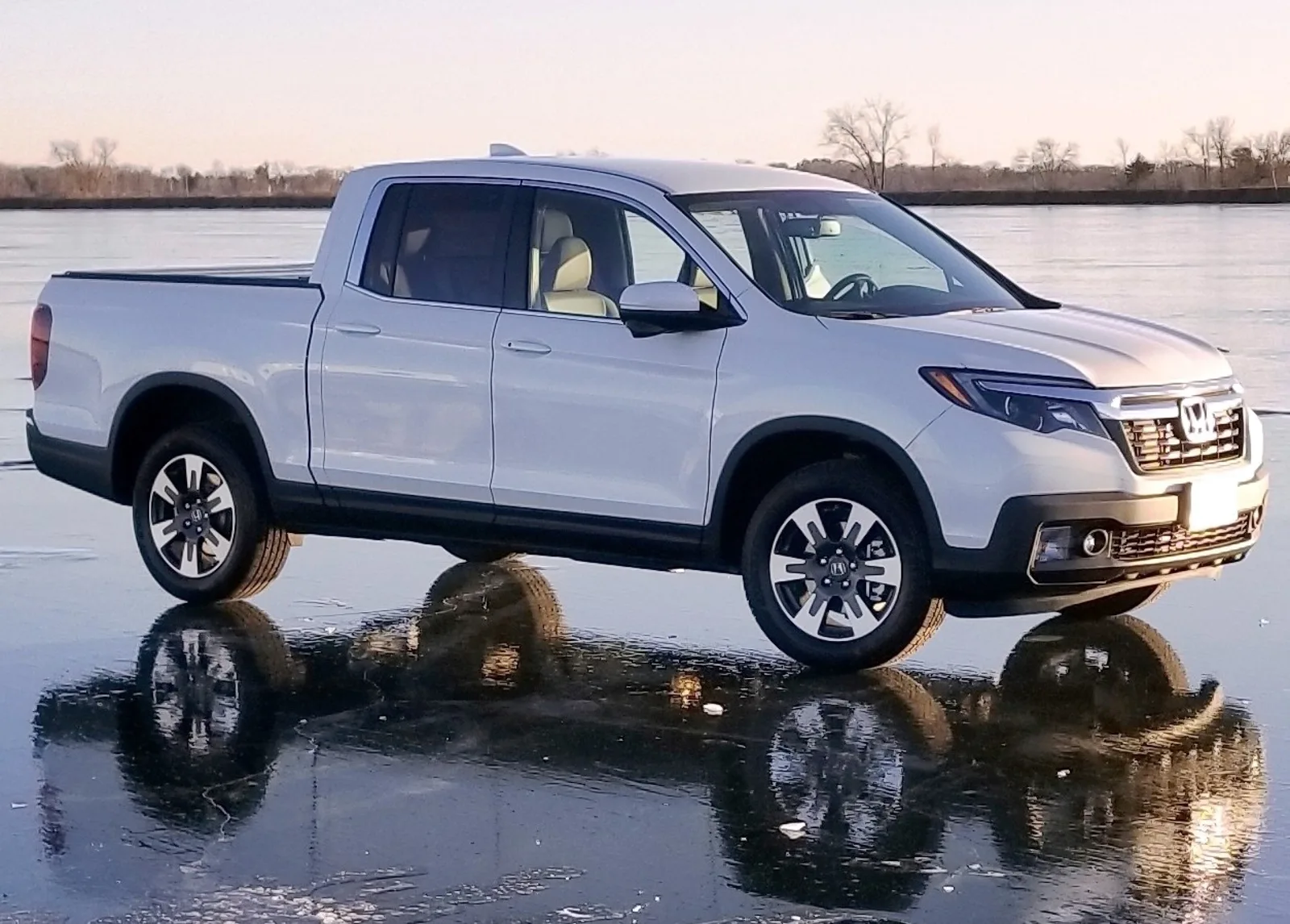
Honda's second-generation Ridgeline brought car-like handling and a clever bed to a segment that the Tacoma had already made its own.
The Honda Ridgeline second generation is a unibody mid-size pickup that went on sale in June 2016 as a 2017 model, built on Honda's global light truck platform. The Toyota Tacoma is a mid-size pickup from Toyota that has been sold since 1995 and reached its second generation in 2004.
The second-generation Honda Ridgeline and the Toyota Tacoma are both mid-size pickups, but they come from different philosophies. The Ridgeline is a unibody truck built on Honda's global light truck platform, which it shares with the Pilot. The Tacoma began life in 1995 as a compact pickup and grew into one of the best-selling trucks in its class. Set side by side, they show a Honda that rethought the pickup and a Toyota that kept refining a proven formula.
Where did the Tacoma and Ridgeline come from?
The Tacoma reached American showrooms in early 1995 as the successor to the Toyota Truck, the North American name the Hilux had carried since 1984. Toyota tuned it for ride quality, handling, comfort and safety ahead of ruggedness and payload, because buyers in the United States and Canada used their pickups as personal vehicles rather than for farm or industrial work.
The Ridgeline's second generation came after a hiatus. The first Ridgeline had sold with mixed success, and Honda responded with an open letter insisting a pickup would stay in its line-up. The new truck arrived in the summer of 2016 as a 2017 model, and it was built on the same global light truck platform as the third-generation Pilot.
A unibody Honda pickup with car-like manners against a Toyota truck that became the benchmark for the mid-size segment.
How did the second-generation Tacoma come together?
Toyota began development of the second generation in 2000 under chief engineer Chikuo Kubota. Most of the work was handled by Hino in Japan, and designers from Hino took the internal design contest in 2001, and styling was locked in 2002. Test mules were running from early 2003.
Toyota unveiled the bigger and more powerful truck at the Chicago Auto Show on February 4, 2004. It reached showrooms in October 2004 as a 2005 model, and it was offered in eighteen combinations spanning cab, gearbox, engine and bed.
How did each truck's frame and body differ?
The first-generation Tacoma had a fully boxed frame that gave way to a C-shaped section near the rear spring bracket. Later models moved to open C-section rails, a change that followed a rust problem Toyota later addressed with a lengthy warranty. The second-generation Tacoma came in regular, access and double cab forms.
The Ridgeline's unibody construction was the more unusual choice for a pickup. Honda said the second generation shared 73 percent of its components with the Pilot, and it kept the first Ridgeline's dual-action tailgate and in-bed trunk. Its bed measured 5.3 ft (1.6 m) with the tailgate up and stretched to 6.9 ft (2.1 m) when it was lowered.
Which engines powered each truck?
The Tacoma's early engines were a 2.4-litre four, a 2.7-litre four and a 3.4-litre V6 shared with the larger T100. With a Toyota Racing Development supercharger kit, the V6 output rose to 254 hp (258 PS; 189 kW); torque reached 270 lb-ft (366 N-m). A later kit, adding a seventh fuel injector, reached 262 hp (195 kW), and torque hit 279 lb-ft (378 N-m).
The second-generation Tacoma swapped the 3.4-litre for a 4.0-litre 1GR-FE V6, and it also offered a smaller 2.7-litre 2TR-FE four in less costly models. The Ridgeline's 3.5-litre V6 was tuned for 280 hp (284 PS; 209 kW); torque peaked at 262 lb-ft (355 N-m). Direct injection and cylinder deactivation at light load were part of its design.
How did the two trucks' drivetrains compare?
The Ridgeline's I-VTM4 all-wheel drive was hydraulically actuated and could split torque between the rear wheels, overdriving the outside wheel by 2.7 percent to help the truck turn. It ran as front-drive on normal roads and brought in the rear wheels when traction was needed. Honda also gave it a six-speed transmission with a lower first gear.
The Tacoma's drivetrain followed a more traditional approach. Off-road models carried a locking rear differential, and the TRD Off-Road package added Down-Hill Assist Control and Hill-Start Assist Control. Those systems helped on steep grades and in rough terrain, which was the Tacoma's home ground.
How long did the first Tacoma take to develop?
Development began in 1989, after the fifth-generation Toyota Truck appeared in late 1988, and it concluded in 1994. Styling was handled at Calty Design Research in California between 1990 and 1992, and Kevin Hunter's exterior concept won out in autumn 1991. That look was locked in 1992.
Japanese patent filings followed in April 1993, with the US filing on October 28, 1993. The first Tacoma reached showrooms soon after, and it was a deliberate break from the Hilux's more rugged brief.
Side-by-side specifications
| Specification | Honda Ridgeline (second generation) | Toyota Tacoma (second generation) |
|---|---|---|
| Launch | Sold from June 2016 as a 2017 model | Launched October 18, 2004 as a 2005 model |
| Structure | Unibody on Honda's global light truck platform | Body-on-frame with open C-section rails |
| Engine | 3.5-litre V6, 280 hp (284 PS; 209 kW) | 4.0-litre 1GR-FE V6, with a 2.7-litre four in lower models |
| Torque | 262 lb-ft (355 N-m) | No figure given |
| Towing | 5,000 lb (2,300 kg) | 6,500 lb (2,948 kg) with the V6 |
| Payload | 1,444 lb (655 kg) to 1,543 lb (700 kg) | 1,650 lb (748 kg) |
| Bed | 5.3 ft (1.6 m) with tailgate up; 6.9 ft (2.1 m) with it down | Short 60.3 in (5.0 ft) or long 73.5 in (6.1 ft) bed on the double cab |
| In-bed storage | 7.3 cu ft (206.7 L) in-bed trunk | No figure given |
| Fuel tank | 19.5 US gal (74 L) | No figure given |
| Transmissions | Six-speed transmission | Four-speed and five-speed automatic, five-speed and six-speed manual |
| Trims | RT through RTL-E in the US, plus a Black Edition | SR, SR5, X-Runner and TRD packages |
How much could each truck carry?
The Ridgeline's bed was rated for 1,100 lb (500 kg), with 300 lb (140 kg) on its tailgate and 165 lb (75 kg) on the roof. Honda also rated the truck to tow 5,000 lb (2,300 kg), a figure it said met the SAE J2807 standard. Its payload ranged from 1,444 lb (655 kg) to 1,543 lb (700 kg), depending on trim.
The Tacoma's second generation rated its 4.0-litre V6 for a 6,500 lb (2,948 kg) tow and a 1,650 lb (748 kg) payload. Those numbers were higher than the Ridgeline's, so the Tacoma stays the stronger working truck on paper, while the Ridgeline's advantage lies in its interior and bed features.
What did Toyota do about frame rust and recalls?
In 2008 Toyota extended corrosion coverage, giving 1995 to 2000 trucks 15 years with no mileage limit, because rustproofing and frame problems had affected more than 800,000 Tacomas. Owners could have the frame repaired or return the truck for a buy-back price of 1.5 times KBB retail value. The offer was later extended to 2001 to 2004 models.
Later problems included a November 2012 recall of about 150,000 trucks from the 2001 to 2004 model years, sold mainly in cold-weather states, over the way the spare tire could fall off. In November 2016 Toyota settled a class action over frame rust on 2005 to 2010 models.
How did the Tacoma's trims and packages work?
The second-generation Tacoma came with TRD Sport and TRD Off-Road packages. The former targeted on-road performance, while the Off-Road package added a rear electronic locking differential, TRD seats and a 400-watt inverter in the bed. The X-Runner replaced the S-Runner and paired the 1GR-FE with a six-speed manual, 18-inch alloy wheels and a two-inch drop.
US buyers could choose the RT, RTS, Sport and RTL family, including RTL-T and RTL-E, along with a Black Edition. Canadian buyers had LX, Sport, EX-L, Touring and a Black Edition, and Canadian models came standard with all-wheel drive and Honda Sensing. In 2018 the base RT lost its AWD option and the RTS was dropped.
What did the Ridgeline share with the Pilot family?
The Ridgeline brought a set of features that were uncommon for mid-size pickups. Its intelligent traction management offered snow mode for front drive and mud and sand modes for all-wheel drive, changing the throttle map and shift points. Hill start assist stopped the truck rolling back from a stop on a slope, and motion-adaptive steering helped correct the truck in turns.
Honda also fitted tire fill assist and tri-zone climate control. The Tacoma's features were more traditional, and its appeal rested on its established reputation rather than on new technology.
How did the Tacoma's later refreshes change it?
A minor facelift in 2009 revised the grille on some models, added LED taillamps and gave the X-Runner and TRD models a smoked headlamp trim. The 2012 refresh restyled the front bumper, headlights, grille and hood, and added a shark fin antenna for SiriusXM radio. For 2013 a touchscreen audio system arrived, and the shark fin disappeared unless the optional Entune package was fitted.
The 2014 model year brought a new SR trim, and the regular cab was discontinued for 2015. Those changes kept the second generation current until the segment moved on.
How did the Ridgeline change in later model years?
For the 2018 model year Honda dropped the all-wheel-drive option from the base RT and removed the RTS from the US line-up. The Sport trim gained two more exterior colours, Lunar Silver Metallic and White Diamond Pearl, which joined its all-black original look.
The Ridgeline's bed audio system, a new feature of the second generation, was discontinued for the 2024 model year, after being offered for several years. Those changes kept the truck's line-up current without altering its basic design.
Which buyer suits each truck?
The Ridgeline suits a buyer who wants a pickup that drives more like a car, with a useful in-bed trunk, a flat cabin and Honda's stability systems. The Tacoma suits a buyer who wants strong towing and payload figures, a choice of off-road packages and a long record in the segment.
The figures here do not settle which is better, so no verdict is given. The Tacoma's towing and payload ratings are higher on paper, while the Ridgeline's unibody design and interior features set it apart in daily use.
What did each truck leave behind?
The Tacoma's legacy is its role in the mid-size segment. Motor Trend named it Truck of the Year for 2005, and its name came from the Coast Salish name for Mount Rainier. Toyota's rust settlement and recalls also shaped how buyers saw the truck.
The Ridgeline left a clear message that Honda would keep a pickup in its range. Its second generation was also sold in the Caribbean and Latin America, where the RTL and RTL-T trims were offered.