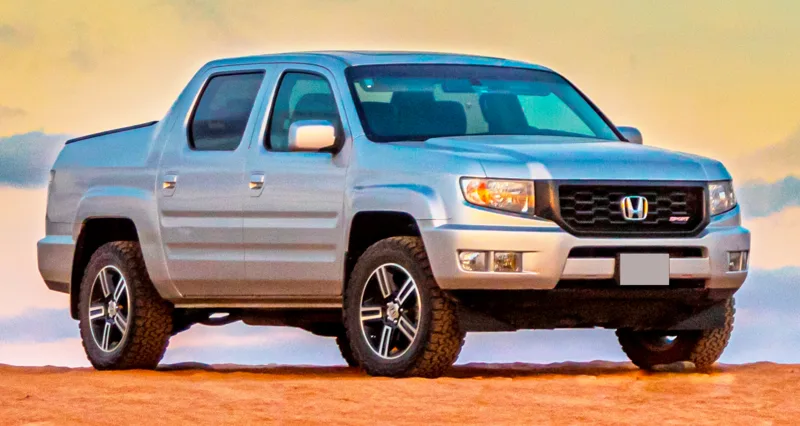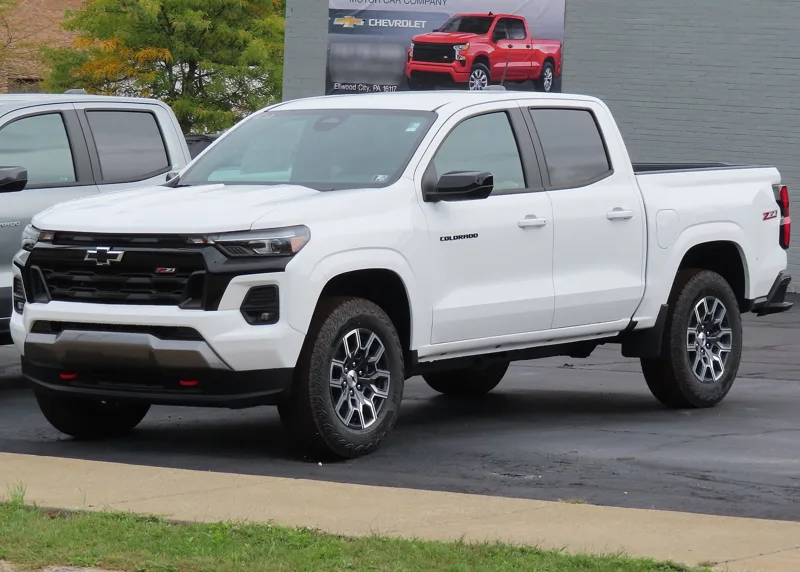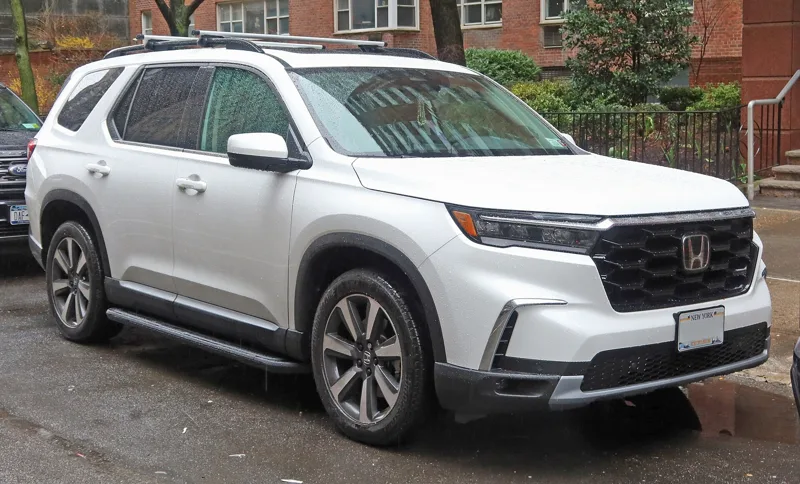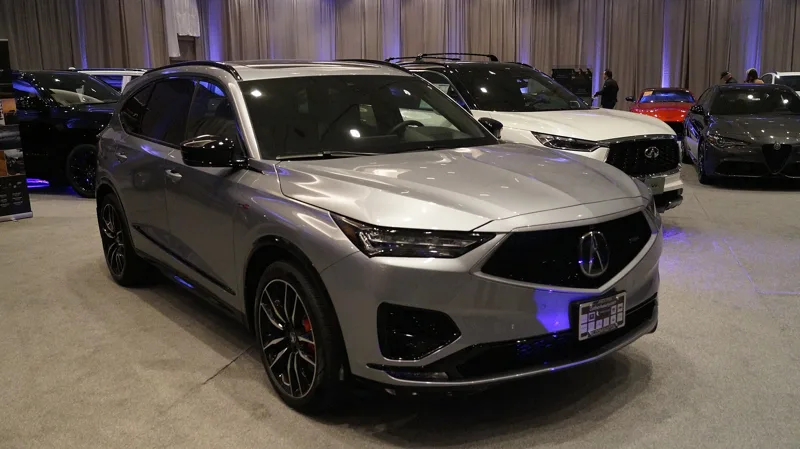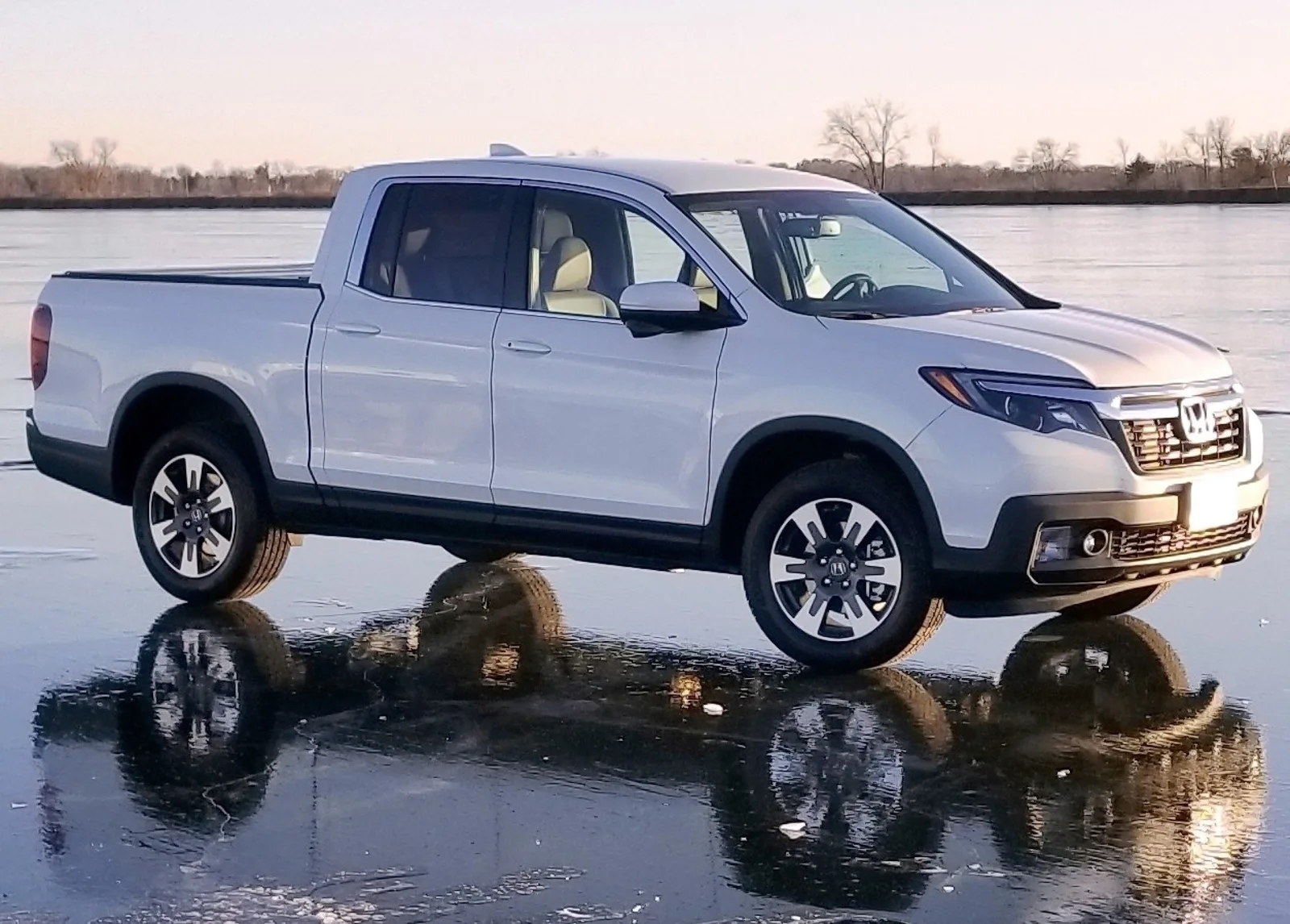
Built on the Pilot's global light truck platform, Honda's second Ridgeline kept the in-bed trunk, gained a nine-speed automatic and won a first-of-its-kind IIHS award.
The second-generation Honda Ridgeline has been sold since June 2016 as a 2017 model, built on the platform it shares with the Pilot. It uses a 3.5 L V6 rated at 280 hp (284 PS; 209 kW) and tows up to 5,000 lb (2,300 kg).
The second-generation Honda Ridgeline, codes YK2 and YK3, took a different route from its predecessor. Honda built it on the company's global light truck platform, the same base used by the third-generation Pilot, and it shares 73% of its components with that SUV. It went on sale in June 2016 as a 2017 model, and it has been revised regularly since.
Why did Honda build a second Ridgeline?
After the mixed results of the first truck, Honda published an open letter from its head of truck product planning, denying that the Ridgeline would be dropped. The company committed to a new Ridgeline, and production paused for about a year before the second generation reached showrooms.
Honda's research clinics found that buyers judged a pickup's toughness and payload by the gaps between the tyres and the wheel arches, by the truck's stance and by whether it had a tow hitch. The project team, led by chief engineer Kerry McClure, folded those findings into the new design.
The team previewed the design direction with a Ridgeline Baja Race Truck at the 2015 SEMA Show in November 2015. Two months later the production version was unveiled at the North American International Auto Show.
A Pilot-based pickup that kept its in-bed trunk, earned a first-of-its-kind IIHS award and still struggled to match its sales promise.
What did the Ridgeline share with the Pilot?
The global light truck platform gave the second Ridgeline features that are rare among mid-size pickups. Intelligent traction management offers snow and mud modes on the models that have it, with sand mode added on all-wheel drive versions. Each mode changes throttle mapping, shift points and power distribution, and the stability systems respond differently.
Economy assist adjusts engine response, cruise control and climate control, and hill start assist stops the truck from rolling back when the driver moves from the brake to the accelerator on a slope. Honda Sensing, a suite of collision and lane systems, was fitted on select models, along with a blind spot system with rear cross-traffic monitoring.
The chassis used MacPherson struts at the front and a multi-link rear, both with heavier knuckles, hubs and bearings for truck duty. Amplitude reactive dampers combined two hydraulic circuits, one tuned for ride and one for large, harsh bumps. Tire fill assist sounds an alert and shows on screen when the correct pressure is reached.
How did the second Ridgeline differ from the first?
Honda removed 78 lb (35 kg) from the truck. The C-pillar and rear sub-frame were strengthened, giving 28% more torsional rigidity than the first generation, and active noise cancellation and engine mounts were added to reduce vibration and harshness.
The published hauling limits stayed similar, with 1,100 lb (500 kg) in the bed, 300 lb (140 kg) on the tailgate, 165 lb (75 kg) on the roof and 5,000 lb (2,300 kg) of towing. This time the towing rating was reportedly built to the SAE J2807 standard. Rear under-seat storage rose to 2.9 cu ft (82.1 L), and second-row storage grew to 50.2 cu ft (1,421.5 L).
The bed was larger too. It measured 5.3 ft (1.6 m) with the tailgate up and 6.9 ft (2.1 m) with it down, and it was 5 ft (1.5 m) wide. The gap between the wheel wells grew slightly, to 4.2 ft (1.3 m). The steel-reinforced composite bed, developed with Continental Structural Plastics, stayed unpainted and textured.
What engine and transmission powered the second Ridgeline?
The engine was a 3.5 L (212 cu in) 60-degree aluminium V6 from the J-series family, with belt-driven single overhead camshafts, 24 valves and an aluminium variable-length intake manifold. It gained direct injection, i-VTEC, and variable displacement that runs on three cylinders when the load is light. The compression ratio was 11.5:1.
Output was 280 hp (284 PS; 209 kW) and 262 lb ft (355 N m) of torque, up 30 to 33 hp and 15 to 17 lb ft depending on the model year. It ran on 87 AKI gasoline in all conditions. The alternator was rated 150 A, 20 A more than before, with a battery management system to extend battery life.
The transmission moved from five gears to six. First gear sits 24.5% lower, reverse 20.2% lower and top gear 3.3% higher, which widens the overall gear spread by 20%. Friction was reduced and a new lock-up clutch was fitted. For the 2020 model year the six-speed was replaced by a ZF 9HP nine-speed automatic.
How did the I-VTM4 all-wheel drive work?
The all-wheel drive system, called I-VTM4, is hydraulically actuated and 22% lighter than the old unit. It can handle 20% more torque and can distribute torque between the left and right rear wheels. It can overdrive the outside rear wheel by 2.7%, which is a form of torque vectoring.
Brake ventilation was reworked to cut drag by 23%, and the steering ratio was reduced by 15% to 15.95:1. Honda also added a trailer stability assist system to help control a trailer's sway while towing.
What cameras and lights did the second Ridgeline add?
A rear camera offered wide, normal and top-down views with guidelines, and on models with the 8-inch touchscreen the guidelines moved with the steering angle. A LaneWatch camera covered the right side of the truck, while an auto-tilting side mirror improved close-in visibility when reversing.
Where fitted, LED projector headlights added 100 ft (30.5 m) of beam depth and 35 ft (10.7 m) of beam width compared with traditional units. Honda said the truck's drag area was 15% lower, according to computer simulations. The bed had a 115 V AC inverter with a 150 to 400 W output, and an integrated audio system could be controlled from a Bluetooth smartphone.
How much did fuel economy improve over the first generation?
Honda's figures show a clear gain. On EPA testing the city rating improved by 3 to 4 mpg-US, the highway rating by 5 to 6 mpg-US and the combined rating by 4 mpg-US. On Natural Resources Canada testing, city consumption fell by 2.4 to 3.3 L/100 km, highway by 1.8 to 2.4 L/100 km and combined by 2.1 to 2.9 L/100 km.
The gains arrived alongside the lower drag and the revised transmission described earlier. The published hauling limits were kept broadly the same, so the economy gain did not cost the truck its work capacity.
What did the second Ridgeline give up?
Not everything improved. The all-wheel drive gross combined weight rating fell to 9,987 lb (4,530 kg), and the front-wheel drive rating to 8,201 lb (3,720 kg). Gross vehicle weight ratings dropped to 6,019 lb (2,730 kg) for all-wheel drive and 5,710 lb (2,590 kg) for front-wheel drive, and payload fell to between 1,444 lb (655 kg) and 1,543 lb (700 kg).
Passenger volume shrank by 2.3 cu ft (65.1 L) to 109.7 cu ft (3,106.4 L). The bed became shallower and less illuminated, and the in-bed trunk, though deeper, lost 1.2 cu ft (34.0 L) to 7.3 cu ft (206.7 L). Ground clearance dropped to 7.3 in (19 cm) for front-wheel drive and 7.9 in (20 cm) for all-wheel drive, the turning radius grew to 44.4 ft (13.5 m), and the fuel tank shrank to 19.5 US gal (74 L). The power steering cooler was also removed.
Which trims did the second Ridgeline launch with?
The US market started with seven trims: RT, RTS, Sport, RTL, RTL-T, RTL-E and Black Edition. Canada had five: LX, Sport, EX-L, Touring and Black Edition. Canadian trims differed from the US line-up, and every Canadian truck came standard with all-wheel drive, Honda Sensing and a Clarion audio system with an 8-inch touchscreen.
The Caribbean and Latin American markets offered RTL and RTL-T, but these were equipped differently from the US trims. The Caribbean and Latin American RTL lacked the heated front seats of the US version, and the RTL-T added navigation and voice recognition. Each Latin American country sold the truck in its own mix.
Colours ranged from four to seven exterior choices, depending on trim and country, with black, blue, red, green, two shades of grey and white among them. Interiors came in black, grey and beige, in fabric for the US and Canada and in leather for other markets. The Black Edition had a special black leather interior with red highlights.
How did the trim line-up change after launch?
For 2018 Honda removed all-wheel drive from the base RT and dropped the RTS, leaving buyers to step up to the Sport for all-wheel drive. The Sport gained two new paint options. In 2019 the US trucks gained a second USB charging port, and the RTL and RTL-T picked up the power moonroof and power sliding rear window that had been limited to the top trims.
For 2020 the US line-up lost the RT, RTS and RTL-T, leaving four trims. Honda Sensing, the 8-inch audio touchscreen and a power locking tailgate became standard on every model, and the gear lever was replaced by a push-button selector. The rear door checks were extended to make the second row easier to enter.
The 2021 model year brought a new front end with a squared-off nose, a new skid plate, brighter LED headlights and dual exhaust tips. All front-wheel drive trims were discontinued, leaving all-wheel drive standard, and a Honda Performance Development package was added. For 2024 the TrailSport replaced the RTL-E, with all-terrain tyres and underbody protection, and every trim received a 7-inch digital cluster and a 9-inch touchscreen. For 2026 the price rose by $450 on all trims.
How did critics rate the second Ridgeline?
Car and Driver's 2018 comparison with the Toyota Tacoma, Nissan Frontier and GM's Colorado and Canyon found the Ridgeline had the best fuel economy, cornering, rear-seat space, quietness and safety features in the group. Its weak points were the lowest tow rating, the worst braking, the lowest ground clearance and the poorest infotainment system. It was still named the magazine's best mid-size pickup for 2017.
Motor Trend made the truck a 2017 Truck of the Year finalist, praising its smooth ride and sharp handling but criticising its high price, clumsy infotainment and plain design. Autoblog's long-term test praised the size, the in-bed trunk and the comfort, while noting the modest fuel economy, the lack of paddle shifters and a rear door that was tight to get in and out of.
Styling drew the strongest criticism. Some reviewers said the front looked soft and rounded, and a New York newspaper argued that the Tacoma and Colorado offered a bolder image than the Ridgeline could match. Others praised the truck's practicality and called it a comfortable, capable vehicle for buyers who did not tow heavy loads.
How did the second Ridgeline perform in safety testing?
The 2017 Ridgeline earned the Insurance Institute for Highway Safety's new Top Safety Pick-Plus, the first mid-size pickup to do so. As of September 2019 it remained the only mid-size pickup to hold that award. It was also the only pickup to earn top marks in the IIHS headlight test, though only the top trims with LED projector headlights qualified.
The National Highway Traffic Safety Administration gave the 2017 to 2019 trucks its five-star rating. Its testing put rollover resistance at 16.4% for front-wheel drive and 16.9% for all-wheel drive, which NHTSA described as the best of any truck currently sold in the US, full-size or mid-size. The IIHS also gave Top Safety Pick awards for 2018 and 2019.
How did the second Ridgeline do in PickupTrucks.com's challenge?
PickupTrucks.com ran another mid-size challenge, this time with 2016 and 2017 models sold in the US. The 2017 Ridgeline finished second overall by a very slim margin, and it won half of the objective tests. Its intelligent traction system impressed the testers in sand and steep hill climbs at an off-road park.
The testers found weak points too. The truck sagged noticeably under payload, its brakes were mushy and unpredictable, and the infotainment touchscreen was hard to read in strong sun. They still concluded that a buyer who needed a practical all-rounder and did not carry heavy loads would find nothing else quite like it.
How did sales and pricing go for the second Ridgeline?
Honda targeted sales of up to 40,000 Ridgelines a year, and early demand outpaced production. To lift output, Honda moved production of the Acura MDX to its East Liberty plant, which allowed more Odyssey, Pilot and Ridgeline assembly at its other sites.
Sales were still a concern. In 2017 the Toyota Tacoma outsold the Ridgeline five to one, even though the Ridgeline narrowly beat the GMC Canyon. A 2018 Autoline report noted the Ridgeline was the only mid-size truck in North America with falling sales. Pricing also drew fire, because removing all-wheel drive from the base RT pushed buyers toward the costlier Sport.
Resale values were a bright spot. Kelley Blue Book kept the Ridgeline in its top ten for resale value, with the 2019 model forecast to keep 63.2% of its value at 36 months and 51.3% at 60 months, just behind the Tacoma at the top of the mid-size class.
What awards has the second Ridgeline won?
The truck won North American Car of the Year for 2017, and Car and Driver named it its number one mid-size truck for 2017 to 2019. Auto123.com named it Pickup of the Year for 2017, and the J.D. Power APEAL Award went to it for 2017 and 2018. Green Car Journal named it its 2017 Green Truck of the Year.
Consumer Guide gave it a Best Buy award for 2017 to 2019, and Kelley Blue Book's resale award covered 2017 to 2019 too. The Car Connection picked it as the Best Pickup to Buy for 2018. It also won Women's Choice Awards in the eco-friendly and safety categories for 2018, and it was a SCORE Baja Class 7 winner in 2015, 2016, 2018 and 2019.
What were the second-generation Ridgeline specifications?
| Specification | Detail |
|---|---|
| On sale | June 2016 as a 2017 model |
| Engine | 3.5 L (212 cu in) 60-degree V6, direct injection, 11.5:1 compression |
| Power and torque | 280 hp (284 PS; 209 kW) and 262 lb ft (355 N m) |
| Transmission | Six-speed automatic; ZF 9HP nine-speed from 2020 |
| Drive | I-VTM4 all-wheel drive, 22% lighter than before |
| Bed payload limit | 1,100 lb (500 kg) |
| Towing | 5,000 lb (2,300 kg), SAE J2807 |
| AWD gross combined rating | 9,987 lb (4,530 kg) |
| Passenger volume | 109.7 cu ft (3,106.4 L) |
| In-bed trunk | 7.3 cu ft (206.7 L) |
| Ground clearance | 7.3 in (19 cm) FWD; 7.9 in (20 cm) AWD |
| Turning radius | 44.4 ft (13.5 m) |
| Fuel tank | 19.5 US gal (74 L; 16 imp gal) |
| Rollover resistance | 16.4% FWD; 16.9% AWD |