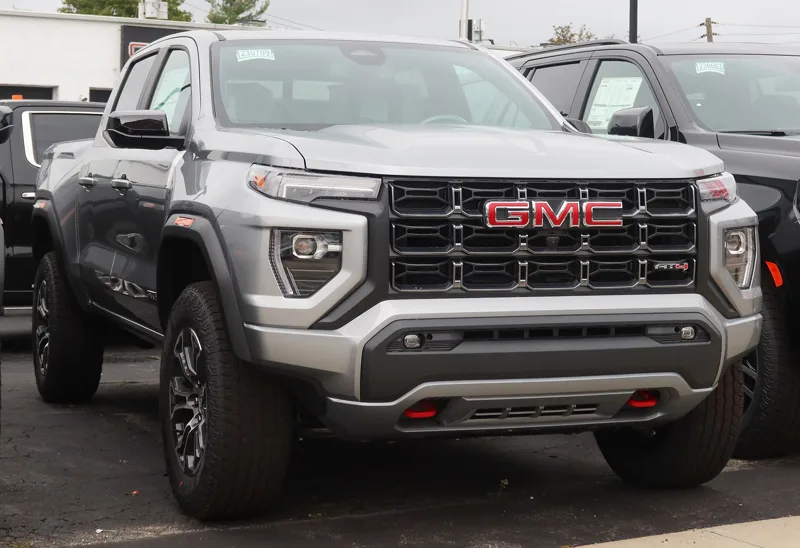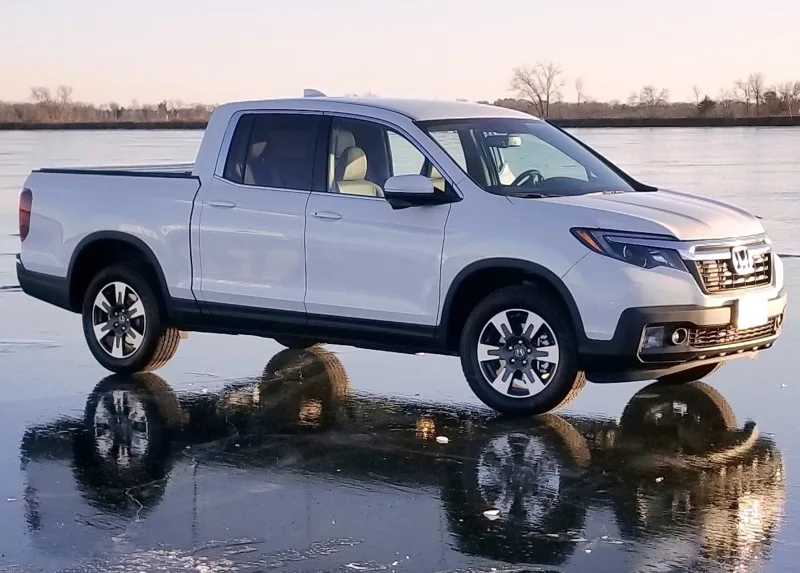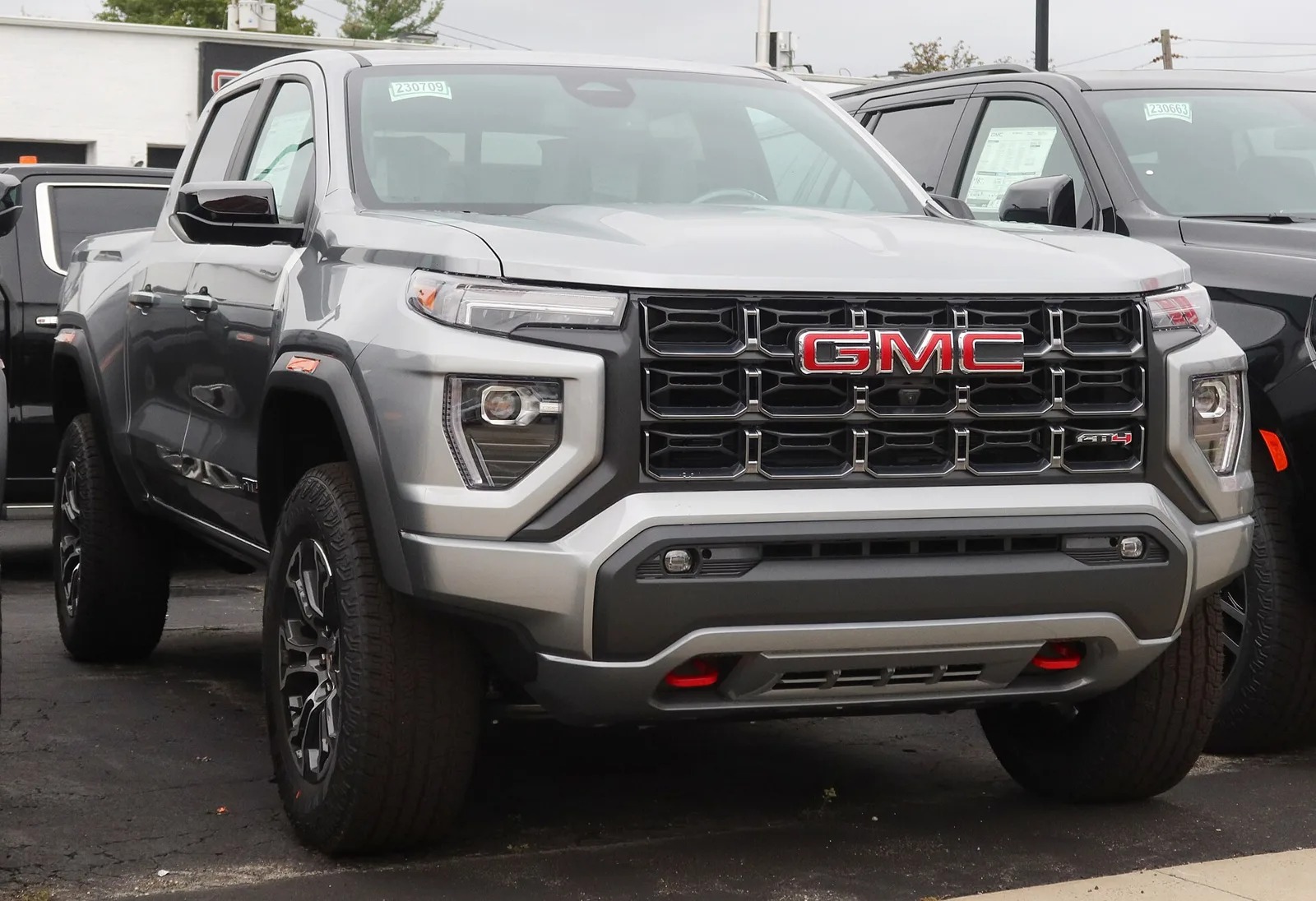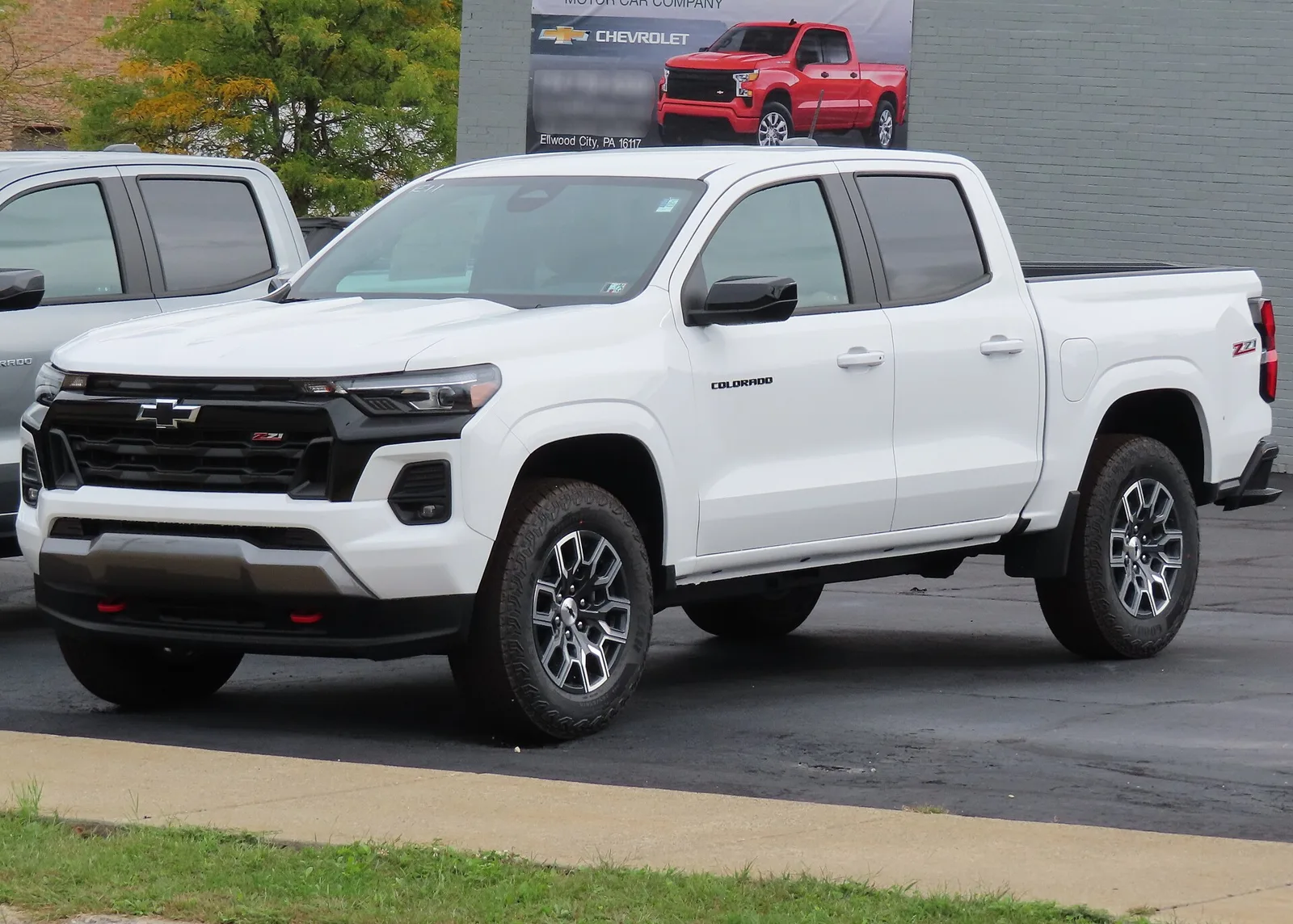
GM's Canyon and its Colorado twin took a traditional truck route, while Honda's second-generation Ridgeline borrowed its platform from the Pilot.
The GMC Canyon is a mid-size body-on-frame pickup from General Motors, twin to the Chevrolet Colorado, with its North American second generation revealed in 2013. The second-generation Honda Ridgeline is a unibody mid-size pickup that went on sale in 2016 and was built on Honda's global light truck platform.
The GMC Canyon and the second-generation Honda Ridgeline are both mid-size pickups, but they were built on very different foundations. The Canyon is a body-on-frame truck that shares its underpinnings with the Chevrolet Colorado, while the Ridgeline is a unibody pickup that borrowed its platform from Honda's Pilot. Set side by side, they show two traditional and two unconventional routes to the same job.
Where did the Canyon and Ridgeline come from?
The Canyon debuted in 2004, replacing the Chevrolet S-10 and the GMC S-15 and Sonoma compacts. Its twin, the Chevrolet Colorado, was named after the US state, while the Canyon took its name from a deep chasm between cliffs. The first-generation pair was developed jointly by General Motors and Isuzu, and production began in October 2003.
The second-generation Ridgeline was a deliberate return. After the first model had sold only moderately, Honda posted an open letter saying a pickup would remain in its line-up. After a one-year pause, the new truck launched in June 2016 as a 2017 model, with its production version first shown at the January 2016 Detroit show.
A body-on-frame GM pickup against a unibody Honda truck built on the Pilot's platform, two very different ideas of what a mid-size truck should be.
How did the two trucks' platforms differ?
The Canyon used a body-on-frame layout, which keeps a separate ladder frame under the body and suits heavy towing and rough use. That choice shaped the ride, the towing setup and the weight of the truck. It came in 4x2 and 4x4 forms, with manual or automatic transmissions, and in regular, extended and crew-cab body styles.
The Ridgeline took a different route. Its second generation moved to Honda's global light truck platform, which also underpins the third-generation Pilot and the Passport. Honda said the Ridgeline shared 73 percent of its components with the Pilot, and it kept the first model's dual-action tailgate and in-bed trunk.
Which engines did each truck offer?
In the first generation, most Colorado and Canyon models started with a 2.8-litre LK5 four-cylinder, while a 3.5-litre five-cylinder came with the Z71 package on four-door models. The 2007 facelift brought a 2.9-litre I4 and a 3.7-litre I5, and the 2009 update added a 5.3-litre V8 rated at 300 hp (224 kW), and its torque was 320 lb-ft (434 N-m).
The Ridgeline's second generation used a 3.5-litre V6 rated at 280 hp (284 PS; 209 kW), and its torque reached 262 lb-ft (355 N-m). It had direct injection, 11.5:1 compression and variable cylinder management, which shuts off cylinders from six to three when the load is light. The engine was tuned to run on 87 octane gasoline in all conditions.
How did the two trucks' all-wheel drive work?
Honda's new I-VTM4 all-wheel drive was hydraulically actuated and 22 percent lighter than the earlier system. It could handle 20 percent more torque and split torque between the rear wheels. It could overdrive the outside rear wheel by 2.7 percent to help the truck turn.
The Canyon's 4x4 system followed the familiar truck approach, with a locking rear differential on Z71 models. The difference was in purpose: the Canyon's hardware focused on off-road grip, while the Ridgeline's system was tuned for everyday stability and handling.
How were the Canyon's cabs and trims arranged?
The first-generation Canyon came as a regular cab with a six-foot box and seating for two or three, an extended cab with the same box and seating for four or five, and a crew cab with a shorter five-foot box and seating for five or six. The top crew-cab trims added leather seats, dual power front buckets, satellite radio and rear side airbags.
Suspension choices were the base Z85 for comfort, the Z71 off-road setup with a locking rear differential and a higher ride, and the ZQ8 Sport with a lower ride, which was offered only on 4x2 models. A ZQ8 edition added 17-inch wheels and low profile fender flares, while the Xtreme edition brought 18-inch wheels and a continuation of an S-10 package.
Side-by-side specifications
| Specification | GMC Canyon (second generation) | Honda Ridgeline (second generation) |
|---|---|---|
| Launch | Revealed November 20, 2013; production at Wentzville, 2014 | On sale June 2016 as a 2017 model |
| Structure | Body-on-frame; North American frame 40 percent lighter than the global version | Unibody, Honda global light truck platform |
| Engine | No figure given for the second generation; the first generation used a 2.8-litre four and a 3.5-litre five, with a V8 from 2009 | 3.5-litre V6, 280 hp (284 PS; 209 kW) |
| Torque | No figure given for the second generation | 262 lb-ft (355 N-m) |
| Drivetrain | 4x2 or 4x4, manual or automatic | I-VTM4 all-wheel drive or front-wheel drive |
| Towing | No figure given | 5,000 lb (2,300 kg) |
| Bed | Standard, extended and crew-cab body styles | 5.3 ft (1.6 m) with tailgate up, 6.9 ft (2.1 m) with it down |
| In-bed storage | No figure given | 7.3 cu ft (206.7 L) in-bed trunk |
| Fuel tank | No figure given | 19.5 US gal (74 L) |
| Turning radius | No figure given | 44.4 ft (13.5 m) |
| Trims | Base, LS and LT in the first generation; Canyon, SLE and SLT names | RT through RTL-E in the US, plus a Black Edition |
| Plant | Wentzville Assembly | Lincoln, Alabama, as with the Pilot |
What changed in the Ridgeline's second generation?
The second Ridgeline weighed 78 lb (35 kg) less than the first, and its strengthened C-pillar and rear sub-frame gave 28 percent more torsional rigidity. Its bed grew: 5.3 ft (1.6 m) with the tailgate up, which was 3.9 in (10 cm) more than before, and 6.9 ft (2.1 m) with the tailgate down, 3.6 in (9 cm) longer than before. The bed was also 4.8 in (12 cm) wider.
Rear seat storage improved too, with under-seat space of 2.9 cu ft (82.1 L) and overall second-row room of 1,421.5 L (50.2 cu ft). The drag area fell by 15 percent by computer simulation, and the steering ratio was cut by 15 percent to 15.95:1. Features such as the LaneWatch camera, an auto-tilting side mirror and trailer stability assist were new to the family.
How much could each truck carry?
The Ridgeline carried a 1,100 lb (500 kg) bed load, 300 lb (140 kg) on its dynamically loaded tailgate and 165 lb (75 kg) on the roof. It was rated to tow 5,000 lb (2,300 kg). Honda also lowered the payload slightly compared with the first generation, to between 1,444 lb (655 kg) and 1,543 lb (700 kg), depending on trim.
The Canyon's capacity depended more on its cab and drivetrain. Its crew-cab version offered a shorter five-foot box with room for five or six, while the regular and extended cabs gave a six-foot box. The Canyon's heavier body-on-frame design gave it a traditional truck feel for the same kind of work.
What did the second Ridgeline give up?
Honda's second-generation truck was not better in every measure. Its all-wheel-drive gross combined weight rating was 9,987 lb (4,530 kg), 98 lb (44 kg) lower than the first generation, and the front-drive figure fell by 1,884 lb (855 kg). Payload dropped slightly, and passenger space shrank by 2.3 cu ft (65.1 L), leaving 3,106.4 L (109.7 cu ft).
The in-bed trunk shrank to 7.3 cu ft (206.7 L), and the fuel tank was 2.5 US gal (9 L) smaller at 19.5 US gal (74 L). The turning radius grew to 44.4 ft (13.5 m), 1.8 ft (0.5 m) more than before, and ground clearance was lower.
Which trims did the two trucks use?
In the US the Ridgeline ran from the RT base through the RTS, Sport and RTL family, plus a Black Edition, while Canadian buyers chose from LX, Sport, EX-L, Touring, plus a Black Edition. Canadian models came standard with all-wheel drive, Honda Sensing and an 8-inch touchscreen. In 2018 the base RT lost its AWD option and the RTS was dropped from the US range.
The Canyon's trim names differed by market. In the Colorado line up the DX, LX, LT and LTZ trims were sold in Australia and New Zealand, with the top Z71 gaining off-road gear and 18-inch wheels. An LS trim arrived in 2014 for the Holden range.
What did the Ridgeline share with the Pilot family?
The Ridgeline's global light truck platform brought features that were uncommon in mid-size pickups. Intelligent traction management offered snow mode for front drive, and mud and sand modes for all-wheel drive, which changed the throttle mapping, shift points and power split. Hill start assist stopped the truck from rolling back when the driver moved from brake to throttle on a slope.
The second generation also used motion-adaptive electric power steering, tire fill assist, tri-zone climate control and a Honda Sensing suite on select models. The Canyon's approach to such technology was more conventional, with its trims spanning from the base model up to the top Z71.
Which buyer suits each truck?
The Canyon suits a buyer who wants a traditional body-on-frame pickup with a choice of cabs, a V8 option in earlier years and a strong off-road heritage. The Ridgeline suits a buyer who wants a truck that drives more like a car, with a useful in-bed trunk and Honda's stability systems.
The figures here do not settle which is better, so no verdict is given. The Canyon offers the traditional truck approach, while the Ridgeline gives up some of that toughness in exchange for car-like ride and handling. Buyers who tow often should compare the rated capacities closely, since the figures differ by generation and by market.
What did each truck leave behind?
The Canyon's legacy runs through the Colorado twin and its long GM and Isuzu partnership. The Isuzu i-series, based on the Canyon, was sold in the United States from 2005 to 2008, but it sold only 1,377 units before the line was dropped.
The Ridgeline left a reputation for practical features and a clear message that Honda would keep a pickup in its range. Its second generation was also sold in the Caribbean and Latin America, where the RTL and RTL-T trims were offered.