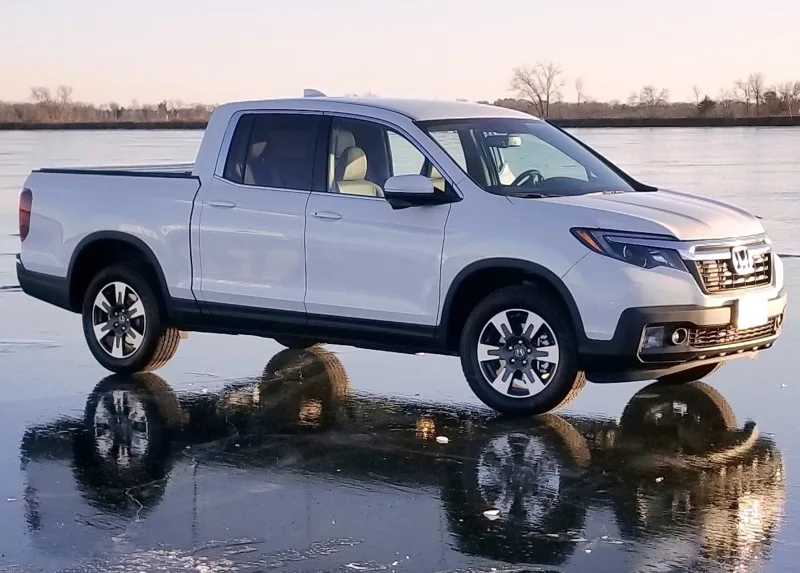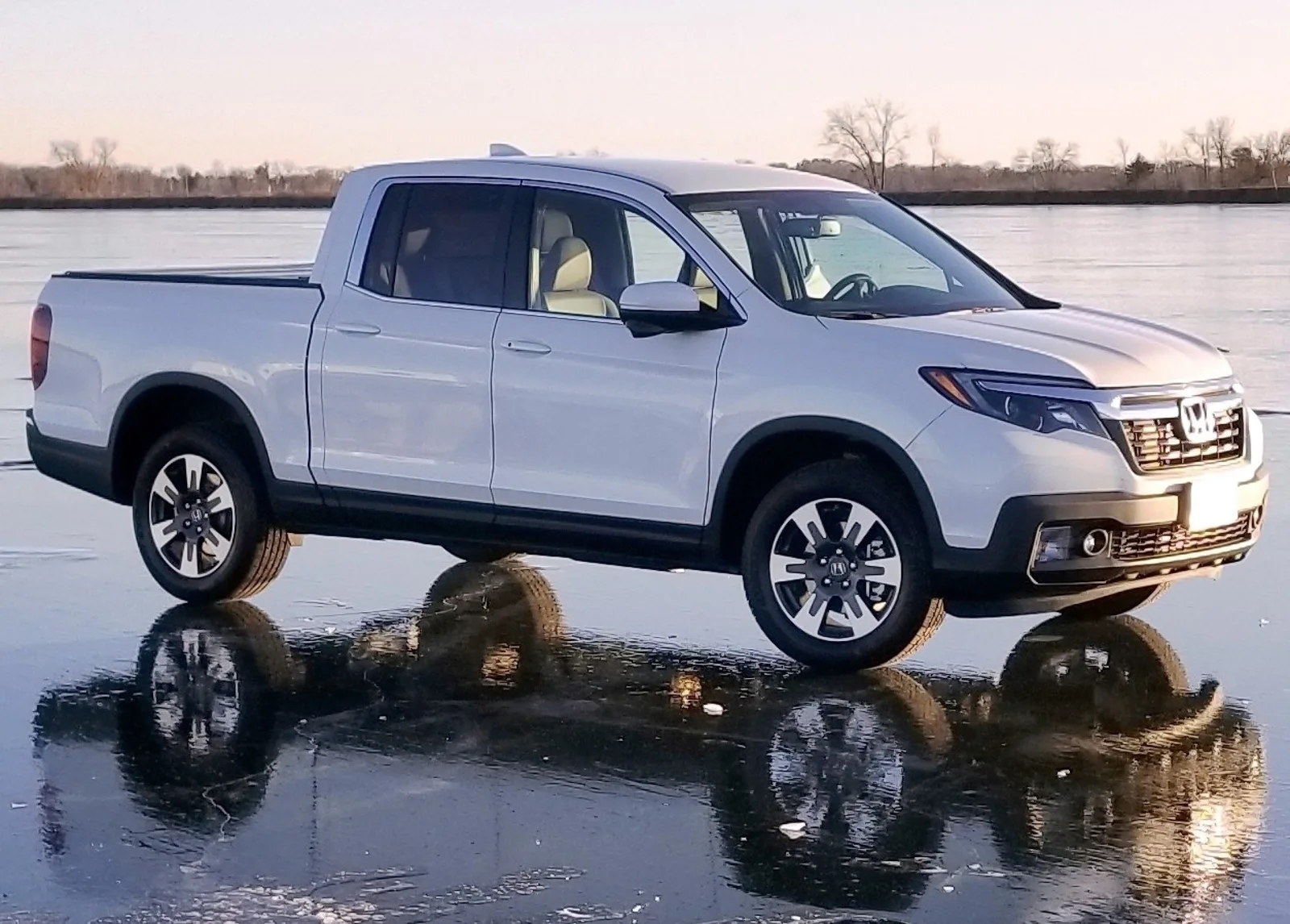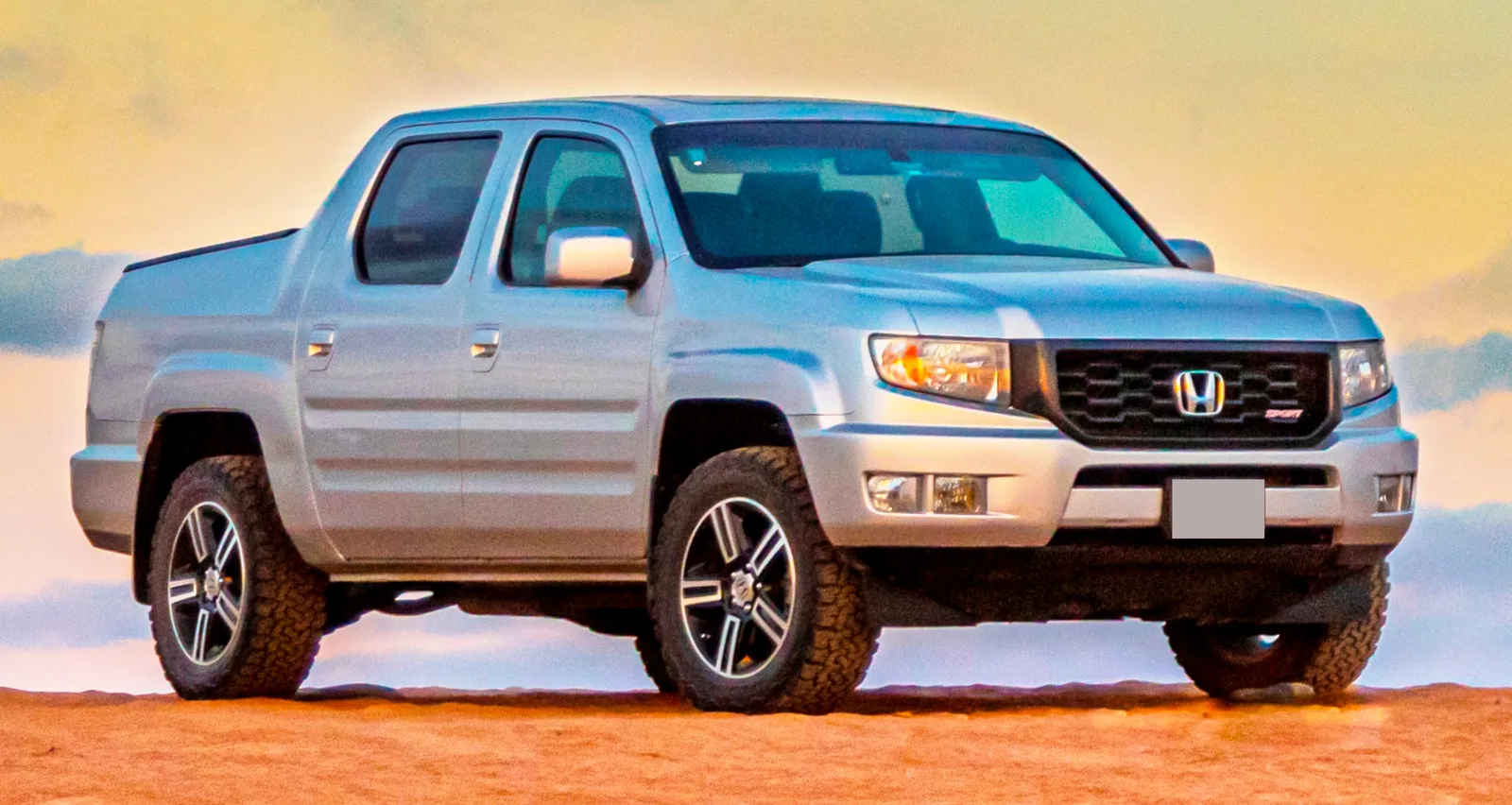
All-wheel drive, a composite bed with a lockable in-bed trunk and a rare unibody build made Honda's first pickup a sales puzzle that still earned awards.
Built from 2005 to 2015, this pickup combined a unibody frame, an all-wheel drive V6 and a lockable in-bed trunk. It won several awards and a five-star NHTSA rating, but its sales never matched the features.
The first-generation Honda Ridgeline was a mid-size pickup sold mainly in North America from early 2005, as a 2006 model, until early 2015. It set itself apart from its rivals with a dual-action tailgate, an in-bed trunk, all-wheel drive and a unibody build that was unusual for a pickup. Its sales never matched its features, but the truck still collected a string of awards.
Why did Honda build a pickup?
Honda said the Ridgeline was not designed to take sales from traditional North American trucks. Its aim was to give the 18% of Honda owners who also owned pickups a chance to keep their garages Honda-only. The car was therefore aimed at buyers moving out of sedans, minivans and sport utility vehicles into a pickup.
Despite weak volume, the truck was reportedly among the more profitable models Honda sold, and it reached buyers in more than 20 countries. Honda's frugal development approach is part of the reason the truck paid its way.
An unusual unibody pickup with an in-bed trunk and all-wheel drive, built for less than half the usual cost of a new truck project.
How was the Ridgeline developed?
The Ridgeline was designed and engineered by a 37-member team from Honda Research and Development Americas, led by Gary Flint. In 2001 the team began with a development mule, an extended version of an early Acura MDX with a competitor's pickup bed grafted onto its rear structure, which they called the Hondarado.
Four years of work produced a concept, which was first shown at the 2004 Detroit show as Honda's Sport Utility Truck Concept. Later that year a revised pickup concept appeared at the SEMA Show, which also revealed the Ridgeline name. The production version was unveiled at the 2005 show in Detroit.
How was the Ridgeline's structure built?
Honda built the Ridgeline on a boxed ladder-style frame, made with 44% high-strength steel and braced by seven crossmembers of the same grade. Sheet metal was unique to the truck, and its interior was 95% unique to the model. The frame, powertrain and four-wheel independent suspension left room for storage in, around and on top of the structure.
The crew cab used a unibody frame to create 112 cu ft (3,171 L) of passenger volume with a flat floor and no transmission hump. The C-pillar buttress was shaped to spread large loads across the unibody so the truck could reach its targeted payload and towing figures. The bed was made of steel-reinforced sheet moulding composite, developed with Continental Structural Plastics, which Honda said resists dents, corrosion and ultraviolet light, and weighs 30% less than sheet metal.
How big were the bed and in-bed trunk?
The cargo bed measured 5 ft (1.5 m) and extended to 6.6 ft (2 m) with the tailgate down. Its width between the wheel wells was 4.1 ft (1.2 m), widening to 4.6 ft (1.4 m) at the widest points. Honda described the in-bed trunk as the industry's first lockable, watertight and drainable storage compartment, offering 8.5 cu ft (240.7 L) at the rear of the bed.
The cabin seated five adults, with 2.6 cu ft (73.6 L) of under-seat storage in the second row. Folding the rear bench cushions raised the usable volume to 41.4 cu ft (1.2 m3). Ground clearance was 8.2 in (20.8 cm).
How much could the Ridgeline carry and tow?
Payload ranged from 1,475 lb (669 kg) to 1,559 lb (707 kg), depending on trim. The gross vehicle weight rating was 6,050 lb (2,744 kg), and the gross combined weight rating was 10,085 lb (4,574 kg). The weight split was 58/42 between front and rear axles. The bed itself was rated for loads up to 1,100 lb (499 kg).
Honda listed a towing capacity of 5,000 lb (2,268 kg), with room for a 600 lb (272 kg) tongue weight and another 330 lb (150 kg) of people and gear. Every model had a 130 A alternator, a pre-wired trailer brake controller and a seven-pin trailer harness, while a class III hitch was standard on some trims and optional on others.
How did the suspension, brakes and steering work?
The Ridgeline used four-wheel independent suspension. MacPherson struts were fitted at the front, and a multi-link trailing arm arrangement with twin-tube gas-filled shocks at the rear. Total wheel travel was 7.3 in (18.5 cm) at the front and 8.2 in (20.8 cm) at the rear.
The steering was a variable power-assisted rack and pinion with an 18.5:1 ratio, and the turning radius was 42.6 ft (13.0 m). Braking used four-wheel discs, with 12.6 in (32 cm) ventilated front discs and 13.1 in (33.3 cm) solid rear discs, a four-channel anti-lock system with electronic brakeforce distribution and emergency brake assist.
What engine and drivetrain powered the Ridgeline?
The Ridgeline used Honda's J-series engine, a transverse-mounted 3,471 cc 24-valve 60-degree V6 with VTEC and belt-driven SOHC. It had an aluminium block with cast-iron liners, a 10:1 compression ratio and PGM-FI fuel injection. A heavy-duty radiator, extra transmission and power steering coolers and dual 160 W radiator fans came with every truck.
The variable torque management all-wheel drive system, VTM-4, was co-developed with BorgWarner. It sent the truck into front-wheel drive for dry road cruising and brought in all-wheel drive for acceleration, stability and off-road traction. Its clutch-operated rear differential could transfer up to 70% of the torque to the rear axle, and it could be locked for difficult terrain.
The five-speed automatic used a four-shaft design and was managed by the engine's control unit, which also handled the electronic throttle linked to the stability systems. A 22 US gal (83 L) tank was fitted, with 86 octane fuel for 2006 and 87 octane for later years, and 91 octane recommended when towing above 3,500 lb (1,588 kg).
Which trims did the Ridgeline offer?
In the United States the Ridgeline was offered in six trim levels across its life, starting in 2006 with the base RT. The RTS, RTL, RTX, Sport and SE followed, with some trims added and dropped over the years. The RT came with cruise control, power windows and locks and a six-speaker audio system.
The RTX added a class III hitch, a trailer wiring harness, a hexagonal black grille and 17-inch grey alloys. The Sport had a blackout treatment, fog lights, a saw-tooth grille and 18-inch polished alloys. The RTL was the leather-trimmed top model for most of the run, with an optional moonroof, navigation and XM Satellite Radio. The short-lived SE took the RTL and made its options standard, with Sport styling.
Canada had seven trims, from DX and VP at the base to EX-L and Touring at the top. Mexico offered only an RTL, and Chile sold the RT and RTL. Canadian cars had metric gauges, daytime running lights and bilingual voice recognition.
What standard equipment came with the 2006 Ridgeline?
Car and Driver noted that the base US Ridgeline carried standard equipment that rival base mid-size trucks did not offer. Its 8-inch touchscreen navigation unit came with a 160 W seven-speaker AM/FM/XM radio and a six-disc CD player. Dual-zone climate control with separate rear vents was also standard.
The centre console had telescoping armrest storage and a 115 V, 100 W AC outlet, and the rear bench had LATCH anchors for three child seats. Rear passengers had a 12 V, 10 A DC outlet, four cup holders and a power sliding rear window.
What changed in the 2007 and 2008 model years?
For 2007 the RTX returned as a tow-ready version of the Ridgeline. The RTL made its moonroof and XM Satellite Radio standard, and its two-tone leather was replaced with monotone leather. Honda also added an illuminated driver-side vanity mirror to every trim.
For 2008 the interior lost its olive colour choice, two-tone fabrics were replaced with monotone versions, and the navigation voice was removed to make room for more points of interest. The RTS and RTL also received more polished alloy wheels.
What did the 2009 refresh change?
The 2009 model year brought the first refresh, with more than 50 changes. The front end was restyled with daytime running lights, the taillights became solid red, and a new rear step bumper was fitted with an integrated class III hitch. Two more bed cleats were added, and the instrument cluster and steering wheel were redesigned.
A new V6 gave up to 10 lb ft (14 N m) more torque at lower revs, with a small rise of 3 hp (2.2 kW) at the top of its band. The five-speed automatic was revised, with third and fourth gear ratios about 5% lower. In the US the RTX was dropped and the RTS gained a power lumbar and a seven-pin harness, while the RTL gained fog lights and a rearview camera on the navigation screen.
What changed in 2012, 2013 and 2014?
The 2012 refresh added a Sport trim for the US and Canada, with steering-wheel audio controls, black-accented 18-inch alloys and a red SPORT grille badge. Aerodynamic and friction improvements lifted fuel economy by 1 mpg-US on EPA testing, and by between 0.2 and 0.5 L/100 km on Natural Resources Canada testing.
For 2013 every Ridgeline gained a backup camera shown in the mirror, with distance guidelines at 1.7 ft (0.5 m), 3.3 ft (1 m), 6.6 ft (2 m) and 9.8 ft (3 m). For 2014 Honda dropped the VP trim in Canada, added a Special Edition, and made the SE the top US trim, identified by its 18-inch polished alloys and a SPECIAL EDITION tailgate badge.
How safe was the Ridgeline?
The Ridgeline was the first four-door pickup to earn the NHTSA five-star rating for both front and side impact crash testing. It also had the highest rollover resistance of any pickup NHTSA had tested, at 14.3%. The Insurance Institute for Highway Safety gave it Top Safety Pick awards for the 2009, 2012 and 2013 model years.
The Ridgeline had stability control, which Honda called Vehicle Stability Assist, and it could be disabled for off-road use where the system might cut throttle at the wrong moment. The steel-reinforced bed and high-strength crossmembers were designed to hold loads even in a collision.
How did the Ridgeline compare with rival mid-size trucks?
MSN Autos compared the Ridgeline with rivals including the Toyota Tacoma, Nissan Frontier, Suzuki Equator and Ford Ranger. It had more amenities, more interior space and more hauling capacity than most of them, but it sat at the bottom of its class for tow ratings. Otherwise it generally fell in the middle of published specifications.
In 2012 PickupTrucks.com ran a mid-size challenge with seven trucks, including the Ridgeline. The Ridgeline finished third overall. It had the highest payload score and the best real-world fuel economy, but the lowest torque at the wheels. It was judged second for expert impressions, third for value and last on the off-road course.
How did critics and buyers receive the Ridgeline?
Reviewers were split. Motor Trend expected hardcore truck fans to object that the Ridgeline was a modified minivan that did not qualify as a truck, yet after a year in its long-term fleet the magazine said it had won over several staff members. The Driver's Seat TV called it the Swiss Army knife of trucks, and it also called the Ridgeline the anti-truck for breaking the usual pickup rules.
Sales were the problem. The Chicago Sun-Times reported slow traction after the March 2005 debut, and some buyers considered the price too high. Dealers began discounting, and sales rose, but Automobile Magazine recorded a drop of half from 2008 to 2010 and a further 40% fall in 2011. The 2011 parts shortages after the Tohoku earthquake and tsunami were a factor.
Why did production of the Ridgeline end?
The first generation ended production in early 2015. Auto Trader reported that Honda had planned to build the truck until the second generation arrived, but slow sales led the company to end it sooner. Honda had developed the Ridgeline for under $250 million (USD), about half of what General Motors would normally invest in a similar project.
Honda's head of truck product planning published an open letter denying rumours that the Ridgeline would be dropped, and insisted a pickup would remain in the company's line-up. The first generation nevertheless ended before the second one reached the market.
Which awards did the Ridgeline win?
The 2006 Ridgeline took the North American Car, Utility and Truck of the Year award, Canadian Car of the Year and Best New Pickup, and the Motor Trend 2006 Truck of the Year. Car and Driver named it its number one mid-size truck for 2006, and Autobytel gave it the 2006 Truck of the Year title.
It also won the Popular Mechanics 2006 Automotive Excellence Award for functionality and the Society of Plastics Engineers 2006 Grand Award for its composite in-bed trunk. The J.D. Power APEAL Award was earned for 2006 to 2008. The record also lists the truck among SCORE Baja Stock Mini Class winners in 2008 and 2010.
What were the Honda Ridgeline first-generation specifications?
| Specification | Detail |
|---|---|
| Sold | Early 2005 (2006 model year) to early 2015 |
| Engine | 3,471 cc (212 cu in) 60-degree V6, 24-valve, VTEC, 10:1 compression |
| Drive | VTM-4 all-wheel drive; up to 70% of torque to the rear |
| Bed | 5 ft (1.5 m); 6.6 ft (2 m) with tailgate down |
| In-bed trunk | 8.5 cu ft (240.7 L), lockable and drainable |
| Payload | 1,475 lb (669 kg) to 1,559 lb (707 kg) |
| Towing | 5,000 lb (2,268 kg); 600 lb (272 kg) tongue weight |
| GVWR / GCWR | 6,050 lb (2,744 kg) / 10,085 lb (4,574 kg) |
| Ground clearance | 8.2 in (20.8 cm) |
| Turning radius | 42.6 ft (13.0 m) |
| Fuel tank | 22 US gal (83 L) |
| Safety | NHTSA five-star front and side; rollover resistance 14.3% |