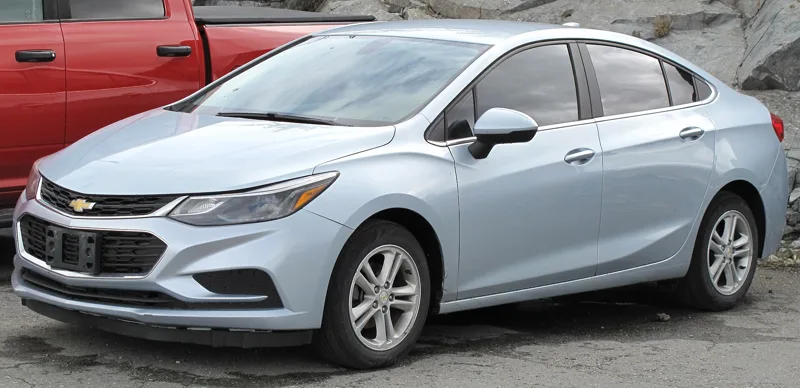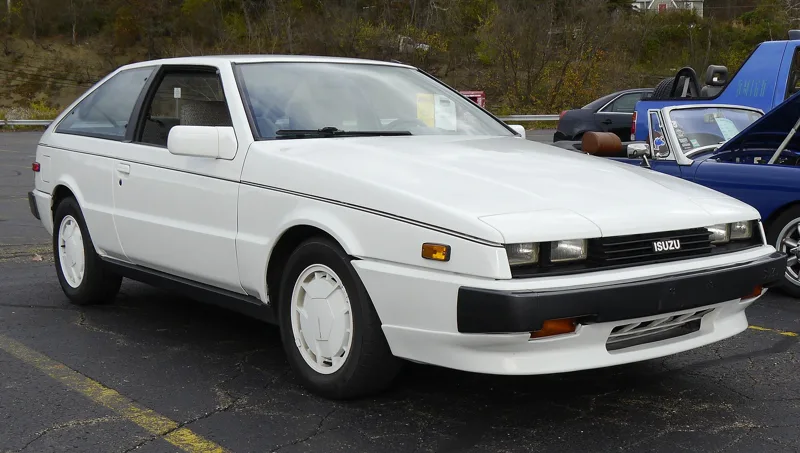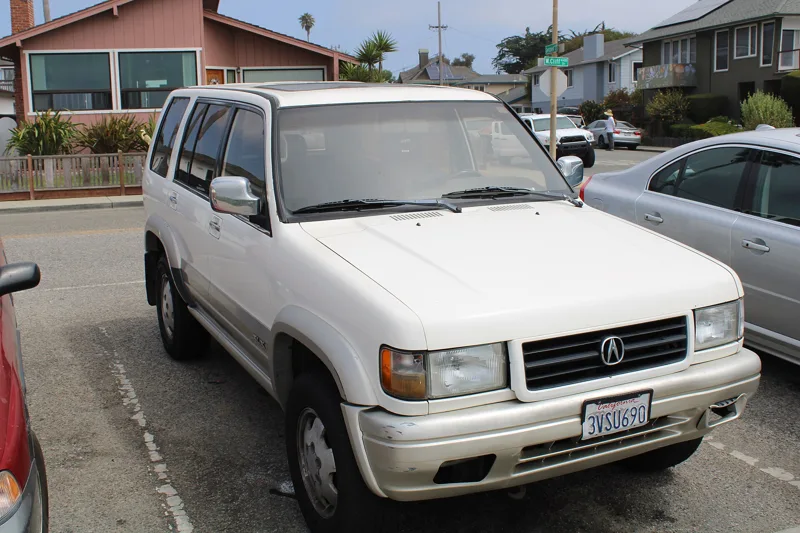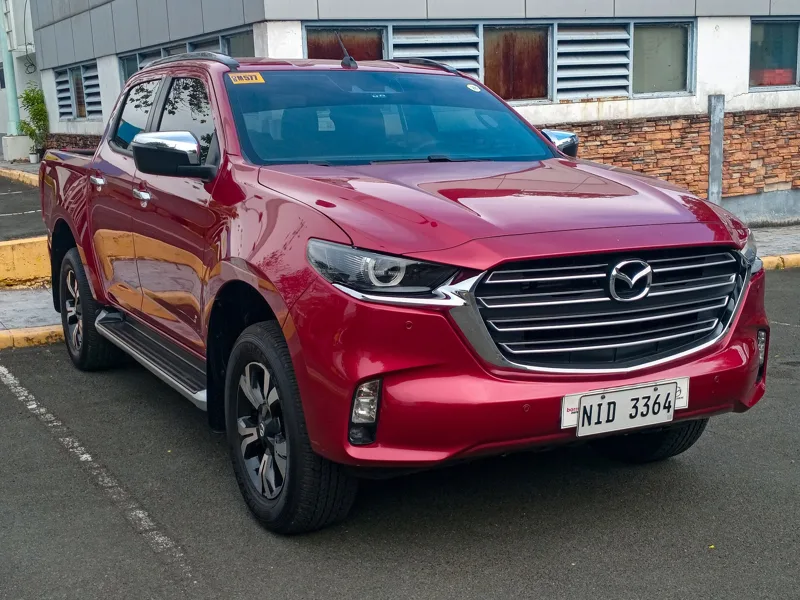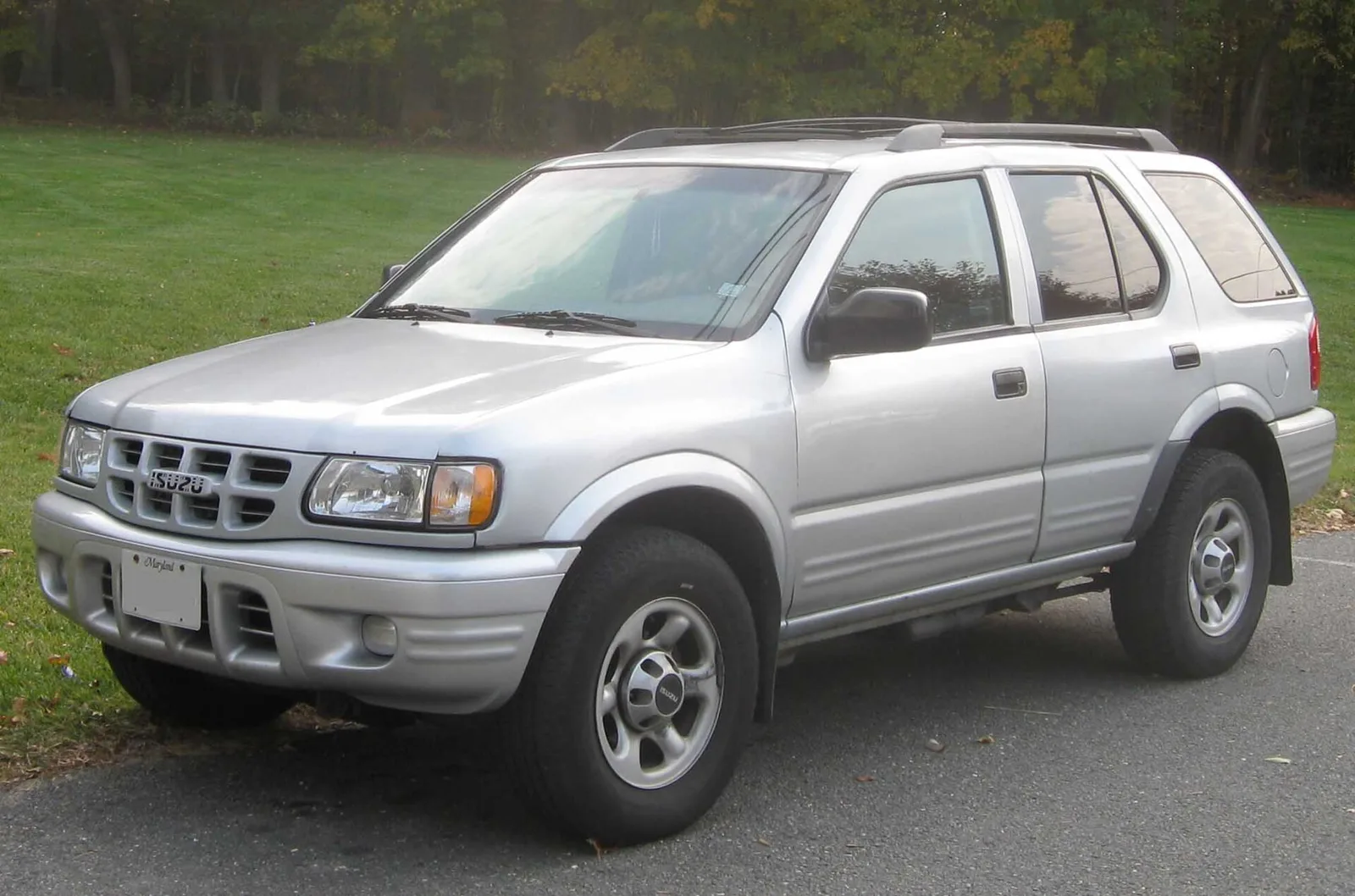
An Isuzu SUV built from 1989 to 2005 that wore a different badge in almost every market, from Amigo and Rodeo to Frontera and Wizard.
Built from 1989 to 2005 in three-door and five-door forms, the MU carried many badges, including Amigo, Rodeo, Frontera and Wizard. Its name stood for Mysterious Utility, and the first generation ran until 1998.
The Isuzu MU was a mid-size SUV that Isuzu built from 1989 to 2005. The name stood for Mysterious Utility. The three-door arrived first, followed in 1990 by a five-door called the MU Wizard, and the car wore a different badge in almost every market it reached.
Where did the MU come from?
The MU took its underpinnings from the 1988 Isuzu Faster (TF) pickup. Both body styles shared their bodywork and most internal parts up to the front doors, so the two looked closely related on the road. Like the pickup, the MU came with rear-wheel-drive and four-wheel-drive layouts.
The three-door made its debut in Japan during 1989, and the five-door MU Wizard was introduced the following year. Between 1993 and 1996 Honda sold three-door versions as the Honda Jazz in Japan, under a model-sharing arrangement that badged several Isuzu models as Honda and the reverse.
The first generation ended in 1998 and gave way to a second generation. The five-door then dropped the MU prefix and became the Isuzu Wizard.
A mid-size SUV that carried many different badges across Europe, North America, Asia and Australia, and was built from 1989 to 2005.
What were the MU's names around the world?
The short-wheelbase three-door appeared as the MU and the Honda Jazz in Japan, as the Amigo and later the Rodeo Sport in the United States, and as the Opel Frontera Sport across continental Europe. Britain used the Vauxhall Frontera Sport and Australia the Holden Frontera Sport.
The long-wheelbase five-door was the Isuzu Wizard in Japan and the Isuzu Rodeo in North America, where Honda sold it as the Passport. Opel, Vauxhall and Holden each sold rebadged versions as the Frontera, and Chevrolet used the Frontera name in Egypt and the Rodeo name in Ecuador, Colombia and Bolivia.
Thailand bought the five-door as the Isuzu Cameo and later the Isuzu Vega, while South Africa called it the Isuzu Frontier. The sheer number of names shows how far the platform travelled across markets.
How did the Amigo and Rodeo sell in North America?
The three-door reached US showrooms in the second quarter of 1989 as the Amigo. The base car used a 2.3-litre 4ZD1 inline-four with 102 hp (76 kW), while four-wheel drive came with the 2.6-litre 4ZE1. Trims were limited to S and XS, and early options were few.
Isuzu introduced the five-door Rodeo for the 1991 model year. It came with either a 2.6-litre inline-four rated at 119 horsepower or a 3.1-litre GM V6, and Rodeo volume reached 24,612 units in 1991 and then 45,257 in 1992. For 1993 the company replaced the GM V6 with its own 3.2-litre 24-valve SOHC V6, rated at 174 hp (130 kW). US models were built at Subaru-Isuzu Automotive in Lafayette, Indiana, and 75 percent of their parts were made overseas, so the Rodeo still counted as an import.
The first-generation Rodeo and its twin, the Honda Passport, were rated Poor in the IIHS frontal offset test at 40 mph. The concern was a weak safety cage and excessive footwell intrusion that contributed to leg injuries. The Amigo was dropped from the US market in 1995 after a limited XS-F run, with fewer than 75 of those cars sold.
What was the Frontera in Europe?
In Europe the five-door was the Frontera, which Opel sold on the continent and Vauxhall sold in Britain. It launched in November 1991 from a plant that was once a Bedford van works in Luton, later known as IBC. Vauxhall saw it as an answer to demand for 4x4s, particularly in the right-hand-drive British market.
In the 1980s the Luton plant had come under joint Isuzu and General Motors control, and it built the Frontera alongside other commercial vehicles. Japanese four-wheel-drive brands such as Daihatsu, Mitsubishi, Nissan, Suzuki and Toyota had sold strongly in Britain before the Frontera arrived.
Early cars until 1995 offered a 2.4-litre petrol engine, the C24NE developed for the Opel Manta i240, or a 2.3-litre diesel borrowed from the Bedford CF and Vauxhall Carlton. The Frontera Sport used the 2.0-litre Vauxhall Cavalier petrol engine.
A 1995 facelift added rear coil springs and new engines, including a 2.8-litre diesel for the short wheelbase. A 2.5-litre diesel, the VM41, arrived in the 1996 and 1997 models. The same unit also powered Range Rover Classic and Jeep Cherokee models in Britain.
What did the Rodeo's cabin and cargo area offer?
The Rodeo's rear seat bottom folded forward and its seatback folded down, extending the cargo area to 35 cubic feet (990 L). The lug wrench lived under the seat base, concealed by a carpeted Velcro flap, and the jack was tucked behind a panel at the back left of the load bay.
The LS trim added privacy glass, velour seats and rear seats that split and folded. A secret locking compartment sat in the depths of the centre console, beneath a removable cassette storage bin.
Early Rodeos weighed 3,490 to 3,820 lb (1,580 to 1,730 kg), depending on engine and options. The 4WD models with the V6 and automatic transmission returned 15 mpg-US in the city and 18 on the highway under the EPA rating of the period.
How did the Rodeo change through the 1990s?
For 1993 the Rodeo gained a recalibrated suspension with softer springs and shock valving, plus a third brake light set over the rear glass and a more refined centre console. Manually locking hubs were eliminated, although the floor-mounted transfer case shifter stayed.
A Family II 2.4-litre four-cylinder engine from Holden was introduced in 1993. In mid-1995 the dashboard and steering wheel were updated, and airbags came with them. For 1996 the 3.2-litre V6 rose to 194 hp (145 kW), and the top LS trim received 16-inch aluminium wheels.
How did the Frontera reach Australia and New Zealand?
In October 1995 Holden introduced the MU in Australia under the Frontera badge, and in New Zealand as the Wizard. The Australian version, known as the UT or M7 series, used the three-door body and was built in the United Kingdom.
Holden offered it in just one trim level, the Sport 4x4, and it came only with a manual transmission. That made it a narrow offer, though it gave Australian buyers a short-wheelbase four-wheel-drive option.
What did the second generation change?
The second-generation MU and Wizard were shown at the Tokyo Motor Show in September 1997, and Japanese sales began in May 1998. The three-door kept the MU name, while the five-door became the Wizard without the prefix.
In North America the Amigo returned in 1998 after a three-year break, alongside the redesigned Rodeo. Both models used a rigid frame with eight crossmembers, independent front suspension and a solid rear axle, plus a push-button four-wheel-drive system on the 4WD versions.
The base engine was a 2.2-litre X22SE built by Holden in Australia. Isuzu also offered a 205 hp 6VD1 V6, whose 214 lb-ft (290 N-m) of torque was a clear step up. In 2004 a 3.5-litre gasoline direct-injection V6 with 250 hp arrived, and Isuzu became the first to offer direct injection in a vehicle priced under US$100,000.
How was the second-generation chassis built?
The second-generation Rodeo and Amigo used a rigid frame with eight crossmembers. The front suspension had independent lower and upper arms, while the rear used a solid axle. On 4WD models the rear axle was a modified Dana 44 unit.
Four-wheel drive was selected with a push-button on the 4WD versions, while a traditional floor-mounted lever still switched between high and low range. Skid plates came as standard underneath both vehicles.
The 2003 model year brought a new grille and headlights, plus a revised dash and steering wheel. Halfway through that year Isuzu moved to an Aisin automatic, and the physical 4WD shifter on those models was replaced with a dash-mounted knob for high and low range.
How did the second generation sell in Europe and Australia?
In Britain the second-generation models were sold as the Vauxhall Frontera for the five-door and the Frontera Sport for the three-door. Continental Europe used the Opel names. Both body styles were sold in each market under the local badge. A planned move of the line to Ellesmere Port was reversed after the Luton plant's closure was announced.
Holden also sold the UE and MX series Frontera in Australia and New Zealand from February 1999. Both three-door and five-door bodies were offered, and the five-door models were now built in the United States.
The five-door Holden carried a 3.2-litre V6 rated at 202 hp with an optional automatic. The three-door Frontera Sport was withdrawn in June 2002, and the five-door wagon was semi-replaced by the Adventra in 2003.
Which engines did the Thai and Chinese versions use?
In Thailand the Cameo of 1993 to 1996 used a 2.5-litre 4JA1 diesel with 90 PS (66 kW), mated to a five-speed manual and rear-wheel drive only. The Vega of 1999 to 2004 was four-wheel drive only and introduced a 3.0-litre 4JH1-T turbodiesel producing 120 PS (88 kW).
The Vega's engine changes included Isuzu's Computer Controlled Injection and High Pressure Fuel Injection systems. A four-speed automatic with electronic control offered a Normal and a Power mode for the driver to choose between.
In China the Jiangling Landwind copied the Rodeo. It was not an Isuzu vehicle, and its crash-test failures in Europe were a poor advertisement for the copy.
What went wrong with the corrosion recall?
In October 2010 US safety regulators, through NHTSA, recalled 1998 to 2002 Rodeos, 2002 Isuzu Axioms and 1998 to 2002 Honda Passports because of frame corrosion near the rear suspension.
Vehicles with light corrosion received an anti-corrosion compound, while those with severe rust were fitted with a reinforcement bracket. In some cases the corrosion was too advanced to repair, and Isuzu and Honda bought those vehicles back from their owners.
How did the MU's run end?
The final MU rolled off the line on June 5, 2004. The Holden Frontera Sport had already been discontinued in June 2002, and the five-door wagon in Australia continued until 2003.
In Australia and New Zealand the Frontera was replaced by a Holden-badged version of the Chevrolet Captiva. In Europe it gave way to the Opel Antara, which was also sold as a Vauxhall.
Specifications at a glance
| Item | Detail |
|---|---|
| Production | 1989 to 2005 |
| Generations | Two (1989-1998 and 1998-2004) |
| First-generation engine | 2.3L 4ZD1 inline-four, 102 hp (76 kW) |
| Rodeo V6 (1993) | 3.2L 24-valve SOHC V6, 174 hp (130 kW) |
| Second-generation top V6 | 3.5L GDI, 250 hp (186 kW), 246 lb-ft (334 N-m) |
| Rodeo weight (first generation) | 3,490 to 3,820 lb (1,580 to 1,730 kg) |
| Cargo volume | 35 cubic feet (990 L) |
| Final MU | June 5, 2004 |
How safe was the Rodeo?
The first-generation Rodeo's Honda Passport twin shared its weak showing in the crash tests. The second generation fared better, with a rating of marginal in the same test, although the head and right leg were still a concern.
Dummy movement was reasonably well controlled in the second generation, a detail that the testers noted alongside the overall rating.