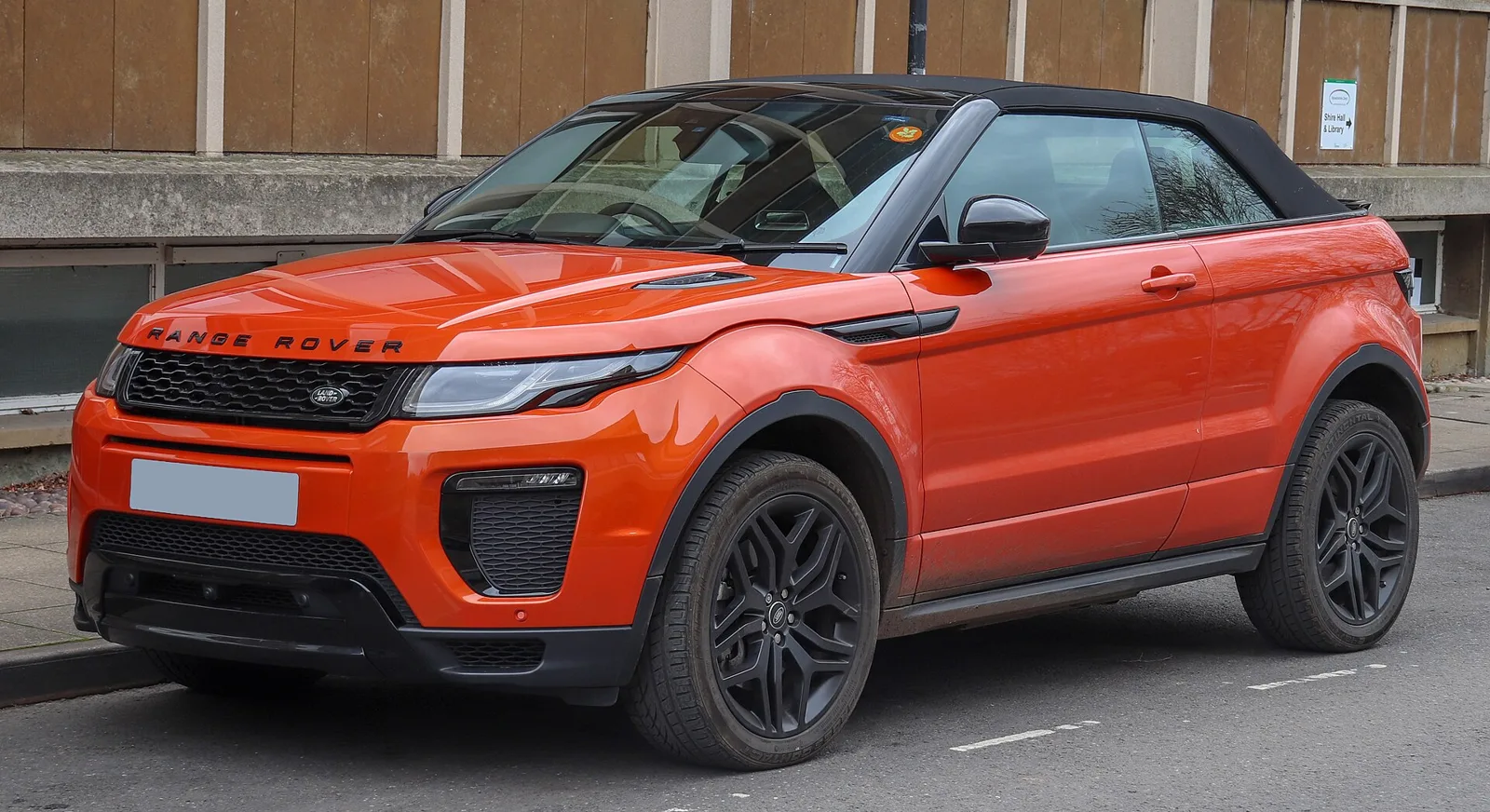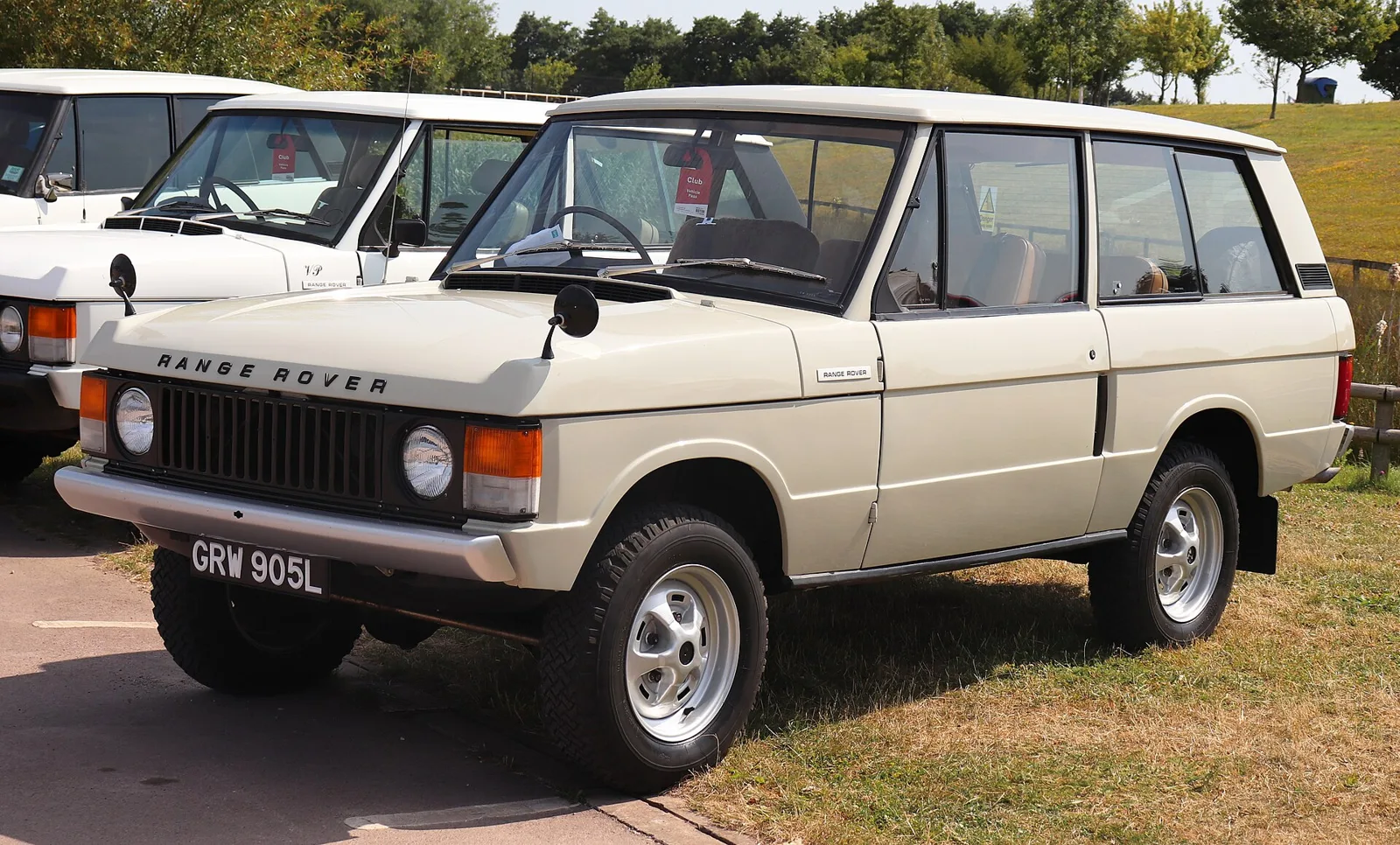
Coil springs, permanent four-wheel drive and an aluminium body on a steel frame, built from 1970 to 1996.
The Range Rover Classic was a mid-size off-road vehicle built from 1970 to 1996 with coil springs, permanent four-wheel drive and a V8 that began at 3.5 litres. It was the first generation to carry the Range Rover name and gave the Land Rover Discovery its chassis.
The Range Rover Classic was built from 1970 to 1996, and it proved that a four-wheel-drive machine could be as comfortable as a saloon. Rover launched it in June 1970 with a top speed of around 100 mph (160 km/h), and it was the first car to carry the Range Rover name.
Its roots were in the Land Rover, a cheap and simple utility vehicle designed for hard work. Rover wanted something more comfortable for the same customers, and the Range Rover took years of experiments to arrive.
Where did the Range Rover idea come from?
The idea grew out of Land Rover's attempts to add comfort. A 1949 estate car with a Tickford wood-framed body sold fewer than 700 units before it was dropped in 1951, and a 1958 Road Rover concept never reached production.
Those early failures taught the company that comfort was expensive. Seats, carpets, a heater and a one-piece windscreen pushed the price of the estate car far above what the rough-and-ready Land Rover cost, and buyers did not follow.
Rover's American operations also had a part in the story. The president of the company's US operations shipped a Series II 88 to Britain fitted with a Buick V8, a nudge that pushed the company to move.
A four-wheel drive that could cross a continent and still feel at home outside a country house.
The 100-inch Station Wagon programme
The programme began in 1967 under Charles Spencer King, who set out to build a radical competitor. Its brief was to blend luxury car comfort with the proven off-road ability of the Land Rover.
Rover bought a Bronco to study its long-travel coil spring suspension, which the luxury blend demanded. King became convinced that permanent four-wheel drive was needed, both for handling and to absorb the power the car required.
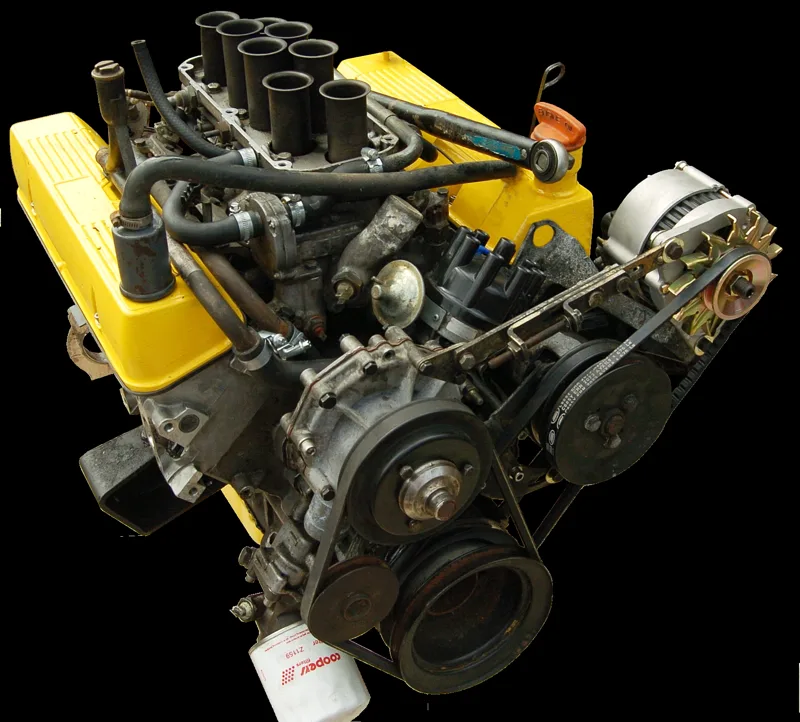
The Buick alloy V8 that powered the prototype needed carburettors that worked at extreme angles. Its alloy construction kept weight down, which mattered for a car meant to be competitive on road and off it.
The bodywork was largely the work of engineers rather than David Bache's styling division. Bache later altered the detailing, but the square-cut shape of the prototype was largely kept.
How was the Range Rover body built?
The body used aluminium panels hung on a steel safety frame, a method pioneered on the Rover P6 saloon. The result combined strength from the steel with panels that resisted corrosion and could be repaired easily.
Most of the body skin was lightweight aluminium, except for the tailgates, the rear corners and, on all but the earliest cars, the bonnet. Cosmetic tweaks aside, the body barely changed during its first decade.
Bache's symmetric dashboard was a standout detail. One moulding served right-hand and left-hand drive cars alike, and the instrument pod was simply mounted on the appropriate side.
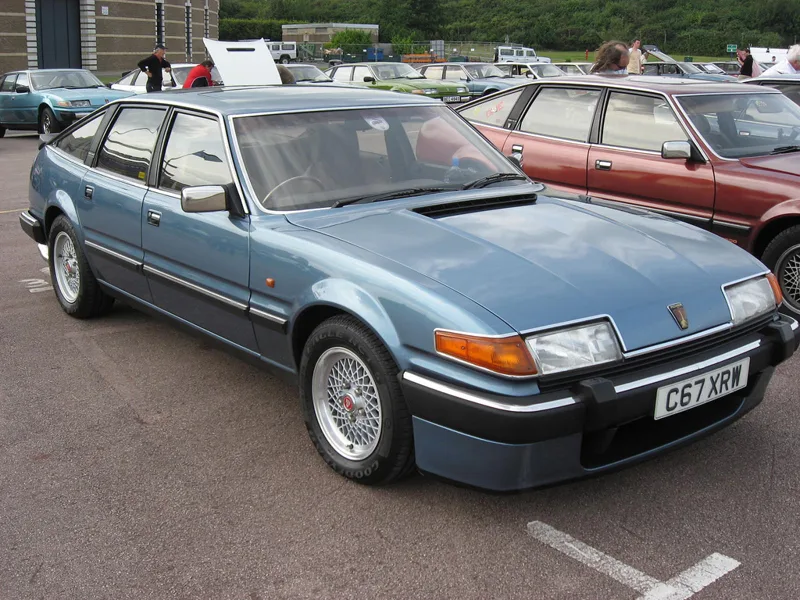
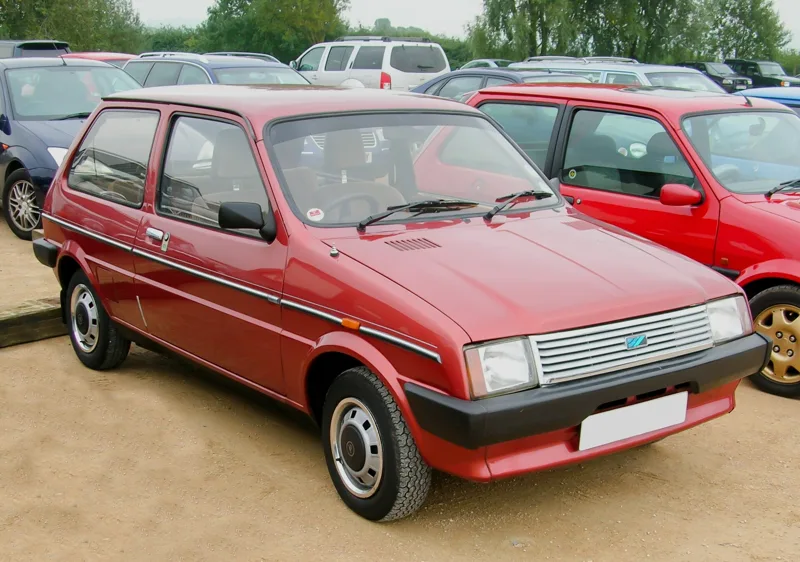
The same dash idea reappeared on the Rover SD1 and the Austin Metro, which shows how far that design travelled through the company. Enthusiasts later nicknamed the early fascia the Airfix Dashboard.
When did the four-door Range Rover arrive?
Four doors arrived in 1981, after the car had spent its first 11 years as a two-door. A Monteverdi conversion, which Land Rover approved so that warranty cover was kept, had shown the market the idea.
Rear access had been awkward on the two-door, and the new body changed that. Rear doors gained a second inside latch behind the front seats, so rear passengers could leave the car without relying on the front occupants.
The four-door version proved popular, and the two-door bodies were offered only until 1984 in Britain. The two-door itself lingered on in other markets, and production continued to January 1994, mainly for France.
What changed inside the Range Rover?
Interior updates arrived in steps. In 1984 leather trim and an unhinged rear number plate appeared, and the car gained a new type of automatic gearbox for the same period.
In 1985 the instrument pod was replaced by a more modern one adapted from the Austin Maestro.
The front end was revamped in 1986. A plastic grille with horizontal slats arrived, and the seat base was lowered, which improved comfort for taller front occupants but made rear entry harder.
The last major interior change came in 1994, when the car became the Classic to make way for the second generation. Its soft dash came from the Series 1 Discovery, and the switches were lifted from the Rover 800, so enthusiasts call these models soft dash cars.
Coil springs, brakes and the body roll problem
The Range Rover broke with its contemporaries by using coil springs where Land Rovers used leaf springs. Its weight also meant disc brakes on all four wheels, a step that was unusual for a car of its kind.
Power steering was not fitted originally and only arrived in 1973. Body roll was a real problem, so the suspension was lowered by 20 mm (0.8 in) in 1980, and anti-roll bars were added later.
Air suspension came in late 1992 for high-end models. It sat on the long-wheelbase body that buyers wanted for their rear seats.
Coil springs gave the car the long travel that its off-road reputation rested on. They also set it apart from the leaf-sprung Land Rovers that shared the same showroom floor.
How long was the Range Rover wheelbase?
Most cars had a 100-inch (2,540 mm) wheelbase. In 1992 a 108-inch (2,743 mm) long-wheelbase version arrived with 4.2-litre engines and air suspension, sold as LSE in Britain and County LWB in the US.
The longer body was aimed at buyers who wanted more rear legroom in a luxury Range Rover. It was the most luxurious version of the Classic.
The 100-inch chassis also became the foundation for the Land Rover Discovery, introduced in 1989. The Classic's platform therefore fed a second model that opened the marque to a wider audience.
Because the Discovery shared the Range Rover's chassis, it offered many of the same qualities at a lower price point, and that gave Land Rover a model to fill the gap below its flagship.
Which engines powered the Range Rover Classic?
The first cars used a detuned 135 hp (101 kW) version of the Buick-derived Rover V8, displacing 3,528 cc (3.5 L; 215.3 cu in). That engine grew to 3,947 cc (3.9 L) for the 1989 model year and 4,197 cc (4.2 L) in 1992.
Carburettors gave way to Lucas electronic fuel injection in 1986, which improved both performance and economy. The system kept evolving until the Lucas 14CUX ran from 1990 to 1995.
Some export markets kept carburettors, and those units were eventually built by a different maker. The petrol story was one of steady refinement rather than one dramatic change.
The 3.5-litre V8 was therefore the heart of the car for most of its life. Growing that engine in stages, rather than replacing it, kept the basic architecture intact through a long production run.
Did Land Rover ever build a diesel V8?
Land Rover tried. Project Iceberg with Perkins began in 1979 to develop a diesel version of the 3.5-litre V8, but the all-alloy blocks failed under the pressures of diesel running.
The Iceberg work was not wasted, because the crankshaft castings developed for it were later used on the 4.2-litre petrol V8. That was a small but useful reward for a project that did not reach production.
Diesel finally arrived in 1986 in the form of a 2,393 cc (2.4 L) VM Motori inline-four called the Turbo D, which grew to 2,499 cc (2.5 L) in 1989. Land Rover then replaced it with its own engines, the 200Tdi arriving in 1992 and the 300Tdi at the end of 1994.
Transmission and four-wheel drive
The Range Rover used permanent four-wheel drive, unlike the switchable system on Series vehicles. A lever on the transfer box selected the ratios for off-road use, and that arrangement was central to the car's identity.
A four-speed manual was the original gearbox. A three-speed Chrysler TorqueFlite automatic became an option in October 1982, after years of buyer demand.
In 1983 the combined LT95 gearbox and transfer box gave way to a five-speed LT77 with a separate LT230 transfer case.
How fast was the Range Rover?
At launch the car was quoted at 95 mph (153 km/h), and it reached 60 mph (97 km/h) in under 15 seconds. Those figures were better than many family saloons of the era, which was a significant claim for a utility-based car.
Later Classics were quicker, with 0 to 60 mph taking about 11 seconds and top speed around 110 mph (180 km/h). Critics praised the car's balance of on-road and off-road ability from the start.
How did the Range Rover perform in competition?
It won the four-wheel drive class at the first Paris-Dakar Rally in 1979, and it repeated the win in 1981. Those results gave the car a rugged reputation that matched its luxury image.
Two of the first vehicles to traverse both American continents north to south through the Darien Gap, between 1971 and 1972, were Range Rovers. The crossing was an early test of the car's durability.
How did the Range Rover reach the United States?
A mid-1971 US launch was planned at a base price of $5,300, but new safety and environmental rules and British Leyland's finances stopped it. Factory-built US imports began on 16 March 1987.
Land Rover left the US market in 1974, so American buyers turned to the grey market. US dealers modified cars to meet regulations, and demand grew steadily through the early 1980s.
Range Rover of North America was set up in Lanham, Maryland, in 1985. Only four-door models were ever imported, and demand far exceeded supply, so resale prices often rose above retail.
The network grew from 36 dealers to 65 by 1988, and the Range Rover won Playboy's Best 4x4 award that year. In 1989 eight special editions took part in the Great Divide Expedition, a 1128-mile trek through Colorado over 12 days.
Journalist Jay Lamm rolled one of those special editions during the trek. The US arm was renamed Land Rover North America, Inc., on 1 August 1992.
Popemobiles and rescue vehicles
Pope John Paul II used three popemobiles on his 1982 UK visit, and two of them were custom Range Rovers. Ogle Design penned the bodies, which made them the first fully bulletproof papal transports.
Each popemobile cost 128,000 pounds sterling, around 460,000 in 2025 money. One is in the Vatican, while the other is on display in Las Vegas.
Full bulletproofing added weight and cost to a vehicle already built on a heavy chassis, so the conversion was a serious piece of engineering rather than a simple cosmetic job.
The TACR2 was a six-wheeled, Range Rover-based airfield crash rescue truck built by Carmichael, Gloster Saro and HCB Angus. Coachbuilders also turned the Range Rover into ambulances, convertibles, limos and police cars.
Range Rover Classic key figures
| Specification | Detail |
|---|---|
| Production | 1970 to 1996 |
| Launch engine | 3,528 cc (3.5 L; 215.3 cu in) V8, detuned to 135 hp (101 kW) |
| 1989 engine | 3,947 cc (3.9 L; 240.9 cu in) V8 |
| 1992 engine | 4,197 cc (4.2 L; 256.1 cu in) V8 |
| Diesel | 2,393 cc (2.4 L) VM inline-four; 2,499 cc (2.5 L) from 1989 |
| Wheelbase | 100-inch (2,540 mm); 108-inch (2,743 mm) long wheelbase from 1992 |
| Launch top speed | 95 mph (153 km/h) |
| 0 to 60 mph | Under 15 seconds at launch; about 11 seconds on later Classics |
| Later top speed | Around 110 mph (180 km/h) |
| Towing | 3.5 tons |
| Gearboxes | Four-speed manual; TorqueFlite three-speed automatic from October 1982; LT77 five-speed from 1983 |