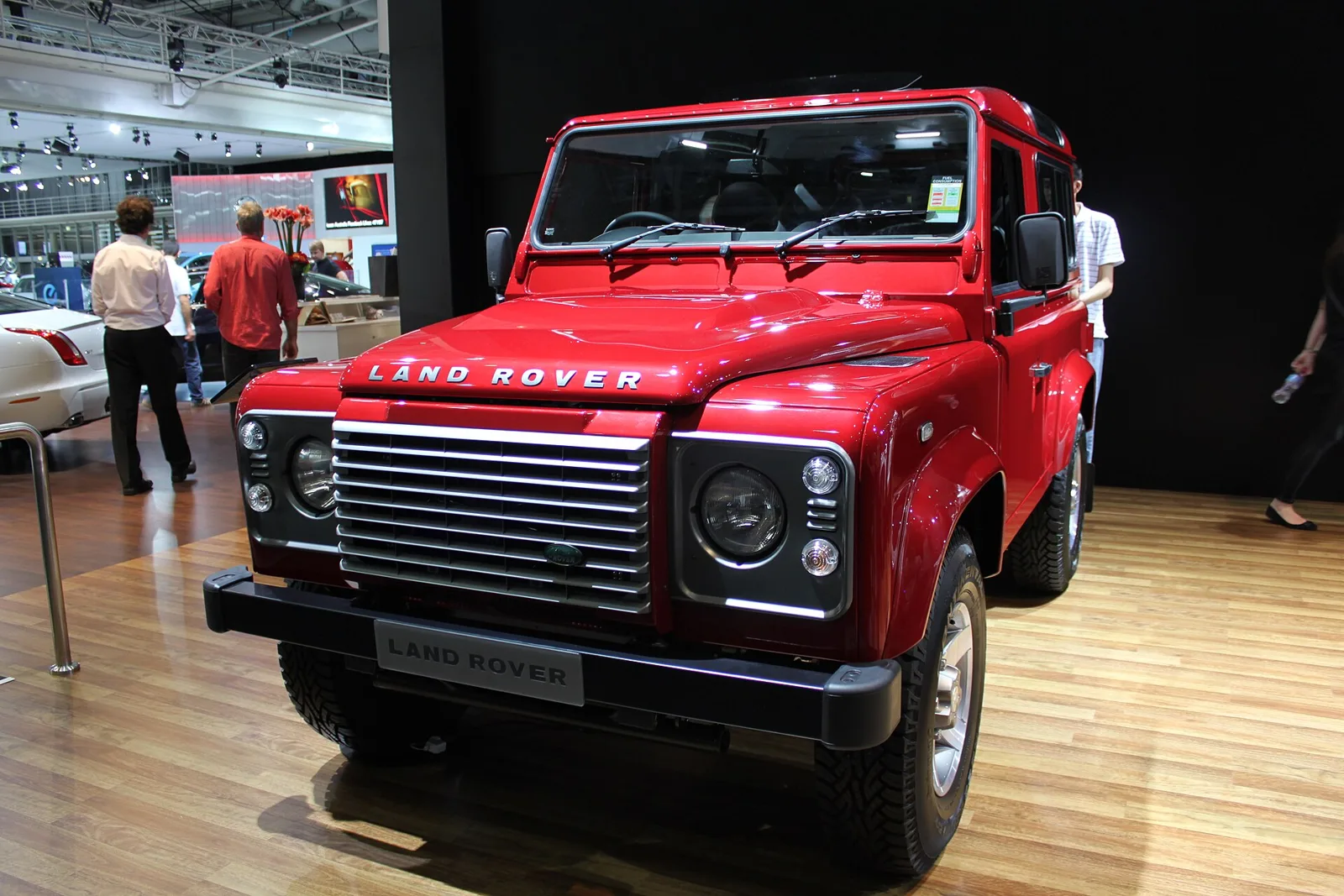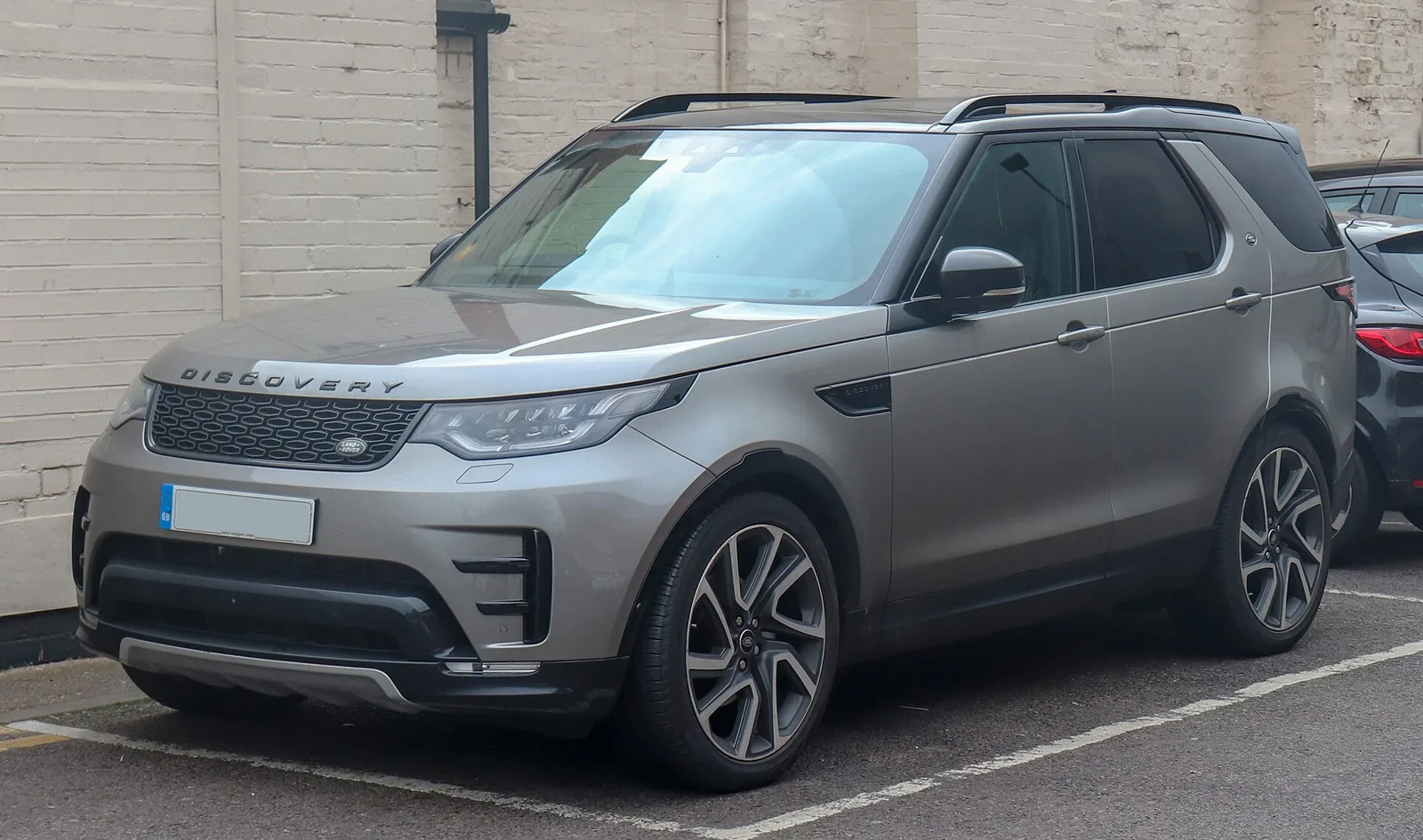
The 1989 Discovery brought Range Rover off-road ability to a cheaper, family-sized body, and five generations later it runs on an aluminium unibody.
Since 1989 the Discovery has offered Range Rover off-road ability in a more affordable, family-sized body. The fifth generation, from 2017, runs on an aluminium unibody and is built in Slovakia.
The Land Rover Discovery is a sport utility vehicle that Land Rover has built since 1989, and the series is now in its fifth generation. It was the first new model series from the brand since the 1970 Range Rover, on which it was based. It is often described as one of the first family cars with genuine off-road ability.
Why was the Discovery created?
The Range Rover had started life as an everyday four-wheel-drive car, but it had moved steadily upmarket into a luxury vehicle with a much higher price. The Discovery was designed to fill the role the Range Rover was first meant to play, in a segment where Japanese four-wheel-drive models such as the Patrol, the Pajero and the Land Cruiser set the pace.
Although it sat below the Range Rover, the Discovery was longer and taller, offered more room in the back and could seat more passengers. Later generations used space more cleverly, but the series has always offered seating for seven.
Its internal codename was Project Jay.The launch took place at the 1989 Frankfurt show, with British sales beginning that October. It shared the Range Rover's chassis, suspension and four-wheel-drive system.
A Range Rover's off-road ability in a cheaper, family-sized body, carried through five generations to an aluminium unibody.
What were the Series I's engines and running gear?
Early Series I cars used a 2.5-litre 200Tdi diesel or a 3.5-litre Rover V8. The V8 first used twin SU carburettors, then moved to Lucas 14CUX injection in 1990. A dual-ratio five-speed manual transmission was standard.
A 2.0-litre Mpi four-cylinder was briefly offered for fleet buyers, because UK and Italian tax rules favoured vehicles below 2.0 litres. That engine faded away once the tax picture changed and it became clear that a heavy vehicle needed more power. Prince Philip, in his role as Park Ranger, drove one of the royal Discoveries around Windsor Great Park.
The transmission was permanent four-wheel drive, with high and low ranges through a transfer box and a centre differential that could be locked. The handbrake worked on the transmission from the rear of the transfer case, so it could lock the rear propshaft, or both propshafts when the centre differential was engaged.
How did the Discovery look and feel inside?
Land Rover hired the Conran Design Group to design the interior. It was asked to set aside conventional car interior styling and present the vehicle as a lifestyle accessory. The result won a British Design Award in 1989, although some mock-up ideas were left on the shelf.
Much of the cabin came from other Rover Group cars. Switchgear was borrowed from the Maestro and Montego, while the clock came from the Metro and the heater panel from the Range Rover. Several Range Rover body panels were also used, including the door shells and window frames.
Early models shipped with Sonar Blue upholstery and a Land Rover-branded cloth holdall that could be worn as a handbag. A more traditional beige was offered from 1992 alongside the controversial light blue, and the SE pack added alloy wheels and a range of metallic paints.
What is the story behind the G-WAC name?
The original 64 press demonstrators carried Gxxx WAC registration numbers, which is why enthusiasts call them G-WACs. The first Discovery was available only as a three-door, and the five-door version followed in 1990. Both had five seats, with optional jump seats in the boot.
The Mark I Discovery remains the only three-door model in the line. It was also the only Discovery with a four-cylinder petrol engine until 2017, which makes its early history a distinctive chapter.
To make room for third-row jump seats, the spare wheel moved to a side-swinging rear door. The roof over the rear section was raised for headroom, and a safari side window cluster gave the car its distinct profile.
What did the Series II change in 1998?
The Series II arrived in autumn 1998, and Land Rover promoted it as having 720 differences from the original. Nearly every panel was changed, and only the outer skin of the rear doors carried over. The body grew at the back so that full-size adults could sit on all seven seats, at the cost of a slightly larger rear overhang.
It kept the original 100 in (2,540 mm) wheelbase and the live axles front and rear. It is the final Land Rover SUV built on Range Rover underpinnings from 1970, a layout it carried into 2004.
The Td5, a 2,495 cc direct-injected straight-five diesel, replaced the 300Tdi. The petrol V8 became the 4.0-litre Range Rover P38 Thor unit, and 4.6-litre V8s arrived for the 2003 and 2004 model years in the wider range.
What was Active Cornering Enhancement?
Active Cornering Enhancement, known as ACE, was an electronically controlled hydraulic anti-roll bar system fitted to some Series II models. Accelerometers detected body lean and told the ACE computer to counteract it by applying pressure to the torsion bars through hydraulic actuators.
Land Rover said ACE could counter up to 1 G of sideways force in under a tenth of a second, which kept the vehicle steadier when cornering hard. Air springs that levelled themselves were fitted to some models, and European approval for seven-seat vehicles was given only to air-sprung examples.
How did the Discovery 3 change the formula?
The Discovery 3 went on sale on 2 April 2004, and North America and the Middle East knew it as the LR3. It was an all-new design built on Integrated Body Frame construction, in which the engine bay and passenger compartment formed a monocoque mated to a ladder-frame chassis for the gearbox and suspension.
Its full independent air suspension came with cross-linking, so when one wheel dropped, the other rose to mimic a beam axle. Terrain Response selected gearbox, suspension and differential settings for the terrain chosen on a dial, which removed much of the skill that off-roading had once required.
Engines came from Jaguar's stable. A 2.7-litre TdV6 produced 195 hp (145 kW), with torque of 320 lb-ft (440 N-m), a 4.4-litre V8 produced 300 hp (220 kW), and a 4.0-litre Ford V6 with 216 hp (161 kW) was offered in North America and Australia.
How well did the Discovery 3 perform in the press?
Jeremy Clarkson of Top Gear drove a Discovery 3 up Cnoc an Fhreiceadain, which stands at 307 m (1,007 ft) near Tongue in northern Scotland, a summit no vehicle had reached before. Richard Hammond also praised the model on the same programme.
The vehicle was lauded for its Terrain Response system and interior design. In Australia the 4WD Press named it 4WD of the Year, and a driverless LR3 finished fourth in the DARPA Urban Challenge.
A 2008 to 2009 facelift added a Harman/Kardon stereo upgrade, a six-CD changer, clear side indicator lights and body-coloured bumpers. The Discovery 3 was also planned for assembly from complete knock-down kits at a Ford plant in Russia, but that project was cancelled in 2007.
What did the Discovery 4 change?
The Discovery 4, called the LR4 in North America, arrived in 2009 as an updated version of the Discovery 3. It kept the same Integrated Body Frame structure, and its restyled grille and light units matched the Range Rover and Range Rover Sport.
Engines came from the Gen III range. The 3.0-litre TDV6 made 241 hp (180 kW) with 440 lb-ft (600 N-m) of torque, rising to 252 hp (188 kW) in 2014. The Gen III 5-litre V8 made 385 hp (287 kW) and 380 lb-ft (520 N-m), and it was offered in markets outside the UK.
An eight-speed ZF automatic arrived in 2012 in Europe and 2014 in the United States. Terrain Response was retuned for the new engines, and Trailer Stability Assist was added to prevent a dangerously swaying trailer.
How did the Discovery 4 serve specialist buyers?
Land Rover offered an armoured version, the Sentinel, protected to Level B6 and almost indistinguishable from the standard car. UK government ministers were often seen being ferried around in Discovery 4 Sentinels.
Supacat, part of SC Group, converted the Discovery 4 into the Specialist Utility Vehicle 600, a 6x6 or 6x4 for emergency and utility work. Italian police and Carabinieri also used many Discovery II and IV models, fitted with reinforced grilles and automatic fire-extinguishing systems.
How is the fifth-generation Discovery built?
The fifth generation was unveiled on 28 September 2016 at Packington Hall near Meriden, on the eve of the Paris Motor Show, and it reached British showrooms in February 2017. It was the first Discovery built on a unibody chassis, rather than on a body-on-frame layout.
Built on Land Rover's aluminium architecture from the Range Rover L405, the model cut up to 480 kg (1,060 lb) from its predecessor and achieved a 17 per cent lower drag coefficient. The mid-term update in 2021 added a 3.0-litre I6 diesel and larger infotainment screens.
Terrain Response 2 monitors wheel slip, speed and suspension movement, and it includes an Auto mode that picks the most appropriate setting by itself. The chassis offers a wading depth of up to 35.6 inches (900 mm) and improved ground clearance.
The fifth generation began with two permanent four-wheel-drive systems. The standard single-speed transfer case used a Torsen limited-slip centre differential, which kept a basic 42% front and 58% rear split in a straight line. An optional two-speed transfer case used a bevel-gear centre differential to split torque 50/50, with a multi-disc clutch that could lock the axles together.
Coil springs became standard on base trims, while air suspension remained an option.
Production moved to Slovakia in 2019, where the plant had the capacity to build up to 300,000 units a year. The SVX version debuted at the 2017 Frankfurt show, but its planned 2019 sale was cancelled.
Specifications at a glance
| Item | Detail |
|---|---|
| Introduced | 1989, Frankfurt Motor Show |
| Generations | Five, with the fifth from 2017 |
| Series II wheelbase | 100 in (2,540 mm), live axles |
| Series II length | 185 in (4.70 m) |
| Discovery 3 TdV6 | 2.7L, 195 hp (145 kW), 320 lb-ft (440 N-m) of torque |
| Discovery 4 TDV6 Gen III | 3.0L, 241 hp (180 kW), 600 N-m (440 lb-ft) |
| Discovery 4 V8 Gen III | 5-litre, 385 hp (287 kW), 380 lb-ft (520 N-m) |
| Fifth-generation wading depth | 35.6 inches (900 mm) |
| Sales to 1 January 2017 | 1,200,000 |
How did the Discovery sell and celebrate its milestones?
As of 1 January 2017, some 1,200,000 Discoveries had been sold in total since the 1989 launch. Land Rover's detailed sales breakdowns, however, run only from 2009 onward.
The one-millionth Discovery was built at Solihull in March 2012. It was celebrated with a drive from Solihull to Beijing that retraced a 1950s expedition, and a pre-production Discovery 1, G459 WAC, joined the celebrations on the way.
The 30th anniversary in 2019 brought a special edition and celebratory events around the world.
Which motorsport and expedition results did the Discovery earn?
The Rallye Aicha des Gazelles went to a Discovery in 2010. The 2006 G4 challenge saw the Discovery 3 run alongside the Range Rover Sport, both in near-standard form apart from added off-road kit.