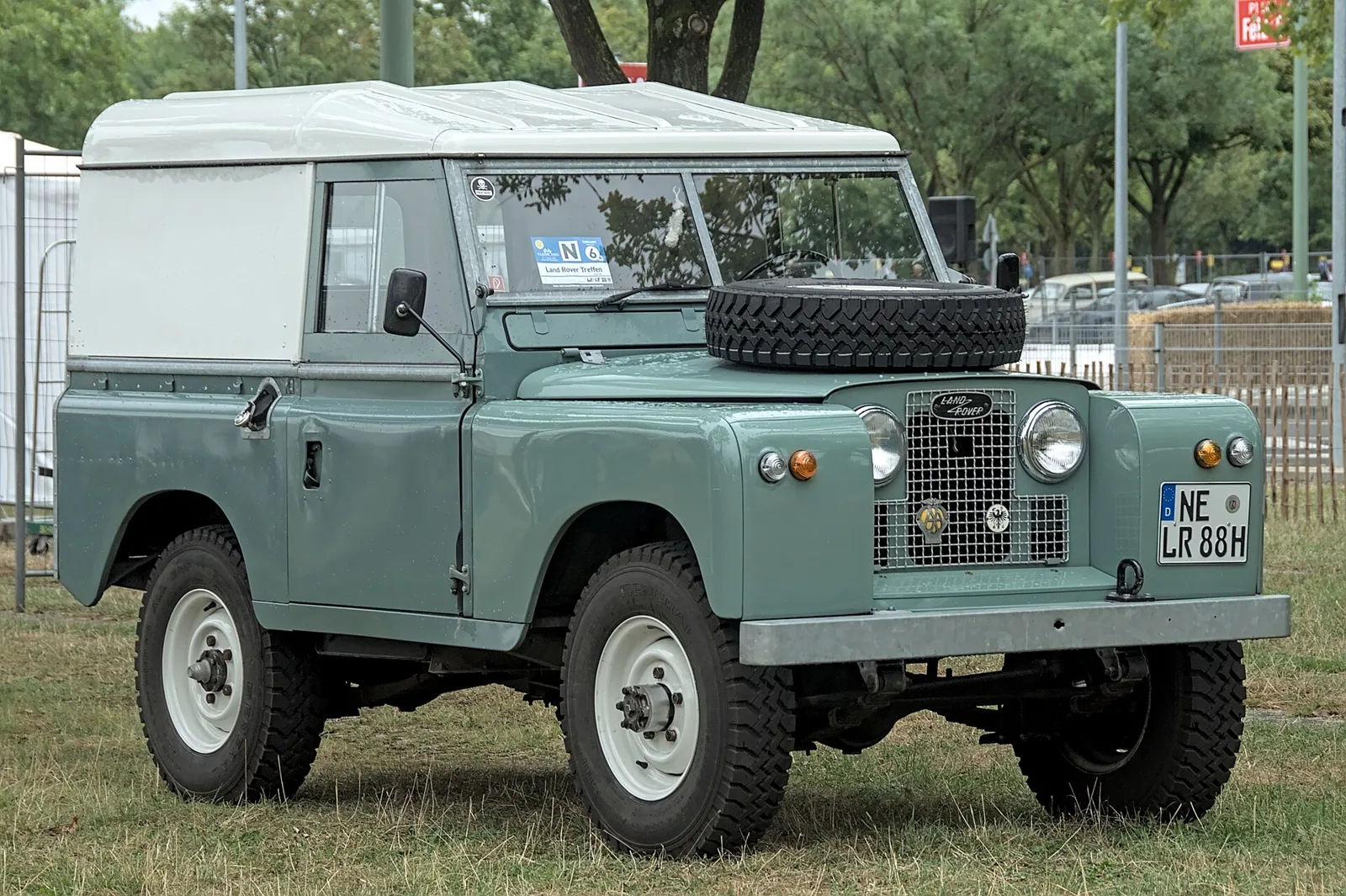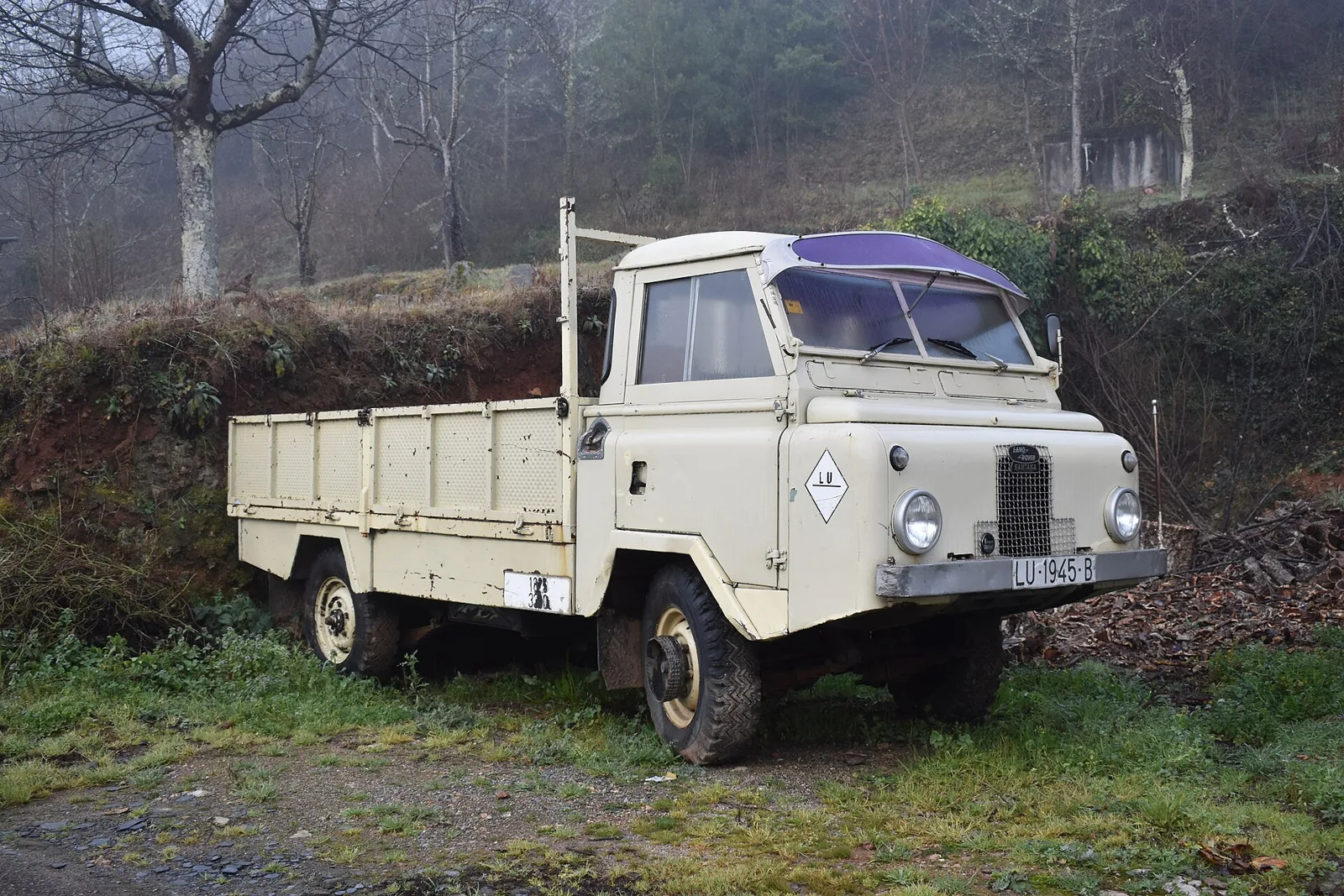
A Spanish-built off-roader from 1958 to 1994, shaped by local-content rules, a six-cylinder Series III and a split from the British parent.
The Land Rover Santana was built in Linares, Spain, from 1958 to 1994 by Santana Motor, based on the British Series models. Local content rules, a six-cylinder Series III and a split from Land Rover around 1983 shaped the car's later history.
The Land Rover Santana was an off-road car made by Santana Motor in Linares, Spain, from 1958 to 1994. It grew out of the British Series models, yet the Spanish version followed its own path, with separate upgrades and local content rules that pushed production toward Spanish parts.
How did Franco-era rules shape the car?
The car was built in Franco's Spain, when the Spanish car industry was still being developed. Autarky policies levied heavy taxes on imported cars, while overseas manufacturers were offered facilities to set up factories in the country.
A Spanish-built off-roader shaped by local content rules and a split with its British parent.
How did production start in Linares?
Metalurgica de Santa Ana began building the car around 1958 to diversify a farm-machinery business. It contacted Tabanera Romagosa, Rover's Spanish distributor, which showed interest. Rover liked the idea of subcontracting part of the manufacture, since Solihull could not cover all the demand. It had already done the same with Minerva in Belgium and Tempo in Germany.
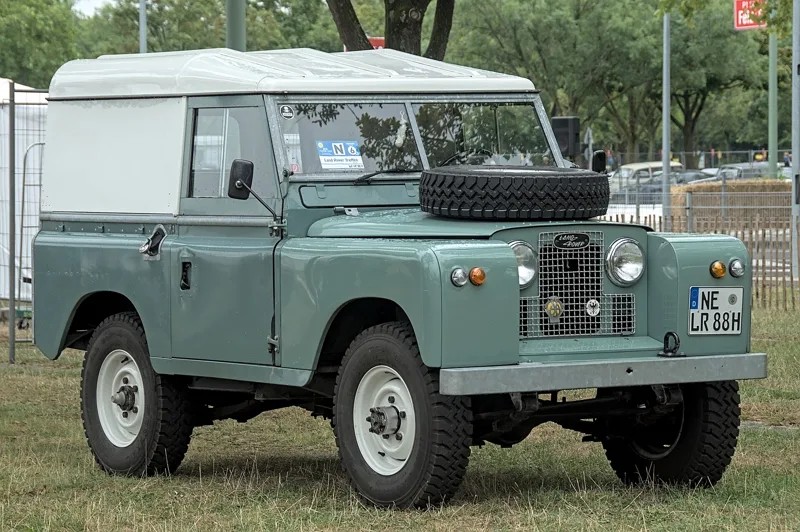
The British wanted to start with the Series I, but the talks ended with agreement to start production with the Series II. The first model made was the Series II in its 88-inch form.
How Spanish did the Series II become?
The first Land Rover from Metalurgica de Santa Ana was assembled in 1958 from a CKD kit sent by the Solihull factory. By late 1960 the car was almost entirely Spanish, although specialised components with no local maker still had to be imported.
The Series II came with either a 2.2 L petrol engine or a 2.0-litre diesel. Buyers on the civil market leaned toward the diesel, despite its higher price and lower power, because it used less fuel.
What local content rules applied to the car?
Output had to use Spanish-made parts in rising shares. The first 1,500 units needed at least 75% of components made in Spain, the next thousand 85%, and up to 95% after that. To meet the target, Spanish spark plugs replaced the British ones fitted to engines from the United Kingdom. As output grew, the required share rose, so the local content demand tightened over time.
Who bought the first Santanas?
The first buyers were public institutions and companies. Police forces such as the Guardia Civil and the Policia Armada bought them, along with the Ministry of Public Works, the CTNE and several armies. Their work proved the car tough and reliable, and that reputation is still attached to the model today.
The civil market was a different story. Petrol engines went mainly to fire brigades and the police, who needed more performance, while the diesel was more in demand on the civil market for its economy.
Why did the Series IIa matter?
The Series IIa, presented around 1962, improved the Series II mechanically and offered new options such as power take-off points. It was also the base for the Santana 1300, and the 5,000th civil unit was registered in 1967.
A five-door version on a 109-inch wheelbase (2,769 mm) reached the range in 1968. During the 1970s the fasteners changed from Whitworth to metric thread, so some parts stopped swapping between Spain and Britain.
Land Rover granted the Spanish firm the rights to promote the brand in African and Latin American markets. Cars went to Morocco, Costa Rica, Colombia and Iran as CKD kits, and sales of this version ended in 1974.
What did the 1972 headlamp rule change?
New homologation rules in 1972 forced the headlamps out of their recessed position in the centre of the nose and onto the outer wings. Cars sold earlier that were still running had to be altered by their owners, with varying results.
Why did the Series III need a bigger engine?
The Series III, built from 1974 to 1984, needed more power than the four-cylinder could give. Petrol V8s of Buick origin, used in England, were studied, but their fuel use was too high, so a new six-cylinder was developed instead.
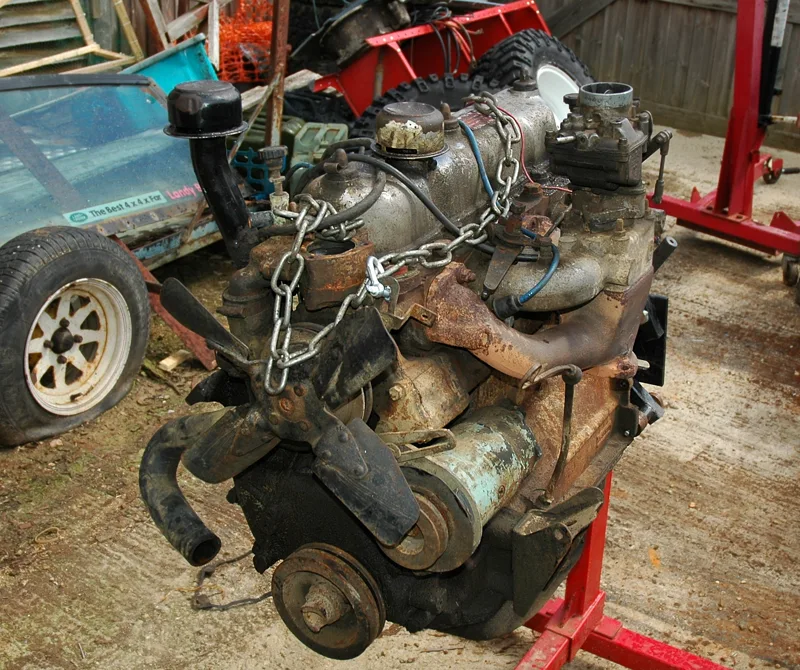
The six was made by adding two cylinders to the existing four, keeping the stroke and bore. Because it shared the four's starter motor, it was hard to start, especially when cold.
An Australian distributor pressed the British head office to bring in the Santana-built six, but the maker declined.
How did the Series III gain speed?
A turbocharger on the four-cylinder lifted its power from 62 PS to 75 PS (55 kW; 74 hp). It was developed independently and ahead of the parent company's own plans.
Thanks to the turbo and the optional five-speed gearbox, the Santana could homologate top speeds above 120 km/h (75 mph) for the first time. Double-circuit brakes followed in 1975, a brake servo a year later, and the LT85 gearbox from around 1982, famed for its strength though a little noisy.
Its reliability showed when the parent company fitted it to new British models, while the South African subsidiary used a four-speed version for the Series IIISS.
What were the Cazorla and Gran Capacidad versions?
Cazorla was the Series III version with the more powerful six-cylinder. It had square SEAT 127 headlamps, no central front seat and two 92-litre fuel tanks. The Gran Capacidad, introduced in 1982, was derived from the pick-up.
The larger, better-equipped models sold for about 2,595,000 pesetas, equivalent to almost 15,600 euros.
Why did Land Rover and Santana part ways?
After Santana became associated with Suzuki, Land Rover began to distrust the Linares firm. After 1983, when Land Rover's sales fell for the first time, caused mainly by competitors like the Toyota Land Cruiser, it changed its sales strategy towards manufacturing and promotion for developed markets, and Santana became an obstacle. Around 1983 Land Rover pulled out of Metalurgica de Santa Ana, for financial reasons.
What did Santana build after the split?
Santana kept building a modified car derived from the Series III, split into two versions. The 2.5 was a simple working vehicle, while the 2500 offered passenger comfort, with power steering fitted as standard. The 300,000th unit was made in 1985.
From behind the two are easy to tell apart: the 2.5 has one window in its tailgate, while the 2500 adds two small fixed windows and mudguards. A deal with SEAT, which made the Volkswagen Santana in Spain, secured the right to use the Santana name.
Petrol engines were fitted only on request, until stocks ran out.
Which engine name appeared on the paperwork?
Santana built nearly all the engines in Spain, apart from the first units, and some were its own designs. Even so, the technical sheets always named the engine as a Rover or Rover Diesel.
Key figures for the Land Rover Santana
| Specification | Detail |
|---|---|
| Built | Linares, Spain, 1958-1994 |
| First model | Series II, 88 inches (2,235 mm) wheelbase |
| Series II engines | 2.0 diesel; 2.2 L petrol, with 2.25 petrol on the first model |
| Series IIa five-door | 109 inches (2,769 mm) wheelbase, from 1968 |
| Turbo four-cylinder | 62 PS to 75 PS (55 kW; 74 hp) |
| Top speed with turbo | Above 120 km/h (75 mph) |
| Series III | 1974-1984, with a six-cylinder option |
| Local content | 75% of the first 1,500 units, 85% of the next thousand, up to 95% after |
| Cazorla | Six-cylinder version with SEAT 127 headlamps and two 92-litre tanks |
| After production | Continued by Morattab in Iran with minor changes |
What became of the Santana after production ended?
Production ended as the car lost ground to the Nissan Patrol and Mitsubishi Montero, and as the Defender arrived with a stronger engine. Its machinery, designs and rights went to Iran's Morattab, which still builds a version of the vehicle today.
Morattab started with a 1.8-litre four-cylinder petrol engine of Nissan origin. It later moved to six-cylinder V engines of 2.4 and 3 litres, already used by Mitsubishi and later by Hyundai.
Demand lingers. Used examples remain sought after in the Sahara, and specialists locate them in Spain for scrapping and export to Africa. Modified cars also turn up in trial and off-road competitions.