The four-cylinder petrol and diesel engines that powered Land Rover's off-road vehicles, from early Rover car conversions to the five-cylinder Td5.
Land Rover's dedicated engines began as modified Rover car units in 1948 and passed through petrol, diesel and turbodiesel designs. The series ended with the five-cylinder Td5, built at Solihull until 2007. Along the way the company moved from borrowed designs to parts shared across its petrol and diesel ranges.
Land Rover's engines were mostly four-cylinder petrol and four- and five-cylinder diesels, built for the company's four-wheel-drive vehicles. Early units were adapted from Rover car engines, but dedicated designs followed, and the line ended with a five-cylinder turbodiesel. This article covers only engines developed specifically for Land Rover vehicles.
Where did the Land Rover engine series begin?
Land Rover began by modifying standard Rover car petrol engines, but the need for dedicated in-house units was soon clear. The first engine in the series was a 1.6-litre petrol unit from 1948, and that design was improved over time. A brand-new petrol engine followed in 1958, and it existed in both petrol and diesel form.
The basic engine family was steadily modified until it became the 200Tdi diesel, and a substantial redesign produced the 300Tdi in 1994, which stopped production in 2006. Over 1.2 million engines in the series were built.
From a 1948 petrol unit to the five-cylinder Td5, Land Rover's engines carried its off-road reputation for decades.
Why did Land Rover need a diesel engine?
Demand for a diesel Land Rover grew through the 1950s. Diesel technology had improved enough to make small, high-speed engines practical, and fleet users often found that their Land Rovers were the only petrol vehicles they ran, which complicated spares, servicing and fuel supply.
Rover held merger talks with Standard-Triumph in 1954. Standard had pioneered small road-going diesels with an engine used in Ferguson tractors and in the Vanguard, Britain's first diesel car. Rover engineers studied those designs during the talks. The merger was called off, but Rover had gained valuable experience in small diesel engines.
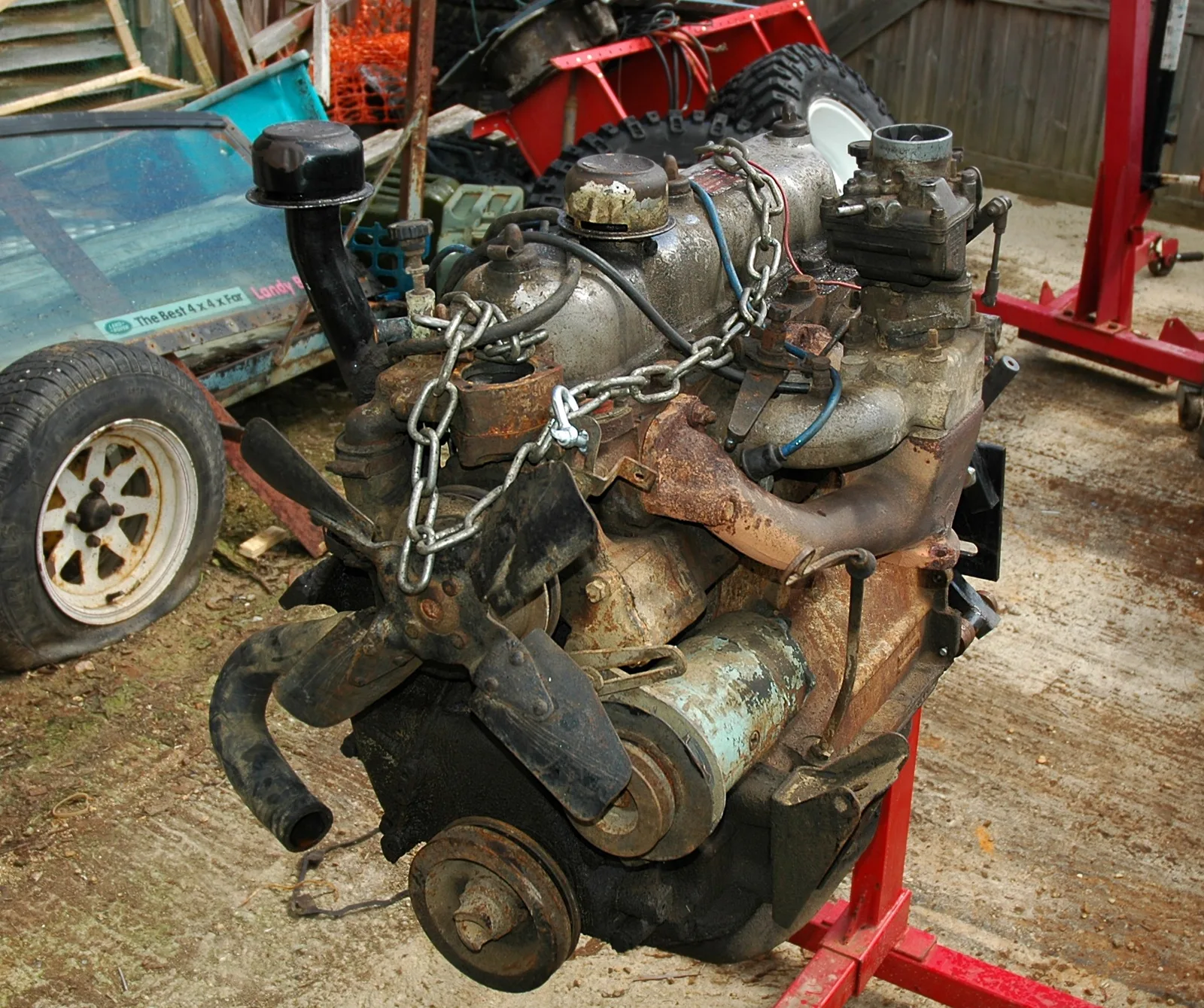
The result was a wet-liner four-cylinder engine launched in the Land Rover in 1957. It used CAV fuel injection and Ricardo's Comet swirl chambers, with Rover-developed dimples for quieter, smoother running, and heater plugs in each chamber for easier starting. The chassis needed an extra 2 in (51 mm) let into the engine bay to take it, but its power and speed range were close enough to the petrol engine that the same transmission could be used.
What was the 2.25-litre petrol engine?
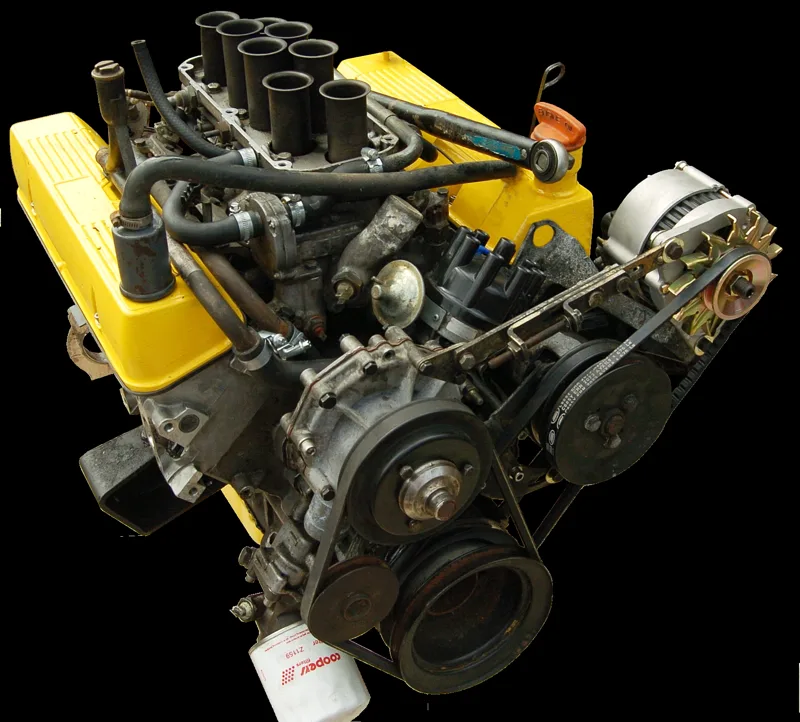
Launched in 1958, the Series II was bigger, heavier and more complicated than the first Land Rover. Rover's petrol engines of the time used the older inlet-over-exhaust valve layout and were close to 20 years old in design terms, so a new, larger petrol engine was developed for the vehicle. It began life as the 2-litre diesel, reworked inside.
The new engine was a dry-liner type, and its wider bore improved low-speed torque. It shared a machining line with the diesel, which created a design basis common to Land Rover's petrol and diesel engines for decades. It was the most popular engine option until the mid-1980s and earned a worldwide reputation for reliability.
Its relatively low compression ratio and strong design made it tolerant of poor fuel and oil, as well as infrequent servicing. With proper maintenance it could easily survive more than 250,000 miles (400,000 km). Its castings came from Bean Industries of Sheffield, using Bilchrome, an in-house iron for the cylinders.
A five-bearing crankshaft arrived in 1980, improving bottom-end strength and refinement. The engine was quiet and smooth enough for Rover to fit it to the P4 saloon as the Rover 80, and its output varied with compression ratio and emissions equipment.
What was the 2.5-litre diesel?
Land Rover's updated line appeared in 1983 with the One Ten, and the Ninety followed in 1984 with a 2.5-litre diesel. This was little more than an updated version of the existing diesel, although that design was then 22 years old. Its stroke was lengthened for torque, and the cylinder head was revised to cut noise and emissions.
The most significant change was replacing the chain-driven camshaft with a fibre-toothed belt, which also turned the moved injector pump. The drive freed by the old injector pump turned a vacuum pump for the brake servo. Aluminium castings reduced weight, and a spin-on cartridge oil filter replaced the older element type.
The engine also went into the Freight Rover 300 and the FX4 taxi, with designations 14J and 15J. The belt-driven 15J avoided the FX4 reliability problems of its predecessor. The engine became a special-order option after turbodiesels arrived, but it stayed in production until 1994, and it remained popular with military and some commercial buyers.
Most of the roughly 20,000 Land Rovers the British Army acquired from 1985 to 1994 used this engine. A piston manufacturing flaw, combined with a habit of over-filling the sump with oil, made the engines over-breathe and ingest oil, which led to piston failure. Late military engines added a centrifugal separator to return excess oil to the sump. These later units were the first small, high-speed diesels to pass the Ministry of Defence's 500-hour durability trial.
What was the Diesel Turbo?
Land Rover's global sales collapsed in the early 1980s, mainly because foreign rivals offered larger, more powerful and more comfortable vehicles. The Series III was dated by 1983, and the company decided to focus Ninety, One Ten and 127 sales on the UK and Europe. That needed a diesel much stronger than the 68 hp (51 kW) 2.5-litre then in use, so Project Falcon began in 1984 to develop a turbocharged version.
The result was the Diesel Turbo, Land Rover's first production turbodiesel and its first engine with a marketing name. The name separated it from the VM Motori turbodiesel then used in the Range Rover, which was sold as the Turbo D. Although it was essentially the 2.5-litre diesel, it gained Teflon-coated piston crowns, Nimonic steel exhaust valves and a cross-drilled crankshaft for the extra heat and load.
It also had an oil feed and drain for the turbocharger, an improved cooling system with an eight-bladed viscous fan and integral oil cooler, and a high-capacity breather. It became the first diesel model able to match the petrol engine's 4-ton towing limit, and the first able to exceed the UK national limit of 70 mph (113 km/h).
Early engines suffered main and big-end bearing failures and cracks in the block. A new block and better bearings in 1988 cured those, and a breather change in 1989 stopped oil being drawn into the air filter. Despite these problems the Diesel Turbo sold strongly, becoming the standard engine for the UK and European markets.
How was the 200Tdi developed?
In 1989 Land Rover launched the Discovery, a Range Rover-based family 4x4 that quickly became Europe's top-selling vehicle of its type. Its turbodiesel was one of the reasons for that success. The 200Tdi, developed under the codename Gemini, was one of the first mass-produced small direct-injection diesels, which brought gains in power and efficiency.
For production reasons it was machined on existing equipment, so it shared the block and crankshaft of the 2.5-litre diesel. An aluminium alloy cylinder head saved weight and noise, a new Bosch injection system improved running and starting, and an intercooler boosted power further. Lessons from the Diesel Turbo were carried over, including an inertial separator in the breather to remove oil before crankcase gases returned to the intake.
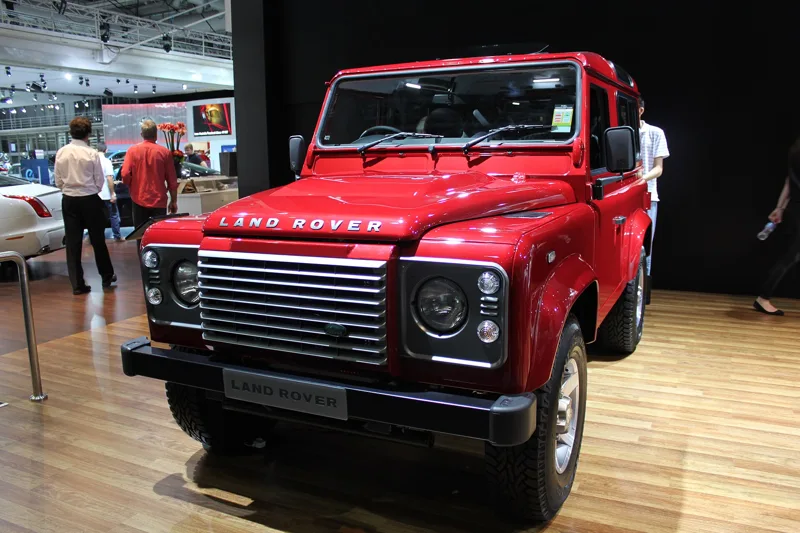
Turbodiesel and naturally aspirated diesel versions were planned, along with a carburettor petrol version. The turbodiesel performed and economised so well that the other variants were never built. The engine went into the Defender, renamed from the utility Land Rover, in late 1990, slightly detuned. In the Defender it kept the Diesel Turbo's high turbo mounting, while the Discovery version used all-new parts.
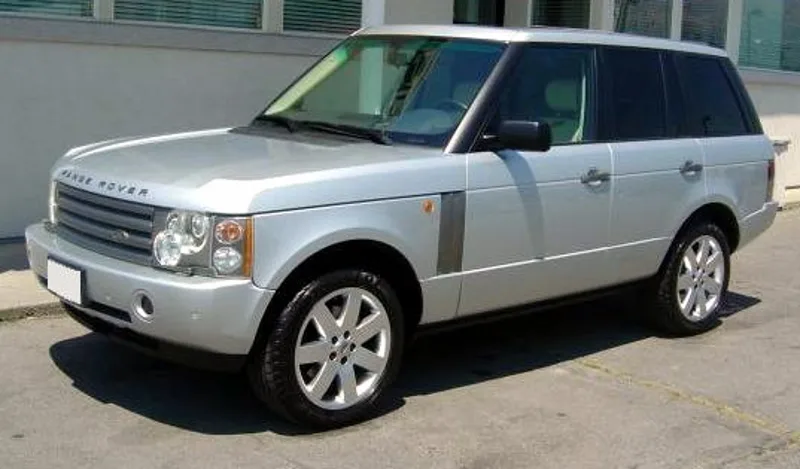
The engine reached the Range Rover in 1992, where it carries the 14L engine number. Its performance and economy dominated sales, and enthusiasts still rate it highly. With proper maintenance it can exceed 300,000 miles (480,000 km).
What changed with the 300Tdi?
The 200Tdi had limitations. It was still a direct-injection version of the older Diesel Turbo, and it was rough and unrefined for the Discovery and Range Rover. The British Army and some other military buyers also needed a 24-volt generator for radio equipment, which the 200Tdi could not supply, so the Army kept buying 2.5-litre naturally aspirated diesels.
Euro I emissions rules were on the way, and the engine needed major changes. The resulting development project, codenamed Romulus, produced the 300Tdi. Although it looked much like the 200Tdi, it had 208 changes, including new block, head, injection and ancillary details, with a revised crankshaft, pistons and connecting rods.
The 300Tdi had a rubber acoustic cover and a single serpentine belt in place of multiple V-belts. It also carried exhaust gas recirculation. Power and torque stayed the same, and the same tune served the Defender, Discovery and Range Rover. It was smoother and quieter than the 200Tdi, but it was generally less economical in real use.
Automatic versions were rated at 122 hp (91 kW) to offset transmission losses. Those engines, designated 23L, had Bosch electronic diesel control with a drive-by-wire throttle. The 300Tdi was replaced in 1998 by the five-cylinder Td5, which ended the line of four-cylinder Land Rover engines that began in 1957. It stayed in production in Brazil and as an option elsewhere, until emissions laws and falling sales ended it in 2006.
What was the Td5?
By the mid-1990s the Rover Group wanted fewer engine families that could meet emissions rules for years to come. The 300Tdi could not fit the car range and was about to fall foul of Euro III. The development project, Storm, produced a new diesel family based on the L-series bore and stroke, sharing its piston and connecting rod assemblies.
Storm used Lucas electronic unit injection, which was rare on small engines at the time, with a cross-flow aluminium head on a cast iron block. Its electronics included an anti-stall system and two programmed modes for road and off-road use. Storm was designed as a four-, five- and six-cylinder range, but BMW's takeover of the Rover Group made it largely redundant.
Only the five-cylinder version reached production, as the Td5 in 1998, for the Defender and the new Discovery Series II. It gave more power and refinement than the 300Tdi. Its electronic engine management worried operators, including the British Army, because it was harder to repair in the field than mechanical injection. Land Rover therefore kept the 300Tdi for special orders.
Early engines had two mechanical faults: the oil pump drive could fail suddenly, and the cylinder head could shuffle because its retaining studs were weak. Both were fixed within two years. In 2002 the engine met Euro 3 and gained an EGR valve, and its electronics were updated to smooth low-speed throttle response. The Td5 was then considered reasonably reliable, although the injector harness was prone to oil contamination.
Tuners pushed output as high as 180 hp (134 kW; 182 PS). The AJD-V6 replaced the Td5 in the Discovery in 2004, and the Ford ZSD-424 took over in the Defender in 2007, the year Solihull production ended. It was the last Land Rover-designed and built engine. Around 310,000 were produced between 1998 and 2007.
What are the key Land Rover engine specifications?
| Engine | Introduced | Type | Output | Used in |
|---|---|---|---|---|
| 1.6-litre petrol | 1948 | Petrol | First in the series | |
| 2-litre diesel | 1957 | Diesel | Series I and Series II | |
| 2.25-litre petrol | 1958 | Petrol | Series II, Series III, Ninety and One Ten | |
| 2.25-litre diesel | 1962 | Diesel | Series IIA and later models | |
| 2.5-litre diesel | 1984 | Diesel | Ninety, One Ten and Defender | |
| 2.5-litre petrol | 1985 | Petrol | Ninety, One Ten and Defender | |
| Diesel Turbo | 1984 project | Turbodiesel | Base 2.5 gave 68 hp (51 kW) | Ninety, One Ten and 127 |
| 200Tdi | 1989 | Turbodiesel | Discovery, Defender and Range Rover | |
| 300Tdi | 1994 | Turbodiesel | 122 hp (91 kW) with automatic | Defender, Discovery and Range Rover Classic |
| Td5 | 1998 | Five-cylinder turbodiesel | Up to 180 hp (134 kW; 182 PS) when tuned | Defender and Discovery |
What is the legacy of the Land Rover engine?
The Td5 was the last engine that Land Rover designed and built in-house, and its end at Solihull in 2007 marked a change in how the company sourced its powerplants.