From a General Motors design that Rover acquired in 1965 to the last production engines of 2004, a compact pushrod V8 that powered saloons, sports cars and off-roaders.
The Rover V8 is a compact aluminium overhead-valve V8 that began as the Buick 215, was built by Rover from 1967 and ran to 2004, powering saloons, sports cars and off-roaders.
The Rover V8 is a compact overhead-valve V8 with an aluminium block and cylinder heads. It began life as an American Buick design, passed to Rover in the mid-1960s and stayed in production for 37 years, ending in 2004 after just under one million engines had been built.
Where did the Rover V8 come from?
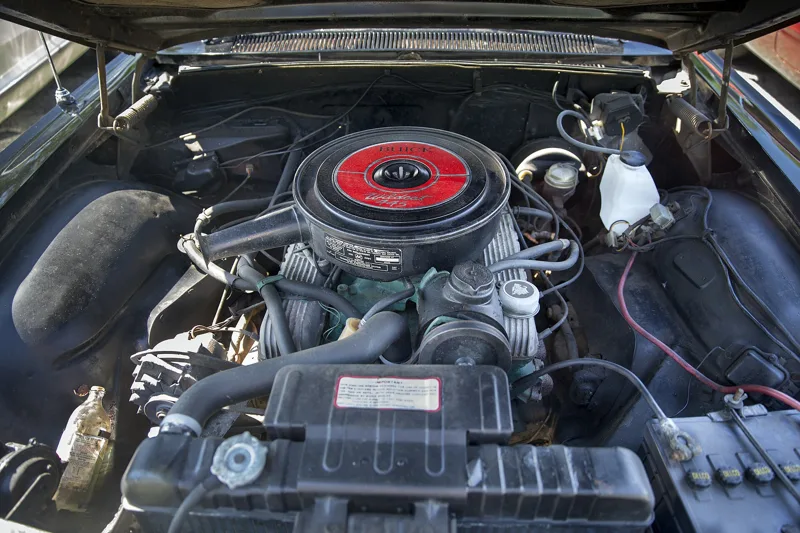
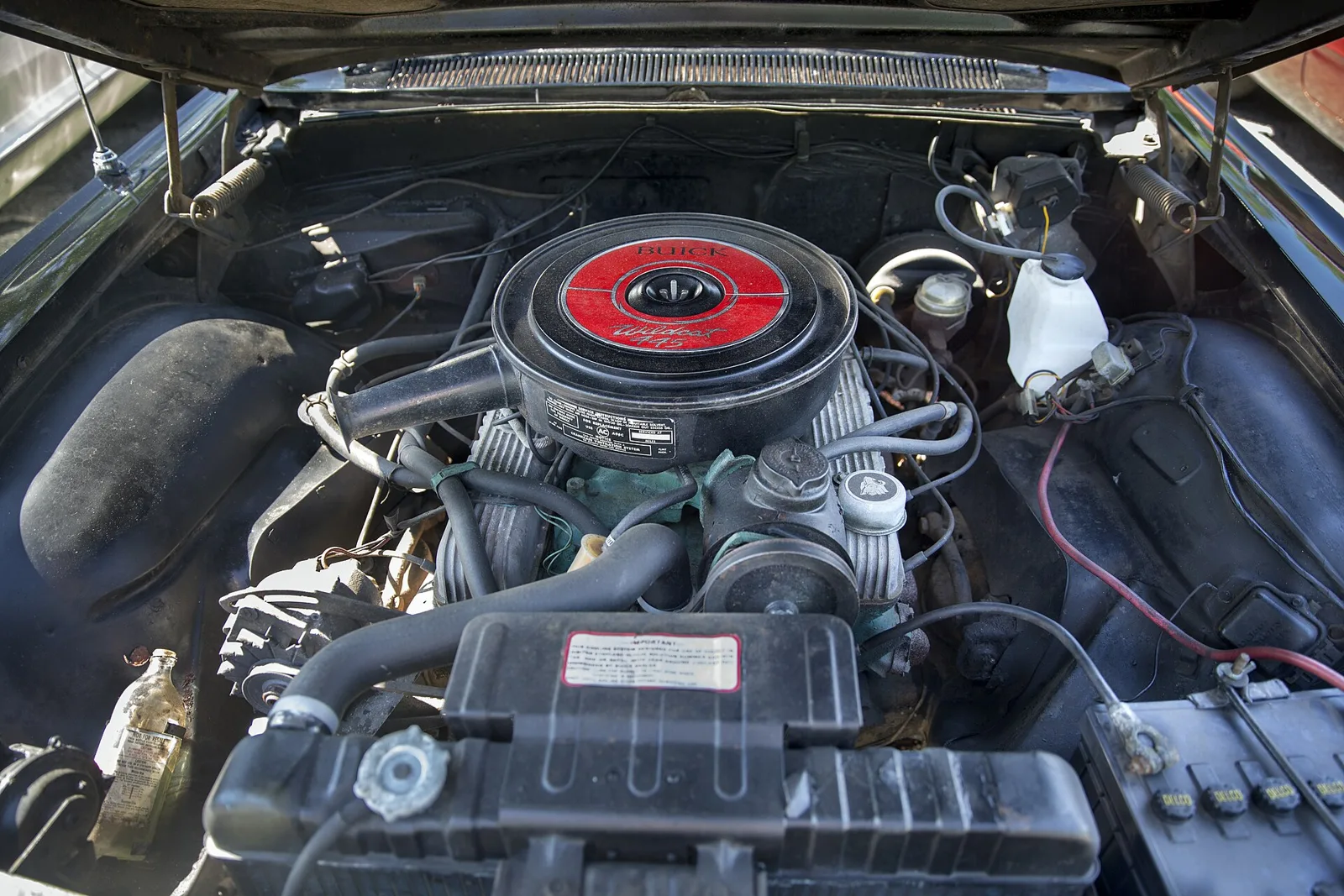
The engine was designed as the Buick 215, an all-aluminium pushrod V8 that Buick introduced in 1960 for the 1961 model year. At 144 kg (317 lb) it was light for its power, and the most powerful Buick version was rated at 200 hp (149 kW), using SAE gross figures. Oldsmobile's turbocharged Jetfire version reached 215 hp (160 kW) on the same basis.
Sales were strong in the short term. Buick built 376,799 cars with the engine in three years, and a comparable number of Oldsmobile 215s followed. Some Pontiac models also took it, which earned the engine the nickname BOP 215, standing for Buick, Oldsmobile and Pontiac.
The aluminium engine was costly to make and suffered from oil and coolant sealing problems. Antifreeze that was incompatible with aluminium also clogged radiators. GM stopped building the all-aluminium version after 1963, although Buick kept an iron-block engine of 300 to 350 cubic inches and a V6 derivative that ran from 1962 to 2008.
A General Motors aluminium V8 that Rover turned into a 37-year production engine, from the P5B saloon to hand-built sports cars.
How did Rover acquire the design?
In January 1964 J. Bruce McWilliams, who ran Rover's American operations, began looking into buying an American V8 for Rover cars. He probably first saw the Buick engine at Mercury Marine, where he was discussing sales of Rover gas turbines and diesel engines. He saw that the lightweight Buick would suit smaller British cars, since it weighed less than many of the four-cylinder engines it would replace.
McWilliams and William Martin-Hurst pressed GM to sell the tooling, and the agreement came in January 1965. Retired Buick engineer Joe Turlay moved to Britain as a consultant to help with the transfer.
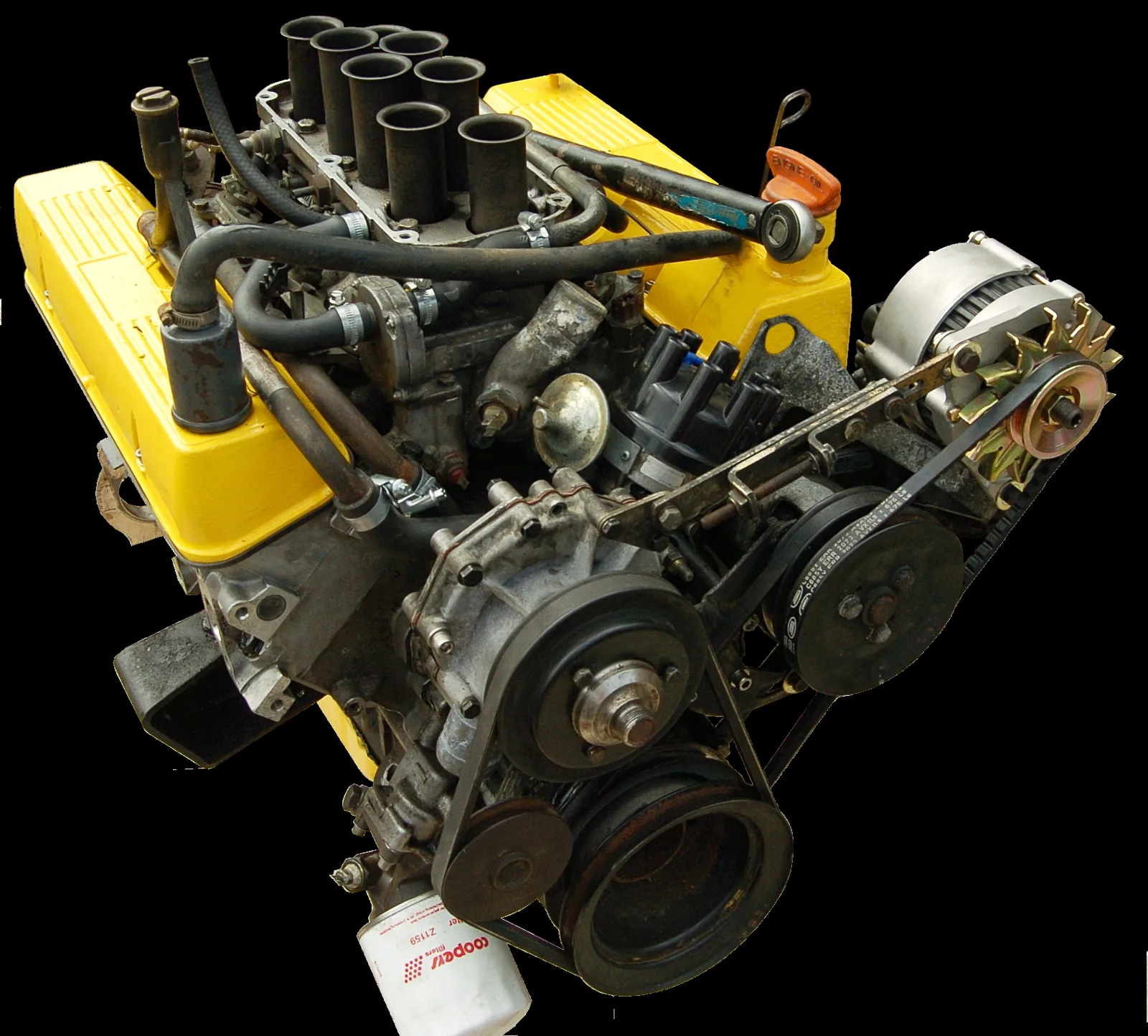
Rover's own V8 was not a straight copy. Its block was a sand-cast version with pressed-in iron cylinder liners, and it was heavier than the Buick unit, though stronger for the same job.
What did the 3.5 litre Rover engine look like?
The first Rover version measured 3.5 litres (3,528 cc), with a bore of 88.9 mm and a stroke of 71.12 mm. Its block was sand-cast with iron liners pressed in, and a fresh intake manifold carried two HS6 SU carburettors. The dry weight was about 170 kg (370 lb).
The engine debuted in the 1967 Rover P5B saloon with 184 PS (135 kW; 181 hp) gross and 160 PS (118 kW; 158 hp) net at 5,200 rpm. Torque was 226 lb-ft (306 N m) gross and 210 lb-ft (285 N m) net at 2,600 rpm, with a compression ratio of 10.5:1, at a time when 5-star petrol was still available in the UK.
The 1976 Rover SD1 brought an updated engine. Rope crankshaft seals gave way to lip seals, the spark plug dimensions changed, and the compression ratio fell to 9.35:1. Applications spanned the Rover P6B, the Range Rover, the Morgan Plus 8, the Triumph TR8 and the MGB GT V8.
By the 1980s the engine was fitted to a long list of models, among them the TVR 350i, the Marcos Mantula and the Land Rover 90 and 110 range. The Land Rover Series III Stage One and the Freight Rover Sherpa also used it.
Why was there a diesel version called Iceberg?
In the late 1970s British Leyland saw diesel cars becoming important after the 1979 energy crisis, so it developed a diesel version of the 3.5 litre V8, code-named Iceberg. The project was undertaken with Perkins Engines of Peterborough, and it produced naturally aspirated engines of around 100 horsepower and turbocharged units of around 150 horsepower.
Iceberg was slated for the Range Rover, the Rover SD1 and the Jaguar XJ. It ran into trouble with alloy cylinder heads and internal cooling, and the engine was limited by the need to use the same block casting as the petrol unit. Those problems might have been overcome, but the project was caught up in British Leyland's reorganisation, which separated Land Rover from Rover.
Land Rover took over production of the V8 in 1982 and moved it to a much smaller line at Solihull, which left no spare capacity for diesel versions. British Leyland pulled out of the project in 1983, and Perkins decided to pursue the engine alone before the project was wrapped up later that year. The partnership did produce one success of its own, a diesel version of the O-Series engine known as the Prima.
How big did the Land Rover versions grow?
Land Rover used a 3.9 litre (3,946 cc) version through the 1990s, with the bore increased to 94 mm while the stroke stayed at 71.12 mm. The engine was revised in 1995 and renamed the 4.0, although its capacity was unchanged. The 1995 changes added a fresh intake and exhaust, more block ribbing, new pistons and bigger cross-bolted main bearings. Land Rover used the 4.0 in the Range Rover, the Discovery and the Defender, where the Defender carried it as standard only on US-specification vehicles, and buyers elsewhere had to special order it. A 1998 Defender 50th Anniversary Limited Edition also used it.
The 1995 4.0 gave 190 hp (142 kW; 193 PS) with 236 lb-ft (320 N m). The 4.0 was built until 2003, and the last examples, fitted to the Discovery through 2004, made 188 hp (140 kW; 191 PS) at 4,750 rpm, while peak torque of 250 lb-ft (339 N m) arrived at 2,600 rpm.
What performance versions did TVR and others build?
TVR was the main performance user, running the Rover V8 from 3.9 to 5.0 litres. Morgan, Ginetta and Marcos all used the engine too, and the Lichfield Land Rovers built their own versions.
In the early 1980s TVR approached Andy Rouse about using his race-developed 3.9 variant in the TVR 350i wedge. Cost led to other engineering firms developing a rare 3.9 with 93.5 mm bores, giving 3,905 cc. Most of the production work went to North Coventry Kawasaki, which TVR later bought as its in-house TVR Power division. About 100 cars were built as the TVR 390SE.
TVR Power also built a 4.3 with 4,280 cc for the Griffith and Chimaera. Rover rounded its 4.2 down to 4.2 litres, while TVR rounded the same bore and stroke up to 4.3. TVR's version used Land Rover 3.9 pistons with their tops machined down to lift the compression ratio.
Leyland of Australia produced a 4.4 litre (4,414 cc) version for the 1973 Leyland P76, with a square 88.9 mm bore and stroke. A Bendix Stromberg two-barrel carburettor replaced the SU units, and the engine delivered 200 hp (149 kW; 203 PS), and torque reached 280 lb-ft (380 N m). The closure of Leyland's Australian operations in 1975 prevented wider use of the engine.
How did the 4.6 and 5.0 versions develop?
In 1995 Land Rover enlarged the engine to 4.6 litres (4,552 cc), keeping the 94 mm bore while stroking it to 82 mm. Output was 225 hp (168 kW; 228 PS), and torque was 280 lb-ft (380 N m). Its last form, in the Range Rover P38, reached 218 hp (163 kW; 221 PS) at 4,750 rpm, and torque peaked at 300 lb-ft (407 N m) at 2,600 rpm.
Production of the 4.6 ended at Solihull in 2004. The last mass-produced application was the Land Rover Discovery until its 2005 redesign, and the engine still appears in some hand-built sports cars. The 4.6 was also fitted to the 2003 to 2004 North American Discovery and the 1996 Morgan Plus 8.
The 5.0 litre (4,997 cc) variant used a 94 mm by 90 mm bore and stroke. TVR fitted it to the top Griffith and Chimaera, quoting 340 bhp (254 kW; 345 PS) at most, and torque of 350 lb-ft (475 N m). Other users included Lichfield Land Rovers and Marcos.
How far could the Rover V8 be stretched?
Hot rodders in the 1980s found the 215 could be stretched to as much as 5.0 litres (305 cu in), using the Buick 300 crankshaft, new cylinder sleeves and non-Buick parts. A 5.2 litre capacity is possible with the 5-litre Rover block and crankshaft, mostly in racing applications.
Pushing the design further could reach over 5.6 litres, and possibly near 6.3 litres, although the larger figure has not been tested in practice.
Why did the Rover V8 end production?
By the late 1990s the Rover V8 had fallen behind its rivals. It made less power, used more fuel and relied on an older pushrod layout while other makers used overhead cams. Land Rover moved to the BMW M62 in the 2003 Range Rover, the Discovery 3 switched to the Jaguar AJ-V8, and the last mass-produced Rover V8 left the line in May 2004.
Land Rover still wanted production to continue, so it arranged for the engineering company MCT in Weston-super-Mare to restart limited production for aftermarket and replacement use. Coscast in Birmingham was still casting an improved version as of 2011. The 2004 Discovery II was the final mass-produced car with this engine.
Inside Rover's own range the story ended earlier. The SD1 was the last Rover-badged car to use the V8 before its discontinuation in 1986. The Rover 800 that replaced it carried a 2.7 litre Honda C-series unit as its top engine.
Which vehicles used the Rover V8?
| Capacity | Published output | Notable applications |
|---|---|---|
| 3.5 L (3,528 cc) | 184 PS (135 kW; 181 hp) gross at 5,200 rpm | Rover P5B, Rover SD1, Range Rover, Morgan Plus 8, Triumph TR8 |
| 3.9 L (3,946 cc) | Not given | Range Rover, Discovery, Defender, Morgan Plus 8 |
| 4.0 (1995 revision) | 190 hp (142 kW; 193 PS) | Range Rover, Discovery |
| 4.2 L (4,275 cc) | Not given | Classic Range Rover LSE |
| 4.3 L (4,280 cc) | Not given | TVR Griffith, TVR Chimaera |
| 4.4 L (4,414 cc) | 200 hp (149 kW; 203 PS) | Leyland P76, Leyland Terrier |
| 4.6 L (4,552 cc) | 225 hp (168 kW; 228 PS) | Range Rover P38, Discovery, Morgan Plus 8 |
| 5.0 L (4,997 cc) | Up to 340 bhp (254 kW; 345 PS) | TVR Griffith, TVR Chimaera, Marcos LM500 |
Why does the Rover V8 still matter?
The Rover V8 matters because it turned a short-lived American design into an engine with a 37-year production run and close to one million units built. Its variants ran from the 3.5 litre P5B to the 5.0 litre TVR cars, and it kept a following among kit car builders and specialist makers.
Its afterlife lies in motorsport and specialist work. Hotstox used the Rover V8 in their stock cars, and independent manufacturers still build hand-made sports cars around it.