Buick's V8 family ran from the 1953 Nailhead to the end of production in 1981, passing through an aluminium 215 that Rover later adopted and a 455 big block that closed the muscle era.
The Buick V8 was a 90-degree overhead valve family built from 1953 to 1981, after Buick had made only inline engines since 1903. It moved from the Nailhead to an aluminium 215 and then to iron small blocks and 400 to 455 cu in big blocks.
The Buick V8 was a family of 90-degree, water-cooled, overhead valve, naturally aspirated V8s built by the Buick division of General Motors from 1953 to 1981. Buick had built only inline engines since 1903, so the arrival of a V8 marked a clear change of direction, and the family that followed ran through three eras: the Nailhead, the small block and the big block.
When did Buick start building V8 engines?
Buick began work on its first V8 in 1944, and the engine debuted in its 1953 cars after an accumulated million road-test miles. Buick described the goal as powerful, efficient, smooth, quiet and easy to service, and it was built as light and compact as possible without raising manufacturing cost.
The oversquare design had a stroke-to-bore ratio of 0.8:1, which helped keep the engine narrow. A one-inch increase in front tread allowed the chassis improvements from the earlier inline engine to carry over. Compression ratios of 8:1 and 8.5:1 were higher than those of Chrysler's 1953 models, and the new Buick was shorter, narrower and lighter than the 300-plus cubic inch engines from Chrysler and the other GM brands.
Engineers placed the valves vertically in line, a layout that minimised overall width. Buick kept inline valves from its straight-eight, but used a smaller exhaust valve opened earlier and higher, which the company said kept flow efficiency while saving weight and cost.
Buick's V8 started as a heavy-torque Nailhead and ended as a 455 that proved the big block could still run on low-octane fuel.
Why was the first Buick V8 called the Nailhead?
The Nailhead was the enthusiasts' name for the first generation of Buick's V8, which Buick officially called the Fireball V8. Its heads carried small valves with long stems, and those valves looked like nails, so hot-rodders first called them nail valves. The Nailhead ran in two generations, from 1953 to 1956 and then from 1957 to 1966.
The first generation replaced the straight-eight and was matched to the Dynaflow transmission, whose non-shifting design needed a high-torque engine to deliver acceleration. Intake valves measured 1.75 in (44 mm) and exhaust valves 1.25 in (32 mm), with a pent-roof combustion chamber. Early engines were painted Late Buick Green.
The first-generation range included the 322 cu in (5.3 L), where the bore measured 4 in (101.6 mm) and the stroke 3.2 in (81.3 mm). A junior 264 cu in (4.3 L) version with a 3.625 in (92.1 mm) bore was produced in 1954 and 1955 as the only engine in Buick's economy Special series.
How did the second-generation Nailhead grow?
The second generation used a different block with the same bore spacing, and it came with larger, less restrictive valves and ports, thinner castings and more radical camshafts. The 364 cu in (6.0 L) arrived in 1957 with a 4.125 in (104.8 mm) bore and a 3.4 in (86.4 mm) stroke, producing 300 hp (224 kW) in four-barrel form.
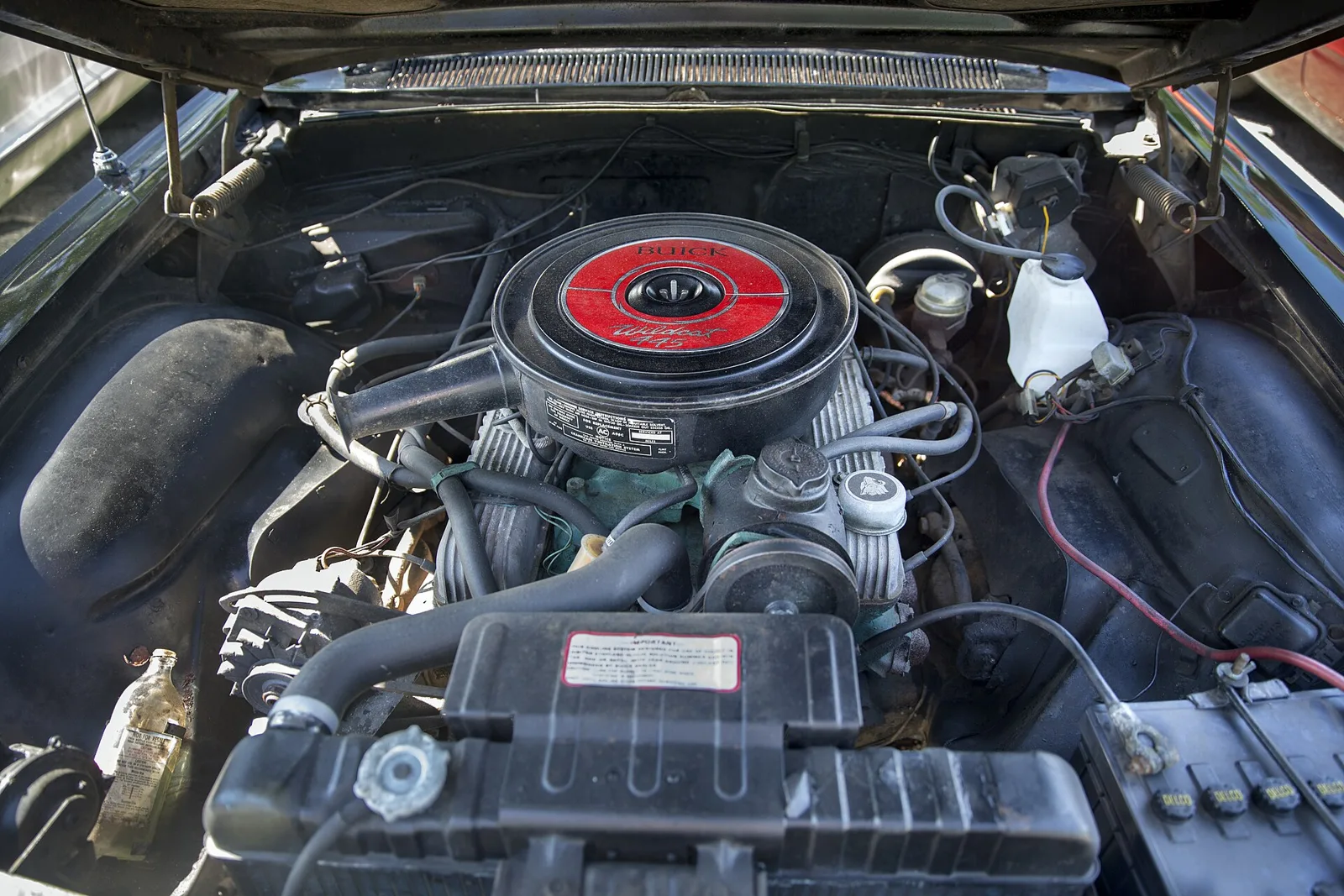
The 364 grew into the 401, which ran from 1959 to 1966 with a bore of 4.1875 in and a stroke of 3.64 in. Buick later renamed it the 400 to meet a GM directive limiting mid-size cars to 400 cubic inches, and it became Buick's original muscle car powerplant in the Skylark Gran Sport and the Wildcat. The single four-barrel Wildcat 445 was standard in the Invicta, the Electra and the Riviera.
The largest Nailhead was the 425 cu in (7.0 L), built from 1963 to 1966 measuring 4.3125 in (109.54 mm) across the bore and 3.64 in (92.46 mm) along the stroke. It began as an exclusive option on the 1963 Riviera, and the Super Wildcat carried two four-barrel carburettors. Buick built 2,122 Super Wildcat Rivieras in 1964. The engines were also used as starter motors for the SR-71 Blackbird on a trolley, a detail that shows how large and robust the Nailhead was.
What were the key Buick V8 specifications?
| Engine | Years | Displacement | Bore x stroke | Peak output |
|---|---|---|---|---|
| 364 (Nailhead) | 1957 to 1961 | 364 cu in (6.0 L) | 104.8 mm x 86.4 mm (4.125 in x 3.4 in) | 300 hp (224 kW), four-barrel |
| 215 (aluminium small block) | 1961 to 1963 | 215.51 cu in (3.5 L) | 88.9 mm x 71.1 mm (3.5 in x 2.8 in) | 200 hp (149 kW) in 1963 |
| 300 (iron small block) | 1964 to 1966 | 300.4 cu in (4.9 L) | 95.3 mm x 86.4 mm (3.75 in x 3.4 in) | 250 hp (186 kW), four-barrel |
| 455 (big block) | 1970 to 1976 | 455.2 cu in (7.5 L) | 109.5 mm x 99.1 mm (4.31 in x 3.9 in) | 350 hp (261 kW) base |
What made the aluminium 215 special?
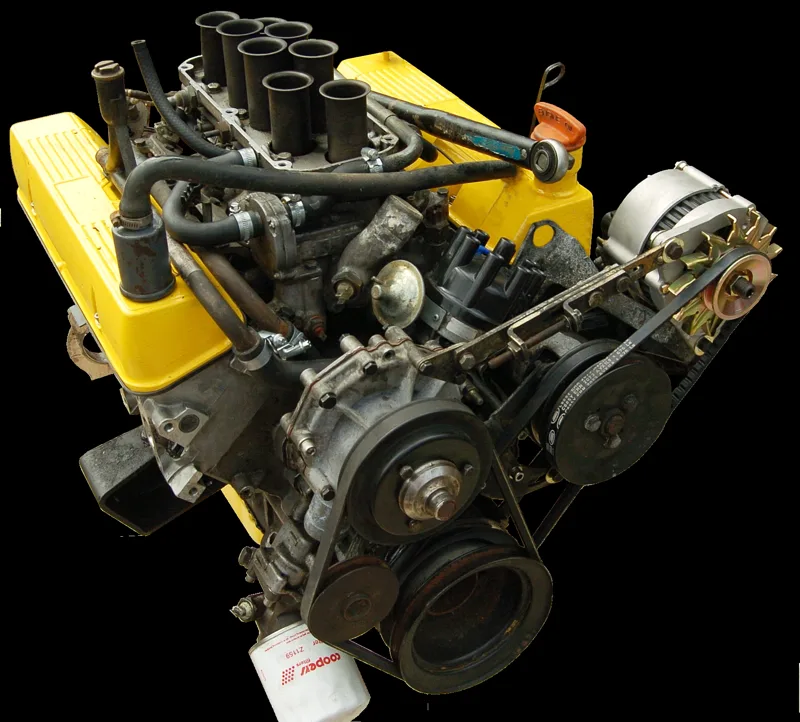
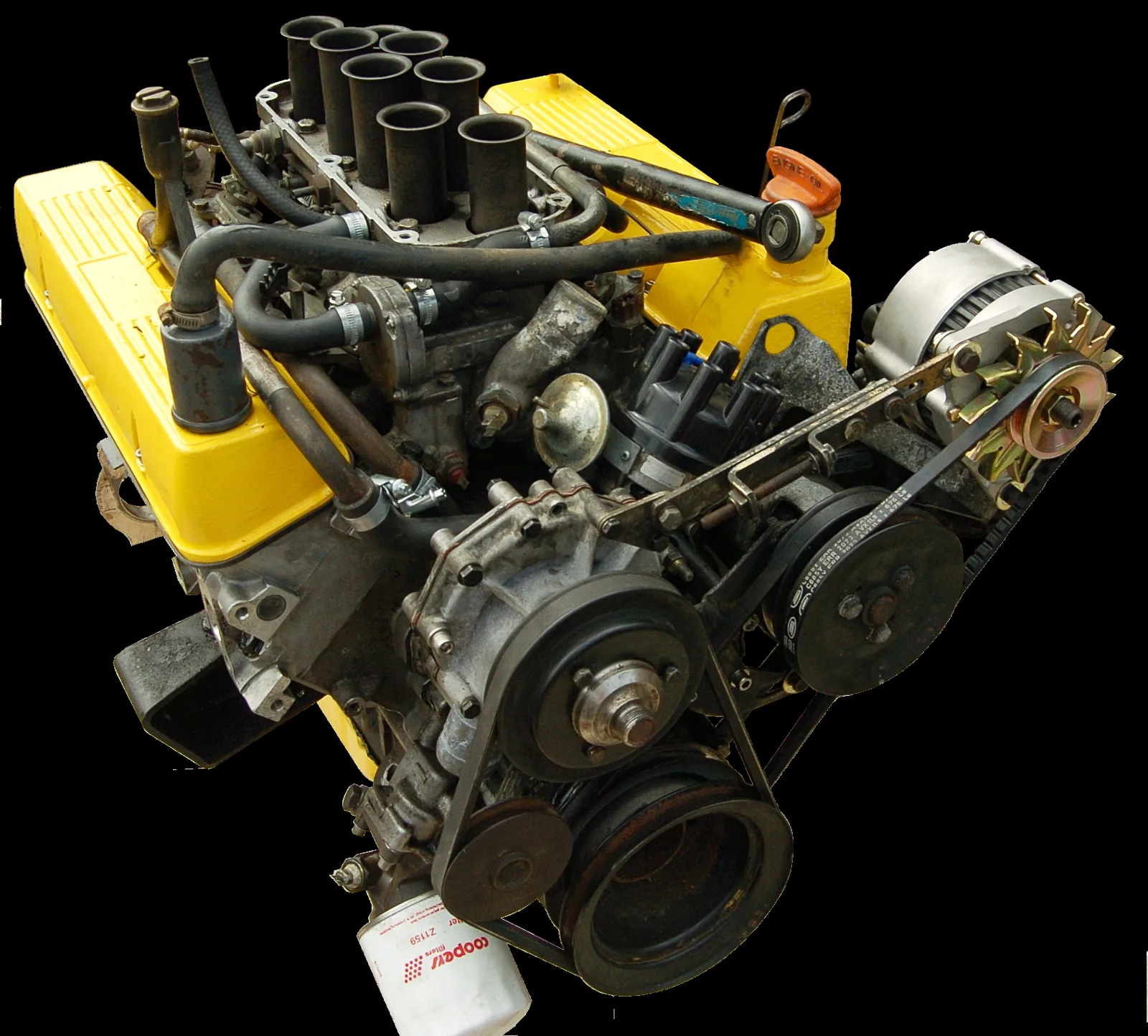
The 215 cu in (3.5 L) was an all-aluminium small block introduced in 1961, and it had an aluminium timing cover that carried a forward-mounted distributor and an external oil pump. It weighed 318 lb (144 kg), a figure that made it the lightest mass-production V8 of its day, and it measured 28 in (71 cm) long, 26 in (66 cm) wide and 27 in (69 cm) high.
Early two-barrel versions produced 150 hp (112 kW) at 4400 rpm, and the output rose to 155 hp (116 kW) soon after launch. A four-barrel Skylark version followed mid-year in 1961 with 10.0:1 compression and 185 hp (138 kW) at 4800 rpm. By 1963 the four-barrel had 11.0:1 compression and produced 200 hp (149 kW) at 5000 rpm, with 240 lb ft (325 N m) of torque at 3200 rpm on the higher-output Power Pack.
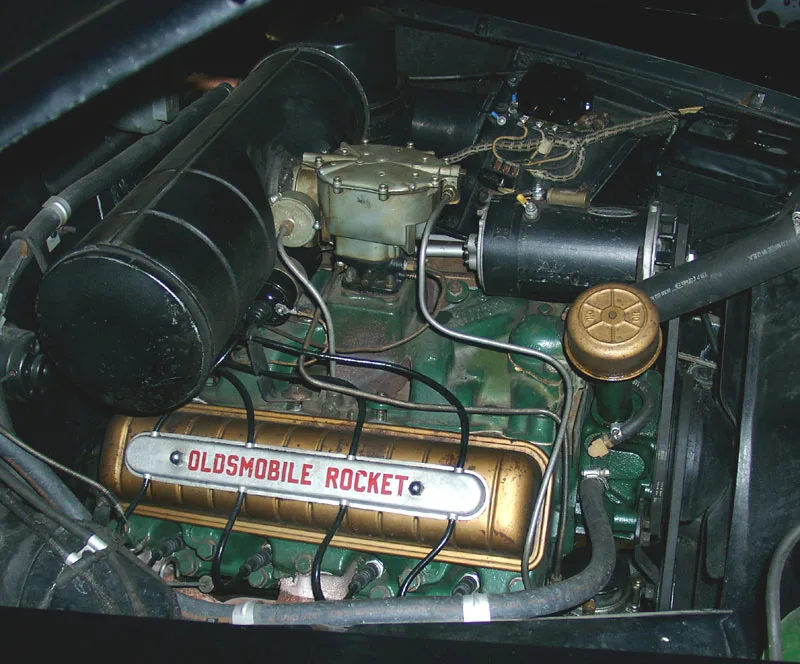
Pontiac fitted the Buick 215 to its Y-body Tempest and LeMans in 1961 and 1962, though it sold few cars with it. Oldsmobile developed a version of its own, the Rockette, with a different head design. Oldsmobile also offered a turbocharged Turbo-Rocket version in its Jetfire.
Why did the aluminium blocks end after 1963?
Aluminium blocks were cancelled after the 1963 model year because casting-sealing technology was not advanced enough at the time. Hidden porosity caused serious oil leaks and a high scrap rate, and the factory could not detect leaks on blocks that were as much as 95% complete. Complete engines cost more than an all cast-iron unit, and antifreeze mixtures clogged radiators.
The 300 replaced the 215 in 1964 as an iron-block engine with the same architecture. The aluminium heads, intake manifold and accessories carried over from the 215, and dry weight came to 405 lb (184 kg). The 300 was offered as a two-barrel with 9.0:1 compression and 210 hp (157 kW), or as a four-barrel with 11.0:1 compression and 250 hp (186 kW). For 1966 it switched to cast-iron heads, and it was replaced by the 350 in 1968.
What happened to the 215 after Buick?
The British Rover Company bought the rights to the 215 and used it in the 1967 Rover P5B, which replaced the 3 L straight-six P5. Rover improved the engine constantly after that, and capacities ranged from 3.5 to 5.0 litres (215 to 307 cu in). The engine later went into MG, Triumph and Range Rover models, and Morgan and TVR were licensed to build it.
The 215 also found a place in racing. Mickey Thompson ran a 215 in the 1962 Indianapolis 500. It was the only non-Offenhauser powerplant in the field, and no stock block had raced there since 1946. Rookie driver Dan Gurney qualified eighth and ran 92 laps before retiring with transmission trouble.
Which big block replaced the Nailhead?
Buick introduced its big block in 1967 to replace the largest Nailheads, which had grown to 425 cu in (7.0 L). The engine kept the 4.75 in (120.7 mm) bore spacing and came in three displacements, 400, 430 and 455 cubic inches. Production continued until 1976, and most of the parts except the pistons interchanged across the range.
The 400 was built from 1967 to 1969. Its bore measured 4.04 in (102.6 mm) and its stroke 3.9 in (99.1 mm). It was the only large V8 available in the intermediate A platform because of GM's 400 cubic inch limit for mid-size cars. The 430 ran only from 1967 to 1969 and produced 360 hp (268 kW) and 475 lb ft (644 N m) of torque in four-barrel form, for the large B, C and E-body Buicks.
The 455 was the last of the family to be built in quantity, from 1970 to 1976. It used a 4.31 in (109.5 mm) bore with the same 3.9 in (99.1 mm) stroke, and its base version was rated at 350 hp (261 kW). The Stage 1 455 with a single Quadrajet made 360 hp (268 kW) at 4600 rpm, and the regular engine produced 510 lb ft of torque at 2800 rpm. Thin-wall casting kept it about 150 lb (68 kg) lighter than a Chevrolet 454.
How did emissions rules change the Buick V8 in the 1970s?
By the mid-1970s the 455 could not meet fuel economy and emissions requirements, and it was phased out. The Buick 350 stayed on as a factory option until 1980, and in its place Buick offered engines from other GM divisions, including the Oldsmobile 260, Pontiac 301, Chevrolet 305 and Oldsmobile 307 and 403. These engines came as standard equipment or as options, depending on the model.
The 350 was Buick's final V8 family, produced from 1968 to 1980. It had a 3.8 in (96.5 mm) bore and kept the 3.85 in (97.8 mm) stroke of the 340, for 349.31 cu in (5.7 L). Its blocks were a Buick design rather than a shared GM casting, and it had 6.385 in (162.2 mm) connecting rods. Jeep used the same engine as the Dauntless V8 in Gladiator and Wagoneer models from 1968 to 1971.