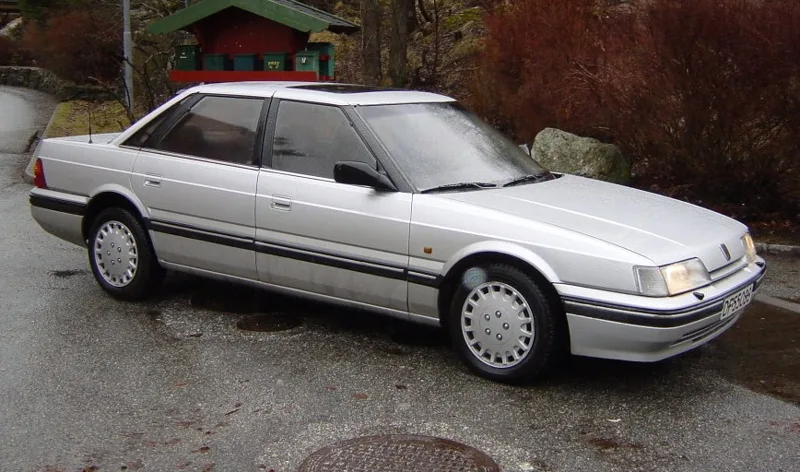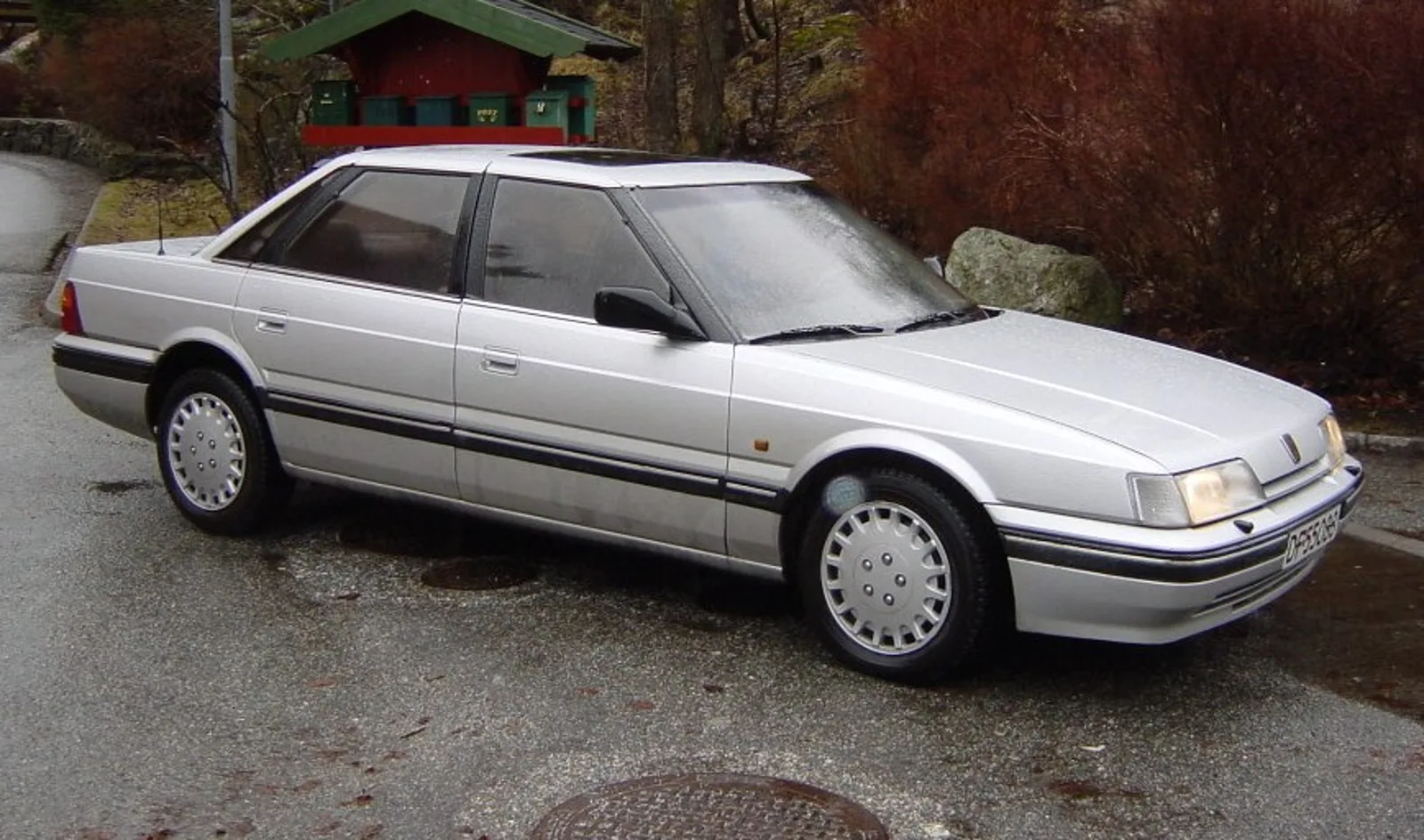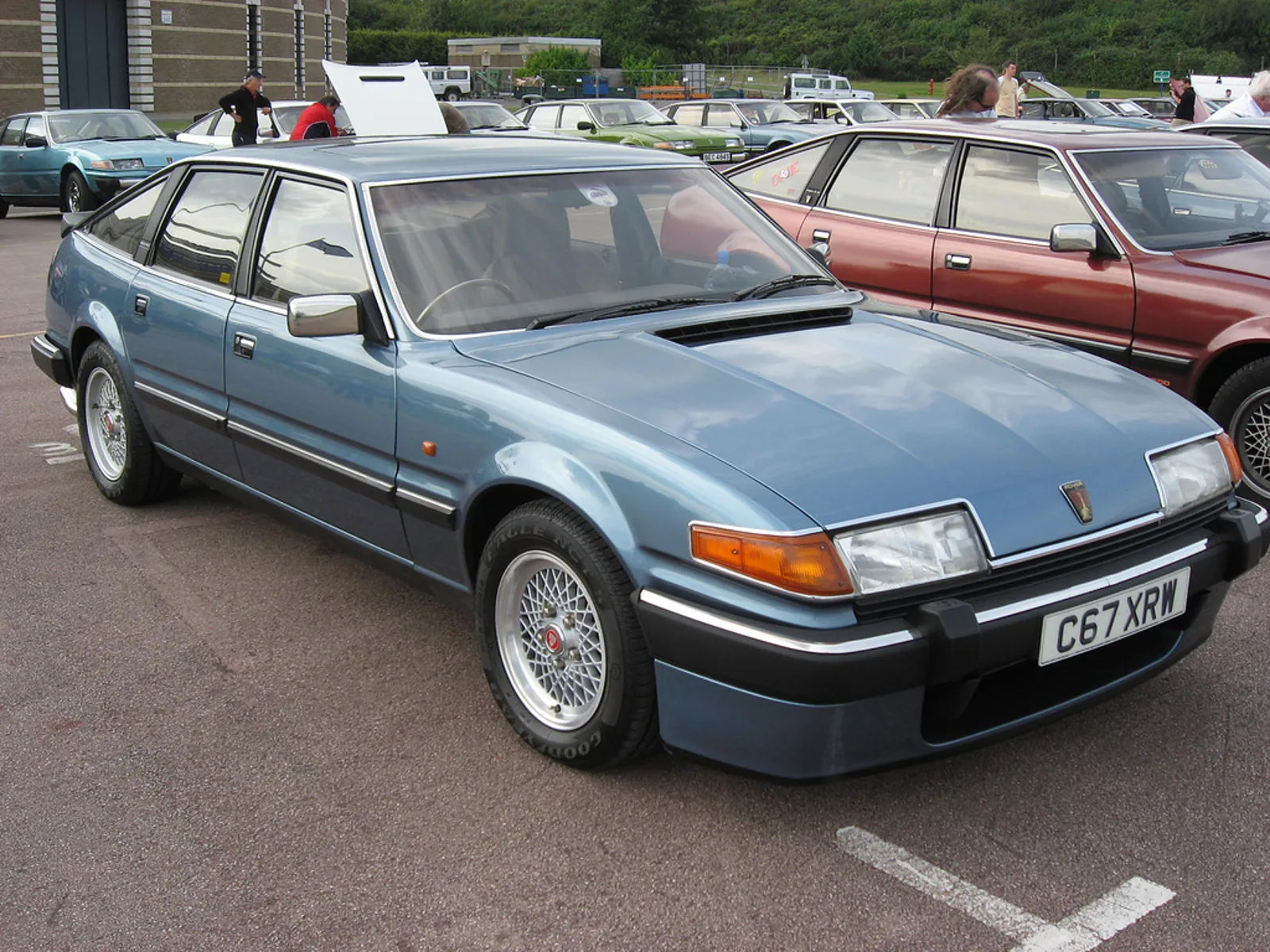
Designed by David Bache and launched in 1976, the SD1 was a large five-door hatchback with a V8 option, a difficult build record and a strong racing history.
The Rover SD1 was a large five-door fastback executive car built by British Leyland from 1976 to 1986. It replaced the Rover P6 and Triumph 2000, won European Car of the Year for 1977, and was offered with engines from a 2.0-litre four to a V8.
Sold under the Rover marque, the SD1 was an executive car that arrived in June 1976 and stayed on sale for a decade. Its name stood for Specialist Division Number 1, and it replaced the Rover P6 and Triumph 2000. The car also won European Car of the Year for 1977.
Where did the SD1 come from?
The SD1 project began in 1971, when the Rover P10 was chosen over the Triumph Puma. Design was led by David Bache and engineering by Spen King, and the car was launched as the Rover 3500 hatchback.
Bache drew inspiration from the Ferrari Daytona and the 365 GTC/4, so the car's sources mixed Italian and British influences from the start. The design also drew on a Pininfarina study for the BMC 1800, so the car's styling had several sources.
The British government largely funded the car after the 1975 bailout. The funding meant the programme's progress was closely tied to the state's support for the company.
A fastback executive car from British Leyland that carried a V8 option and a racing record through the 1980s.
Why was the SD1 a hatchback with a fastback shape?
The SD1 was a large five-door hatchback with fastback styling and a front-engine, rear-wheel-drive layout. Its simple live rear beam axle was chosen for ease of manufacture, a practical decision for a car of its size.
Rear drum brakes sat on the live axle. The dashboard air vent faced the passenger, and the instrument binnacle sat on top of the dashboard so the car could be built for either hand of drive.
Estate prototypes were built, and two survive in museums. The tailgate detail differed between them, with one recessed and one clamshell.
The Series 1 interior used soft-feel plastics instead of wood, a choice that the Series 2 later reversed with wood trim.
What engines did the SD1 offer?
Early plans used a 2.2-litre Slant-Four with Bosch fuel injection, but redesigned Triumph six-cylinder engines were used instead. The Rover V8 was also fitted in the engine bay.
The Rover 2000 used a 2.0 L BL O-Series four from the Morris Ital. A shared engine family made sense for a company with several marques, because one unit could serve several models. The 2400 SD Turbo had a 90 bhp (67 kW; 91 PS) VM Motori diesel, and diesel V8 development was cancelled in 1983.
SOHC 2.3 L and 2.6 L sixes followed in November 1977. The Rover V8 remained in Land Rover products until 2003, long after the SD1 had gone.
A BorgWarner 65 three-speed automatic gearbox was used early on, while the Series 2 switched to the GM Turbo-Hydramatic 180 (TH180) automatic.
How powerful was the SD1 Vitesse?
The Vitesse was the flagship of the range, with a 190 bhp (142 kW; 193 PS) fuel-injected V8 and 220 lb-ft (298 N m) of torque. A twin-plenum version later produced between 210 and 220 bhp.
US 1981 cars produced 148 hp with fuel injection, while the European carburetted V8 produced 155 hp (116 kW). A touring car V8 made about 340 bhp (254 kW; 345 PS) by 1986.
The Vitesse became the flagship from the 1982 Series 2, and the Vanden Plas EFi of 1984 used that same fuel-injected engine family.
Output figures varied by market and year, so the same model name could cover several different power outputs.
How did the SD1 sell?
US sales reached 480 cars in 1980 and 774 in 1981, and supply of American SD1s ended at the end of 1981. The Series 2 arrived in early 1982 and was built at Cowley.
Cowley became the main assembly site for the SD1 from 1981, and the Series 2 was built there from its unveiling. The move left the Solihull plant without a role for the car.
Production moved to Cowley in 1981, and the Solihull plant was mothballed. The Solihull extension was later used for the Freelander in 1997 and the Jaguar XE and F-PACE in 2016.
The Standard 2000 was built in Madras from 1985 to 1988, and it was not a commercial success. Standard ceased car manufacture soon after 1988, and Rimmer Brothers later acquired the remaining parts stock of the Standard factory.
What changed in the Series 2?
The Series 2 unveiled in early 1982 added wood trim and a flatter binnacle, and its headlights were chrome-rimmed and flush fitting. The rear window was deeper and gained a wash-wipe.
The Series 2 changes were visible but modest, focused on trim and details rather than the basic car. Those changes gave the car a more finished look without altering its core design. The traditional Rover Longship emblem returned for the 1981 model year.
The Series 2 also brought the Rover 2000, added in 1982 as the first Austin-Morris engine in a Rover.
How did the SD1 perform in motorsport?
The Vitesse won major touring car titles in the mid-1980s. Steve Soper and Rene Metge won the 1983 RAC Tourist Trophy in a Vitesse, and Andy Rouse took the 1984 British Saloon Car Championship.
Tom Walkinshaw and Win Percy won six rounds of the 1985 European Touring Car Championship, and TWR Rovers won five rounds of the 1986 FIA Touring Car Championship. Kurt Thiim won the 1986 Deutsche Tourenwagen Meisterschaft.
The Group A results show the SD1's competitiveness in touring car categories, where homologated road cars raced against each other. Jeff Allam and Armin Hahne won the Group A class at the 1984 Bathurst 1000, finishing 12th. Tony Pond won the 1985 British Rally Group A category in an SD1.
Why were SD1s popular with police forces?
The SD1 was popular with several UK police forces. West Midlands Police was the first UK force to operate one, with a 1976 demonstrator, and Metropolitan Police began using SD1s in 1978 in their jam sandwich livery.
V8 SD1s were highly popular with many UK police forces, but some forces retired cars early because of build quality. Ford Granadas and Vauxhall Senators replaced some police SD1s, which shows that forces were willing to switch models when a car did not meet their needs.
The Liver Run covered 27 miles in 34 minutes on 8 May 1987, which was one of the later public events in the car's story.
How good was the SD1's build quality?
Build quality drew criticism. Motor's road test reported poor door seals and steering vibration, ventilation problems persisted until 1980, and flaking paint on early cars forced British Leyland into costly repaints.
Raymond Mays praised his 3500 after 12,000 miles of ownership. The Midlander of the Year Award for 1976 went to the design team.
What replaced the SD1?
The Rover 800, developed as Project XX with Honda, replaced the SD1 in July 1986 after a ten-year run. Stocks of new SD1s remained available into 1987.
The Rover V8 outlasted the SD1 by well over a decade, which shows how far the engine's life extended beyond the car it was first fitted to.
Which SD1 models and trims were offered?
Models were named by engine size, and the range included the 2000, 2300, 2400 SD Turbo, 2600, 3500 and V8-S at various points. The Vitesse was the top model from the 1982 Series 2, and the final range comprised the 2300, the 2600 Vanden Plas and the Vitesse.
The V8-S arrived in 1979 with gold or silver alloy wheels, which gave the V8 models a visible sporting touch. In late 1980 a Vanden Plas 3500 with leather arrived, and a Vanden Plas model also replaced the V8-S with leather as standard.
The Vanden Plas EFi arrived in 1984 with the fuel-injected V8. The twin-plenum Vitesse was a 1986 homologation special, and between 200 and 250 of the 500 planned cars were built.
Naming the models by engine size made the range easy to follow, because the figure in each name gave a clear sense of the engine under the bonnet. Buyers could compare specifications directly, which suited a car sold in several forms.
How did the SD1 differ between markets?
US cars were 191 inches (4850 mm) long with larger bumpers, and they used a 3532 cc engine with 8.13:1 compression. A five-speed manual was standard, with a three-speed automatic available as an option.
The US 1980 V8 made 133 hp (99 kW) with carburettors. That market closed to new cars once US supply stopped in 1981.
The Australian fuel-injected SD1 produced 106 kW (142 hp). Those differences show how the same basic car was adapted for different markets, with engine and equipment choices shaped by each market's needs.
What legacy did the SD1 leave?
The SD1 is remembered for its fastback shape, its V8 options and its motorsport record. The Solihull extension was reused decades later for the Freelander, and the Rover V8 lasted in Land Rover products until 2003.
A police car had to stand up to daily use, so build quality was a practical concern for the forces that bought them. Police use gave the car a distinctive presence on UK roads, from West Midlands Police's 1976 demonstrator to the Metropolitan Police's 1978 jam sandwich livery. The car's presence on those patrols is one reason it remains recognisable. The SD1 combined hatchback practicality with V8 performance in one body, a mix that kept it in people's memory.
Build-quality problems are part of the car's record, and they are discussed alongside its performance. Repairs were costly for the company, which had to absorb the expense of repainting early cars.
What are the Rover SD1 specifications?
The core figures cover the launch car, the Vitesse flagship and the US market. Torque for the Vitesse was 298 N m (220 lb-ft), and US cars had a 3532 cc engine with a five-speed manual standard.
| Specification | Detail |
|---|---|
| Built | 1976 to 1986 |
| Launch model | Rover 3500 hatchback, June 1976 |
| Replaced | Rover P6 and Triumph 2000 |
| Successor | Rover 800, July 1986 |
| Vitesse output | 190 bhp (142 kW; 193 PS), fuel-injected V8 |
| Vitesse torque | 298 N m (220 lb-ft) |
| Twin-plenum Vitesse | 210 to 220 bhp |
| Standard 2000 | 83 hp (62 kW), 2.0-litre engine |
| US engine displacement | 3532 cc |
| US 1980 V8 | 133 hp (99 kW) with carburettors |
| US sales | 480 in 1980, 774 in 1981 |
| Touring car V8 | About 340 bhp (254 kW; 345 PS) by 1986 |