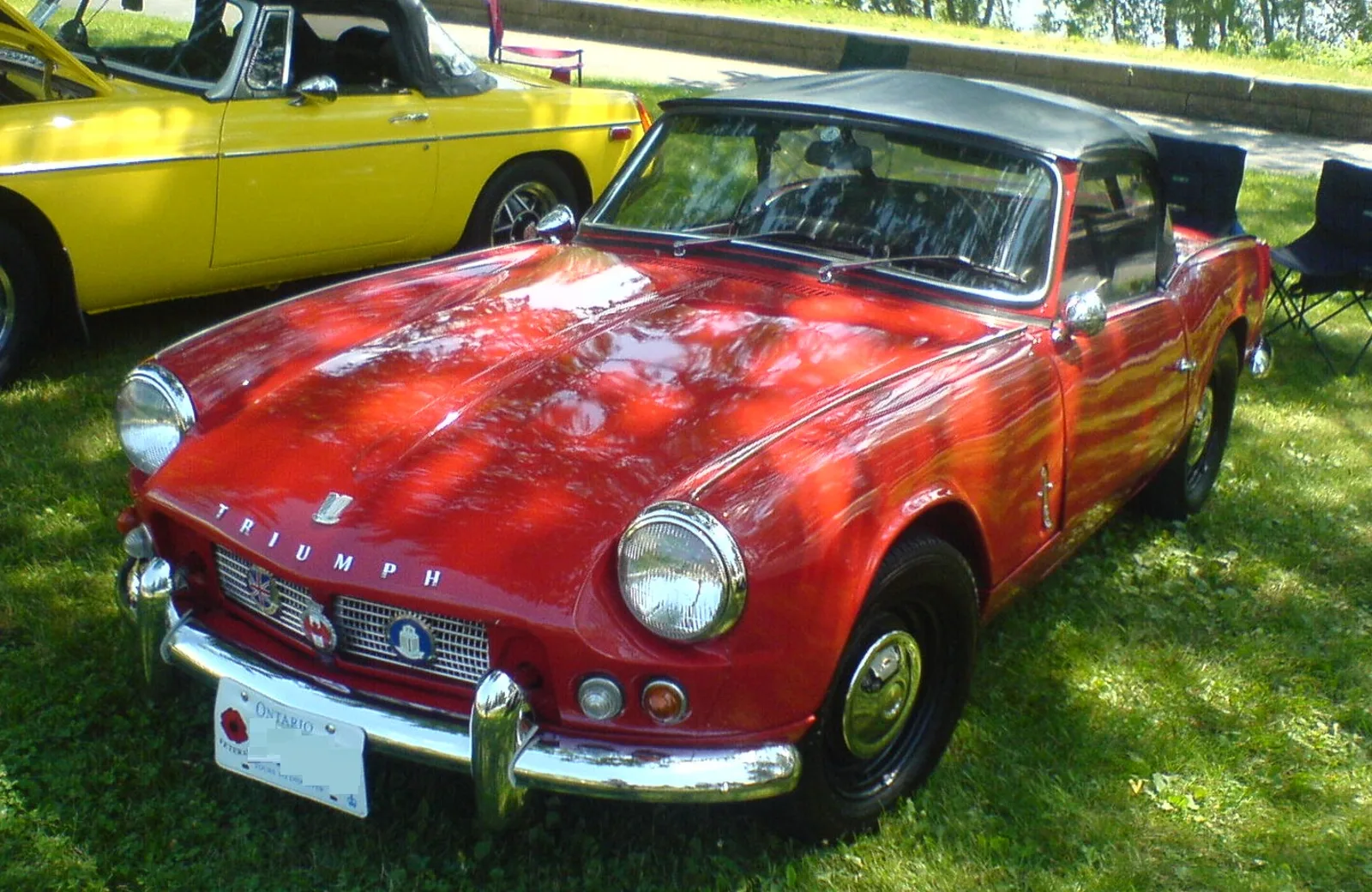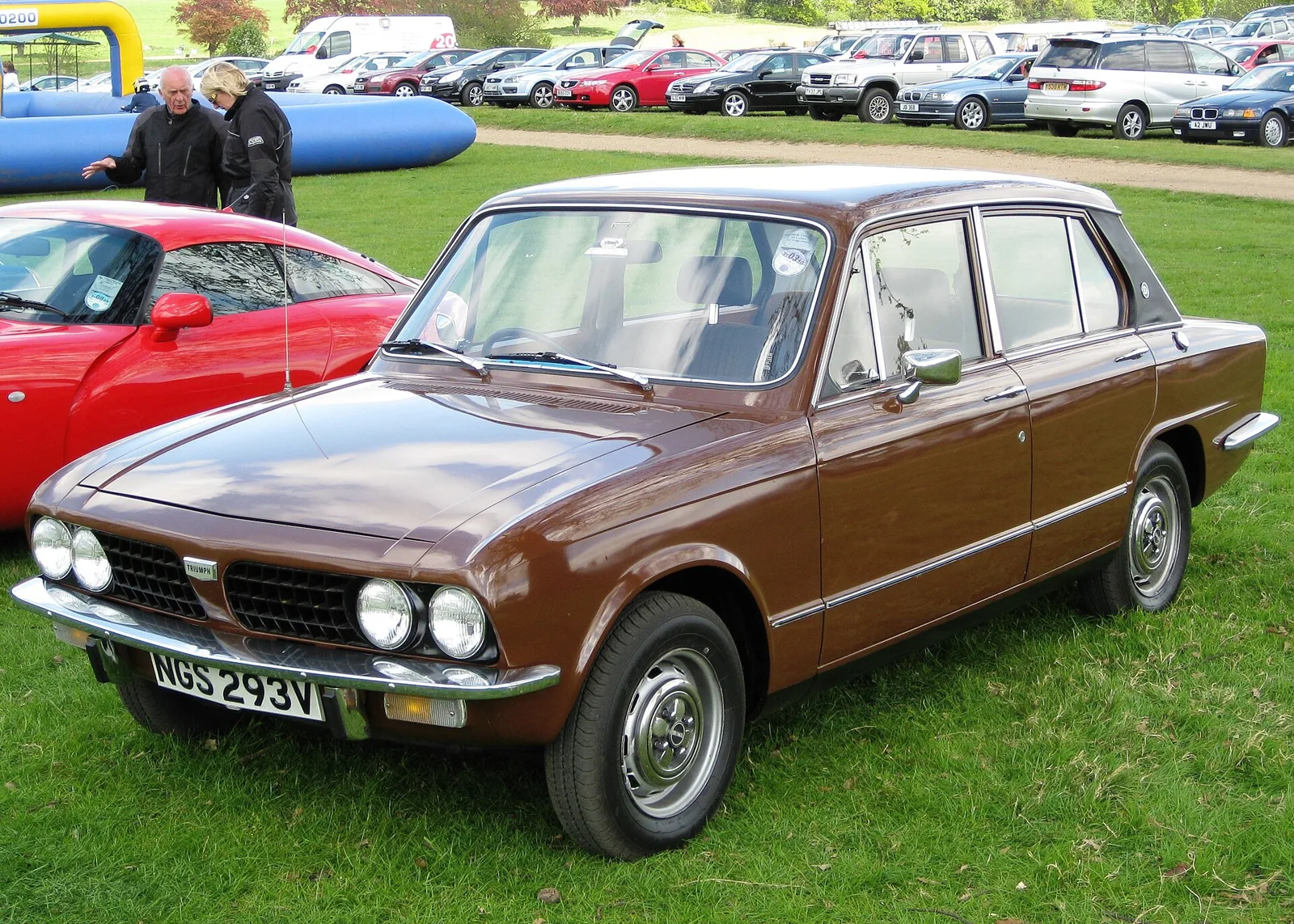
Triumph's compact saloon from 1972 to 1980, and the 16-valve Sprint that went racing in the British Saloon Car Championship.
A British Leyland small saloon, the Dolomite was made at Canley from 1972 to 1980, and its 16-valve Sprint from 1973 raced in the British Saloon Car Championship and rallies, with several race wins that shaped its reputation in the 1970s.
Triumph's Dolomite was a compact British saloon from the early 1970s, and its Sprint version brought a 16-valve engine that became a fixture of 1970s touring car racing. The model ran from late 1972 until 1980, and its Sprint still has a loyal following.
What was the Triumph Dolomite?
The Triumph Dolomite was a small saloon built by Triumph Motor Company, a division of British Leyland, at Canley in Coventry from October 1972 to August 1980. It was the last addition to Triumph's small-car range and was aimed at the compact performance-luxury sector.
The car competed with the BMW 2002 and Ford Cortina GXL. Standard equipment was generous, with twin headlamps, a clock, full instrumentation, luxury seats, a heated rear window and a cigar lighter.
Top speed was 100 mph (160 km/h), and the car reached 60 mph (97 km/h) in just over 11 seconds. An overdrive gearbox was soon offered as an option, and an automatic was also available.
Triumph's answer to the BMW 2002, with a 16-valve head that its makers claimed as a first for mass production.
Where did the Dolomite come from?
The Dolomite was the final addition to Triumph's small-car range, a programme codenamed Project Ajax that began in 1965 with the Triumph 1300. It was unveiled at the London Motor Show in October 1971.
The 1300 was meant to replace the rear-wheel drive Triumph Herald. It started life with front-wheel drive and a 1,296 cc engine, and it sold less well than the simpler Herald it followed. The 1500 that replaced it in September 1970 had a restyled front and rear by Michelotti and a 1,493 cc engine.
Triumph then reengineered the car. The Toledo, launched in September 1970, was a cheaper and more basic variant with conventional rear-wheel drive, and the Dolomite borrowed most of its running gear from it. The Dolomite used the longer bodyshell of the 1500.
The Dolomite name had been used by Triumph before the Second World War, and the company revived it for this car. Strikes and other industrial upsets delayed full production until October 1972.
What engine did the Dolomite use?
The first Dolomite used a 1,854 cc slant-four with an alloy overhead cam head on an iron block, producing 91 bhp (68 kW) and giving sprightly performance for the class. The same engine was supplied to Saab for its 99 model.
Mixing an alloy head with an iron block was new to many workshops, and the engine's construction later became part of the car's reputation.
What made the Dolomite Sprint special?
The Dolomite Sprint, unveiled in June 1973, used a 1,998 cc version of the slant-four with a 16-valve cylinder head. It was Triumph's answer to the BMW 2002 in the sports saloon market, which had a performance advantage that was costing sales and prestige.
Triumph had delayed the launch by a year, as it was due on sale in 1972. Spen King's team devised the plan, with help from Harry Mundy and the engineers at Coventry Climax, who designed the 16-valve head.
All of the valves were operated by a single camshaft rather than the more conventional twin-cam arrangement. Larger carburettors lifted output to 95 kW (127 bhp) at 5,700 rpm and 165 N-m (122 lb-ft) at 4,500 rpm.
The power figure caused debate. The engine was expected to make 135 bhp, and factory test engines reached 150 bhp, so the car was first intended to be called the Dolomite 135. Matthew Vale said the switch to DIN measurement, which read about 5 per cent lower, explains the gap: 135 bhp SAE equals 127 bhp DIN.
Why is the Sprint called the first mass-produced multi-valve car?
The Sprint has been claimed to be the world's first mass-produced multi-valve car. Other multi-valve engines, notably the Lotus 907, were built in volume, but they did not appear in mass-production vehicles until after the Sprint. The cylinder head design also won a British Design Council award in 1974.
Triumph's claim rests on timing. Multi-valve engines from other makers were produced in volume, but none were fitted to mass-production cars before the Sprint arrived, and its cylinder head was recognised with a design award in 1974.
How quick was the Sprint?
The Sprint reached 60 mph (97 km/h) in about 8.4 seconds, with a maximum speed of 119 mph (192 km/h). It also had standard alloy wheels, a first for a British production car, and the standard kit included a vinyl roof, front spoiler and twin exhausts.
Trim was similar to the 1850, with lowered suspension added to the list. Seats were cloth, as on the 1850, and the driveline was upgraded to handle the extra torque.
The gearbox and differential came from the TR and 2000 series cars, with a close-ratio gearset. The brakes gained new front pad materials, larger rear drums and a load-sensing valve.
A limited-slip differential was optional, as were overdrive and automatic transmissions carried over from the 1850. Early cars came only in mimosa yellow, and other colours arrived from 1974.
At launch the Sprint cost GBP 1,740, which compared extremely well with rivals. Motor's road test, titled Britain leads the way, praised it highly, calling it compact yet deceptively roomy and tremendously satisfying to drive.
How did the Sprint sell in Australia?
Australia received 620 Sprints between August 1975 and June 1976, all in Mimosa Yellow. At $7,700 they were dearer than the Ford XB Falcon GT 351, whose asking price was $7,100. Rivals included the Lancia Beta and the BMW 2002, which cost $8,233 and $8,419.
Dealer Ron Hodgson raced Sprints and, according to Mark Oastler, spent six-figure sums developing a car called Super Sprint. The Confederation of Australian Motorsport, CAMS, rejected it, and insisted on 500 cars for homologation while Leyland would build only 300 from the 600 already in Australia.
At the 1976 Bathurst 1000, Jack Brabham's Torana was heavily damaged when a Sprint driven by John Dellaca and Kerry Wade rammed it.
In 1977 CAMS refused to approve the Sprint's pistons, which denied it a place in the 1977 Hardie-Ferodo Bathurst 1000. By July 1976 the Australian Design Rule ADR27A had taken effect, and it was not feasible to re-engineer the car for such a small niche.
Fewer than 80 of the 620 imported cars are believed to survive, and they are considered collectible today.
How did the Sprint compete in touring car racing?
The Sprint was campaigned in the British Saloon Car Championship from 1974 to 1978. It was homologated into FIA Group 1 on 2 January 1974, and Andy Rouse won the 1975 drivers' title in one. Tony Dron won seven of the twelve races outright in 1977.
Homologation needed 5,000 cars built in 12 months, which was exceeded only just in 1973. The rules changed in 1975 to 500 cars a year, but Triumph still needed continued production to keep eligibility.
Rouse and Tony Dron lifted the 1974 manufacturers' title together, and the Sprint they shared placed fifth overall at the Spa 24 Hours in July 1974.
The racing Sprints used in the series appear to have had larger 2 inch SU HS8 carburettors, instead of the 1.75 inch HS6 fitted to production cars. Their Group 1 approval is anomalous, and no production run of such cars is documented.
Did the Dolomite compete in rallying?
The Sprint was less successful in rallying because its heavier bodyshell and Group 2 tuned engine caused frequent retirements. Brian Culcheth and Johnstone Syer took 11th overall in the 1975 Welsh Rally and won Group 1 in the Lombard RAC Rally that year.
Culcheth and Syer finished second overall in the Tour of Britain in August 1975. Pond and Richards took Group 1 at the Tour of Dean Rally, held in January 1976.
From May 1976 the Sprint ran alongside the TR7 before being withdrawn, and the TR7 V8 took over the rally role. The Manx Rally in September 1977 was the last rally with a works-entered Sprint, where Ryan and Nicholson finished seventh overall and won Group 1.
How many Dolomite Sprints were built?
Sprint production peaked at 5,446 cars in 1973 and fell to 493 in 1980, the last year of the Dolomite. The 1979 Dolomite SE, a separate luxury-trimmed model, had 2,163 examples built.
Sprint output by year ran as 5,446 in 1973, then 4,232 in 1974, 3,589 in 1975, 4,035 in 1976, 2,554 in 1977, 1,352 in 1978, 1,240 in 1979 and 493 in 1980.
Output fell each year after the 1973 peak, apart from a small rise in 1976 over 1975.
What are the Dolomite Sprint specifications?
| Specification | Detail |
|---|---|
| Engine | 1,998 cc slant-four, 16 valves, single camshaft |
| Output | 127 bhp (95 kW) at 5,700 rpm, against an expected 135 bhp SAE |
| Torque | 122 lb-ft (165 N-m) peak, reached at 4,500 rpm |
| 0-60 mph | About 8.4 seconds |
| Top speed | 119 mph (192 km/h) |
| Launch price | GBP 1,740 |
| Group 1 homologation | 2 January 1974 |
| Australian imports | 620 cars, August 1975 to June 1976, all in Mimosa Yellow |
| Production | Peak 5,446 in 1973; 493 in 1980 |
What were the Dolomite-derived cars?
Several specialist cars used Dolomite parts. The early Robin Hood S7 used the front subframe and mechanical components of any Dolomite on a stainless steel monocoque, and the Latham F2 used Dolomite mechanicals, usually from Sprints, in a fibreglass body.
The Panther Rio used the Dolomite 1850 as its starting point, with new aluminium body panels and a fresh cabin. The Rio Especiale used the Sprint as its base, and 38 Rios were sold between 1975 and 1977.
The Rio Especiale cost GBP 9,445, while in February 1976 a Dolomite Sprint could be bought for GBP 3,283.
Why does the Dolomite have a reputation for fragility?
The Dolomite gained a reputation for fragility because dealership mechanics were not fully aware of the servicing needs of the new slant-four engine. The cooling system had to be kept in good condition and partly filled with rust inhibitor, or corrosion could block the radiator.
The timing mattered. BL and Triumph were introducing many new models at once, and the slant-four's alloy head on an iron block was unfamiliar to workshops. A well-maintained car need not be a problem today.
Enthusiasts still value the Dolomite, and the Sprint especially. Many parts remain available, and club support is strong. About 1300 roadworthy examples were registered in the UK, with 300 to 400 16-valve Sprints in 2009.
The Morris Marina is a useful comparison, with fewer than 800 of 953,576 built still roadworthy, despite selling better than the Dolomite.
What replaced the Dolomite?
The Dolomite was replaced a year later by the Triumph Acclaim, a front-wheel drive family saloon built in a joint venture with Honda. The Acclaim kept the marque alive until 1984, when the Rover 200 replaced it and the Triumph Motor Company passed into history.