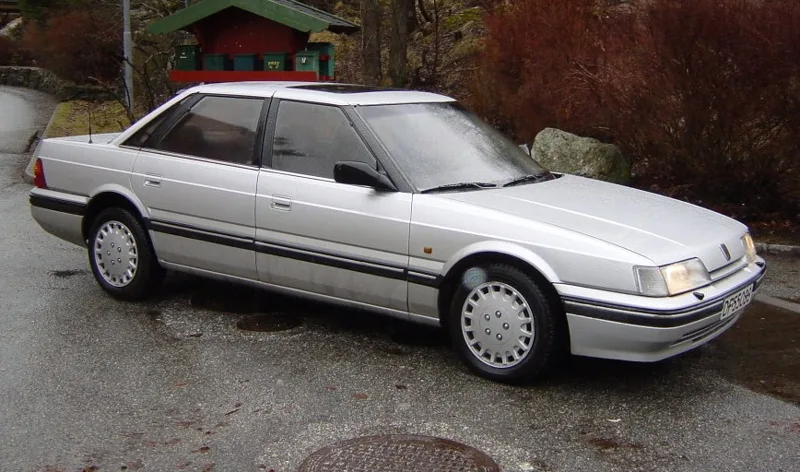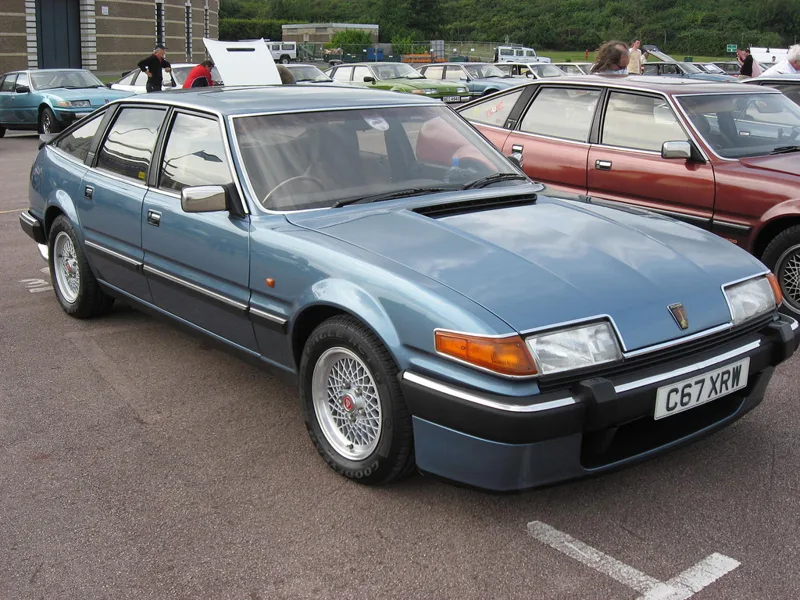
Four generations of a small car that began as a British-built Honda, grew into a Rover original and finished as the Rover 25 before MG Rover fell.
The Rover 200 was a small family car built at Longbridge from 1984 to 2005 across four generations. The first generation was a British-built Honda Ballade, the second a Honda-collaboration hatchback, and the third a Rover design, before the 1999 facelift became the Rover 25.
The Rover 200, and later the Rover 25, were small family cars built at Longbridge by Rover from 1984 until 2005 across four generations. The first was a British-built Honda, the second a Honda-collaboration hatchback, the third a Rover design, and the final cars were the facelifted Rover 25. Production ended when MG Rover went into administration.
How did the Rover 200 begin with Honda?
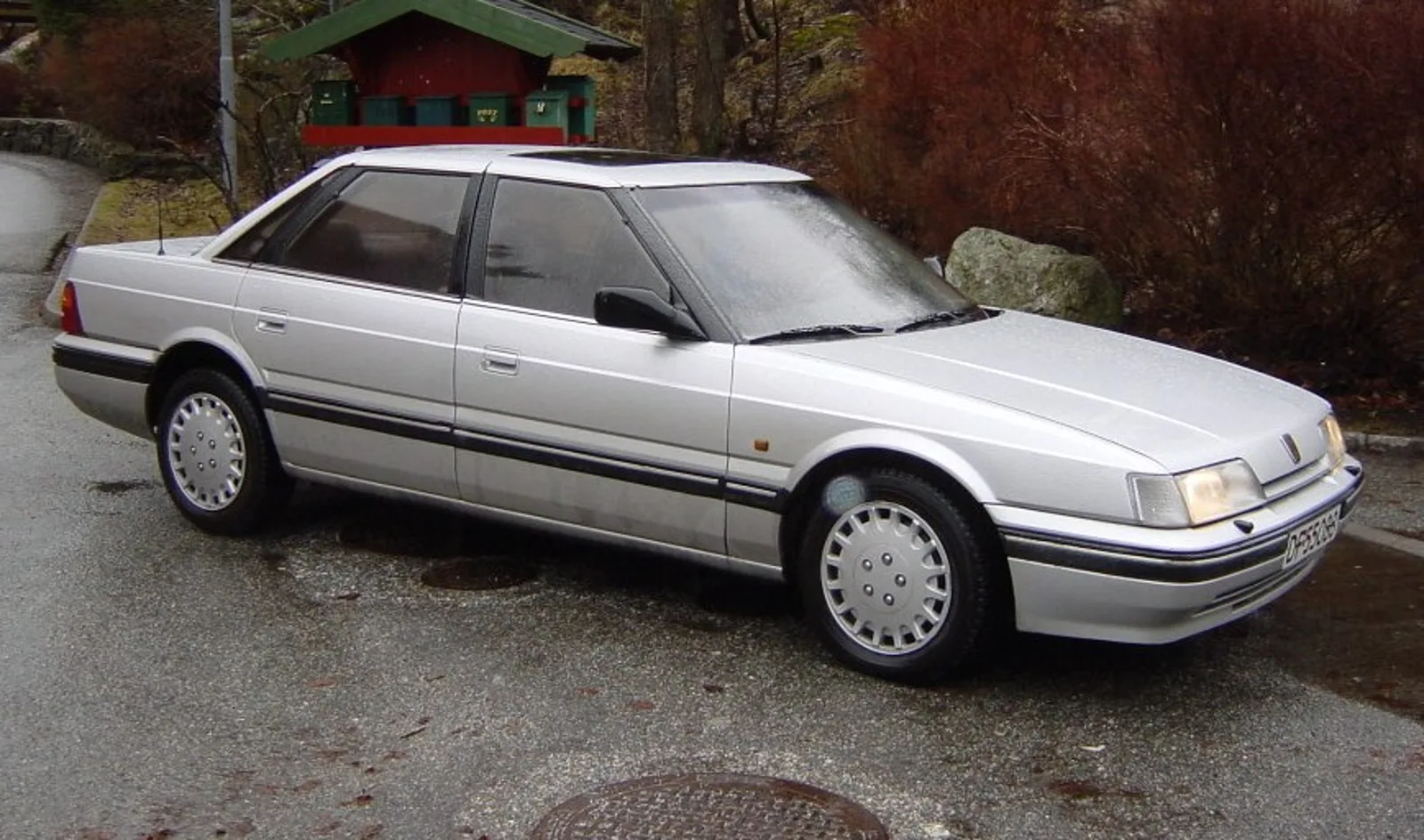
The original Rover 200, sometimes called SD3, took over from the Triumph Acclaim as the second joint project of British Leyland and Honda. It was launched on 19 June 1984 as a four-door saloon, positioned above the Maestro and Montego. The Rover name on a small Japanese-derived car worried some traditionalists, who feared it would weaken the brand.
Essentially it was a British-built Honda Ballade, and the Ballade's original design had been shared by both companies. Its rival saloons were the Ford Orion, the Volkswagen Jetta and the Vauxhall Belmont, while the Rover 200 was not based on a hatchback at all.
A small Rover that started life as a British-built Honda and ended as the Rover 25 in a company that did not survive.
What engines did the first 200 use?
The engines were either the Honda-derived E-series 1.3-litre 12-valve unit rated 71 PS (52 kW; 70 bhp), badged as the Rover 213, or British Leyland's own S-series in 1.6-litre form. The 1.6 was rated 86 PS (63 kW; 85 bhp) with a carburettor or 103 PS (76 kW; 102 bhp) with Lucas electronic fuel injection, and it was badged Rover 216.
The 213 came with a Honda five-speed manual or a three-speed automatic. The 216 also used a Honda five-speed manual, though a German ZF four-speed automatic was available on some models.
How long did the first saloon last?
Production of the saloon ended in late 1989, and stocks continued to be sold until early 1990. It was replaced by the Rover 400. The car is famous for a different reason too, since a 216S and later a 216SE EFi model played the Bucket family's car in the BBC sitcom Keeping Up Appearances, which ran from 1990 to 1995.
The Ballade bodyshells and later complete cars were built at Longbridge alongside the Rover versions, and Honda's Swindon plant carried out quality checks on the Ballade models.
What was the R8 hatchback?
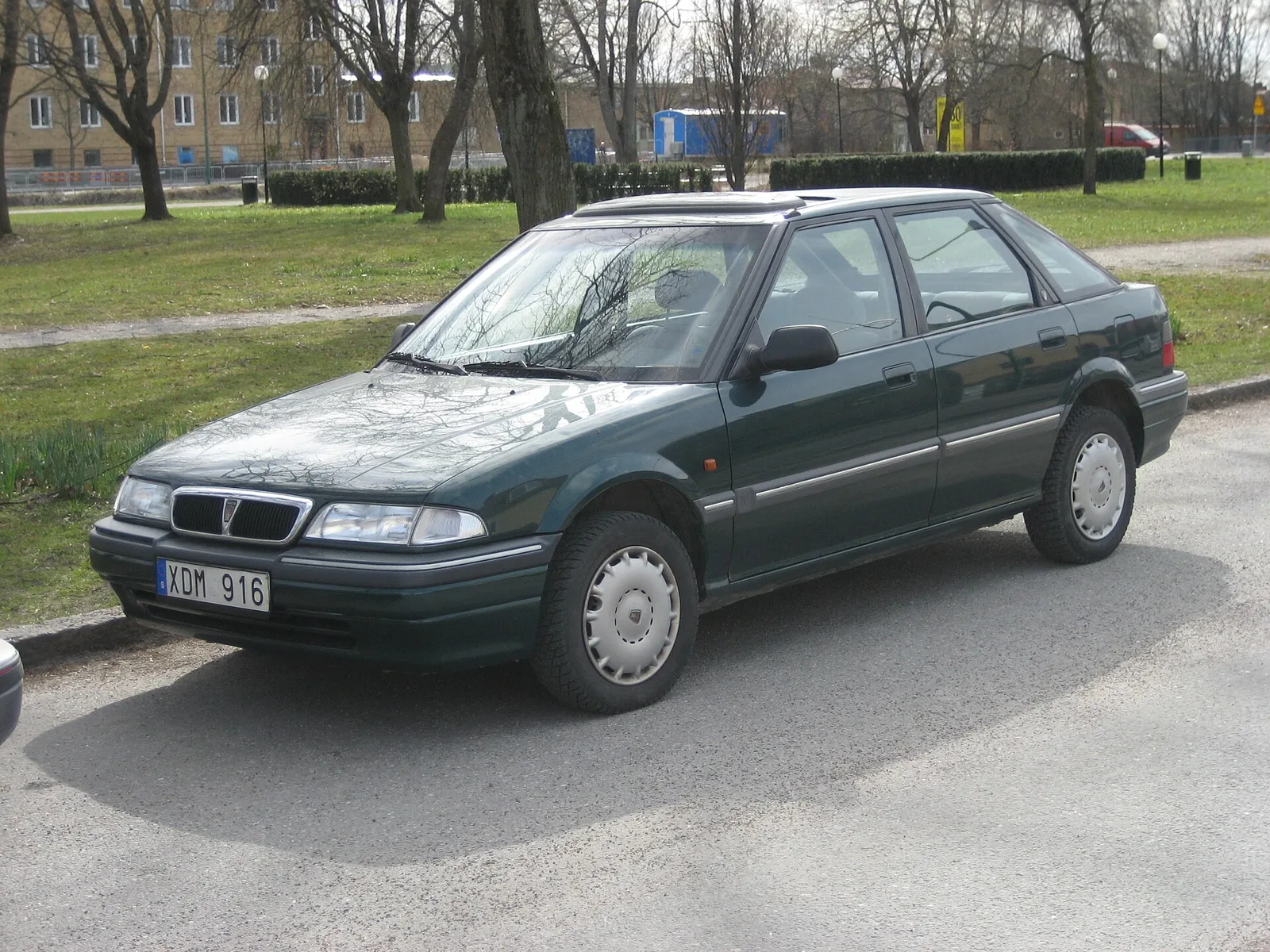
The R8 Rover 200, sometimes called the Mk 2, launched on 11 October 1989 as a five-door hatchback designed to replace the Maestro. The saloon became the 400 Series, launched in April 1990, and it sat slightly upmarket from the hatchback. Honda produced the Concerto alongside it, and the two cars shared Longbridge production lines.
The 200 and Concerto were based on the fourth-generation Honda Civic, the EC. The R8 was the first car from the newly privatised Rover Group, and the Maestro continued as a budget option until December 1994.
- Autumn 1992: mild facelift with redesigned indicator lights
- 1993: new grille and body-coloured bumpers added across the range
- Coupe: launched in autumn 1992 with a 1.6 SOHC or a 2.0-litre T-series
- Cabriolet: codenamed Tracer, with a hood designed alongside Pininfarina
- Coupe codename: Tomcat
Why did the Tomcat project set land speed records?
The Tomcat coupe was promoted in 1992 when a group of volunteer Rover employees built two special land speed record cars. After an aborted run in August, they broke 37 UK land speed records on 26 and 27 September 1992 at the Millbrook Proving Ground in Bedfordshire. The record breaking became known as the Tomcat Affair.
The runs included a flying 5 km average of 156 mph (251 km/h) and a 24-hour average of 138 mph (222 km/h). Of those records, 36 remain unbroken.
What engines powered the R8 range?
The 200 introduced Rover's K-series engines in 1.4-litre twin-cam 16-valve form, with 1,396 cc. The 1.6-litre version used a Honda D16A6 or D16A8 unit at 1,590 cc, while the 2.0-litre M-series from the 800 range arrived in 1991. Later versions used the T-series turbo, with the 220 GTi and GSi-Turbo rated 200 PS (147 kW; 197 bhp).
Diesel options were a naturally aspirated 1.9-litre XUD9 and a turbocharged 1.8 XUD7T, both from PSA. In France, Italy and Portugal, Honda sold a diesel version called the Concerto TD.
How did the R8 sell?
When it arrived, the R8 stood among the rare fresh designs in its segment, since the Escort had been around since 1980 and the Astra was unchanged from its 1984 launch. Up to 110,000 Rover 200 and 400 models were sold each year, with more than half in Britain. The 214 won What Car? Car of the Year in 1990, though it was not shortlisted for the European award.
What was the R3 generation?
The next generation surfaced at the London Motor Show in October 1995 and was previewed to the press in Italy that November. Codenamed R3, it was smaller than the Honda-based R8 and was designed to replace the ageing Metro, which was by then 15 years old. It was the Rover Group's first mass-market car designed in-house since the Montego of 1984.
Honda had been contracted to help with tooling, and the earlier SK3 project used a cut-down rear floor. The programme was revised to use a Maestro and Montego H-frame rear suspension, which allowed a fuel tank, a full-size spare wheel and an exhaust silencer while keeping a good boot. That saved over 100 pounds sterling per car and allowed the project to proceed.
- Engines: a 1.4i 16-valve unit making 105 PS (77 kW; 104 bhp), plus a 1.6i 16-valve making 111 PS (82 kW; 109 bhp)
- Diesel: 2.0 turbodiesel rated 86 PS (63 kW; 85 bhp), with an intercooled version also rated at 105 PS, with 104 bhp
- Later additions: a 1.1i producing 60 PS (44 kW; 59 bhp), and a 1.4i 8v producing 75 PS (55 kW; 74 bhp)
- Top petrol: 1.8 VVC rated 145 PS (107 kW; 143 bhp)
By the time the R3 launched, Honda and Rover had already separated after the BMW takeover of 1994. The K-series petrol engines and the L-series diesel were the mainstays. The L-series was regarded as second only to the Volkswagen TDI in overall performance in the mid-1990s.
What was the Rover 200 BRM?
A BRM-styled special debuted at the 1997 Frankfurt Motor Show. A year of development later, the BRM LE went on sale at the British Motor Show in October 1998. Underneath, it was a Vi model but had 1960s BRM styling, including a woven mesh grille and an orange snout that echoed the BRM Formula One racers.
The interior had red quilted leather seats and red carpet, and the car ran the 145 PS (107 kW) 1.8 VVC engine. It was priced at 18,000 pounds sterling, although the price was cut to 16,000 and then 14,000 pounds sterling when the Rover 25 arrived. Around 797 were built for the UK and 350 for overseas.
What changed with the Rover 25?
Renamed the Rover 25 and codenamed Jewel, the facelifted model debuted at the London Motor Show on 6 October 1999, reaching showrooms on 25 November. Its price and size were aimed at the Ford Fiesta and Vauxhall Corsa, not at bigger cars. The chassis was uprated to the 200vi's handling, and the front end took the corporate Rover look from the 75.
Engines were carried over, and the 1.1-litre 16V K-series arrived in autumn 2000, raising power to 75 PS (55 kW). The MG ZR followed in 2001 with a 1.8 VVC engine rated 160 PS (118 kW; 158 bhp) and a top speed of 210 km/h (130 mph). In 2003 the Streetwise version added ride height and chunkier bumpers, and in 2004 the cars received a new interior and revised trim levels.
How did the Rover 25 sell?
The 25 was Britain's best-selling new car in April 2000, thanks to a brief surge in sales after BMW sold the Rover Group. Sales quickly settled, and the car was never able to compete seriously with the Fiesta and Corsa. Rivals that sold more included the Renault Clio, Skoda Fabia, Seat Ibiza, Volkswagen Polo, Fiat Punto and Peugeot 206.
Earlier, the third-generation 200 had been Britain's seventh-best-selling new car from 1996 to 1998, but it had fallen out of the top ten within three years.
How did production end?
Production of both models was suspended in April 2005, when the company went into administration. The 25 had also taken the Bargain of the Year prize at the Auto Express used car honours. Specifications were later purchased by Shanghai Automotive Industry Corporation, while Nanjing Automobile Group owns the tooling. The Streetwise, rebadged as the MG 3SW, was relaunched in China in 2008.
Was there a hybrid Rover 25?
A prototype hybrid drivetrain version of the Rover 25 was reported in the flight shed at Longbridge in late 2005. A Top Gear writer found it surrounded by paperwork, and a first-generation Toyota Prius was parked nearby for benchmarking while MG was still operating.
The sighting is one of the last glimpses of development work at Longbridge before the administration, and it shows how the company was still looking at new technology when its finances failed.
Specifications at a glance
| Specification | Detail |
|---|---|
| Original launch | 19 June 1984, Honda Ballade-based saloon |
| R8 hatchback launch | 11 October 1989 |
| R3 unveiling | October 1995, London Motor Show |
| BRM LE launch | October 1998, British Motor Show |
| Rover 25 unveiling | 6 October 1999, London Motor Show |
| MG ZR output | 1.8 VVC, 118 kW (160 PS; 158 bhp) |
| Production end | April 2005, MG Rover administration |