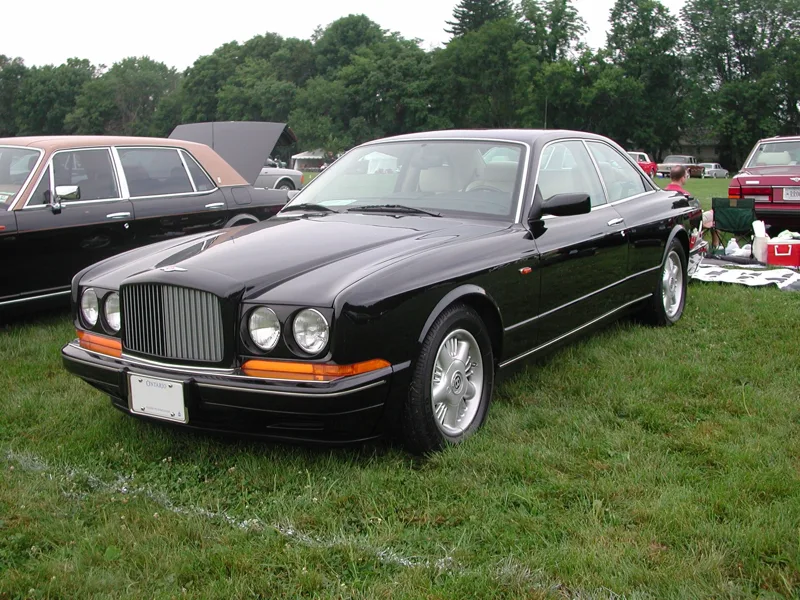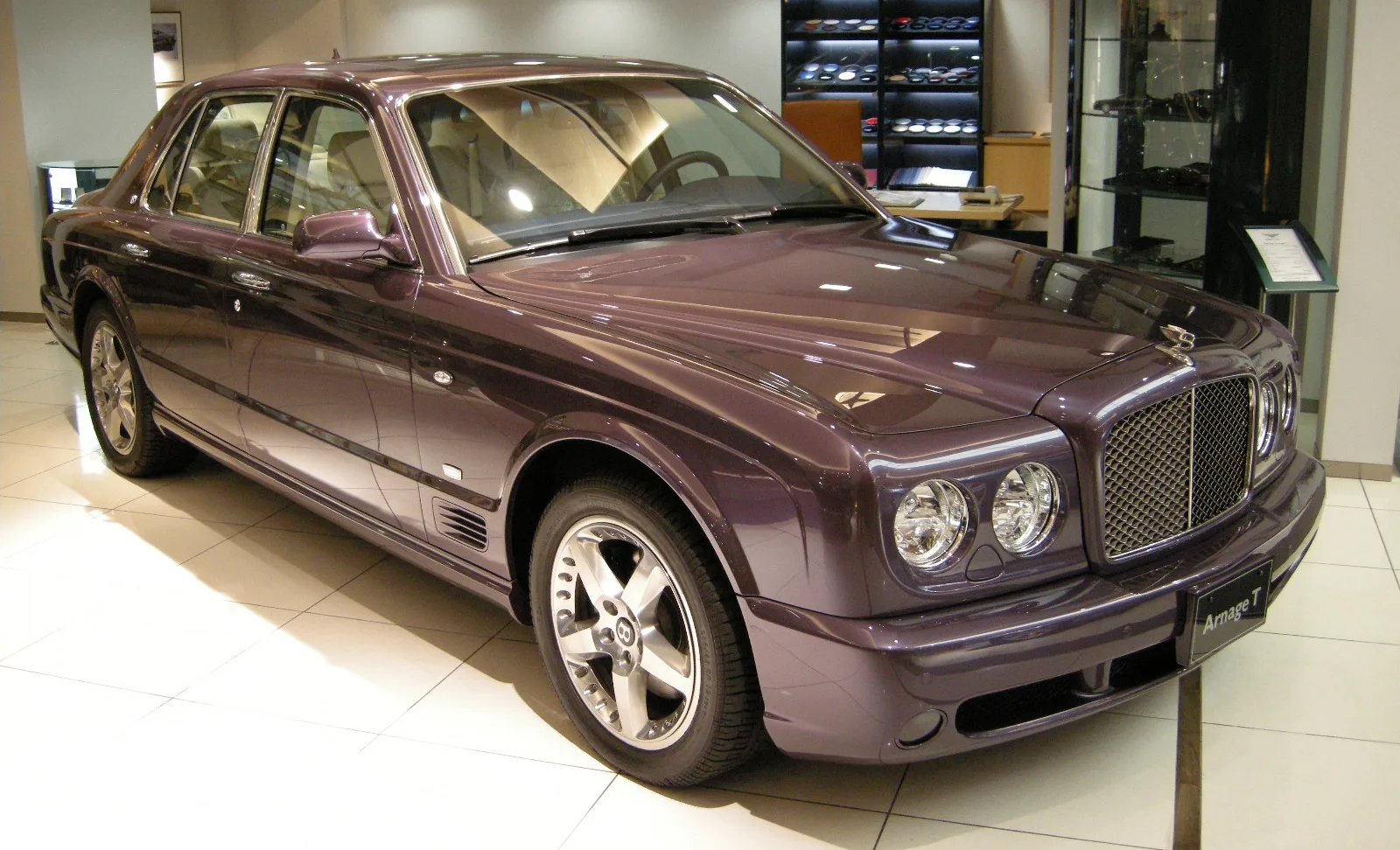
BMW engines, a return to a 6.75-litre Rolls-Royce V8, a long-wheelbase RL and the 507 PS Arnage T before the Mulsanne took over in 2009.
Built in Crewe between 1998 and 2009, the Arnage started with BMW engines before Bentley moved to a 6.75-litre Rolls-Royce V8. Bentley replaced it with the Mulsanne in 2009, and the range was sold as a full-size luxury saloon.
The Bentley Arnage was a full-size luxury saloon built at Crewe in England from 1998 until 2009. Bentley introduced it alongside the Rolls-Royce Silver Seraph, and both cars were the first wholly new designs for their marques since 1980. Its engine story is unusual, moving from BMW power to a 6.75-litre Rolls-Royce V8 within two years.
Where did the Arnage come from?
Vickers, then the owner of Bentley, wanted to replace derivatives of the Silver Spirit and Mulsanne that had been sold since 1980. For the first time the new cars would take their engines from outside suppliers, while their bodies would be built at Crewe. By late 1994 Vickers had selected a pair of BMW power units for the two marques.
Earlier candidates included the Cadillac Northstar and the Mercedes-Benz M119. The Silver Seraph used BMW's M73 V12, while the sportier Bentley used a twin-turbocharged 4.4-litre M62 V8. That engine came from Cosworth Engineering, a Vickers subsidiary, and produced 354 PS (260 kW; 349 hp), and its torque reached 569 N m (420 lb ft).
A Crewe-built saloon that began with BMW power and finished with the 507 PS Arnage T.
Why did Bentley switch engines in 1999?
During the 1998 takeover battle between BMW and the Volkswagen Group, BMW threatened to stop supplying engines if Volkswagen won. Customers grew uneasy about engine and part supply, and new orders fell sharply, even though supply later proved unaffected. Volkswagen needed a replacement engine for the Bentley.
Volkswagen adapted the drivetrain from the Turbo R, fitting the 6.75-litre Rolls-Royce L410 V8 into the Arnage body with a 4-speed 4L80-E automatic. That engine was thirsty and would not meet emissions rules without quick modifications.
What were the Red Label and Green Label?
The Red Label arrived in October 1999 with the 6.75-litre Rolls-Royce engine. The Green Label followed for the 2000 model year and kept the BMW engine, with modifications. Both versions received a stiffer bodyshell and larger wheels and brakes, because the older British engine was heavier.
Bentley said customers preferred the older engine's low-end torque over the higher-revving BMW unit. The engine delivered 835 N m (616 lb ft) through a single Garrett T4 turbocharger. That was the greatest torque of any four-door car at the time, although the extra output trimmed the 0-97 km/h (60 mph) time by less than a second.
Braking got worse despite the bigger brakes. A 1999 Green Label stopped from 113 km/h in 52 m (172 ft), while the later Arnage T needed 55 m (182 ft) from the same speed. Other revisions brought standard Alpine pop-up navigation, park distance control at both ends, more rear legroom, power folding mirrors and plastic headlamp covers from 2000.
Only seven Green Label cars were built, and all of them were left-hand drive.
How fast was the Arnage T?
The Arnage T was the sportier of the two main models and was described as the most powerful roadgoing Bentley at its launch in 2002 at the Detroit Motor Show. It produced 456 PS (335 kW; 450 hp) and 875 N m (645 lbf ft), and it claimed 0-97 km/h (60 mph) in 5.5 seconds with a top speed of 274 km/h (170 mph).
By 2007 the T had risen to 507 PS (373 kW; 500 hp), with 1,000 N m (738 lbf ft) of torque. Its 0-97 km/h time fell to 5.2 seconds, and the top speed reached 288 km/h (179 mph). The milder Arnage R stayed at 456 PS (335 kW; 450 hp).
Which updates came after 2001?
In 2001 the long-wheelbase car introduced a reworked 6.75-litre V8 with more than half new parts. Bosch Motronic engine management replaced the Zytek system, and two small Garrett T3 turbochargers took over from the single large T4. The result was rated at 405 PS (298 kW; 399 hp), with 835 N m (616 lb ft) of torque.
In 2002 the Red Label was renamed the Arnage R, and the Arnage T joined it as the sportier option. The range was facelifted in 2005 with four round headlights that echoed the Continental GT, and the BMW climate switchgear was swapped for parts from the Azure.
For 2007 the turbochargers became low-inertia Mitsubishi units to sharpen response. The four-speed automatic gave way to a six-speed ZF 6HP26 from the Continental GT range, and the dot-matrix instrument display used since 1990 was replaced by a full-colour screen.
What was the long-wheelbase RL?
The long-wheelbase Arnage debuted in 2001 at the North American International Auto Show. It gained length at the front and rear doors, and about 20 units also had a longer C-pillar. It was sold only as a bespoke Mulliner model, and it was renamed the RL from model year 2003.
Wheelbases ranged from 3,336 mm (131.3 in), only slightly longer than the standard car, up to 3,566 mm (140.4 in). A 3,844 mm (151.3 in) version also added 100 mm (3.9 in) of roof height. The suspension was retuned for the extra weight, so the bigger car still handled well.
Armour was available too. A full B6 package cost between $243,000 and $300,000 and gave protection from assault weapons and grenades.
Which special editions were built?
The 2001 Le Mans edition was planned at 150 cars, but 153 were built. It celebrated Bentley's return to Le Mans after 71 years and carried quad exhaust pipes, red brake calipers and Le Mans Series badges. The interior added dark burr walnut and Racing Green dials.
The Arnage Birkin of 2000 used the BMW 4.4-litre engine and honoured the Bentley Boys driver Tim Birkin. Its 52 cars are identified by a three-dial instrument cluster instead of five dials.
The Diamond Series marked 60 years of production at Crewe in 2006, with 60 cars planned, mostly for the United States. The final run was the Final Series, which was announced in September 2008 with 150 planned models. Only 96 were built before production ended. These featured 20-inch alloy wheels, a retractable Flying B hood ornament and a premium 1,000 watt audio system from Naim Audio.
How did critics review the Arnage?
Reviewers admired the Arnage's image and performance but criticised its price and running costs. The RAC scored it 7.6/10 and called it the best product the Crewe plant had ever produced. What Car? flagged poor fuel consumption, a lack of practicality and steep depreciation as its weak points.
Auto Express listed the whopping price and hefty weight among its drawbacks. Parker's Car Guides praised the car's agility for its size and its road presence, while noting the size and running costs as negatives.
What replaced the Arnage?
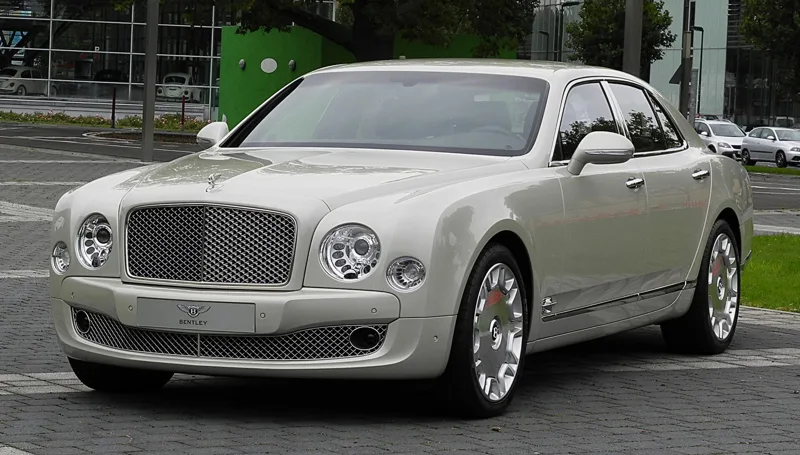
The Arnage was replaced by the Bentley Mulsanne, which launched in August 2009 at the Pebble Beach Concours d'Elegance. Its design was no longer shared with Rolls-Royce, because the two brands had separate parents, with Bentley in the Volkswagen Group and Rolls-Royce under BMW.
What are the Arnage specifications?
| Specification | Detail |
|---|---|
| Built | Crewe, England, 1998 to 2009 |
| Green Label engine | Twin-turbo 4.4-litre BMW-based V8, 32 valves, 354 PS (260 kW; 349 hp) |
| Red Label engine | 6.75-litre Rolls-Royce L410 V8, single Garrett T4, 835 N m (616 lb ft) |
| Reworked V8 (2001) | 405 PS (298 kW; 399 hp); torque 835 N m (616 lb ft) |
| Arnage T (2002) | 456 PS (335 kW; 450 hp), 875 N m (645 lbf ft), 5.5 seconds to 60 mph, 274 km/h (170 mph) |
| Arnage T (2007) | 507 PS (373 kW; 500 hp), 1,000 N m (738 lbf ft), 5.2 seconds to 60 mph, 288 km/h (179 mph) |
| Gearbox | ZF 5HP30 on BMW cars; 4-speed 4L80-E on Red Label; 6-speed ZF 6HP26 from 2007 |
| Wheelbase (R and T) | 3,116 mm (122.7 in) |
| Long-wheelbase (RL) | 3,336 mm (131.3 in) to 3,844 mm (151.3 in) |
| Final Series V8 | 5.3 seconds to 60 mph; under 10 mpg city, just over 20 mpg highway |