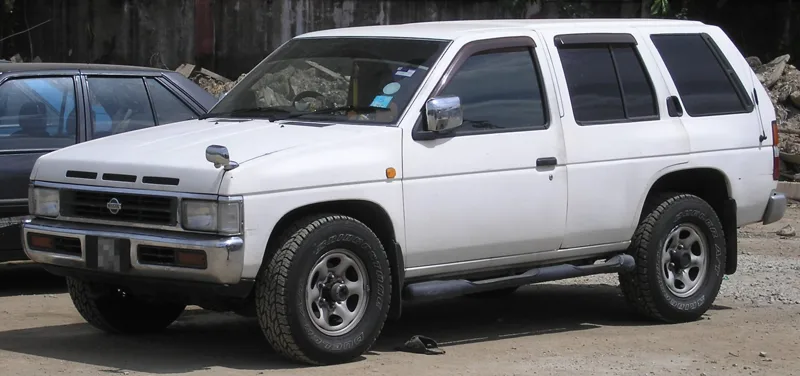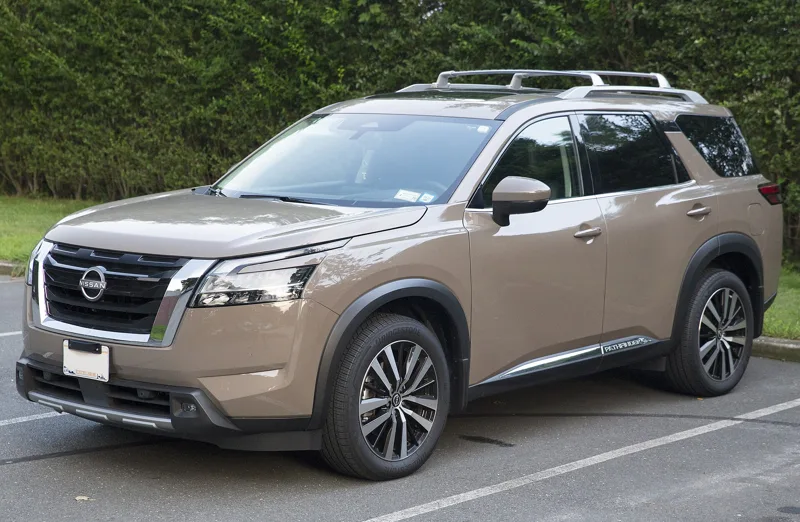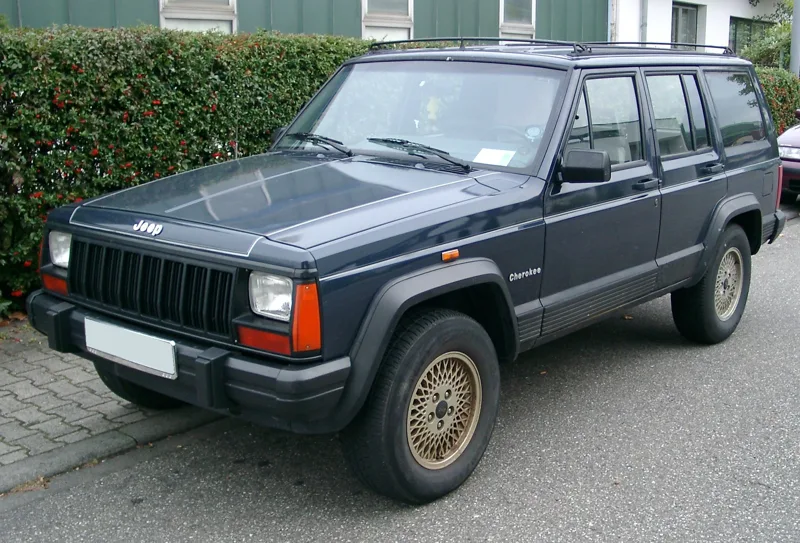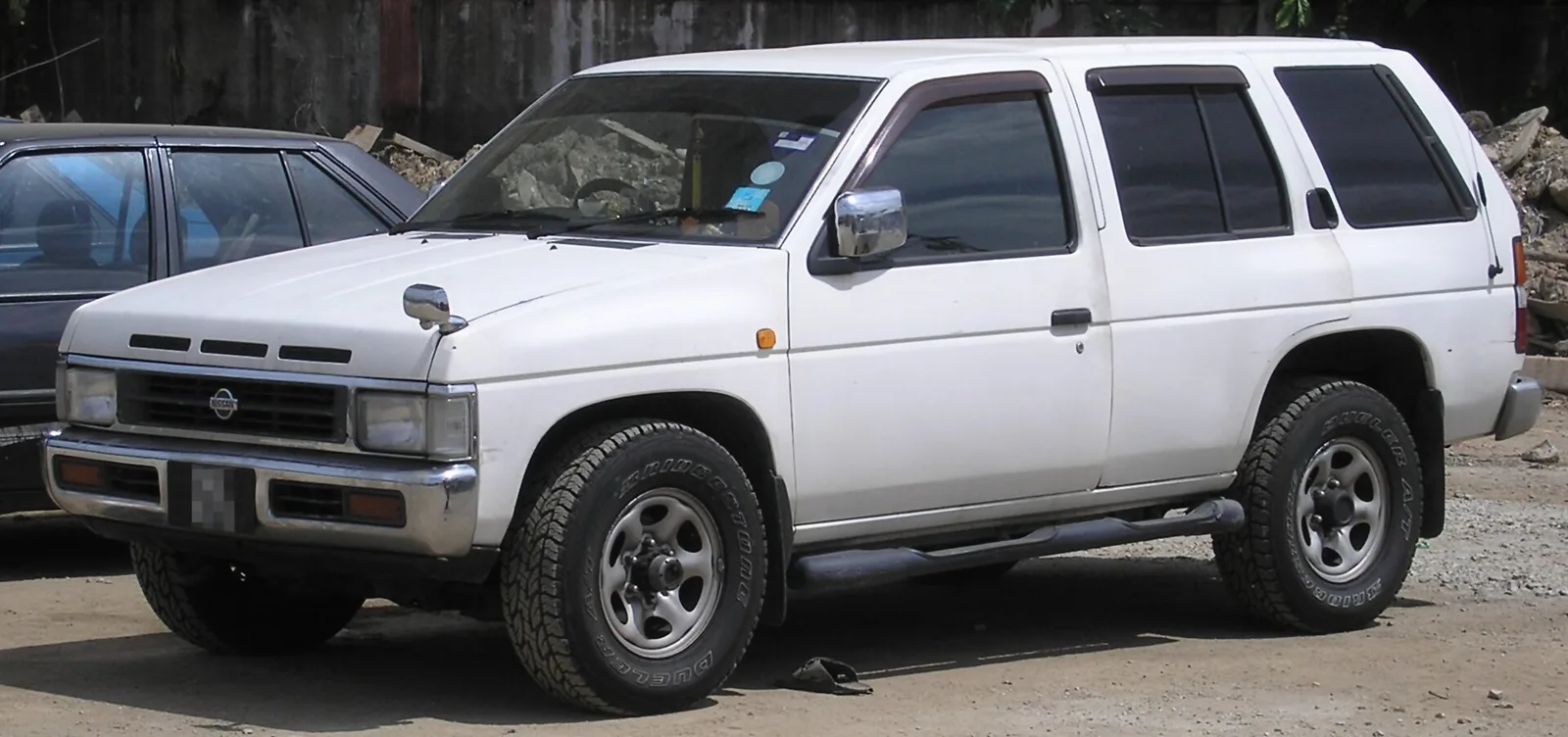
A body-on-frame Nissan built to answer the Cherokee, set against the unibody Jeep that became one of the most admired SUVs of its era.
The Nissan Pathfinder reached US buyers for the 1987 model year as a two-door body-on-frame SUV, and it was sold as the Terrano elsewhere. The Jeep Cherokee XJ, first sold for the 1984 model year, used unibody construction and became a benchmark for the modern SUV.
The Nissan Pathfinder and the Jeep Cherokee XJ were both compact SUVs that arrived in the mid-1980s to fill a gap between pickups and full-size utility vehicles. The Pathfinder was Nissan's answer to the compact SUV boom, built on a ladder frame and sold as the Terrano outside North America. The Cherokee XJ was a unibody design that is often credited with starting the modern SUV craze, and it lasted in the US until 2001.
Why was the Pathfinder built to rival the Cherokee?
Nissan developed the Pathfinder as its response to the Chevrolet Blazer, Ford Bronco II and Jeep Cherokee, along with non-American rivals such as the Toyota 4Runner, Honda Passport and Isuzu MU. Those were the vehicles Nissan had to beat for buyers who wanted a capable compact off-roader.
Jeep's Cherokee XJ, sold in the US from 1983 as a 1984 model, was the first all-new Jeep design since the 1963 SJ Wagoneer. GM had already launched the S-10 Blazer and GMC S-15 Jimmy one year before it, so the XJ arrived in a market that was already changing fast.
A ladder-frame Nissan built to answer a rival, set against the unibody Jeep that helped invent the modern SUV.
How did the two SUVs differ in construction?
The first Pathfinder was built on a ladder-type frame and shared its styling and most components with the Nissan Hardbody truck. That made it a body-on-frame vehicle in the traditional sense, with separate chassis and body parts.
The Cherokee XJ took the opposite route. It was the first American off-road vehicle with unibody construction, which meant the body and frame were fully integrated into a single structure. The design needed roughly 3,200 welds in a finished body, and it formed the basis of the Comanche MJ pickup from 1986 to 1992.
The XJ was a strong step down in size from the SJ it replaced. It weighed about 1,200 pounds less, was 31 inches shorter, six inches narrower and four inches lower, yet it kept 90 percent of the older car's interior volume.
The Pathfinder's rear suspension borrowed a five-link coil set-up from the Nissan Safari, which was meant to help its off-road ability. Its Japanese models were sold through Nissan Shop locations as the Terrano, a smaller companion to the Safari.
How did AMC plan the Cherokee XJ?
American Motors began work on a replacement for the full-size SJ in the late 1970s, aiming at a more compact vehicle. Renault's 1979 purchase of a 22% stake in AMC pushed the project towards a smaller footprint, lower weight, better fuel economy and improved ergonomics.
The early styling showed a distinct European influence and was mainly conceived by AMC engineers under design vice president Dick Teague. AMC put $250 million into the XJ's design and production, on the belief that the compact SUV was the future for American motoring.
Roy Lunn, AMC's vice president of engineering, created the Quadra-Link suspension specifically to reduce the risk of rollover. With GM's two-door S-10-based Blazer in view, AMC designed its own four-door body alongside the two-door.
Renault's Francois Castaing developed a drivetrain that used a significantly smaller engine than was typical for four-wheel-drive vehicles, which helped achieve substantial weight reduction. That combination of unibody structure, small engine and new suspension gave the XJ its distinct character.
How did the engines compare?
The Pathfinder's first engines were a 2.4-litre four-cylinder and a 3.0-litre V6. The VG30i V6 made 143 hp (107 kW) and 162 lb-ft (220 N-m) between 1987 and 1989, and it was joined by a 2.7-litre TD27 diesel in some countries.
For 1990 the V6 was upgraded to the VG30E with multi-point fuel injection, rated at 153 hp (114 kW) and 180 lb-ft (244 N-m). The four-cylinder was replaced by the KA24E that same year, and the first generation continued until 1995.
The Cherokee XJ started with the AMC 2.5-litre four-cylinder in 1984, and early models also offered a 4.0-litre inline six. Renault's Francois Castaing contributed to the XJ's drivetrain, which used a much smaller engine than was typical for a four-wheel-drive vehicle while still cutting weight.
The XJ's 4.0-litre later produced 190 hp in a high-output version for police and fleet use from 1996, replacing the earlier 177 hp engine. For 1996 the car also moved to Chrysler's JTEC engine management to meet OBD-II emissions rules.
Specifications side by side
| Specification | Nissan Pathfinder (first generation) | Jeep Cherokee (XJ) |
|---|---|---|
| Launch | Unveiled May 1985; two-door for the 1987 model year in the US | 1984 model year in the US |
| Construction | Ladder-type frame, body-on-frame | Unibody, first American off-road vehicle of its kind |
| Body styles | Two-door at first; four-door from October 1989 | Two-door and four-door, same track and wheelbase |
| Base engine | 2.4-litre Z24i four-cylinder, 106 hp (79 kW) | 2.5-litre AMC four-cylinder |
| V6 or six-cylinder | 3.0-litre VG30i, 143 hp; VG30E, 153 hp from 1990 | 4.0-litre inline six |
| Diesel | 2.7-litre TD27 in some countries | VM Motori turbodiesel in Europe from 1995 |
| Drive options | 2WD and manually engaged 4WD | Two-wheel drive added in 1985; four-wheel drive |
| Weight and size | Not given | About 1,200 pounds lighter and 31 inches shorter than the SJ |
| End of production | First generation until 1995 | US until 2001; global until 2014 |
What were the body styles and markets?
The Pathfinder was a two-door at first, and in North America it stayed a two-door until 1989. The four-door arrived in October 1989 without an extended wheelbase, so the front doors were shortened to fit the rear doors.
Nissan hid the rear door handles inside the C-pillar trim, so the four-door looked like a two-door truck with a camper shell. The same design tradition later appeared on the Armada, Juke, Terrano II and Xterra.
The Cherokee XJ was offered as a two-door or four-door, and the two-door had longer doors and front seats that folded forward for rear passengers. Its wheelbase and track were the same for both bodies.
The XJ first reached Europe in the late 1980s, starting with a Swiss import organisation in 1988 and a French launch through Renault in 1989. The UK followed in 1993, and right-hand drive models were first built for the US Postal Service.
How did the Terrano and QX4 spin-offs differ?
In Japan the Terrano was sold through Nissan's dealer network as an off-road, back-country alternative to the Fairlady ZX. Buyers could choose climate-controlled air conditioning, powered windows and seats and, from 1993, Recaro seats. Nissan's sports division Autech added packages such as the Wide R3M Urban and the AJ Limited.
The Japanese Wide models used overfenders and larger bumpers, which took their exterior dimensions beyond the regulations and into a higher annual road tax. Their model codes carried a leading L, and the emphasis on luxury reflected the strong economy of Japan's bubble period.
Infiniti's QX4, introduced in September 1996 and based on the Pathfinder, was the brand's first entry into the SUV segment. It used the same 3.3-litre V6 as the Pathfinder, with 168 hp (125 kW) that was considered underpowered for the class, and a 0 to 60 mph time of 12.4 seconds in period testing.
The Japanese Terrano Regulus offered a more upscale interior and 8.3 inches (211 mm) of ground clearance with a low-range four-wheel-drive system. In 2000 the QX4 gained a VQ V6 that lifted power from 168 to 240 hp, and a rear-wheel drive model was added to the range.
The Pathfinder also had a competition life. The first-generation Terrano entered the ninth Paris to Dakar rally in 1985, and it continued in rally entries for years, winning several times in its category.
How much influence did each one have?
The Cherokee XJ is widely credited with starting the modern SUV craze. Jeep sold it as a Sportwagon, a precursor to the modern sport utility vehicle, and it was the first small crossover SUV in the US, a title that owed much to its unibody design.
Its influence went further. Other automakers noticed the design taking sales from regular cars and took up the idea of a car-based utility vehicle, and the XJ's Quadra-Link suspension was designed to reduce rollover risk.
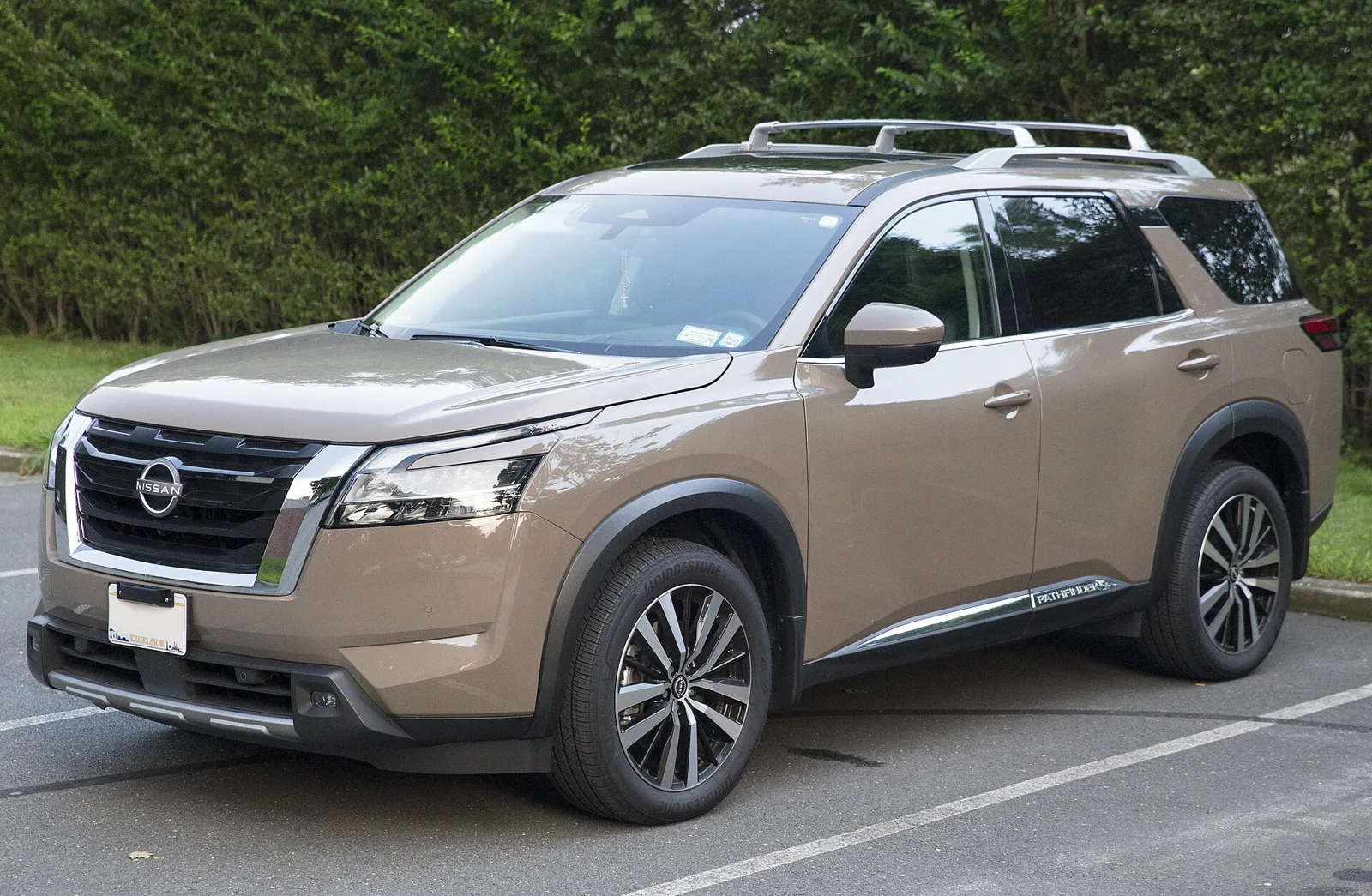
The Pathfinder's influence came through its long run and its later shift to a unibody platform. The third-generation model moved to Nissan's F-Alpha platform in 2004, and the 2012 R52 series dropped body-on-frame for a three-row unibody crossover.
Nissan previewed the third-generation car with the Dunehawk concept at the IAA in Frankfurt in August 2003. The 2005 model year brought a third row of seats for the first time, and a larger Armada, based on the Titan pickup, arrived in late 2003 and dropped the Pathfinder prefix in 2005.
The 2008 facelift for the US and Middle East borrowed the Titan's 5.6-litre V8, with an output of 310 hp (231 kW) and 388 lb-ft (526 N-m). Europe received a 2010 update with a 3.0-litre V6 turbodiesel making 228 hp, which Nissan said cut combined consumption to 8.4 L/100 km.
How did the XJ and Pathfinder fare with reviewers?
The XJ earned lasting praise. Kiplinger named it one of the cars that refuse to die in 2011, and Robert Cumberford, writing for Automobile, listed it among the 20 greatest cars of all time, calling it possibly the best SUV shape ever.
The Pathfinder's road reputation rested more on its practical value and its long run of updates. Its engines were improved over time, with the 1990 VG30E and the 2001 VQ35DE V6 lifting power steadily.
How did the XJ's later years and sister models play out?
Jeep updated the XJ for 1997 with a steel liftgate in place of the fibreglass one, restyled taillights, a new front header panel and an all-new instrument panel. A stiffer unibody frame improved noise and vibration, and new door seals cut wind noise at speed.
A variation called the Jeep Wagoneer ran from 1983 to 1990. The Wagoneer Limited had vinyl woodgrain trim on the sides and cloth seats with leather bolsters, and its standard equipment included air conditioning, cruise control and power disc brakes.
The XJ was also tied to the Chrysler decision to keep it alive. Chrysler had planned to replace the compact XJ with the larger ZJ, which became the Grand Cherokee in 1993, but the smaller model's continuing popularity led executives to keep the XJ until 2001.
Which SUV suits which buyer?
On the figures, the Pathfinder suits a buyer who wants a body-on-frame Nissan with a choice of V6 engines, a rear suspension borrowed from a proven off-roader and an option of four-wheel drive. The Cherokee XJ suits a buyer who wants the lighter unibody approach, a straight-six and a design that enthusiasts still trade in today.
The XJ's unibody construction gave it a lighter, more car-like ride than a ladder-frame truck. Buyers who wanted towing or a heavy-duty chassis would find the Pathfinder's frame the better tool.
Neither vehicle wins outright. The Pathfinder offered a broader range of drivetrains and a longer production life in its first generation, while the Cherokee XJ offered the more influential design. The right choice depends on whether a buyer values chassis type, engine choice or the car's place in SUV history.