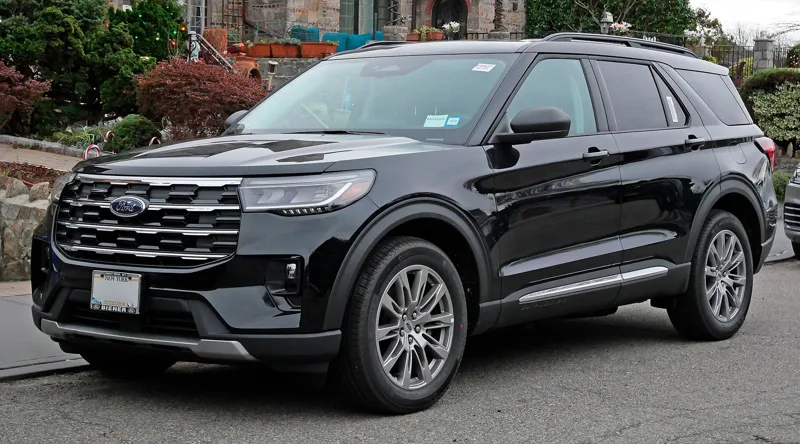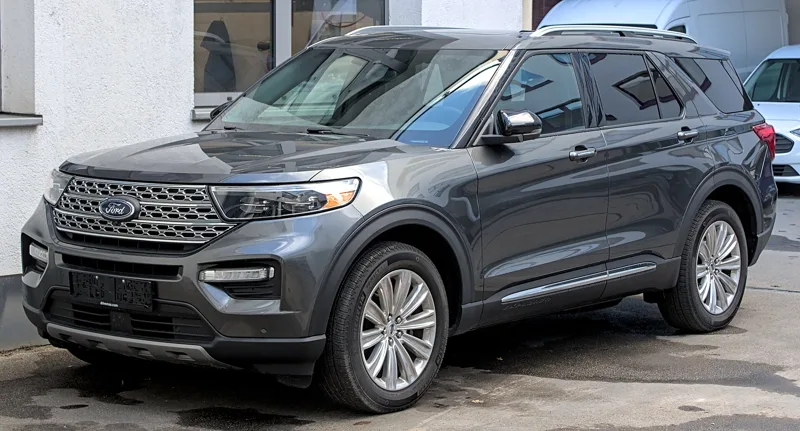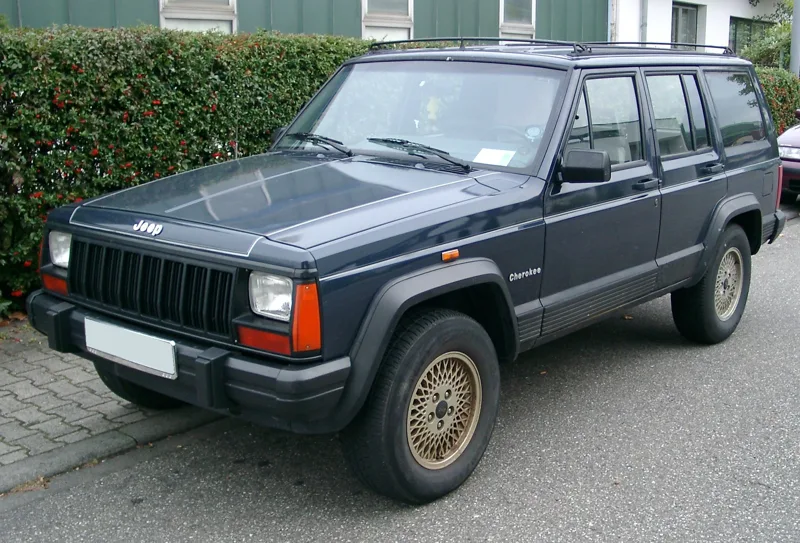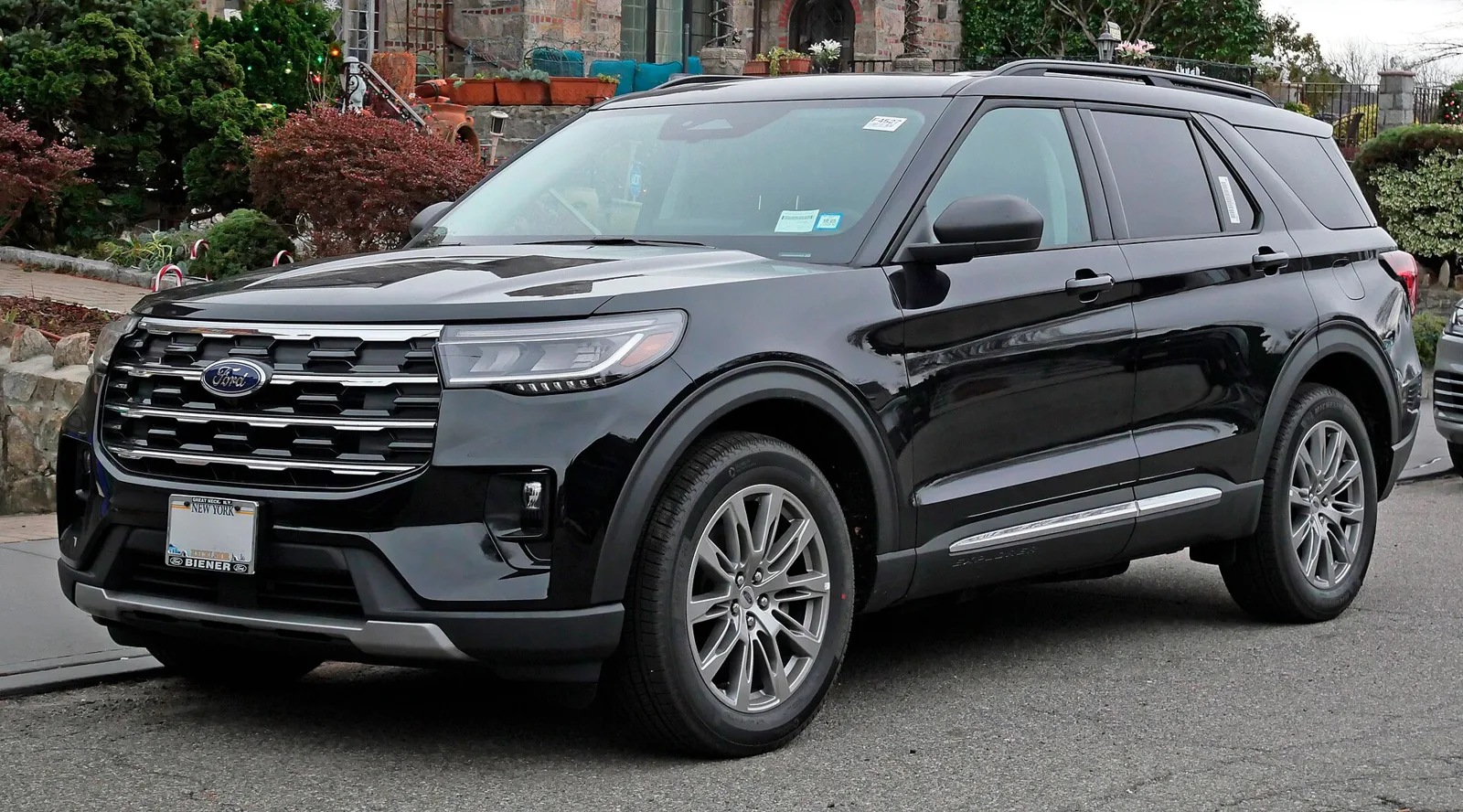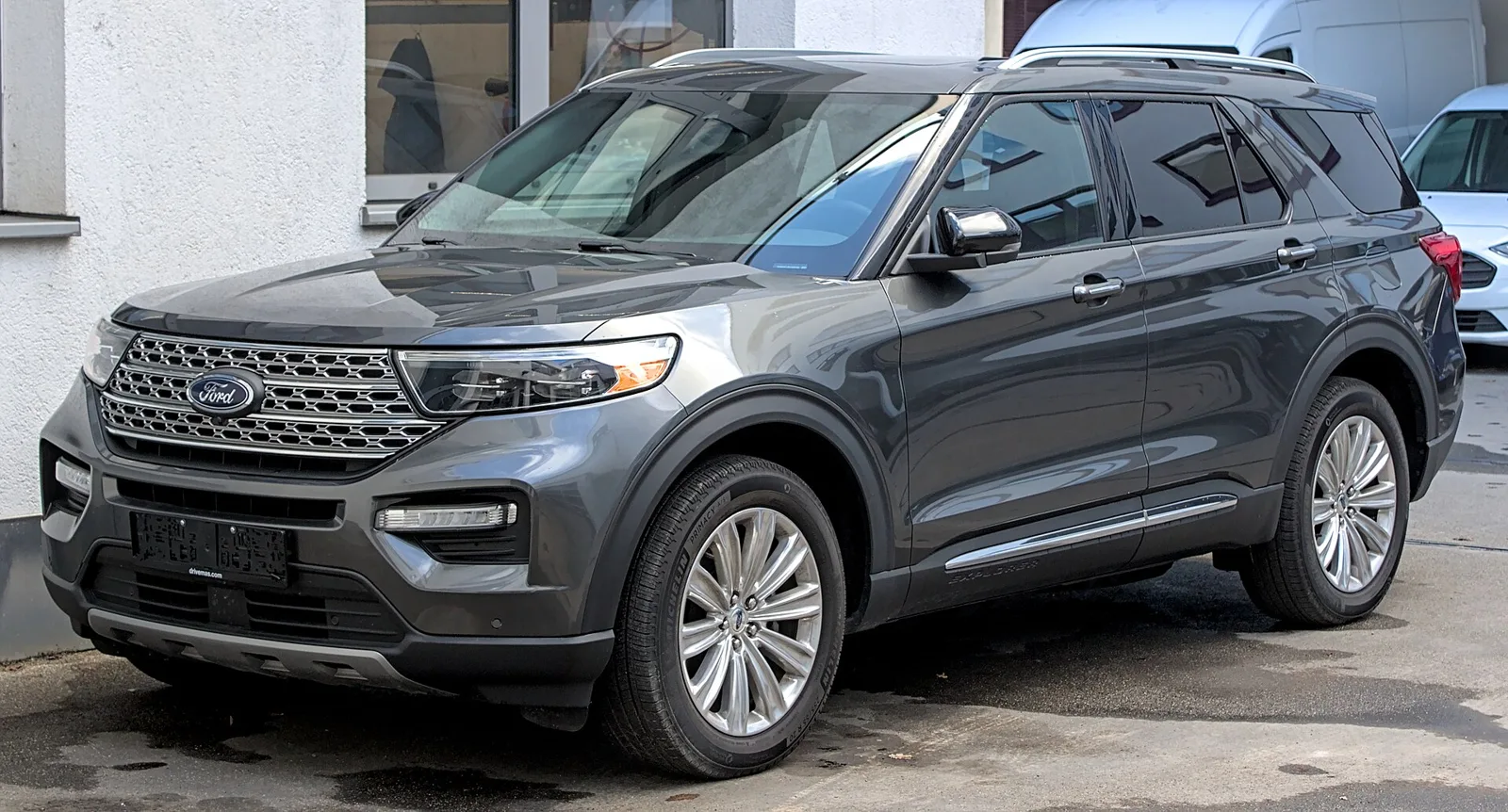
Ford's first five-door Explorer was built to fight the Jeep Cherokee XJ, and the two designs took very different routes to the same family off-roader.
The Ford Explorer began as a 1991 five-door SUV built to take on the Jeep Cherokee XJ, which had introduced unibody construction to the American off-road market in 1984. The two were direct rivals, and they differed most in chassis design, with the Explorer on a truck frame and the XJ on a unibody.
The Ford Explorer and the Jeep Cherokee XJ were built to fight for the same buyers: families who wanted a five-door, off-road-capable vehicle that did not feel like a truck. The Explorer arrived in 1991 as a replacement for the three-door Bronco II. The Cherokee XJ had already opened the segment in the mid-1980s, and Ford's Explorer was designed to compete with it directly.
Where did the Explorer and the XJ come from?
The Explorer was introduced in March 1990 as an early 1991 model, replacing the Bronco II. It was Ford's first five-door SUV, and its design balanced off-road capability with family use. The Cherokee XJ was introduced for the 1984 model year, and it was Jeep's first all-new design since the 1963 SJ Wagoneer.
The XJ was developed at American Motors in the late 1970s to replace the full-size SJ Cherokee with something more compact. Renault, which took a 22% stake in AMC in 1979, pushed the project toward a smaller footprint, lower weight and better fuel efficiency. American Motors put $250 million into the XJ's design and production.
The Explorer's roots are in Ford's truck range. Its name came from a trim package that had earlier appeared on F-Series pickups, and its mechanical base was shared with the Ranger. That meant the Explorer was a truck at heart, while the XJ was not.
The Explorer was a truck-based answer to a unibody rival, and the XJ was the vehicle that made the compact SUV a market in the first place.
Why was the XJ so influential?
The XJ is widely credited with spawning the compact SUV trend that followed. Jeep marketed it as a Sportwagon, a precursor to the modern sport utility, and its appeal drew buyers away from ordinary station wagons. It was also one of the first American off-road vehicles built with unibody construction.
American Motors also pioneered a product lifecycle management process, with development drawings and documents held in a central database by 1985. Chrysler expanded that system across its enterprise after acquiring AMC in 1987.
The XJ's engineering also carried a clever suspension. Roy Lunn, American Motors' vice president of engineering, created the Quadra-Link rear suspension to reduce the risk of rollover. Renault's Francois Castaing contributed a drivetrain that used a smaller engine than typical four-wheel-drive vehicles, and the weight savings helped the car's handling.
Its reputation has lasted. The 2007 title Jeep Off-Road described the XJ as an important step in the development of four-wheel drive, and in 2011 Kiplinger magazine included it among cars that refuse to die. The automotive writer Robert Cumberford named the XJ among the 20 greatest cars of all time, praising its shape.
How did the two designs differ in construction?
The Explorer used the chassis of the Ranger, with a coil-sprung front suspension and a leaf-sprung solid rear axle. The front was a Twin I-Beam setup on two-wheel-drive models and a Twin-Traction Beam on four-wheel-drive models, and brakes were discs at the front with drums at the back.
The second-generation Explorer kept the same U1 platform but replaced the Twin I-Beam front with short and long-arm wishbones, which improved on-road handling and let the chassis carry larger engines. The rear stayed a leaf-sprung live axle.
The XJ was a unibody, with the body and frame built as one structure. Compared with the SJ it replaced, the XJ shed 1,200 pounds, stood 31 inches shorter and six inches narrower, and sat four inches lower, yet it kept 90 percent of the interior volume thanks to the unibody design. Its body used approximately 3,200 welds.
That structural gap shaped how each vehicle was built. The Explorer's truck frame suited buyers who wanted a traditional sturdy base, while the XJ's unibody gave it a lighter weight and a more car-like feel. On the facts given, the choice came down to which of those two qualities a buyer valued more.
What were the bodies and interiors like?
The first Explorer grew over the Bronco II by 12.6 inches in the three-door form and 22.4 inches in the five-door form, and the five-door weighed 730 pounds more than the 1990 Bronco II. Its five-door wheelbase was 111.9 in (2,842 mm), and the three-door used a 102.1 in (2,593 mm) wheelbase.
The five-door Explorer had standard front bucket seats and a three-passenger rear bench, with a split front bench as an option that brought seating for six. Its wider body allowed three-across rear seating, and the traditional swing-away spare carrier was dropped in favour of an underfloor location.
The XJ came as a two-door or four-door model with five-passenger seating. The two-door had longer doors and front seats that folded forward for rear passengers, and it had the same track and wheelbase as the four-door. In 1985 a two-wheel-drive version was added, the first Jeep offered without four-wheel drive since 1967.
Which engines did each one offer?
The first-generation Explorer used a 4.0-litre Cologne V6 that was initially rated at 155 hp (116 kW) and was raised to 160 hp (119 kW) for 1993. The second generation kept that V6 and added a 4.9-litre V8 with 210 hp (157 kW) for 1996, which was marketed as a 5.0-litre engine.
For 1997 Ford added an overhead-cam version of the 4.0-litre V6 rated at 210 hp, which rivalled the V8 for output. By 1998 it was offered on all non-XL trims, and the second-generation Explorer also gained dual airbags, which were a first for an American-brand SUV.
The XJ started with the AMC 2.5-litre four-cylinder engine and early versions came with a 4.0-litre inline six. European XJs gained a 2.5-litre petrol engine and a 2.5-litre VM Motori turbodiesel in 1995. In 1996 the police and fleet SE received a high-output version of the 4.0-litre six rated at 190 hp (142 kW).
What transmissions and drive systems did they use?
The first Explorer had a Mazda M5OD five-speed manual as standard, with a Ford four-speed A4LD overdrive automatic as the option. Its Touch Drive electric-shift transfer case allowed shifts into four-wheel drive at any speed and into low range when stopped, and a manual-shift transfer case was offered as an alternative.
The Explorer's rear axle was the Ford 8.8, offered as a limited-slip or open differential, and multiple axle ratios could be specified. Four-wheel-drive front axles used the Twin-Traction Beam design with Dana 35 and some Dana 44 components.
The XJ's drive systems were tied to its unibody design and its engine choices. The two-wheel-drive models used a single axle tube from hub to hub without a differential, which kept the front suspension simple and inexpensive. Four-wheel drive remained the core of the XJ's appeal for off-road use.
What trims did the two families offer?
The first Explorer followed Ford's light-truck trim system with XL, XLT and Eddie Bauer. The three-door added an Explorer Sport trim with black lower bodywork and alloy wheels. From 1993 the five-door also came as the Explorer Limited, a luxury trim aimed at the Oldsmobile Bravada.
Mazda's version of the first Explorer, the Navajo, was offered in DX and LX trims, and it used a 4.0-litre V6 rated at 160 hp (119 kW). The Navajo won the 1991 Motor Trend Truck of the Year award, although its reputation later suffered during the Firestone and Ford tyre controversy.
The XJ had its own variants. The Jeep Wagoneer ran from 1983 until 1990 with its own grille and tail lamps, and in the Limited form it had vinyl wood trim and cloth seats with leather bolsters. From 1996 a special SE version was built for police and fleet use, with no interior rear door handles.
How did sales and reception compare?
The Explorer's sales record is strong. In 2020 it became the best-selling SUV in the American market, which marks a long run of popularity for a model that began life as a Bronco II replacement. The XJ's European sales were slow at first, with only a few cars exported in the early years, and notable sales began in the late 1980s or early 1990s.
Europe saw the XJ in France from 1989, through Renault, and in more markets during 1992. The United Kingdom received it in 1993, and right-hand drive versions also went to the United States Postal Service, which needed them for rural mail routes.
The XJ's critical reputation is especially high. Quentin Willson, the British motoring presenter, called it a real 4x4 icon, and the XJ's long life, from 1984 to 2001 in the United States, gave it time to build a following among off-roaders. Its aftermarket support remains strong.
Which models branched off from each?
The Explorer produced several spin-offs. Mazda sold the Navajo, Mercury sold the Mountaineer from 1997, and Ford added the Sport Trac crew-cab pickup from 2001. Lincoln later sold a luxury version as the Aviator, and the Explorer also served as a basis for police vehicles.
The XJ's family was smaller but important. The Wagoneer became a separate trim and name between 1983 and 1990, and the XJ-based Comanche pickup, known as the MJ, was built from 1986 to 1992. The XJ itself remained in the US until 2001, while the larger ZJ Grand Cherokee arrived in 1993.
Side-by-side comparison
| Point | Ford Explorer | Jeep Cherokee (XJ) |
|---|---|---|
| Introduced | March 1990 announcement, early 1991 model | 1984 model year |
| Construction | Ranger-based truck chassis | Unibody, one integrated structure |
| Body styles | Three-door and five-door wagon | Two-door and four-door, five passengers |
| Five-door wheelbase | 111.9 in (2,842 mm) | Not given |
| Starting engine | 4.0-litre Cologne V6, 155 hp (116 kW) | 2.5-litre AMC four-cylinder |
| Larger engine | 4.9-litre V8, 210 hp (157 kW) from 1996 | 4.0-litre inline six |
| Diesel | Not given | 2.5-litre VM Motori turbodiesel in Europe from 1995 |
| Manual gearbox | Mazda M5OD five-speed | Not given |
| Police or fleet version | Not given | SE police and fleet version from 1996 |
| Successor or family | Sixth generation is current; Sport Trac and Aviator branches | Grand Cherokee ZJ from 1993; Comanche MJ pickup |