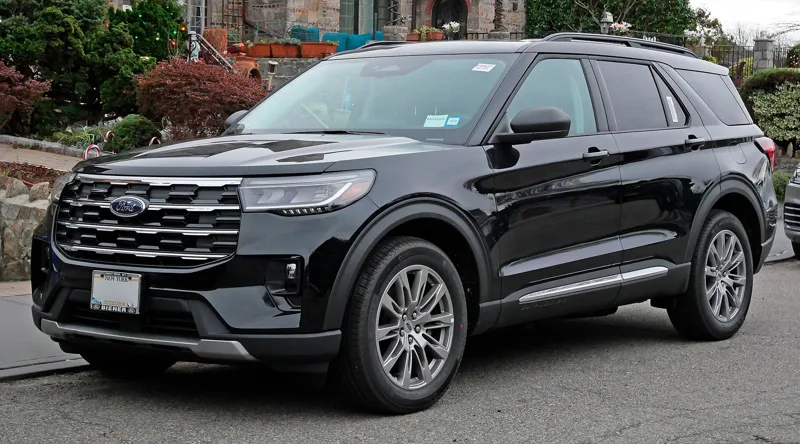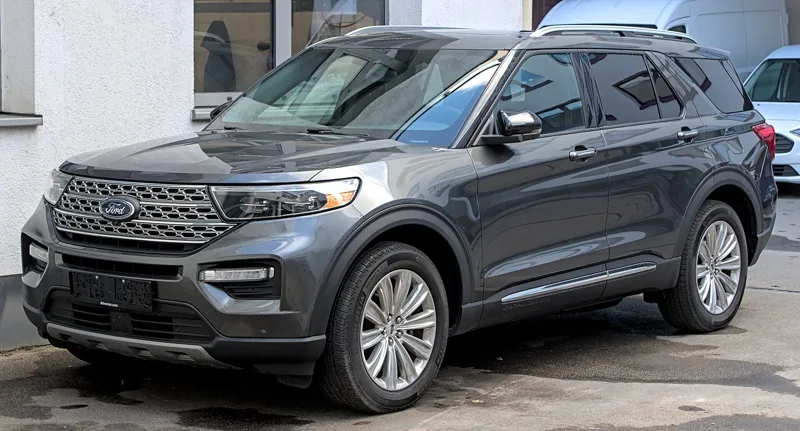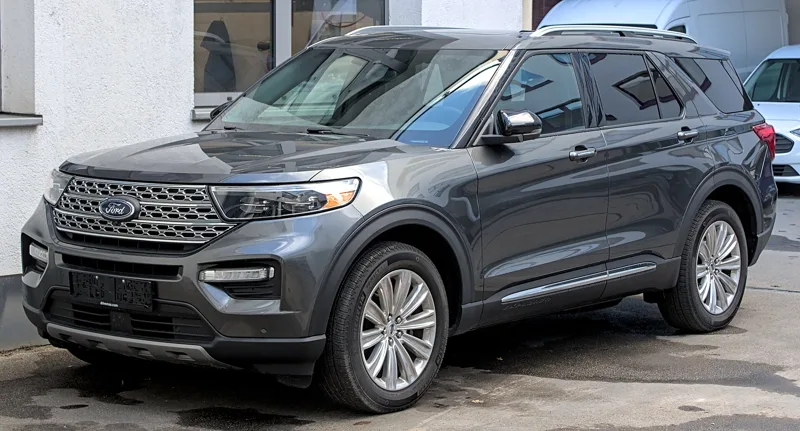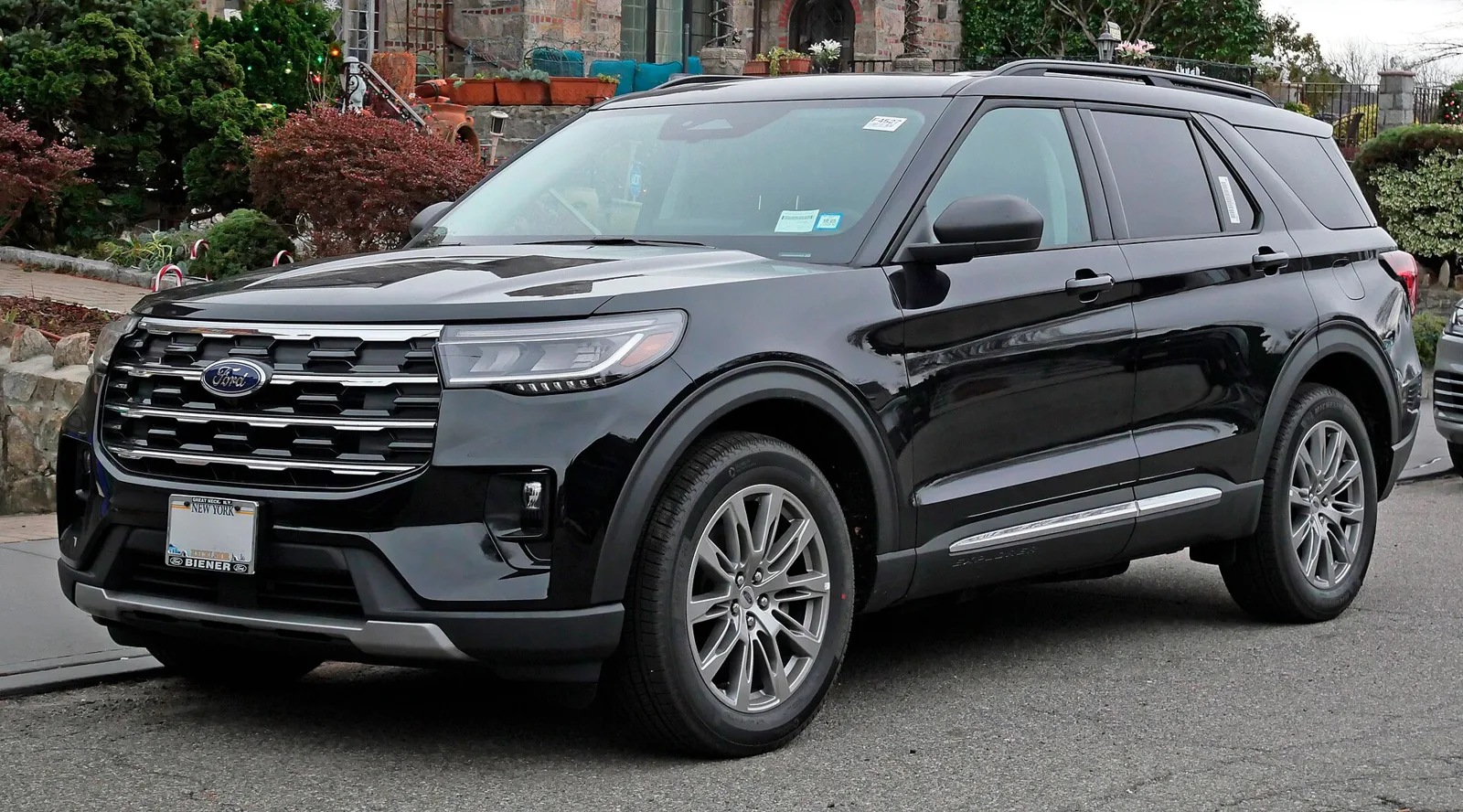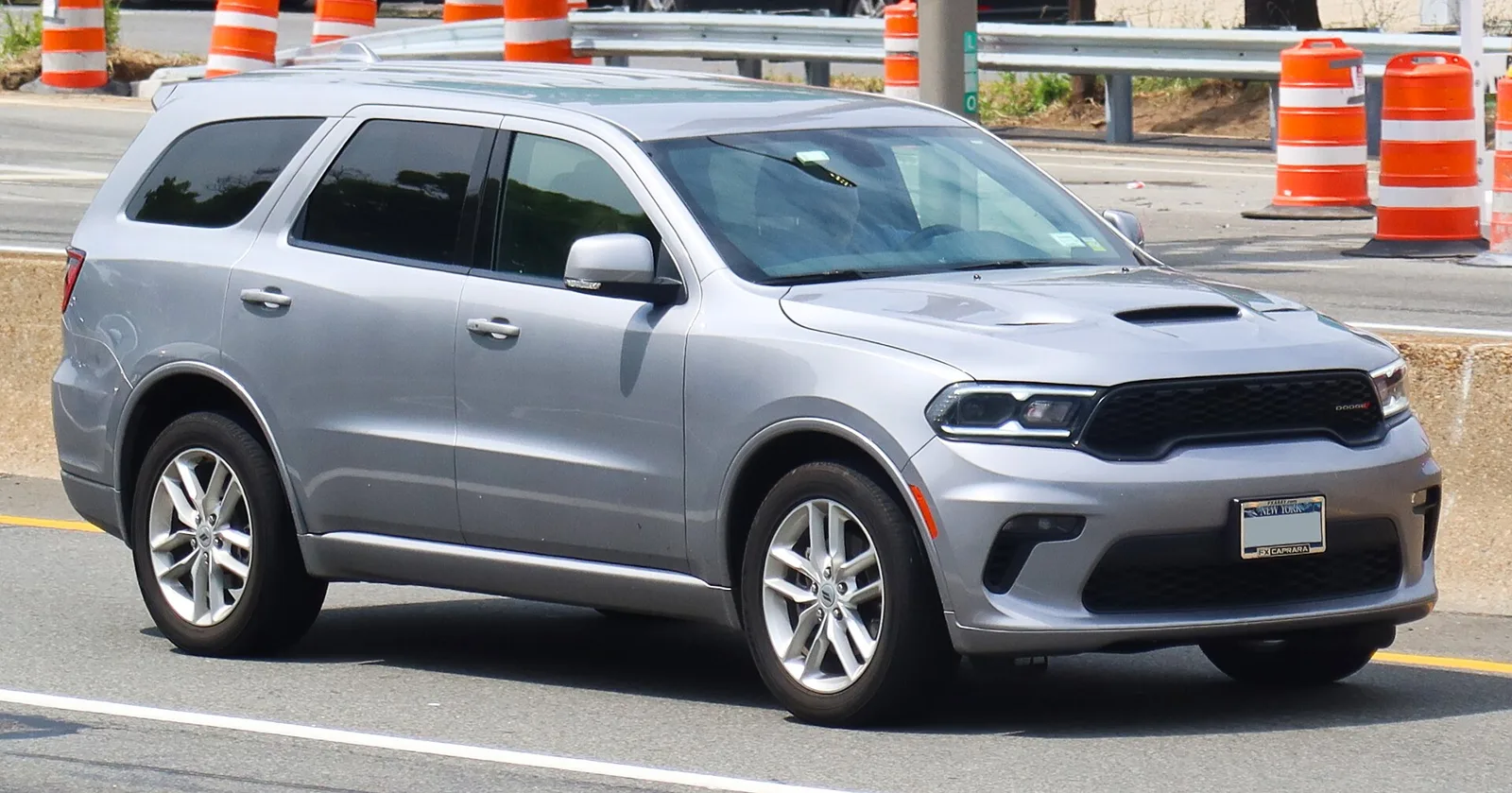
Both were mid-size SUVs that grew up in North America, but the Durango moved from a truck frame to a unibody while the Explorer kept its truck roots.
The Dodge Durango was a mid-size SUV from the 1998 model year, first built on Dakota and Ram truck parts and later moved to a unibody. The Ford Explorer was a five-door SUV from the 1991 model year built on Ranger underpinnings. Both sold well in North America, and the facts given show how their engines and frames diverged.
The Dodge Durango and the Ford Explorer were both mid-size SUVs sold across North America, and both were built for families who wanted seven or eight seats and a bit of towing or off-road ability. The Durango arrived in 1998 on truck parts from the Dakota and Ram. The Explorer had started in 1991 as Ford's first five-door SUV, and it shared its underpinnings with the Ranger pickup.
Where did the Durango and the Explorer come from?
The Durango went on sale for the 1998 model year as a mid-size SUV from Dodge. Its first generation shared its front end, instrument panel and front seats with the Dakota pickup, and its taillights and liftgate handle came from Chrysler's minivans of the period. The Explorer was introduced in March 1990 as an early 1991 model, replacing the three-door Bronco II.
The Durango's first two generations were body-on-frame and built at the Newark Assembly Plant in Delaware through the 2009 model year. The Explorer's first generation was built on the Ranger's truck chassis, and its first four generations were built at Louisville and at a St. Louis plant that has since closed.
Each family then moved on. The third-generation Durango began with the 2011 model year on the same platform as the Jeep Grand Cherokee, with a unibody structure and assembly at the Jefferson North plant in Detroit since late 2010. The Explorer kept its truck heritage for longer, and the sixth generation is the current model.
Two mid-size SUVs from the same continent and the same decade, one that stayed a truck for longer and one that became a unibody crossover.
Which of the two was bigger?
The second generation measured 7 in (180 mm) more in length, 2 in (51 mm) more in width and 3 in (76 mm) more in height than the first, and it gained a third-row bench that gave it eight seats. The first Durango had seven passengers as standard, with an eight-passenger option that used a rear-facing third row.
The Explorer's five-door wheelbase was 111.9 in (2,842 mm), while the three-door used 102.1 in (2,593 mm). The five-door was 22.4 inches longer and 730 pounds heavier than the 1990 Bronco II, and it used a three-across rear bench in the five-door body.
Those figures show that the Durango grew most in its second generation, while the Explorer's growth came with the move from the three-door to the five-door body.
The first Durango's roof sat two inches higher than the front seats, which allowed stadium seating for the third row, and the roof rack was designed to hide the raised profile.
The second generation also used a Watt's linkage on its rear axle, which centred the axle and reduced rear-end skate over rough surfaces, while allowing a lower and wider cargo floor.
Its styling drew mainly on the Powerbox concept, a design that had grown out of the 1999 Power Wagon concept, and the production car was first previewed as a concept at the 2003 Detroit Auto Show.
The three-door Explorer body had pop-out rear quarter windows, and the B-pillar and D-pillars were blacked out in a look that became a feature of the model line.
What engines did each one offer?
The first Durango launched with a 5.2-litre Magnum V8 rated at 230 hp (172 kW) and a 5.9-litre Magnum V8 rated at 245 hp (183 kW). In 2000 the 5.2 gave way to a 4.7-litre PowerTech V8 for four-wheel-drive models, and a 3.9-litre Magnum V6 at 175 hp (130 kW) was offered for 1999 but sold in small numbers.
The Explorer's first generation used a 4.0-litre Cologne V6 rated at 155 hp (116 kW), raised to 160 hp (119 kW) for 1993. The second generation added a 4.9-litre V8 with 210 hp (157 kW) for 1996, and by 1997 its output had reached 215 hp (160 kW) on revised cylinder heads.
The second-generation Durango offered a 3.7-litre Magnum V6 with 210 hp (157 kW), a 4.7-litre Magnum V8 with 235 hp (175 kW) and a 5.7-litre Hemi V8 with 335 hp (250 kW) from 2004 to 2008. The 2009 Hemi produced 376 hp (280 kW) and 401 lb ft (544 N m).
How fast was the Durango Shelby?
The Shelby S.P.360 was a limited-edition Durango built in 1999 and 2000 with a supercharged 5.9-litre Magnum V8. Its 360 hp (268 kW) and 412 lb ft (559 N m) of torque gave it a 0 to 60 mph run of 7.1 seconds and a top speed of 142 mph (229 km/h).
The car came standard in Viper blue paint with two racing stripes down the centre, and it had unique wheels, tyres, suspension and bumpers. It was a niche car within the Durango range.
The Durango's R/T trim also brought an all-wheel-drive performance version with a 5.9-litre Magnum V8. The Explorer's overhead-cam V6 rivalled its V8 in output, but it was not sold with a performance trim.
From 2000 the 3.9-litre V6 was no longer offered, which left only V8 engines for the rest of the first generation's production. The R/T and Shelby models were the two with the 5.9-litre V8 as standard equipment, which made them the performance end of the range.
What was the 2009 hybrid like?
The 2009 Durango hybrid used a GM-designed two-stage hybrid system, with two 87 hp electric motors added to the 5.7-litre V8 for a combined output of around 400 horsepower. Every hybrid came with four-wheel drive as standard, and its fuel economy rose to 19 mpg in the city and 20 on the highway, against the Hemi's 13 and 18.
The hybrid added 400 pounds (180 kg) and cost $4,000 more than the standard 5.7-litre Durango. Chrysler discontinued it within two months of its debut, citing falling demand for full-size SUVs in the economic slowdown. The Newark plant that built it was also closed, and around 800 hybrids were made in total.
Neither the Explorer nor any other vehicle in this comparison offers a hybrid, so the Durango hybrid stands alone. It was an ambitious step for a large SUV, but it lasted only a short time on sale.
Which trim levels were on offer?
The first-generation Durango came in SLT, SLT Plus, Sport, SXT and R/T trims. The SLT was the basic and then midrange trim, while the SLT Plus was the most luxurious. The R/T was the high-performance trim with a 5.9-litre engine and all-wheel drive, and the SXT became the entry-level trim in 2002.
The second-generation Durango offered ST, SXT, SLT, Adventurer and Limited trims. The Limited was the most luxurious, with leather upholstery, a memory system for the driver's seat and mirrors, and an Infinity sound system with eight speakers and a subwoofer. The Adventurer added an off-road look and a V8 engine.
The Explorer followed Ford's light-truck trim system. The XL, XLT and Eddie Bauer trims were joined by the Limited in 1993, which was offered only as a five-door and added a sunroof, a compact disc player and a towing package as its only options.
For 2001 Dodge focused on the interior, with redesigned trim panels, dash controls and steering wheel, and dual-zone climate control added as standard for rear passenger comfort. Sound systems then came with six speakers as standard.
The 2002 model year added the SXT as an entry-level trim with optional side curtain airbags, and the 2003 Durango gained four-wheel disc brakes.
In 1999 the four-wheel-drive 5.2-litre and 5.9-litre V8 models earned the best crash test results of the range, with a total rating of 6.8 out of 10.
How many seats and how much could each tow?
The first Durango was marketed to seat up to seven people and could tow up to 7,500 lb (3,400 kg) when properly equipped. The second generation grew to eight seats with a third-row bench, and the 5.7-litre Hemi made the bigger towing figure more usable for owners.
The Explorer's five-door form had front bucket seats and a three-passenger rear bench as standard, with a split front bench as an option that expanded the car to six passengers. Its towing ratings are unavailable here, so no figure is given for that vehicle.
What did sales and later history look like?
Over two million Durangos have been sold since the model arrived in 1998, which makes it a major seller in its class. The Chrysler Aspen, a luxury SUV based on the second generation, was launched for the 2007 model year, and the Durango was also sold under the Aspen name from 2007 to 2009.
The Explorer's sales record includes a peak in 2020, when it became the best-selling SUV in the American market. The Mazda Navajo, a rebadged first-generation Explorer, won the 1991 Motor Trend Truck of the Year award, and the Sport Trac crew-cab pickup followed in 2001.
Both vehicles moved to newer platforms in their later years, with the Durango's third generation on the Grand Cherokee platform and the Explorer's second generation on the U1 platform that was later updated. Neither vehicle kept its original structure through its whole life.
Side-by-side comparison
| Point | Dodge Durango | Ford Explorer |
|---|---|---|
| Introduced | 1998 model year | Early 1991 model, announced March 1990 |
| First-generation construction | Body-on-frame, Dakota and Ram parts | Body-on-frame, Ranger chassis underpinnings |
| Current construction | Unibody, Jeep Grand Cherokee platform | Sixth generation, current |
| Seating | Seven, with eight-seat option | Six with split front bench |
| Towing | Up to 7,500 lb (3,400 kg), first generation | Not given |
| Largest V8 at launch | 5.9-litre Magnum V8, 245 hp (183 kW) | 4.9-litre V8 from 1996, 210 hp (157 kW) |
| Performance model | Shelby S.P.360, 360 hp (268 kW) | Not given |
| Hybrid | 2009 hybrid, around 800 built | Not given |
| Sales milestone | Over two million since 1998 | Best-selling SUV in the American market in 2020 |