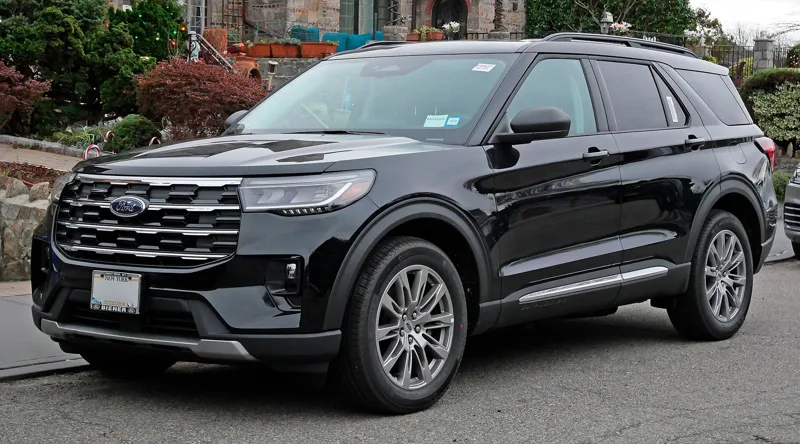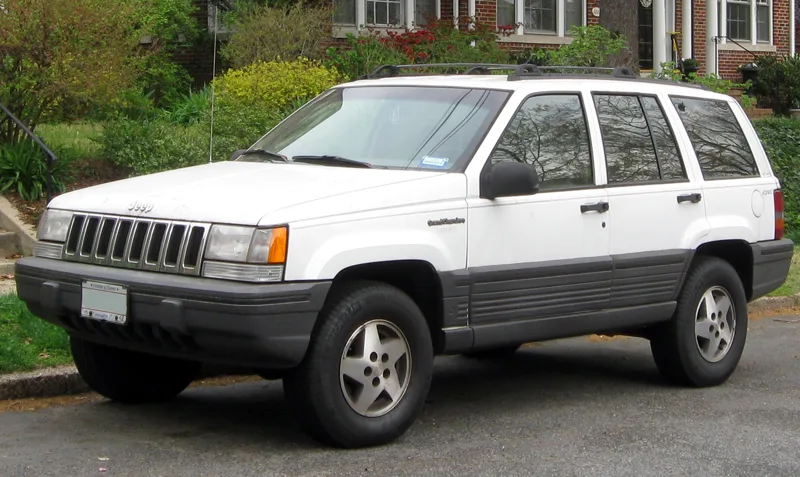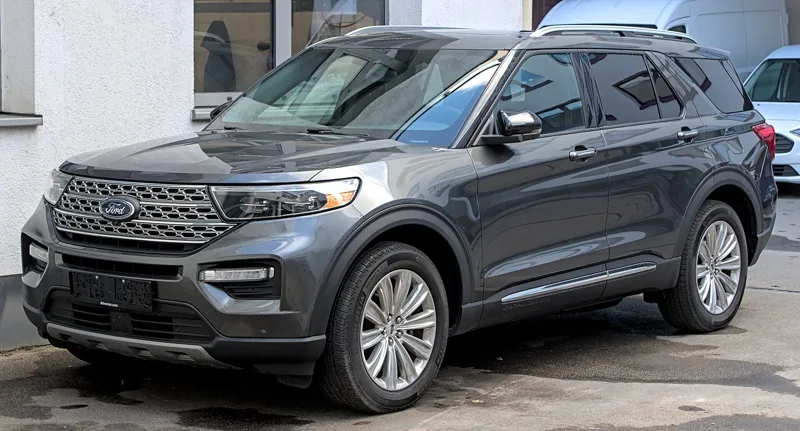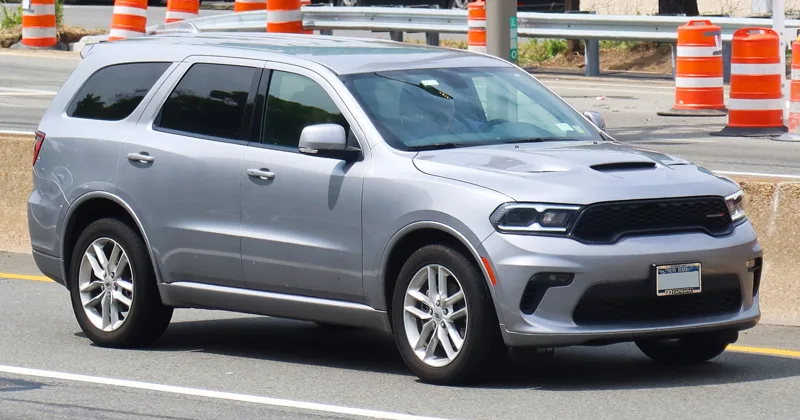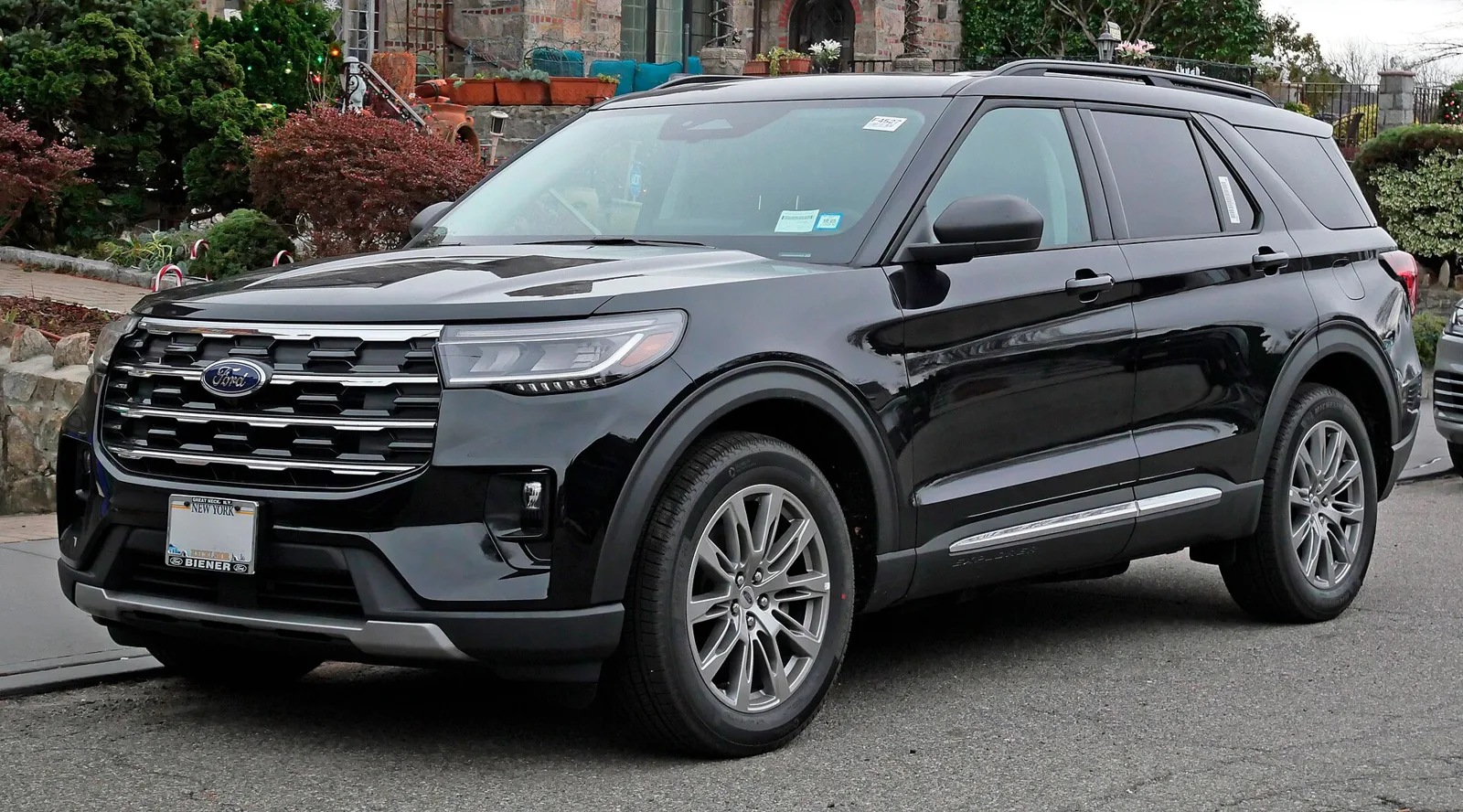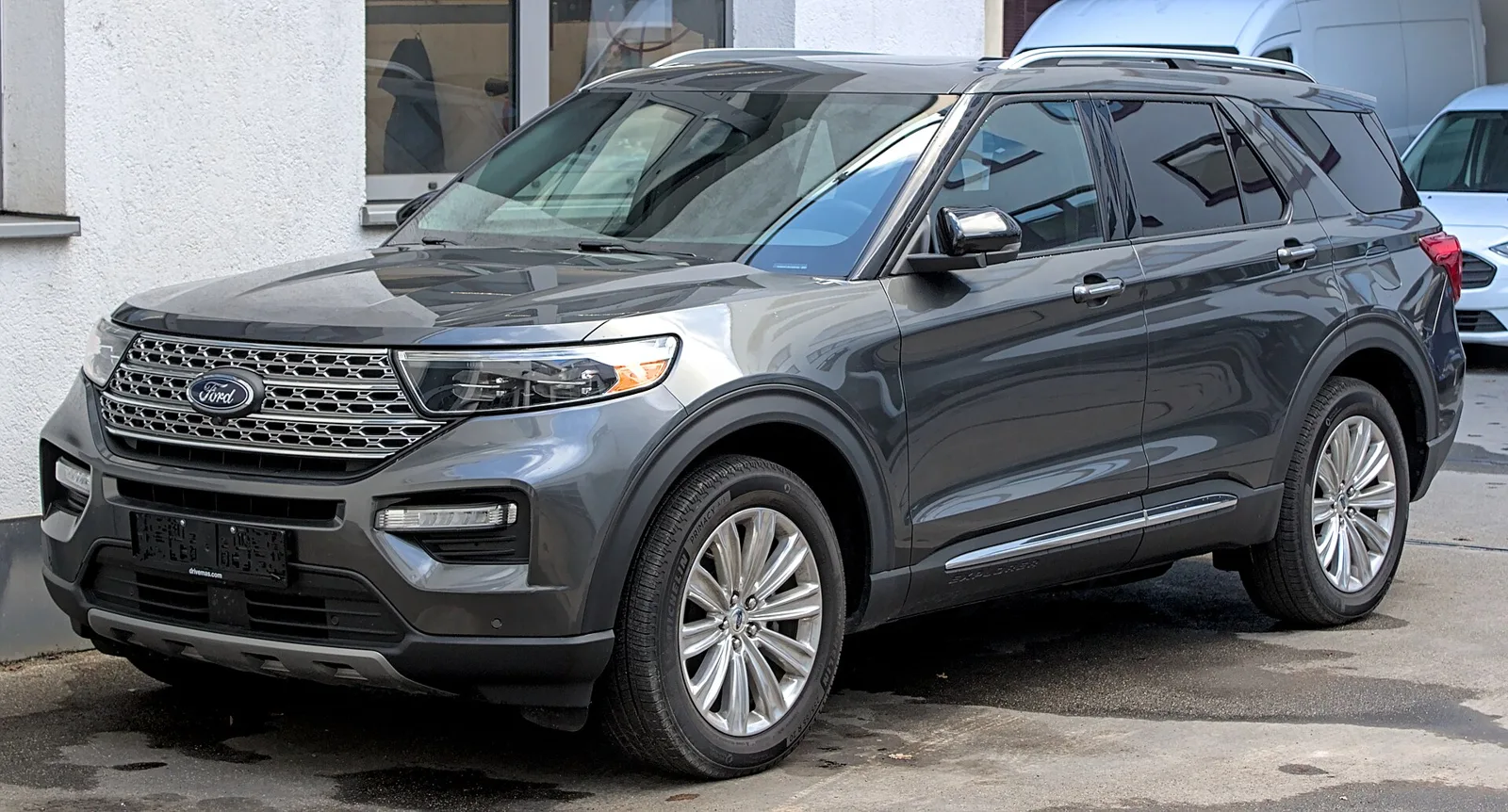
A five-door Ford built on a pickup chassis against a Jeep that offered a V8 and an airbag from its first year.
The Ford Explorer went on sale in early 1991 as a five-door SUV on Ranger underpinnings, while the Jeep Grand Cherokee ZJ followed in April 1992 with a V8 option from early 1993. The Jeep offered a standard driver's airbag from launch, and the Explorer added dual airbags in 1995.
The Ford Explorer and the Jeep Grand Cherokee (ZJ) arrived in the early 1990s and chased the same family buyer. The Explorer went on sale as an early 1991 model, a five-door SUV built on Ranger underpinnings. The Grand Cherokee followed in April 1992, billed as an early 1993 model, and it offered a V8 and a standard driver's airbag from the start, both of which the Explorer lacked at launch.
Where did these two SUVs come from?
Ford introduced the Explorer in March 1990 to replace the three-door Bronco II. It was the first five-door SUV Ford had produced, and the three-door version stayed in the range through the first two generations. Ford kept mechanical ties to the Ranger, sharing its chassis with the 1983 to 1992 pickup, and the Explorer name came from a trim package once used on F-Series trucks.
Jeep's ZJ began life under American Motors Corporation as a mid-size successor to the Cherokee (XJ) and the aging Wagoneer (SJ). Chrysler bought AMC in 1987 and took the project forward. A fully working preproduction car appeared at the 1989 Jeep Concept 1 show, and the production model was previewed in 1992 at the Detroit auto show.
Two early-1990s SUVs, one built on a Ranger chassis and one that brought a V8 to market first.
How much did the Explorer grow from its predecessor?
The Explorer was a clear step up in size from the compact Bronco II. The three-door grew 12.6 inches in length, while the five-door added 22.4 inches and 730 pounds over the 1990 Bronco II. The five-door rode on a 111.9-inch (2,842 mm) wheelbase, against 102.1 inches (2,593 mm) for the three-door.
Inside, the five-door came with front buckets and a rear bench that split and folded to seat three. An optional front split bench lifted the seating to six. The spare tyre moved from the swing-away carrier to an underfloor position.
What engines did the first Explorer use?
The Explorer's standard engine was a 4.0 L Cologne V6, the same unit offered on the Ranger and the Aerostar. It began with 155 hp (116 kW), and output rose to 160 hp (119 kW) for 1993. A Mazda five-speed manual was the standard gearbox, and a four-speed A4LD automatic with overdrive was the option.
Four-wheel drive used a Touch Drive electric-shift transfer case as standard, which allowed a shift from two-wheel drive into high-range four-wheel drive at any speed and to low range when stopped. A manual-shift transfer case was offered as well, paired with manual-locking hubs. Rear axles were the Ford 8.8, with either a limited-slip or an open differential.
What did the Grand Cherokee offer from launch?
The ZJ launched with a 4.0 L Power Tech inline-six making 190 hp. Buyers chose a four-speed automatic or an Aisin manual, and rear-wheel drive or four-wheel drive was available. The standard part-time system was Command-Trac, with modes for 2WD, 4 HI and 4 LO.
The V8 came in early 1993. Its 5.2 L Magnum, rated at 220 hp (164 kW) and 280 lb-ft (380 N m), could be paired with Quadra-Trac, a permanent four-wheel-drive system that sent up to 60 percent of the power to the rear. A Selec-Trac shift-on-the-fly full-time system was also offered. The Magnum V8 was rated to tow up to 5,000 lb, and It was the only SUV in its class offering a V8 at the time.
What changed with the second-generation Explorer?
The 1995 redesign kept the basic formula but reworked the front. Ford gave the Explorer its own front bodywork, distinct from the Ranger. Rear-wheel drive stayed standard with part-time four-wheel drive as an option, and all-wheel drive appeared as an option for the first time.
Under the skin, the long-running Twin I-Beam front suspension gave way to a short/long-arm wishbone layout. That allowed bigger engines and a lower bonnet line. The Ford U1 platform carried over, and the rear stayed a leaf-sprung live axle, as on the Ranger and the F-Series.
Lincoln-Mercury launched its first SUV for 1997, the Mercury Mountaineer, which was sold only as a five-door. The Explorer Sport Trac, a mid-size crew-cab pickup based on the five-door, followed for 2001. The three-door kept the second-generation body until the 2003 model year, after the third generation arrived for 2002.
How did the V8 engines compare?
Ford's V8 arrived later. For 1996 a 4.9 L (302 cu in) V8, sold as a 5.0 L, was offered on rear-wheel-drive XLT five-doors. Output was 210 hp (157 kW), and by 1997 revised cylinder heads lifted it to 215 hp (160 kW). It was then offered with nearly every trim except the XL and paired with all-wheel drive.
Jeep's V8 kept developing too. Torque rose to 300 lb-ft (407 N m) in 1995, from 285, and in 1998 the 5.9 L Limited arrived with 245 hp and 345 lb-ft. That model was credited with the most power in its class.
Which safety features came first?
The Grand Cherokee made the driver's airbag standard on every model from the start, and four-wheel anti-lock brakes came with it. Dual front airbags followed in 1996. The Explorer's second generation went further in 1995, adding dual airbags, which were a first for an American-brand SUV.
Ford's first-generation rear brakes were discs at the front and drums at the back. Four-wheel ABS was available on the Explorer by 1994, and the second generation brought disc brakes at the rear as standard with that system.
What did the Grand Cherokee add to the cabin?
Jeep made a point of its equipment list. Every ZJ had a digital Electronic Vehicle Information Center that monitored systems such as the doors, the hood, the tailgate, coolant and oil levels, and the lights. An overhead console housed a trip computer, a garage door opener holder and reading lamps. Keyless entry also armed a class-exclusive security system, and the ignition was lit at night.
Audio came from Jensen as an AccuSound system, rebranded Infinity Gold from 1994. The 1996 model year added a Jeep Memory System that recalled seat and mirror settings from the key, heated front seats, and the choice of a combined cassette and CD player. The Limited brought leather, a power sunroof and heated power seats as standard.
How did the ZJ reach the market?
The ZJ had an unusual pre-history. Larry Shinoda styled a prototype in 1985 for American Motors's follow-up to the Cherokee XJ, but AMC took the design as its own, and Shinoda had to sue to get paid and be recognised. Chrysler eventually settled with his estate for more than $200,000. A preproduction car was shown in 1989 as the Jeep Concept 1, with brown paint, two-tone lower accents and smoked lamps.
Dodge had its own plan for the same ground. In the early 1990s it looked at a mid-size replacement for the Ramcharger and built an unnamed Dodge ZJ prototype with a cross-hair grille. That project was cancelled before the Jeep arrived, and the Ramcharger replacement came as the Dodge Durango for the 1998 model year, based on the Dakota pickup.
The ZJ made its debut at the 1992 North American International Auto Show in Detroit. Bob Lutz, then Chrysler's chief executive, drove a Laredo 4X4 from the Jefferson North plant up the front steps of Cobo Hall, through a plate-glass window that broke just before the car arrived.
Which trims did each SUV offer?
The first Explorer used the Ford light-truck trim ladder: XL at the base, XLT above, and the outdoorsy Eddie Bauer at the top, which shared the XLT's features. The three-door had an Explorer Sport in place of the XLT. A Limited joined the five-door range in 1993, aimed at rivals such as the Oldsmobile Bravada and the Jeep Grand Wagoneer, and it came only with a sunroof, a compact disc player and the towing package as options.
The Grand Cherokee launched as base, Laredo and Limited. The base car was renamed SE for 1994, and a Grand Wagoneer, with four-wheel drive and V8 power as standard, appeared in 1993 before it was dropped for 1994. An Up-Country version with the AMC straight-six and four-wheel drive ran from 1993 to 1997, and an Orvis Edition arrived in 1995.
Did the Explorer have a rebadged twin?
Yes. Mazda sold a version called the Navajo, which was rebadged from the first-generation Explorer and was Mazda's first SUV. It was named Motor Trend's truck of 1991, but the name drew criticism from some who felt it was exploitative. Mazda responded by saying the name was chosen for its American character, and it donated a 1991 model to the Torreon, New Mexico, tribal government.
The Navajo carried a 4.0 L V6 at 160 hp (119 kW), and its trims were DX and LX. Production ended after three years, and it was replaced by a Ford Escape-based Mazda Tribute. The Explorer lived on, and in 2020 it was the top-selling SUV in America.
Specifications side by side
| Feature | Ford Explorer (first generation) | Jeep Grand Cherokee (ZJ) |
|---|---|---|
| Introduced | March 1990 reveal, early 1991 model | April 1992 reveal, early 1993 model |
| Body | Three-door and five-door | Five-door wagon |
| Chassis basis | Shared with the Ranger pickup | Developed under AMC |
| Five-door wheelbase | 111.9 in (2,842 mm) | Not listed |
| Launch engine | 4.0 L Cologne V6, 155 hp (116 kW) | 4.0 L Power Tech inline-six, 190 hp |
| Top engine (launch years) | 4.0 L V6, 160 hp (119 kW) from 1993 | 5.2 L Magnum V8, 220 hp (164 kW), 280 lb-ft (380 N m) |
| Four-wheel drive | Part-time with Touch Drive; all-wheel drive from 1995 | Command-Trac standard; Quadra-Trac and Selec-Trac options |
| Dual front airbags | From 1995 (second generation) | From 1996; driver's airbag standard from launch |
| Front suspension | Twin I-Beam or Twin-Traction Beam; rear leaf springs | Not listed |
| Towing | Not listed | Up to 5,000 lb with the V8 |
| Trims | XL, XLT, Eddie Bauer; Sport (three-door); Limited (1993) | Base (SE from 1994), Laredo, Limited; Up-Country |
| Built at | Louisville, Kentucky; St. Louis plant at Hazelwood, Missouri (closed) | Jefferson North Assembly Plant |
Which SUV suits which buyer?
The Explorer suits a buyer who wants a five-door SUV on a Ranger-based chassis that later offered all-wheel drive and, from 1996, a V8. The Mazda Navajo showed that the platform could be rebadged, and the Explorer's later sales record is the most famous part of its history.
The Grand Cherokee suits a buyer who wanted a V8 from the start of the model run, along with a standard driver's airbag and a longer list of cabin electronics. Jeep's launch equipment included features its rivals did not offer, such as the EVIC display and a class-exclusive security system.
On the evidence here, the two cars do not settle which is better. The Explorer's advantages are its record of sales, its dual airbags from 1995 and its later V8. The Jeep's advantages are its earlier V8, its full-time four-wheel-drive options and its standard driver's airbag from the first year on sale.