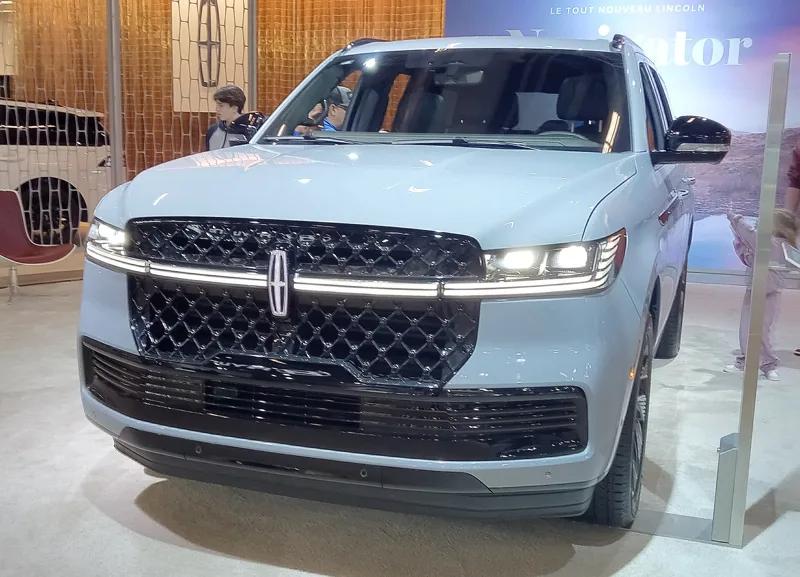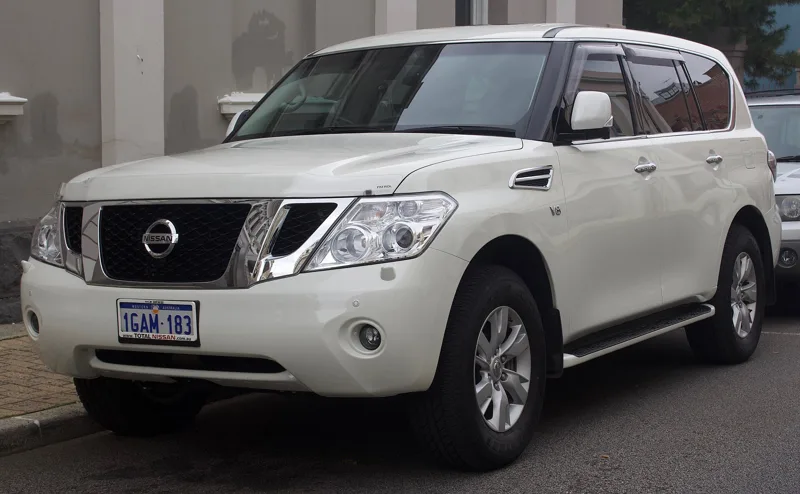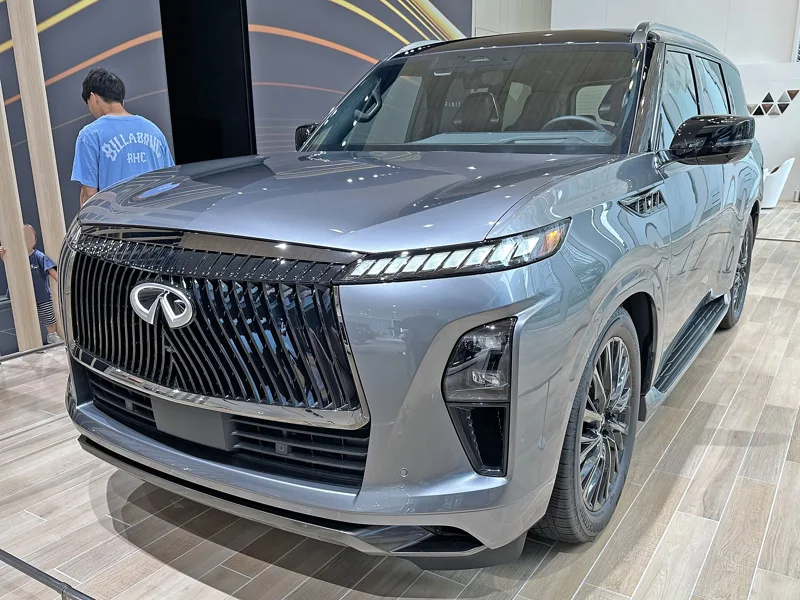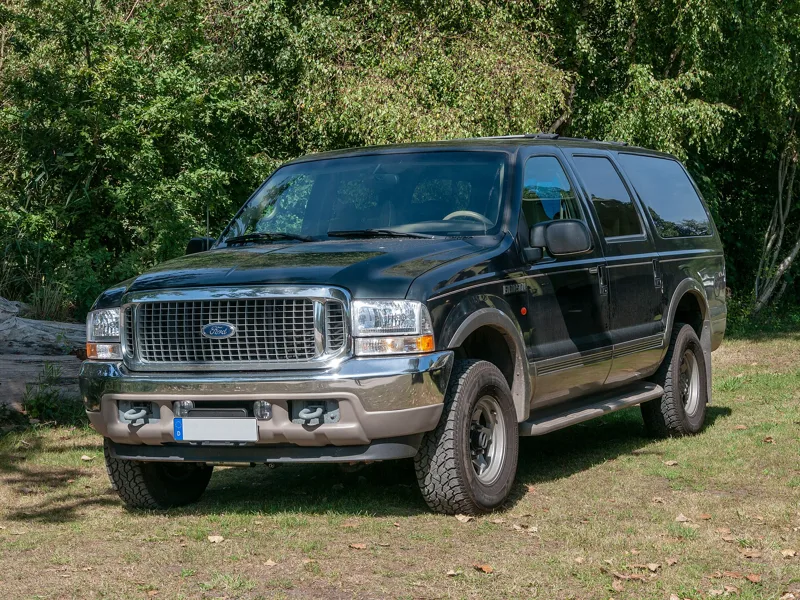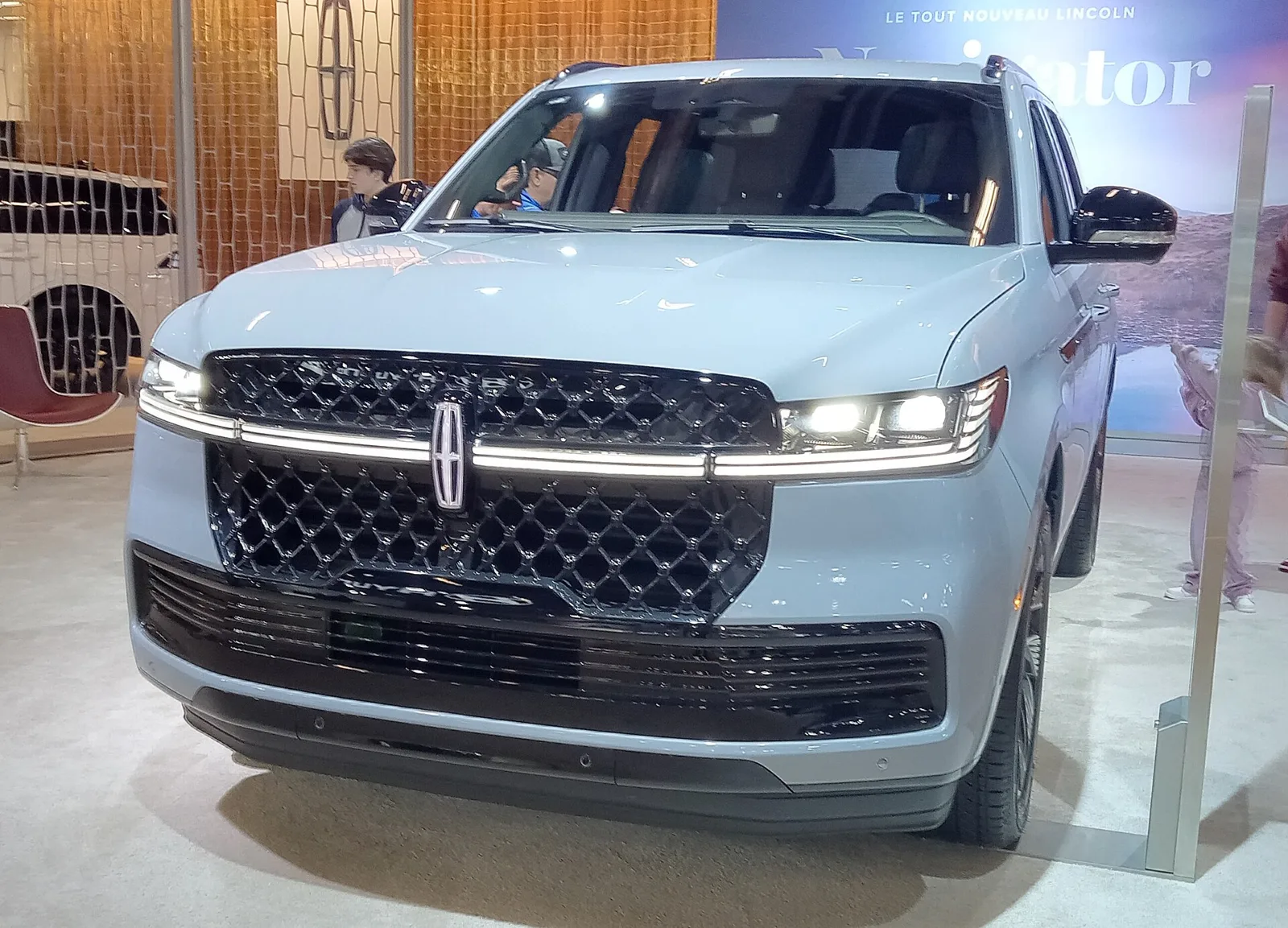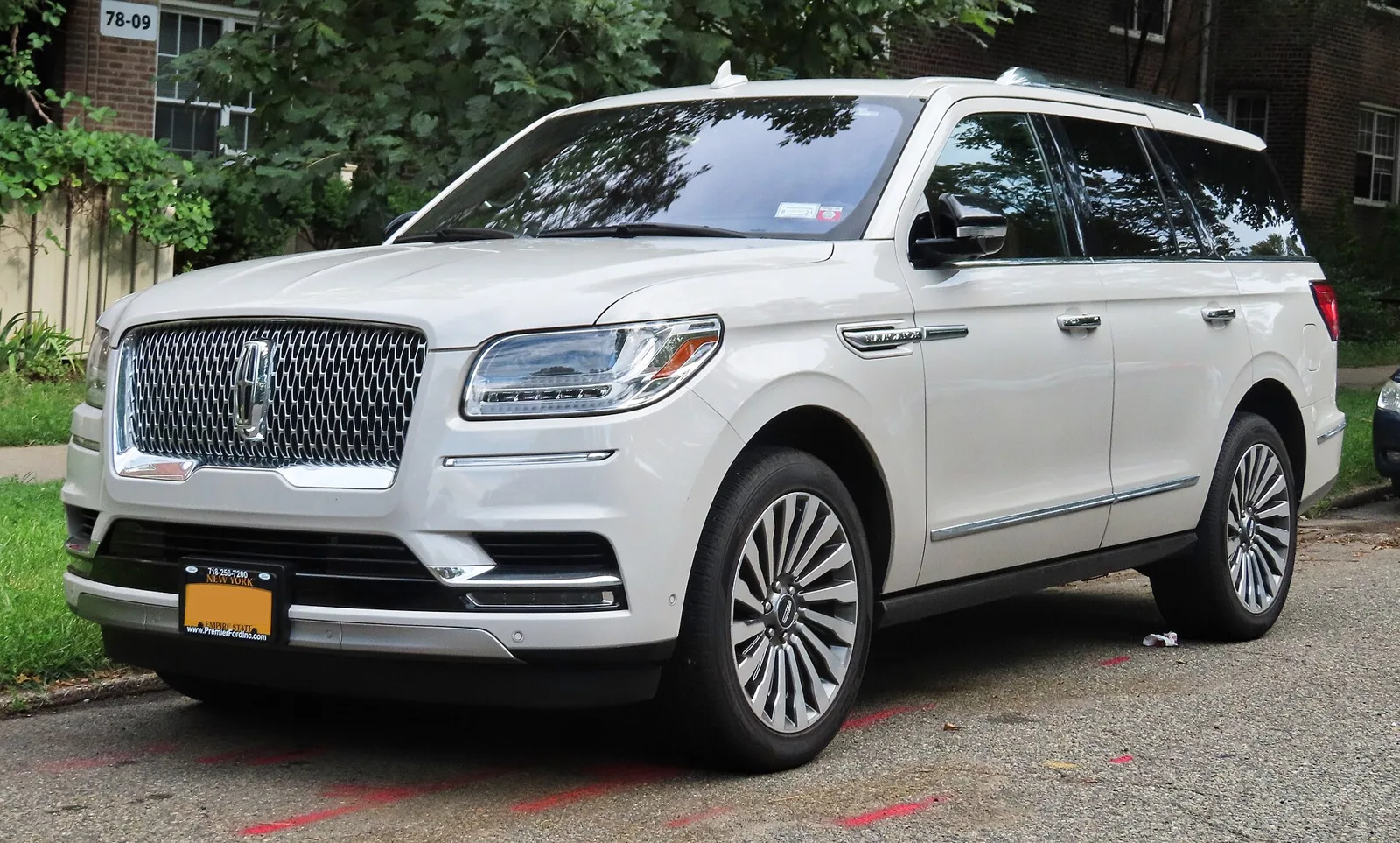
Two body-on-frame luxury SUVs that began as relatives of mainstream models, then grew their own engines, tech and markets.
The Lincoln Navigator, built on the Ford Expedition from 1998, and the Infiniti QX80, which began as the QX56 in 2004, are both full-size luxury SUVs. The Navigator started with a 230 hp V8 and the QX80 now uses a 450 hp twin-turbo V6, with very different engine histories along the way.
The Lincoln Navigator and the Infiniti QX80 are both full-size luxury SUVs with body-on-frame roots, and both began as close relatives of mainstream models. The Navigator arrived for the 1998 model year on the Ford Expedition, while the QX80 started life as the QX56 in 2004 and took its current name in 2014. Over the years the two grew into upmarket flagships with very different engine stories.
Where did the two SUVs come from?
The Navigator gave Lincoln-Mercury its first full-size SUV, sitting above the Ford Explorer-based Mercury Mountaineer. Infiniti's answer came in 2004 with the QX56, which was built on the first-generation Armada and became the QX80 for the 2014 model year.
The Navigator was born at a time when sport-utility vehicles were drifting away from pure off-road use towards family roles. Full-size SUVs such as the Chevrolet Suburban were highly profitable, so Ford positioned the Navigator as a full-size luxury SUV.
Infiniti's development ran alongside the Armada. The QX56 was the first Infiniti built in the United States, and at launch it was sold only in the United States, Canada, GCC countries and Russia. It was also the most expensive Infiniti in North America once the Q45 left the range, and it was the brand's only full-size vehicle.
Two full-size luxury SUVs that began as mainstream relatives and grew into upmarket flagships in their own right.
Platforms and production
The Navigator shares its bodyshell with the Ford Expedition, yet it shares no front body panels with it. Lincoln gave the car its own grille, wheels, roof rack, lower body trim and taillights, while the dashboard was common to both, with more wood trim on the Lincoln.
The Navigator was built at the Michigan Assembly Plant in Wayne, Michigan, from 1997 to 2009. Since 2009 the Kentucky Truck Plant in Louisville has also built it, so the model has come from two American plants.
The Navigator's chassis carried independent front suspension with a live rear axle, and ControlTrac computer-controlled four-wheel drive was the primary drivetrain even though rear-wheel drive was available. Four-wheel anti-lock disc brakes were fitted as with the Expedition, and load-leveling air suspension lowered the car when parked.
The 2003 redesign reworked the chassis, adding rack-and-pinion steering and independent rear suspension, changes it shared with the redesigned Expedition. The air suspension was retuned to lower the Navigator by an inch when stopped, which made getting in and out easier.
The QX56 was based on the F-Alpha platform, which it shared with the first-generation Titan. The second generation moved away from that and used the body of the Y62 Patrol, and Nissan Shatai built it in Japan for export only.
The third-generation QX80 was previewed on 17 August 2023 as the QX Monograph Concept. The production car arrived on 20 March 2024 as a 2025 model, with Pure, Luxe, Sensory and Autograph trims at launch.
How much power did each generation make?
The first Navigator made 230 hp from its 5.4-litre Triton V8 and reached 300 hp in 1999 with the InTech engine. The first QX56 made 320 hp from a 5.6-litre V8, and the second generation pushed that to 400 hp. The 2025 QX80 turned to a 3.5-litre twin-turbo V6 rated at 450 hp.
The Navigator's engine story was one of shifting names. The 1998 car used the 230 hp Triton with a 4-speed 4R100 automatic, and in 1999 Lincoln raised the Triton to 260 hp before replacing the SOHC unit with a 300 hp DOHC 5.4-litre V8 called InTech.
Lincoln's 2003 redesign kept the DOHC V8 at 300 hp, with 355 lb-ft (481 N-m) of torque at 3,750 rpm. For 2005 it swapped in a 5.4-litre three-valve SOHC V8 from the F-150 that made 300 hp at 5,000 rpm and 365 lb-ft (495 N-m), and it paired the engine with a ZF-sourced 6-speed automatic.
Output from the 5.6-litre VK56DE V8 was 320 hp at 4,900 rpm, while torque peaked at 393 lb-ft (533 N-m) at 3,600 rpm, with a 5-speed automatic. Infiniti tuned the throttle to the drive mode, so it was less sensitive in all-wheel drive, which made off-road work easier to control.
Infiniti's Z62 raised the bar with the direct-injection 5.6-litre VK56VD V8, rated at 400 hp (298 kW) and 413 lb-ft (560 N-m) and paired with a seven-speed automatic and a new four-wheel drive system.
In 2003 Ford Performance Group also showed the Navigator K concept, which used a supercharged Ford SVT Lightning 5.4-litre V8 to make 385 hp. Its name paid tribute to the Model K, which had rejuvenated the Lincoln brand. The concept wore 20-inch chrome wheels and a monochromatic colour scheme, and its interior came only in red.
Specifications by generation
| Generation | Lincoln Navigator | Infiniti QX56 and QX80 |
|---|---|---|
| First generation | 1998: 230 hp 5.4L Triton V8, 4-speed automatic; 1999: 300 hp InTech V8 | 2004: 320 hp 5.6L VK56DE V8, 393 lb-ft (533 N-m), 5-speed automatic |
| Second generation | 2003: 300 hp 5.4L DOHC V8, 355 lb-ft (481 N-m); 2005: 300 hp SOHC V8, 365 lb-ft (495 N-m), 6-speed automatic | 2011 (Z62): 400 hp 5.6L VK56VD V8, 413 lb-ft (560 N-m), 7-speed automatic |
| Third generation | Not given | 2025 QX80: 450 hp 3.5L twin-turbo V6, 516 lb-ft (700 N-m), 9-speed automatic |
| Drive layout | ControlTrac four-wheel drive as the primary system | RWD, or Infiniti All-mode 4WD on the 2025 QX80 |
How did the two SUVs change over time?
The Navigator changed little at first, adding power-adjustable brake and accelerator pedals in 1999 and a black background behind the Lincoln emblem in 2001. The big change came in May 2002, when a thorough redesign arrived for the 2003 model year.
That redesign carried over only the front doors and roof panel. It brought a chrome waterfall grille, quad-beam headlights, all-new independent rear suspension and power running boards, which Lincoln billed as an industry first. The 2005 facelift added square foglights and made AdvanceTrac with Roll Stability Control standard.
The QX56 received a facelift for the 2008 model year, which went on sale in April 2007 with a revised grille, a redesigned interior and standard 20-inch chrome wheels. The second generation arrived in 2011 as the Z62 and was rebadged the QX80 in 2014.
The QX80 gained LED lighting and a new flagship Limited trim in 2015, with standard all-wheel drive and no second-row bench. A second facelift followed for 2018, and the August 2021 update for the 2022 model year swapped the old two-screen setup for a 12.3-inch touchscreen.
The third-generation QX80 is the first to use Infiniti's Artistry in Motion design language. Its double arch grille takes its cues from a bamboo forest, and a full-width LED taillight bar carries more than 300 LEDs. The exterior follows the look of the QX Monograph Concept closely.
How heavy were they, and what could they tow?
The 2003 Navigator weighed 5,760 lb (2,613 kg) in two-wheel drive and nearly 6,000 lb (2,700 kg) with four-wheel drive. Towing from the 1998 model's 7,700 lb (3,493 kg) rose above 8,500 lb (3,900 kg) once the InTech engine arrived, but the 2003 redesign reduced capacity slightly.
By 2005 the Navigator had shed weight, with a base curb weight of 5,555 lb (2,520 kg) in two-wheel drive and 5,842 lb (2,650 kg) in four-wheel drive. Towing rose to 8,600 lb (3,901 kg) for two-wheel drive models and 8,300 lb (3,765 kg) for four-wheel drive models.
The first QX56 was rated at around 9,000 lb (4,082 kg) of towing capacity, and its fuel economy at peak drain was 12 miles per US gallon (20 L/100 km; 14 mpg-imp). The Z62 was 1.4 inches longer and 1.1 inches wider, and its towing capacity reached up to 8,500 lb (3,856 kg).
Which had more interior technology?
The first Navigator offered power pedals, a feature unusual on a luxury SUV at the time. By 2003 its interior used real walnut burl wood and 120 white LEDs, while the third-generation QX80 carries two 14.3-inch displays and a touchscreen climate panel below them.
The Navigator's dashboard was designed as a statement piece. Lincoln adopted a symmetrical dual-cockpit layout, fitted a satin nickel analog clock and used an articulating door to hide the radio and optional navigation when they were not in use.
The 2003 model brought power-folding third-row seats, a power liftgate and HID headlights on the top models, and rear-seat entertainment moved to DVD. Every Navigator now came with 18-inch alloy wheels, with 18-inch chrome wheels as an option, and Ford's Safety Canopy side curtain airbags were newly available.
Infiniti's latest car is more digital. The 2025 QX80 offers 64-colour personalised ambient lighting, heated third-row seats, Klipsch audio speakers in the front headrests and a Front Wide View camera that shows 170-degree side views on the 14.3-inch screens.
Some early QX56 kit was ahead of its time. Its 2004 standard equipment included a Bose system with ten speakers and 18-inch chrome alloys, and the Navigator's 2000 options included climate-controlled front seats from Amerigon, the first such seats offered by any manufacturer.
The first QX56 was a single trim level, and its main choices were a DVD entertainment system, 4WD or 2WD, and a bench instead of captain's chairs in the second row. Starting with the 2006 model year the third row split 60/40, and the car's standard list ran to leather trim, dual-zone climate control and an adaptive cruise control system.
How did the two SUVs fare on safety?
The 2003 Navigator added Safety Canopy side curtain airbags, and tire-pressure monitoring became standard for 2004. The 2004 QX56 carried a precrash system that was unusual on the market at the time, and the 2011 model came with eight airbags, including knee airbags for the driver and front passenger.
The 2025 QX80 earned IIHS Top Safety Pick+. Standard equipment includes automatic emergency braking with pedestrian detection, blind spot intervention and warning, lane departure prevention, predictive forward collision warning and rear cross traffic alert.
Sales and reach
The Navigator's first full calendar year brought a notable sales result. Lincoln overtook Cadillac in annual sales volume, although early published figures had Cadillac ahead by 222 vehicles, a lead attributed to a huge surge in Escalade sales in December 1998.
A later audit led to a retraction and apology in May 1999. The error was blamed on overzealous low-level employees.
The QX80 later spread across a long list of markets, from Canada and Mexico to Australia, Malaysia and Singapore. The third generation launched in Middle Eastern markets on 8 November 2024, and it is built in Japan for export.
Grey importers have long been active with these cars. Many QX56s and later QX80s are sold in Japan as grey imports, and the Japanese tuner Tommykaira released a tuned QX56 called the QX56 PREMIUM in 2013.
Which SUV suits which buyer?
On the figures, the Navigator suits a buyer who values American-built heritage, a Ford-derived chassis and a V8 that carried the model through its early years. The QX80 suits a buyer who wants the newest twin-turbo V6 and a model line that traces back to Nissan's Patrol.
A buyer who wants the most power from a V8 will look at the QX56 and the Z62 at 400 hp. A buyer who cares most about the latest screens and driver assistance will find the 2025 QX80 easier to justify.
The two SUVs come from different engineering families, with one built on the Expedition and the other on the Armada and later the Patrol. Buyers who weigh those histories differently will reach different conclusions, and the figures above give them a starting point for that call.