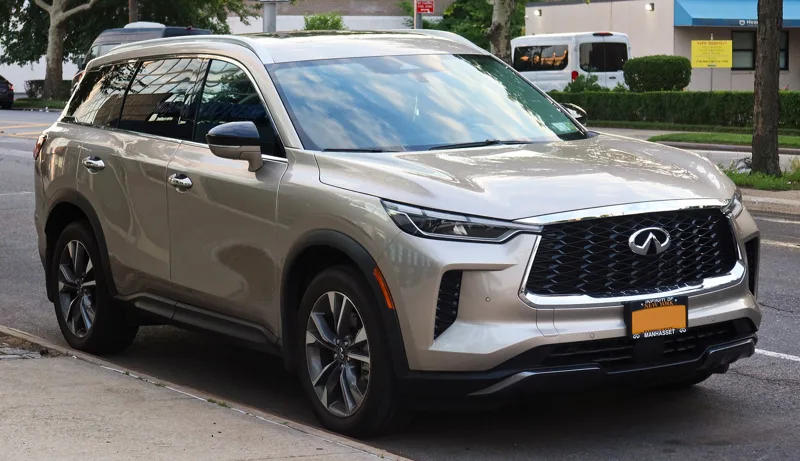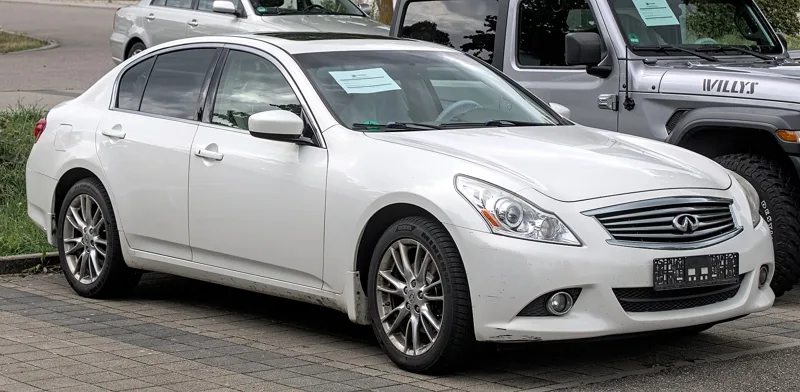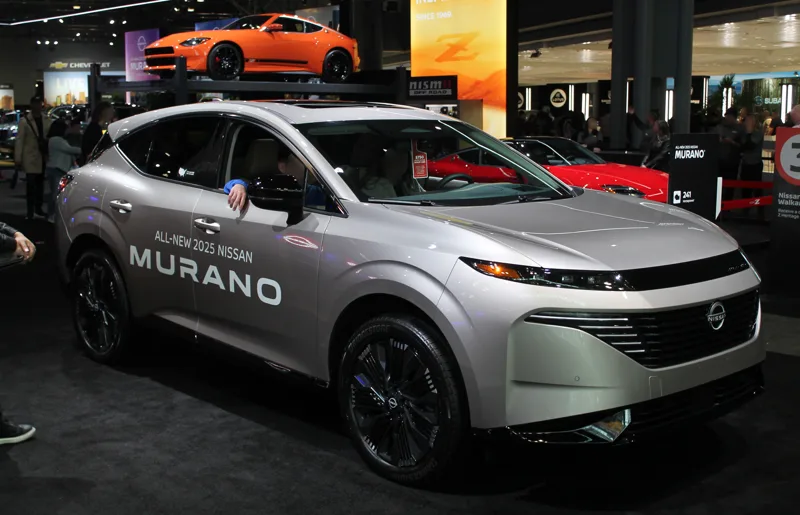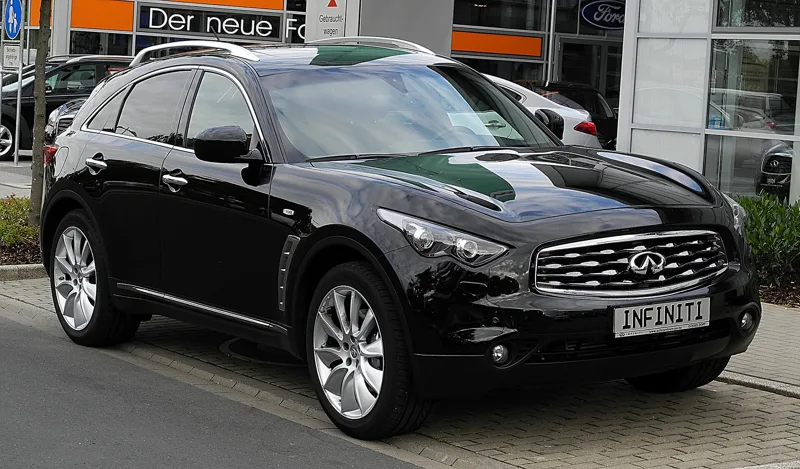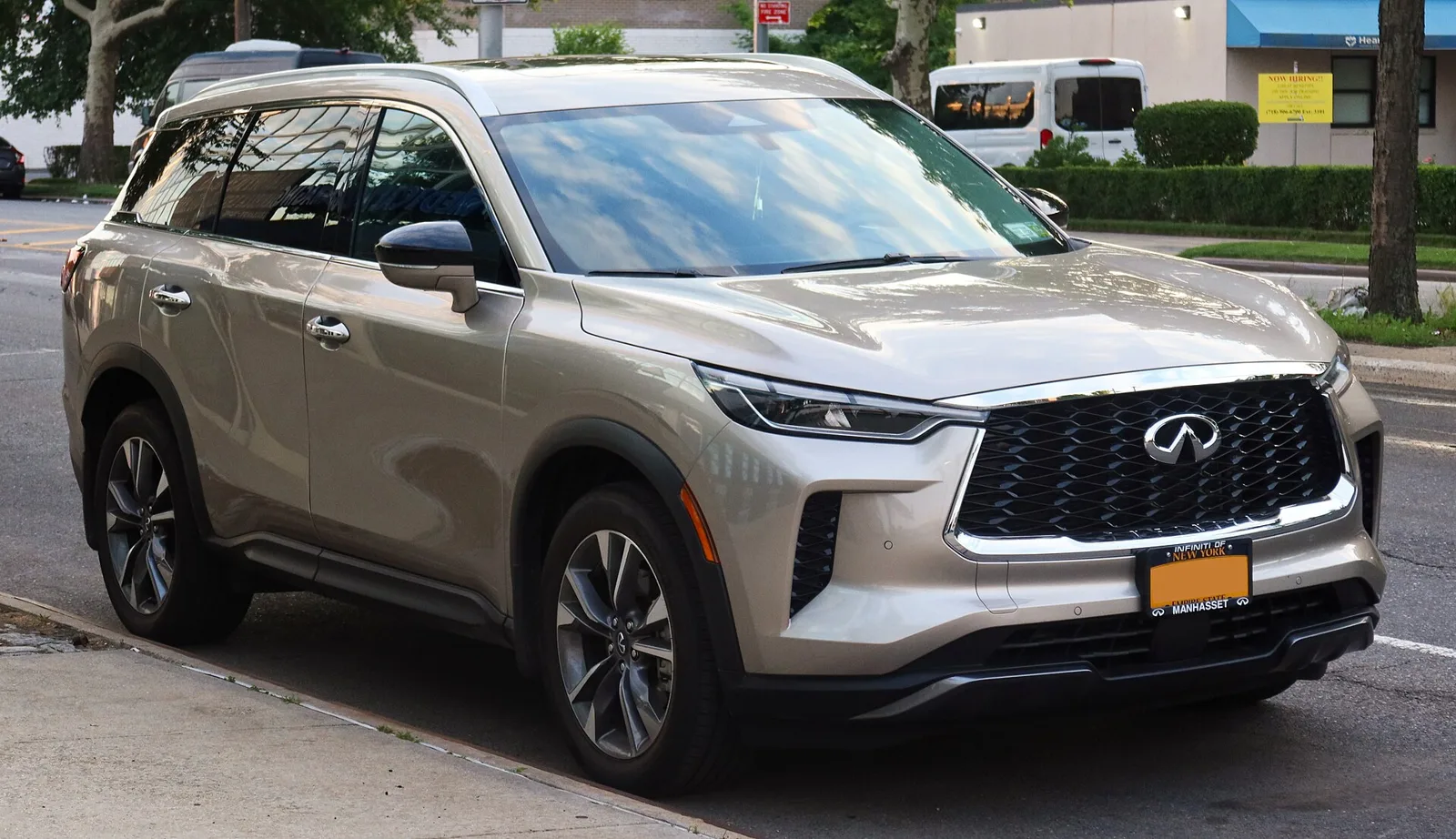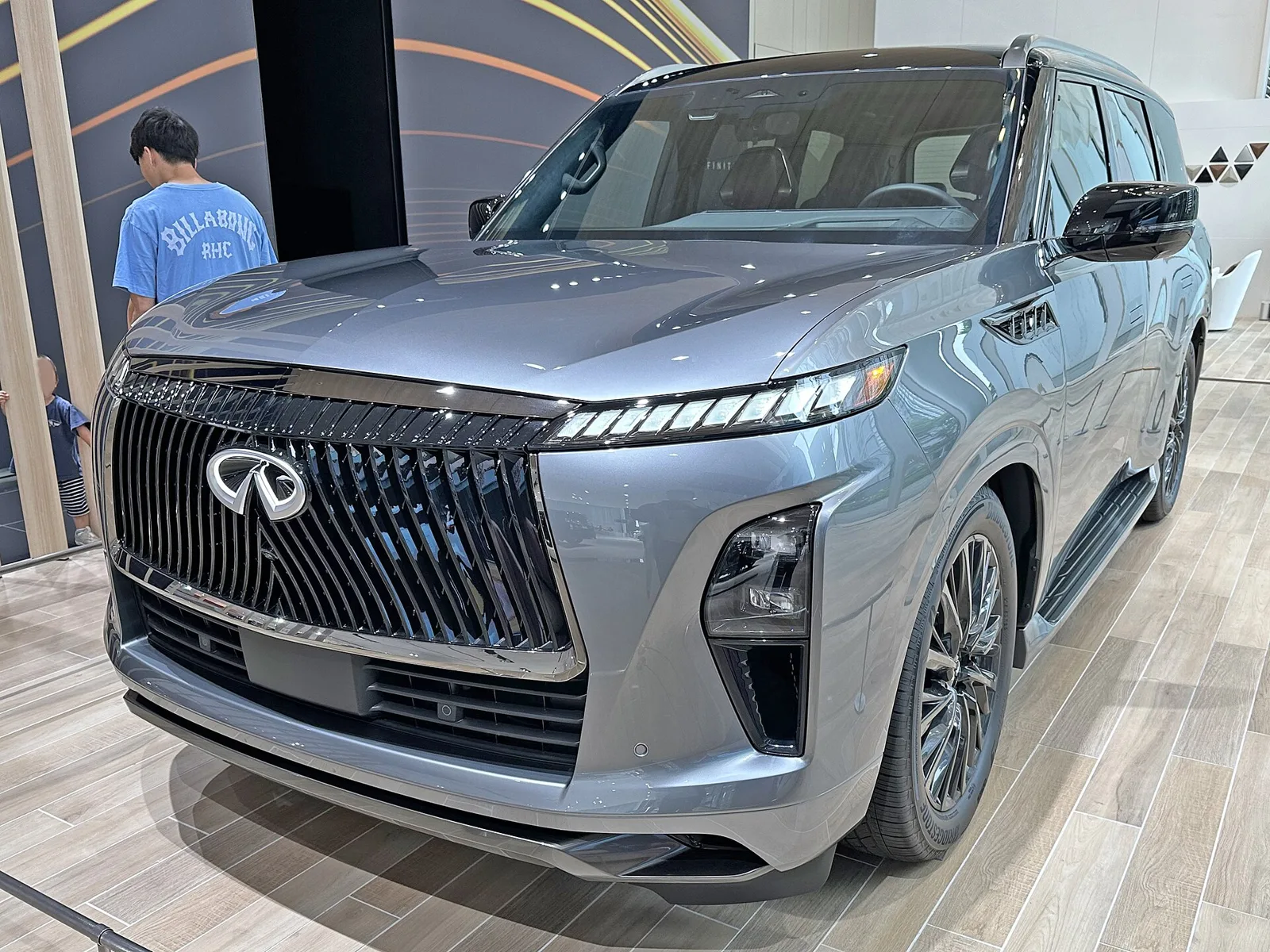
A full-size luxury SUV that began as the QX56 in 2004, took a Patrol-based body in 2010 and returned in 2024 with a twin-turbo V6 and a new design language.
Sold since 2004 as the QX56 and renamed QX80 in 2014, Infiniti's full-size luxury SUV moved from a 5.6-liter V8 in its first two generations to a 3.5-liter twin-turbo V6 for the 2025 model year. The second generation shared its body with the Y62 Patrol, and the car has been sold in dozens of markets.
The Infiniti QX80 is a full-size luxury SUV from Nissan's Infiniti division, sold since the 2004 model year. It began life as the QX56 and was renamed for 2014 when Infiniti reorganised its whole range. Each generation has changed its underpinnings and engine, and the car has been built in both the United States and Japan.
What is the Infiniti QX80?
The QX80 is Infiniti's largest model and its only full-size vehicle for much of its life. It has been the most expensive Infiniti sold in North America at times, a position that followed the discontinuation of the Q45 after 2006. Its size, body-on-frame construction and V8 or V6 engines have made it a long-running choice for luxury buyers who need space.
The car has been sold in many markets, and its story covers three generations, several facelifts and a major renaming. Each change reflects the brand's wider product strategy.
A full-size luxury SUV that went from a V8 QX56 to a twin-turbo V6 QX80 without losing its size or its towing focus.
How did the first-generation QX56 come about?
The first-generation QX56, model code JA60, was based on the first-generation Armada and shared the F-Alpha platform with the first-generation Titan. It was the first Infiniti built in the United States. Development began in early 2000 alongside the WA60 Armada, and a final design by Masato Takahashi was reached in early 2001.
Design freeze came in August 2001, which set up a start of production in early 2004. The QX56 was sold only in the United States, Canada, the GCC countries and Russia. Its rear door handles were fitted to the C-pillar, a Nissan tradition that began with the 1985 D21 Pathfinder and gave the vehicle the look of a two-door truck with a camper shell.
What engine did the first QX56 use?
The first-generation QX56 used a 5.6-liter VK56DE V8 that produced 239 kW (320 hp) at 4,900 rpm and 393 lb-ft (533 N m) of torque at 3,600 rpm. The engine was linked to a 5-speed automatic with overdrive. Its cylinders were lined with cast iron, and the valvetrain was a DOHC design with four valves per cylinder.
Infiniti tuned the throttle response to match the drive mode. In all-wheel-drive mode the throttle became less sensitive, which made it easier to control acceleration off road. The QX56 was rated to tow around 9,000 lb (4,082 kg), and its mileage at peak performance drain was 12 miles per US gallon.
What did the first QX56 include as standard?
The QX56 came in a single trim level. Key options included a DVD entertainment system, a choice of 4WD or 2WD, and a bench in place of captain's chairs for the second row. Standard features included a ten-speaker Bose system, a DVD-based navigation system, leather for all seats, dual-zone climate control, 18-inch chrome alloy wheels and adaptive cruise control.
A pre-crash system was unusual at the time, and the third-row seats received a 60/40 split from the 2006 model year. A facelift for the 2008 model year, introduced at the 2007 North American International Auto Show in January 2007, brought a revised grille, a redesigned interior and a new intelligent key system. It went on sale in April 2007 with standard 20-inch chrome wheels.
Why did the second generation change so much?
Nissan management decided to move QX56 production back to Japan and to separate it from the Armada. Development of the Z62 car began in 2006, after the Y62 Patrol programme that had started in 2003. A styling proposal from Shinya Momokawa and Akihiro Sugita was approved by the board in 2007 and frozen for production.
On 31 March 2010 Infiniti debuted the 2011 QX56 at the New York International Auto Show. It shared its body with the Y62 Patrol, which marked the first time a Patrol-based vehicle had been sold in North America since 1969. Infiniti built the car at Nissan Shatai in Japan, and it was export-only.
What engine powered the second generation?
The Z62 QX56 used a new 5.6-liter VK56VD V8 with direct injection and VVEL variable valve timing, which was also found in the Patrol. It produced 400 hp (298 kW) and 413 lb-ft (560 N m) of torque. The extra power raised the towing capacity to as much as 8,500 lb (3,856 kg), and a seven-speed sequential-shift automatic and an all-new 4WD system completed the drivetrain.
The second-generation car was 1.4 inches longer and 1.1 inches wider than its predecessor. Front and rear independent double wishbone suspension was fitted alongside Hydraulic Body Motion Control. Four-wheel-drive versions had a four-setting terrain control with rock, snow, sand and dirt modes.
How did the QX56 become the QX80?
Infiniti renamed its entire line in 2013, and the QX56 became the QX80 for the 2014 model year. The car kept its underpinnings and the rebadge was largely a naming change.
A refresh for the 2015 model year was first shown at the 2014 New York show, bringing new headlights and taillights, revised fascias, bi-xenon projector headlamps with LED daytime running lights and LED front turn signals. New wheel designs included a 22-inch forged-aluminum version, and three new exterior colours were added. The new flagship was the QX80 Limited, which included Intelligent All Wheel Drive as standard, although it dropped the second-row bench seat that allowed eight occupants.
Where was the QX80 sold?
As of 2017 the QX80 was sold in the United States and its territories, Canada, Mexico, China, the GCC markets, Russia, Ukraine, Armenia, Georgia, South Korea, Vietnam, Singapore, Malaysia, Indonesia, New Zealand, Australia, Panama, Guam and the Dominican Republic. A right-hand-drive version was offered in some markets from late 2014.
From late 2016 the 2017 Armada used the Y62 Patrol body, making the Armada a mechanical twin of the QX80 once more. The second generation was also a popular grey import in Japan, where Tommykaira produced a tuned version called QX56 PREMIUM in 2013.
What changed with the 2018 facelift?
The QX80 Monograph Concept previewed a major second facelift for the 2018 model year and was shown in New York in 2017. It kept the 5.6-liter V8 and basic architecture. Dubai saw the revised production car first, on 14 November 2017, with a redesigned grille, hood, LED headlamps and full LED taillamps.
In August 2021 Infiniti updated the QX80 for the 2022 model year with a new infotainment system and a 12.3-inch touchscreen. Wireless charging, Android Auto and Apple CarPlay were added, and the interior was almost identical to the related Armada.
What is the third-generation QX80?
A concept called the QX Monograph first showed the Z63 on 17 August 2023. Infiniti teased the production car on 27 February 2024 and unveiled it on 20 March 2024. Four trims were offered at launch for the 2025 model year: Pure, Luxe, Sensory and Autograph. It is the first model to carry the brand's Artistry in Motion styling theme.
| Generation | Model code | Engine | Power | Torque |
|---|---|---|---|---|
| First (QX56) | JA60 | 5.6-liter VK56DE V8 | 320 hp (239 kW) | 393 lb-ft (533 N m) |
| Second (QX56) | Z62 | 5.6-liter VK56VD V8 | 400 hp (298 kW) | 413 lb-ft (560 N m) |
| Third (QX80) | Z63 | 3.5-liter twin-turbo V6 | 450 hp (336 kW) | 516 lb-ft (700 N m) |
Every third-generation model uses the 3.5-liter engine with a 9-speed automatic, with a choice of rear-wheel drive or Infiniti All-mode 4WD.
What does the third-generation QX80 offer inside?
The cabin has two 14.3-inch displays, one serving as the driver's digital gauge panel and the other handling central infotainment with InTouch and built-in Google. Below them is a 9-inch touchscreen with haptic feedback for climate, front seat heating and cooling, and drive mode selection. A massage function is offered for the seats.
The layout includes 64-colour personalised ambient lighting, biometric cooling for the second row, a coloured head-up display and heated third-row seats. The Journey Diary function can save photos and video from the cameras, and a Klipsch audio system sits in the front headrests. The automatic is operated by push buttons rather than a gear lever.
How does the third-generation QX80 handle visibility?
The QX80 introduced a feature called Front Wide View, which offers 170-degree camera views from the sides of the vehicle on both 14.3-inch screens. The view helps with parking around other vehicles and with turning in tight corners.
The nose has a double-arch grille with bamboo-forest cues, the daytime lights are built from several LED elements, and a full-width LED taillight bar carries over 300 LEDs. The Infiniti logo is illuminated with a 3D effect, and the door handles are flush.
How safe is the QX80?
The 2025 car earned the Top Safety Pick+ designation from the Insurance Institute for Highway Safety. As standard it carries emergency braking that detects pedestrians, blind spot intervention and warning, lane departure prevention, forward collision prediction and rear cross-traffic alert.
What is the QX80's place in the market?
The QX80 has moved from a niche full-size luxury SUV to a car with a long history of grey imports, facelifts and renaming. The third generation brings a twin-turbo V6 in place of the big V8, while keeping the size and towing focus that defined the QX56.
The model's journey from Japan-built export car to global luxury SUV reflects the way Infiniti uses the Patrol as a base. Each change has kept the QX80 relevant to buyers who want space and presence.