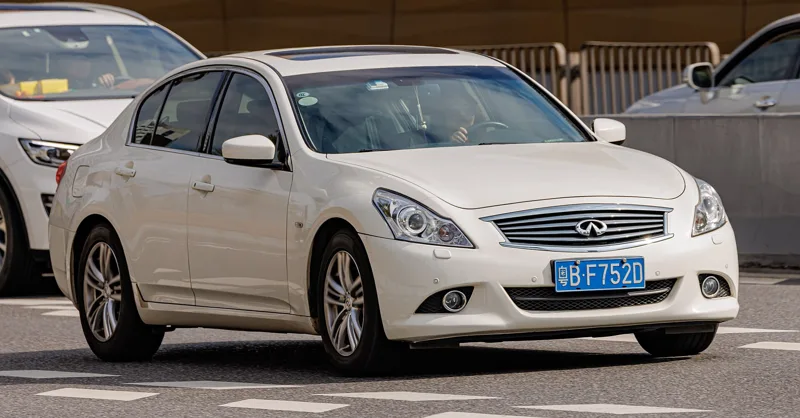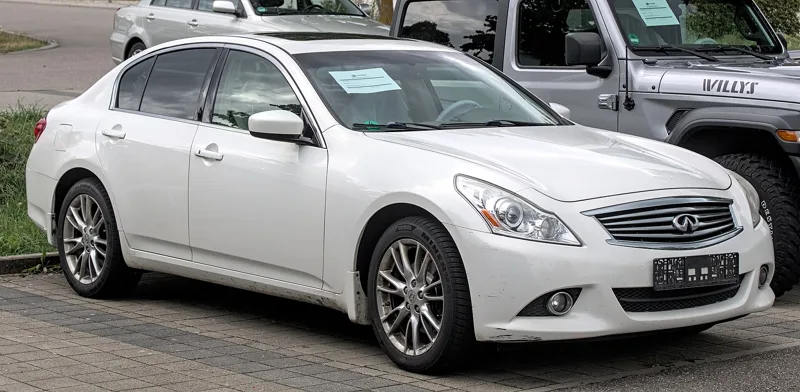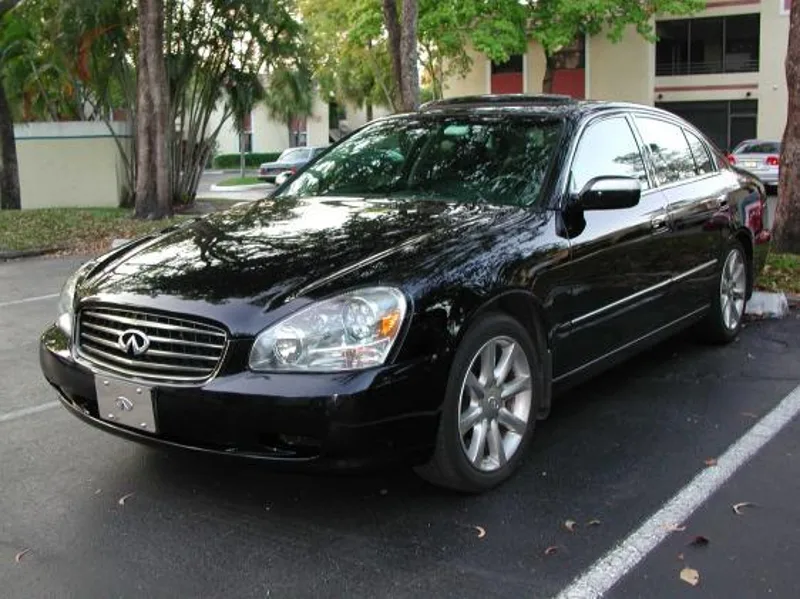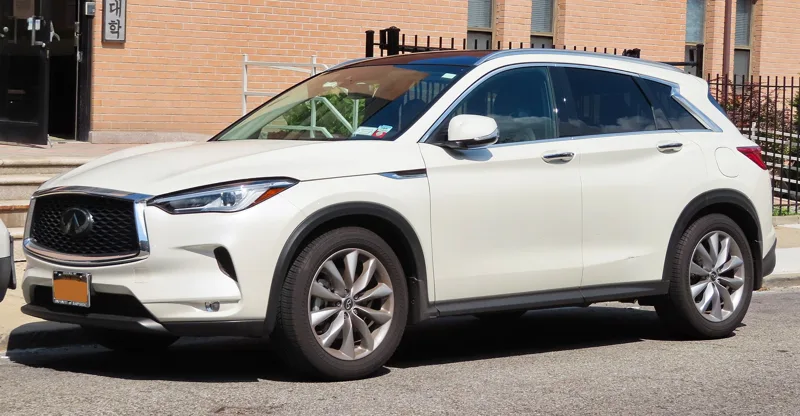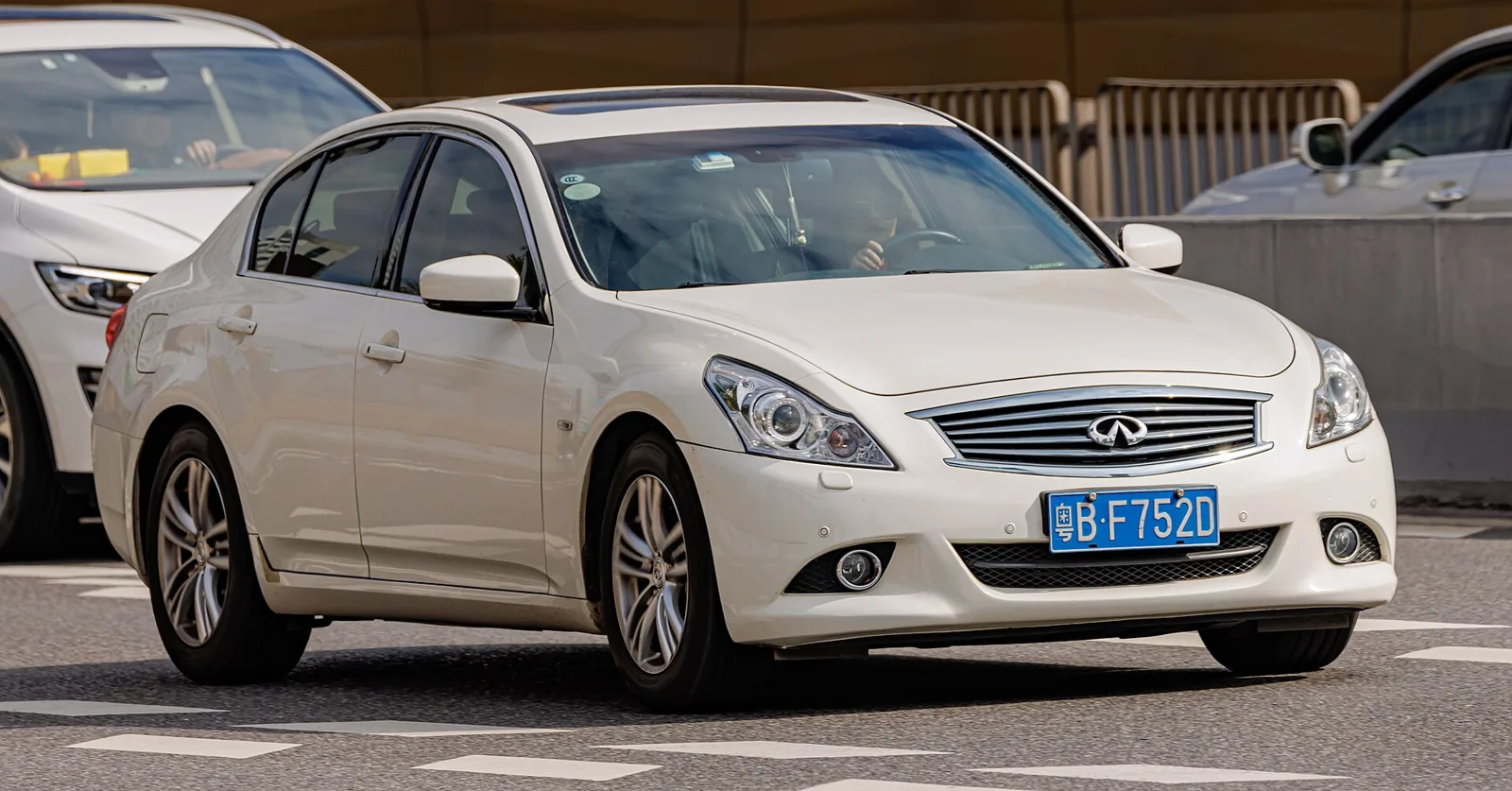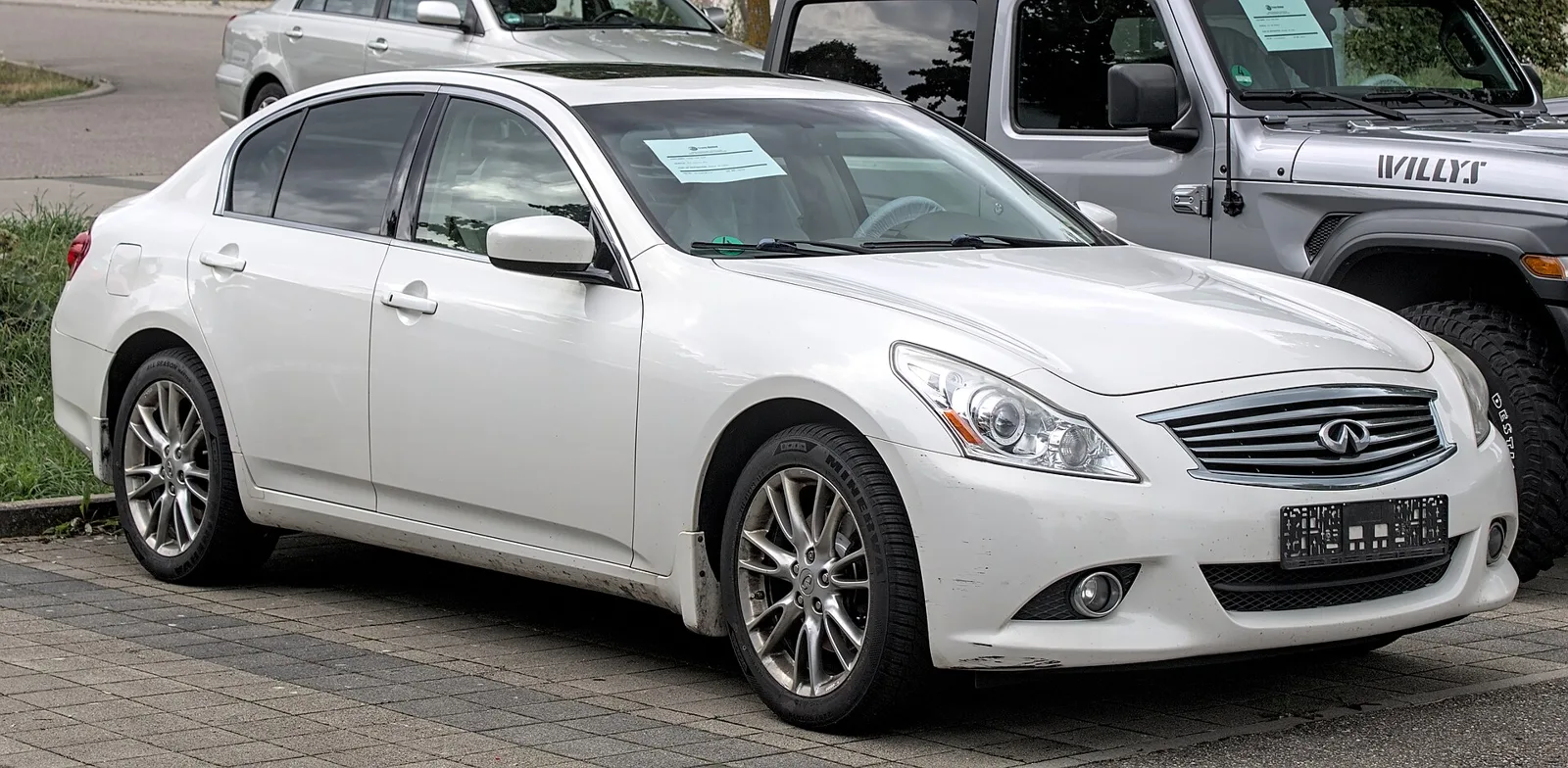
The Infiniti G and the Lexus IS both aimed at the entry point of their makers' luxury ranges, but they took very different routes to get there.
Infiniti's G is a compact executive car built across four generations from 1990, beginning as a rebadged Nissan Primera. Lexus's IS, sold since 1998, began as the Toyota Altezza in Japan and became the entry sport model below the ES.
The Infiniti G and the Lexus IS both started life as compact executive sedans from Japanese luxury divisions, but they took different routes. The G began in 1990 as a front-drive car built on the Nissan Primera, while the IS arrived in 1998 as the Toyota Altezza in Japan before Lexus took it on worldwide.
Where did the Infiniti G begin?
The G20 launched in September 1990 as Infiniti's first small car, positioned below the Q45. It was a rebadged Nissan Primera designed mainly for the European market, developed under Nissan's Project 901 initiative.
Production was at Oppama in Japan, and the first series production example was assembled on July 10, 1990. Infiniti pitched the car as a premium brand, so it came with more equipment than its European and Japanese relatives.
The P10 introduced Nissan's multi-link front suspension to a front-drive car, paired with an independent MacPherson strut arrangement at the rear. The car came standard with a five-speed manual, with an automatic, leather and a moonroof offered as options.
The G20 ran from 1990 to 2002, with a hiatus in the 1997 and 1998 model years when the I30 became Infiniti's entry car. The second generation, the P11, followed in 1998, and the final second-generation car was assembled on January 11, 2002.
One began as a Primera in Infiniti clothing, the other as an Altezza that became Lexus's entry sport sedan.
How did the Lexus IS begin?
The Lexus IS is a compact executive car, in the D-segment in Europe, that Lexus has sold since 1998. Lexus is Toyota's luxury division, and the IS sat below the ES as an entry-level sport model, staying the smallest Lexus until the CT arrived in 2011.
In Japan the car was sold as the Toyota Altezza, a name meaning height or highness in Italian, from 1998 until 2005. The first-generation Altezza (XE10) launched in October 1998, and the IS 200 reached Europe in 1999 while the IS 300 arrived in North America in 2000.
Nobuaki Katayama ran the engineering effort between 1994 and 1998, working under the 038T code. Design work was frozen in 1996, and the design was filed at the Japan Patent Office on 5 December 1996.
In Europe the IS 200 produced 153 hp (114 kW), reached 216 km/h (134 mph) and needed 9.3 seconds to hit 100 km/h. The Altezza was sold only at Toyota Netz Store dealers in Japan until Lexus arrived there in 2006. The design won Japan's Car of the Year honour for 1998 to 1999, and its rear lamp clusters were copied by many aftermarket makers.
What standard equipment did the G20 offer?
The standard trim was called Luxury, and it included electric windows and locks, powered mirrors, air conditioning, ABS-equipped four-wheel discs, alloy wheels and a Bose stereo. Anti-theft protection, cruise control, floor mats and a leather-wrapped wheel and shift knob also came as standard.
Buyers often added heated mirrors, leather seats and a powered glass roof, and later these were bundled with power seats and keyless entry. Later models also gained dual front airbags. Reviewers praised the five-speed manual as one of the best in the business.
The Touring package, badged G20t, was offered from the 1994 to 1996 model years and again from 1999 to 2001. It added a limited-slip differential, sportier bolstered front seats, fold-down rear seats, fog lamps and a decklid spoiler, and in 2002 a Sport package with no badge change took its place.
How did the first-generation engines compare?
The first G20 used the 2.0-litre SR20DE inline-four, rated at 140 hp (104 kW) in US specification, with torque in the 132 to 136 lb-ft range (179 to 184 N-m). The engine had a redline of 7500 rpm and was built in highport form until December 1993, then in lowport form from January 1994 because of tighter emissions rules.
In Japan the AS200 used a 2.0-litre 1G-FE straight-six with a four-speed automatic as standard. The RS200 used a 2.0-litre 3S-GE straight-four with a six-speed manual, while a five-speed automatic was optional.
The IS 300 brought a 3.0-litre 2JZ-GE straight-six, which was only available with an automatic at first. The US gained a five-speed manual for the 2002 model year, because Lexus wanted 15 percent of American IS 300 sales to be manuals.
| Feature | Infiniti G | Lexus IS |
|---|---|---|
| Debut | September 1990 as the G20 | October 1998 as the Toyota Altezza in Japan |
| Origin | Rebadged Nissan Primera, then a Skyline-based car from the V35 | Shortened front-engine, rear-wheel drive midsize platform |
| Drive layout | Front-wheel drive for P10 and P11, rear-wheel drive from the V35 | Rear-wheel drive |
| First-generation engine | 2.0-litre SR20DE inline-four, 140 hp (104 kW) in the US | 2.0-litre 1G-FE straight-six or 2.0-litre 3S-GE straight-four |
| Larger engine | No larger engine listed for the early G20 | 3.0-litre 2JZ-GE straight-six in the IS 300 |
| Generations | Four | Three, with the third premiered in January 2013 |
| Successor | Q50 planned, with the G37 revived as the Q40 for 2015 | Third-generation IS from January 2013 |
| Sales highlight | G35 priced about US$7,000 above the G20 average | Over 49,000 units in the first year of the second generation |
Why did the G20 give way to the G35?
The G20 was discontinued in favour of the rear-wheel drive Infiniti G35, which was a Skyline V35 sold under a different badge after its Japanese debut in 2001. It cost roughly US$7,000 more than the G20's average MSRP of $23,000, yet it became a sales success for Infiniti.
The G35 was aimed at the entry-level premium sports sedan market rather than the G20's compact premium sport niche. It was significantly larger and more powerful than the car it replaced.
The V35 was designed by Hiroshi Hasegawa and previewed as the Nissan XVL Concept at the Tokyo show in October 1999. Infiniti had shown a prototype to journalists in early April 1999 at the New York show, before production began at Kaminokawa, Tochigi, in January 2002.
How did the IS interior and equipment differ from the G?
The first-generation IS interior had features rarely seen on other Lexus models. Among them was a chrome metal ball shifter for US and European buyers, an optional pop-up navigation screen, and a chronograph-look instrument cluster with small gauges for temperature, fuel economy and voltage.
In Europe and Australia the IS 300 gained full leather seats instead of the leather and Ecsaine trim of the IS 200, plus auto-dimming mirrors and HID headlamps. US regulators classed the IS 300 as a subcompact, even though its overall volume was big enough for a compact, because the rear seat was small.
The second-generation IS moved to a more typical Lexus interior, with memory leather seats, electroluminescent instrument lighting, LED accents and SmartAccess keyless entry. Options ran from touchscreen navigation with a backup camera to a Mark Levinson sound system and Dynamic Radar Cruise Control.
How did the Infiniti G change in later generations?
The P11 grew in size, with a body 2.7 inches (69 mm) longer and 0.4 inch (10 mm) taller than the P10. That gave rear passengers 1.4 inches (36 mm) more legroom, although the weight rose to 3000 pounds.
The P11 used a multi-link beam rear suspension, similar to the 1995 to 1999 Nissan Maxima. Its 140 to 145 hp engine gave the heavier car less performance than before. Enthusiasts disliked the beam, but several publications praised it for handling while keeping the ride compliant.
The 2000 refresh brought a 145 hp roller-rocker SR20DE and anti-theft immobiliser circuitry, and in 2001 the G20t was dropped in favour of a Sport model with 16-inch wheels. The third-generation V35 was released in North America as the G35 on March 12, 2002, for the 2003 model year.
The fourth-generation G, the V36, introduced a hardtop convertible. Its FM platform also underpins the Nissan 370Z, and from the 2014 model year Infiniti named its passenger cars with a Q prefix.
How did the Lexus IS change in later generations?
A minor facelift for the 2004 model year, designed by Hiroyuki Tada, brought 11-spoke wheels, xenon lamps and a driver seat memory function. A 4.3-litre V8 IS 430 concept shown at SEMA in 2003 was a one-off with no plans for production.
The second-generation IS was introduced at the Geneva Motor Show in March 2005 and went on sale in September and October 2005 as a 2006 model. Its sedan had sleeker, coupe-like contours and a drag coefficient of Cd=0.28.
Production started in September 2005 at the Miyata plant in Miyawaka, Fukuoka, and the Tahara plant joined in October 2005. The IS F began production at Tahara in December 2007, and the IS C was built at Miyata from April 2009.
The second generation drove a sales resurgence, with a 332% increase in 2006 over the year before. In its first year in the US the IS sold over 49,000 units, which placed it among the ten best-selling luxury cars there.
The high-performance IS F debuted at the 2007 Detroit show on 8 January 2007. It accelerated from 0 to 97 km/h (0 to 60 mph) in 4.2 seconds and was electronically limited to 274 km/h (170 mph).
The third-generation IS premiered in January 2013 with V6 IS 250 and IS 350 models, turbocharged IS 200t and 300 versions, the IS 300h hybrid and F Sport variants.
How did the two cars sell and perform in safety tests?
The first-generation IS 300 earned five stars from the National Highway Traffic Safety Administration for side driver and rear passenger protection, and four stars for the frontal positions in 2001. The Insurance Institute for Highway Safety rated it Good overall and Good in all six front impact categories.
Sales of the first-generation IS in North America peaked at 22,486 units in 2001, then fell below 10,000 by 2004. Lexus did well in North America overall, but its sales trailed German rivals in Europe, where the lack of a manual gearbox on the IS 300 may have held back sales.
In 2008 the IS sold ahead of the Acura TL, Audi A4 and Infiniti G sedan, while it sold behind several BMW 3 Series variants, the Mercedes-Benz C-Class and the Cadillac CTS. That placed the IS in the middle of the entry-luxury market.
Which buyer suits each car?
Neither car has a clear overall winner, so the right choice depends on what the buyer wanted from a compact luxury sedan. The Lexus IS offered a rear-drive chassis from the start, while the Infiniti G only moved to rear drive with the V35 and the G35.
Buyers who wanted a high-performance version could choose the IS F, while the G35 was the Infiniti's more powerful alternative. Both makers used their luxury divisions to build an entry point into the brand, one from a rebadged Primera and the other from a Japanese Altezza.
The Infiniti G began as a Nissan family sedan and ended as a rear-drive luxury car, while the IS came from a Toyota sport sedan built to compete with the European marques. Both stories show how a compact executive car can carry a luxury brand's first steps.