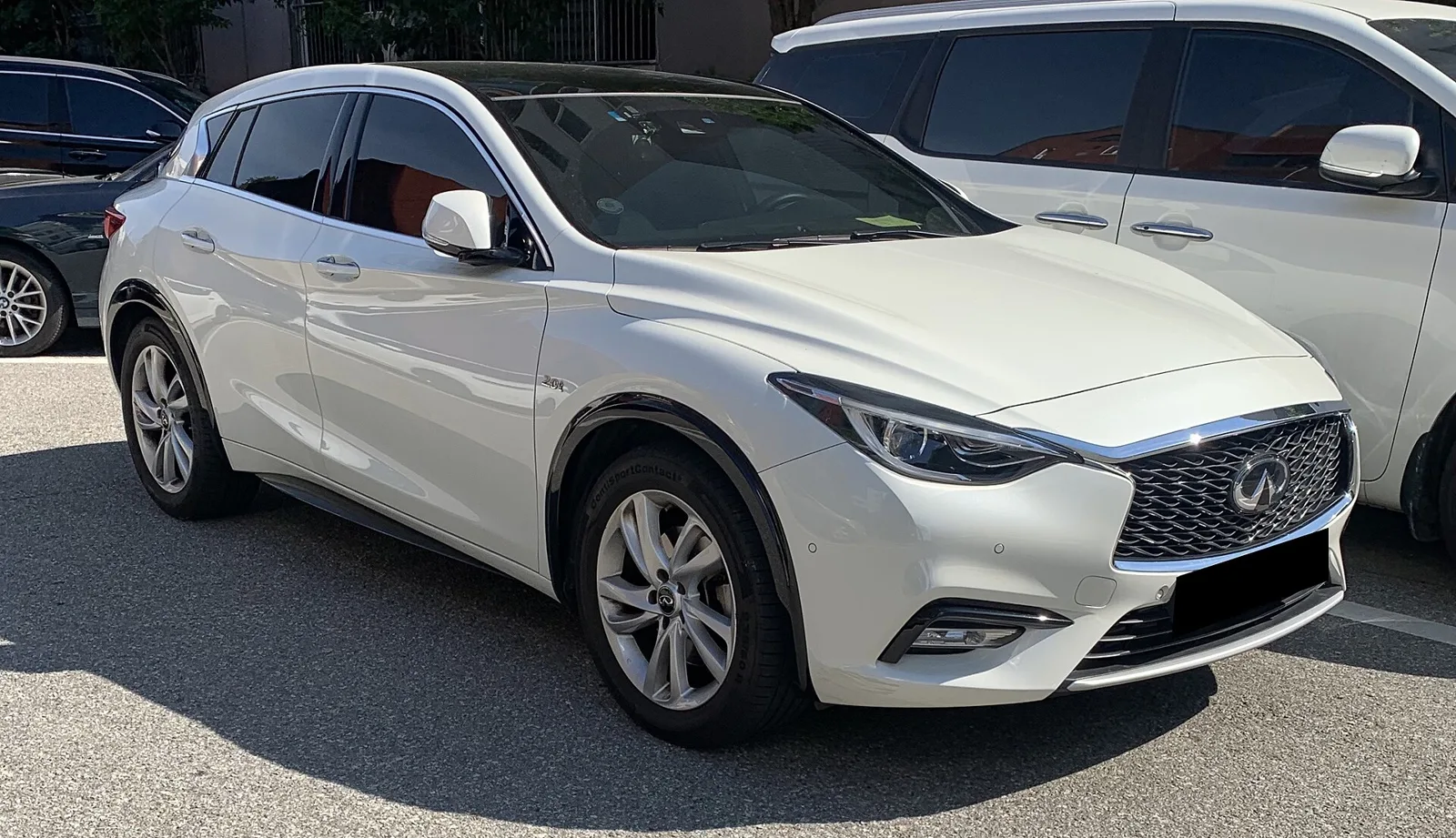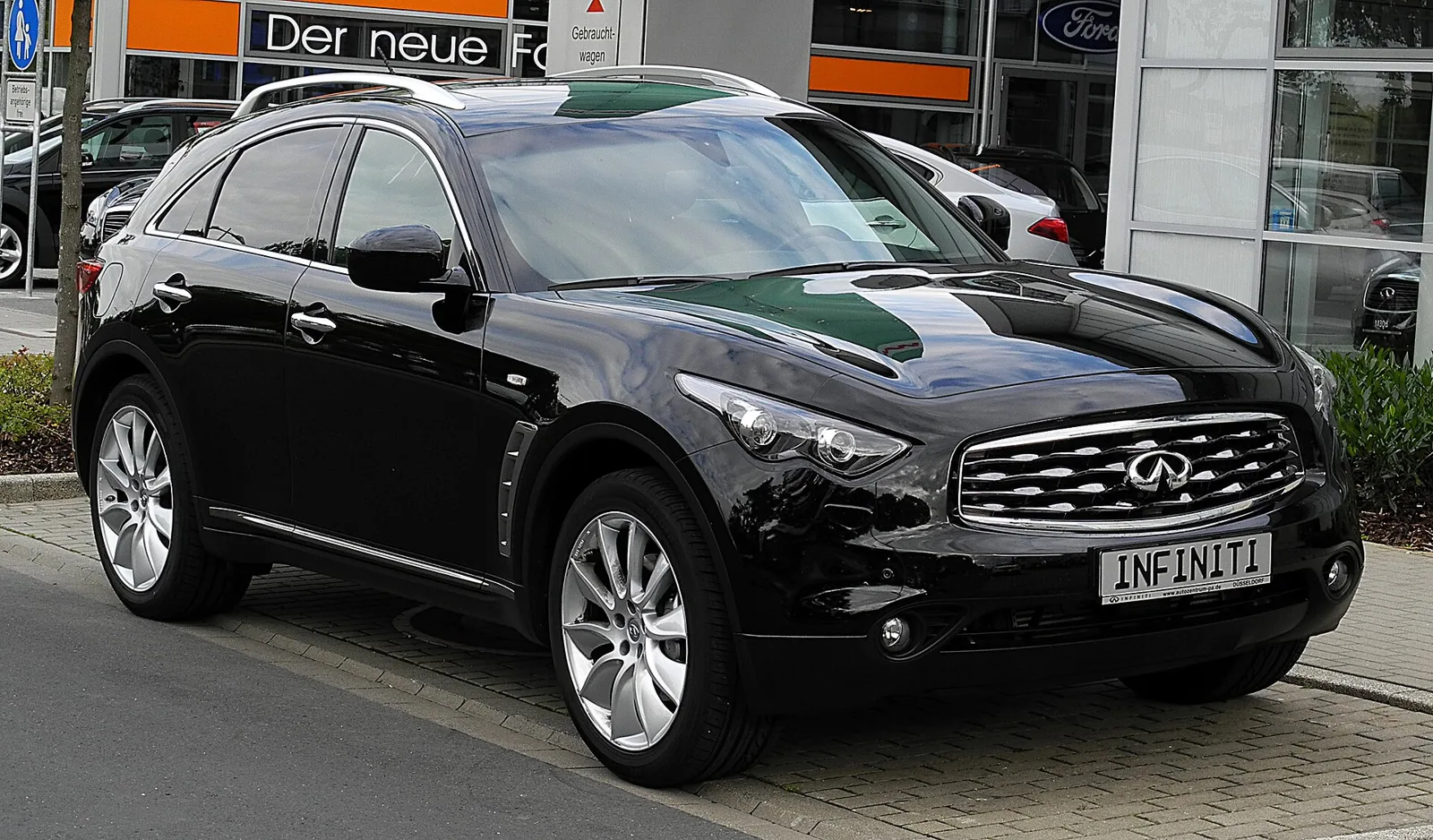
A mid-size Nissan-built crossover with V6, V8 and turbodiesel engines, a Formula 1 flavoured concept and a 2013 rename to QX70.
Built by Nissan's premium arm from 2002 to 2019 over two generations, the crossover was renamed the QX70 in 2013. Its engines ranged from a V6 to a 5-litre V8, with a European turbodiesel added in 2010.
The Infiniti FX was a mid-size luxury crossover from Infiniti, the premium arm of Nissan, and it was built from 2002 to 2019 across two generations. It was never sold in Japan, and it had no Nissan-branded equivalent, which made it a distinct product in the brand's range.
The FX brought a sculpted, sporty shape to a segment dominated by more conventional sport utilities. Infiniti renamed the model the QX70 in 2013, and the new name carried the car through its final years on sale.
Where did the Infiniti FX come from?
The FX replaced the QX4 as Infiniti's mid-size SUV. Development began in 1999 under the Nissan Revival Plan led by Carlos Ghosn, and design work was completed in 2000 so that production could start in late 2002.
The design drew on a Bionic Cheetah theme. The 2001 FX45 Concept was introduced at the NAIAS in January 2001, and a second concept, shown at the same show in January 2002, was already close to the production car.
The 2003 FX45 debuted at the NAIAS that January and went on sale on January 24, 2003. The launch gave Infiniti a visible product in the US crossover market, and the model grew steadily from there.
A mid-size Nissan-built crossover that started as the FX and finished as the QX70, with V6, V8 and diesel power.
What did the first-generation FX offer?
The first-generation S50 came with two engines, the FX35 and the FX45. The FX35 used a 3.5-litre VQ35DE V6 with 24 valves, while the FX45 used a 4.5-litre VK45DE V8 with 32 valves. The FX35 could be ordered with rear-wheel or all-wheel drive, and the FX45 was all-wheel drive only.
The FX45 was the performance flagship of the range. When the model was updated in 2006, the FX45 gained a sport-tuned four-wheel independent suspension with new dampers, plus new 20-inch wheels that gave it a more aggressive stance.
Engine development also reflected Infiniti's focus on refinement. The VQ35 used continuously variable valve timing to optimise the opening of the intake valves, and the V8 used microfinished parts to reduce friction and improve response.
How did the 2005 and 2006 updates change the FX?
For the 2005 model year the FX gained a lane departure warning system, which made the 2005 FX the first US passenger car to offer one. Standard roof-mounted curtain airbags with rollover protection arrived in the same update, for front and rear outboard seats.
The 2006 model year brought a facelift with a new grille, bumper and wheel design, a revised centre console and a standard 300-watt Bose audio system. Many features that had been optional became standard, which made the updated car feel more complete for the price.
Production of the updated FX commenced in November 2005, and sales began in January 2006. The first generation ran until February 2008, when the second generation was ready to take over the sporty crossover segment.
How did performance compare across the first generation?
The FX35 reached 60 mph in 7.1 seconds and 100 mph in 17.5 seconds, while the FX45 managed 60 mph in 6.1 seconds and 100 mph in 16.5 seconds. Those figures put the V8 car in a different league from its V6 sibling, even though both shared the same body.
The FX35 had a top speed of 143 mph (230 km/h), a figure limited by drag. The FX45 reached 149 mph (240 km/h) before its electronic limiter stepped in, which gave the flagship a clear performance advantage.
Grip figures followed the same pattern. The FX35 recorded 0.79 g on the skidpad and the FX45 0.82 g, and the quarter mile took 15.3 seconds at 91.0 mph for the FX35 and 14.6 seconds at 96.1 mph for the FX45.
How did the second-generation FX change?
The second-generation S51 was revealed at the Geneva Motor Show on March 4, 2008, and it went on sale in June of that year. It arrived for the 2009 model year, with the V6 keeping the FX35 name and the V8 renamed FX50 for its 5-litre VK50VE engine.
The sculpted profile of the first car survived, with longer, shark-like headlights and a large trapezoidal grille. The body was also much stiffer, with torsional rigidity 1.6 times that of the previous model and bending resistance 3.4 times higher.
The front suspension moved to a double-wishbone design, the same layout used by the G37 and EX35, replacing the earlier strut setup. All-wheel drive was standard, and Infiniti's system always engages a 50:50 power split when stationary, with up to 100 percent of engine power sent to the rear when needed.
What made the second-generation interior stand out?
The second generation came with an 11-speaker, 300-watt Bose stereo, heated front seats and a 10-way power driver seat with lumbar adjustment. The 8-way power passenger seat and the individual driver memory system made long journeys more comfortable for everyone in the car.
Infiniti's Intelligent Key system gained a Push Button Ignition, so the driver no longer had to remove the key to drive. A simple electronic fob let the driver lock, unlock and start the vehicle without touching a key, which was a clear step up from the first generation.
Options included the All-Around View Monitor, which displayed a bird's-eye view of the car and its surroundings to help with parking. Intelligent Cruise Control was also available, adjusting speed and distance to traffic and returning to its preset speed when the road cleared.
What were the European FX37 versions?
Europe received its own FX37 in 2008, unveiled at the Paris Motor Show and sold from October that year. The 3.7-litre VQ37VHR V6 made 325 hp in entry form, and the range came in GT and S versions with larger wheels and sportier equipment.
The FX37 GT came with 20-inch wheels and heated and ventilated front seats, while the FX37S added 21-inch wheels and Continuous Damping Control. Those choices gave European buyers trim levels that the American line-up never offered in the same way.
These were Europe-specific cars, so they sat alongside the US-market FX35 and FX50 rather than replacing them. The arrangement reflected how Infiniti tailored the same platform to different markets, using local engines and specification.
Why did the FX30d diesel matter?
The FX30d was a European-specific model released in late 2010 with a new 3.0-litre V6 turbodiesel, the V9X, developed within the Renault-Nissan Alliance. It was the first diesel in Infiniti's history and was designed for refined performance rather than outright power.
The unit produced 240 PS and 550 Nm of torque, with peak torque available from 1,750 rpm. Idle speed was an exceptionally low 650 rpm, and the engine showed less noise, vibration and harshness than most diesels of its time.
A V8 diesel had been considered, but Infiniti chose the V6 layout because it offered the best balance between performance and refinement. That choice reflected an effort to suit the car to European buyers, who expected economy and torque from a large crossover.
What was the Sebastian Vettel Edition?
The Sebastian Vettel Edition concept was unveiled at the 2011 Frankfurt Motor Show by the Formula 1 driver Sebastian Vettel. It was based on the FX50 and finished in Moonlight White, with an F1-inspired carbon fibre front air dam, side skirts and rear wing.
The concept raised output to 420 PS and lowered the ride height by 20 millimetres, while its aerodynamic changes improved the drag coefficient by 30 percent. Inside were carbon fibre trim, an F1-inspired steering wheel and suede seating surfaces.
The production edition, sold in 2012 and 2013, was limited to 150 units with 50 in Western Europe. In the UK it cost 100,800 pounds, and a carbon rear spoiler was available at extra cost.
How did the FX become the QX70?
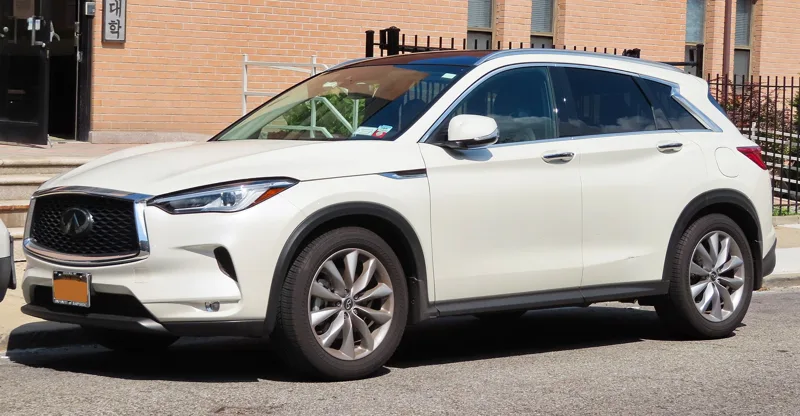
Infiniti renamed the model the QX in 2013 for the 2014 US model year, and the car was first shown at the 2013 Geneva Motor Show. The change came with a light facelift, and US models went on sale in June 2013 as the QX70 5.0 AWD, QX70 3.7 AWD and QX70 3.7.
In August 2013 Infiniti delivered 3,026 QX70 vehicles, which took the cumulative total to 20,556. The 5.0 AWD was last offered in the US in the 2014 model year, leaving the 3.7 models as the core of the range.
A 2016 update introduced the QX70 Limited, unveiled at the New York auto show that year. The Limited reached US showrooms in summer 2016, followed by the 3.7 and 3.7 AWD versions.
In July 2017 Infiniti confirmed that the US QX70 would be absent from the 2018 range, blaming poor sales and a shift of focus toward the better-selling QX50. The model's US run ended there, closing the chapter that began with the FX.
Where was the Infiniti FX built?
All FX and QX70 vehicles were built at Nissan's plant in Tochigi, Japan. Between 2013 and 2014 the QX70 was also built at Nissan's plant in Shushari, Saint Petersburg, Russia, giving the model a second production site during its later years.
The second-generation car stayed in the Tochigi plant from its launch, which kept build quality consistent. Export markets still faced the cost of shipping a large crossover from Japan to Europe and North America, a factor that shaped how the model was priced.
What are the Infiniti FX specifications?
| Model | Engine | Output | Performance |
|---|---|---|---|
| FX35 (first generation) | 3.5-litre VQ35DE V6, 24 valves | Rear-wheel or all-wheel drive | 0-60 mph 7.1 seconds; top speed 143 mph |
| FX45 (first generation) | 4.5-litre VK45DE V8, 32 valves | All-wheel drive | 0-60 mph 6.1 seconds; top speed 149 mph |
| FX35 (second generation) | 3.5-litre VQ35HR V6 | Standard all-wheel drive in Canada and Europe | 0-60 mph 6.1 seconds; top speed 155 mph |
| FX37 (Europe) | 3.7-litre VQ37VHR V6 | 325 hp entry model | 0-62 mph 5.8 seconds |
| FX50 | 5.0-litre VK50VE V8 | All-wheel drive | 0-60 mph 5.2 seconds; quarter mile 13.7 seconds; top speed 165 mph |
| FX30d (Europe) | 3.0-litre V9X turbodiesel | 240 PS and 550 Nm | Peak torque from 1,750 rpm |
| Sebastian Vettel Edition | FX50 with uprated engine | 420 PS | Limited to 150 units |