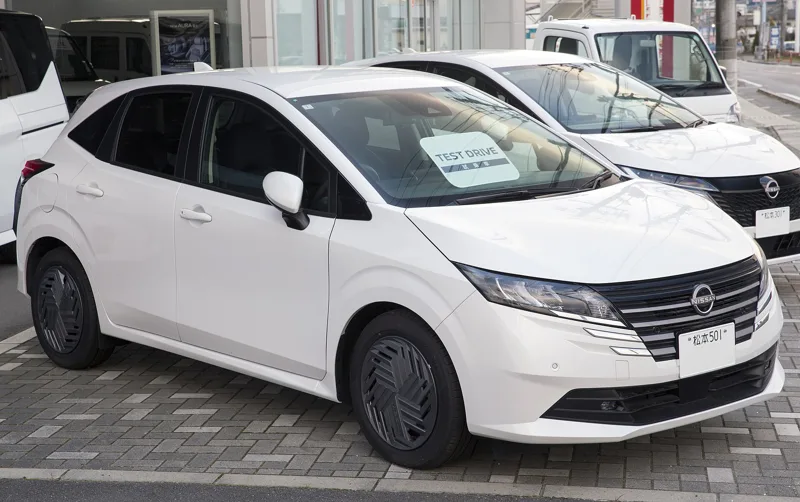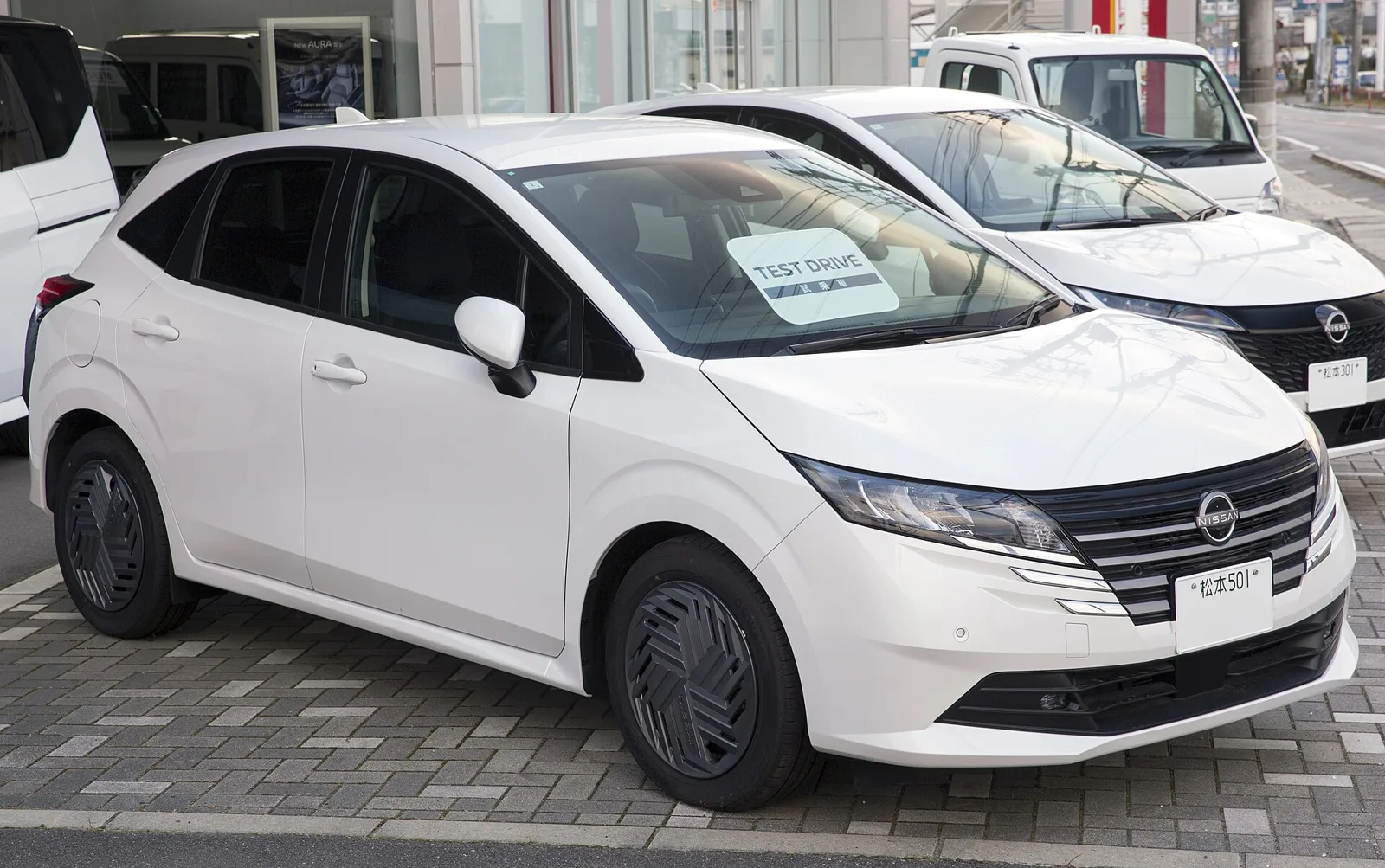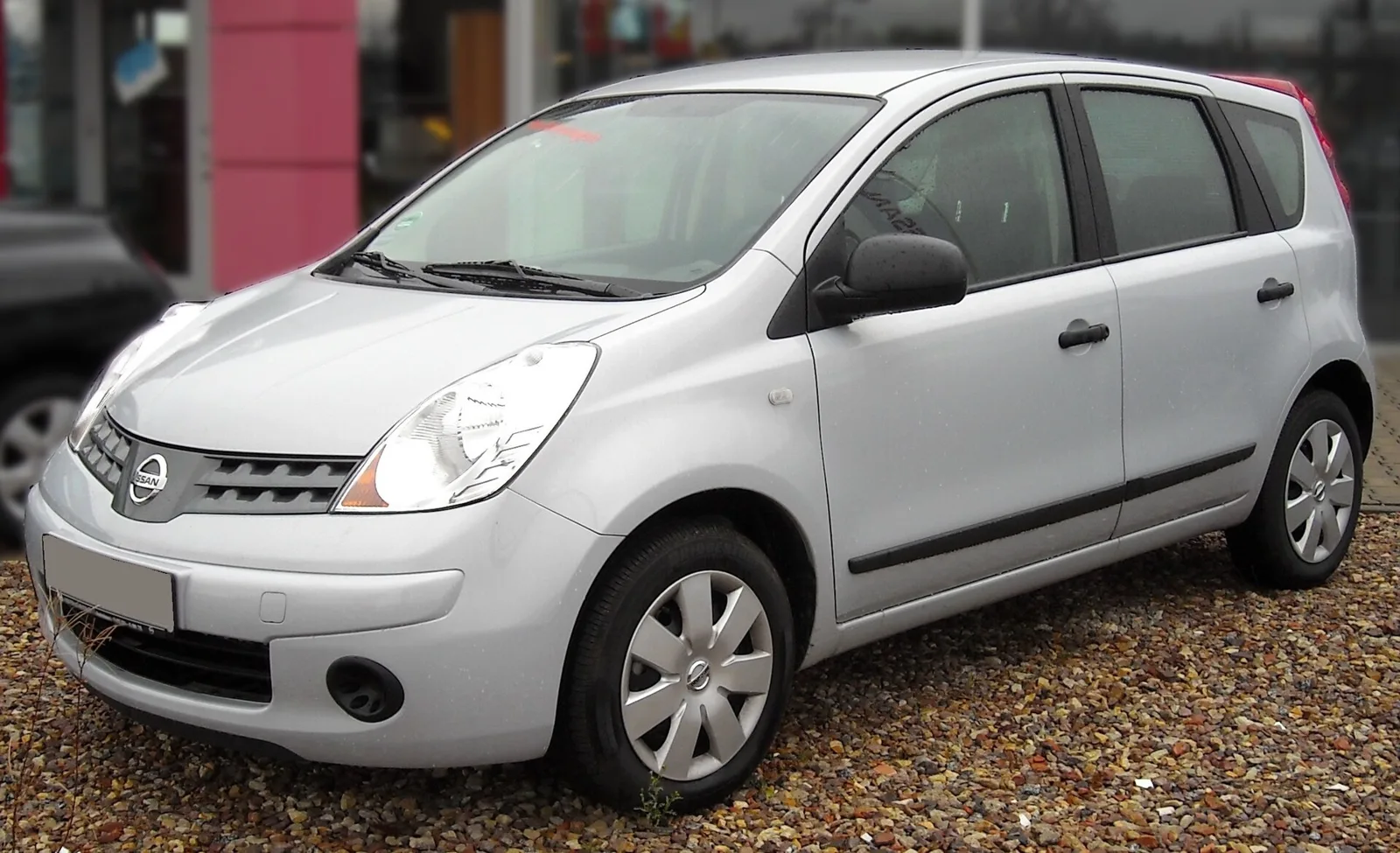
A subcompact van built on the Renault-Nissan B platform, with Japanese, British and Italian versions, a concept car inspired by a sportswear maker and a long run from 2005 to 2014.
The Nissan Note E11 was a subcompact van sold in Japan from January 2005 and in Europe from spring 2006. It took over from the Almera Tino in Nissan's European line-up.
The first-generation Nissan Note was a subcompact van built from 2005 to 2014, first for Japan and then for Europe. It replaced the Almera Tino, whose sales had fallen short of expectations. Across its life the Note sold about half a million cars in Japan, around 360 thousand in Europe and almost reached one million in total.
Why did Nissan need a new van?
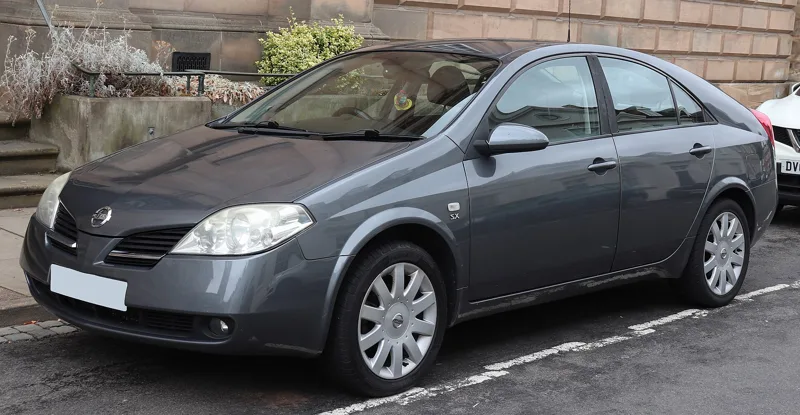
The Almera Tino, a compact van based on the Almera hatchback, had been sold in Japan from 1998 and in Europe from 2000. Its European sales came to only about 200 thousand cars over seven years, below expectations.
The alliance partner Renault had a better result with the Scenic, which sold more than 1,400,000 cars from 2000 to 2004 at 250 to 300 thousand a year. Renault also had the Modus, which passed 60 thousand sales in 2004 and 165 thousand in 2005. Nissan concluded that the Almera Tino could not compete and that a new car was needed.
Roomy and clever inside, yet hit by recalls and criticised for engine noise, the Note still sold well in Europe.
What was the Tone concept?
The Nissan Tone concept was shown at the Paris Motor Show in September 2004, two years after the first news about the future model. It was the direct forerunner of the production Note for Europe and the CIS markets, and it was to be built on the Nissan B platform of the Renault-Nissan alliance, which also carried the third-generation Nissan Micra and the Renault Modus.
The design was handled by Taiji Toyota. The sum spent on the concept was never disclosed, but Chris Lee, the company's product manager, said 'tens of millions of euros' had been invested. The production price was planned not to exceed 13,000 euros, and the engine range was to include two petrol and two diesel units.
How was the concept different from the production car?
The concept was similar to the production car in many ways, but it had some original features. A partly glass roof was one, and the production car dropped it. The front got a radiator grille of eight cells in two rows, a design already tried on the Nissan Murano crossover.
The rear lamps were shaped like boomerangs, mounted on pillars and reaching far onto the roof. That idea came from the Nissan Qashqai concept, shown shortly before the Tone. On the Tone the front doors opened while the rear doors stayed shut, and the cabin mixed plastic with aluminium trim. A screen sat on the centre console above the control buttons, and the car had an automatic gearbox.
How did the Note get its name?
The production car had no name for a long time. Before the 2004 concept appeared, it was called the new generation of the Almera Tino in reports, and in Europe until autumn 2005 people went on calling it Tone. A variant, the Micra MPV, also appeared.
The name Note comes from the English word for a note or memo, and the company linked it to a family wanting to start a new page. The Japanese website offered another reading: a musical note, making the driver's life rhythmic and pleasant. The body code E11 was chosen because E10 had already been used by the first-generation Nissan Cherry, built from 1970 to 1977, according to the company's design director, Shiro Nakamura.
How did the Japanese Note launch?
The Note was announced on 2 September 2004, alongside the Murano, Fuga, Lafesta and Tiida, and its official Japanese presentation took place on 19 January 2005. Sales began across the country the same day, and the Nissan president, Carlos Ghosn, attended the event.
The car was assembled at the Nissan Oppama Plant in Yokosuka, and at the start the plan was to sell about 8 thousand cars a month. The launch price ran from 1,260,000 to 1,585,500 yen, which was roughly 9.4 to 11.8 thousand euros at the time.
Japanese model timeline
| Date | Change | Price |
|---|---|---|
| 19 January 2005 | Japanese launch | 1,260,000 to 1,585,500 yen |
| 22 December 2005 | First update: new seat fabric, silver trim and chrome detail | 1,287,300 to 1,623,300 yen |
| 1 December 2010 | Third restyle with ECO Mode and an ionising air conditioner | 1,298,850 to 1,949,850 yen |
What versions did Japan get besides the standard car?
Autech, a Nissan division, developed the Note Autech Rider, a sporty version with different bumpers, radiator grille, interior trim and seats. It was joined on 10 May 2006 by the 15S V-Limited and 15S FOUR V-Limited, which had new seat and door trim, a new car stereo and two rear speakers. The only difference between them was the drive, with the FOUR version running all-wheel drive.
In October 2007 two more versions arrived. The 15 Brownie Interior was named after its exclusive interior colour, was based on the 15X, and had seats treated with an antibacterial finish. A special colour, Framboise Red, was available. The Aero Style, built by Autech on the 15RS and 16RZ bases, had a chrome grille, reflector halogen headlamps and a leather-trimmed three-spoke steering wheel.
Prices for the Brownie Interior started at 1,449,000 yen with front-wheel drive, and the Aero Style started at 1,646,400 yen on the 15RS base and 1,746,150 yen on the 16 RZ base. On 27 May 2008 a limited series arrived with the Plus Navi HDD SP system, which was offered in any trim for 446,250 yen more than the usual price.
What were the Lifecare versions?
The Note Lifecare Vehicles were three modifications for people with disabilities. They comprised a slide-out front passenger seat version, a swivel seat version, and the Driving Helper, which was built with Autech's Driving Control Package Type e.
The first had a front passenger seat that moved out of the car, using a non-standard seat with two armrests and electric adjustment on each side. The second used the standard front seat, which turned and slid out under a special remote control. The third was for the driver, with levers on the steering wheel taking the place of the pedals.
How did the Note sell in Europe?
The European Note was first shown at the Frankfurt Motor Show in September 2005 and then at the Geneva Motor Show in March 2006. Production at the Sunderland plant in Great Britain started in January 2006, and British dealers had cars from 10 February. Petrol-engined cars went on sale in Britain on 1 March, and diesels followed across Europe in April.
The model was popular, and about 100 thousand had sold by April 2007, a year after sales began. In Britain the prices were from 9,995 to 13,395 pounds. In Russia, where the car earned the jocular nickname 'raccoon', sales began in April 2006 at prices from 14,990 US dollars.
What changed in the European updates?
The European model was updated for 2008 at the Paris Motor Show. It had new headlamps and grille, the outside antenna moved from the front of the roof to the rear, the bumpers were painted in the body colour, and the rear lamps were tinted. A light green body colour appeared, along with two new wheel designs and a new dashboard.
The Nissan Connect infotainment system arrived, offering satellite navigation and audio playback from discs, a USB stick, an AUX cable or a Bluetooth link. A 1.5-litre diesel with 103 hp and CO2 emissions of about 119 g/km was offered in Europe, but not in Russia. Updated prices in Britain were from 9,795 to 13,695 pounds from January 2009.
A second restyle in August 2010 mainly affected equipment. ESP became standard from the Acenta trim, the Intelligent Key keyless entry became standard in the Tekna trim, and two new body colours were added, including a red called Magnetic Red. The 2012 restyle brought 16-inch wheels to the Acenta, chrome trim on the mirrors and fog lamps, and standard climate control.
Russia received the updated model in September 2009 at prices from 586,000 to 716,100 roubles. The 2012 British prices were 11,200 pounds for the base Visia, 13,000 pounds for the Acenta and 13,500 pounds for the N-TEC+.
What was the Eco Note?
The Eco Note was a model for the Italian market, built after the 2008 restyle with a new 1.4-litre 16-valve bi-fuel engine. It ran on petrol and on liquefied petroleum gas.
The declared range was 685 km on gas and 1,465 km in total. A switch in the cabin changed the fuel, and when the gas ran out a warning sounded before the car switched itself to petrol. A similar engine was also fitted to the Micra.
What was the Note Nickelodeon?
The Note Nickelodeon was a French special version released in October 2012 in partnership with an American children's television channel. It was shown from 27 to 30 October 2012 at the Kidexpo exhibition in Versailles, and its only exterior difference was a Nickelodeon logo on the boot door.
Inside, the car had Nissan Connect and a tablet with six built-in apps, 100 cartoons from Nickelodeon, 30 apps from a consumer electronics maker and two games from Nissan. Extras included a neck pillow, seat belt protectors and wireless headphones. The price started at 17,040 euros, and only 1,000 cars were sold. An online car publication named it one of the ten most unusual car collaborations of 2021.
Why did the Note never reach China or Taiwan?
In December 2006 a Taiwanese car portal, citing the Chinese division of Nissan, reported that from 2007 the Note would be built in China with the local partner Dongfeng in Huadu, Guangzhou, replacing the second-generation Nissan March. The price was to be under 100 thousand yuan, or 400 thousand Taiwan dollars.
In February 2007 the plan was cancelled because of internal competition with the Tiida. Instead, the Livina Geniss, built in Asian countries, took the place that the Note had been planned to fill.
What was the Note inspired by adidas?
The Note inspired by adidas was a concept car shown at the Tokyo Motor Show in October 2005, developed with a German sportswear maker. Its sporty styling used many rubber parts on the bumpers and sills and fabric inside. The five-petal wheel discs and removable bumper covers were part of an idea aimed at the young Japanese 'remix generation'.
The cabin used fabric and rubber, along with materials from sports clothing and kit. The seat upholstery and bumpers could be swapped easily. The glovebox used a zip fastener instead of a door, and the centre console box held a small travel bag.
How well did the first Note sell?
The Note was a commercial success. About half a million cars sold in Japan, around 360 thousand in Europe and 88 thousand in Russia, and total sales almost reached one million cars.
Reviewers praised its roomy and easily reconfigured interior and its capacious boot. They criticised engine noise, false triggers of the Intelligent Key system and the quality of the cabin trim. The car was also hit by many recall campaigns, the loudest over airbags from another supplier, and it was three times named best in its class by Auto Express.
How did the first Note come to an end?
The second-generation Note was presented in Japan on 28 August 2012 in Yokohama, with sales starting that September. In Europe it was shown at the Geneva Motor Show in March 2013, and its sales began in the summer.
British-built cars were still reaching Russia until June 2014. Assembly at Sunderland was then wound down, and the model's sales ended soon afterwards.