How a failed Almera successor became the compact SUV that sold two million cars, from its European design studio to its Japanese Dualis and Chinese Xiaoke variants.
Nissan's compact crossover was built in Sunderland, Japan and China between December 2006 and October 2015. Cumulative sales reached two million by 2014, and Japan knew the car as the Dualis. China called it the Xiaoke, and reviewers later placed it among the first urban crossovers.
Nissan's Qashqai arrived in showrooms in 2007 as a crossover that refused to fit the existing boxes, and it went on to sell two million cars. It was shaped in Europe, built in Sunderland and sold under different names around the world.
What was the first-generation Qashqai?
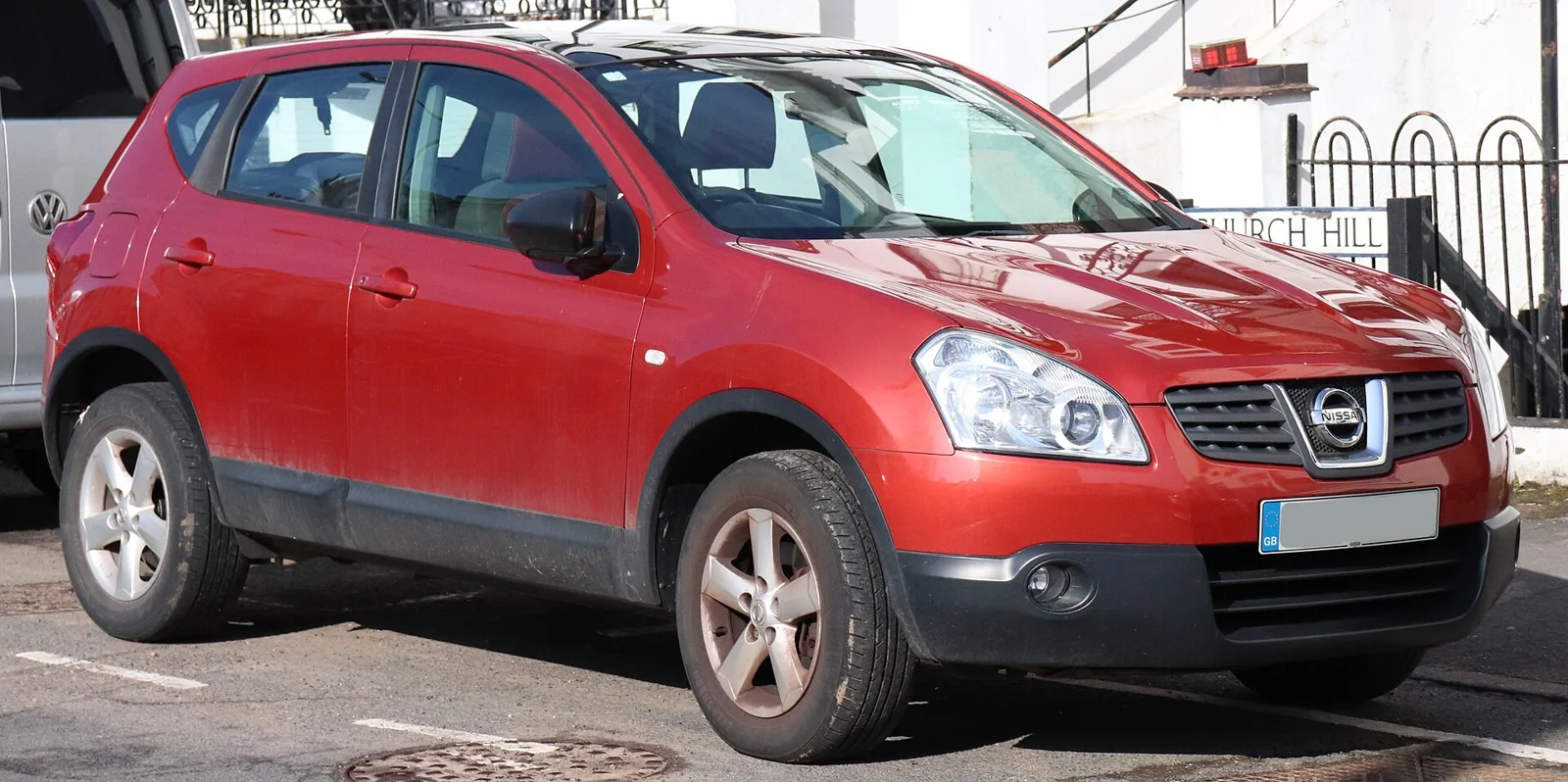
The first-generation Nissan Qashqai was a compact SUV built from December 2006 to October 2015. It was sold as the Dualis in Australia and Japan and as the Xiaoke in China. Many regard it as one of the first urban crossovers, and it was the first Nissan developed almost entirely in Europe.
At first the car came only as a five-seater. A longer seven-seat Qashqai+2 reached Europe in September 2008, and both were facelifted in 2010 with a sportier exterior.
A failed Almera successor became one of the first urban crossovers, and it kept the cash register ringing for almost a decade.
Why did Nissan start the Qashqai project?
Development began in 2002 to replace the Almera, a second-generation model that had sold poorly in marketing terms. In March 2002 a 25-member engineering team from the Nissan Technical Centre in Japan assembled to discuss the successor. The new car was intended to succeed the Almera in Europe.
On December 13, 2002, the team met again to show the results of an eight-month development process. The result was a compact MPV meant to compete with the Volkswagen Golf Plus and SEAT Altea, but it was judged likely to fail too, and the Almera successor was dropped in 2003.
Nissan then chose a different concept: an SUV's swiftness and versatility with the size, dynamics and cost of a compact family hatchback. Designers called the car a mini-Murano, after the larger Murano sold in the United States and Canada.
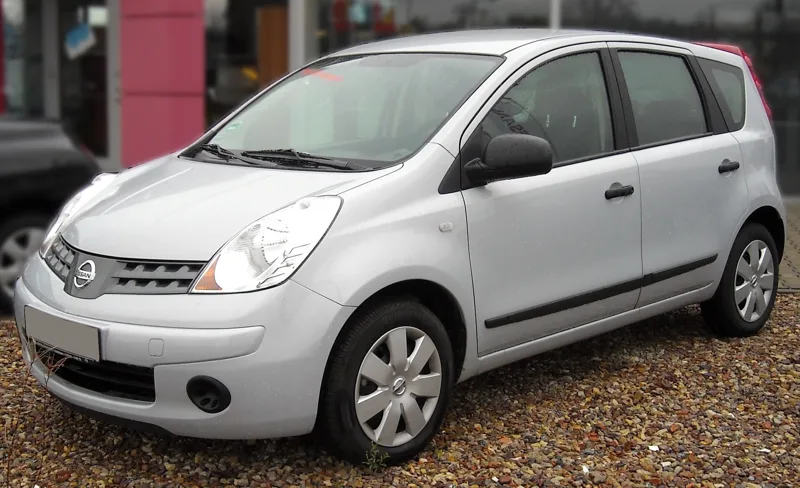
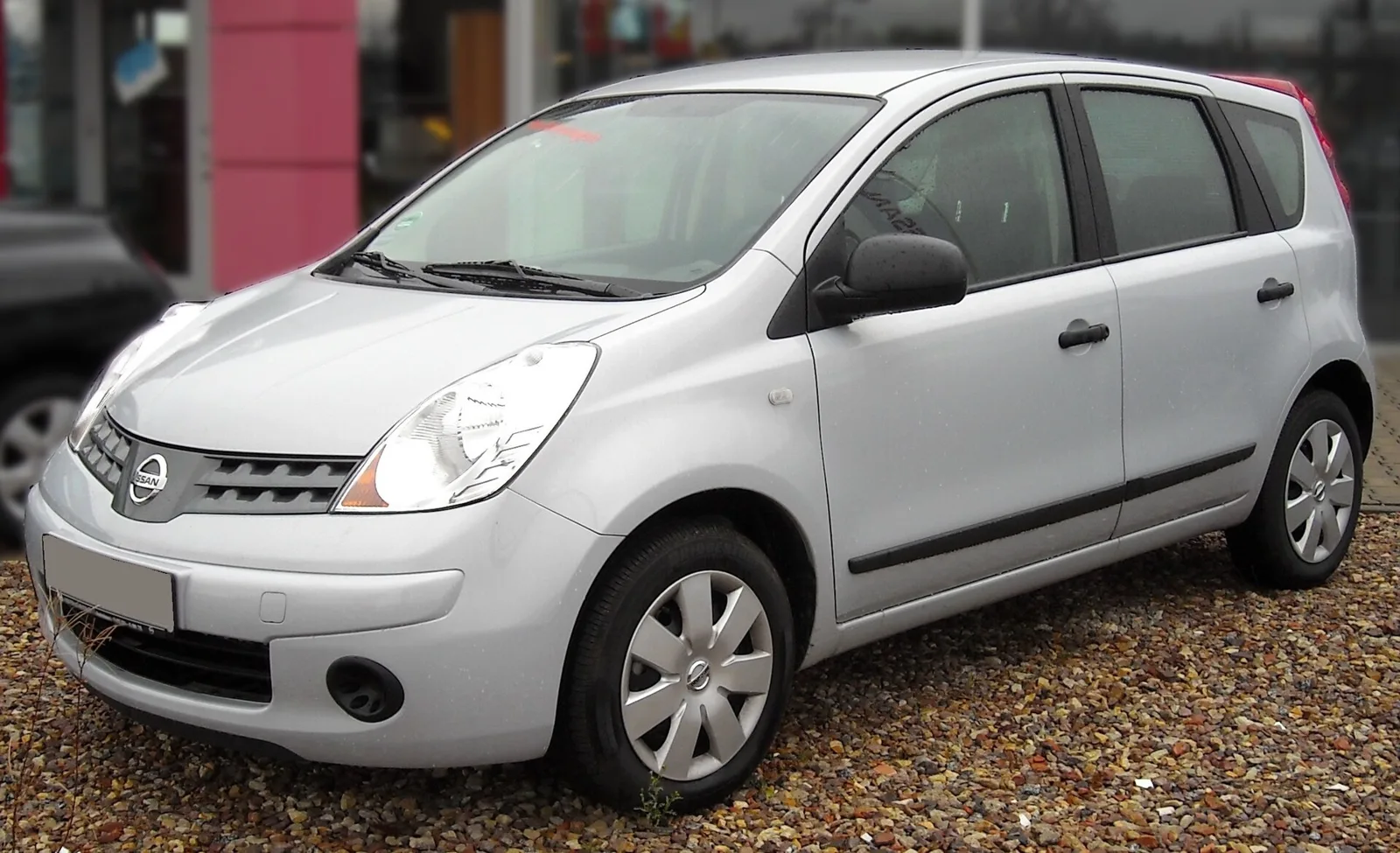
The project also fitted Nissan's new European strategy, which was to create unique cars for new market niches rather than build cars for existing segments. The Note mini MPV, which reached European markets in 2006, had shown that approach first.
How did the Qashqai concept look in 2004?
The concept was formalised around the phrase urban nomad. Nissan Design Centre Europe, which had been in London since January 2003, did the design work. The head of the design team was Stefan Schwarz. The concept itself was first shown in early 2004, once testing of prototypes had been completed.
Matt Weaver, then a senior designer at the London studio, said graffiti the team found in their abandoned future office partly inspired the concept. The studio had been in an empty building during the first visit.
The concept premiered on 2 March 2004 at the Geneva Motor Show. It had rear suicide doors and no centre pillars, with a large longitudinal centre beam in the cabin, and four individual seats that seemed to float above the floor.
The press was sceptical at first, because the car seemed to fit no existing segment. The concept still won the Design Award from the British Institute of Vehicle Engineers (IVehE) in May 2004.
Why was the car called the Qashqai?
The name comes from the Qashqai people of Fars province in Iran. Some publications initially misread it as Quashqai. Nissan decided the production car should keep the concept's name. The name is that of a people, not a model code.
In April 2004 Nissan hinted that Murano would go on sale and Qashqai would not, yet. The production model was announced in February 2005, under the codename P32L, for assembly at Nissan's Sunderland plant.
How did reviewers judge the pre-production car?
In January 2006 the crossover was tested in Finland, the first time journalists saw a pre-production model. The reviews were sceptical, because critics thought the car looked uncompetitive next to typical crossovers of the time. Journalists described the future model as a failure in the making.
Nissan specialists had studied the question and found that all-wheel drive was not often used by SUV owners, so it could not be a success factor. The total development cost exceeded 300 million euros, according to Carlos Ghosn.
During 2006 rumours and leaks spread. A spy photo in red with no camouflage at the front surfaced in August 2006, and the car was tipped to compete with the BMW X3 in one report.
When did Qashqai production start?
Carlos Ghosn first showed the production car to the press on September 6, 2006. A larger presentation for the public followed at the Paris Motor Show, held from September 30 to October 15, 2006. Serial production followed that December in Sunderland.
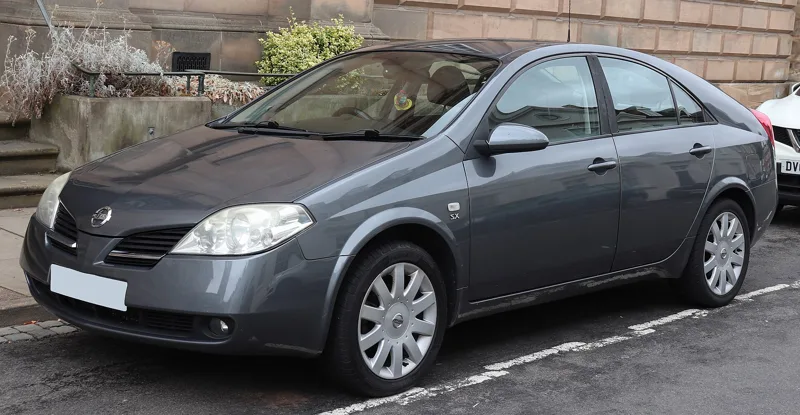
Nissan expected to sell about 100,000 cars a year in Europe, and 80 per cent of buyers were expected to be new to the brand. Serial production in Sunderland began on 5 December 2006, on the line previously used for the Primera, with around 130,000 cars a year planned.
Production of the two-litre diesel began on 16 April 2007, by which time the British-built car had already been exported to Europe, Russia, Japan, Australia, South Africa, South America and the Middle East.
Demand grew quickly. By March 2008, exactly one year after launch, more than 148,000 cars had been sold worldwide, so Sunderland added an extra shift and then a third shift in June 2008, effectively running as a 24-hour operation. Japan and China later added their own assembly lines.
By the 2014 milestone total cumulative sales had reached two million, a result that helped earn the car the nickname cash cow. A millionth car was sold in May 2011.
How did the Qashqai sell in the UK?
On the day production began, the British price list showed the basic Visia from GBP 13,499, the mid-range Acenta from GBP 14,999 and the top Tekna from GBP 16,499. The most expensive model reached GBP 21,899, and UK sales began on March 1, 2007.
The launch also coincided with the withdrawal of the Primera from the UK market. The Note became the indirect successor to the Almera, and the Qashqai took over the Primera's role, a move that was controversial at the time.
In time the choice paid off. More than 39,000 UK sales in 2010 made the Qashqai the tenth best selling new car in Britain, the first Nissan in the top ten since the Sunny in 1983.
Nissan invested a further GBP 2.4 million in the UK facility in June 2007 to raise Qashqai production by 20 per cent. In 2012, its sixth year on sale, the car passed 45,000 UK sales and ranked sixth best selling car there.
Which special editions were sold?
In May 2009 Nissan released the Qashqai n-tec, placed between Acenta and Tekna. It had 18-inch wheels, a panoramic roof, tinted rear windows and silver trim, and it priced from GBP 17,645 to GBP 24,295 in the UK. In continental Europe it was known as the Qashqai i-Way.
The Sound & Style model, based on Tekna, arrived in 2008 with a Bose audio system and 18-inch light-alloy rims. Sales began in November 2008, and France received a limited run of 1,000 units at EUR 26,615 in a single Cassis colour.
What engines did the first Qashqai use?
In Russia, sales began on March 20, 2007, without the panoramic roof, because of poor road conditions. The engines offered were a 1.6 L with 85 kW (116 PS) and a 2.0 L with 105 kW (143 PS), with manual, CVT and four-wheel-drive options depending on the body.
Japanese Dualis cars all used a two-litre petrol engine with a continuously variable transmission. Across the Middle East the S, SE and LE trims shared a 2.0-litre engine of 106 kW (142 bhp) with CVT.
Why was the Qashqai called the Dualis in Japan?
Export to Japan began on March 2, 2007, and the car was renamed the Nissan Dualis. The name refers to the duality of the driver's life, with an active, busy side and a quiet side, and the car was meant to fit both.
The main reason for the change was the difficulty of pronouncing Qashqai in Japanese. Sales began on May 22 or 23, 2007, with prices from 1,953,000 to 2,430,750 yen, and the first week brought more than 5000 orders against a planned 2000 cars a month.
From December 2007 or January 2008 the Dualis was assembled at the Nissan Kyushu Plant in Kanda, Fukuoka Prefecture, at a rate of 24,000 cars a year. It was discontinued in Japan on 31 March 2014.
What Japanese special editions did Nissan build?
The Dualis Urban Flare, based on the 20G and 20G FOUR, was sold from May 5, 2008 to November 2008. Its driver's seat had lumbar support, and the passenger seat had an ottoman. It was the first of the Japanese special editions, and it set the pattern for those that followed.
The Dualis CrossRider went on sale on 9 September 2008, built on the 20S trim instead. Based on the 20S trim, it had a new front bumper and grille, an exclusive Fujitsubo Giken muffler, alcantara upholstery and 17-inch discs.
A Dualis Premium Concept, shown at the 2008 Tokyo Motor Show by Nissan subsidiary Autech, preceded the CrossRider. The Urban Black Leather special, released January 7, 2010, added heated front seats and black leather. The series ran from the Flare's 2008 launch through to the 2010 edition.
How did the Qashqai reach China and Australia?
China assembly started on March 12, 2008, at the Dongfeng plant in Huadu, Guangzhou. There the car was called the Nissan Xiaoke, and only the 2.0-litre MR20DE petrol engine was offered, priced between 167,800 and 219,800 yuan at launch.
The Australian model was named Dualis, as in Japan. It was unveiled at the Melbourne Motor Show in March 2007, then shown at the Sydney International Motor Show in October 2007, with prices from $28,990 to $35,990.
Australian sales opened in December 2007 with all-wheel drive only. The front-wheel-drive model did not arrive until August 5, 2009, with ST and Ti trims priced from $24,990 to $27,490. Australian journalists had first given the car the nickname cash cow.
Which other markets sold the Qashqai?
The New Zealand model went on sale in May 2009, retaining the Qashqai name in part to set it apart from Dualis grey imports. The Qashqai+2 was added to the New Zealand range in July 2010. Nissan's New Zealand marketing head, Peter Merry, dismissed the Dualis name as meaningless.
South Africa saw the car at the Auto Africa show in October 2006, and sales began in December 2007. The first-generation car never went on sale in the United States or Canada, where the Nissan Rogue was offered from 2007. Sales also reached several Middle Eastern countries.
Was the first-generation Qashqai recalled?
Nissan recalled 51,000 cars worldwide on 13 September 2012, after a steering wheel problem was reported and investigated. The recall covered the Qashqai, the seven-seat Qashqai+2 that launched in Europe in September 2008, and the NV200. It came three years before the first generation ended in October 2015.
Nissan Qashqai J10 specifications
| Specification | Detail |
|---|---|
| Production | December 2006 to October 2015 |
| Regional names | Dualis (Australia and Japan), Xiaoke (China), Qashqai elsewhere |
| Concept | Geneva Motor Show, 2 March 2004 |
| Production start | Sunderland, 5 December 2006 |
| Japanese engine | 2.0-litre MR20DE with six-speed Xtronic CVT |
| Russian engines | 1.6 L 85 kW (116 PS); 2.0 L 105 kW (143 PS) |
| Middle East engine | 2.0-litre 106 kW (142 bhp) MR20DE with CVT |
| UK launch prices | GBP 13,499 (Visia); GBP 14,999 (Acenta); GBP 16,499 (Tekna); GBP 21,899 top model |
| Australian prices | $28,990 to $35,990 at launch; $24,990 to $27,490 for FWD Dualis |
| Japanese prices | 1,953,000 to 2,430,750 yen at launch |
| China prices | 167,800 to 219,800 yuan |
| Cumulative sales | 2 million by 2014 |
| Recall | 51,000 cars, 13 September 2012 |