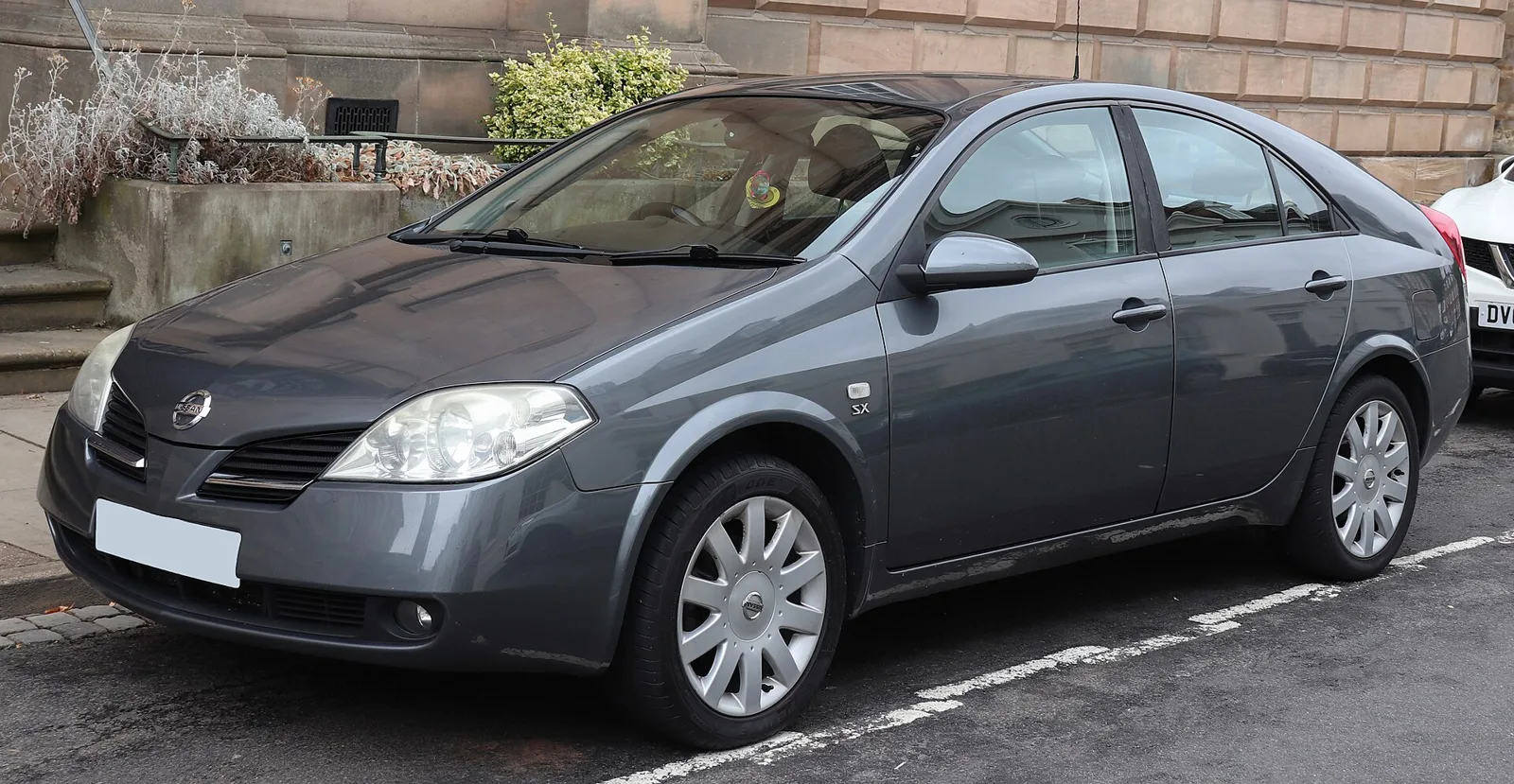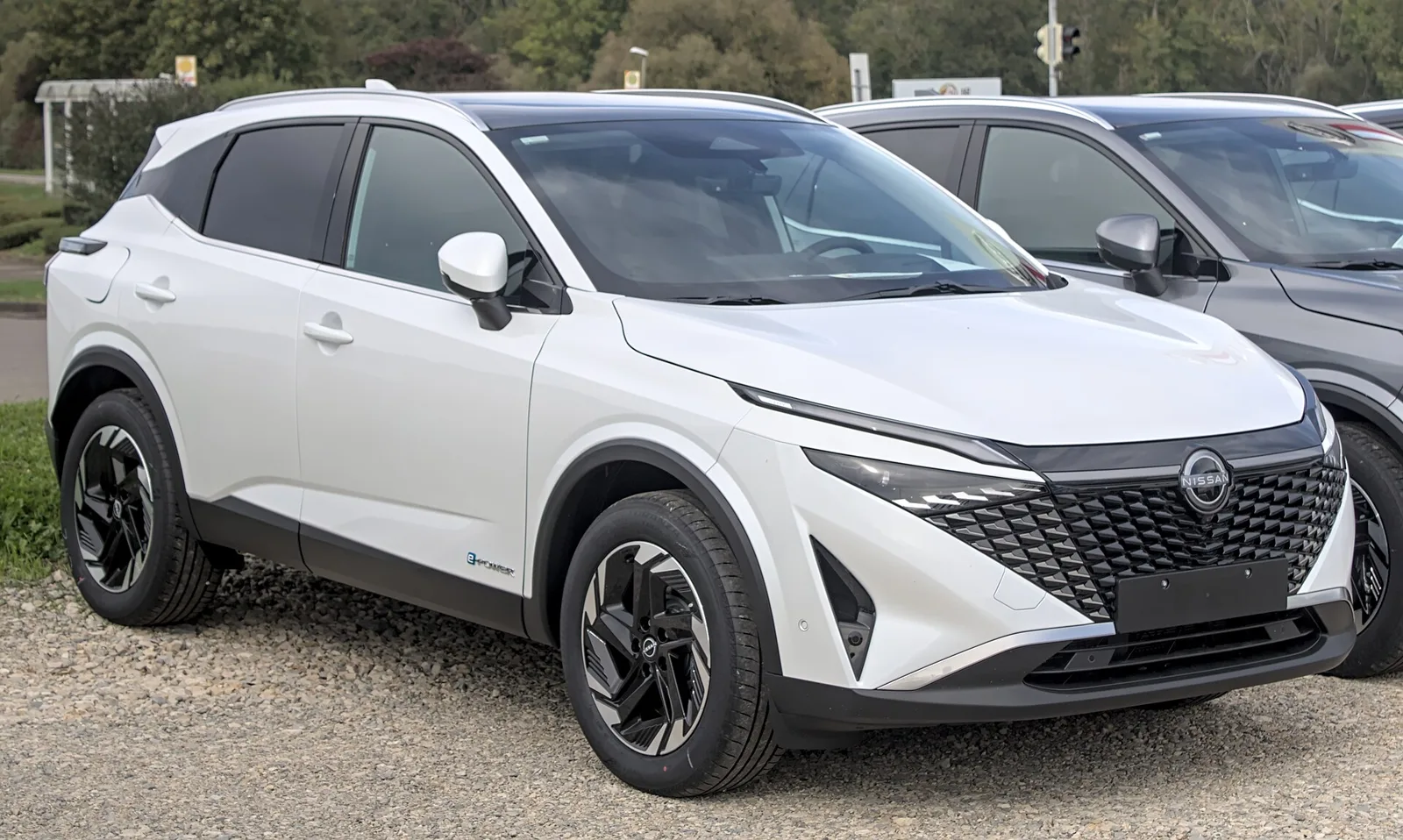
A compact crossover that began as a Nissan answer to the Almera's decline, then grew into a hybrid family SUV sold across three continents.
The Nissan Qashqai is a compact SUV that Nissan has built since 2006, first at Sunderland for European buyers. Its first generation became a strong seller across Europe, and the third generation, launched in 2021, offers mild-hybrid and e-Power hybrid engines alongside petrol power.
The Nissan Qashqai is a compact crossover that Nissan built in Sunderland for European buyers, and it became one of the company's biggest sellers. The first generation sold more than 1.24 million units in Europe in seven years of production. Its successors added seven-seat versions, a 360-degree camera system and, in the third generation, an e-Power hybrid that drives the wheels with an electric motor.
What is the Nissan Qashqai?
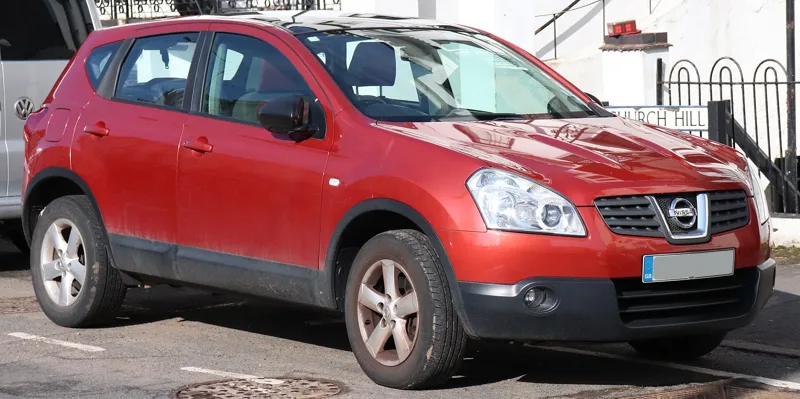
The Qashqai is a compact SUV, a C-segment vehicle, designed and produced by Nissan since 2006. The first generation was sold as the Dualis in Japan and Australia, and as the Qashqai in the rest of the world. The second generation launched for the 2014 model year and was not sold in Japan, while the third generation arrived in 2021 with hybrid powertrains.
Nissan named the car after the Qashqai people, a nomadic group who live in the mountains of Central and Southwestern Iran. In Europe and Australia the Qashqai sits between the Juke and the X-Trail in Nissan's crossover range, sharing its platform with the X-Trail.
The Qashqai began as a fix for a slow-selling hatchback and grew into one of the defining crossovers of its decade.
Why did Nissan create the Qashqai?
The car grew out of the Renault-Nissan Alliance, which was formed in 1999 when Carlos Ghosn became Nissan's chief operating officer and set out to change the company's European range. The C-segment Almera was a slow seller in Europe, and it became the first focus of that work.
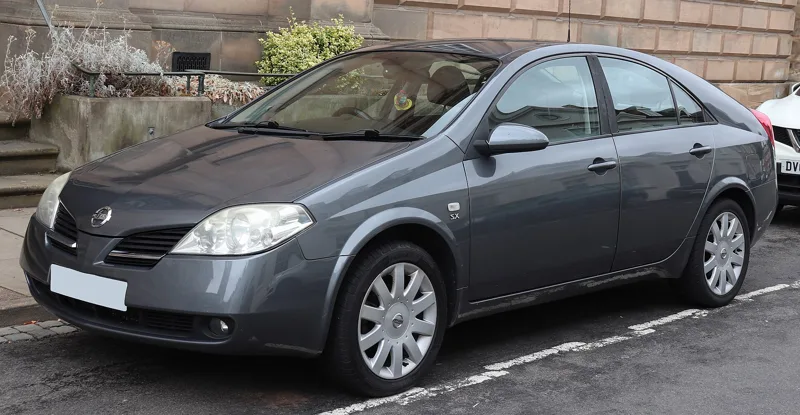
In early 2002, 25 European Nissan engineers went to the brand's technical centre in Japan to begin a 12-month project to develop an Almera successor. In December 2002 Nissan decided the planned car would not be profitable enough, and the team proposed a smaller vehicle, a mini-Murano, that would sit below the X-Trail. Nissan Design Europe's proposal became the 2004 Qashqai concept.
How did the first-generation Qashqai sell?
The concept was shown at the 2004 Geneva Motor Show, and the production car had its global debut at the 2006 Paris show. Sales opened in February 2007, and Nissan's target was more than 100,000 cars a year. Nissan said the car would appeal to buyers who wanted a more dynamic design but were not drawn to the upright nature of a traditional SUV.
Over seven years in production, the first generation passed 1.24 million sales in Europe. From the UK it was also exported to the Middle East and other overseas markets. It replaced both the Primera in the D-segment and the Almera, and it was the first Nissan to be styled by Nissan Design Europe in London.
What was the name Dualis about?
In Australia the first generation carried the Japanese name Dualis, because Nissan worried that Qashqai could be pronounced cash cow. The press often used that pun to describe the model's sales success, and the name stayed in Australia while the rest of the world used Qashqai.
Production was based at Nissan Motor Manufacturing UK in Sunderland, Tyne and Wear, from December 2006. The Qashqai took over the line that had built the Primera, and part of the Almera's line as well. A seven-seat Qashqai+2 followed in July 2008, with a wheelbase 135 mm (5.3 in) longer.
What changed in the 2009 facelift and 2011 engines?
In December 2009 Nissan announced a refreshed first-generation model, which went on sale in March 2010. The front end was restyled completely, the rear gained LED tail lights, and the interior received a new instrument panel layout for the drive computer and better soundproofing. Electronic stability control became standard across the range in Europe.
A new 1.6 dCi replaced the 2.0 dCi in 2011. Output dropped from 110 kW to 96 kW (129 bhp; 131 PS), yet torque held at 320 Nm (240 lb ft), now arriving at 1750 rpm. Nissan also made its Around View Monitor standard on the 360 versions, which used external cameras to create a bird's-eye view.
How did the second-generation J11 differ?
The J11 debuted on 7 November 2013 through a streamed global launch from London. It was larger than its predecessor and based on the all-new CMF-CD platform that it shared with the Nissan X-Trail and Rogue and with the Renault Kadjar. UK showrooms received it in February 2014, and What Car? later gave it Car of the Year for 2014.
The second generation was offered with 1.6-litre petrol and turbo-diesel engines, a 1.5-litre turbo-diesel, a 1.2-litre turbocharged petrol and a 2.0-litre petrol. In September 2015 Nissan rolled its 500,000th Qashqai off the UK line, which it said was the fastest time for any UK-built vehicle to reach half a million units.
Why did the Qashqai become the Rogue Sport in America?
In North America the car was sold as the Rogue Sport in the United States, to tie it in with the Rogue nameplate, and as the Qashqai in Canada. It replaced the Rogue Select, which had been discontinued in the US in 2015. The North American cars were sourced from Japan, because the UK plant could not build the Rogue Sport to US rules.
The Rogue Sport used a 2.0-litre inline-four with 141 hp (143 PS; 105 kW) and a CVT. It was offered in S, SV and SL trims, with front-wheel drive or all-wheel drive, and it went on sale in the second quarter of 2017. Production in the US ended in December 2022, and the Canadian Qashqai was discontinued after the 2023 model year.
Why was the Qashqai banned in South Korea?
The Qashqai was introduced to South Korea on 13 November 2014 by the then defunct Nissan Korea, but its sales were later suspended over an emissions dispute. South Korean authorities said Nissan had fitted a defeat device that cut nitrogen oxide readings in tests. After the VW diesel scandal, the regulator examined 20 diesels, and the Qashqai alone failed.
The UK disagreed. British authorities found no evidence of emissions cheating, and noted that they had tested the older Euro 5 models while South Korea tested the newer Euro 6 versions. Nissan was fined 330 million won in 2016, and sales were banned by the South Korean government on 11 May 2017.
What is the third-generation Qashqai's e-Power?
The third generation launched on 18 February 2021 on the CMF-CD platform shared with the Rogue, X-Trail and Renault Austral. It is slightly larger than before, and Nissan used aluminium for the bonnet, front fenders and doors, which made them 21 kg (46 lb) lighter. The tailgate is composite and saves 2.3 kg (5.1 lb).
The base engine is a mild-hybrid 1.3-litre DIG-T with 138 hp (140 PS; 103 kW), paired with a six-speed manual or an Xtronic CVT-X. For the first time the range also included e-Power. That system uses a 1.5-litre petrol engine as a generator, with a 187 hp (190 PS; 139 kW) motor driving the wheels, but the engine itself is not connected to the wheels.
What did the 2024 facelift change?
The facelifted Qashqai was revealed on 17 April 2024. It has redesigned headlights and tail lights, a front fascia inspired by the Ariya, and new interior materials. The infotainment system uses Google built-in services, and the Around View Monitor gained a front camera with a 200-degree viewing angle.
A new Driver Assist Custom Mode lets drivers choose which safety features they want active. An N-Design grade was added to the facelifted range.
Specifications
| Generation | Launch | Base engine | Notable feature |
|---|---|---|---|
| First generation J10 | February 2007 sale | 1.6 dCi diesel from 2011 | Over 1.24 million sold in Europe |
| Second generation J11 | 7 November 2013 | 1.6-litre petrol and turbo-diesel | What Car? Car of the Year 2014 |
| Third generation J12 | 18 February 2021 | 1.3-litre DIG-T mild hybrid, 138 hp | e-Power with 187 hp motor |
Did the Qashqai pass safety tests?
The UK-built Qashqai in its most basic Latin American configuration, with six airbags, ESC and full seatbelt reminders, received five stars from Latin NCAP 3.0 in 2022. The Latin American test followed a newer protocol, which Latin NCAP described as similar to Euro NCAP 2014.
Those results sit alongside the emissions dispute and the Russian exit, both of which affected how the car was sold. Nissan stopped assembling the Qashqai at its St Petersburg plant in March 2022 and later sold the factory for 1 Euro as it left the Russian market.