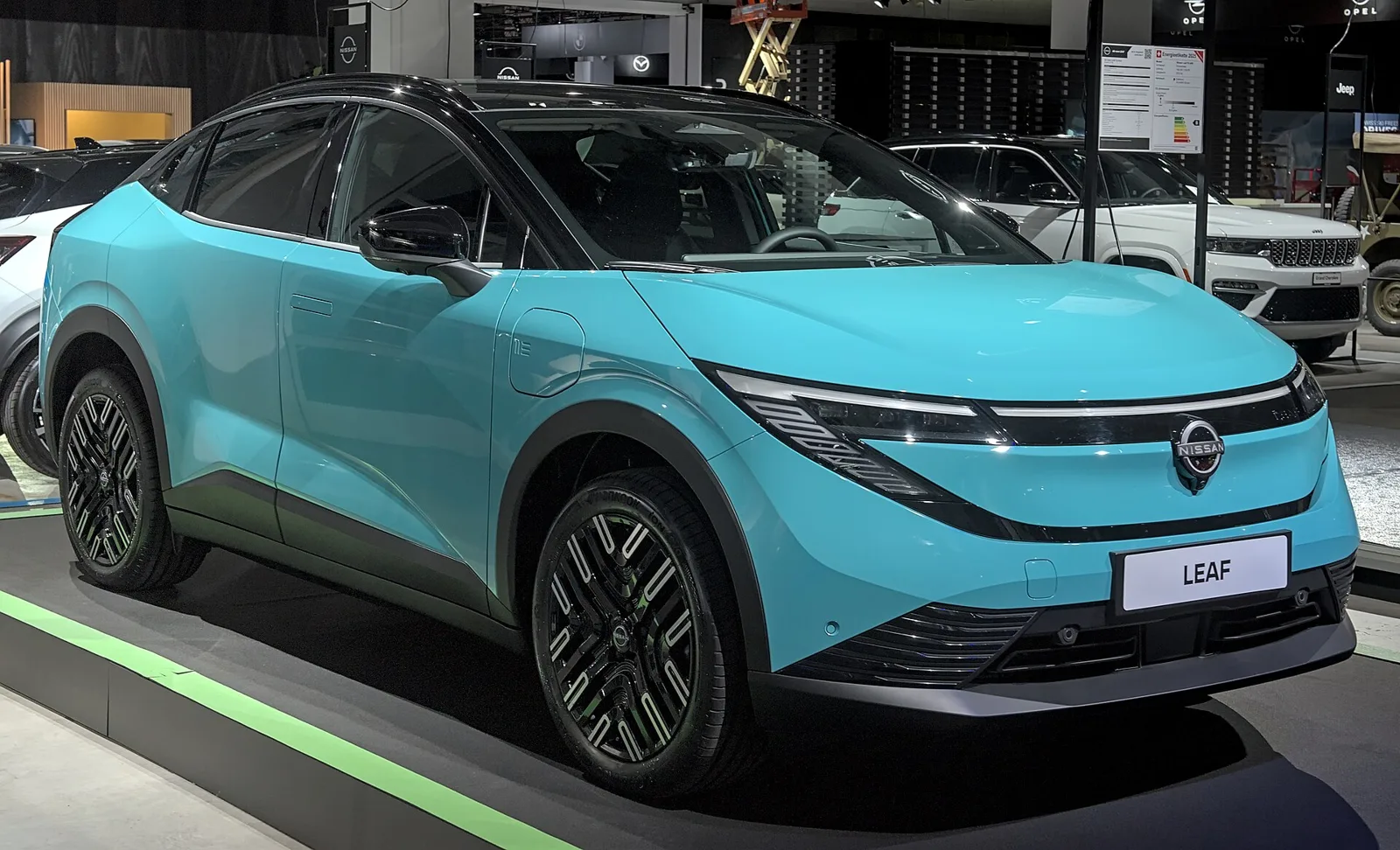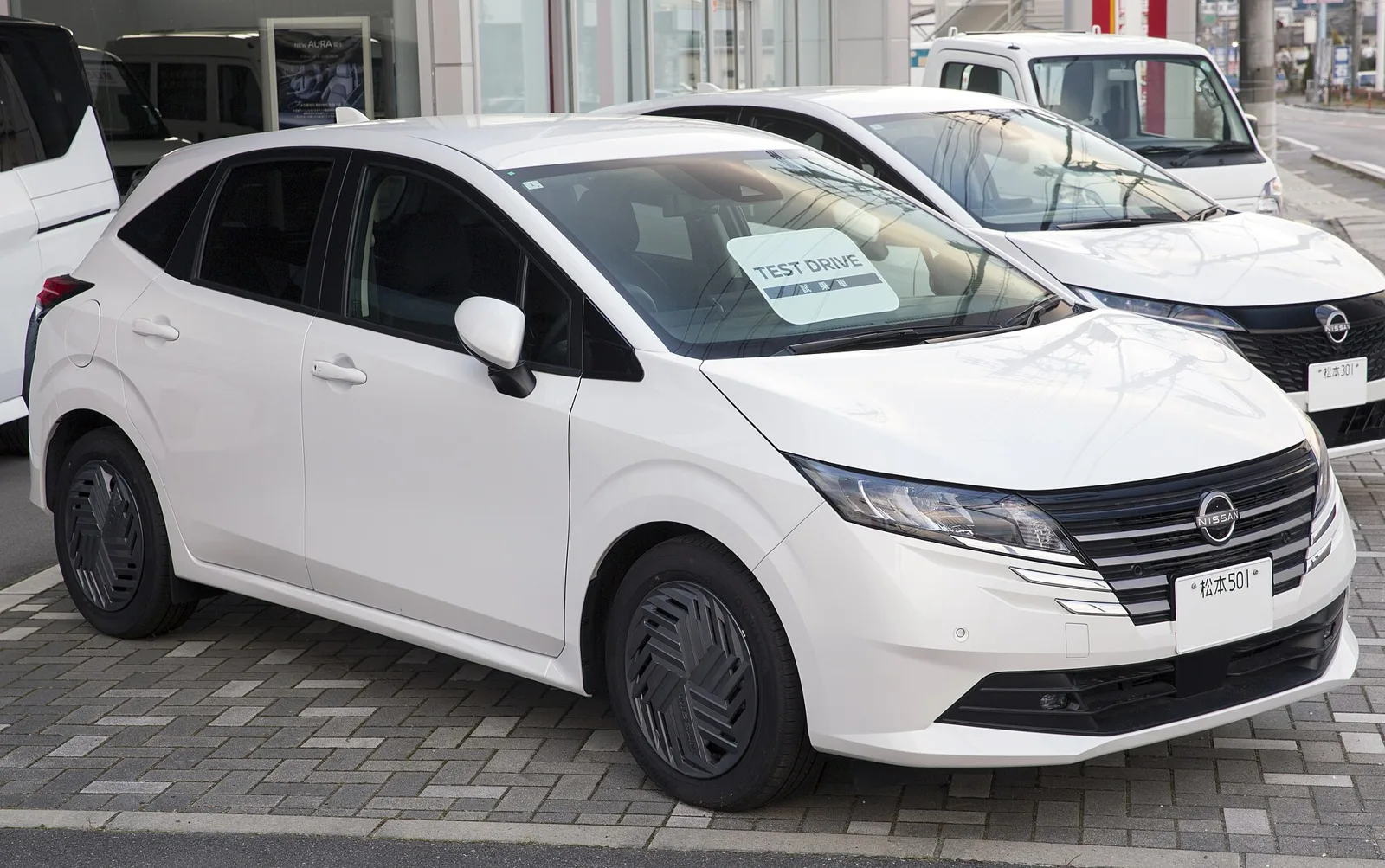
Nissan's supermini and mini MPV, sold since 2004, moved from petrol and diesel to a series hybrid called e-Power and won Car of the Year Japan for 2021 to 2022.
Sold since 2004 across three generations, the Note moved to the e-Power series hybrid in 2016. The third generation, launched in December 2020, uses that drivetrain alone, and the E13 won Car of the Year Japan for 2021 to 2022.
The Nissan Note is a supermini or mini MPV that Nissan has sold worldwide since 2004. The first generation was marketed mainly in Japan and Europe, and the second sold in other regions, including North America as the Versa Note. The third generation, launched in 2020, is offered only with the e-Power series hybrid drivetrain.
Why did Nissan create the Note?
The Note grew out of a sales problem. Nissan's Almera Tino had sold 200,000 cars in seven years, while the Renault Scenic, its main rival, had sold 1,400,000 after the introduction of its second generation. Nissan began development of what became the Note in the summer of 2002.
The concept that paved the way was the Nissan Tone, which appeared at the 2004 Paris Motor Show. It had a U-shaped panoramic roof, a large dashboard screen and an automatic gearbox, and its rear doors were always locked. Chris Lee, Nissan's product manager, said that millions of dollars were invested in development and that the target price was under 13,000 euros.
The production car was an indirect successor to the conventional Almera hatchback in the European market. Its packaging, with a tall body and generous interior space, was meant to offer more room than a small hatch without the cost of a full-size car.
A supermini that began as a sales fix for the Almera Tino and ended as a series-hybrid car with a Car of the Year title.
Where was the first-generation Note built and sold?
The production version of the first-generation E11 went on sale in Japan on January 20, 2005. The European model was revealed at the 2005 Frankfurt Motor Show and shown again at the 2006 Geneva Motor Show, and retail sales started in early 2006.
The United Kingdom was the first market to receive the car, with its launch on March 1, 2006. The Note shared some underpinnings with the Renault Modus and was built at Nissan's plant in Washington, England. Production at the Sunderland plant began in January 2006, and the Oppama plant in Japan also built the car.
The engine line-up at the start was modest, with two 1.5-litre diesels and 1.4-litre and 1.6-litre petrol units. The European trim levels were the S, the SE and the SVE, and these were later replaced by Visia, Visia Plus, Acenta, Acenta R and Tekna. In Russia the car was sold as Comfort, Luxury and Tekna, and cars made before 2009 had standard OBD II diagnostics.
How did the first Note change during its life?
In 2007 the Note received a mid-cycle facelift for European-built models. The bumpers were fully painted and the radio antenna moved to the rear of the roof. The headlamp washer lost its dedicated button and became automatic, which led to excessive use of washer fluid.
The Japanese 2008 update was a bigger revision, with a redesigned headlamp, engine hood, grille and front bumper. Japanese sales began on January 16, 2008, and the Sporty series gained a dimpled leather-wrapped steering wheel. The European model was unveiled at the 2008 Paris Motor Show, and the 1.5-litre dCi models followed in September 2008.
A second European restyle arrived for the 2011 model year. Early cars offered a 1.5-litre dCi turbo diesel, a 65 kW (88 hp) 1.4-litre petrol and an 81 kW (110 hp) 1.6-litre petrol. The lights, bumpers, grille and dashboard were all significantly changed, and the range gained ten body colours.
The 2012 UK update added 16-inch diamond-cut two-tone alloy wheels to the Acenta. The N-TEC trim introduced darkened rear privacy glass and the Connect touch-screen satellite navigation system. By July 16, 2012, Nissan had sold 940,000 Notes.
Which special editions did the Note get?
An Adidas-inspired version was unveiled at the 2005 Tokyo Motor Show. It had bumpers that could be changed by the owner and fabrics and rubber trim on the dashboard and doors. In 2006 the Autech Note Rider appeared at the Tokyo Auto Salon, and the Rider Blackline followed on October 19, 2011.
Nissan also released the 15X SV Plasma on June 30, 2011, with an intelligent air conditioning system and a one-touch clean switch. Japanese marketing used the Golden Eggs characters in 2008 commercials, and a 2009 series of animated commercials took its inspiration from Heidi, Girl of the Alps.
What changed with the second generation?
The second generation, the E12, was based on the Invitation Concept shown at the 2012 Geneva Motor Show. The Invitation used the V platform and was designed to sell alongside the Micra and Juke. The production car was unveiled at Osanbashi in Yokohama, followed by a showing at the Nissan Gallery.
Japanese sales began on September 3, 2012, with HR12DE and HR12DDR engines and an Xtronic CVT transmission. Hong Kong followed on September 21, 2012, and Singapore on January 14, 2013 with a 1.2-litre DIG-S engine. European sales began in summer 2013, with a choice of three engines and three trim levels: Visia, Acenta and Tekna.
Nissan said the drag coefficient was 0.298, and with a frontal area of 2.13 square metres the drag area works out to 0.639 square metres.
How did the Versa Note fit into North America?
The Versa Note was the North American version of the Note. It was unveiled at the 2013 North American International Auto Show as a replacement for the Versa hatchback, and it went on sale in mid-2013 as a 2014 model. Its 1.6-litre DOHC engine used dual fuel injection and twin CVTC variable timing.
Trim levels were S, S Plus, SV and SL, and a sporty SR joined the range for 2015. A 2017 facelift brought a new front bumper and new wheels and colours. The Versa Note ended in late 2019, although the Versa sedan kept going into the 2020 model year.
What is e-Power and how does it work?
The e-Power system was revealed at the Nissan factory in Japan in October 2016, and it became the new powertrain for the facelifted 2017 Note. It is a series hybrid, so the petrol engine never drives the wheels. A small 1.2-litre three-cylinder engine generates electricity, which either powers the motor directly or charges a small battery.
The electric motor is the EM57 unit that Nissan also fitted to the Leaf, and it produces 80 kW (110 PS; 110 hp) and 240 Nm (180 lb ft) of torque. The battery holds 1.5 kWh, far less than the Leaf's. Unlike a parallel hybrid, the petrol engine only charges the battery, so the car has no plug-in capability.
The first e-Power Note was unveiled in Japan in November 2016. From 2017 the Note was sold only in Asia and the Americas, because production for European and Argentine markets had already ended in the UK in March that year.
What was the third-generation Note like?
The third-generation E13 was revealed on November 24, 2020 and went on sale on December 23, 2020. It sits on the CMF-B platform and is only offered with e-Power, in front-wheel-drive or four-wheel-drive form. The four-wheel-drive version, introduced in 2021, adds a second electric motor on the rear axle.
The new car is 55 mm shorter than its predecessor, with a turning radius of 4.9 m. Body stiffness rose by 30 percent through the use of 1470 MPa ultra-high tensile steel. The 2WD battery is a 1.54 kWh lithium-ion unit under the front seats, and torque for the 2WD version rose to 280 Nm.
The second-generation e-Power inverter is 40 percent smaller and 30 percent lighter than the outgoing unit. The E13 won Car of the Year Japan for 2021 to 2022, and it was the basis for the top-selling compact car in Japan in its early years.
What trim levels did the third-generation Note offer in Japan?
In Japan the trim levels were F, S, X and Autech. The S grade had 15-inch steel wheels, a reverse camera with a digital rear view mirror and a basic safety package. The F grade lacked the rear wiper and the height-adjustable driver's seat, and it did not offer ProPILOT.
The X grade added keyless entry as an option on the S, gradient tricot cloth seats and 16-inch steel wheels. The Autech sat at the top, with special 16-inch wheels, a dark chrome grille and a leather steering wheel. ProPILOT was optional on the X and Autech, and it used the navigation system to anticipate corners.
What is the Note Aura?
The Note Aura was an upmarket version introduced in June 2021. It has a redesigned front and rear fascia and a wider body, 40 mm wider than the standard car, achieved by widening the wheel arches to fit wider tyres. Its electric motor produces 100 kW (134 hp; 136 PS) and 300 Nm of torque.
The Aura NISMO followed on August 17, 2021, with a redesigned grille, bumpers and 17-inch aluminium wheels. The Aura received a facelift on June 13, 2024, with a wider grille, a sportier bumper and a sculpted rear fascia, while the NISMO followed on July 18, 2024.
Did the Note have a crossover version?
The Note Autech Crossover went on sale in October 2021. It had a crossover body with blue signature LEDs, metal-finish door mirrors and 25 mm of extra ground clearance from retuned suspension. Grades were X and X Four, and the model was facelifted in May 2024 with new bumpers and extra metal-finish trim.
The standard Note also received a 2024 facelift, revealed on December 11, 2023. It gained a revised V-Motion grille, LED headlights and 16-inch wheels that carry Japanese geometric motifs. The facelifted car was offered only in X grade, as the F and S grades were discontinued.
What awards did the Note win?
The RJC Car of the Year prize went to the Note in 2013, ahead of two rivals, the Suzuki Wagon R and the Mazda CX-5. By 2018 it had become Japan's best-selling compact, and that year it also collected an environmental award.
The E13 went on to win Car of the Year Japan for 2021 to 2022, which confirmed the strength of the e-Power approach. The award recognised a car that had moved from a simple supermini to a hybrid that many buyers considered a practical everyday choice.
What are the Nissan Note specifications?
| Specification | Detail |
|---|---|
| First generation (E11) | Introduced 2004; UK launch March 1, 2006 |
| Early engines | 1.4 and 1.6-litre petrol; 1.5-litre diesel |
| Sales, first generation | 940,000 by July 16, 2012 |
| Second generation (E12) | Introduced 2012; Japan from September 3, 2012 |
| Drag coefficient | 0.298 (second generation) |
| e-Power generator | 1.2-litre three-cylinder petrol |
| e-Power motor | 80 kW (110 PS; 110 hp), 240 Nm (180 lb ft) |
| Third generation (E13) | Sales from December 23, 2020 |
| WLTC economy | 29.5 km/l (69 mpg-US) |
| Note Aura motor | 100 kW (134 hp; 136 PS), 300 Nm |