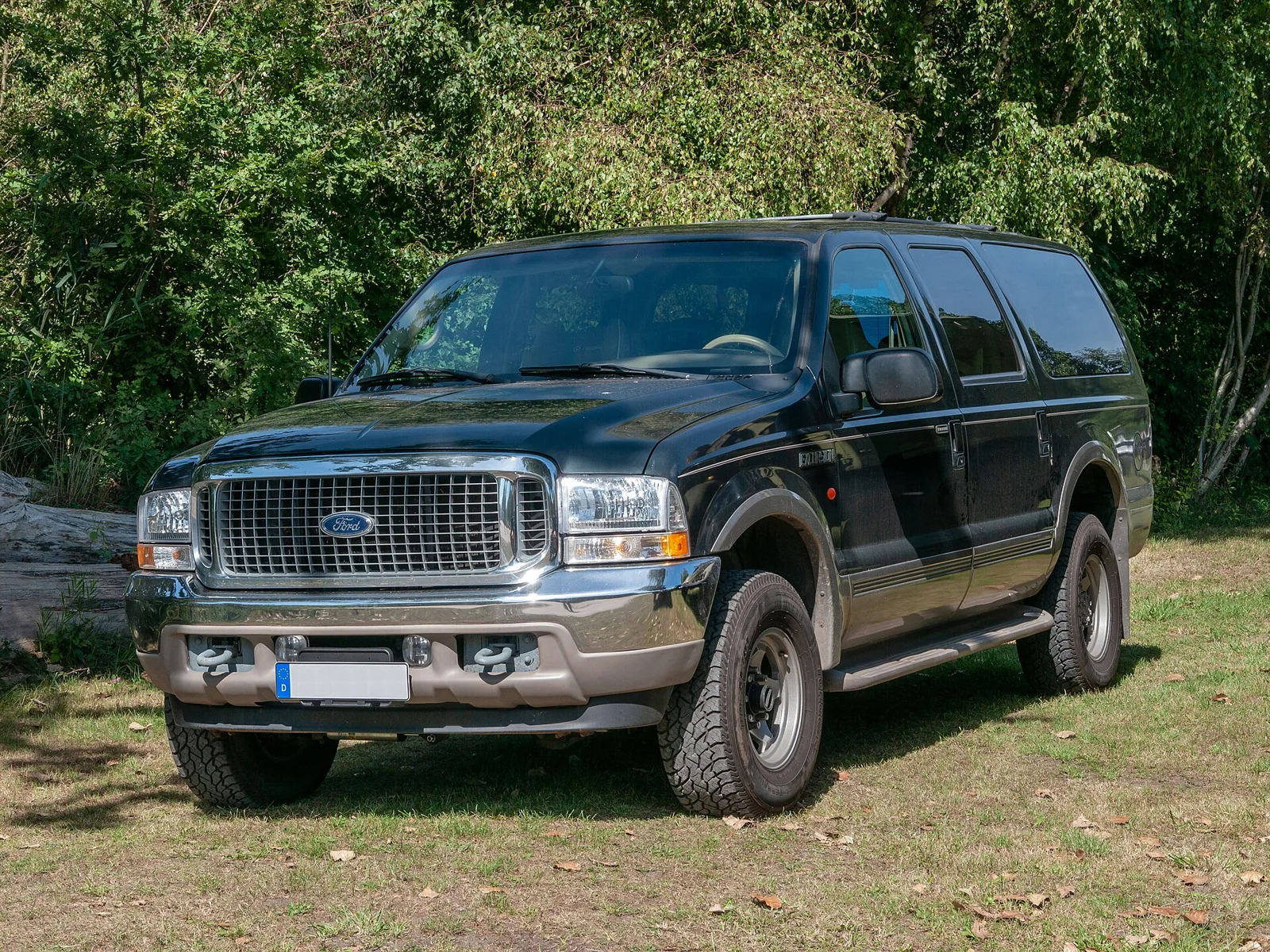
A heavy-duty full-size SUV built from the F-250 Super Duty, which held the longest-SUV title for nearly two decades and sold best in its first model year.
The Ford Excursion was a heavy-duty full-size SUV that Ford built from the F-250 Super Duty pickup for the 2000 to 2005 model years. It rivalled the Chevrolet Suburban, used Triton V8 and V10 petrol engines or a Power Stroke diesel, and was the longest SUV ever mass-produced for nearly two decades.
Within Ford's range, only the E-350 Super Wagon and the Transit 350 that replaced it outranked the Excursion for size and passenger capacity. The model reached back to the Bronco and the Suburban in its design, and its frame came from a three-quarter-ton truck. It was sold for the 2000 to 2005 model years.
Where did the Excursion come from?
The Excursion was introduced for the 2000 model year on September 30, 1999, as Ford's third SUV built on the F-Series, after the Bronco and Expedition. It was derived from the three-quarter-ton F-250 Super Duty pickup and aimed at the Chevrolet Suburban 2500-series and GMC Yukon XL.
Its roots lie with General Motors. The Suburban gained a fourth passenger door for the 1973 model year, and International Harvester's Travelall, its main rival, was retired after the 1975 model year. The Jeep Wagoneer was nearly three feet shorter and had begun its move upmarket as a luxury vehicle.
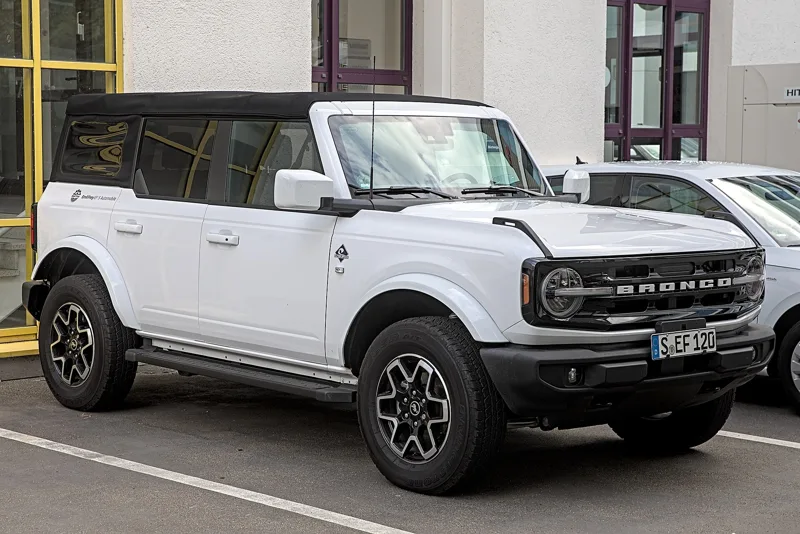
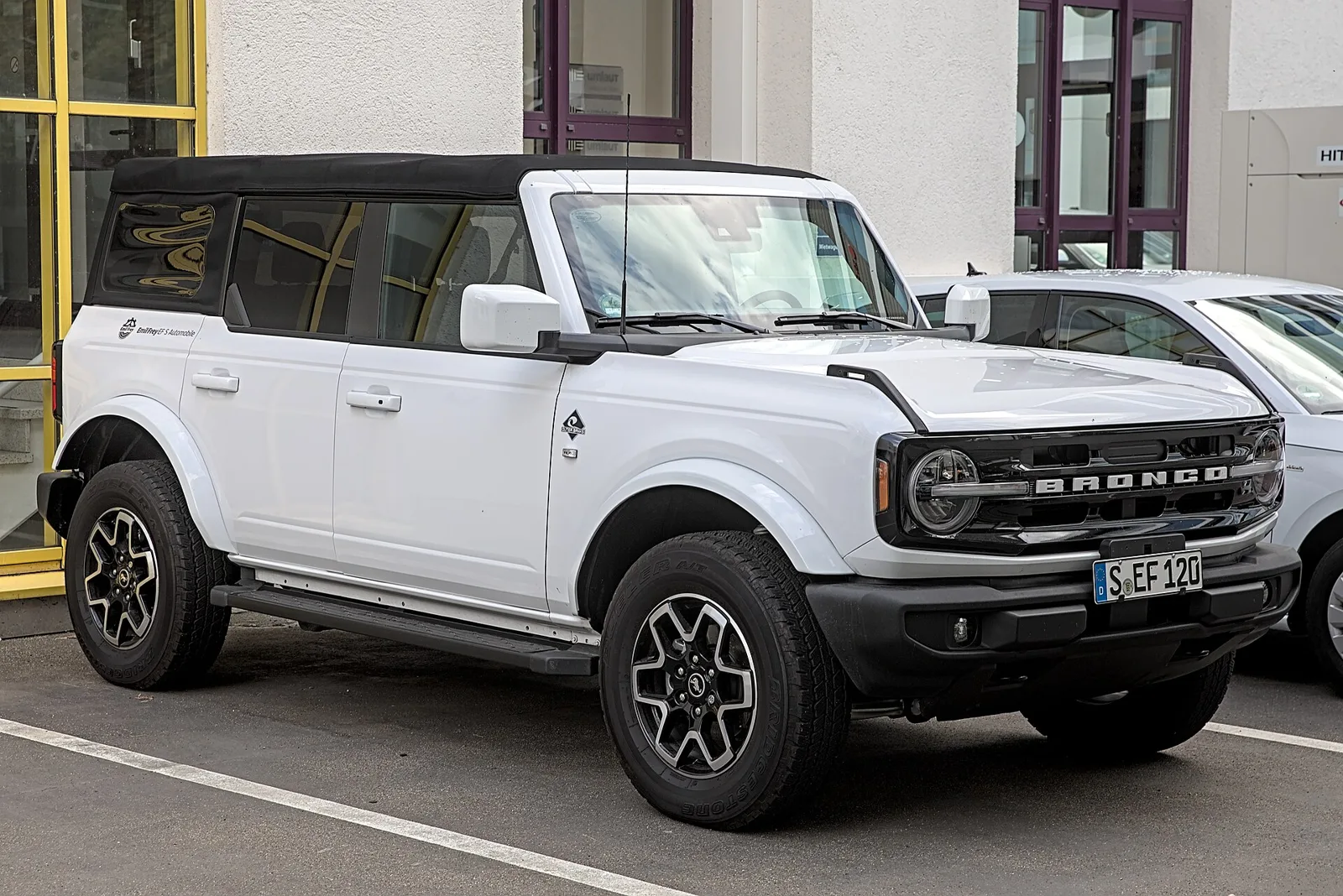
Ford's own path ran through the Bronco. For 1978 the second-generation Bronco became an F-Series variant and grew in length, but it stayed a three-door half-cab wagon. After 30 years the Bronco gave way to the five-door Expedition for 1997, which shared its design with the redesigned F-150.
In 1999 the F-250 and F-350 became Super Duty trucks with a heavier-duty chassis, larger engines and their own body. That gave Ford a direct route to match the 2500-series Suburban, and the Excursion was the result.
Built from the F-250 Super Duty, the Excursion was the longest SUV ever mass-produced for nearly two decades.
How was the Excursion's chassis built?
The Excursion shares many body and chassis parts with the F-250 pickup, including the front suspension and most of the rear. It has its own frame from the front sway-bar mounts rearward, which made it taller and wider than the pickup.
Every Excursion used a Sterling 10.5 rear axle. Four-wheel-drive models added an NV273 transfer case and a Dana 50 front axle, and buyers could pick final-drive ratios of 3.73:1 or 4.30:1.
Ford's engineers learned during development that the early design made smaller cars such as the Taurus vulnerable in head-on crashes. In one test the Excursion's tyre rode up to the Taurus windscreen, so Ford added an under-bumper blocker beam, a device the French transport ministry had first tested in 1971.
A standard trailer hitch took on the blocker's role against underriding in rear-end crashes.
Which engines did the Excursion use?
Every Excursion came with Triton V8 or V10 petrol engines or a Power Stroke turbodiesel, all paired with an automatic gearbox. The standard engine was a 5.4-litre Triton V8, with a 6.8-litre V10 as an option. No manual transmission was ever offered.
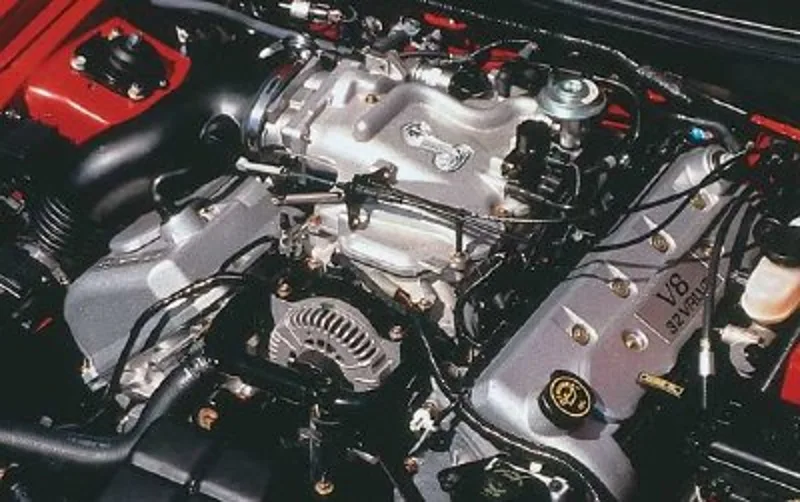
The Triton engines were truck versions of the Modular family. The diesel at launch was a Navistar-built 7.3-litre Power Stroke V8, and in 2003 Ford replaced it with a Navistar 6.0-litre turbodiesel that adopted a variable-geometry turbocharger.
The 5.4, 6.8 and 7.3 litre engines used a four-speed 4R100 automatic, while the 6.0 turbodiesel used a five-speed 5R110W. The gearbox choice therefore depended on the engine, not on the trim.
How heavy was the Excursion, and how did it fare on fuel?
The two-wheel-drive Excursion carried a gross vehicle weight rating of 8,600 lb (3,900 kg) with petrol engines and 8,900 lb (4,000 kg) with diesel. A weight rating above 8,500 lb (3,900 kg) placed the car outside EPA fuel economy ratings and the Ford CAFE fleet.
Four-wheel-drive models added 300 lb (140 kg) to those figures. Reviewers quoted real-world consumption of 12-15 mpg with the V10.
The weight rating also exempted the car from light-duty emissions standards, but Ford still designed its powertrains to reach low emissions vehicle status.
How was the Excursion's body built?
Forward of the B-pillars, the car matches the F-250 pickup almost completely. It differs mainly in its egg-crate grille, slightly different rear passenger doors and a fixed rear body styled like the 1980-1996 Bronco, with larger, flush-mounted glass.
Four full-length passenger doors made it one of few mass-produced SUVs with that layout. The rear end used a three-way cargo arrangement, akin to the Astro van's, with a top-hinged window and wiper above 50/50 split doors, and it took its larger taillamps from the E-Series van.
The dashboard came straight from the F-250, with an Excursion nameplate. Seating was for eight or nine, with either a front bench or bucket seats. The spare tyre sat upright on the side of the cargo area behind the third row, as on the Suburban and the Bronco.
In 2002 the instrument panel gained a digital odometer and a transmission temperature gauge. For 2005 the model received a light front facelift, with F-250 grille components replacing the egg-crate design.
Which trims did the Excursion offer?
The Excursion used Ford's light-truck trim names: XL, mostly sold to fleets, XLT as the standard retail trim, and Limited at the top. An Eddie Bauer package joined the range for 2003, differing from the Limited mainly in its looks.
The XLT came with three rows of seats, a leather-wrapped steering wheel with speed control, keyless entry and 16 in (41 cm) chrome steel rims, with alloys optional. A trailer towing package and six premium speakers were part of the kit.
On top of the XLT equipment, the Limited had a power seat for the driver, rear audio controls, illuminated running boards, 16 in (41 cm) alloy rims, five power outlets, ten cupholders and heated front leather seats. A rear DVD entertainment system was optional.
How did the Excursion sell?
The Excursion sold nearly 69,000 units in its first model year, 2000, close to a production capacity of 70,000 a year. Sales from 2001 barely reached half that figure, and it ended as the weakest seller among Ford and Lincoln-Mercury SUVs.
Sales had met projections at launch, but demand fell, partly due to the energy crisis of the 2000s.
Why was the Excursion criticised?
The Sierra Club dubbed it the Ford Valdez in 1999, a reference to the Exxon Valdez supertanker. Popular Science had already called it the biggest sport utility on the planet at launch.
In 2007 Time named it one of the Fifty Worst Cars of All Time. Its scale and fuel use fed the criticism, and the Valdez nickname stuck.
What variants and conversions were made?
In Brazil the F-250 Tropivan, a conversion sold from 1998 to 2012, offered a similar SUV layout as a second-party build. It came with a 4.2-litre Essex gasoline V6 and two diesels, a 3.9-litre Cummins B-series and a 4.2-litre MWM Sprint 6.07TCA straight-six.
The Tropivan also came in two wheelbases, a contrast with the single Excursion length. Its layout echoed the American model, but it was a separate build rather than a factory SUV.
Aftermarket builders also used Excursion bodywork on Ford F-650 and F-750 medium-duty chassis, usually adding an extra set of doors to cope with the longer wheelbase. The Hennessey VelociRaptor mated Excursion rear bodywork with the first-generation Ford Raptor body.
Ford set a 120-inch limit on body extensions for full-frame cars such as the Lincoln Town Car, yet some Excursions have been stretched beyond it. A stretched 2001 Excursion was involved in the 2018 Schoharie limousine crash, which killed 20 people.
What are the Excursion specifications?
| Specification | Detail |
|---|---|
| Model years | 2000 to 2005 |
| Launch | September 30, 1999 |
| Platform | Three-quarter-ton F-250 Super Duty chassis |
| Standard engine | 5.4 L Triton V8 |
| Optional petrol engine | 6.8 L Triton V10 |
| Launch diesel | 7.3 L Navistar Power Stroke V8 |
| Diesel from 2003 | 6.0 L Navistar turbodiesel with variable-geometry turbocharger |
| Transmissions | 4R100 four-speed automatic; 5R110W five-speed automatic for the 6.0 L |
| Rear axle | Sterling 10.5 |
| Rear axle ratios | 3.73:1 and 4.30:1 |
| Gross vehicle weight rating | 8,600 lb (3,900 kg) petrol; 8,900 lb (4,000 kg) diesel |
| Four-wheel drive | Adds 300 lb (140 kg) to GVWR; NV273 transfer case; Dana 50 front axle |
| Seating | 8 or 9 passengers |
| Wheels | 16 in (41 cm) on XLT and Limited |
| Best sales year | Nearly 69,000 units in the 2000 model year |