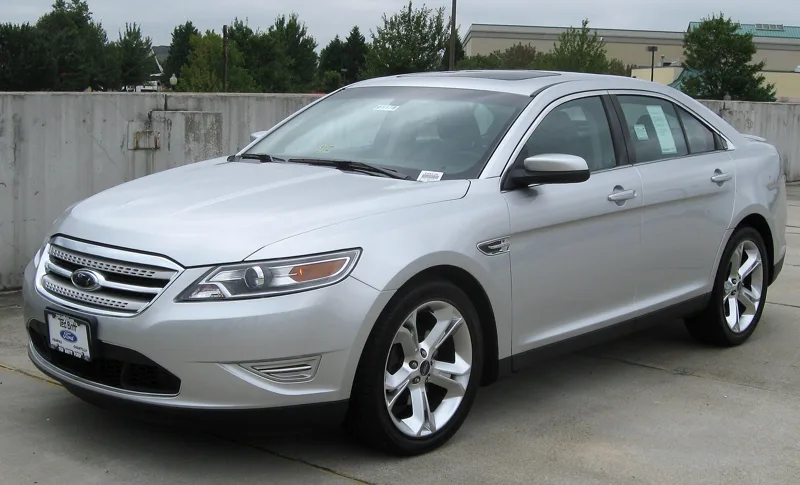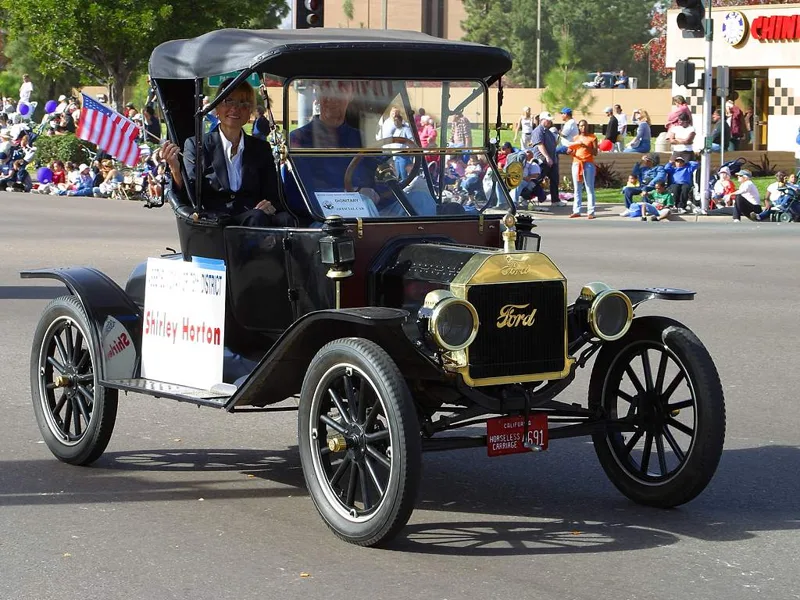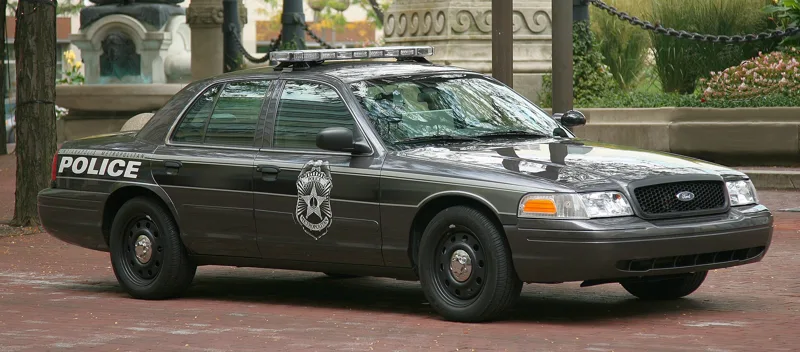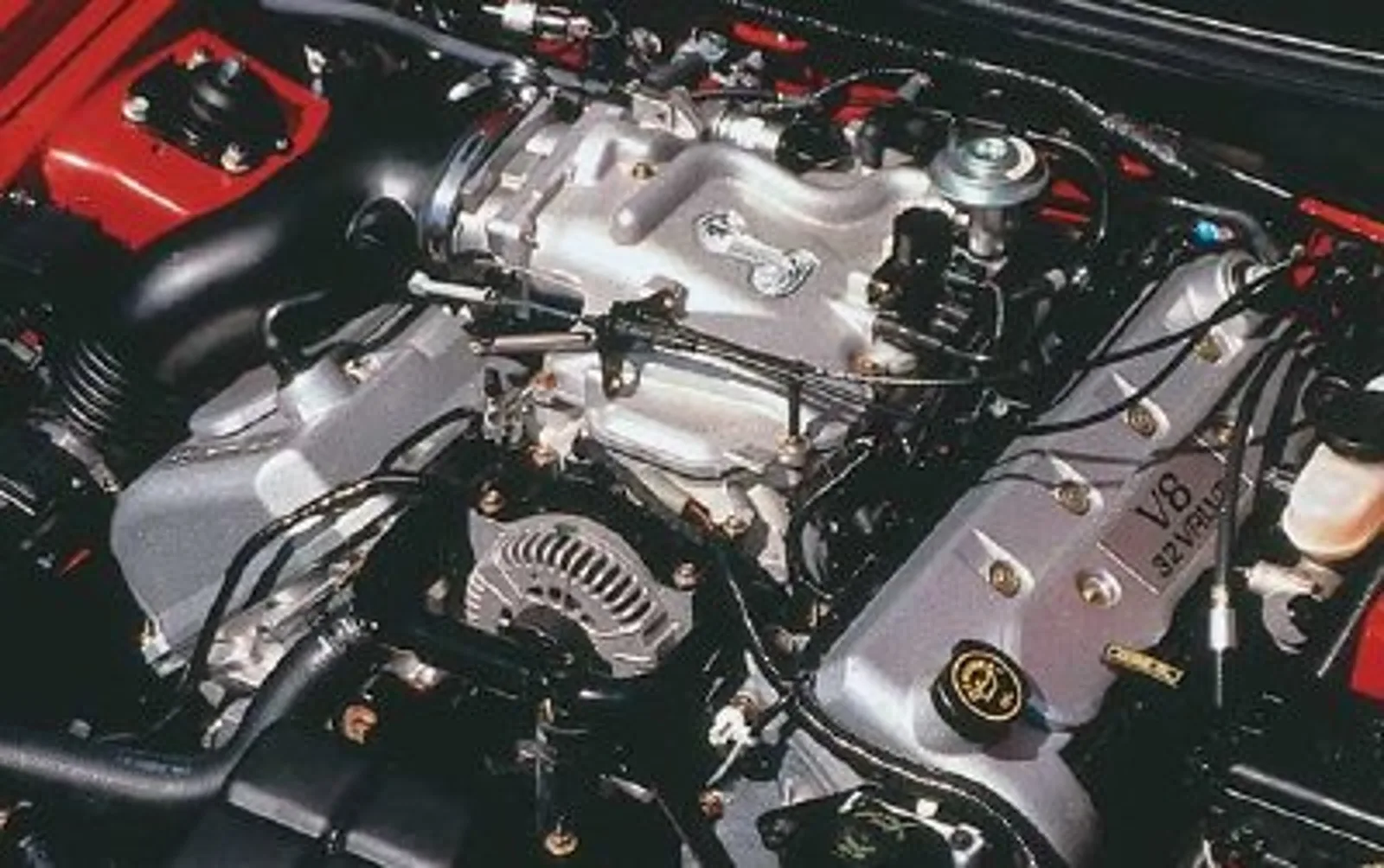
Three Ford engine families, two of them wearing the Duratec badge, from the 4.6 V8 of 1990 to the Coyote and the 3.5 EcoBoost.
Ford's Modular is a family of overhead cam V8 and V10 engines introduced in 1990, while the Duratec V6 followed in 1993 and the Cyclone V6 in 2006. The Cyclone is also branded Duratec, but it shares no components or design with the older Duratec.
The Ford Cyclone V6 carries the Duratec name, and it shares no component or design with the Duratec V6 that came before it. The Modular V8, the first Duratec V6 and the Cyclone are three separate families linked by a few ideas: the 4.6 Modular's variable intake inspired the first V6, and the Coyote V8 grew straight out of the Modular.
What is the Ford Modular engine?
The Ford Modular is a family of overhead camshaft V8 and V10 small-block petrol engines introduced in 1990 for the 1991 model year. The "modular" label referred to the tooling and casting stations in Ford's Windsor and Romeo engine plants, not to the engines.
The first was a 4.6-litre V8. Modular engines have powered Ford, Lincoln and Mercury vehicles, and those in Ford trucks were sold under the Triton name from 1997 to 2010. At Lincoln and Mercury the DOHC versions wore the InTech badge for a time. Production began in Michigan, at the Romeo Engine Plant, and later spread to Windsor, Ontario.
Two Ford V6 families wear the Duratec badge, and they share nothing.
Where did the Modular V8 come from?
In the early 1980s Ford's chief operating officer, Donald Petersen, pushed design vice-president Jack Telnack to drop boxy styling, and the Taurus was the result. In the second half of the decade, as chief executive, Petersen asked senior engineer Jim Clarke for a V8 that would beat Ford's older ones on all counts: power, efficiency, emissions and smoothness.
Clarke's team studied European and Japanese engines and set out to build a power-dense, dependable V8 that needed no major service before 100,000 miles (160,000 km). The 4.6 used a 90-degree vee with a bore and stroke of 3.552 by 3.543 inches (90.2 by 90.0 mm), which gave 4,601 cc (280.8 cubic inches). That near-square shape was chosen mainly for its low noise, vibration and harshness.
It had a chain-driven single overhead cam working through roller finger followers, plus cross-bolted main bearings and a cast-iron block with deep skirts, all for durability. Aluminium heads were standard, and all the main accessories were mounted directly to the block, a more complex casting that removed the need for heavy brackets. Every engine in the family shares a bore spacing of 3.937 inches (100 mm). Tight tolerances in the cylinder bores allowed narrow piston rings, cutting friction and oil consumption. Six-cylinder versions were explored but never built.
The true modularity was in the factory. A new tooling system let Ford change from one engine to another quickly, so existing plants could handle shorter production runs. By 1987 Ford had committed $4 billion to the project, and the first engine, a 4.6 SOHC V8, went into the 1991 Lincoln Town Car in the third quarter of 1990. At 20 lb (9 kg) lighter than the old overhead valve 5.0-litre V8 (302 cubic inches), it made more power, was 1.5 seconds quicker from 0-60 mph (0-97 km/h) and used less fuel.
What were the 4.6 Modular variants?
The 4.6 came in two-valve SOHC, three-valve SOHC and four-valve DOHC forms, with aluminium or cast iron blocks depending on the job. All Modular V8s share one firing order with the Ford 5.0 HO and 351, except the Coyote and the Voodoo. Romeo, Windsor and the Essex Engine Plant in Windsor, Ontario all built them, and the final 4.6 was produced in May 2014 for a 2014 Ford E-Series van.
Two valves, three valves, four valves
The first production Modular was the 2-valve in the 1991 Town Car. Romeo and Windsor made it with different cylinder heads, camshaft sprockets, valve covers and crankshafts.
The three-valve SOHC with variable camshaft timing arrived in the redesigned 2005 Mustang. It used a Charge Motion Control Valve to raise air speed at low revs for better emissions and torque, had an aluminium block in the Mustang GT and cast iron in trucks, and was on Ward's 10 Best Engines list from 2005 to 2008.
The 4-valve DOHC came in the 1993 Lincoln Mark VIII as the 4.6 Four-Cam V8, and Lincoln called it InTech after 1995. Early versions had split-port cylinder heads and variable-length intake runners, and a 1999 revision added tumble-style ports and fixed runners, for more power, more torque and a wider power band. Blocks were aluminium, cast in Italy by Fiat subsidiary Teksid until 1999. The exception was the 2003-2004 SVT Cobra, which had a cast-iron block. SVT technicians have built the Cobra's four-valve engines by hand at Romeo since 1996, and the engine made Ward's list in 1996 and 1997.
How did the Coyote grow out of the Modular?
The 5.0-litre Coyote (4,951 cc; 302.1 cubic inches) was first made in 2010 for the 2011 model year as an evolution of the Modular V8. It is assembled at the Essex Engine Plant on existing Modular tooling. Ford needed an engine for the Mustang GT to take on General Motors' 6.2-litre LS3 in the Camaro and Chrysler's 6.4-litre Hemi, and as it replaced the 4.6 and 5.4 Modulars it had to stay close to the 4.6 in size.
So it keeps the 4.6's bore spacing, deck height and connecting rod length, with a wider bore and longer stroke of 92.2 by 92.7 mm. The firing order switched to that of the old Ford Flathead V8. Compression is 11.0:1, and although it uses port injection it runs on 87-octane petrol. New four-valve DOHC heads moved the camshafts outboard, and the redline is 7000 rpm. It was Ford's first V8 with cam-torque-actuated Ti-VCT, and the block was stiffened by webbing instead of thicker walls. Ward's named it a 10 Best engine in 2011, 2012 and 2018.
The Boss 302 variant of 2012 got CNC-ported heads, sodium-filled exhaust valves and a high-mounted plenum, lifting power from 412 hp (307 kW) to 444 hp (331 kW) while torque slipped from 390 lb ft (529 Nm) to 380 lb ft (515 Nm). Its redline rose to 7500 rpm, verified stable to 8400.
For 2018 the Gen 3 added direct injection, raised the bore from 92.2 to 93 mm and capacity from 4,951 to 5,035 cc, and lifted compression to 12.0:1, for 460 hp (343 kW) and 569 Nm. The Bullitt and Mach 1 got 480 hp (358 kW) with parts from the 5.2-litre Voodoo. The Gen 4, from 2024, makes 480 hp (358 kW), 486 hp (362 kW) with the Active Performance Exhaust and 500 hp (373 kW) in the Dark Horse. An F-150 variant, tuned for torque with 10.5:1 compression, is offered as an alternative to the EcoBoost V6.
What is the Ford Duratec V6?
The Duratec V6 is an aluminium-block, dual overhead cam V6 with cast iron cylinder liners and a 60-degree bank angle. It debuted in the 1993 Ford Mondeo and was used widely through 2012, including by Mercury, Lincoln, Jaguar and Mazda.
Ford wanted a compact front-drive transverse engine, short enough for an 11-metre turning radius, with class-leading performance, economy and refinement. V6 programme head Bruce Coventry said that Ford turned to Porsche when its own engineers were stretched, and that Porsche had completed the early development, which explains the Duratec's similarities to Porsche engines of the time. The cylinder head and the main bearing ladder recall the 928's V8.
Ford licensed a high-integrity casting method from Cosworth, developed by John Campbell, which uses zircon aggregate, a preheated mould and rotation during the pour for dense, accurate castings. The variable intake was inspired by the 4.6 Modular's, with dual intake ports that opened and closed. In the early 2.5-litre Contour, torque stayed within five per cent between 1,500 and 5,200 rpm.
The Duratec versions
The 2.5 (2,544 cc) arrived in 1994 for the Contour and the first Mondeo, and made Ward's list in 1995 and 1996. The SVT version, with 195 hp (145 kW) in 1998 and 200 hp (149 kW) in 1999, powered the Mondeo ST200, the Cougar and the Contour SVT. Mazda cut it to 2,495 cc in the 2000 MPV to stay under Japan's 2.5-litre tax threshold.
The 3.0 (2,967 cc) came in 1996 to replace the 3.8-litre Essex in the Taurus and Sable. It is a bored-out 2.5, at 88.9 mm, and made 200 to 240 hp. The Jaguar AJ30 version with mechanical bucket tappets gave 240 hp (179 kW) and 298 Nm, and the Taurus and Escape version with roller finger followers gave 201 hp (150 kW) and 281 Nm. By late 2005 about 3.5 million had been built at Cleveland Engine Plant 2, each hot-run on an 85-foot, 34-station carousel for at least four minutes.
For 2006 the Fusion, Milan and Zephyr received a variable camshaft timing version making 221 bhp (165 kW; 224 PS). The second generation adapted it for E85, with 240 bhp (179 kW; 243 PS) on petrol and 250 bhp (186 kW; 253 PS) on E85. The Duratec 35 later replaced it.
The V6 found odd homes. The Noble M400 uses a twin-turbo 3.0 at 425 bhp (317 kW), the 2015 Rossion Q1 makes 508 bhp (379 kW), and a racing version in the Juno SS3 mini prototype makes 350 to 400 hp with an 8700 rpm redline and a 40-hour life. Aston Martin's 5.9-litre V12 is best thought of as two 3.0 Duratec blocks mated end to end, developed by Ford and Cosworth. Ford's 3.4-litre SHO V8 shares the 2.5's bore and stroke but was never called a Duratec.
Is the Ford Cyclone a Duratec?
By name, yes. The Cyclone engine is also branded Duratec, but it is a separate design. Introduced in 2006, this DOHC V6 family succeeds Ford's earlier V6s: the Essex of 1982, the Vulcan of 1985, the original Duratec of 1993 and the Cologne, whose design dates back to 1962.
The Cyclone shares no parts or design with the previous Duratec. It can run up to 4.0 litres and has four valves per cylinder, mechanical bucket tappets, variable cam timing on the intake side, and twin-independent timing on later versions. Direct injection and turbocharging were considered at the design stage and arrived as EcoBoost. Mazda badges its versions MZI.
Cyclone sizes
The first, a 3.5-litre (3,496 cc), appeared in the 2007 Ford Edge and its Lincoln relatives, the MKX and MKZ. It made 265 hp (198 kW) and 339 Nm on 87 octane, and with Ti-VCT in 2011, 285 hp (213 kW). The best was 290 bhp (216 kW), in the 2011 Explorer. It is assembled in Lima, Ohio, and was a Ward's 10 Best engine in 2007.
The EcoBoost, a twin-turbo direct-injection 3.5, powers the Explorer Sport, Taurus SHO, Flex, Lincoln MKT and MKS and police vehicles. The 3.7-litre (3,726 cc) came in the 2008 Mazda CX-9 and the 2009 Lincoln MKS. Its 2011 Mustang version was the first production engine to deliver more than 300 hp (224 kW) and 30 mpg-US, and the first Duratec-badged V6 in a production rear-drive car since the Lincoln LS. The 3.3-litre (3,339 cc) became the base engine of the 2018 F-150.
The water pump problem
The transverse 3.5, 3.5 EcoBoost and 3.7 have a water pump inside the engine, driven by the timing chain. When it fails, coolant goes into the crankcase and mixes with oil, risking the head gaskets and bearings. Many failures come without warning, repairs often cost thousands of dollars, and sometimes the engine has to be replaced. A class-action lawsuit was dismissed and there was no recall. Longitudinal versions use an external pump.
How do the three Ford families compare?
| Family | Introduced | Layout | Notes |
|---|---|---|---|
| Modular | 1990 | OHC V8 and V10 | 4.6 first; Coyote 5.0 grew from it |
| Duratec V6 | 1993 | 60-degree DOHC V6, aluminium block | Early development by Porsche |
| Cyclone | 2006 | DOHC V6, up to 4.0 L | Shares no parts with the earlier Duratec |
Where this goes next
The Duratec 30 was eventually dropped for the Duratec 35 and its variants, and the final 4.6 Modular left the line in May 2014. The Coyote carries the Modular line forward, now in its fourth generation for the 2024 Mustang, while the Cyclone family continues with the 3.3-litre in the F-150.